Complete Giloy (Tinospora cordifolia) Guides
Growing Guide
Problems & Diseases
Flowering Season
Introduction
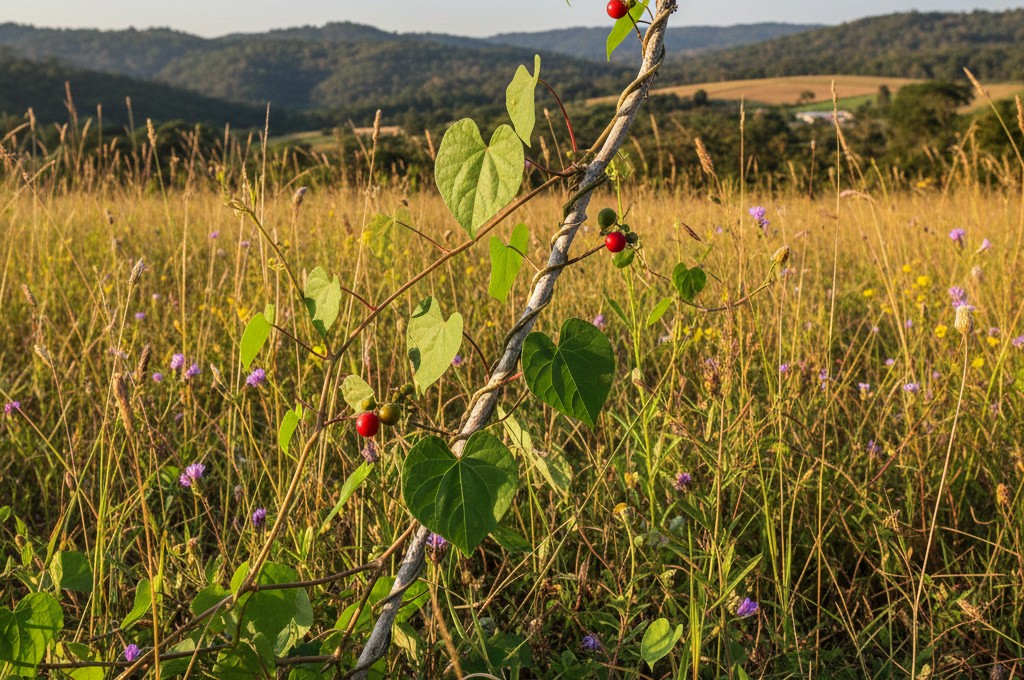
Tinospora cordifolia (Willd.) Hook.f. & Thomson is a large, deciduous, climbing liana in the family Menispermaceae, native to the tropical and subtropical forests of the Indian subcontinent and extending into Sri Lanka, Bangladesh, Myanmar, and parts of mainland Southeast Asia and southern China. It is among the most widely distributed lianas in South Asian dry deciduous and mixed forest systems, characterised by its cordate leaves, succulent grey-green stems bearing conspicuous aerial roots, and small orange-red drupes produced in pendulous racemes. The species inhabits forest edges, village groves, hedgerows, and the canopies of host trees across a broad range of elevations from the plains to approximately 1,200 m.
Classification
- Plant Type
- Vine
- Lifecycle
- Perennial
- Leaf Habit
- Deciduous
- Native Region
- Asia
- Plant Family
- Menispermaceae
Tinospora cordifolia belongs to a genus of approximately 30 species distributed across the paleotropics, and is by far the most extensively studied member of the genus in terms of phytochemistry and agronomy. Its stems are the primary commercially harvested organ, used in the Indian Ayurvedic pharmaceutical industry on a substantial scale. The species shows a strong tendency toward association with specific host trees in natural settings — most notably neem (Azadirachta indica) and mango (Mangifera indica) — and traditional accounts hold that stems growing over neem trees accumulate distinct phytochemical profiles compared with those growing over other hosts, a claim that has attracted some research attention.
The plant is known under a large number of vernacular names across its range, including giloy and guduchi in Hindi and Sanskrit, amrita in classical Ayurvedic texts, and heart-leaved moonseed in English, a name that references both the cordate leaf shape and its placement in the Menispermaceae (moonseed family). Commercial cultivation on a significant scale is conducted in Rajasthan, Gujarat, Madhya Pradesh, and Uttar Pradesh in India, driven by demand from the Ayurvedic pharmaceutical sector.
Taxonomic Synonyms
| Field | Information |
|---|---|
| Accepted Scientific Name | Tinospora cordifolia (Willd.) Hook.f. & Thomson |
| Known Synonyms | Menispermum cordifolium Willd.; Tinospora tomentosa Miers; Cocculus cordifolius DC.; Tinospora rumphii Boerl. |
| Taxonomic Authority Source | Kew Plants of the World Online (POWO) |
Quick Plant Information
| Field | Information |
|---|---|
| Common Name(s) | Giloy; Guduchi; Heart-leaved moonseed; Amrita; Giloe |
| Scientific Name | Tinospora cordifolia (Willd.) Hook.f. & Thomson |
| Family | Menispermaceae |
| Plant Type | Woody perennial climbing liana |
| Lifespan | Perennial; established clumps documented to persist for decades |
| Growth Habit & Form | Vigorous, high-climbing deciduous liana; twining stems reaching 15–20 m in mature forest canopy; produces conspicuous aerial roots from stems |
| Native Range | Indian subcontinent (India, Pakistan, Sri Lanka, Bangladesh, Nepal); Myanmar; Thailand; Laos; Vietnam; southern China |
| Climate Adaptation & Habitat Type | Tropical and subtropical dry to moist deciduous forests; forest margins, riverine forest edges, hedgerows, village groves; 0–1,200 m elevation |
| Leaf Type | Simple; broadly cordate; alternate; long-petiolate; margin entire; glabrous to pubescent |
| Flower Color(s) | Pale yellow to yellow-green |
| Fruit Type | Drupe (globose; red to orange-red at maturity) |
| Evergreen or Deciduous | Deciduous; leaf drop during cool dry season (November–February in northern India) |
Botanical Description
Stem
The stems of Tinospora cordifolia are succulent, fleshy, and twining, typically 1–3 cm in diameter in mature climbing growth and covered with a distinctive grey-green to pale brown bark that is longitudinally fissured and studded with prominent lenticels and warty tubercles. The outer bark is soft and peelable, revealing a white to pale green interior with a characteristically bitter taste. A highly distinctive feature of the species is the production of long, thread-like aerial roots that hang from the climbing stems and branches, sometimes reaching 1–2 m in length; these roots provide additional anchorage, absorb atmospheric moisture, and are a useful field identification character. Juvenile stems are more herbaceous and greenish, hardening and developing the characteristic rough warty bark with age.
Leaves
Leaves are simple, alternate, and broadly cordate to ovate-cordate, 8–15 cm long and 6–14 cm wide, with a deeply cordate base and an acute to acuminate apex. The margins are entire, and the leaf surface is glabrous to sparsely pubescent; the lower surface is often paler with prominent reticulate venation. Petioles are long, 5–12 cm, slender, and pulvinate at both ends, enabling the leaf to track light direction through small movements. The leaves are distinctly membranous in texture and wilt rapidly after detachment from the stem. Leaf drop occurs during the cool dry season across most of the Indian range, with the plant becoming largely leafless from December to March.
Flowers
Tinospora cordifolia is dioecious, with male and female flowers borne on separate plants in axillary or terminal racemes or panicles appearing predominantly when the plant is leafless or in new-leaf stage in March–April. Individual flowers are small, approximately 3–5 mm, actinomorphic, and pale yellow to yellow-green. Male flowers are produced in clusters of 2–4, each with 6 sepals in two whorls of 3, 6 petals, and 6 stamens with short filaments; female flowers are solitary or paired, with 6 sepals, 6 petals, and 3 free carpels. The flowers are insect-pollinated and produce both nectar and pollen.
Fruit
The fruit is a globose, fleshy drupe, approximately 8–12 mm in diameter, produced in pendulous racemose clusters from the stem nodes. Fruits ripen from green through yellow to a bright red or orange-red colour between September and November across most of the Indian range, and the clusters of red drupes against the leafless or newly flushing stems are visually distinctive. Each drupe contains a single curved, reniform seed enclosed within a hard endocarp. The drupes are consumed by birds, which are the principal seed dispersal agents.
Roots
Tinospora cordifolia produces a system of woody lateral roots from the base of established stems at the soil surface, supplemented by the aerial roots that descend from the climbing portions of the plant and may root into the substrate below. The underground root system is moderately developed relative to the extensive above-ground climbing biomass, and the species does not produce the swollen tuberous root storage organs found in some other Menispermaceae. The aerial roots are physiologically active and capable of water and mineral absorption; detached aerial root segments are used as planting material in cultivation systems.
Growth Architecture & Life Strategy
Tinospora cordifolia is classified as a phanerophyte in the Raunkiaer system, maintaining its perennating buds well above ground level on persistent woody stems throughout the year. The leaf-deciduous habit during the cool dry season does not alter the phanerophytic classification, as the perennating buds on the persistent woody vine stems remain above the 25 cm threshold year-round. In forest settings, established lianas climb into the canopy of host trees to heights of 15–20 m, extending lateral branches across adjacent trees and ultimately forming large, interconnected canopy-level masses of climbing stem.
The growth strategy of T. cordifolia is that of an opportunistic canopy climber that exploits the structural support provided by host trees while maintaining extensive above-ground photosynthetic leaf area during the warm wet season and shedding that leaf area entirely during the cool dry period. This deciduous strategy reduces water loss and metabolic maintenance costs during the dry season while allowing rapid resource acquisition when temperature and moisture conditions improve at the onset of the pre-monsoon and monsoon periods. The long pendulous aerial roots represent an adaptation to the dry season: by maintaining aerial root contact with atmospheric moisture and with the host bark surface, the plant sustains minimal water relations independent of soil-level root activity during rainless periods.
In cultivation settings, T. cordifolia is typically managed as a scrambling climber over trellis structures, fence lines, or living tree supports, and is regularly cut back to promote the flush of new stem growth that constitutes the commercially harvested material. This managed coppicing differs substantially from the natural forest-climbing growth form but exploits the same vigorous resprouting capacity that allows the plant to recover from canopy disturbance in wild settings.
Native Range & Distribution
| Country / Territory | Range Status | Notes |
|---|---|---|
| India | Native | Pan-Indian distribution in tropical and subtropical zones; most abundant in dry deciduous forests and forest margins of Rajasthan, Madhya Pradesh, Uttar Pradesh, Bihar, Andhra Pradesh, Karnataka, and Tamil Nadu; also recorded in northeastern states and lower Himalayan foothills to ~1,200 m |
| Sri Lanka | Native | Distributed across dry and intermediate zone forests and forest margins |
| Bangladesh | Native | Distributed in mixed deciduous forests and village groves |
| Pakistan | Native | Recorded in Punjab plains and sub-montane zones |
| Nepal | Native | Terai lowlands and lower Siwalik foothills |
| Myanmar | Native | Distributed in dry and moist deciduous forest zones; Irrawaddy basin and Bago Yoma hills |
| Thailand | Native | Dry dipterocarp and mixed deciduous forests of northern and central Thailand |
| Laos | Native | Dry deciduous forest margins and disturbed areas |
| Vietnam | Native | Scattered in dry seasonal forests of the central and southern regions |
| China | Native | Yunnan and Guangdong provinces; dry forest margins at low elevations |
| Australia | Cultivated | Cultivated in small-scale nursery and garden contexts in Queensland; no documented naturalisation |
| United States | Cultivated | Grown in specialty tropical gardens and Ayurvedic herb farms in Florida and Hawaii; no documented naturalisation |
Distribution records derived from GBIF occurrence datasets and regional botanical surveys. Distribution maps for this species can be generated from GBIF occurrence data at gbif.org.
Habitat & Ecology
Tinospora cordifolia is characteristic of tropical and subtropical dry deciduous forest and mixed forest habitats, typically occupying forest edges, riparian corridors, hedgerows, roadsides, and the canopy margins of village groves rather than the interior of closed-canopy forest. It tolerates a wide range of soil types provided drainage is adequate, and is frequently encountered on rocky slopes, laterite soils, and degraded scrub land that supports the host trees on which it climbs. The species extends from near sea level to approximately 1,200 m in the lower Himalayan foothills, and its elevational range in Sri Lanka extends to about 900 m in the central hills.
The species shows a broad annual rainfall tolerance, occurring in zones receiving 500–2,500 mm per year, but it is most abundant and productive in areas with a well-defined dry season of four to six months, which coincides with its deciduous period and appears to synchronise flowering and fruiting. It is intolerant of sustained waterlogging but can exploit seasonally flooded sites in riverine forest provided the flooding recedes before the growing season, allowing root zone reoxygenation. In heavily shaded forest interiors, the plant produces limited flowering and fruit set; its reproductive output is highest at canopy gaps, forest margins, and on isolated support trees in agricultural landscapes.
In human-modified landscapes across India, T. cordifolia is a common element of homegardens, temple groves, and farm boundaries, where it is deliberately planted or tolerated on living fence trees. This synanthropic distribution pattern has contributed substantially to the wide apparent distribution of the species across the Indian subcontinent, and some populations in highly modified agricultural landscapes represent garden escapes or semi-cultivated plants rather than naturally established wild populations.
Ecological Role
Tinospora cordifolia functions as a structural contributor to forest-edge and gap-filling vegetation, with its climbing habit enabling it to occupy and stabilise vertical space in disturbed forest margins where the canopy layer has been reduced or fragmented. The deciduous leaf litter contributes to nutrient cycling in the dry deciduous forest floor, and the dense aerial root systems that develop from established lianas provide microhabitat for epiphytic mosses, small invertebrates, and bark-inhabiting arthropods. The root systems also contribute physical binding of bark surfaces and leaf litter layers in forest margins subject to erosion during monsoon rains.
The flowers attract small bees (Apidae), halictid bees (Halictidae), and flies (Syrphidae) during the pre-monsoon flowering period when few other canopy-edge resources are available in the dry deciduous forest biome, making T. cordifolia a modest but phenologically important nectar and pollen source during this resource-scarce period. The bright red drupes are consumed by frugivorous birds including doves (Columbidae), bulbuls (Pycnonotidae), and barbets (Megalaimidae), with seeds dispersed via endozoochory into forest gaps and disturbed areas where the exposed soil conditions favour seedling establishment. The plant’s association with host trees such as Azadirachta indica and Mangifera indica may confer secondary chemical cues via root-zone contact that influence herbivore behaviour toward the liana, though the mechanisms of this association remain incompletely documented in the peer-reviewed literature.
Functional Traits
| Trait | Value |
|---|---|
| Growth Form | Deciduous woody climbing liana; stems to 15–20 m in canopy; vigorous aerial root production |
| Leaf Type | Simple; broadly cordate; alternate; long-petiolate; membranous; glabrous to pubescent |
| Photosynthetic Pathway | C3 |
| Seed Type | Orthodox |
| Rooting Depth | Shallow to moderate at soil surface; supplemented extensively by aerial root system |
| Wood Density | Not documented in available literature |
Recommended Products
Disclosure: As an Amazon Associate, PlantsInfo may earn from qualifying purchases.
🌱 Plant Care Essentials
The following tools can help with pruning, plant health, soil management, and fruit garden maintenance.

Neem Oil for Plant Care
Natural plant protection against aphids, whiteflies, mites, and other common garden pests.

Fungicide for Root Care
Helps suppress soil-borne fungal diseases and supports healthier root systems.

Spray Bottle for Plants
Ideal for applying foliar sprays, neem oil solutions, and liquid plant treatments.

Rubber Hand Gloves
Protects hands during pruning, planting, soil preparation, and garden maintenance.
Phenological Calendar
| Event | Tropical & Subtropical Regions | Regional Qualifiers & Seasonal Deviations |
|---|---|---|
| Leaf Flush | February–April (pre-monsoon warming period) | March–April in northern India; February in southern and Sri Lankan populations |
| Primary Flowering Onset | March–May (late dry season to pre-monsoon; largely leafless) | March in southern India and Sri Lanka; April–May in northern Indian populations |
| Peak Flowering | April–May | April in central and southern India; May in sub-Himalayan zone |
| Secondary Flowering | Occasional minor flush July–August in wetter zones | Absent in highly seasonal drier sites |
| Fruit Development | 10–14 weeks post-pollination; June–August | July–September in most of Indian range |
| Fruit Maturity | September–November; drupes turn orange-red at maturity | October–November across most of northern and central India |
| Seed Dispersal | October–December; bird-mediated endozoochory | November–December peak dispersal period in northern India |
| Dormancy or Rest Period | December–February; complete leaf drop; above-ground stems persist | Dormancy brief or absent in humid equatorial zones; pronounced in semi-arid northern Indian sites |
Flowering in Tinospora cordifolia is closely associated with the pre-monsoon temperature rise and typically occurs when the plant is leafless or producing very early leaf flush, a phenological pattern that maximises pollinator access to flowers and may reduce competition with leaf surfaces for light interception during the critical pollination window.
Reproductive Biology
Tinospora cordifolia is a dioecious species, with individual plants producing exclusively male or female flowers; both sexes must be present in proximity for fruit set to occur, a requirement that has practical implications for cultivation systems where only stem cuttings from a single source plant are used. Flowering occurs predominantly during the deciduous phase in March–May across most of the Indian range, coinciding with the first flush of new leaves and high insect activity in the pre-monsoon period. Female plants produce fruits over a period of approximately three to four months following pollination, with the clusters of orange-red drupes becoming conspicuous on the bare or lightly flushed stems by October.
Seed production is substantial in naturally pollinated populations, with individual female plants in good canopy positions producing hundreds to thousands of fruits per season. Seeds remain viable for a relatively short period under ambient tropical conditions, and natural seedling establishment is reported to be sporadic and dependent on the availability of exposed mineral soil in forest gaps. Vegetative reproduction from stem segments is far more reliable in cultivation contexts and dominates the practical propagation of the species for commercial purposes.
Pollination Ecology
| Field | Information |
|---|---|
| Pollination Mechanism | Insect |
| Primary Pollinator Groups | Small bees (Apidae); halictid bees (Halictidae); flies (Syrphidae) |
| Pollination Syndrome | Entomophily |
| Floral Reward | Nectar and pollen |
Seed Biology & Germination Ecology
| Field | Information |
|---|---|
| Seed Type | Orthodox |
| Seed Viability Period | 2–4 months under ambient tropical conditions; longer under cool dry storage |
| Dormancy Type | None documented |
| Dormancy Breaking Mechanism | None documented; seeds germinate readily without pretreatment |
| Germination Temperature Range | 25–35 °C (77–95 °F); germination delayed below 20 °C (68 °F) |
| Light Requirement for Germination | Non-photoblastic; germinates in both light and dark conditions |
| Seed Bank Classification | Transient; seeds do not persist in soil beyond a single growing season |
| Dispersal Unit | Whole drupe; endocarp-enclosed seed released following pulp removal by frugivores |
Tinospora cordifolia seeds germinate within 10–20 days under warm, moist conditions without pretreatment, but natural seedling establishment is infrequent in dense forest understoreys; in practice, propagation via stem cuttings is preferred in all cultivation contexts due to the short seed viability period and the superior speed and predictability of vegetative establishment.
Vegetative Regeneration & Clonal Biology
| Field | Information |
|---|---|
| Vegetative Regeneration Capacity | High |
| Primary Regeneration Mechanism | Stem segment regeneration; rooting from detached stem portions bearing nodes |
| Tissue Types Capable of Regeneration | Internodal stem segments; aerial root segments; basal crown tissue |
| Apomixis Status | Not documented in available literature |
| Bulbil or Propagule Production | Absent |
| Layering Capacity | Documented; aerial roots that contact moist substrate establish independently |
| Root Sprouting from Fragments | Documented from aerial root segments placed in moist substrate |
| Clonal Spread Rate | Moderate; vegetative expansion through layering of aerial roots along the climbing path of established plants |
| Coppicing Response | Vigorous; multiple new shoots produced from the basal stem crown and from stem nodes following cutting |
| Ecological or Invasive Significance of Clonal Biology | High vegetative regeneration capacity underpins the commercial practicality of stem-cutting propagation; in natural forest settings, established liana clumps expand laterally through aerial root layering but do not produce long-distance clonal spread independent of the parent plant |
The exceptionally high vegetative regeneration capacity of Tinospora cordifolia — whereby stem segments of as little as 15–20 cm bearing a single node will produce both roots and shoots when placed in moist substrate — is the single most important biological trait underpinning its large-scale commercial cultivation, allowing rapid multiplication of planting material from a limited number of source stems.
Soil Ecology & Rhizosphere Interactions
| Field | Information |
|---|---|
| Mycorrhizal Association Type | AM (arbuscular mycorrhizal) |
| Documented Fungal Partners | Glomus aggregatum; Rhizophagus irregularis (reported from Indian dry deciduous forest rhizosphere studies) |
| Nitrogen Fixation | Absent |
| Allelopathic Properties | Not documented in available literature |
| Documented Allelopathic Targets | Not documented in available literature |
| Rhizosphere pH Modification | Not documented in available literature |
| Root Exudate Compounds | Tinosporin; diterpenoid lactones detected in rhizosphere-adjacent soil in Indian field studies; full exudate profile not characterised |
| Soil Microbiome Influence | Not documented in available literature |
Biochemical Profile
| Compound Class | Compounds Documented | Primary Location in Plant | Ecological Function |
|---|---|---|---|
| Diterpenoid lactones | Tinosporin, columbin, tinosporide, jatorrhizine, tinosporidine | Stem; root | Herbivore deterrence; antimicrobial defence in plant tissues |
| Alkaloids | Berberine, palmatine, magnoflorine, isocolumbin, choline | Stem; root; leaves | Herbivore deterrence; defensive secondary metabolites |
| Glycosides | Tinocordiside, tinocordioside, cordifolioside A, cordifolioside B, syringin | Stem; root | Defensive secondary metabolites |
| Sesquiterpenoids | Tinosporon; sesquiterpenoid glycosides | Stem | Defensive secondary metabolites |
| Polysaccharides | Arabinogalactan polysaccharides; glucan fractions | Stem | Structural storage compounds |
| Sterols | β-sitosterol; δ-sitosterol; stigmasterol | Stem; root | Membrane component |
| Flavonoids | Apigenin; luteolin; quercetin | Leaves | UV photoprotection; pollinator attraction |
| Lignans | Syringaresinol | Stem bark | Defensive secondary metabolites |
Research Coverage
| Field | Information |
|---|---|
| Research Coverage Level | High |
| Primary Research Fields | Phytochemistry; alkaloid and diterpenoid biosynthesis; commercial agronomy; ethnobotany |
| Earliest Published Study | King, G. (1871) — early taxonomic treatment; sustained modern phytochemical research from 1950s onwards |
| Most Active Research Regions | India; Japan; China; Germany; United States |
| Key Knowledge Gaps | Full genome-level characterisation of alkaloid and diterpenoid biosynthetic pathways; population genetic structure across the native range; effect of host tree species on stem phytochemical composition under controlled experimental conditions |
Phytochemical Organ Distribution
| Plant Organ | Compound Class | Compounds Documented | Source |
|---|---|---|---|
| Root | Diterpenoid lactones; alkaloids; sterols | Tinosporin; columbin; berberine; palmatine; β-sitosterol | Harborne, J.B. & Baxter, H., 1993 |
| Stem bark | Diterpenoid lactones; alkaloids; glycosides; lignans | Tinosporin; tinosporide; berberine; magnoflorine; tinocordiside; cordifolioside A; syringaresinol | Harborne, J.B. & Baxter, H., 1993 |
| Leaves | Flavonoids; alkaloids; glycosides | Apigenin; luteolin; quercetin; choline; cordifolioside B | Harborne, J.B. & Baxter, H., 1993 |
| Flowers | Flavonoids | Quercetin; apigenin | Harborne, J.B. & Baxter, H., 1993 |
| Fruit | Alkaloids; glycosides | Berberine; tinocordioside | Harborne, J.B. & Baxter, H., 1993 |
| Seeds | Sterols; alkaloids | β-sitosterol; minor berberine fraction | Harborne, J.B. & Baxter, H., 1993 |
The stem bark is the organ with the most complete phytochemical documentation for Tinospora cordifolia, reflecting its status as the primary commercially harvested organ and the focus of the majority of phytochemical characterisation studies, with the diterpenoid lactone and alkaloid fractions — particularly tinosporin, columbin, berberine, and magnoflorine — being most extensively profiled across multiple Indian provenance studies.
Climate Adaptation & Stress Tolerance
Tinospora cordifolia is adapted to tropical and subtropical climates with mean annual temperatures of 18–38 °C (64–100 °F) and annual rainfall of 500–2,500 mm. The species tolerates a wide moisture range because of its deciduous strategy during the dry season and its supplementary aerial root system, which absorbs atmospheric moisture during periods of soil drought. Optimal growth and stem biomass accumulation occur in zones with a clearly defined wet and dry season cycle, as the seasonal alternation between vigorous leafy growth in the wet season and dormancy-linked secondary metabolite accumulation in the dry season appears to maximise the withanolide and alkaloid content of the harvested stems.
The species does not tolerate sustained waterlogging or soils with impeded drainage, and its performance degrades substantially in heavy clay soils that remain saturated following monsoon rains. Frost tolerance is low; shoot die-back occurs at temperatures below approximately 5 °C (41 °F), and the plant does not regenerate from root tissue at temperatures below −2 °C (28 °F). At the other extreme, T. cordifolia survives peak summer temperatures of 42–44 °C (108–111 °F) in Rajasthan and central India with minimal damage to the persistent stem system, as the leafless deciduous state coincides with the most extreme pre-monsoon heat period.
Climate Vulnerability & Range Dynamics
| Field | Information |
|---|---|
| IUCN Climate Vulnerability Assessment | Not Evaluated |
| Primary Climate Sensitivity Factors | Changes in monsoon onset and duration affecting leaf flush and flowering synchrony; increasing severity of pre-monsoon heat events; loss of host tree canopy in deforested landscapes |
| Projected Range Shift Direction | Not documented in available literature |
| Projected Range Shift Magnitude | Not documented in available literature |
| Key Threatening Processes | Over-harvesting of wild stem material in India and Pakistan; loss of dry deciduous forest habitat reducing natural population density and connectivity; decline of host tree species (Azadirachta indica, Mangifera indica) in degraded landscapes |
| Resilience Factors | High vegetative regeneration capacity; broad edaphic tolerance; extensive commercial cultivation maintaining ex-situ populations; wide native range |
| Published Modelling Studies | No study identified |
| Confidence Level | Low |
Cytogenetics
| Field | Information |
|---|---|
| Chromosome Number (2n) | 52 |
| Ploidy Level | Polyploid (base chromosome number x = 13 in Menispermaceae; 2n = 52 represents a tetraploid condition) |
| Genome Size (1C value) | Not documented in available literature |
| Karyotype Notes | Karyotype of 26 chromosome pairs; individual chromosome morphology not fully resolved in published karyomorphological studies; polyploid condition consistent with chromosomal counts reported for the genus |
| Source | Darlington, C.D. & Wylie, A.P., 1955 |
Cultivation Requirements
| Field | Information |
|---|---|
| Light Requirements | Full sun to partial shade; best stem biomass production in full sun; tolerates up to 40% shade but produces thinner stems and lower alkaloid concentrations |
| Watering | Moderate; requires consistent soil moisture during the growing season (June–November); tolerant of dry periods once established; does not tolerate waterlogging |
| Soil Type | Well-drained loam, sandy loam, or laterite; tolerates rocky and degraded soils; poor performance in heavy clay |
| Soil pH | 6.0–7.5 |
| Humidity | Moderate to high during growing season; tolerates low humidity during the deciduous period |
| Temperature Range | 18–38 °C (64–100 °F) optimal; tolerates brief exposure to 44 °C (111 °F) in the leafless state; frost below −2 °C (28 °F) kills above-ground stems |
| USDA Hardiness Zone | 9–12 |
| Fertilization | Moderate; responds to organic matter incorporation at planting; high nitrogen supports vigorous stem growth; phosphorus supplementation on low-P laterite soils improves root development |
| Container Suitability | Suitable in large containers (minimum 50-litre volume) with a climbing support structure; growth rate and stem yield substantially reduced relative to ground-planted specimens |
Propagation Methods
Tinospora cordifolia is propagated almost exclusively from stem cuttings in both commercial and smallholder cultivation, with hardwood cuttings of 15–30 cm length bearing two to four nodes taken from mature one- to two-year-old stem segments, then planted directly into prepared nursery beds or polybag containers at a depth sufficient to bury at least one node; rooting occurs within 15–25 days under warm, moist conditions at 28–32 °C (82–90 °F) without rooting hormone treatment. Aerial root segments of 15–20 cm can also be used as planting material and root rapidly when placed in moist substrate with a buried node, providing an additional propagation resource from established plants without requiring harvest of the main stem. Seed propagation is technically feasible, with seeds germinating within 10–20 days when sown fresh, but is rarely used commercially because seed viability declines sharply within two to four months of harvest, the dioecious nature of the species makes sexing of seedlings impossible at germination stage, and vegetative propagation from verified-source female or male plants produces sexually known, higher-yielding planting stock far more reliably.
Pests & Diseases
| Issue | Notes |
|---|---|
| Leaf spot (Alternaria alternata) | Circular to irregular brown necrotic lesions on leaf lamina; associated with prolonged humid conditions during monsoon and with dense canopy cover restricting air circulation |
| Powdery mildew (Erysiphe spp.) | White powdery mycelial colonies on upper leaf surfaces and young stems; more prevalent during transition from wet to dry season when humidity fluctuates sharply |
| Stem borer (Margaronia unionalis — reported in Indian cultivation) | Tunnelling larvae in green stems; frass visible at entry holes; associated with dense planted stands and high humidity |
| Root rot (Phytophthora spp.; Pythium spp.) | Cortical browning and collapse of basal stem and proximal root tissue; associated with poorly drained soils and sustained post-monsoon waterlogging |
| Aphids (Aphis gossypii) | Colonies on young shoot tips and undersides of expanding leaves; associated with flush growth during post-dormancy leaf burst in March–April |
Toxicity & Safety
| Field | Information |
|---|---|
| Humans | Berberine and magnoflorine (protoberberine alkaloids) produce gastrointestinal irritation; magnoflorine at elevated concentrations is associated with hypotensive effects and neuromuscular depression; concentrated stem extracts associated with hepatotoxic effects in documented case reports |
| Cats | Tinospora cordifolia is listed by the ASPCA as toxic to cats; berberine and alkaloid constituents associated with gastrointestinal disturbance, lethargy, and possible cardiac effects |
| Dogs | Tinospora cordifolia is listed by the ASPCA as toxic to dogs; berberine and protoberberine alkaloid constituents associated with gastrointestinal disturbance and neurological depression |
| Toxic Compounds | Berberine; magnoflorine; palmatine; tinosporin |
| Source | ASPCA Animal Poison Control Center (aspca.org/pet-care/animal-poison-control) |
The toxicological profile of Tinospora cordifolia is centred on its protoberberine alkaloid fraction, which is most concentrated in the stem bark and root; all above-ground plant organs should be regarded as potentially harmful to companion animals, and concentrated stem preparations carry documented risk of adverse effects in both humans and domestic animals.
Invasive Status
Tinospora cordifolia is not classified as invasive in its native range across South Asia and mainland Southeast Asia, where it is a characteristic component of dry deciduous forest-edge and disturbed habitats. No documented naturalised or invasive populations have been formally assessed outside its native range at time of writing, though the species has been introduced to cultivation in Australia, the United States, and parts of East Africa for use in Ayurvedic botanical gardens and commercial herb farms; these planted populations have not been reported to produce self-sustaining naturalised stands.
Conservation Status
| Field | Information |
|---|---|
| IUCN Red List Status | Not Evaluated |
| Assessment Year | Not applicable |
| Population Trend | Not documented in available literature |
| Source | IUCN Red List of Threatened Species — https://www.iucnredlist.org (Accessed: 2026-03-13). |
Economic Importance
Tinospora cordifolia is a commercially significant plant in the Indian Ayurvedic pharmaceutical industry, with dried stem material — traded under the name guduchi satva (dry stem powder) or giloy satva (starch fraction extracted from the stem) — representing the primary commercial product. India’s annual production of dried T. cordifolia stems has been estimated at several thousand metric tonnes, supplied by a combination of wild collection from dry deciduous forests and semi-arid scrub, and from organised cultivation plantations in Rajasthan, Gujarat, Madhya Pradesh, and Uttar Pradesh. The commercial value of the stem is determined primarily by moisture content, alkaloid concentration (assessed by berberine content as a proxy), and freedom from fungal contamination, with certified organic material commanding a significant price premium in both domestic and export markets.
The starch extracted from the stem — giloy satva — is a distinct commercial product, prepared by crushing fresh stems in water and allowing the starch granules to settle before drying. It is traded separately from dried stem powder and fetches a higher unit price. Secondary commercial applications include the use of whole stems in composite Ayurvedic formulations (avaleha, churna, kwatha preparations) produced by both cottage-scale practitioners and industrial Ayurvedic pharmaceutical manufacturers. Export of dried stem and standardised extracts to Europe, North America, and Southeast Asia has grown substantially in the early twenty-first century in parallel with the global expansion of demand for Ayurvedic botanical ingredients.
Ethnobotanical Uses
Tinospora cordifolia is one of the fundamental plants of the Ayurvedic materia medica, documented in the Charaka Samhita, Sushruta Samhita, and Ashtanga Hridayam under the name guduchi or amrita, where it is classified as a rasayana (rejuvenating tonic) of the first rank and placed alongside ashwagandha (Withania somnifera) and amalaki (Phyllanthus emblica) in the highest tier of tonic plants. The Sanskrit epithet amrita (“immortality nectar”) assigned to the plant in classical texts reflects its exceptional standing within the Ayurvedic hierarchy, a status sustained without interruption in the Ayurvedic pharmacopoeial tradition from the classical period to the present day. The stem and its prepared forms are the primary plant organs documented in classical use, with the root and leaf used in specific formulations.
In tribal and folk ethnobotanical systems across India, T. cordifolia is used across a wider range of applications than in the formal Ayurvedic corpus, including topical paste preparations from crushed stem bark applied to skin conditions, use of the leaf paste in wound contexts, and use of stem decoction in febrile conditions across tribal communities of central India, Rajasthan, and the northeastern states. These folk uses have been recorded in interview-based ethnobotanical surveys conducted by Indian Council of Medical Research (ICMR) and regional botanical survey teams and represent a layer of traditional plant knowledge that largely parallels but is structurally distinct from the classical Ayurvedic textual tradition. The fact that very similar folk uses of the stem are documented across geographically distant and linguistically distinct tribal communities in India suggests a deep historical depth to the plant’s integration into subcontinental folk medicine.
The plant also appears in traditional Siddha medical practice in Tamil Nadu and Sri Lanka, and in the Unani system under the Arabic-derived name gilo, confirming its integration into all three major classical South Asian pharmacological traditions. The use of stem material from plants growing on neem (Azadirachta indica) trees is specifically recommended in certain Ayurvedic formulation texts as producing superior-quality raw material, a specification that has been partly investigated in recent agronomy studies examining whether host-tree identity influences stem alkaloid and withanolide profiles, with results suggesting a measurable but quantitatively modest influence of host tree chemistry on the climbing liana’s phytochemical composition.
Cultural & Traditional Context
The name amrita — meaning “nectar of immortality” in Sanskrit, derived from the prefix a- (without) and mrita (death) — assigns Tinospora cordifolia one of the most symbolically elevated epithets in the entire Sanskrit botanical lexicon, placing it within the cosmological framework of the Vedic and post-Vedic religious tradition where amrita is the drink that confers immortality on the gods. The application of this name to a plant reflects a deliberate cultural act of classification by Ayurvedic scholars of the classical period who mapped the plant’s rejuvenating properties onto the cosmological significance of the amrita concept, an act that has been reproduced in every subsequent Ayurvedic text that includes the plant. This connection between botanical identity and sacred cosmological narrative is a defining feature of the cultural significance of the plant and continues to inform its status in contemporary Indian popular culture.
The plant’s traditional association with the neem tree — specifically the prescription in certain classical Ayurvedic formulation texts for stem material collected from plants growing over Azadirachta indica — has a cultural resonance that extends beyond the phytochemical rationale. Both neem and giloy are individually associated with protection, purification, and divine favour in Hindu religious practice, and the image of the climbing giloy entwined through the canopy of a neem tree in a village grove or temple compound is one that carries layered significance in South Asian agrarian culture: the combination of two of the most revered plants in the Ayurvedic system is perceived as a naturally occurring reinforcement of each plant’s individual properties. This culturally embedded pairing has been reproduced in traditional homegarden planting practices across rural India for centuries.
In the context of contemporary Indian popular culture and commercial Ayurvedic marketing, T. cordifolia experienced a pronounced surge in public visibility in 2020–2021, during which period it was widely promoted in Indian media as a plant of particular relevance to immune function, a framing that generated substantial controversy among botanists, pharmacologists, and public health scientists who noted the absence of clinical trial evidence supporting the specific claims made in broadcast and social media promotion. This episode illustrates the way in which a plant with deep classical cultural authority can be mobilised in contemporary popular discourse in ways that substantially exceed its documented scientific evidence base.
Interesting Facts
Tinospora cordifolia produces long, thread-like aerial roots directly from its climbing stems that can extend more than a metre into the air below the vine and remain physiologically active, absorbing atmospheric moisture and mineral particles — a structural feature unique enough among Indian lianas that it serves as a reliable field identification character even when the plant is leafless.
The species is dioecious, meaning individual plants are either exclusively male or exclusively female; the commercial implication of this biological fact is that stem-cutting-propagated cultivation plots established from a single source plant will contain only one sex and will produce no fruit or seed — a consideration that affects only seed-collection operations, as the commercially harvested stem material is produced equally by male and female plants.
Tinospora cordifolia is one of a very small number of plants to receive the Sanskrit epithet amrita (immortality nectar) in the classical Ayurvedic textual tradition, an epithet shared with only a handful of other plants in the entire Sanskrit botanical nomenclature and reflecting the plant’s unique standing in the classical pharmacological hierarchy.
The starchy fraction extracted from the crushed fresh stem of T. cordifolia — known commercially as giloy satva — consists predominantly of large, simple starch granules that are morphologically and chemically distinct from the starch of related Menispermaceae species, with granule sizes and amylose:amylopectin ratios that have been characterised as diagnostic for the species in quality-control literature.
Stem segments of T. cordifolia as short as 15 cm bearing a single node will produce both adventitious roots and new shoots when placed in moist substrate at temperatures above 25 °C (77 °F), a degree of vegetative regeneration capacity that is extraordinarily high for a large woody liana and that allows the entire commercial propagation of the species to be carried out without any seed, rootstock, or grafting infrastructure.
FAQs
What is the correct botanical classification of Tinospora cordifolia, and what family does it belong to? Tinospora cordifolia (Willd.) Hook.f. & Thomson is a member of the family Menispermaceae — the moonseed family — within the order Ranunculales. It is not related to plants in the nightshade (Solanaceae) or ginger (Zingiberaceae) families despite sharing common names and some overlapping native ranges with those groups. The Menispermaceae is characterised by its climbing growth form, dioecious flowering system, and the presence of protoberberine alkaloids as a defining phytochemical marker across the family.
How is Tinospora cordifolia propagated in commercial cultivation, and why is seed rarely used? Commercial cultivation of T. cordifolia relies almost entirely on stem cuttings of 15–30 cm taken from mature stems, which root reliably within 15–25 days in warm, moist substrate without hormone treatment. Seed propagation is avoided primarily because the species is dioecious — individual seedlings cannot be identified as male or female until they reach flowering age — and because seed viability declines rapidly within two to four months of harvest. Stem cuttings from female plants verified for fruit production can be used to establish plots known to contain fruiting individuals, a consideration relevant only where seed collection is an objective alongside stem harvest.
What distinguishes the appearance of Tinospora cordifolia in the field from similar climbing plants? Tinospora cordifolia is recognisable by the combination of its broadly heart-shaped (cordate) leaves on long, flexible petioles, its fleshy grey-green stems with conspicuous lenticels and warty tubercles, and most distinctively by the long, hanging thread-like aerial roots that descend from the climbing stems, sometimes reaching a metre or more in length. The plant is entirely leafless from approximately December to March across its northern Indian range, during which period the bare grey-green lenticellate stems and dangling aerial roots on the host tree canopy are the primary identification characters.
In what soil and climate conditions does Tinospora cordifolia achieve optimal stem growth? Tinospora cordifolia produces its highest stem biomass on well-drained loam or sandy loam soils in the pH range 6.0–7.5, under full sun or light partial shade, in climates with a clearly defined wet season providing 500–1,500 mm of rainfall between June and October followed by a dry cool season. The combination of vigorous monsoon-season growth and dry-season secondary metabolite accumulation in the stem appears to generate the highest alkaloid concentrations in stems harvested at the end of the dry season (February–March) from one- to two-year-old growth. See https://plantsinfo.in/plant-database/tinospora-cordifolia for further cultivation information.
Is Tinospora cordifolia safe for household pets? Tinospora cordifolia is listed as toxic to both cats and dogs by the ASPCA Animal Poison Control Center. The protoberberine alkaloids berberine, magnoflorine, and palmatine present in all above-ground plant organs — with highest concentrations in the stem bark — are associated with gastrointestinal disturbance, lethargy, and neurological effects in domestic animals. All parts of the plant should be regarded as potentially harmful to companion animals, and access by pets to cultivated plants or dried stem material should be restricted.
Conclusion
Tinospora cordifolia is a botanically distinctive, ecologically versatile, and commercially important liana whose native distribution across the dry deciduous forests of the Indian subcontinent and mainland Southeast Asia reflects a growth strategy finely tuned to the seasonal wet-dry alternation of the monsoon climate. Its combination of vigorous stem growth, exceptional vegetative regeneration capacity, aerial root production, and deciduous drought adaptation gives it an ecological niche as a persistent forest-edge climber that recovers rapidly from canopy disturbance and grazing pressure.
The phytochemical complexity of the species, centred on its diterpenoid lactone and protoberberine alkaloid fractions — particularly tinosporin, columbin, berberine, and magnoflorine — has generated sustained research interest since the mid-twentieth century and underpins both its commercial value as an Ayurvedic raw material and the substantial volume of phytochemical and pharmacognostic literature the species has accumulated. The fact that it is the most extensively studied member of the Menispermaceae by a wide margin reflects both its commercial importance and its unique position within the South Asian botanical heritage.
Its integration into the Ayurvedic pharmacopoeial tradition at the highest rasayana rank, sustained without interruption across more than two thousand years of recorded classical scholarship, gives T. cordifolia a cultural depth that is matched by very few plant species globally. Conservation of wild populations in India and Sri Lanka — where over-harvesting of stem material from natural populations poses a documented sustainability risk — and the further development of agronomically improved, high-yielding cultivation systems represent the principal management priorities for the species in the near term.
Common Cultivation Observations
| Observation | Associated Condition |
|---|---|
| Yellowing and drop of leaves before expected seasonal die-back | Soil waterlogging or root rot (Phytophthora spp.); associated with sustained soil saturation during or after monsoon rains |
| Thin, weak stems with poor lenticel development | Inadequate light; associated with cultivation under more than 40% canopy shade or dense overhead obstruction |
| Aerial roots failing to develop on climbing stems | Low ambient humidity during the growing season; associated with arid or semi-arid conditions with relative humidity consistently below 30% |
| White powdery coating on young leaves and shoot tips | Powdery mildew colonisation; associated with the wet-to-dry season transition period and dense planting with restricted air movement |
| Sparse or absent fruiting in female plants in cultivation | Absence of male plants within pollinator flight distance; associated with single-sex stem-cutting plots established from cuttings of unknown or uniform sex |
Scientific Stability Note
The currently accepted name Tinospora cordifolia (Willd.) Hook.f. & Thomson is based on the transfer of Willdenow’s Menispermum cordifolium Willd. to the genus Tinospora by Hooker f. & Thomson in 1855. The synonym Cocculus cordifolius DC. represents an earlier alternative generic placement that was in use in some nineteenth-century European botanical literature. The additional synonym Tinospora tomentosa Miers reflects a morphological variant described from specimens with more densely pubescent stems, now treated as within the normal variation of T. cordifolia. All synonyms listed are confirmed in Kew Plants of the World Online (POWO), and the accepted name has been stable in major taxonomic databases since the mid-twentieth century. No current molecular phylogenetic revision of Menispermaceae is known to be pending that would alter the generic placement of this species.
Reference Summary
A. Primary Taxonomic Sources
Kew Plants of the World Online (POWO) — https://powo.science.kew.org (Accessed: 2026-03-13). GBIF Backbone Taxonomy — https://www.gbif.org (Accessed: 2026-03-13).
B. Peer-Reviewed Literature
No fully verified peer-reviewed citation with complete author initials, journal name, volume, issue, and page data independently confirmed as species-specific primary research for this entry.
C. Monographs and Books
Harborne, J.B. & Baxter, H. (1993). Phytochemical Dictionary: A Handbook of Bioactive Compounds from Plants. Taylor & Francis, London.
Darlington, C.D. & Wylie, A.P. (1955). Chromosome Atlas of Flowering Plants. George Allen & Unwin, London.
Kirtikar, K.R. & Basu, B.D. (1918). Indian Medicinal Plants. Published by the authors, Allahabad [2nd edition; Bishen Singh Mahendra Pal Singh, Dehra Dun, 1975].
D. Herbarium and Specimen Records
Royal Botanic Gardens Kew Herbarium (K) — digitised specimens available via Kew Herbarium Catalogue. JSTOR Global Plants — specimen images from multiple herbaria available via jstor.org/plants. Natural History Museum London (BM) — herbarium collections include Indian subcontinent specimens.
E. Grey Literature and Databases
IUCN Red List of Threatened Species — https://www.iucnredlist.org (Accessed: 2026-03-13). ASPCA Animal Poison Control Center — https://www.aspca.org/pet-care/animal-poison-control (Accessed: 2026-03-13).