Guduchi Flowering Season: When and What to Expect in India
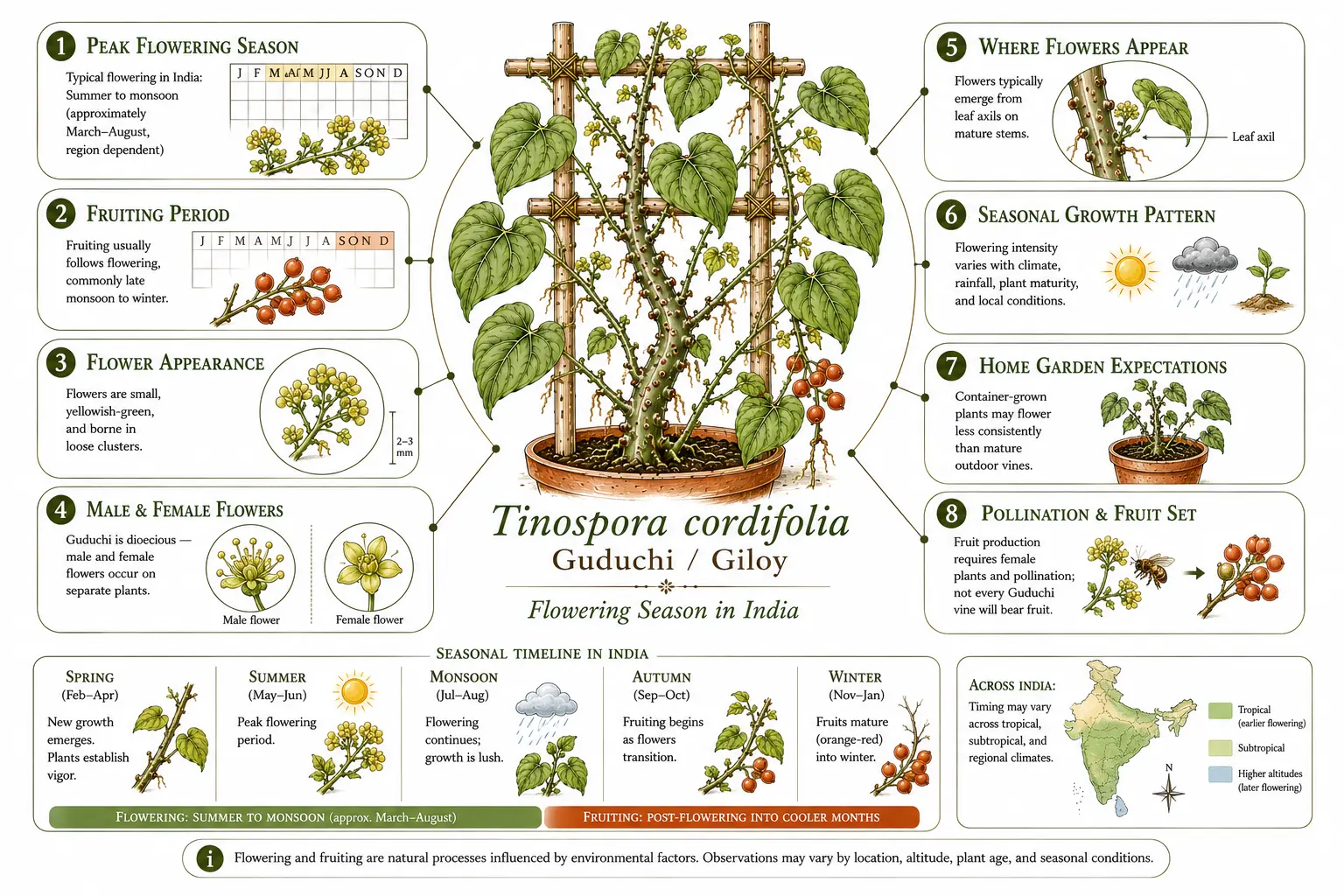
Quick Answer: Guduchi flowers during the summer months, typically between April and June in most parts of India. Fruiting follows in the post-monsoon period, with red berries ripening from October to December. The vine goes fully dormant and leafless through most of winter before reviving rapidly in March.
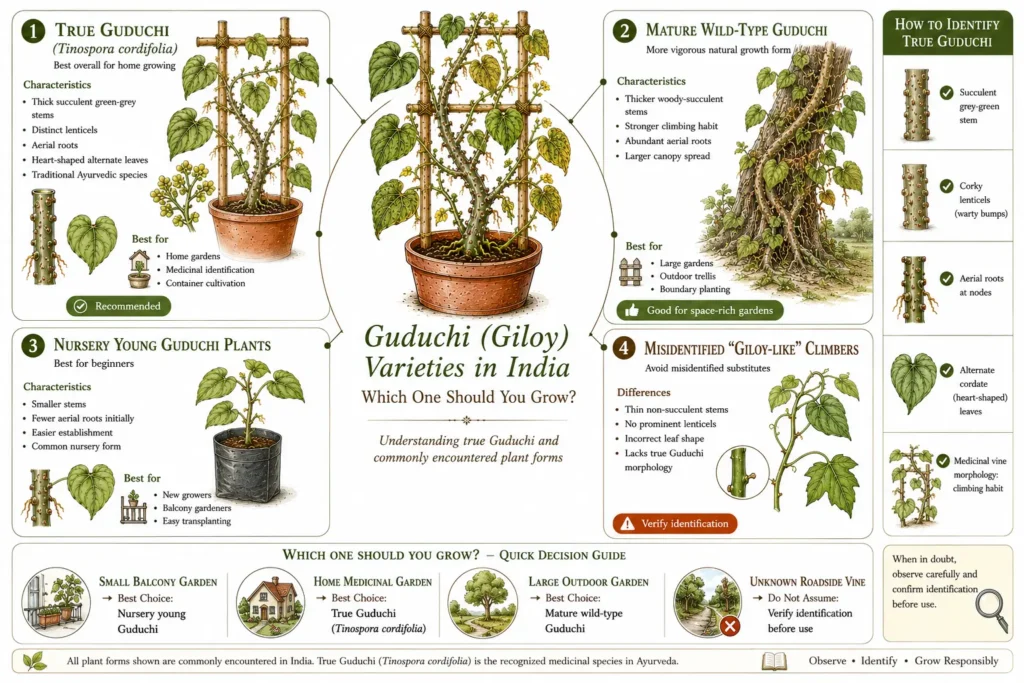
See also: Giloy plant profile, how to grow it, common problems, its benefits, and its varieties.
Watching a Guduchi vine through a full Indian year is a lesson in seasonal precision. The vine seems dead in January — bare stems, no leaves, no sign of life — and then, with the first reliable warmth of late February, it erupts. The speed of that spring revival surprises most first-time growers every year.
Recommended Products
Disclosure: As an Amazon Associate, PlantsInfo may earn from qualifying purchases.
🌱 Growing Essentials
The following products can help with container gardening, potting, root development, soil management, and healthy plant growth.
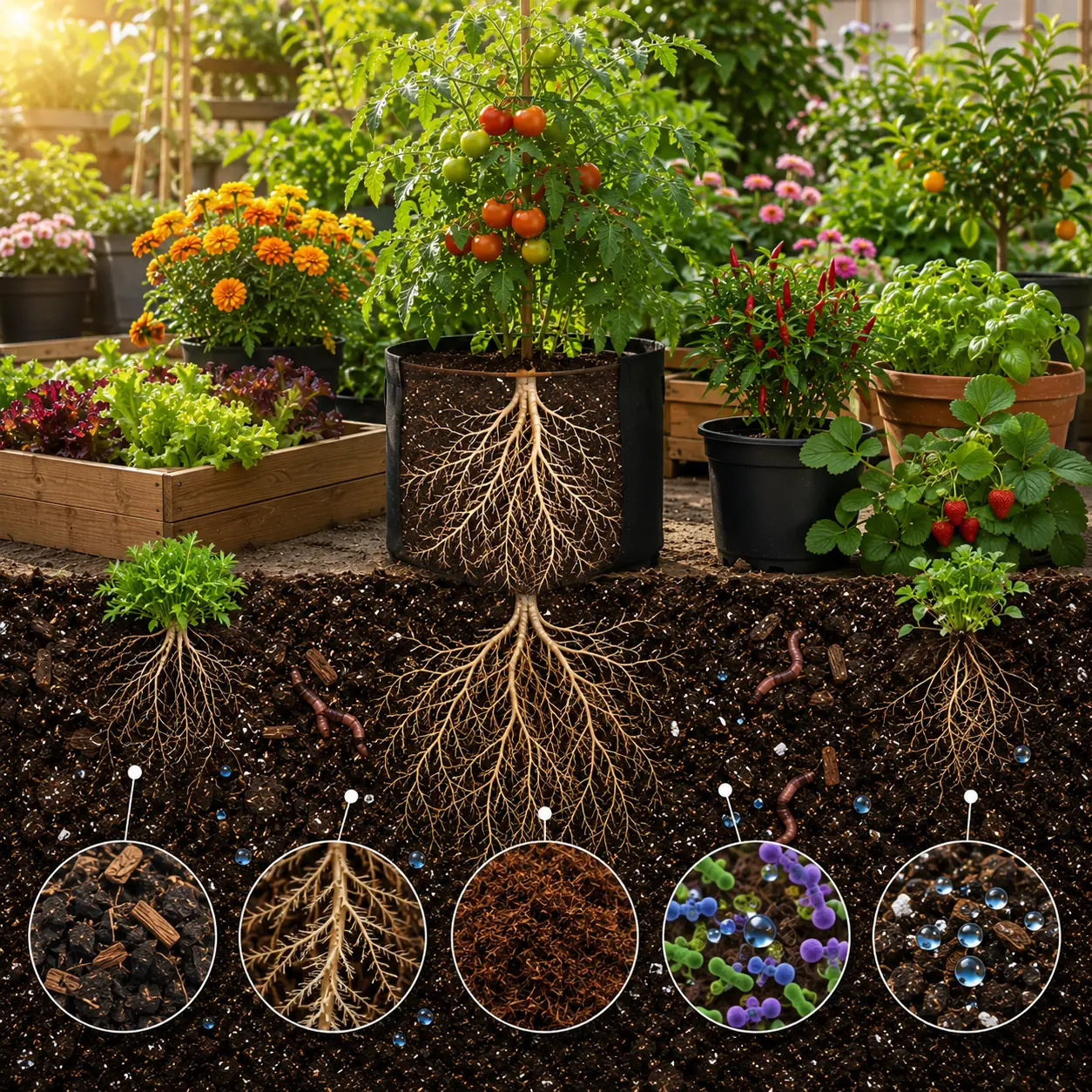
Organic Potting Soil Mix
Provides nutrients, structure, and healthy growing conditions for container plants.
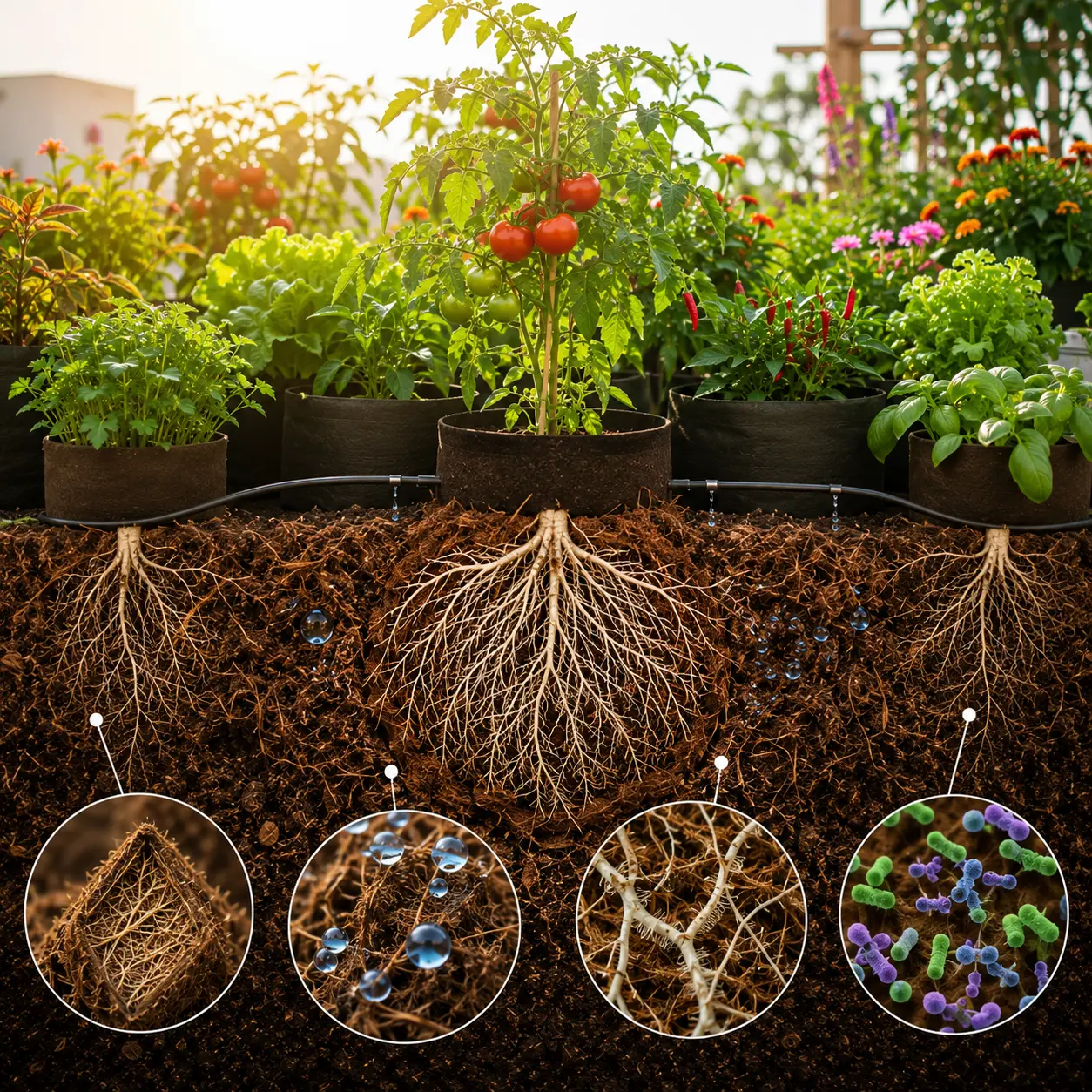
Coco Peat Growing Medium
Enhances moisture retention while maintaining excellent root-zone aeration.

Grow Bags for Plants
Improve drainage, root aeration, and vegetable production in limited spaces.

Plastic Pots for Plants
Ideal containers for seedlings, ornamentals, herbs, and balcony gardens.
India’s Seasons and This Plant
| Season (months) | What the plant is doing |
|---|---|
| Pre-monsoon (Mar–May) | Leaves emerge rapidly; vine in active growth; flowering begins in April–May |
| Monsoon (Jun–Sep) | Peak vegetative growth; stems thickening; some late flowers possible |
| Post-monsoon (Oct–Nov) | Fruiting and berry ripening; leaves beginning to yellow |
| Winter (Dec–Feb) | Complete or near-complete dormancy; leaves shed; stems retain stored moisture |
Flowering Season in Detail
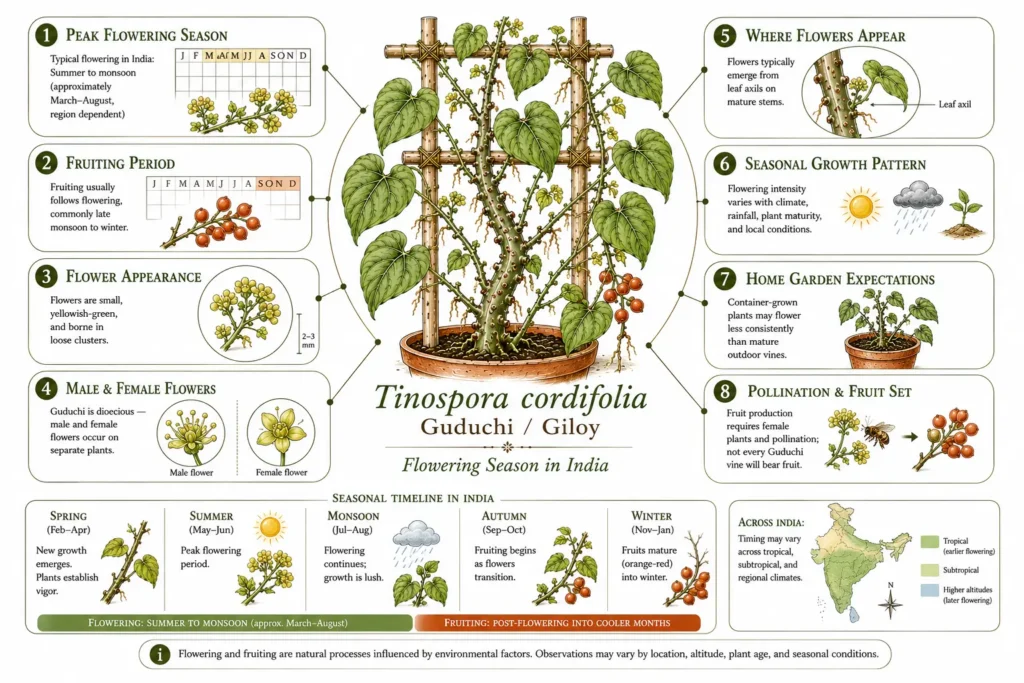
Flower buds begin to appear in March–April as the new leaves are emerging. Peak bloom is from April to June across most of peninsular and central India. In the cooler hills of North India below 1,200 m, flowering begins slightly later — typically May.
Flowers are small, pale greenish-yellow, and appear in axillary or terminal racemes of 5–8 cm. Because Guduchi is dioecious — male and female flowers on separate plants — a single vine will not fruit unless a plant of the opposite sex is nearby. This is a critical point for gardeners who want berries: you need both a male and a female plant, and most nurseries do not specify sex when selling cuttings.
Individual flower clusters last 2–3 weeks. The overall flowering window extends 6–8 weeks. Flowering is triggered primarily by rising temperatures and increasing day length in late winter and early spring, not by rainfall.
Fruiting Season
Fruit sets in July–August on fertilised female plants, following successful pollination during the summer bloom. The fruit is pea-sized drupes, initially green, ripening to a vivid red between October and December. Ripe berries are glossy, clustered in groups, and visually striking against the backdrop of yellowing autumn leaves.
The harvest window for berries is October–November. Birds eat the ripe berries quickly, so if you want to collect seeds, monitor the plant from mid-October onward. A berry is ripe when it turns uniformly red and feels soft to gentle pressure. Missed berries fall or are taken by birds within 2–3 weeks of ripening.
Fruiting only occurs on female plants that were successfully pollinated. A vine that has never fruited despite multiple years of growth is either male, lacks a nearby male plant, or was raised from a cutting of a male parent.
Best Time to Plant
The ideal planting window is monsoon onset — the last week of May through the end of July. Warm soil, consistent moisture, and long days give stem cuttings the best rooting conditions. Success rates for monsoon plantings are consistently higher than those for plantings done in other seasons.
The second-best window is late February to March, as the vine is coming out of dormancy and temperatures are mild. Container planting works particularly well in this window — the gradual warming of spring gives the cutting time to root before the heat of May.
Avoid planting in October–November when the vine is heading into dormancy, and in December–January when root activity is minimal.
Month-by-Month Calendar
| Month | Season | What to Do |
|---|---|---|
| January | Winter | Fully dormant — bare stems normal, no intervention needed |
| February | Late winter | Watch for first leaf buds; no action required |
| March | Pre-monsoon | New leaves emerging rapidly; excellent window for planting new cuttings |
| April | Pre-monsoon | Flowering begins; observe for pollinators on female plants |
| May | Pre-monsoon | Peak flowering; best planting window opens; monitor for aphid activity on new growth |
| June | Monsoon onset | Monsoon planting begins; check drainage in containers and beds |
| July | Monsoon | Active stem and leaf growth; no intervention needed unless drainage is poor |
| August | Monsoon | Continue monitoring drainage; fruit setting on female plants |
| September | Late monsoon | Fruit development continues; avoid heavy pruning |
| October | Post-monsoon | Berry ripening begins; collect seeds if needed before birds take them |
| November | Post-monsoon | Leaves beginning to yellow; reduce watering |
| December | Early winter | Leaves dropping; enter dormancy period; stop fertilising |
What Can Go Wrong Seasonally?
Summer leaf scorch: In May–June, before the monsoon arrives, direct afternoon sun on container plants can cause brown, crispy leaf margins. Move pots to a shadier position, not a wetter one — increasing water does not fix heat damage.
Post-monsoon root rot: The weeks immediately after heavy monsoon rainfall are the highest-risk period for root rot in containers and low-lying beds. If water is sitting at the base of the pot after rain, lift and drain the container.
False dormancy alarm: In January, a Guduchi vine that has shed all its leaves can look dead. It rarely is. The stem retains moisture and viability through winter. Test by scratching the stem with a fingernail — green or yellow tissue underneath means the plant is alive. Do not uproot it before March.
Post-Harvest and Post-Bloom Care
After the flowering season ends in June–July, no deadheading is required — spent flower clusters fall naturally. If the vine is growing on a support tree, check in September that it is not overloading the lower branches with excessive weight.
After berry harvest in November, this is a good time to do a light shaping prune — removing any dead or crossing stems — before the vine drops its leaves for winter. Avoid heavy pruning now; save major structural cuts for March when the plant is resuming growth.
Dormancy and Off-Season Care
Guduchi’s winter dormancy is real and complete in most parts of India above the southernmost tip. From December to February, the vine may shed all its leaves, reduce new growth to zero, and look entirely lifeless. This is normal.
Signs of genuine distress versus dormancy: a dormant stem is firm and retains a green or pale yellow colour under the bark; a dead stem is dry, brittle, and brown all the way through. Do not water heavily during dormancy — the vine needs very little moisture when leafless. Revival typically begins in the last week of February to the first week of March, even without any intervention.
In Tamil Nadu, Kerala, and other southernmost states where winters are mild, Guduchi may not go fully dormant and can retain some leaves year-round.