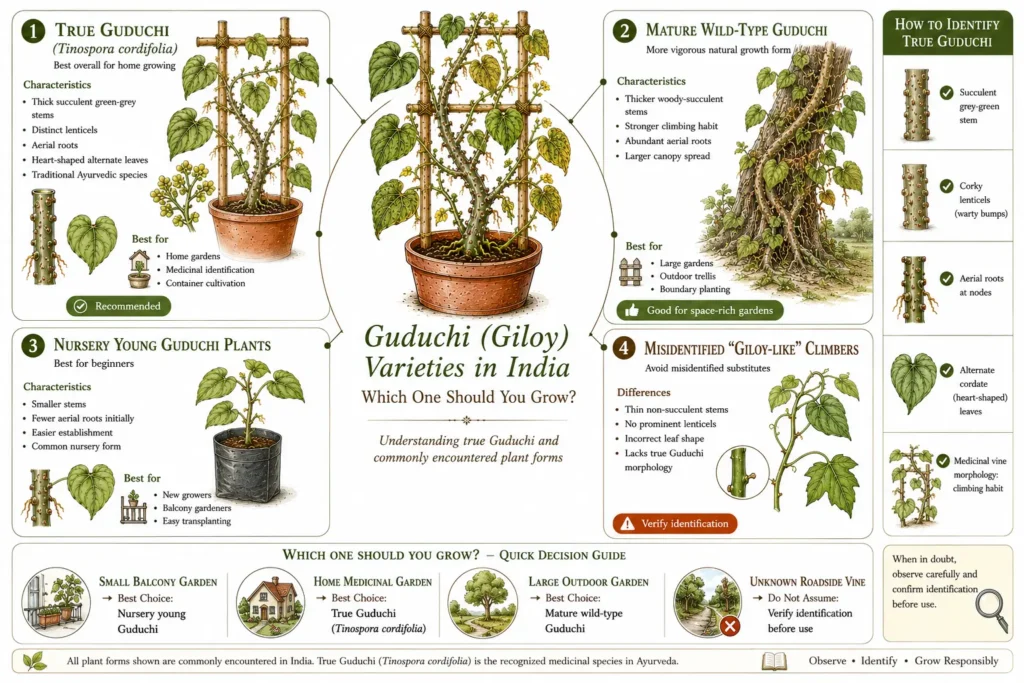
How to Grow Guduchi (Giloy) at Home

Quick Answer: Guduchi is an easy-to-grow perennial vine that thrives across most of India with very little attention. Plant a stem cutting in a pot or in the ground, give it something to climb, and it will establish itself quickly — even in neglected corners of the garden.
See also: Giloy plant profile, common problems, its flowering season, its benefits, and its varieties.
Most people who grow Guduchi at home are surprised by one thing: it almost refuses to fail. This is one of the rare medicinal plants that rewards neglect rather than punishing it. The single mistake beginners make is giving it too much water and not enough support to climb — without a trellis or tree, the vine collapses and rots at the base.
Recommended Products
Disclosure: As an Amazon Associate, PlantsInfo may earn from qualifying purchases.
🌱 Growing Essentials
The following products can help with container gardening, potting, root development, soil management, and healthy plant growth.
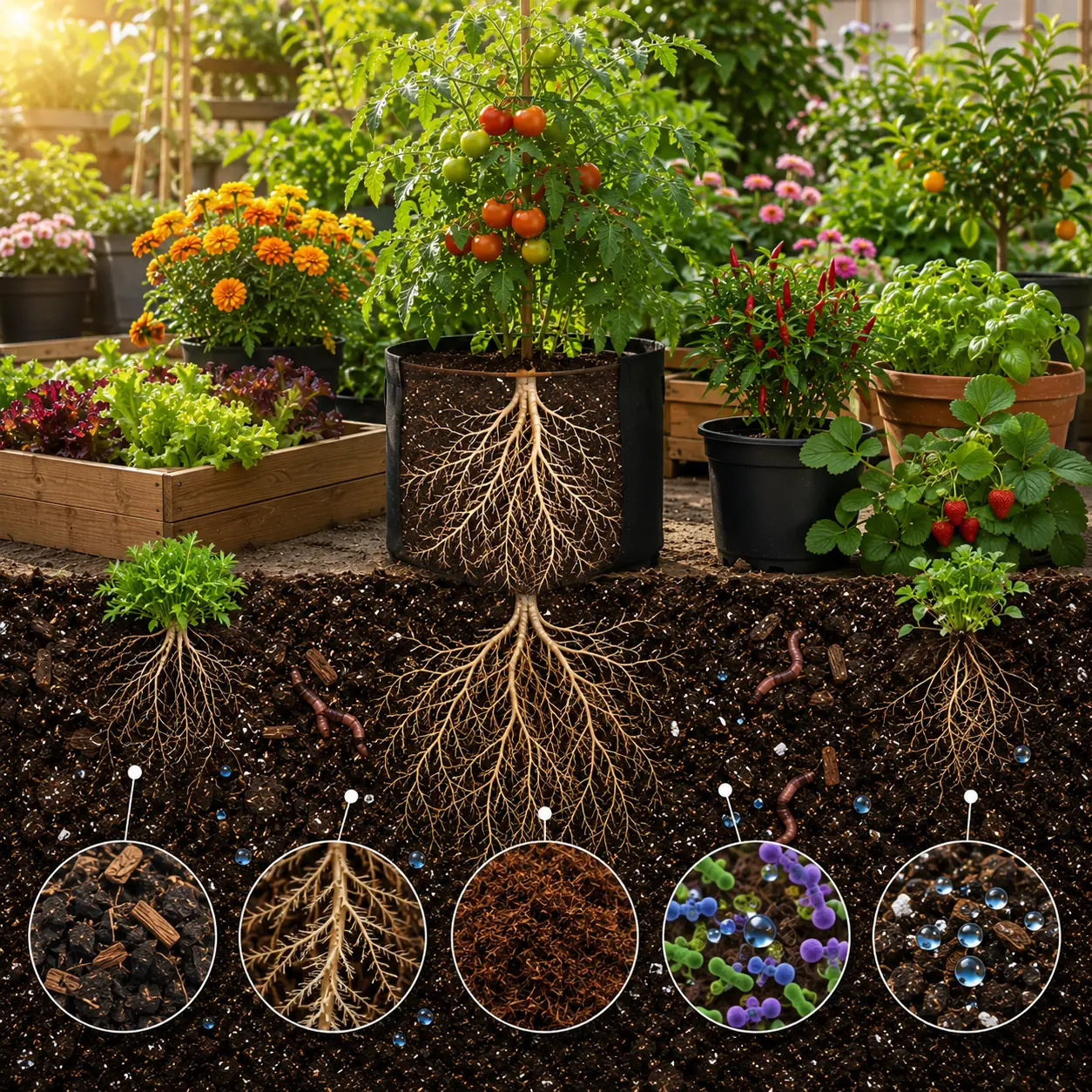
Organic Potting Soil Mix
Provides nutrients, structure, and healthy growing conditions for container plants.
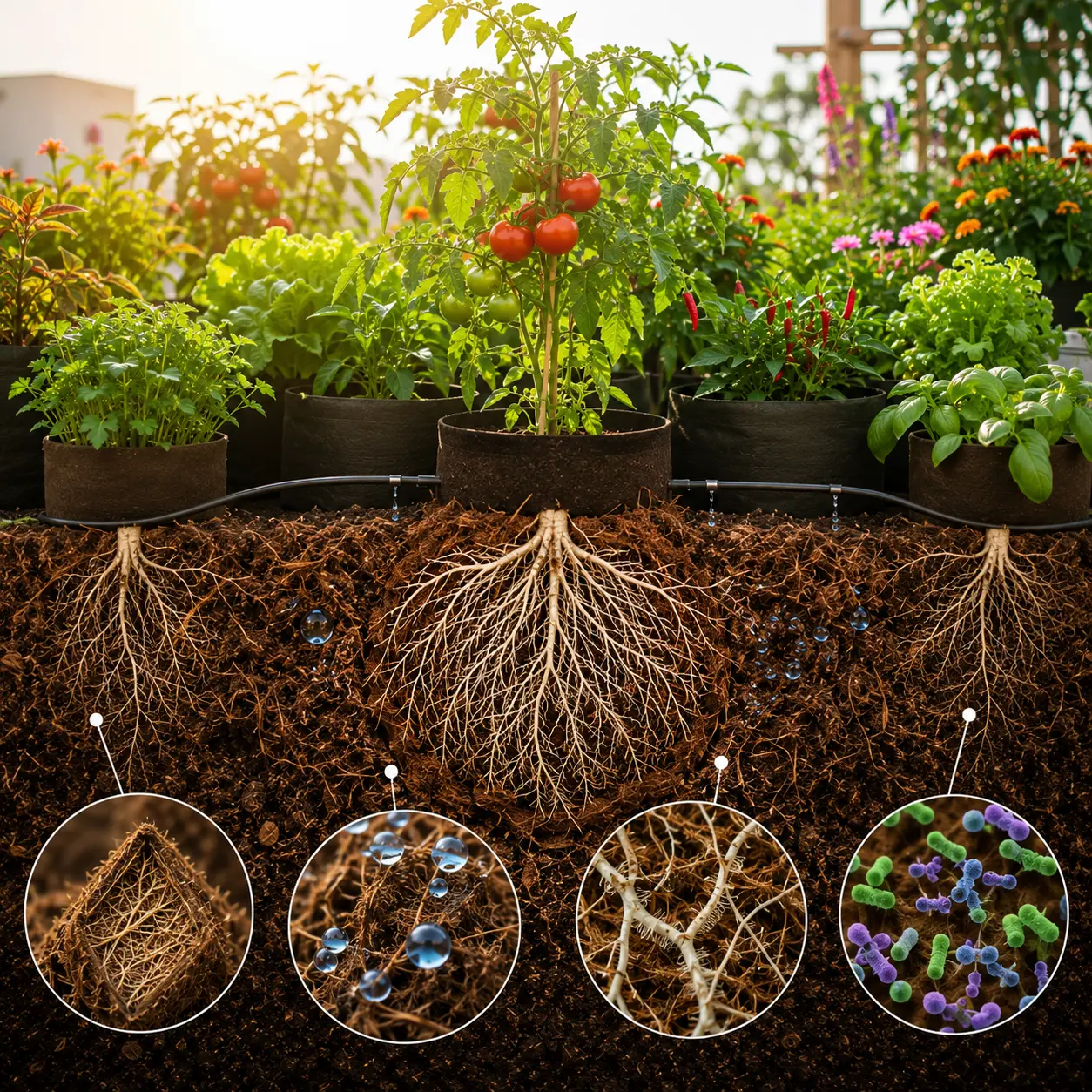
Coco Peat Growing Medium
Enhances moisture retention while maintaining excellent root-zone aeration.

Grow Bags for Plants
Improve drainage, root aeration, and vegetable production in limited spaces.

Plastic Pots for Plants
Ideal containers for seedlings, ornamentals, herbs, and balcony gardens.
Quick Facts
| Attribute | Detail |
|---|---|
| Common names | Guduchi, Giloy, Amrita, Gurchi, Gulvel |
| Scientific name | Tinospora cordifolia (Willd.) Miers |
| Varieties | T. cordifolia (standard), T. sinensis (Padma Guduchi), T. crispa (found in Assam). See Varieties Guide for full comparison. |
| Plant type | Perennial deciduous climbing vine |
| Mature size | Can reach 10–15 m when left unpruned; easily managed at 2–4 m |
| Sunlight | Partial to full sun; morning sun preferred |
| Water needs | Low once established; moderate during first month |
| Best season to plant | Monsoon onset (June–July) or pre-monsoon (May) |
| Suitable states | All of India up to 1,200 m altitude; thrives in Bihar, West Bengal, Karnataka, Kerala, MP, UP |
Choosing the Right Spot
Guduchi prefers bright, indirect, or morning sun. In North India’s harsh summers, afternoon shade is genuinely helpful — a spot that gets 4–5 hours of direct morning light and filtered shade after noon produces healthy, vigorous growth. In coastal Karnataka and Kerala, it handles fuller sun well when the humidity is high.
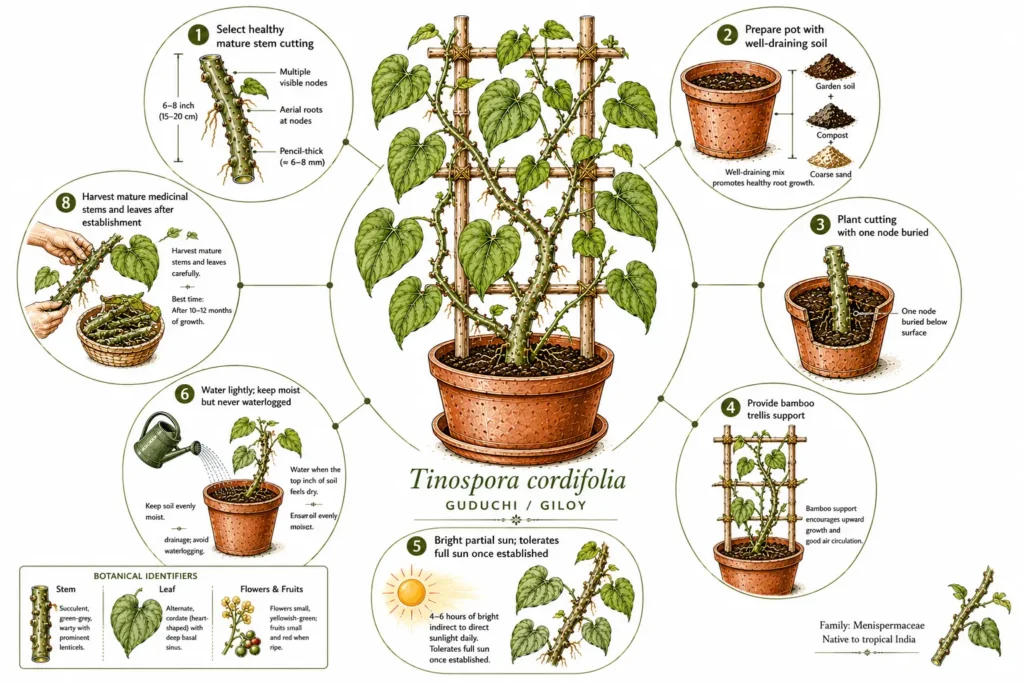
The vine needs something to climb. A neem tree is the traditional and most recommended support — Ayurvedic practice specifically values guduchi grown on neem for its enhanced potency. A bamboo trellis, concrete pillar, or chain-link fence all work well. Give it at least 1.5–2 m of vertical space to begin.
Container growing works, but only with a large pot (minimum 20–25 litres) and a sturdy internal trellis or an adjacent wall for the vine to grip. Ground planting is simpler and produces a stronger plant with significantly less maintenance.
Soil and Potting Mix
Guduchi is tolerant of most soil types — red laterite, medium-black, sandy loam, and clay loam all work. The one non-negotiable requirement is drainage. Waterlogged soil kills this vine faster than drought does.
For ground planting, add a layer of coarse sand or organic compost if your soil is heavy clay. For containers, use one part garden soil, one part coarse river sand, and one part vermicompost. A soil pH of 6.0–7.5 suits the vine comfortably.
The most common soil mistake Indian gardeners make is planting in low-lying areas that collect monsoon water. Even two days of standing water at the root zone can trigger root rot in a young plant.
Planting — Season and Method
The best time to plant is at monsoon onset, between mid-June and mid-July. The combination of warmth and natural rainfall gives cuttings the ideal conditions to root quickly. A second window exists in May if you can water consistently during the hot weeks before the rains arrive.
Stem cuttings are far more practical than seeds for home gardeners. Choose a semi-hardwood stem section 8–12 cm long with at least two nodes. Plant it 4–5 cm deep in a prepared bed or pot, firm the soil around it, and water once. Do not water again until the top 2 cm of soil dries out.
Spacing for ground planting: 1.5–2 m between plants if growing multiple vines.
Watering
During the first four to six weeks, water every two to three days — enough to keep the soil barely moist, not wet. The cutting is building its root system and cannot tolerate both drought and flood at this stage.
Once established, Guduchi is drought-tolerant and needs watering only when the top 3–4 cm of soil is completely dry — roughly once a week in dry season, and rarely at all during the monsoon. One specific overwatering sign to watch for is the stem base turning soft, translucent, and pale — this is early stem rot, not a watering deficiency.
During the monsoon, ensure the pot or bed drains completely within an hour of heavy rain. Elevate containers slightly if your terrace or balcony floor retains water.
Fertiliser
Guduchi is a light feeder and responds well to organic inputs. Apply vermicompost or well-rotted cowdung compost at the base of the plant once at the start of the growing season (June) and again in September after the peak monsoon. A handful of neem cake worked into the topsoil every three months keeps the root zone healthy and suppresses soil-borne pathogens.
If using chemical fertilisers, a light dose of balanced NPK (10:10:10) once in June and once in October is sufficient. Do not fertilise during winter dormancy — the vine sheds its leaves and slows down completely from December to February.
One organic alternative many Indian gardeners overlook is banana peel compost — rich in potassium, it promotes vigorous stem growth in climbing plants.
Common Problems and Fixes
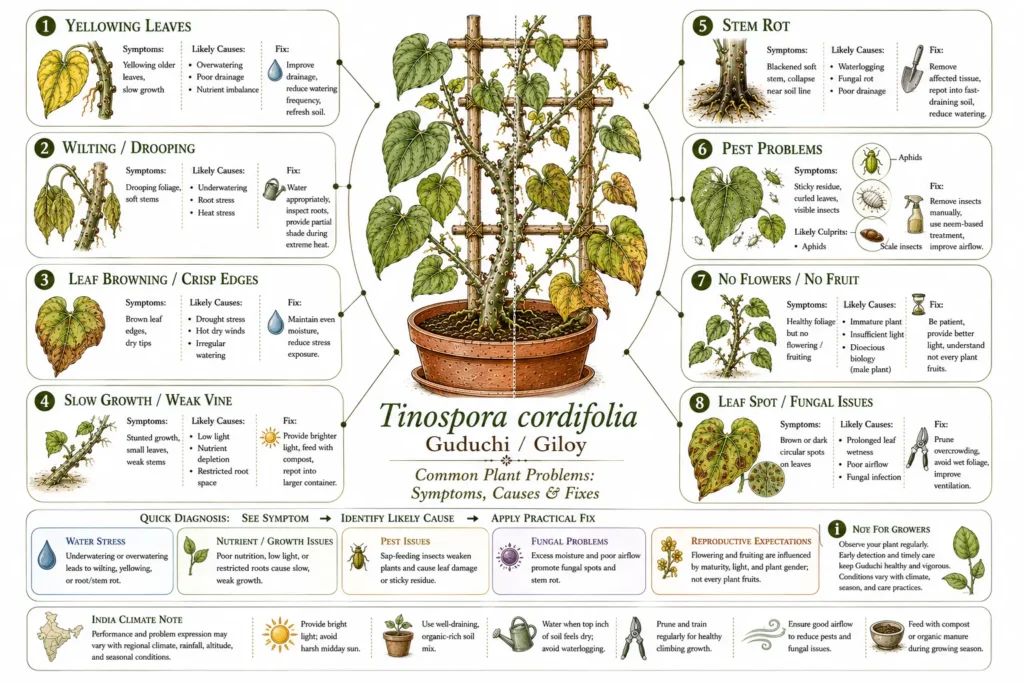
Guduchi is one of the hardiest medicinal vines you can grow, but three problems appear regularly in Indian conditions.
Powdery mildew — a white coating on young leaves — is the most frequent issue, triggered by poor airflow during the humid post-monsoon weeks.
Root rot — softening and darkening of the stem base — results from waterlogged soil and is the leading cause of plant death in containers.
Aphid clusters — small, soft-bodied insects on new growth — are common in February and March as the vine pushes out new leaves after winter dormancy.
For full diagnosis and treatment, see the Guduchi Problems Guide.
When Will You See Results?
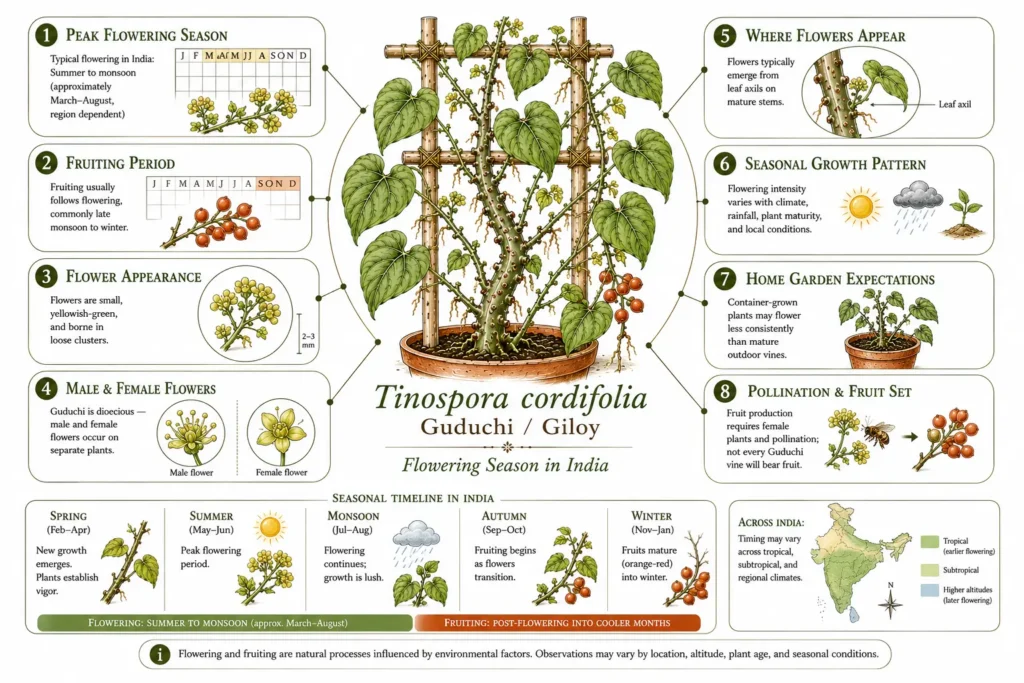
In the first year, a well-rooted cutting will put out 1–2 metres of new stem growth and begin producing its characteristic aerial roots. You will not see flowers or fruit in year one — flowering typically begins in the second year during the summer months (April–June).
By the end of the second monsoon season, the vine will be well-established and vigorous. Stem bark — the primary medicinal part — can be harvested from year two onward. First-time growers often expect faster medicinal harvests; the patience required here is the most honest thing to know before you start.
Propagation
Stem cutting is the standard and most reliable method. Select a healthy, pencil-thick stem section from the previous season’s growth, cut it to 8–12 cm with clean secateurs, and plant it directly in a nursery pot or prepared bed. Rooting success in India during monsoon planting runs at 80–90% under normal conditions.
Air layering works well on established vines and allows you to root a section while still attached to the mother plant. It takes approximately 3–4 weeks to form a good root ball.
Propagation from seed is possible but slow — seeds require fresh fruit and take 3–4 weeks to germinate even under ideal conditions. Stem cuttings are always the practical choice.
Pruning and Training
Prune actively after the vine comes out of winter dormancy in late February or early March. Cut back overcrowded stems by one-third to promote dense, healthy new growth and prevent the vine from smothering its support tree.
During the monsoon, trim any stems that are growing toward electrical wires or onto structures where you do not want them. Guduchi’s vigorous growth in high humidity is one of its potentially problematic traits in urban spaces. Do not cut more than half the plant at once — it recovers slowly from severe pruning.
Container Growing
Use a minimum 20–25 litre container — a standard cement planter or large terracotta pot works well. Plastic pots overheat quickly on Indian terraces and are not recommended for long-term container growing in North and Central India.
Soil mix for containers: one part garden soil, one part coarse river sand, one part vermicompost. Add a handful of perlite or fine gravel for drainage. Repot every two years or when the roots visibly circle the bottom of the pot.
Water container plants more attentively than ground plants — pots dry out faster and heat more in summer. The vine will look wilted by midday in May, even if it is healthy; check soil moisture before watering.
Harvesting
Harvest stems 1–1.5 cm in diameter from second-year or older growth. Cut 30–40 cm sections using clean secateurs or a sharp knife. Avoid harvesting more than 30–40% of the vine in a single session — the plant needs sufficient leaf mass to recover.
Aerial roots can be harvested along with stems and carry a similar medicinal value. Leaves can be picked at any point once the vine is established.
Fresh stems should be used within 2–3 days or dried in shade for long-term storage. Store dried stem pieces in a clean, airtight glass jar away from direct sunlight.
Companion Plants
The traditional and most valued companion for Guduchi is the neem tree — Ayurvedic texts specifically commend Guduchi grown on neem, and the combination produces a vine widely considered superior in medicinal quality. Plant your Guduchi cutting at the base of a neem tree and let it climb freely.
Tulsi planted nearby works well as a complementary medicinal ground cover that does not compete for vertical space. Amla makes a good companion tree for the same reason as neem — a large canopy with rough bark that guduchi can grip and climb.
Avoid growing Guduchi over papaya or banana — the vine’s weight and root competition can stress these plants during fruiting.
Key Takeaways
- Guduchi grows from stem cuttings planted at the onset of the monsoon, with 80–90% success under normal Indian conditions.
- The vine needs something to climb — a neem tree is ideal and produces medicinally superior stems according to Ayurvedic tradition.
- Overwatering and waterlogged soil are the only reliable ways to kill an established plant.
- Stems are ready for medicinal harvest starting in the second year.
- No synthetic pesticides or intensive fertiliser programmes are needed — this is a naturally hardy, low-input plant.
Start with one cutting in the ground beside a neem tree or sturdy trellis, and Guduchi will largely grow itself.