Amla Plant: Quick Facts, Origin, and Everything You Need to Know
Amla (Phyllanthus emblica) is a small to medium deciduous tree native to the Indian subcontinent, found growing wild from the foothills of the Himalayas to Sri Lanka. It produces hard, pale green fruits that are among the most Vitamin C-rich foods on the planet, and has been central to Indian medicine, culture, and food for thousands of years.
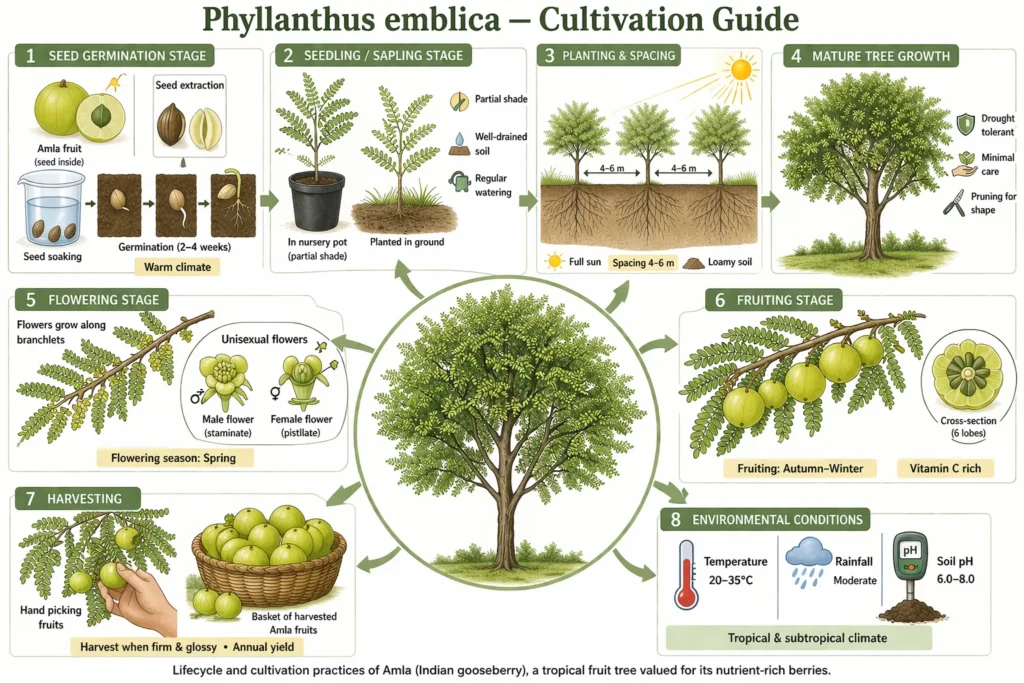
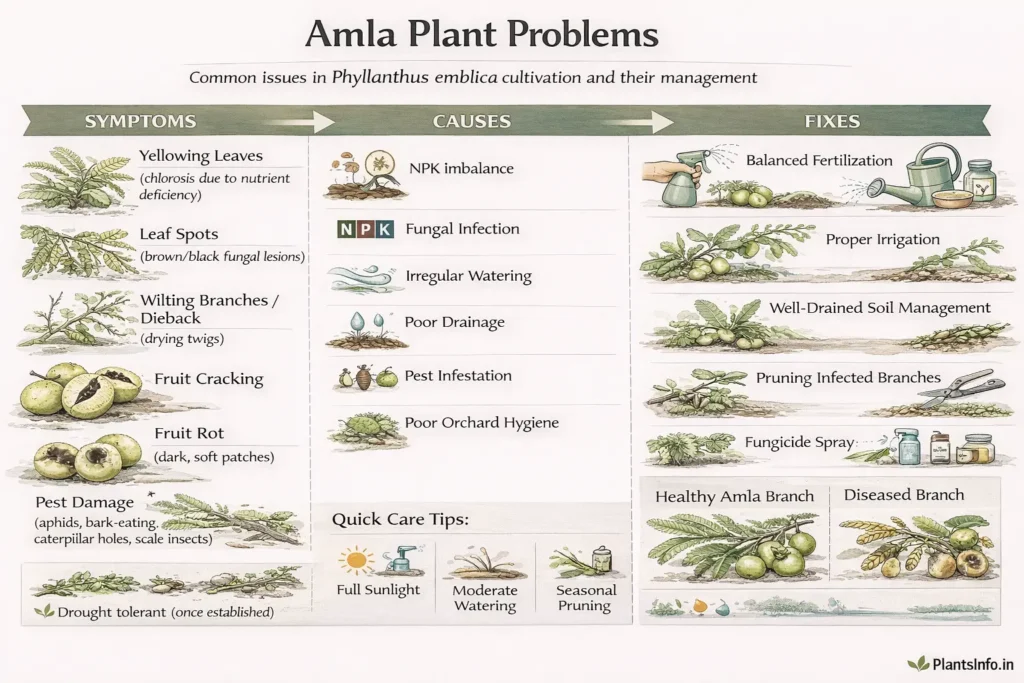
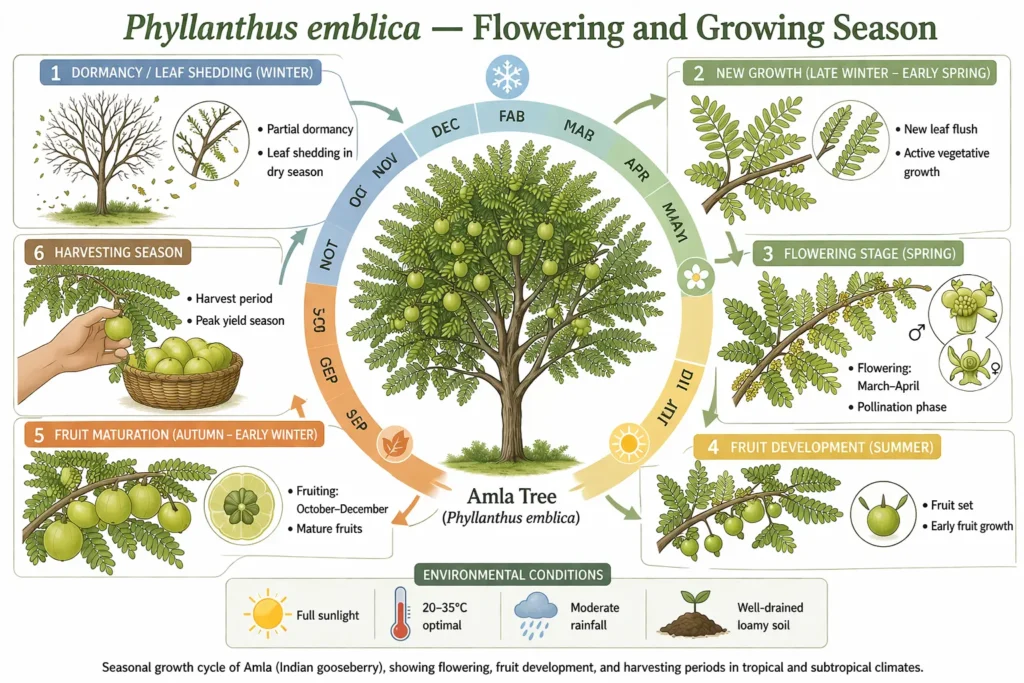
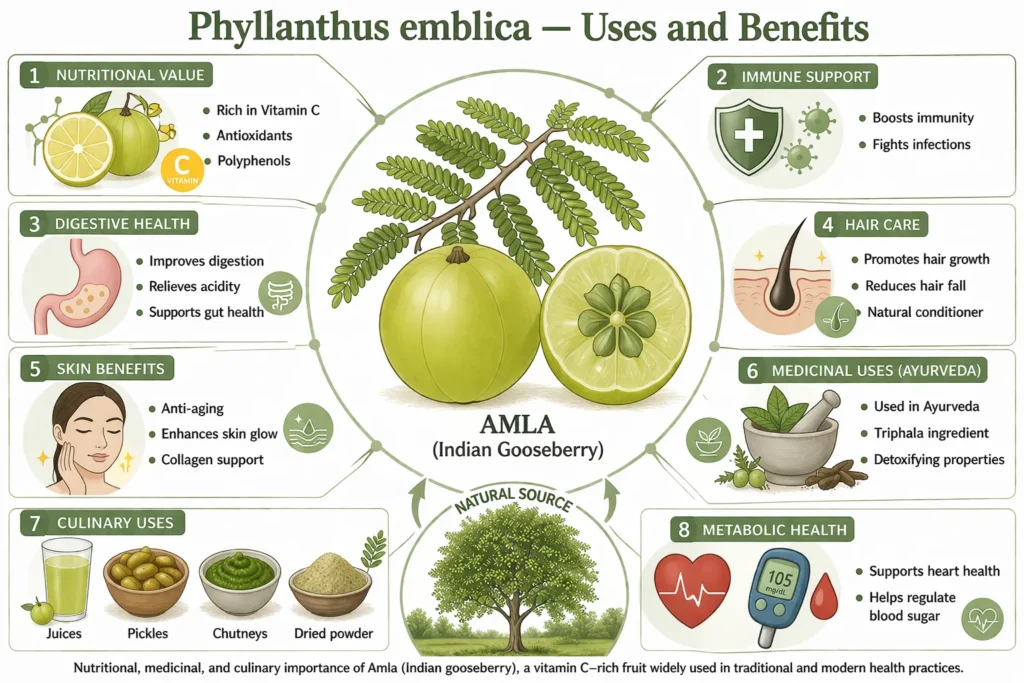
See also: Amla Plant plant profile, how to grow it, common problems, its flowering season, and its benefits.
The amla tree drops every one of its leaves in winter — and then, bare-branched, it sets fruit. This leafless fruiting habit surprises most gardeners who encounter it for the first time; most fruit trees carry their crop on leafy branches. With amla, the small green fruits cluster directly on the naked wood, giving winter trees a distinctively sculptural quality that no photograph quite captures.
Recommended Products
Disclosure: As an Amazon Associate, PlantsInfo may earn from qualifying purchases.
🌱 Growing Essentials
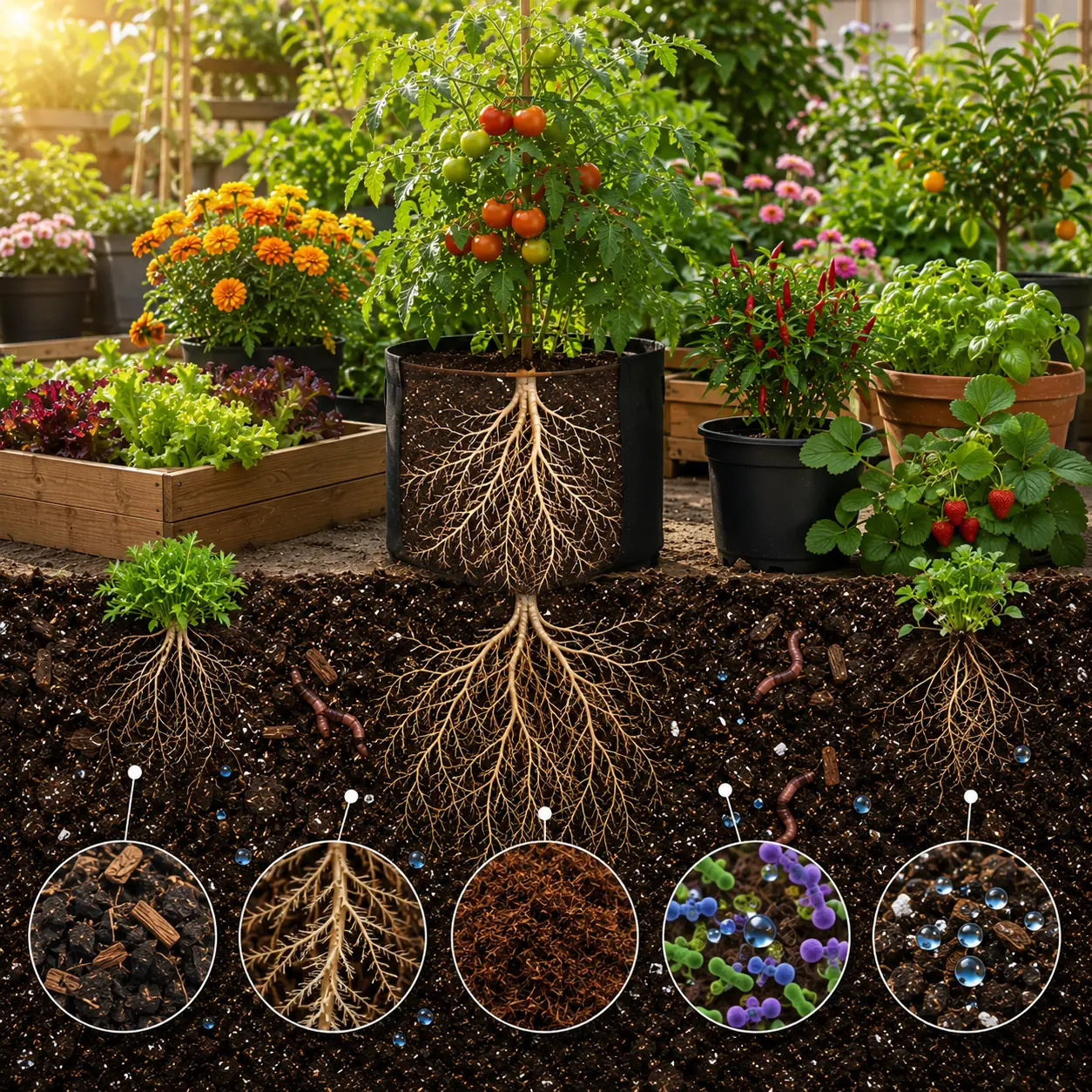
The following products can help with container gardening, potting, root development, soil management, and healthy plant growth.
Organic Potting Soil Mix
Provides nutrients, structure, and healthy growing conditions for container plants.
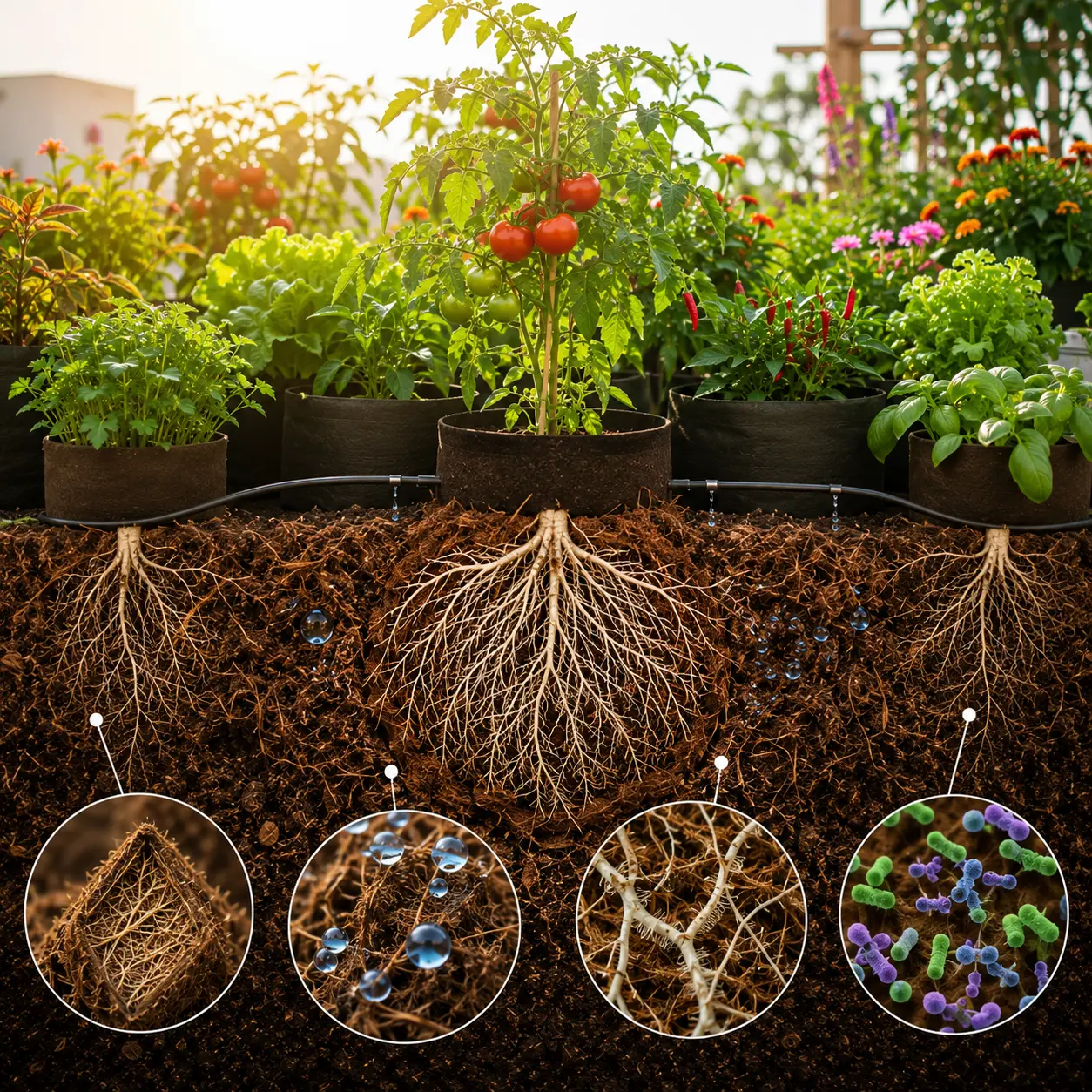
Coco Peat Growing Medium
Enhances moisture retention while maintaining excellent root-zone aeration.

Grow Bags for Plants
Improve drainage, root aeration, and vegetable production in limited spaces.

Plastic Pots for Plants
Ideal containers for seedlings, ornamentals, herbs, and balcony gardens.
At a Glance
| Feature | Detail |
|---|---|
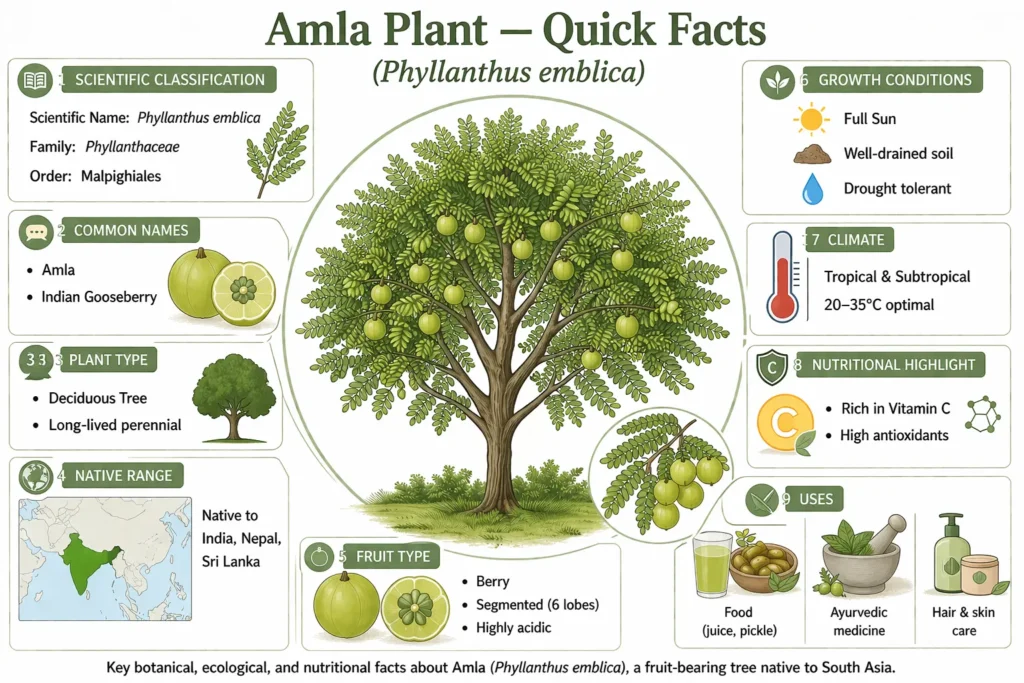
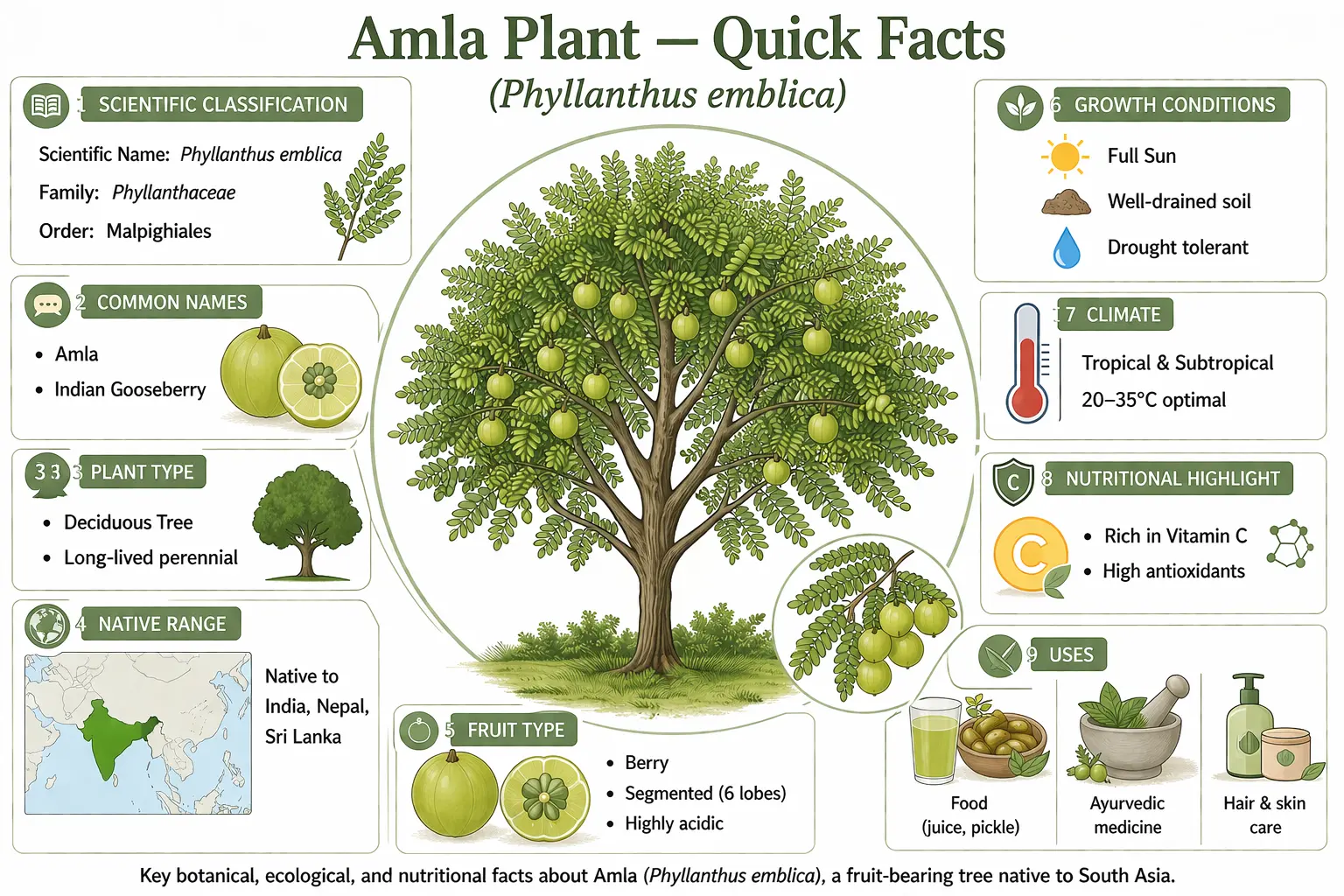
| Scientific name | Phyllanthus emblica (syn. Emblica officinalis) |
| Family | Phyllanthaceae |
| Common names | Amla (Hindi), Amlaki (Bengali/Sanskrit), Nelli (Tamil, Malayalam), Usirikaya (Telugu), Avala (Kannada), Avalo (Gujarati), Awla (Rajasthani) |
| Origin | Indian subcontinent |
| Plant type | Deciduous tree |
| Height at maturity | 8–18 m in the wild; typically 5–8 m in cultivation |
| Lifespan | Long-lived; trees over 100 years old are documented |
| Fruiting age | 3–4 years (grafted); 7–10 years (seed-grown) |
| IUCN status | Least Concern |
Origin and Native Range
Amla is native to the Indian subcontinent and is found growing wild from the sub-Himalayan tracts of Uttar Pradesh and Himachal Pradesh through central India, peninsular India, and into Sri Lanka. It also grows naturally in parts of Southeast Asia — Myanmar, Thailand, and southern China — though its cultural significance is overwhelmingly concentrated in the Indian subcontinent.
In India, the tree is found wild in the dry deciduous forests of Madhya Pradesh, Chhattisgarh, Rajasthan, and Andhra Pradesh. Uttar Pradesh is the heartland of commercial amla cultivation; the Pratapgarh district alone accounts for a significant portion of India’s total amla production and has been cultivating amla commercially for over a century.
Botanical Description
Amla is a medium-sized deciduous tree with a crooked trunk, spreading branches, and feathery foliage that closely resembles a tamarind or curry leaf tree from a distance. The bark is grey-green and peels in thin flakes with age.
The leaves are small, linear, and arranged in two rows along slender branchlets, giving each branch the appearance of a compound leaf. Flowers are small, greenish-yellow, and appear in dense axillary clusters from February through May, typically before or alongside new leaf flush.
The fruit is a drupe — botanically speaking — roughly 2–4 cm in diameter, smooth, and deeply ribbed with six vertical grooves. Fresh fruit is pale to translucent green, ripening to greenish-yellow. The flesh is firm, crisp, and intensely astringent-sour; the flavour experience is complex — sour upfront, astringent mid-palate, with a distinct sweet aftertaste that appears 20–30 seconds after eating.
Where It Grows in India
Amla grows across nearly all of India but thrives in specific conditions. It prefers:
- Climate: Semi-arid to sub-humid; tolerates both dry heat and moderate cold. Most productive between 600–1800 m elevation, though it grows at sea level too.
- Rainfall: 630–800 mm annually is ideal; trees survive on much less once established.
- Temperature: Tolerates 0°C to 46°C, though young trees need protection below 5°C.
The best commercial-quality amla comes from North and Central India — Uttar Pradesh, Madhya Pradesh, Rajasthan, and Gujarat. In South India, Tamil Nadu, Andhra Pradesh, and Karnataka, amla is extensively used, though the fruit tends to be smaller and more acidic in humid coastal climates.
In the Northeast — Assam and Meghalaya — wild amla trees are common in forest margins. The fruit is used locally but rarely enters commercial markets.
Cultural and Traditional Significance
Few plants in India carry as much symbolic and ritual weight as amla. In Hindu tradition, the amla tree is considered sacred to Vishnu, and Amla Navami (Akshaya Navami) — observed on the ninth day of the bright fortnight of Kartik — is a festival dedicated entirely to this tree. Devotees worship under the amla tree, and it is traditional to eat a meal cooked and served in its shade.
In Ayurvedic medicine, amla is one of the most extensively documented medicinal plants. Both the Charaka Samhita and Sushruta Samhita — foundational Ayurvedic texts — describe it as a rasayana: a substance capable of promoting longevity and rejuvenating the body. It is the primary ingredient in Chyawanprash, the most widely consumed Ayurvedic tonic in India, and one of the three fruits in Triphala.
The Sanskrit name Amalaki derives from the root amla, meaning sour — a straightforward description of the fruit’s most immediate quality. In Tamil, nelli carries associations with abundance and is referenced in Sangam poetry dating back more than two thousand years, making it one of the few plants with both a continuous literary history and an unbroken culinary tradition.
Amla wood is hard and used in traditional construction. The bark has been used in tanning. The dried fruit has been a trade commodity across South Asia for at least a millennium.
Is It Easy to Grow?
Amla is genuinely easy to grow in most parts of India — easier than mango, more forgiving than guava. It tolerates poor soil, recovers from drought, and is relatively pest-resistant once established. The main requirements are full sun, well-drained soil, and patience: the first meaningful harvest from a grafted tree typically arrives in year 4 or 5. In the right climate (North or Central India), amla is about as close to a set-and-forget fruit tree as home gardeners will find.
Frequently Asked Questions
Can amla be grown in a pot on a terrace?
Yes — in a minimum 24-inch container with good drainage. Yields will be smaller than a ground-planted tree, but fruiting is achievable.
Is amla the same as gooseberry?
Indian amla (Phyllanthus emblica) is distinct from European gooseberry (Ribes uva-crispa) — different families, different flavour, and no botanical relation despite the shared common name.
Are any parts of the amla tree toxic?
No parts are considered toxic to humans or common pets. The bark and leaves are astringent but are used in traditional preparations without safety concerns.
Amla is one of India’s most deeply rooted plants — in its soil, its medicine, its festivals, and its cooking. Getting to know it is, in a small way, getting to know the subcontinent itself.