
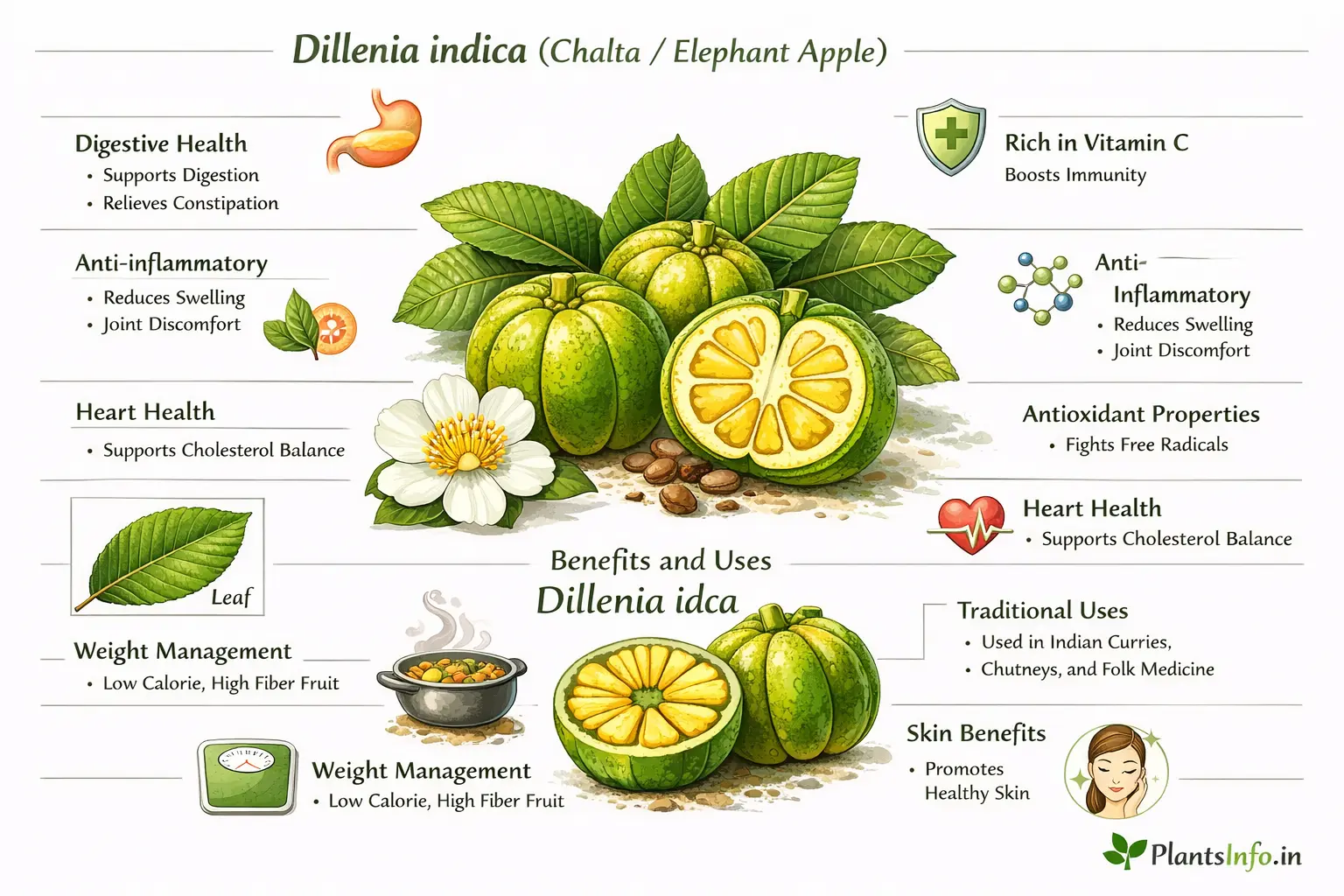
Chalta (Elephant Apple) Benefits and Uses: What This Fruit Actually Does
Quick Answer: Chalta fruit is rich in vitamin C, dietary fibre, and plant polyphenols. It has documented uses in Ayurvedic and folk medicine for digestive health, fever management, and skin care. In Bengali and Assamese kitchens, it is indispensable as a souring agent and chutney base. The leaves and bark have separate medicinal applications recorded in traditional practice.
See also: Chalta plant profile, how to grow it, common problems, its flowering season, and its varieties.
You will not find Chalta (Dillenia indica) on supermarket shelves or in the health food vocabulary that has embraced moringa and amla. It remains, firmly and deliberately, a regional treasure — found in home gardens, wild forest margins, and the kitchens of Bengal and Assam, where its intensely sour flesh is treated with the same knowing affection that Mexicans give to tamarind or Thais to green mango. What most people outside the northeast do not know is how much the plant offers beyond the kitchen.
Recommended Products
Disclosure: As an Amazon Associate, PlantsInfo may earn from qualifying purchases.
🌱 Growing Essentials
The following products can help with container gardening, potting, root development, soil management, and healthy plant growth.

Organic Potting Soil Mix
Provides nutrients, structure, and healthy growing conditions for container plants.
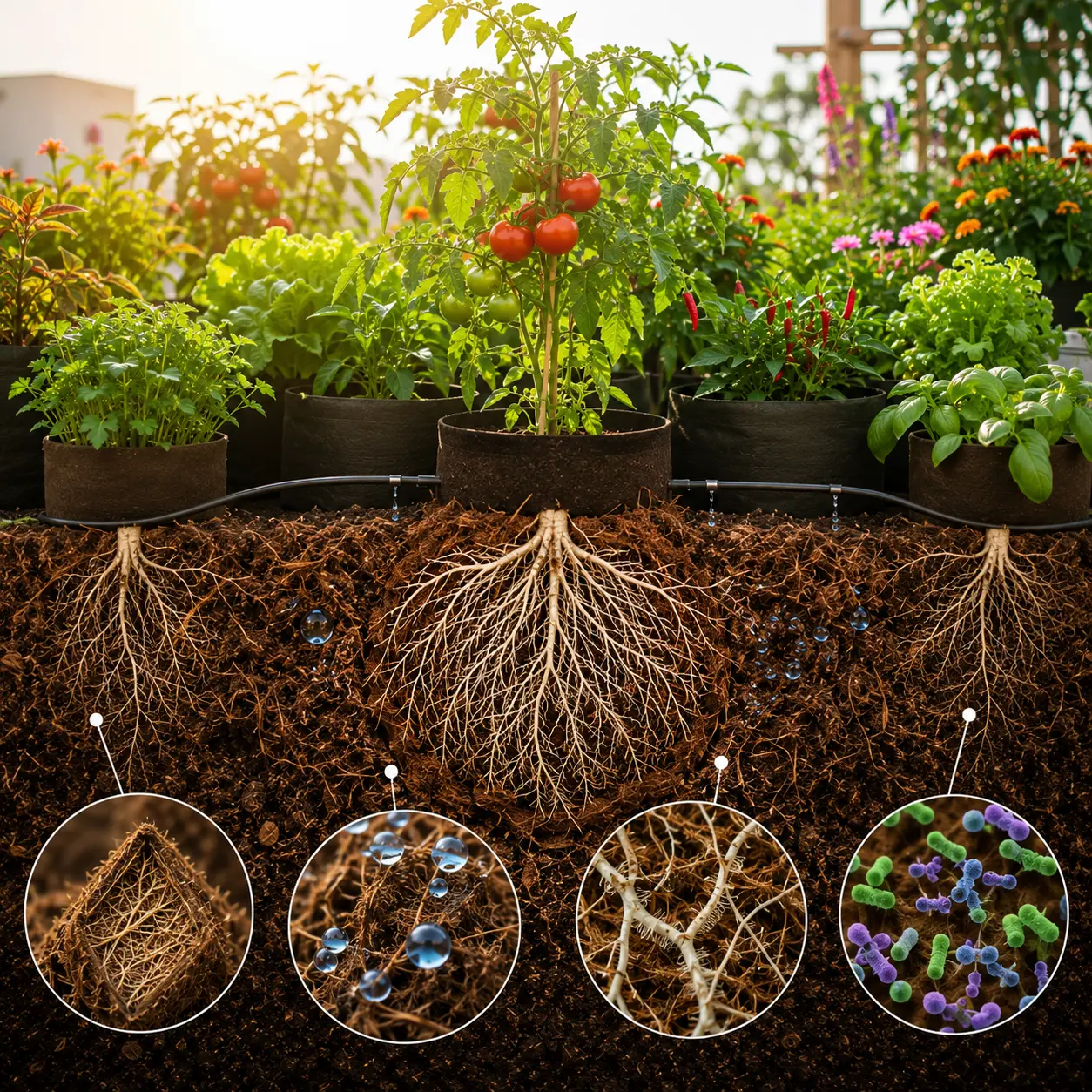
Coco Peat Growing Medium
Enhances moisture retention while maintaining excellent root-zone aeration.

Grow Bags for Plants
Improve drainage, root aeration, and vegetable production in limited spaces.

Plastic Pots for Plants
Ideal containers for seedlings, ornamentals, herbs, and balcony gardens.
Cultural Significance in Bengali and Assamese Tradition
In Bengal, Chalta (chalta in Bengali, ou tenga in Assamese) is one of those ingredients that signal home, season, and belonging. The arrival of Chalta fruit during the monsoon months is a culinary calendar event — it appears in chalta-r chutney, chalta-r achaar, chalta diye maach (fish curry with Chalta), and as a souring agent in dal and ambal.
In Assam, ou tenga plays a role in the kitchen analogous to tamarind in South India — a flexible, intensely sour flavouring used in fish preparations, chutneys, and preserves. The Assamese ou tenga masor tenga (sour fish curry with Elephant Apple) is a dish of quiet regional pride.
The tree itself carries cultural weight. In parts of rural Bengal, a Chalta tree in the courtyard is considered auspicious and is associated with abundance — its large, dramatic fruit, architectural leaves, and white flowers make it one of the most visually striking trees in a Bengali garden.
Nutritional Profile of the Fruit
Chalta fruit is notably high in vitamin C — the raw fruit pulp contains significant ascorbic acid, though exact values vary by ripeness and variety [verify before publishing]. The fruit is also a good source of dietary fibre, particularly pectin, which gives the cooked chutney its characteristic gel-like consistency.
The pulp contains organic acids — primarily citric and oxalic acid — which account for its intense sourness and also contribute to its traditional use as a digestive stimulant. Minerals present in meaningful amounts include calcium, potassium, and iron [verify before publishing].
Raw, unprocessed Chalta flesh is too sour and astringent to eat directly. It is almost always cooked — a process that softens the texture and moderates the astringency while concentrating the fruit’s complex, aromatic sourness.
Digestive Health
Chalta has a long record in Ayurvedic and Bengali folk medicine as a digestive tonic. The fruit’s organic acids stimulate bile production and gastric secretion, making it a traditional accompaniment to heavy meals — the chutney served at the end of a Bengali thali is not merely a palate cleanser; it has a functional digestive role.
The pectin content supports gut motility and acts as a prebiotic, feeding beneficial gut bacteria. Traditional practice uses a decoction of Chalta fruit as a remedy for sluggish digestion, bloating, and mild constipation.
Research suggests Dillenia indica fruit extract has gastroprotective properties — reducing gastric mucosal damage in laboratory studies [verify before publishing]. The contrast with modern use is notable: while traditional medicine uses the whole fruit in cooking, modern pharmacological research is beginning to identify specific compounds responsible for these effects.
Fever and Antimicrobial Properties
Across Bengali and Assamese folk medicine, Chalta fruit juice — diluted and lightly sweetened — is used as a cooling drink during fever. The high vitamin C content and the fruit’s cooling (in the Ayurvedic sheeta sense) properties make it a traditional fever management tool during the monsoon months when viral fevers are common.
Research on Dillenia indica leaf and bark extracts has identified significant antimicrobial activity against several common bacterial and fungal pathogens [verify before publishing]. This aligns with the traditional use of Chalta bark decoctions for wound washing and skin infections in rural northeast India.
Skin and Wound Care
The leaves of Chalta are large, rough-textured, and rich in tannins. Traditional medicine records their use — as a decoction or paste — applied topically to minor wounds, skin infections, and boils. The astringent tannin content creates a drying, antimicrobial surface environment that reduces infection and promotes healing.
In some communities in West Bengal and Assam, the inner bark is used in a preparation for treating skin rashes and fungal conditions. Modern research has identified betulinic acid and other triterpenoids in Dillenia indica bark that have demonstrated anti-inflammatory and antimicrobial activity [verify before publishing].
Fresh Chalta pulp applied as a face pack is a traditional Bengali skin care practice — the organic acids provide mild exfoliation, and the vitamin C content may support skin brightening over time. This is the kind of practice that predates the commercial AHA skincare industry by centuries.
Respiratory and Throat Use
A decoction of Chalta leaves — boiled in water, strained, and taken with honey — is used in Assamese and Bengali folk medicine for coughs, sore throats, and mild respiratory infections. The mucilaginous quality of the leaf extract is thought to coat and soothe inflamed mucous membranes.
Traditional medicine records also note the use of Chalta fruit syrup as a cough suppressant, particularly for children — though this should be approached carefully as the fruit’s high acidity may irritate some individuals.
Wildlife and Ecological Value
What nobody tells you about Chalta: in its native forest habitat, it is a keystone tree for wildlife. Elephants — hence the common name “Elephant Apple” — are strongly attracted to the fallen ripe fruit and are significant dispersers of its seeds across the forests of Assam, West Bengal, and the northeastern states.
The large white flowers attract bees, butterflies, and sunbirds. The dense canopy provides nesting sites for birds. In forest margins and riparian areas, Chalta roots help stabilise stream banks. Growing a Chalta tree is, in a modest but genuine way, an act of ecological restoration.
Practical Value for Indian Households
A mature Chalta tree in a Bengali or Assamese garden produces 30–80 fruits per season [verify before publishing] — enough for multiple batches of chutney, pickle, and dried preparation that can last through the year.
Every part of the plant is useful: the fruit for cooking and medicine, the leaves for topical preparations, the bark for traditional medicine, the wood for light construction and fuel, and the flowers for their ornamental and pollinator value. It is the definition of a multi-use tree.
What is disappearing quietly: Chalta is becoming less common in urban gardens as apartment living expands, and the knowledge of how to use the fruit is not always passed to younger generations. Growing and cooking with Chalta is, in a small way, an act of cultural preservation.
Safety and Cautions
Chalta fruit in normal culinary quantities is safe for most adults. The high oxalic acid content means those with a tendency toward kidney stones — particularly calcium oxalate stones — should consume it in moderation.
The fruit’s high acidity can aggravate acid reflux in susceptible individuals. The traditional practice of cooking Chalta with jaggery (gur) or sugar partially neutralises the acidity and makes it more tolerable.
No significant drug interactions are documented for culinary quantities. Concentrated bark or leaf extracts for medicinal use should be used cautiously and not substituted for medical treatment for serious conditions.
Frequently Asked Questions
Why is it called Elephant Apple?
The name refers to the wild elephant’s strong attraction to the ripe fruit, which falls during the monsoon months. Elephants in Assam and northeastern India actively seek out Chalta trees and play a significant role in seed dispersal — a relationship that has co-evolved over thousands of years.
Can I use Chalta as a substitute for tamarind?
Yes, in most recipes that call for a sour, slightly astringent souring agent. The flavour profile is different — Chalta is more floral and less caramel-like than tamarind — but it substitutes well in fish curries, chutneys, and dal.
Is the fruit edible raw?
The flesh is technically edible raw, but is intensely sour and astringent — most people find it unpleasant without cooking. The sepals (the thick outer covering) are sometimes eaten raw with salt and chilli in rural Bengal as a snack.


