
How to Grow Chalta (Elephant Apple): Complete Care Guide for Indian Gardens

Quick Answer: Chalta is a medium-sized tropical tree that grows readily in humid, warm parts of India — particularly Bengal, Assam, Odisha, and the northeastern states. It is rated Easy to Moderate, needs little pampering once established, and rewards patience with striking white flowers and large, tart fruit used across Bengali and Assamese cooking. The most common beginner mistake is planting it in poorly drained soil and then underwatering during its first dry season.
See also: Chalta plant profile, common problems, its flowering season, its benefits, and its varieties.
Step into a garden in rural West Bengal between July and September and you may find a large, architectural tree with leaves so stiff and rough they feel like sandpaper — and hanging from its branches, round green fruits the size of a cricket ball. That is Chalta (Dillenia indica), one of Bengal’s most beloved wild-cultivated trees, grown for its intensely sour fruit, its spectacular white flowers, and a quiet dignity that makes it one of the finest shade trees in the humid tropics. See all its uses and benefits →
Recommended Products
Disclosure: As an Amazon Associate, PlantsInfo may earn from qualifying purchases.
🌱 Growing Essentials
The following products can help with container gardening, potting, root development, soil management, and healthy plant growth.
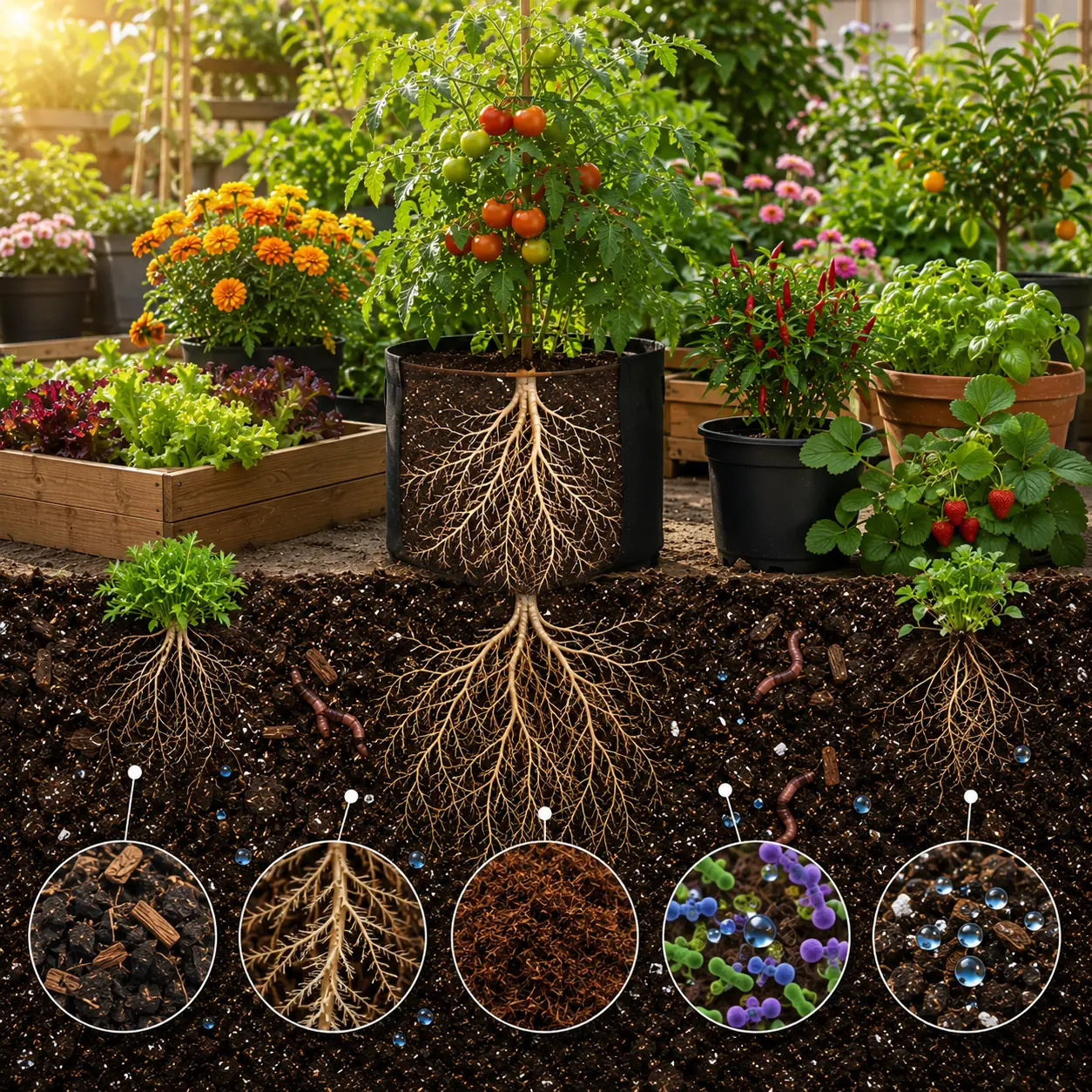
Organic Potting Soil Mix
Provides nutrients, structure, and healthy growing conditions for container plants.
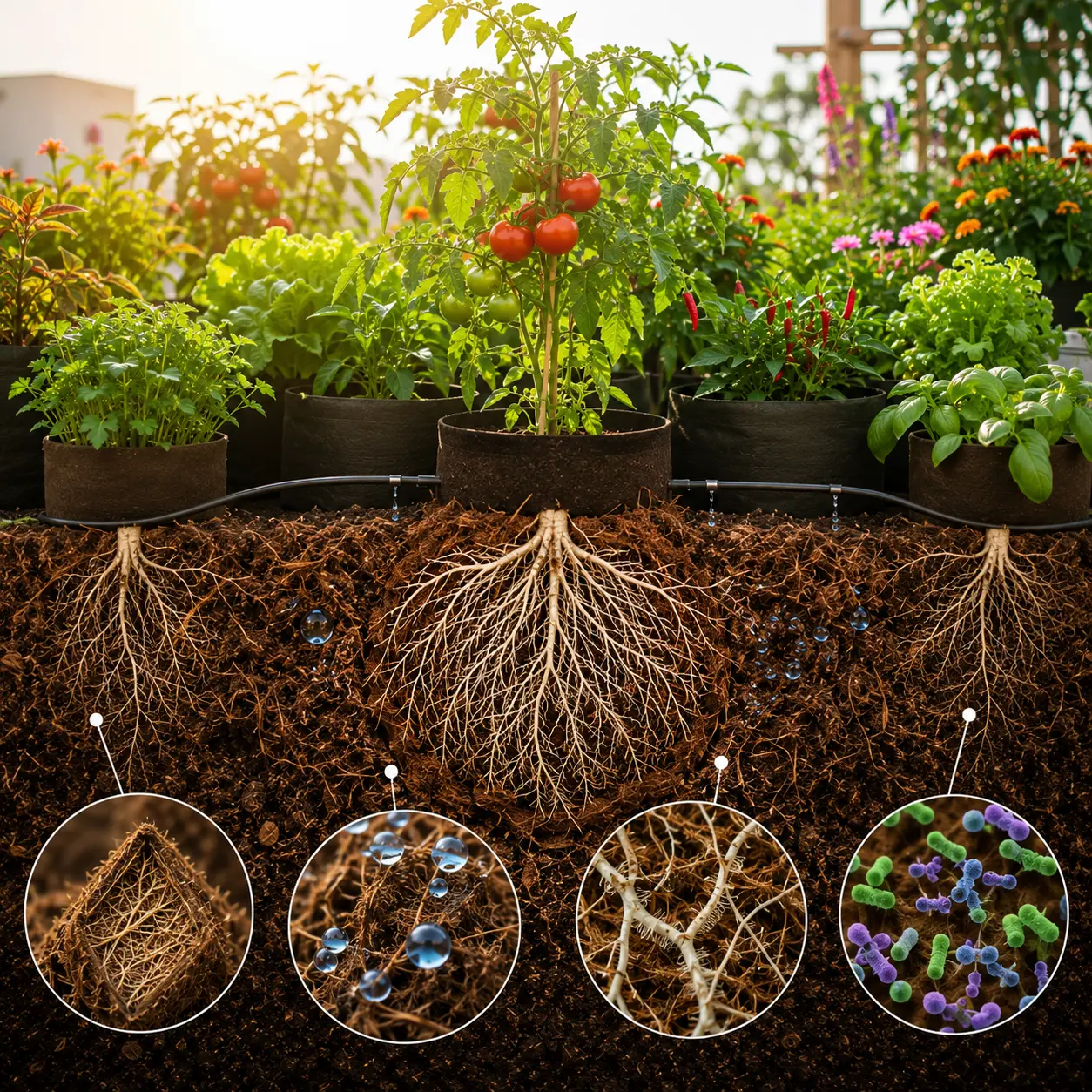
Coco Peat Growing Medium
Enhances moisture retention while maintaining excellent root-zone aeration.

Grow Bags for Plants
Improve drainage, root aeration, and vegetable production in limited spaces.

Plastic Pots for Plants
Ideal containers for seedlings, ornamentals, herbs, and balcony gardens.
Quick Facts
| Attribute | Detail |
|---|---|
| Common names | Chalta, Elephant Apple, Ou Tenga, Karambel, Chalita |
| Scientific name | Dillenia indica L. |
| Plant type | Tropical evergreen to semi-deciduous tree |
| Mature size | 8–15 m in ground; manageable to 4–5 m with pruning |
| Sunlight | Full sun to partial shade |
| Water needs | Moderate to high; dislikes prolonged drought |
| Best season to plant | Early monsoon (June–July) or post-monsoon (October) |
| Suitable states | West Bengal, Assam, Odisha, Bihar, Kerala, Maharashtra (coastal), northeastern states |
Choosing the Right Spot
Chalta thrives in full sun but tolerates partial shade — a useful quality in a garden with existing tall trees. It will fruit more reliably with at least 5–6 hours of direct sunlight daily.
In ground, allow at least 6–8 metres from walls or structures. Chalta grows a broad, spreading canopy over time and its surface roots can lift paving if planted too close to hardscape. It makes an excellent boundary or shade tree in larger gardens.
Container growing is possible in the first 3–5 years — a 60–80 litre pot can hold a young tree — but Chalta ultimately wants to go into the ground. Use the container phase to establish the tree before transplanting to a permanent spot during the monsoon.
In North India — Delhi, Rajasthan, Punjab — Chalta struggles with winter cold below 5°C and hot, dry summers. It is genuinely best suited to humid, warm states with reliable rainfall or irrigation.
Soil and Potting Mix
Chalta is not fussy about soil type but demands good drainage. It grows naturally along riverbanks and forest margins in alluvial, slightly acidic soil — a pH of 5.5–6.5 suits it best.
For garden beds, incorporate generous quantities of well-rotted compost or leaf mould into the planting pit. In the red laterite soils common across West Bengal, Odisha, and parts of the northeast, Chalta does very well with minimal amendment.
The common soil mistake: planting in low-lying beds that collect water during monsoon. Despite its preference for moisture, Chalta does not tolerate waterlogging for extended periods. Roots sitting in standing water for more than a week during early establishment cause rapid decline. Raised planting with a slight slope for runoff is worth the effort.
Planting — Season and Method
The best time to plant Chalta in India is early monsoon — June through July — when rainfall reduces irrigation demand and warm, moist soil conditions accelerate root establishment. Post-monsoon (October) is the second-best window, particularly in states where the monsoon lingers late.
Saplings are far more practical than seeds for home gardeners. Seeds germinate reliably but slowly — germination can take 4–6 weeks — and seedling trees take many more years to fruit than nursery-grown saplings.
Dig a planting pit of at least 60 cm × 60 cm × 60 cm. Fill with a mix of garden soil, compost, and a handful of neem cake. Plant at the same depth the sapling was growing, water deeply, and mulch the base with dry leaves or straw to retain moisture through the first dry season.
Watering
For the first 4–6 weeks, water every 2–3 days — more frequently than most trees require at this stage, because Chalta originates in high-rainfall forest environments and the young root system needs consistent moisture to establish.
A mature tree in West Bengal or Assam largely sustains itself on monsoon rainfall. In drier months (December–May), water deeply once a week — allowing water to penetrate 30–40 cm into the soil rather than light surface sprinkling.
The specific overwatering sign to watch for: new leaves emerging small, dark, and slightly cupped, combined with soft, darkening bark at the base of the stem. This indicates root zone saturation and early fungal activity — distinct from normal drought stress, which causes leaf curl and drooping without bark discolouration.
During peak monsoon, ensure the planting site drains completely within a few hours of heavy rain. In waterlogged conditions, temporarily improve drainage by driving a garden fork around the drip line to aerate the root zone.
Fertiliser
Chalta is a moderate feeder. It grows naturally in forest soils rich in organic matter, and replicating this at home produces the best results.
Apply well-rotted farmyard manure or vermicompost — 5–8 kg per tree — at the start of post-monsoon (October–November) each year. This feeds the tree through winter and supports the flowering flush that comes in late spring.
For productive fruit-bearing trees, add a potassium-rich supplement (potassium sulphate, 100–150 g at the drip line) in February–March, just before the flowering season. This supports fruit set and improves the quality and size of the fruit.
One excellent organic alternative available across Bengali and Assamese gardens: mustard cake (sarso ki khali) soaked in water for 48 hours and applied as a liquid drench around the drip line in October and again in March. It provides nitrogen, phosphorus, and trace minerals in a form the tree absorbs steadily over weeks.
Avoid high-nitrogen fertilisers close to the flowering season — as with mango, excess nitrogen pushes vegetative growth at the expense of flowers.
Common Problems and Fixes
Leaf spot and fungal blotching (July–September): Dark brown or grey spots with yellow margins on older leaves, appearing during humid monsoon months. This is a common fungal issue in high-rainfall states and is frequently misdiagnosed as a nutrient deficiency because the yellowing margins resemble chlorosis. Spray with a copper-based fungicide (copper oxychloride, 3 g per litre) during the monsoon period. Remove and dispose of heavily infected fallen leaves — do not compost them.
Scale insects on stems and leaf undersides: Small brown or grey crusty bumps on young stems, causing leaf yellowing and stem dieback. Scrub affected stems with a soft brush dipped in diluted neem oil solution (10 ml per litre with a few drops of liquid soap as emulsifier). Repeat every 10 days for three cycles.
Poor fruit set despite good flowering: Chalta flowers are large and attractive but pollination depends significantly on bees and other insects. In urban gardens with reduced pollinator access, fruit set can be sparse. Avoid applying any pesticide during the flowering period (April–June). Planting a few flowering companion plants nearby — marigold, basil, or any open-flowered species — improves pollinator visits noticeably.
Yellowing of older leaves in winter: Chalta is semi-deciduous and naturally sheds older leaves during the cooler, drier months. This is normal and not a deficiency. New leaves push in spring. Beginners often apply fertiliser in response to this yellowing, which is unnecessary and disrupts the tree’s natural cycle.
When Will You See Results?
A sapling planted in good conditions will establish visibly within its first monsoon season — pushing new leaf flushes and increasing in height by 50–80 cm in the first year.
Most saplings flower for the first time in year 3 or 4. The iconic large white flowers — 10–15 cm across, with a clean, faint fragrance — appear between April and June. Fruit follows and matures between July and October, with peak harvest typically during the monsoon months.
The patience note: Chalta is not a tree that rushes. Its value accumulates over years — as a shade tree, a fruiting tree, and eventually as a feature of the garden that outlives its planter. The oldest Chalta trees in Bengal are estimated at over 100 years old.
Propagation
Chalta propagates most reliably from seed. Seeds extracted from ripe fruit germinate well when sown fresh — dried or stored seeds have reduced viability. Sow seeds in a mix of compost and coarse sand, 1–2 cm deep, and keep consistently moist in a partially shaded nursery spot. Germination occurs in 3–6 weeks.
Stem cuttings are possible but have a lower success rate (40–60%) and require a rooting hormone application and misting to maintain humidity during the rooting phase. Semi-hardwood cuttings taken in September–October perform better than softwood cuttings taken in summer.
Air layering is the most practical vegetative propagation method for home gardeners wanting to replicate a specific productive tree. Select a pencil-thick branch, ring the bark, apply rooting hormone, wrap with moist sphagnum moss, and cover with polythene. Roots typically appear in 6–8 weeks during the monsoon season, after which the layer can be separated and potted.
Pruning and Training
Young Chalta trees benefit from light directional pruning in the first 2–3 years to build a clear central leader and remove crossing branches. This is best done at the end of the monsoon (September–October) when new growth has hardened.
For trees in home gardens where height management matters, a moderate reduction prune after fruiting (October–November) keeps the canopy accessible and encourages compact, productive branching. Cut back to a lateral branch rather than leaving bare stubs, which invite disease.
Avoid pruning in summer (April–June) when the tree is flowering and fruiting. Large pruning wounds in humid monsoon conditions should be treated with a paste of copper fungicide or cow dung to reduce infection risk.
Container Growing
Chalta can be maintained in a large container — 80–100 litres minimum — for 4–5 years as an ornamental and lightly productive tree. Use a mix of garden loam, compost, and coarse sand in a 2:2:1 ratio.
In containers, watering frequency needs to increase significantly — check soil moisture every 2 days in summer and water when the top 3 cm is dry. Fertilise more frequently than ground-planted trees: vermicompost top-dressing every 3 months and a liquid seaweed or mustard cake drench monthly during the growing season.
Repot every 2 years or when roots emerge from drainage holes. The best time to repot or transplant to the ground is the start of monsoon — June — when recovery is fastest.
Harvesting
Chalta fruit is harvested before full ripeness for culinary use — the ideal stage is when the fruit is fully sized (roughly 8–12 cm in diameter), firm, and has shifted from bright green to a slightly dull, yellow-green colour. At this stage the flesh is firm, intensely sour, and carries the full aromatic complexity that makes it prized in Bengali cooking.
Fruit left to fully ripen on the tree becomes softer and less tart — still edible and attractive to wildlife, but less useful in the kitchen. In Bengal and Assam, the harvest window runs from August through October.
Harvest by cutting the stem cleanly with a sharp blade or secateurs — do not pull or twist, as this can damage the branch and the fruit’s attachment point. Handle carefully; the flesh bruises and the skin breaks more easily than its firm appearance suggests.
Store harvested fruit at room temperature for up to a week, or refrigerate for 2–3 weeks. For long-term preservation, the flesh is sliced and sun-dried, made into chalta-r achaar (pickle), or cooked into chutney and preserved in sterilised jars.
Seasonal Protection
In states at the northern edge of Chalta’s range — Bihar, Jharkhand, parts of Odisha — January temperatures can occasionally dip below 5°C. Young trees under 3 years old should be protected with a jute wrap around the trunk and a layer of dry mulch at the base during cold spells.
In coastal Maharashtra and Gujarat, where Chalta is less commonly grown, the tree faces significant stress during the hot, dry pre-monsoon months (April–May). Deep watering once a week and a thick mulch layer (8–10 cm of dry straw or leaf litter) around the base dramatically reduces moisture loss during this period and improves survival.


