
Pumpkin Flowering Season: When and What to Expect in India
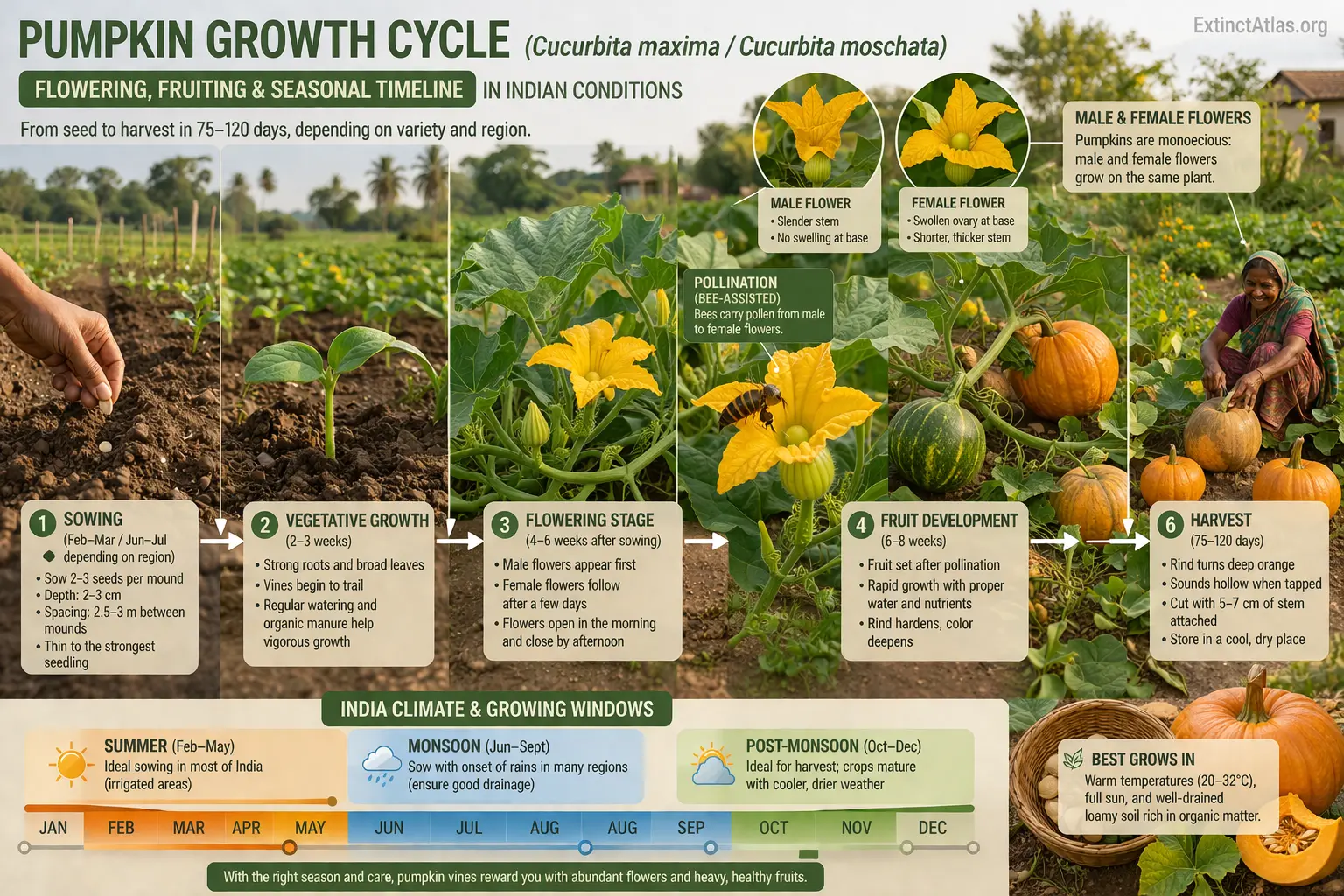
Quick Answer: Pumpkin flowers from approximately 5–7 weeks after sowing. In India, this typically falls between May and August for the main pre-monsoon crop, and between October and November for a second sowing. Fruit ripens 6–8 weeks after flowering. Timing varies by region and sowing date.
See also: Pumpkin Plant plant profile, how to grow it, common problems, its benefits, and its varieties.
The moment pumpkin vines begin to flower is one of the more satisfying sights in an Indian kitchen garden — those large, trumpet-shaped yellow blooms opening at dawn and closing by mid-morning, briefly making the patch look tropical and ornamental. What many gardeners do not know is that the first flush of flowers will not produce a single fruit, and that is perfectly normal.
Recommended Products
Disclosure: As an Amazon Associate, PlantsInfo may earn from qualifying purchases.
🌱 Growing Essentials
The following products can help with container gardening, potting, root development, soil management, and healthy plant growth.
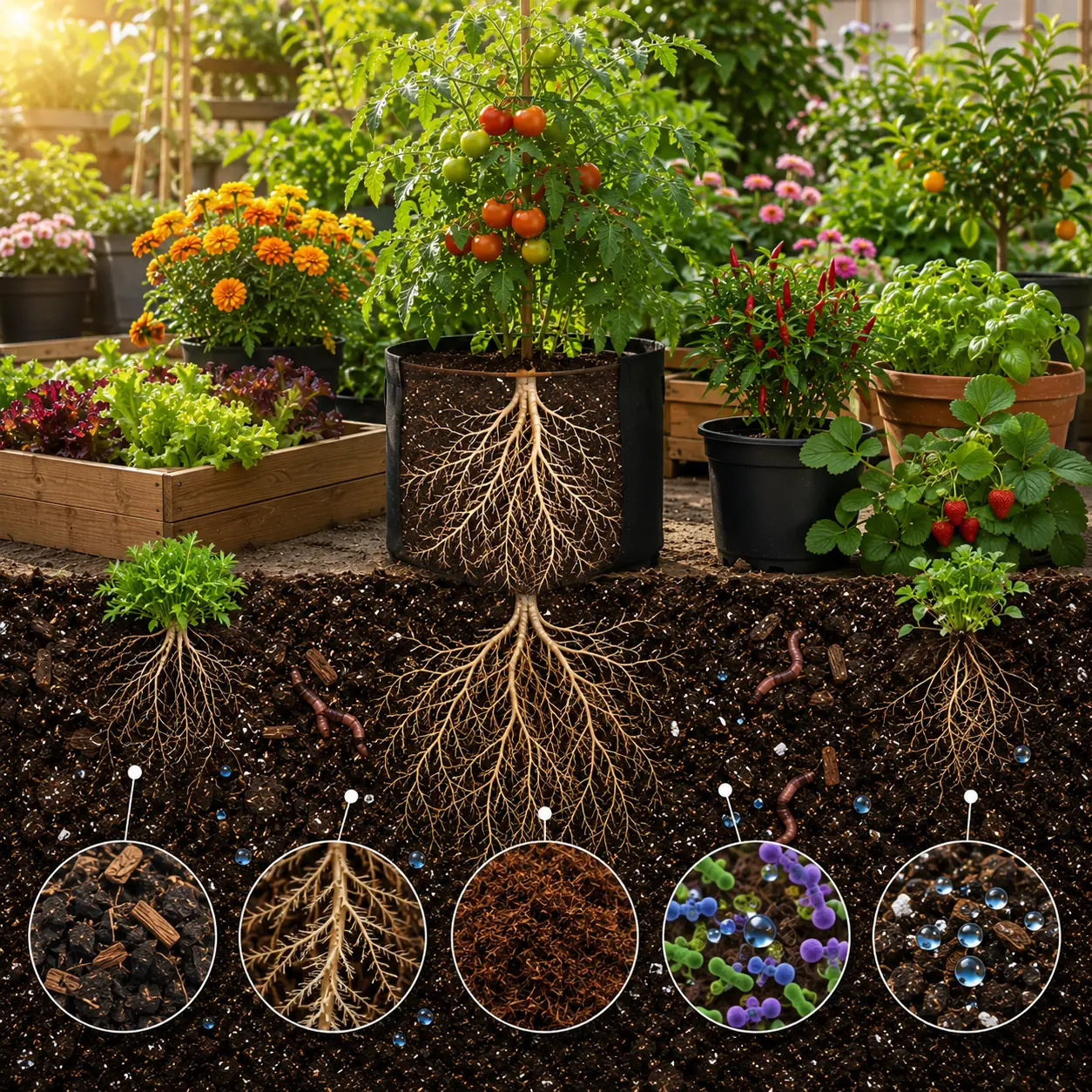
Organic Potting Soil Mix
Provides nutrients, structure, and healthy growing conditions for container plants.
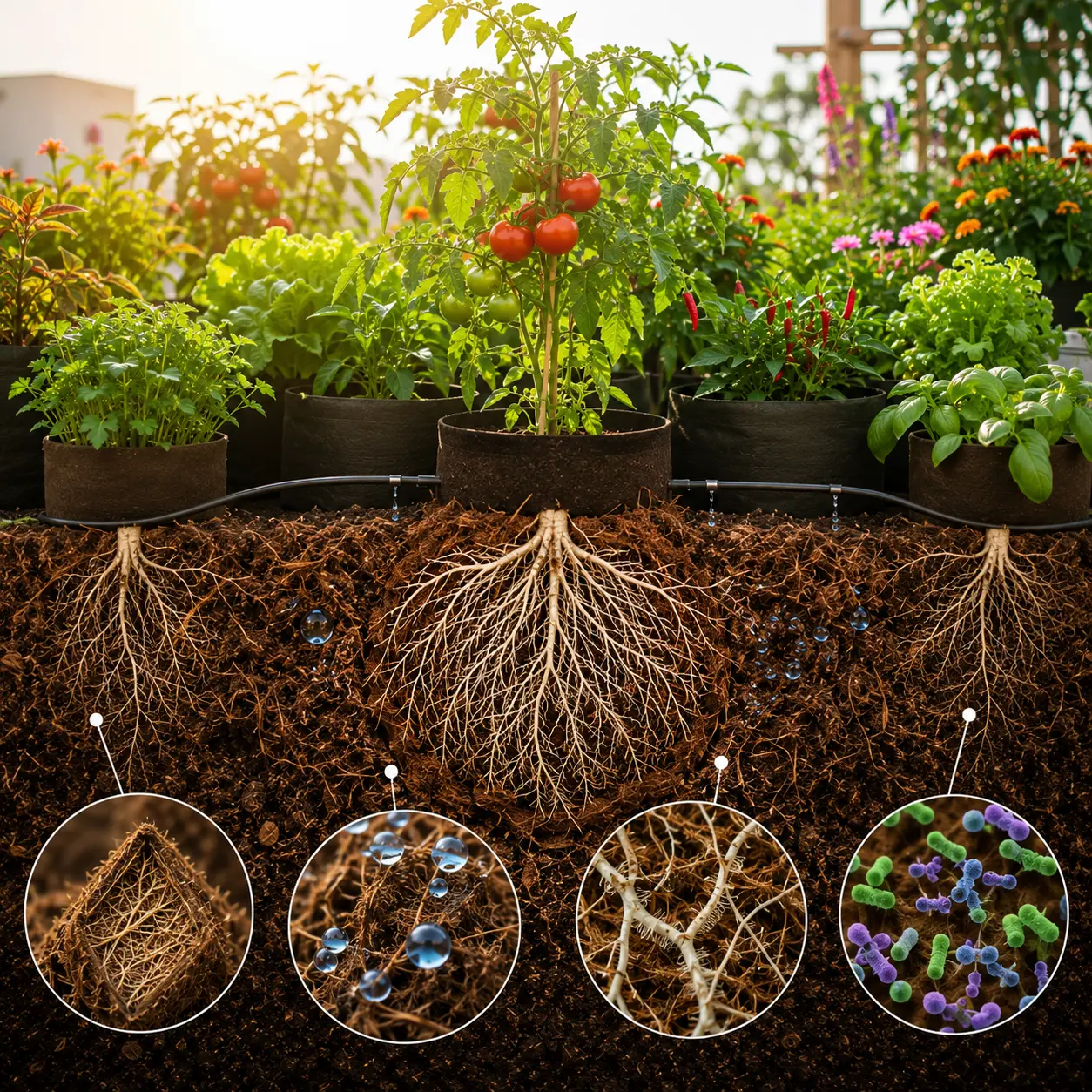
Coco Peat Growing Medium
Enhances moisture retention while maintaining excellent root-zone aeration.

Grow Bags for Plants
Improve drainage, root aeration, and vegetable production in limited spaces.

Plastic Pots for Plants
Ideal containers for seedlings, ornamentals, herbs, and balcony gardens.
India’s Seasons and This Plant
| Season (months) | What the plant is doing |
|---|---|
| Pre-monsoon (Mar–May) | Prime sowing window; germination and early vine growth; vines establish rapidly in warming soil |
| Monsoon (Jun–Sep) | Peak vine growth and flowering; fruit set and development; high vigour but elevated disease pressure |
| Post-monsoon (Oct–Nov) | Main harvest period for pre-monsoon crop; second sowing window opens in South India |
| Winter (Dec–Feb) | Not suitable in North India (frost risk kills vines); South India can continue growing compact varieties |
Flowering Season in Detail
Pumpkin begins flowering approximately 35–50 days after sowing, depending on variety, temperature, and nutrition. Warmer temperatures and fertile soil accelerate this timeline; cooler or nutrient-poor conditions slow it.
Male flowers come first. This is the point that trips up almost every new pumpkin grower. Male flowers appear a week or two before female flowers and drop naturally after one day. This is not a disease, a watering problem, or a sign that something is wrong. It is the plant’s normal sequence.
Female flowers follow. Identifiable by a small swelling at the base of the flower (the proto-fruit), female flowers begin appearing once the vine is mature enough to support fruit. Peak flowering — with both male and female flowers present simultaneously — occurs roughly 6–9 weeks after sowing.
In India’s main growing belt (North, East, Central India), this peak falls in June–July for a pre-monsoon sowing. For a secondary June sowing, peak flowering falls in August–September.
Flowers are open for a single morning. Pollination must happen between sunrise and approximately 10:00–10:30 AM before the flowers close. Bees and other pollinators do most of this work, but in urban gardens with low pollinator populations, hand pollination in the early morning reliably improves fruit set.
Cloudy monsoon weather reduces both pollinator activity and flower viability. This is one of the main reasons fruit set can be erratic during heavy monsoon — not a care failure, but a weather-driven pollination gap.
Fruiting Season
Fruit begins developing immediately after successful pollination of a female flower. The fruit grows rapidly — visibly larger day by day — and reaches harvest size in approximately 50–70 days after the flower is pollinated, depending on variety and conditions.
Ripening indicators: The stem connecting the fruit to the vine begins to dry and cork over. The skin hardens noticeably and resists fingernail pressure. Colour shifts from bright green to the variety’s characteristic mature tone — orange, yellow, tan, or dark grey-green. A hollow sound when thumped confirms maturity.
Harvest window for the main crop: For a March–April sowing across North and East India, the harvest window typically falls in August–September. For a second sowing in June, harvest arrives in October–November.
In South India, where a post-monsoon sowing in September–October is viable, fruit matures in December–January.
If you miss the window, an over-mature pumpkin left too long on the vine in wet conditions will rot from the base. However, a pumpkin harvested too early will lack sweetness and fail to store well. The stem-corking signal is the most reliable cue.
Best Time to Plant
Primary window: Pre-monsoon — March to May — across most of India. The warming soil, long days, and the approaching rains create ideal germination and early growth conditions. Vines establish before the monsoon arrives and are ready to fruit heavily as the rains taper off.
Why this works: Pumpkin germinates best in soil temperatures above 20°C. Pre-monsoon conditions in most Indian states meet this threshold reliably. The vine’s peak flowering and fruiting phase then coincides with early-to-mid monsoon, when soil moisture is consistent, and temperatures remain in the productive range.
Second-best option: Early monsoon sowing, June, is viable across most of India, though disease pressure is higher and pollination can be erratic during peak rains. In North India, this is the last practical sowing window before temperatures drop in October–November.
South India second window: September–October, post-monsoon retreat. This allows for a December–January harvest that avoids the hottest months entirely.
Container vs. ground timing: The same windows apply. Container plants in warmer urban environments (like terrace gardens in Mumbai or Chennai) can sometimes start slightly earlier — late February — if kept in a warm, sheltered spot during the first few weeks.
Month-by-Month Calendar
| Month | Season | What to Do |
|---|---|---|
| January | Winter | Not suitable for sowing in North India; South India terrace gardens may have fruit approaching harvest from October sowing |
| February | Late winter | Begin preparing beds and pits in South and West India; sowing can start in sheltered spots in peninsular India |
| March | Pre-monsoon | Primary sowing window opens across most of India; prepare beds, sow seeds directly |
| April | Pre-monsoon | Sowing in full swing; vines germinating and establishing; train vines early |
| May | Pre-monsoon | Vines in active growth; male flowers beginning to appear on early March sowings; sowing still viable in North India |
| June | Monsoon onset | Female flowers and early fruit set on March–April sowings; second sowing window; monitor drainage |
| July | Monsoon | Peak flowering and fruit set for pre-monsoon crop; hand-pollinate if pollinator activity is low; watch for powdery mildew |
| August | Monsoon | Fruit developing and sizing rapidly; early harvest of fast-maturing varieties; post-monsoon sowing prep in South India |
| September | Monsoon tail | Main harvest window for pre-monsoon crop begins; assess fruit maturity by stem and skin; South India second sowing opens |
| October | Post-monsoon | Peak harvest in North and East India; second sowing in South India underway; store harvested fruit in dry, ventilated space |
| November | Post-monsoon | Harvest complete in North India before cold sets in; South India October sowing in vine growth and flowering phase |
| December | Early winter | Vines dying back in North India; South India second crop approaching harvest; no new sowing in northern states |
What Can Go Wrong Seasonally?
1. Male-flower-only phase misread as flowering failure
New gardeners see flowers appearing and then dropping with no fruit for the first two to three weeks. This is not a problem — it is the plant’s normal male-first flowering sequence. Female flowers will follow. Commonly misdiagnosed as a pollination failure or soil deficiency.
2. Monsoon-period fruit rot
Fruit resting directly on wet soil during the monsoon develops rot from the underside. Place a flat stone, tile, or dry straw mat beneath developing fruit to keep it off saturated ground. One simple step significantly reduces losses.
3. Late-season flowering with no fruit set
In North India, vines sown in June may begin flowering in August but fail to set fruit as temperatures drop in October. Female flowers appear, but fruit does not develop beyond a few centimetres before dropping. This is a temperature-driven signal that the productive season is closing. No intervention will extend it significantly — harvest whatever mature fruit exists and allow the vine to wind down.
Post-Harvest Care
Once the main harvest is complete, the vine will typically continue producing smaller secondary fruit on lateral branches if it is healthy and conditions allow.
Allow the vine to run its course naturally. In North India, the first cold snap in November–December will kill the above-ground vine. Do not attempt to protect it through winter — the plant is an annual and will not survive frost.
After vines die back, remove plant debris from the garden bed to reduce the pathogen load for the next season. Turn the soil and add compost before the next planting cycle.
The pumpkin’s season in India follows a satisfying rhythm — sow before the rains, watch the vines run with the monsoon, harvest as the skies clear. Work with that rhythm rather than against it, and the plant will consistently reward you.


