Arrowroot: Nutritional Benefits and Culinary Uses
Quick Answer: Arrowroot starch is a highly digestible, easily absorbed carbohydrate valued for infant nutrition, digestive recovery, and gluten-free cooking. It is lighter and more easily digested than cornstarch or wheat flour, making it the traditional first starch for convalescents and young children across South and Southeast Asia.
See also: Arrowroot plant profile, how to grow it, common problems, its flowering season, and its varieties.
Ask a grandmother in Kerala why she keeps arrowroot powder in the kitchen, and the answer is rarely “for thickening sauces.” It is for the baby, or for whoever is recovering from a fever. This plant’s significance in Indian domestic life is rooted in a specific kind of usefulness — the kind that matters most when someone in the household is vulnerable. Understanding that context tells you more about arrowroot’s value than any nutritional label.
Recommended Products
Disclosure: As an Amazon Associate, PlantsInfo may earn from qualifying purchases.
🌱 Growing Essentials
The following products can help with container gardening, potting, root development, soil management, and healthy plant growth.
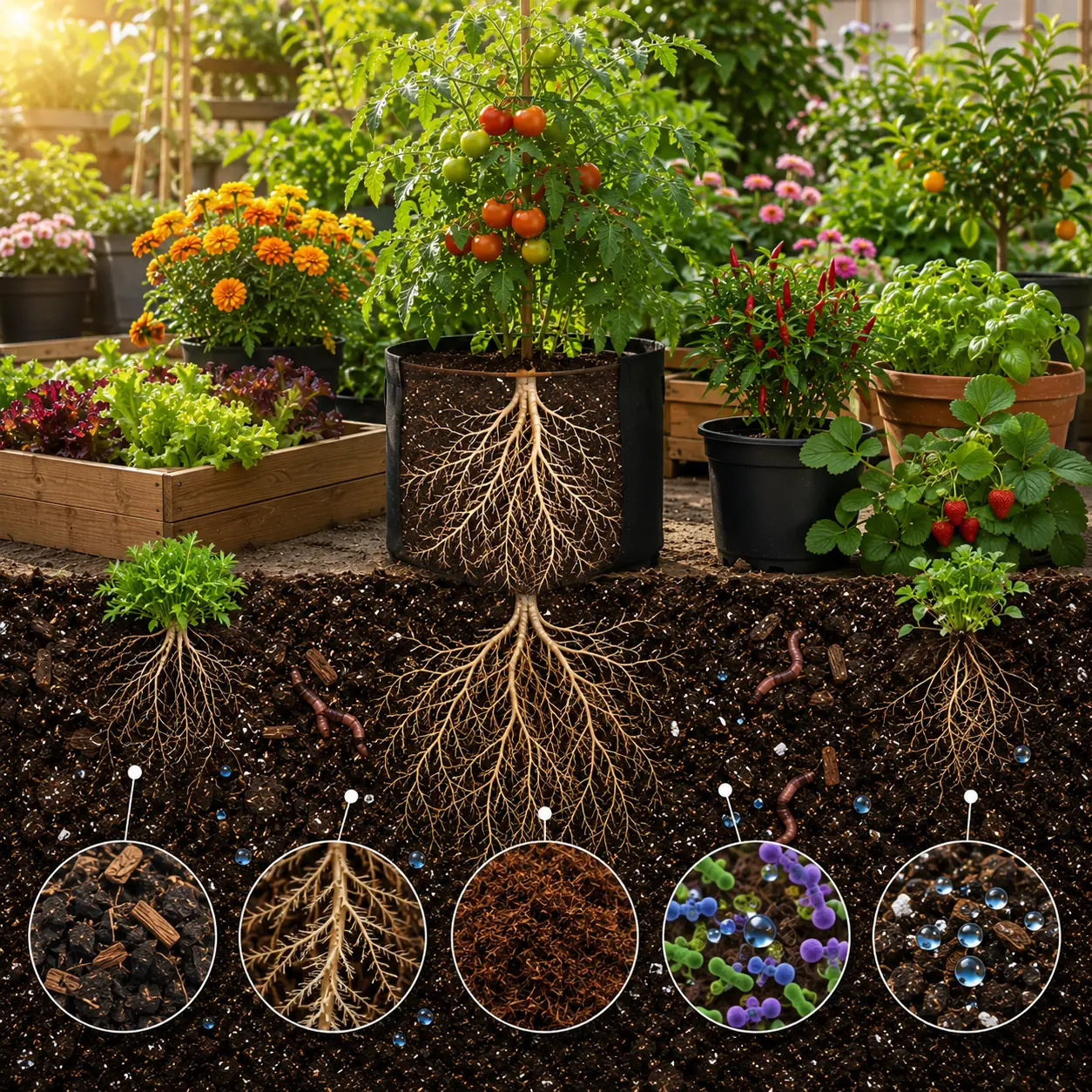
Organic Potting Soil Mix
Provides nutrients, structure, and healthy growing conditions for container plants.
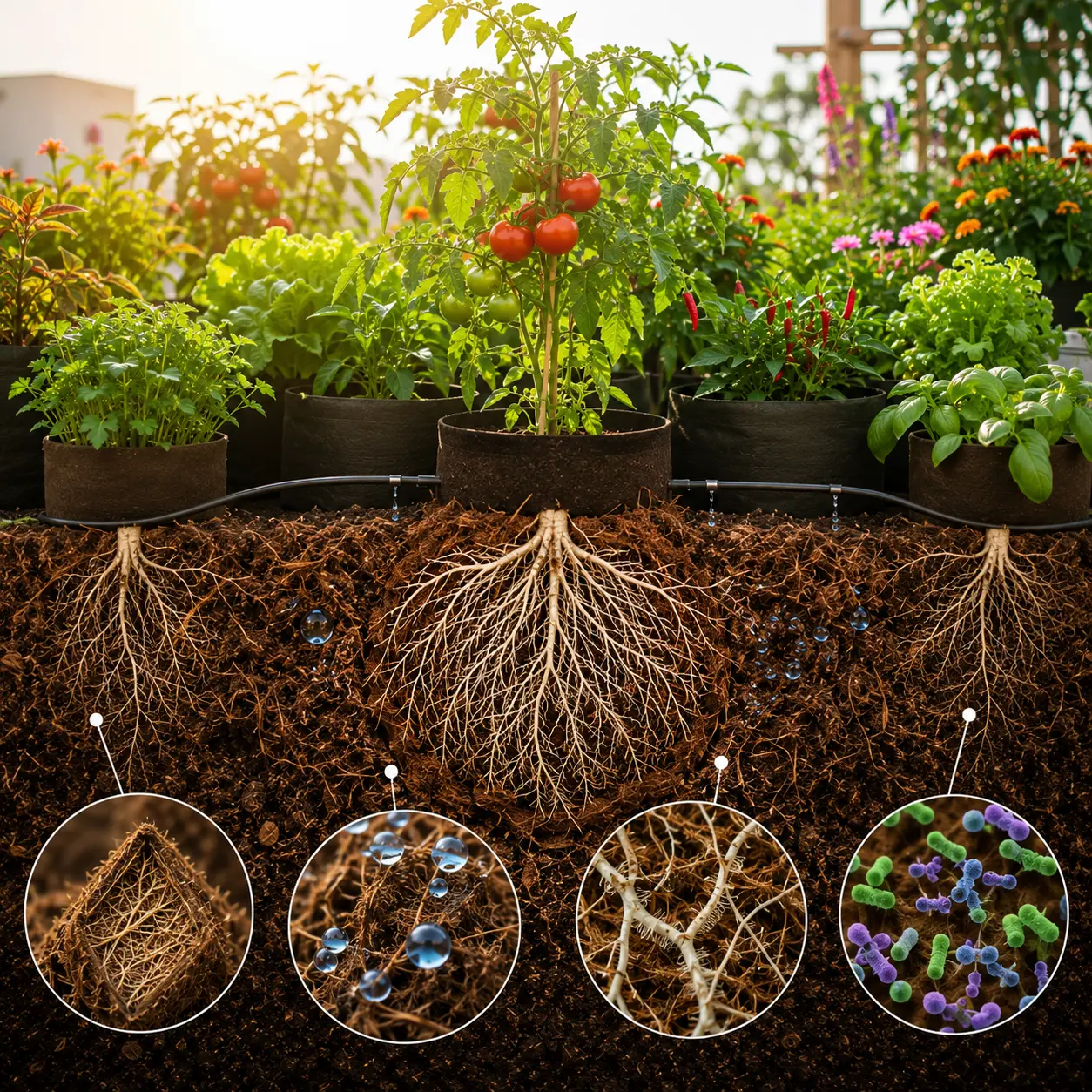
Coco Peat Growing Medium
Enhances moisture retention while maintaining excellent root-zone aeration.

Grow Bags for Plants
Improve drainage, root aeration, and vegetable production in limited spaces.

Plastic Pots for Plants
Ideal containers for seedlings, ornamentals, herbs, and balcony gardens.
Nutritional Profile and Culinary Significance
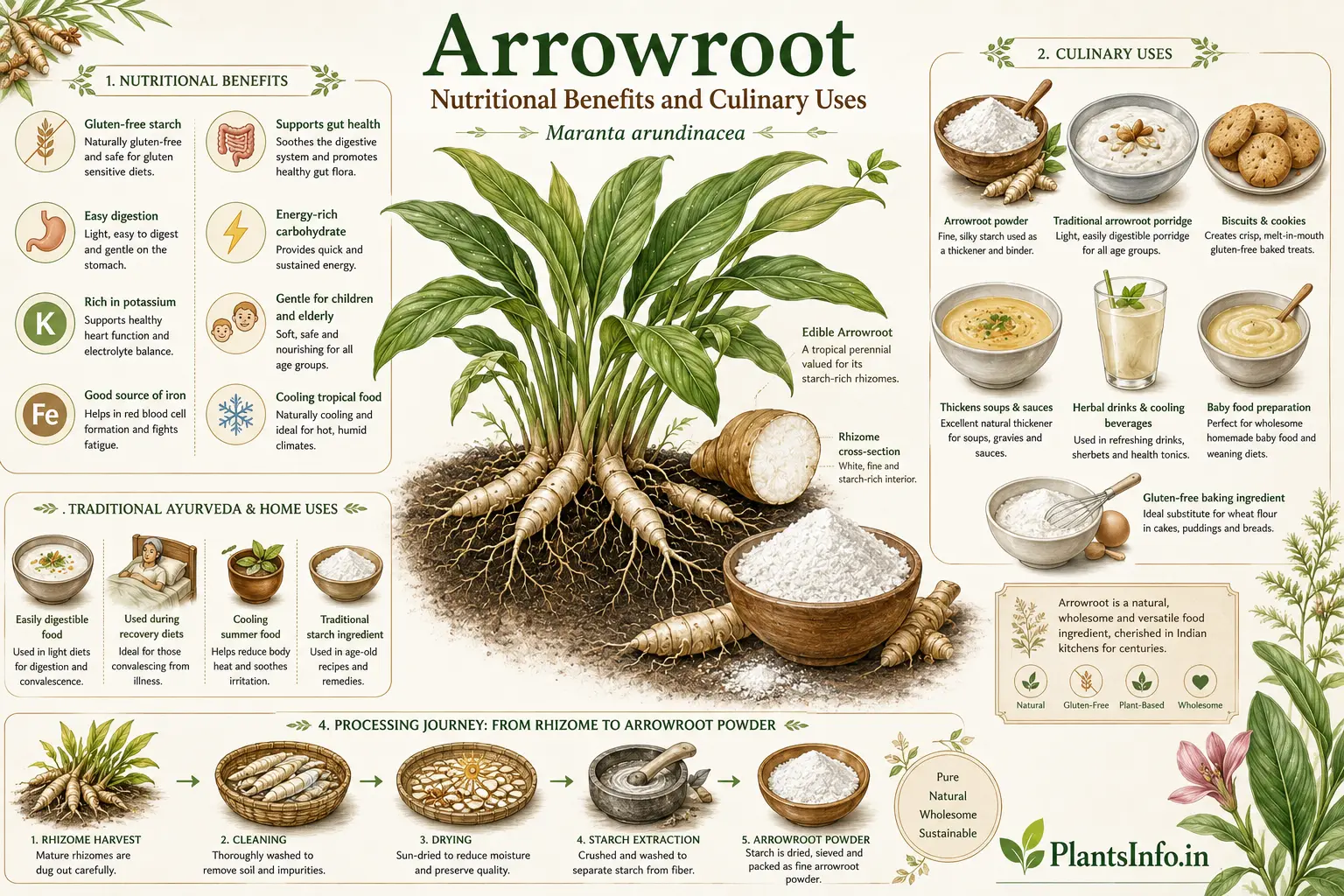
Arrowroot starch is composed almost entirely of easily digestible complex carbohydrates, with a very low fat content and moderate protein. Its nutritional distinction lies not in density but in digestibility — the starch granules of Maranta arundinacea are exceptionally fine and uniform, making them significantly easier to digest than those of cassava, potato, or corn.
Research suggests that arrowroot starch has a lower glycaemic index than most other refined starches, which makes it gentler on blood sugar regulation, particularly relevant for convalescent and infant nutrition.
The starch provides useful quantities of potassium, which supports fluid balance and muscle function. It also contains small amounts of B vitamins — particularly folate and B6 — and trace minerals including iron and manganese.
The rhizome itself (before processing into starch) contains dietary fibre, mucilage, and compounds with mild antibacterial properties. Traditional practice records the use of the raw rhizome decoction as a remedy for urinary tract discomfort, which is consistent with its mucilaginous content.
Arrowroot starch is entirely gluten-free, which has increased its culinary relevance in modern Indian households managing coeliac disease or gluten sensitivity. It is used as a wheat-flour substitute in thickening, binding, and baking applications — with the notable advantage that it produces a clear, glossy gel (unlike the opaque paste of cornstarch) and does not break down when combined with acidic ingredients.
This information is based on traditional knowledge and published nutritional research. It is not a substitute for medical advice. Consult a qualified healthcare professional before using arrowroot preparations for managing specific health conditions.
Traditional and Ayurvedic Significance
Ayurvedic texts describe arrowroot under the name Tavaksiri (and Shishupalaka in some regional texts) as a cooling, soothing food — Sheeta virya in Ayurvedic thermodynamic classification. It is recommended for conditions involving excess Pitta (heat-related disorders, inflammation, burning sensations) and is considered one of the safest foods for infants and the elderly.
Classical formulations occasionally include arrowroot as a vehicle for administering other herbs, particularly in paediatric Ayurvedic medicine, because of its palatability and digestive gentleness.
Traditional practice across South India — particularly in Kerala, Tamil Nadu, and Karnataka — records arrowroot gruel (kanji or porridge preparations) as the standard first solid food for infants beyond six months, and as the primary recovery food after gastrointestinal illness at any age. This usage is centuries old and continues in many households today, particularly in rural areas where the fresh rhizome is available domestically.
Ecological Role
Arrowroot is a shade-tolerant understorey plant that contributes to soil moisture retention in mixed garden systems. Its broad leaves suppress weed growth and reduce soil surface evaporation around companion plantings. In traditional home garden systems (homegardens) in Kerala and the northeast, it occupies the productive lower canopy below coconut, banana, and fruit trees — a position that makes use of filtered light that would otherwise be wasted.
The flowers — small, white, and delicate — attract small pollinators and beneficial insects during the brief flowering period (typically August–September in Indian conditions). The plant is not a significant wildlife habitat contributor, but its role in small-scale mixed cultivation systems is well established.
Practical Value for Home Gardeners
A modest arrowroot planting of 4–6 square metres can supply a household with starch for infant nutrition, thickening, and baking over the course of a year, given the reasonable yields achievable in good conditions. The starch extracted at home is unprocessed and free of the additives (anti-caking agents, preservatives) sometimes present in commercially packaged arrowroot powder.
The plant’s ornamental foliage — broad, bright green leaves with occasional pale markings — also contributes to the garden aesthetically during the growing season, making it a dual-purpose planting that earns its space independently of the harvest.
How to Prepare and Use at Home
Basic arrowroot gruel (for infants and convalescents): Mix one to two teaspoons of arrowroot starch in a small amount of cold water to dissolve. Add to one cup of boiling water or warm milk while stirring continuously. Cook on low heat for two to three minutes until the mixture thickens and clears. Sweeten lightly with jaggery or honey (not honey for infants under twelve months) if desired. This preparation is traditional throughout South and Southeast Asia.
As a thickener in cooking, Arrowroot is used at roughly half the quantity of cornstarch for equivalent thickening. Add it dissolved in cold water to sauces, gravies, or soups just before the end of cooking — it activates quickly and should not be boiled after thickening, as prolonged heat breaks down the gel. It produces a clearer result than cornstarch, which is valued in fruit-based preparations and clear gravies.
In gluten-free baking, Arrowroot starch blends well with rice flour and other gluten-free flours as a binding and lightening agent. It contributes a fine, tender crumb texture that denser gluten-free flours alone cannot produce. The typical proportion in baking blends is 10–20% arrowroot starch to the total flour weight.
What to Avoid
Arrowroot starch is very well tolerated and has no significant documented contraindications for healthy individuals. However, for diabetic individuals, arrowroot preparations — particularly gruel made primarily of arrowroot starch — should be consumed in moderate quantities and as part of a varied diet, as the carbohydrate load is still meaningful despite the lower glycaemic index.
Commercial arrowroot powder should be checked for source purity — products labelled “arrowroot” in Indian markets are occasionally adulterated with cassava starch, which is nutritionally similar but less digestible and lacks the mucilaginous quality of true Maranta arundinacea starch. Home extraction from garden-grown rhizomes is the most reliable way to ensure purity.
Key Takeaways
- Arrowroot starch is distinguished by exceptional digestibility — finer granule structure than cornstarch, cassava, or potato starch makes it the gentlest starch for infants and convalescents.
- Traditional South Indian and Ayurvedic use is well documented and specifically targets infant nutrition and post-illness recovery.
- It is genuinely gluten-free and well-suited to modern gluten-free cooking applications — producing a clear, glossy gel that cornstarch cannot match.
- Home extraction from garden-grown rhizomes is straightforward and guarantees purity.
- Commercial “arrowroot” powder in India is sometimes cassava-derived — verify the source if medicinal use is the intent.
Conclusion: Arrowroot earns its place in the Indian home garden and kitchen not through spectacle but through quiet, reliable usefulness — the kind that matters most when it is needed.