Guduchi Benefits: What Ayurveda and Modern Research Say
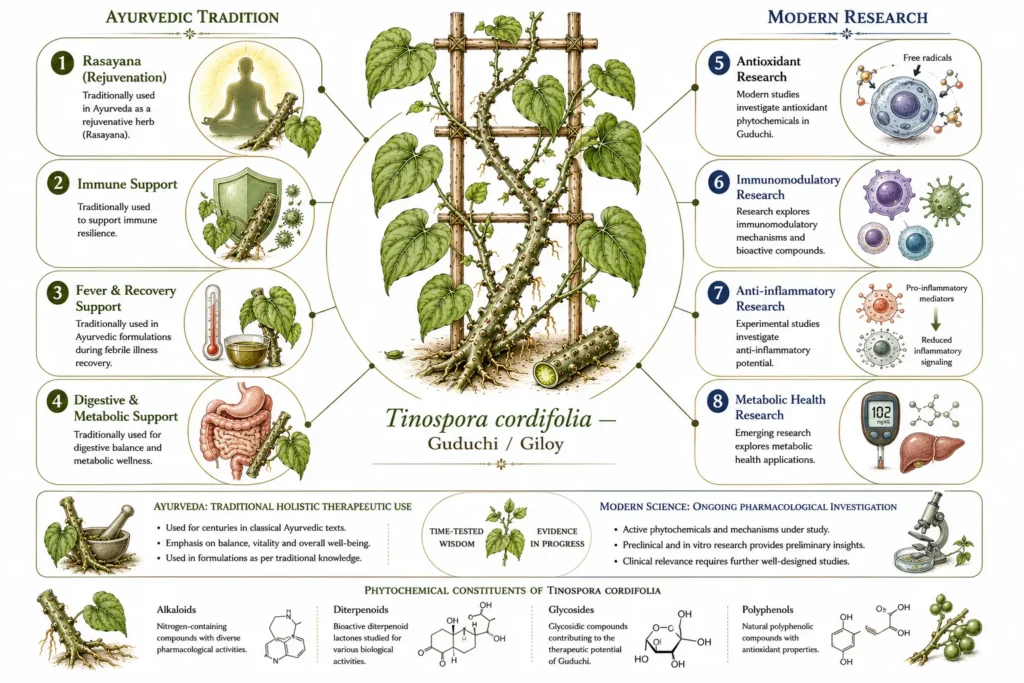
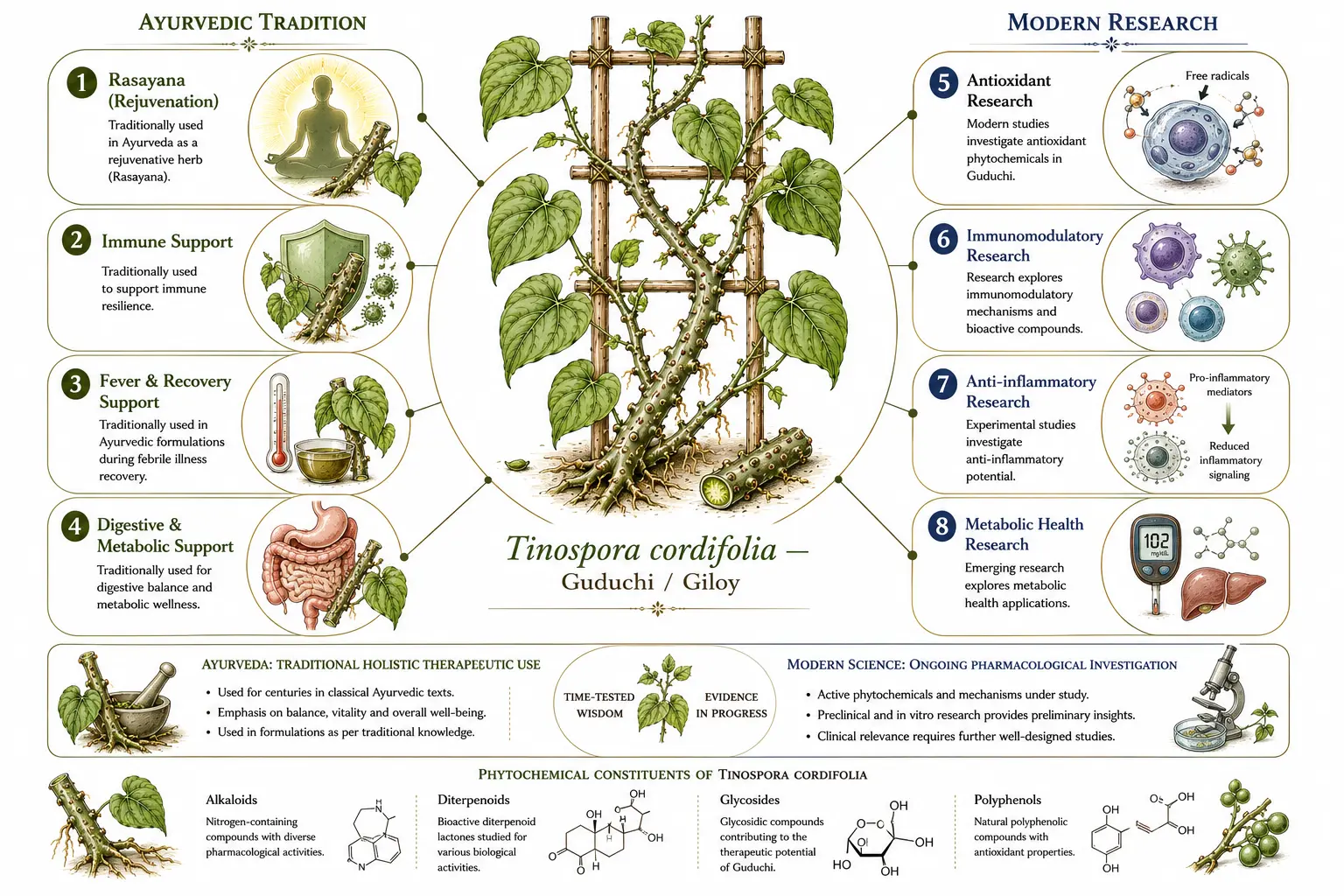
Guduchi (Tinospora cordifolia) is one of Ayurveda’s most respected rasayana herbs — a traditional rejuvenative valued for supporting general wellness, immune function, and recovery during periods of weakness or recurrent illness. In classical Ayurvedic practice, it is described as a tridoshahara herb, meaning it is traditionally considered capable of balancing Vata, Pitta, and Kapha. The stem is the primary medicinal part used, commonly prepared as fresh juice, decoction, or dried powder.
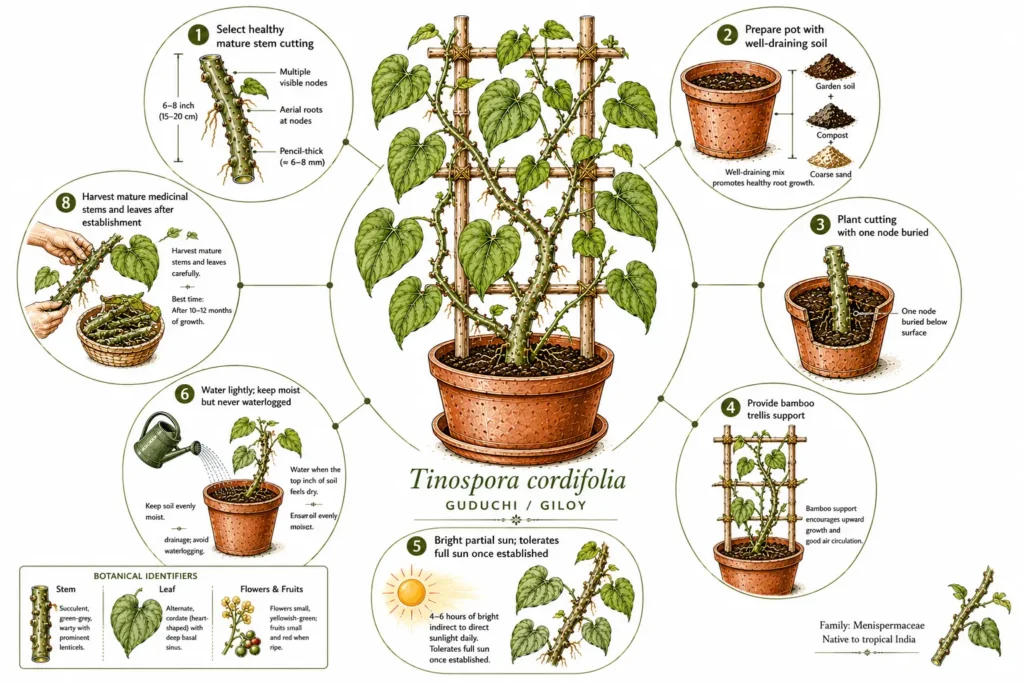
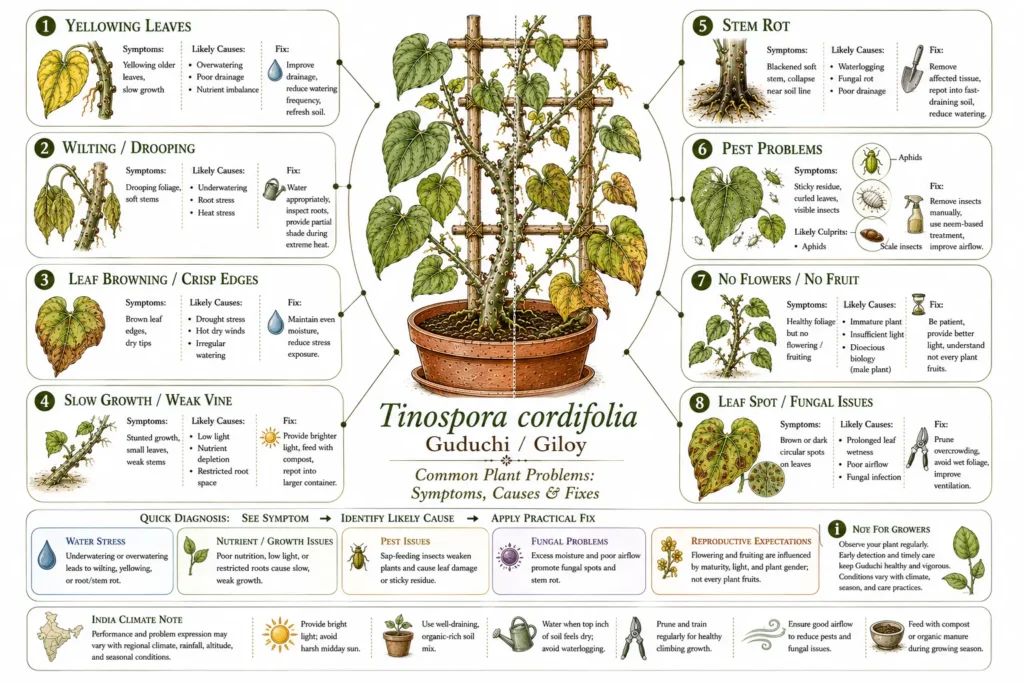
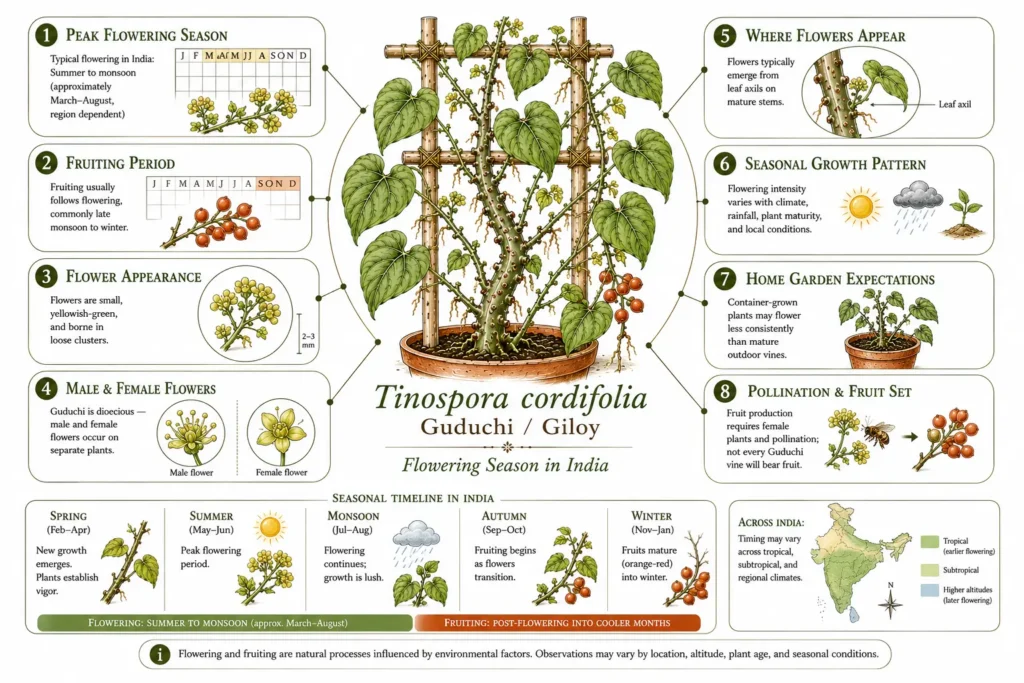
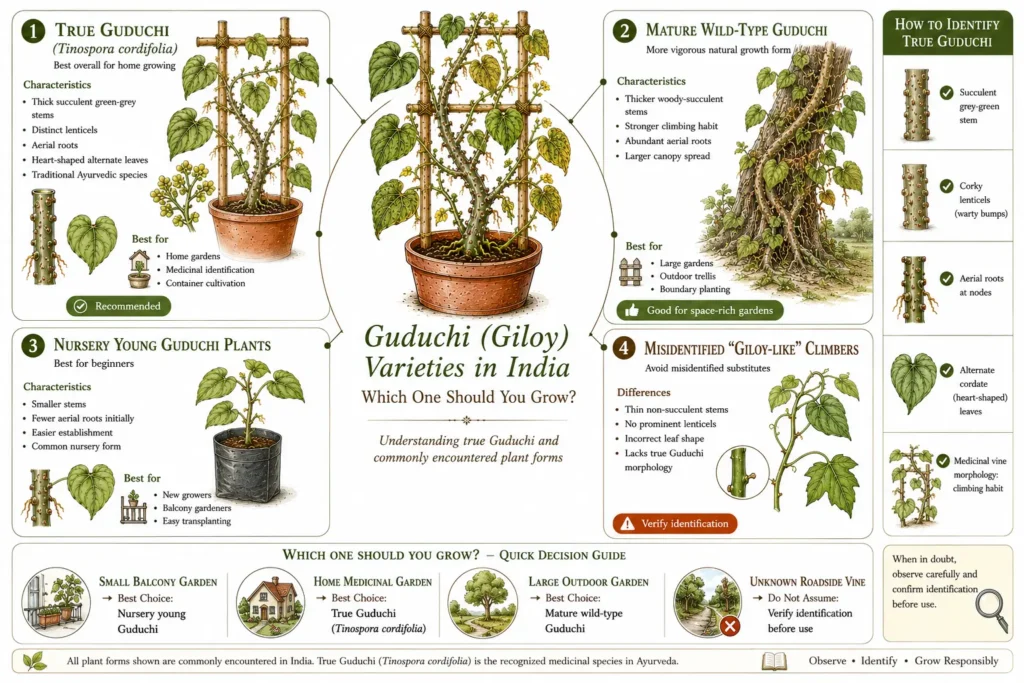
See also: Giloy plant profile, how to grow it, common problems, its flowering season, and its varieties.
The name itself reflects its cultural importance: Amrita, meaning nectar of immortality, is one of Guduchi’s oldest Sanskrit names. For centuries, this climbing medicinal vine has held a prominent place in Ayurvedic herbal medicine for its broad traditional applications. Modern scientific research has investigated several of these traditional uses, with experimental and early clinical studies suggesting immunomodulatory, antioxidant, and anti-inflammatory potential, though stronger clinical evidence is still needed.
Recommended Products
Disclosure: As an Amazon Associate, PlantsInfo may earn from qualifying purchases.
🌱 Growing Essentials
The following products can help with container gardening, potting, root development, soil management, and healthy plant growth.

Organic Potting Soil Mix
Provides nutrients, structure, and healthy growing conditions for container plants.
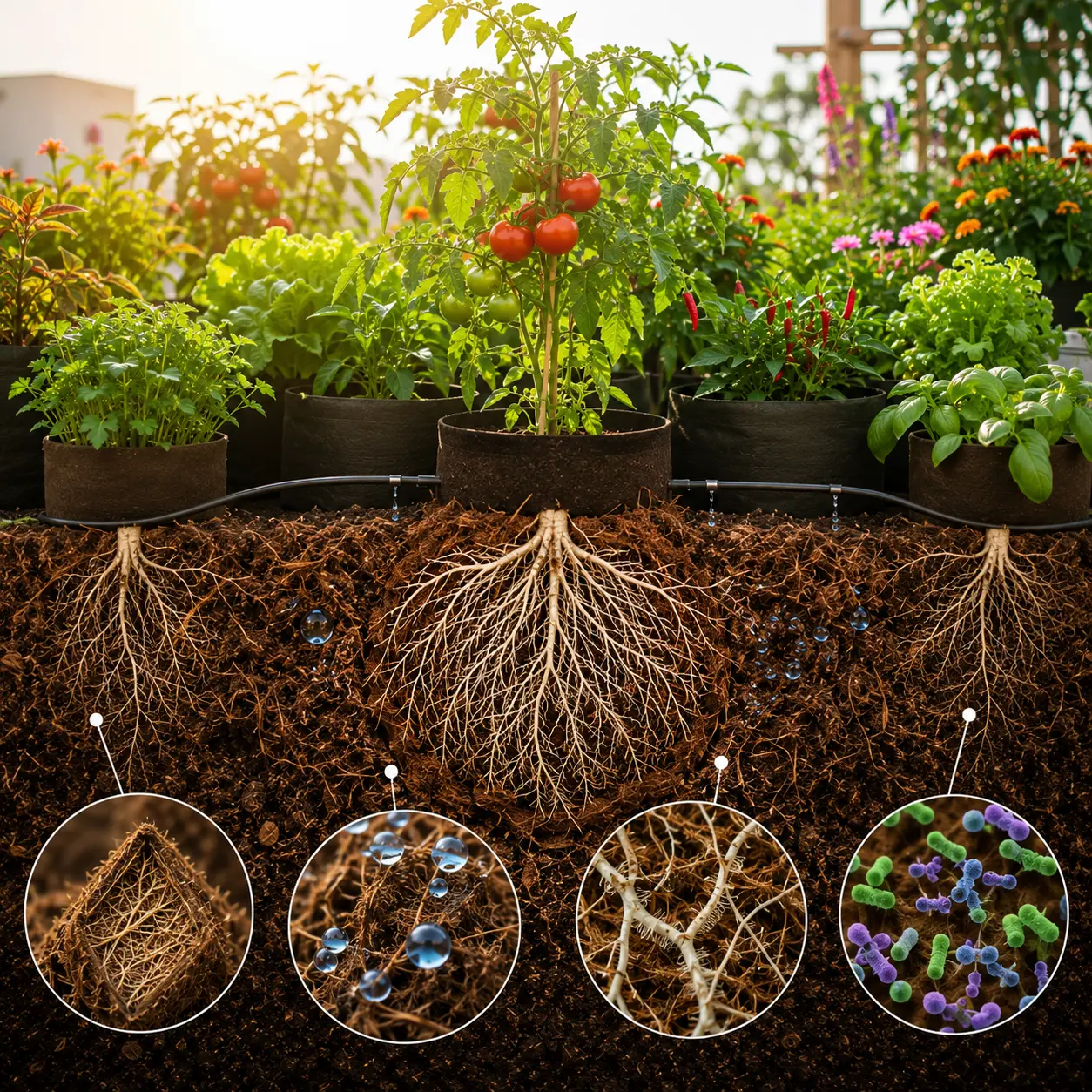
Coco Peat Growing Medium
Enhances moisture retention while maintaining excellent root-zone aeration.

Grow Bags for Plants
Improve drainage, root aeration, and vegetable production in limited spaces.

Plastic Pots for Plants
Ideal containers for seedlings, ornamentals, herbs, and balcony gardens.
Ayurvedic and Medicinal Properties
Guduchi occupies a distinguished place in Ayurvedic medicine. Classical texts, including the Charaka Samhita and Sushruta Samhita describe it as a primary rasayana (rejuvenative), jwarahara (traditionally used in fever management), and medhya (supportive of cognitive wellbeing).
Phytochemical studies have identified a range of biologically active compounds in Tinospora cordifolia, including alkaloids, diterpenoid lactones, glycosides, steroids, and polysaccharides. Experimental research suggests these constituents may contribute to the plant’s reported immunomodulatory and antioxidant activity, although the precise clinical significance remains under investigation.
Traditional Ayurvedic preparations rely primarily on the stem, which is considered the most therapeutically valuable part of the plant. Fresh stem juice (swarasa) is traditionally regarded as a potent preparation, while dried stem powder (churna) is more commonly available commercially. Guduchi satva, a starch extract prepared from the stem, is traditionally used in Ayurvedic practice for specific Pitta-related conditions.
One of the clearest overlaps between traditional practice and modern investigation is Guduchi’s longstanding use during fever and recovery states. Ayurvedic texts describe its use in recurrent and chronic febrile conditions, while modern research has explored related anti-inflammatory and immunological effects, though robust human clinical evidence remains limited.
A longstanding traditional belief in parts of India holds that Guduchi grown on a neem tree — often called Neem Giloy — possesses enhanced therapeutic value. This remains a traditional Ayurvedic preference rather than a conclusion established by modern phytochemical research.
This information is based on traditional Ayurvedic knowledge and published research. It is not a substitute for medical advice. Consult a qualified healthcare professional before using any plant-based remedy for health conditions.
Cultural and Spiritual Significance
Guduchi’s role in Indian culture extends well beyond medicine. The name Amrita connects the plant directly to the myth of the churning of the cosmic ocean (Samudra Manthan) — the vine is said to have sprung from the drops of divine nectar that fell to earth. This mythological origin is explored in full in the Guduchi Quick Facts article; the practical result is that the plant is treated with reverence in many Indian households, often planted near a tulsi or neem tree as a living medicine cabinet and an auspicious presence.
In folk medicine traditions across Bihar, West Bengal, and Madhya Pradesh, Guduchi juice is still administered during monsoon fevers as a household remedy, passed down within families as practical knowledge rather than formal Ayurvedic prescription.
Ecological Role
Guduchi can contribute to garden biodiversity as a flowering and fruiting vine. Its small greenish-yellow flowers may attract pollinating insects, while its berries may be consumed by birds, potentially aiding seed dispersal. As a climbing plant, Guduchi can be trained vertically on supports, making it useful in space-efficient garden designs.
Practical Value for Home Gardeners
For most Indian home gardeners, Guduchi offers three concrete benefits: a freely available source of fresh stem for making kaadha (decoction) during fever season, a low-maintenance vine that adds greenery to a wall or trellis, and a plant with genuine Ayurvedic credibility that can be grown from a single cutting at almost no cost.
Unlike many medicinal plants that require specific conditions, Guduchi adapts to almost any Indian garden. The investment is minimal; a single established vine can provide stem material for household use indefinitely.
How to Prepare or Use at Home
Guduchi is used in several traditional Ayurvedic preparations, with the stem being the most commonly used medicinal part. Home use should be approached conservatively, especially when using concentrated herbal preparations.
Fresh stem juice (swarasa):
Traditionally prepared by washing fresh Guduchi stem, crushing or blending it with a small amount of clean water, and straining the liquid. In Ayurveda, this preparation is considered one of the most traditional forms of use.
Stem decoction (kaadha):
A traditional household preparation made by simmering chopped fresh or dried stem pieces in water until reduced, then straining before use. This remains a common traditional method of preparation in many Indian households.
Dried stem powder (churna):
A commercially available and convenient form commonly used in Ayurvedic practice. Powdered preparations should be used according to product instructions or practitioner guidance.
Because potency can vary significantly depending on preparation method, plant quality, and concentration, medicinal use should ideally follow guidance from a qualified healthcare professional or experienced Ayurvedic practitioner.
What to Avoid
Guduchi may not be suitable for everyone, particularly when used in concentrated medicinal forms.
People with autoimmune conditions:
Because Guduchi may influence immune system activity, individuals with autoimmune disorders such as rheumatoid arthritis, lupus, or multiple sclerosis should seek medical advice before use.
People taking diabetes medications:
Some studies suggest Guduchi may influence blood glucose levels. Those taking anti-diabetic medications should use caution and consult a healthcare professional.
Pregnant or breastfeeding women:
Safety data for medicinal doses of Guduchi during pregnancy and breastfeeding remain limited. Professional medical guidance is recommended before use.
Use with other medications:
As with many medicinal herbs, Guduchi may interact with certain medications or health conditions. Medical supervision is advisable for therapeutic use.
Sourcing and Safety
Correct botanical identification is important when purchasing medicinal plant material. Related Tinospora species may be confused in trade, and product quality can vary significantly between suppliers.
Cases of herb-associated liver injury have been reported with some Tinospora-based products, although contributing factors may include species misidentification, contamination, inappropriate dosing, or pre-existing health conditions. For this reason, Guduchi should be sourced from reputable nurseries, herbal suppliers, or established Ayurvedic manufacturers.
Growing your own authenticated Tinospora cordifolia can provide greater confidence in plant identity for educational gardening purposes.
Key Takeaways
- Guduchi (Tinospora cordifolia) is one of Ayurveda’s best-known rasayana herbs, traditionally valued for general wellness and rejuvenation.
- Classical Ayurvedic texts describe it as a tridoshahara herb capable of balancing all three doshas.
- Modern research suggests potential immunomodulatory, antioxidant, and anti-inflammatory properties, though stronger clinical evidence is still needed.
- Traditional preparations primarily use the stem in juice, decoction, powder, or starch extract form.
- Individuals with medical conditions, those taking prescription medications, and pregnant or breastfeeding women should seek professional advice before medicinal use.
Guduchi remains one of the most culturally significant medicinal vines in South Asia — valued not only for its long Ayurvedic history, but also for its appeal as a resilient and meaningful home garden plant.
This content is for educational purposes only and does not constitute medical advice, diagnosis, or treatment.