Guduchi Plant Problems: Symptoms, Causes, and Fixes
Quick Answer: Guduchi is generally considered one of the more resilient medicinal climbing plants for Indian home gardens. Many serious problems arise not from pests or disease, but from poor drainage and prolonged waterlogging around the roots. Good airflow, appropriate support, and sensible watering prevent most common issues.
See also: Giloy plant profile, how to grow it, its flowering season, its benefits, and its varieties.
There is a certain irony in including Guduchi in a plant problems guide: when grown in suitable conditions, it is usually low-maintenance and trouble-free. Most issues arise from preventable growing mistakes such as poorly draining container mixes, persistently wet planting sites, or unmanaged pest outbreaks during active growth. Many of these problems can be corrected if identified early.
Recommended Products
Disclosure: As an Amazon Associate, PlantsInfo may earn from qualifying purchases.
🌱 Growing Essentials
The following products can help with container gardening, potting, root development, soil management, and healthy plant growth.
Organic Potting Soil Mix
Provides nutrients, structure, and healthy growing conditions for container plants.
Coco Peat Growing Medium
Enhances moisture retention while maintaining excellent root-zone aeration.

Grow Bags for Plants
Improve drainage, root aeration, and vegetable production in limited spaces.

Plastic Pots for Plants
Ideal containers for seedlings, ornamentals, herbs, and balcony gardens.
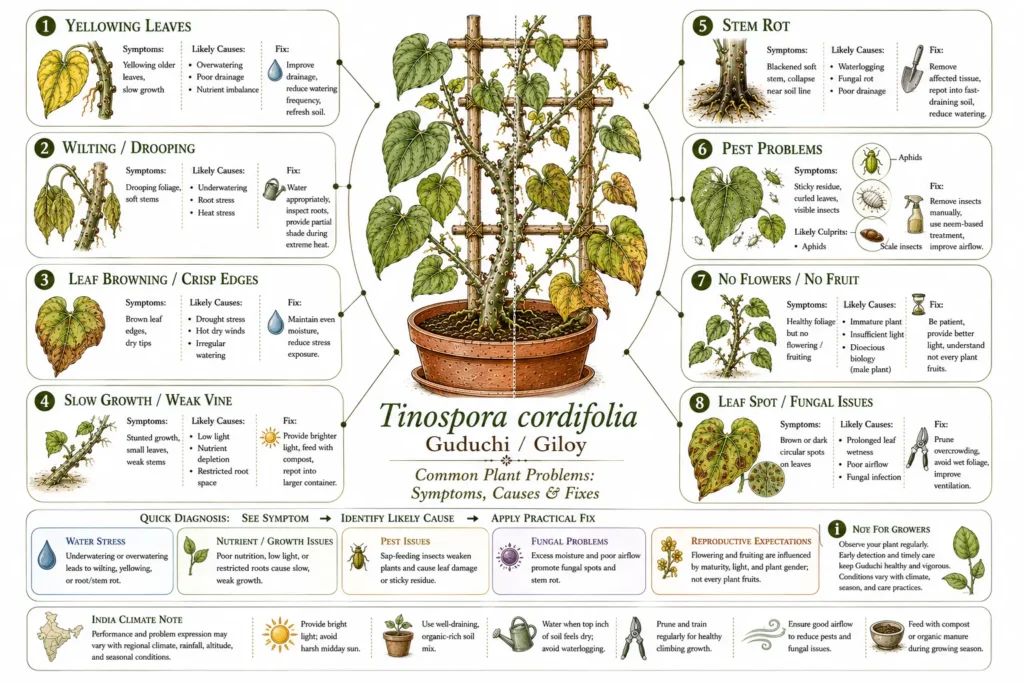
Quick Diagnosis
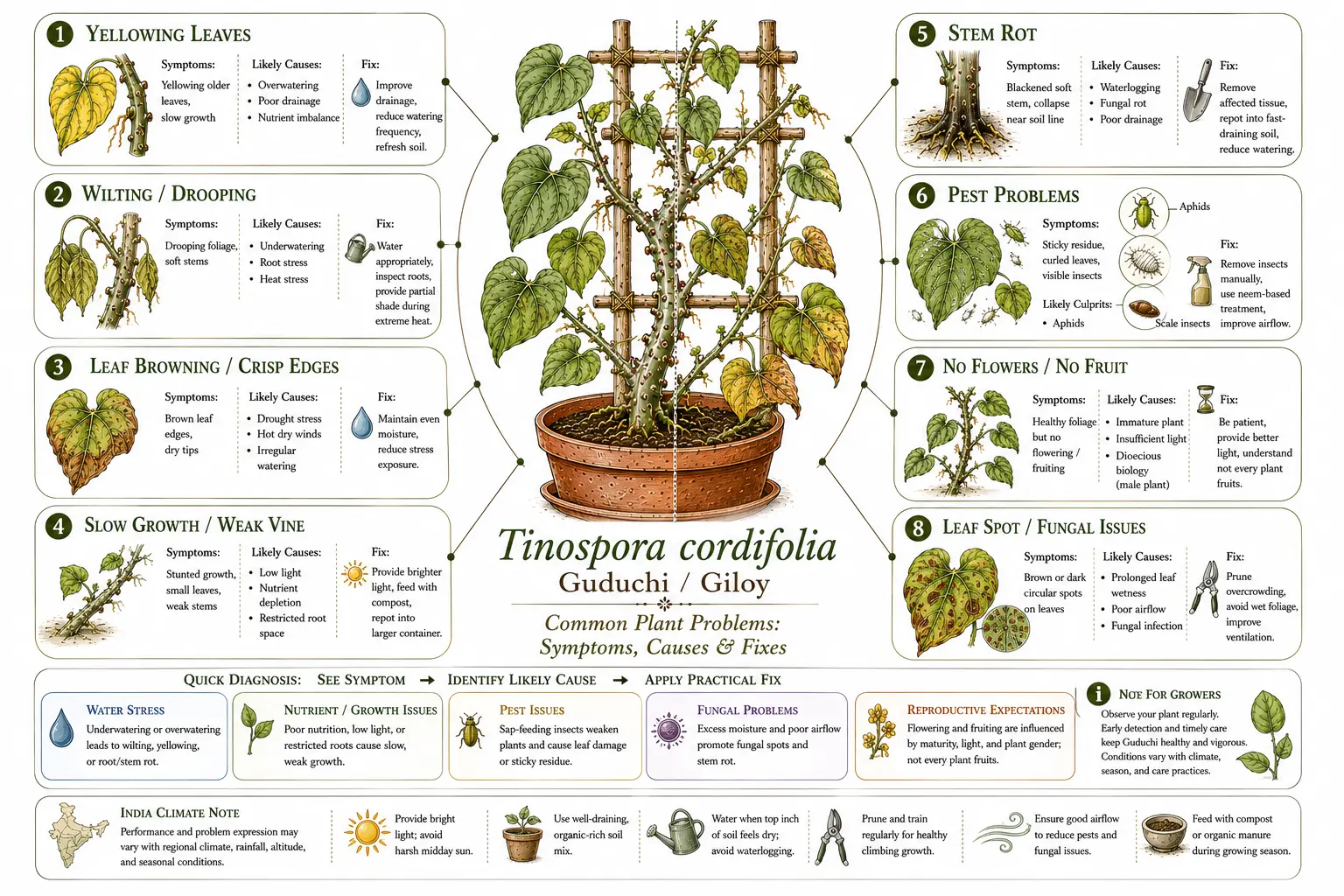
| Symptom | Possible Cause | First Action |
|---|---|---|
| Soft, pale stem base | Root rot or waterlogging damage | Check drainage immediately and inspect root health |
| White powder on young leaves | Possible powdery mildew | Improve airflow and monitor affected growth |
| Yellow sticky clusters on new growth | Aphids | Remove or treat early before infestation spreads |
| Small cottony white masses on stems | Mealybugs | Isolate affected growth and treat promptly |
| Fine webbing under leaves, bronzed foliage | Spider mites | Inspect leaf undersides and begin pest management |
| Uniform yellowing leaves | Seasonal leaf drop, nutrient stress, or watering imbalance | Assess growing conditions and recent care |
| Wilted leaves despite moist soil | Possible root stress or rot | Inspect the stem base and root zone |
Diseases
Powdery Mildew
Powdery mildew appears as a white or greyish powdery coating on leaves, particularly on tender new growth. It is more likely to develop when airflow is poor, and humidity remains elevated around crowded foliage.
Early infections can often be managed by improving airflow, reducing crowding, and removing badly affected growth. Severe or persistent fungal problems may require an appropriate horticultural treatment used according to product instructions.
Prevention is generally more effective than treatment. Avoid allowing dense stems to remain tightly pressed against walls, fences, or other poorly ventilated surfaces.
Root Rot / Waterlogging Damage
Root and stem-base rot is one of the most serious problems Guduchi can face, most commonly associated with persistently wet soil, poor drainage, or containers that retain excess moisture.
Early warning signs may include softening or darkening at the stem base, unexplained wilting despite moist soil, yellowing foliage, or a general decline in vigour.
If detected early, improving drainage, reducing watering frequency, and replacing poorly draining growing media may help recovery. Severely affected plants are often difficult to restore.
Prevention depends on well-drained soil, sensible watering, and avoiding prolonged standing water around the roots.
Stem Damage and Secondary Infection
Older Guduchi stems may occasionally develop discoloured, sunken, or damaged patches following pruning injury, abrasion, or prolonged moisture exposure.
Affected sections should be pruned cleanly with sanitized tools, and growing conditions adjusted to improve airflow and reduce moisture stress.
Leaf Spot or Blight-like Symptoms
Dark spots, water-soaked lesions, or localized leaf damage can occasionally appear during prolonged damp conditions.
In many cases, isolated leaf spotting is minor and can be managed by removing affected foliage and improving air circulation. If symptoms spread rapidly across the plant, a broader fungal or environmental issue may be involved.
Safety Note
This troubleshooting guide provides general gardening information only. If using horticultural pest or disease treatments, always follow local regulations and manufacturer instructions, especially when growing plants intended for medicinal or household use.
Pest Problems
Aphids
Aphids are small, soft-bodied sap-feeding insects that often cluster on tender new growth, leaf undersides, and stem nodes during active growth periods.
Signs of infestation include curled or distorted young leaves, sticky honeydew residue, and increased ant activity around the plant.
Mild infestations can often be managed by physically removing affected growth or using an appropriate horticultural pest treatment according to product instructions. Early intervention helps prevent rapid spread.
Heavy infestations may weaken new growth and reduce overall plant vigour.
Mealybugs
Mealybugs appear as small white cottony clusters in stem joints, leaf axils, and on sheltered plant surfaces. Like aphids, they feed on plant sap and may leave sticky honeydew behind.
Heavy infestations can lead to yellowing foliage, reduced vigour, and localized dieback.
Affected growth should be isolated and treated promptly using appropriate horticultural pest management methods. Inspect nearby plants as mealybugs can spread between closely grouped containers.
Mealybugs are sometimes confused with fungal growth, but unlike powdery mildew, they appear as distinct cottony insect clusters rather than a flat powdery coating.
Spider Mites
Spider mites are tiny sap-feeding pests that may cause fine pale stippling, bronzing, or dull discolouration on leaves. Fine webbing on leaf undersides or between stems strongly suggests their presence.
They are more likely to become problematic in warm, dry conditions or where plant stress is present.
Improving general plant health, monitoring affected foliage, and using suitable horticultural pest control measures can help manage infestations before they become severe.
Environmental and Care Mistakes
Overwatering and Poor Drainage
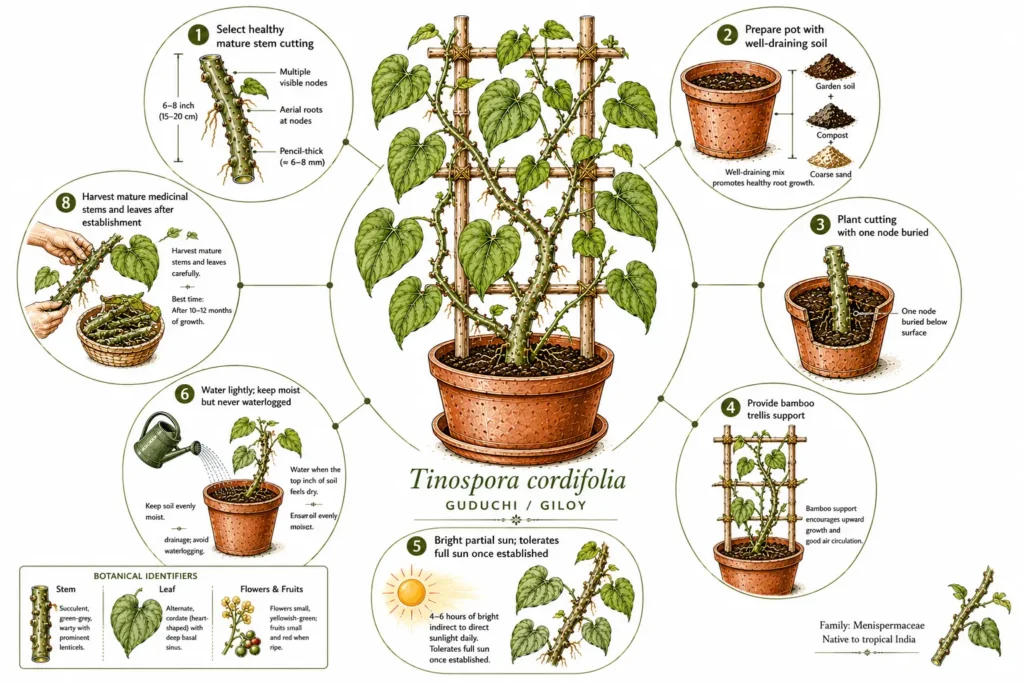
Overwatering is one of the most common care mistakes made by first-time Guduchi growers, especially in containers. The vine’s moisture-storing stems make it more tolerant of moderate drying than persistently wet conditions once established.
One common warning sign is a soft, pale, or weakening stem base accompanied by wilting foliage — symptoms that can sometimes be mistaken for underwatering.
Fix: Reduce watering frequency, allow excess moisture to dissipate before watering again, and ensure containers drain freely without standing water.
Planting in Deep Shade
Guduchi tolerates partial shade but generally performs poorly in deep shade. Growth may become thin, weak, or pale, and persistently damp shaded conditions can increase moisture-related problems.
Fix: Move container-grown plants to a brighter position or reduce excessive shading where practical. Improved growing conditions often encourage healthier new growth.
Insufficient Support
Guduchi is a climbing vine and performs best when given vertical support such as a trellis, fence, or wall. Without support, stems may trail across damp soil or remain crowded in containers, increasing stress and maintenance problems.
Fix: Provide a sturdy climbing structure and gently guide new growth onto it as the plant develops.
Transplant Stress
Recently transplanted Guduchi cuttings or nursery plants may temporarily shed leaves or appear stressed after root disturbance.
This is often part of the plant’s adjustment process as roots re-establish in the new growing medium.
Fix: Avoid overwatering immediately after transplanting, provide stable conditions, and allow time for recovery before making further major changes.
Prevention Protocol
- Before periods of prolonged wet weather, check container drainage and ensure excess water can escape freely. Good drainage is one of the most important preventive measures for Guduchi.
- At the start of active growth, a light top dressing of compost or similar organic matter can help maintain healthy growing conditions.
- Inspect new growth regularly for aphids, mealybugs, or other pests so problems can be addressed early.
- Prune dead, damaged, or overcrowded stems as needed to improve airflow and reduce stress on the plant.
- Avoid allowing dense growth to remain tightly pressed against walls or supports with poor ventilation.
Frequently Asked Questions
Can I use Guduchi stems after applying neem oil?
If using horticultural pest treatments on plants intended for medicinal or household use, always follow product instructions carefully, including any stated harvest or safety precautions.
The stems look dead in winter — is the plant dying?
Not necessarily. In cooler regions or seasonal conditions, Guduchi may shed leaves or appear inactive for a period. A simple scratch test on the stem can help: if green or pale living tissue is visible beneath the bark, the plant is still alive.
My plant has small brown spots on some leaves. Is this a problem?
Small isolated brown spots may result from minor environmental stress, physical damage, or pest activity rather than serious disease. If the spotting spreads rapidly, causes leaf drop, or is accompanied by yellowing or wilting, closer inspection is warranted.
Guduchi is generally a resilient and forgiving climbing plant. Most common growing problems are manageable when drainage, airflow, and basic plant care are handled well.