Safed Musli Plant: Key Facts, Names, and What You Should Know
Dig up a mature Safed Musli plant after the monsoon season, and the tubers come out like a fistful of pale, plump fingers — milky white inside when you snap one, with a faintly sweet and starchy smell that is nothing like what you would expect from a plant traded as a powerful tonic. The ordinariness of it above ground, and the density of it below, is the whole story of this herb.
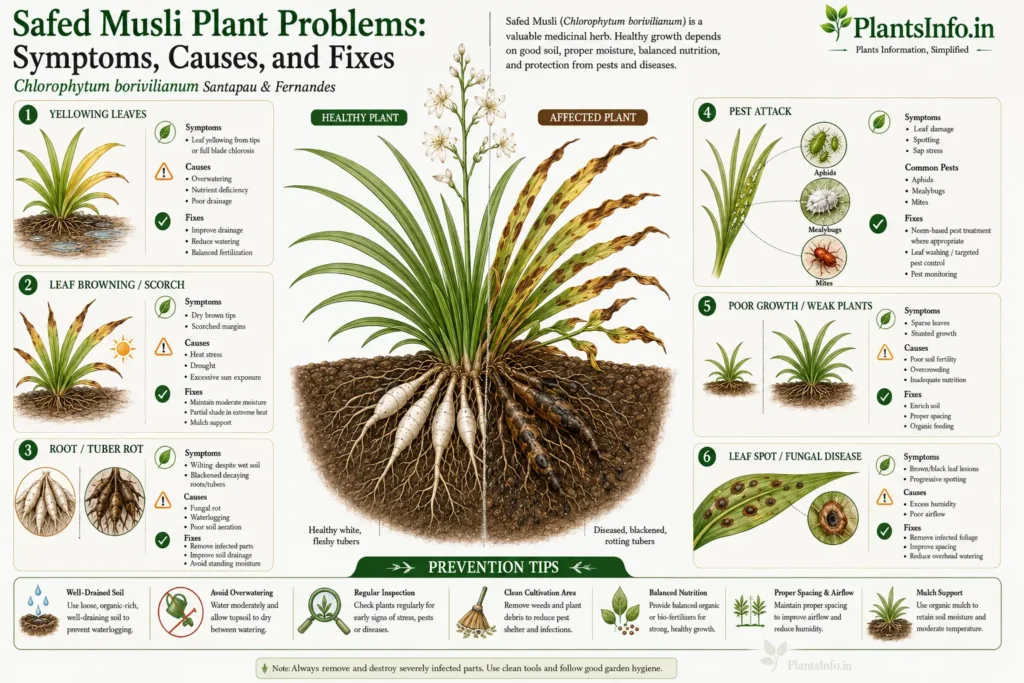
See also: Safed Musli plant profile, how to grow it, common problems, its flowering season, and its benefits.
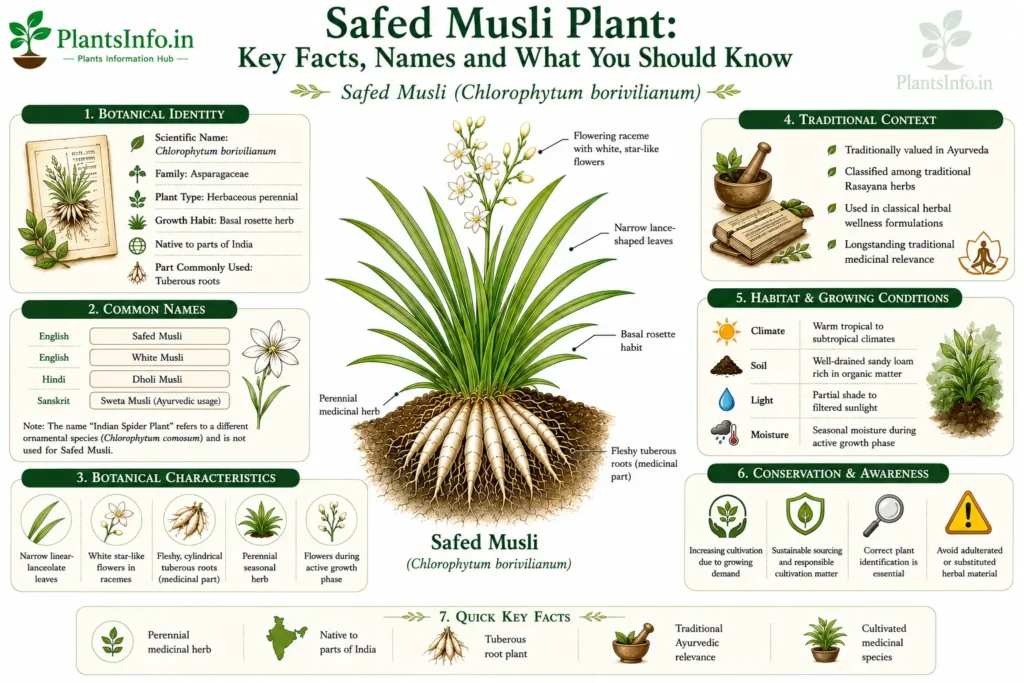
Names in Different Languages
| Language | Name |
|---|---|
| English | White Musli, Indian Spider Plant, Safed Musli |
| Hindi | Safed Musli, Dholi Musli, Musli |
| Bengali | Safed Musli, Shwet Musli |
| Tamil | Tannirvittan Kizhangu |
| Telugu | Tella Nela Tadi |
| Marathi | Shwet Musli, Kheerni |
| Kannada | Bile Musli, Mushi Hegde |
| Malayalam | Vella Kattu Kizhangu |
| Gujarati | Dholi Musli |
| Punjabi | Safed Musli |
| Odia | Safed Musali |
| Sanskrit | Shweta Musali, Musali, Shatavari-parna |
| Scientific name | Chlorophytum borivilianum Santapau & R.R. Fern. |
| Family | Asparagaceae (older texts: Liliaceae) |
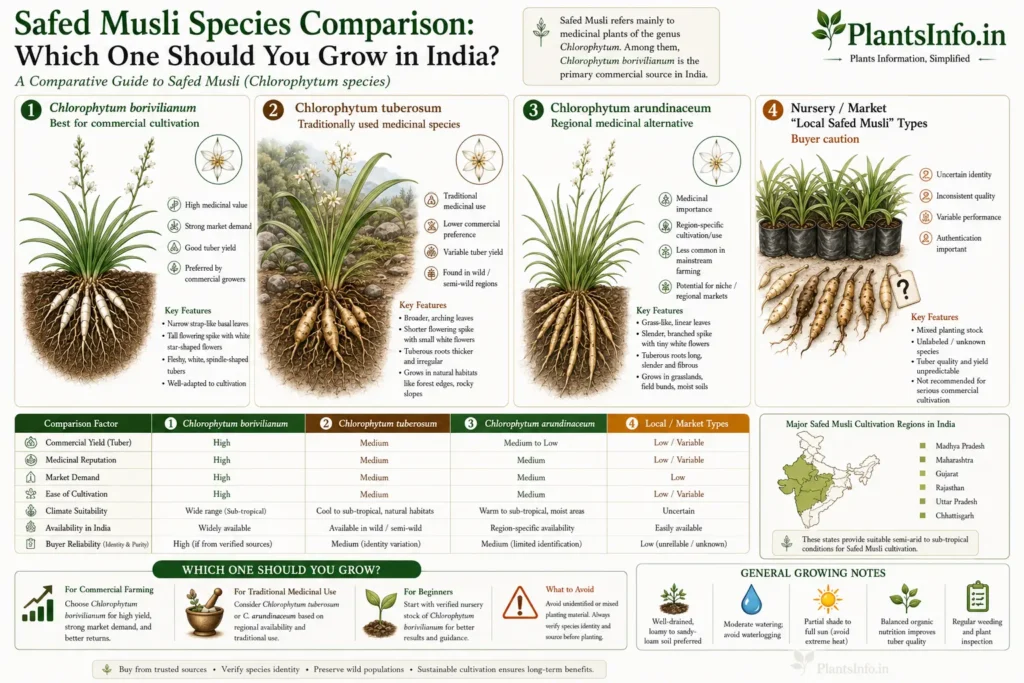
The most-searched name across India is Safed Musli (Hindi). In South India, Tannirvittan Kizhangu (Tamil) is the most recognised regional name. Note: Chlorophytum tuberosum is a closely related species sometimes sold under the same common name — it is not the same plant and is medicinally inferior to C. borivilianum.
Recommended Products
Disclosure: As an Amazon Associate, PlantsInfo may earn from qualifying purchases.
🌱 Growing Essentials
The following products can help with container gardening, potting, root development, soil management, and healthy plant growth.
Organic Potting Soil Mix
Provides nutrients, structure, and healthy growing conditions for container plants.
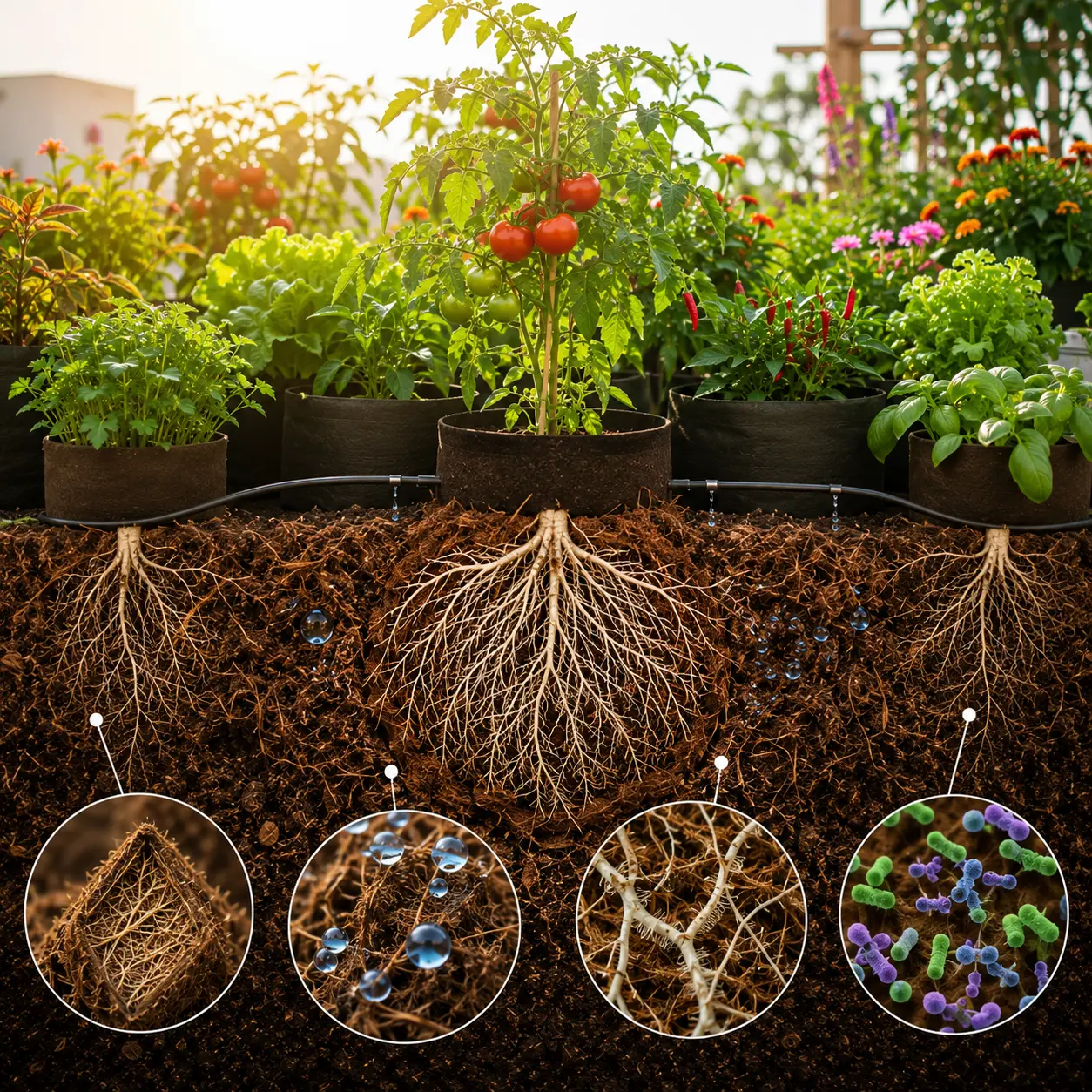
Coco Peat Growing Medium
Enhances moisture retention while maintaining excellent root-zone aeration.

Grow Bags for Plants
Improve drainage, root aeration, and vegetable production in limited spaces.

Plastic Pots for Plants
Ideal containers for seedlings, ornamentals, herbs, and balcony gardens.
What Does It Look Like?
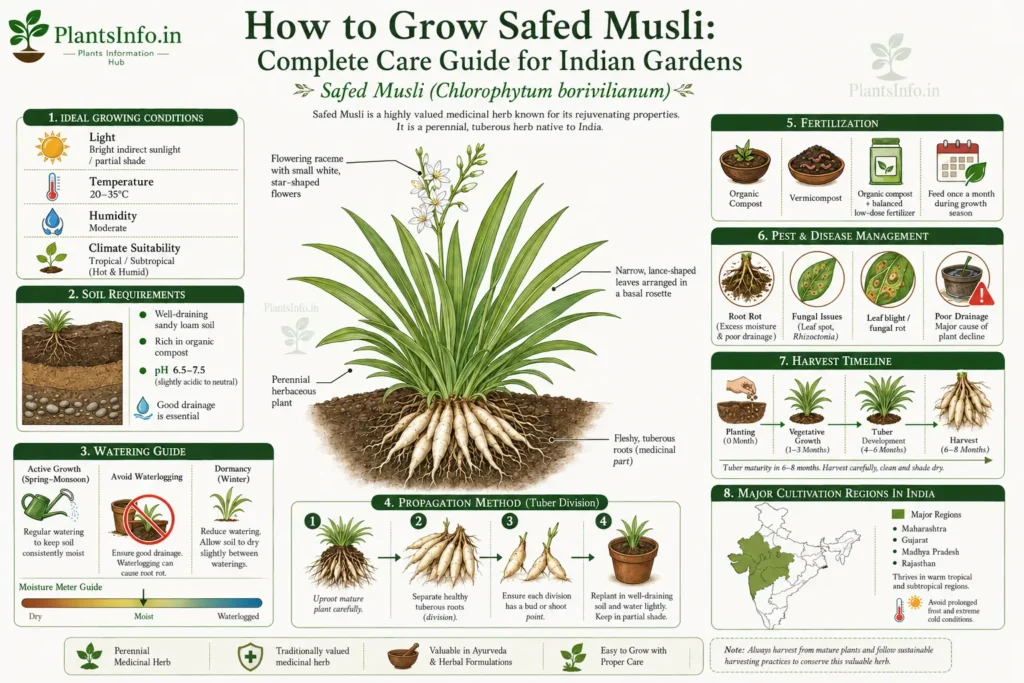
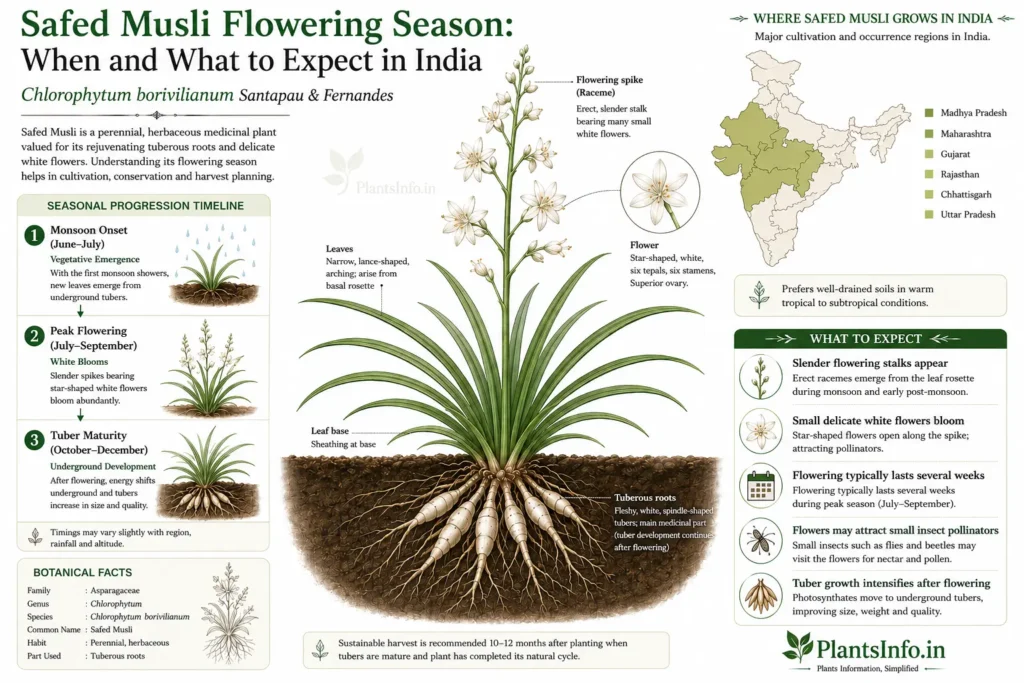
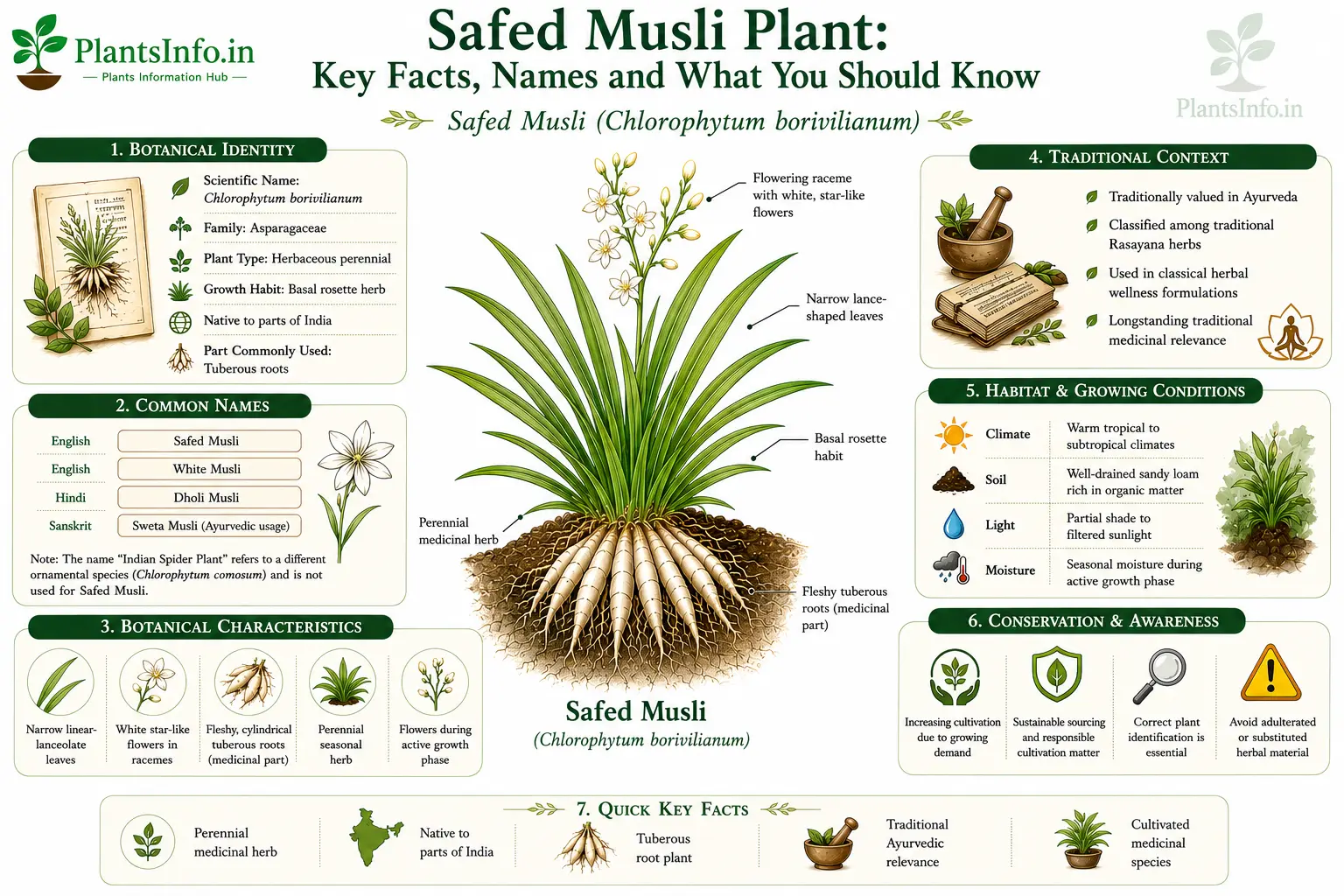
Safed Musli is a small, herbaceous plant 30–45 cm tall during its active growing season. Above ground, it is modest to the point of being easily overlooked — a rosette of sub-erect, lanceolate (lance-shaped) leaves, 20–45 cm long and 3–5 cm wide, with a smooth surface and prominent central vein. The leaves are a healthy, deep green during the monsoon season, yellowing progressively as the plant approaches its winter dormancy.
The flowers are star-shaped, white, approximately 2 cm across, borne on long, slender, branching panicle stalks that can reach 60–120 cm — noticeably taller than the leaves, making them the plant’s most visible feature during the flowering season. Each flower is small and delicate, lasting only a few days, but the panicle carries multiple flowers in succession through the July–December period.
Fruits are small, greenish to yellow capsules. The seeds are black. The underground tuber cluster — the part of most interest to the home grower — consists of 8–20 finger-shaped roots, each 8–15 cm long and 1–2 cm in diameter, creamy white to pale yellow on the outside and milky white inside when fresh. Breaking one releases a faint, starchy, mildly sweet scent.
The one unmistakable identification feature: the cluster of thick, white, pencil-shaped tubers radiating from a central crown when the plant is lifted.
Where Does It Grow in India?
Chlorophytum borivilianum is native to the tropical deciduous and moist forests of peninsular and central India. Its natural populations are concentrated in Madhya Pradesh, Chhattisgarh, Gujarat, Rajasthan, and Maharashtra — the same belt where indigenous communities have relied on it for generations. It also grows naturally in Uttar Pradesh, Assam, Karnataka, and Andhra Pradesh.
Altitude range: it grows from the plains up to approximately 1,500 m. Natural habitat is the shaded floor of deciduous forests, often on gentle slopes with good natural drainage. It does not occur in consistently wet or swampy ground.
Wild populations have been severely depleted by commercial over-harvesting. Natural stands that were abundant in the forests of MP and Gujarat as recently as thirty years ago are now rare and fragmented. Cultivated populations — on farms, in research stations, and increasingly in home gardens — have become the primary source of supply. India’s annual commercial demand for dried Safed Musli tubers is reported at over 500 tonnes, far exceeding what natural regeneration can sustain.
What Is It Used For?
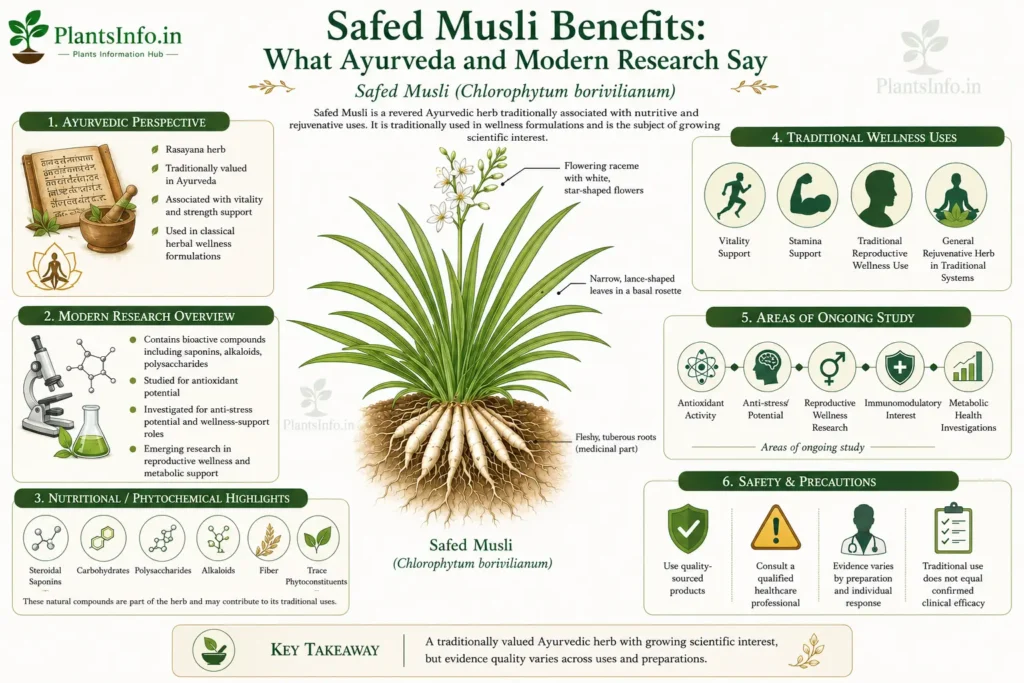
Safed Musli is used primarily as a vajikarana rasayana — a vitality and reproductive health tonic — in Ayurvedic, Unani, and Siddha medicine. It is a constituent of over 100 classical Ayurvedic formulations. Full medicinal details belong in the Benefits Guide.
The dried powdered tuber is the most common commercial form, sold as a standalone supplement and as an ingredient in compound preparations including Musli Pak, Chyawanprash, and various herbal energy tonics. In the United States and parts of Europe, the tuber is processed into chips or flakes as a nutritious food supplement.
In some parts of central India, the leaves are eaten as a seasonal vegetable. The plant is also cultivated commercially as a cash crop — its high market value, relatively short growing cycle of 90–120 days, and suitability for intercropping make it a viable income crop for smallholder farmers in MP and Rajasthan.
In Mythology and Ancient Texts
Safed Musli is not among the plants with prominent roles in the Sanskrit epics or Puranas. Its classical textual presence is rooted firmly in the Ayurvedic pharmacopoeia rather than mythology. The Bhavaprakasha — a 16th-century Ayurvedic text that expanded significantly on the classical materia medica — describes Safed Musli (Shweta Musali) as a potent vajikarana herb, noting its capacity to nourish Shukra dhatu (reproductive tissue) and restore vitality. The Rasaratna Samuccaya references it in rejuvenative preparations.
In classical Ayurvedic taxonomy, Safed Musli belongs to the Vajikarana group alongside Ashwagandha, Shatavari, Kapikacchu, and Gokshura — a group explicitly focused on reproductive health and vitality. Its inclusion in this group reflects a specific pharmacological identity established through centuries of clinical practice.
The folk names Divya Aushadhi (divine medicine) and Shwet Sona (white gold) are not ancient text references but represent the accumulated esteem of indigenous communities who relied on this plant and used these epithets to convey its value to outsiders.
Is It Easy to Grow?
Moderate difficulty. Safed Musli is more demanding than most medicinal herbs because it requires specific conditions — well-prepared soil, raised beds, careful water management, and correct timing. None of these requirements is technically complex, but all of them matter. A gardener who invests in good soil preparation and plants on raised beds at monsoon onset will have a satisfying, productive garden. A gardener who plants tubers flat in unimproved clay soil will have a disappointing one.
Container growing is a practical option for urban gardeners. The crop’s compact above-ground profile fits well on terraces and balconies, and a single large container can produce a useful household supply.
⚠ Special Flags
Endangered status: Chlorophytum borivilianum is listed as an endangered plant in India due to decades of commercial over-harvesting from wild populations. Home cultivation and purchase from cultivated sources directly support conservation.
Widespread adulteration: Commercial Safed Musli products are among the most frequently adulterated medicinal herb preparations in the Indian market. Other Chlorophytum species — particularly C. tuberosum — are commonly substituted or blended in. C. tuberosum is medicinally inferior and carries lower saponin content. The surest protection is home cultivation or purchase from certified sources with a saponin content certificate.
Naming confusion: Chlorophytum tuberosum is sometimes sold as Safed Musli or as a “variety” of it. It is a distinct species with a different phytochemical profile.
Frequently Asked Questions
Is Safed Musli the same as Shatavari?
No. Both are rasayana herbs used for reproductive health, but they are entirely different plants. Shatavari (Asparagus racemosus) is a climbing vine with feathery leaves and small red berries. Safed Musli is a ground-level rosette plant with thick white tubers. Their active compounds, growing habits, and therapeutic emphases differ significantly.
Can the Safed Musli plant I see in photos online be confused with an ornamental spider plant?
Yes, easily. Both Chlorophytum borivilianum and the common ornamental spider plant (Chlorophytum comosum) belong to the same genus and look similar above ground. The key difference is the tuber: C. borivilianum produces thick, clustered, white tuberous roots; the ornamental spider plant does not. Never use an ornamental spider plant as a substitute.
Is wild-harvested Safed Musli better than cultivated?
Not necessarily. Cultivated Safed Musli from well-managed beds with good organic soil can match or exceed wild material in saponin content. Wild material also carries the risk of misidentification and adulteration during supply chain handling. Certified cultivated material from a known source is safer and more reliable for medicinal use.
The story of Safed Musli is partly a conservation story and partly a quality story — and growing your own resolves both at once.