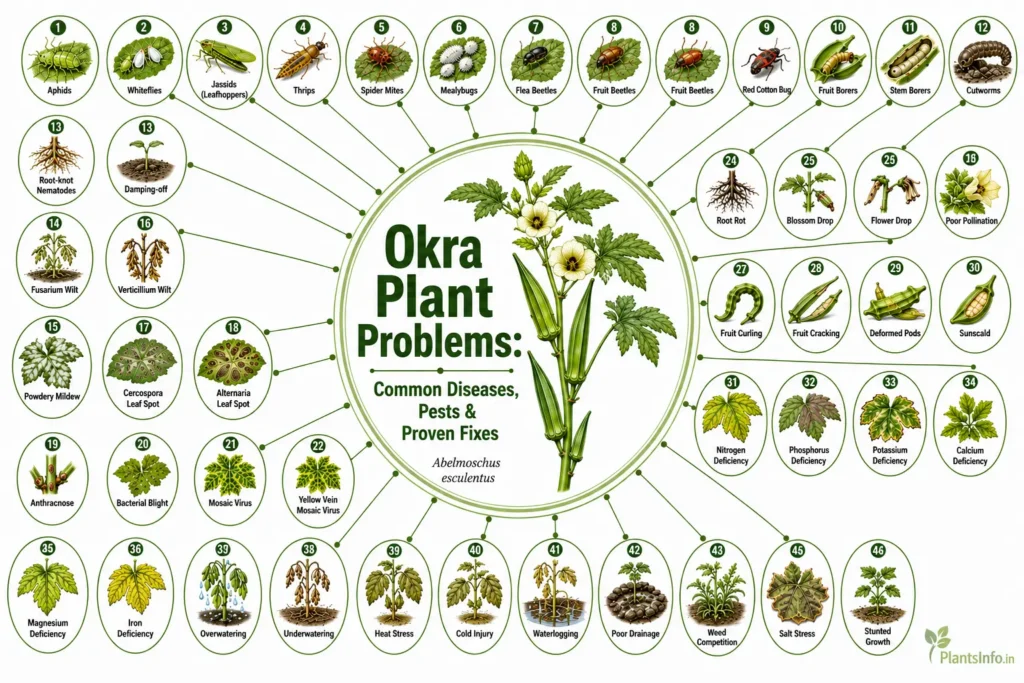
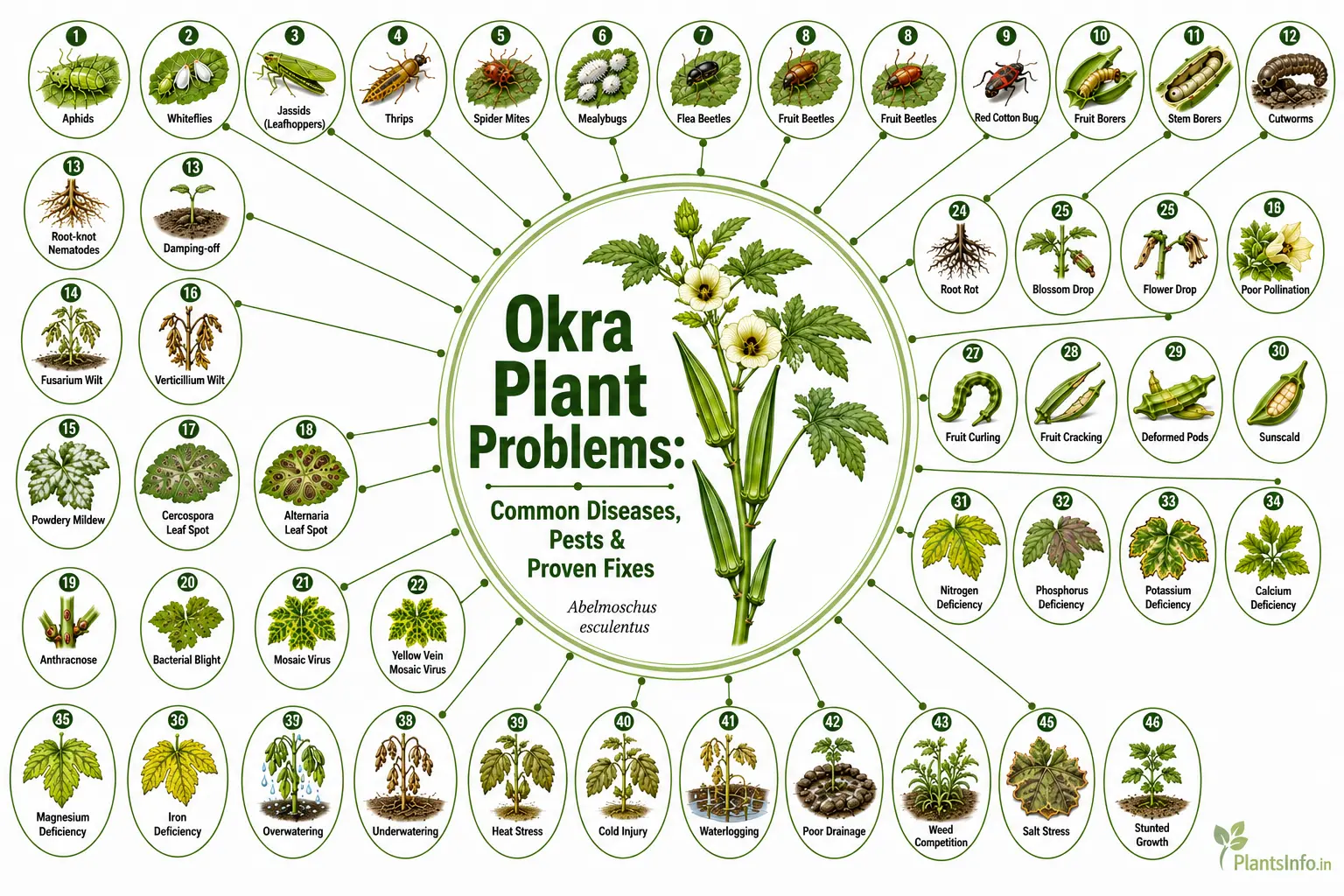
Okra Plant Problems: Common Diseases, Pests & Proven Fixes
Quick Answer
| Common Problem | Most Likely Cause | First Action |
|---|---|---|
| Yellow leaves | Water stress, nutrient imbalance, natural ageing | Check soil moisture and inspect leaf pattern |
| Wilting | Heat stress, underwatering, waterlogged roots | Examine soil moisture before watering |
| Poor germination | Cold soil, old seed, excessive moisture | Sow in warm, well-drained soil |
| Slow growth | Low temperatures, poor soil fertility, overcrowding | Review growing conditions and spacing |
| Flowers dropping | Temperature stress, moisture fluctuations | Maintain consistent growing conditions |
| Few pods | Insufficient sunlight, poor nutrition, irregular harvesting | Increase light exposure and harvest frequently |
| Tough pods | Delayed harvesting | Pick pods every 2–3 days |
| Brown leaf edges | Moisture stress or nutrient imbalance | Check watering practices and soil condition |
| Stunted plants | Root restriction, compacted soil, poor drainage | Improve root environment |
| Stem damage | Wind or mechanical injury | Support plants and remove severely damaged growth |
Most okra problems are caused by environmental stress, watering mistakes, or nutrient imbalance rather than pests or diseases. Correct diagnosis begins by observing where symptoms first appear, how quickly they develop, and recent changes in weather or plant care.
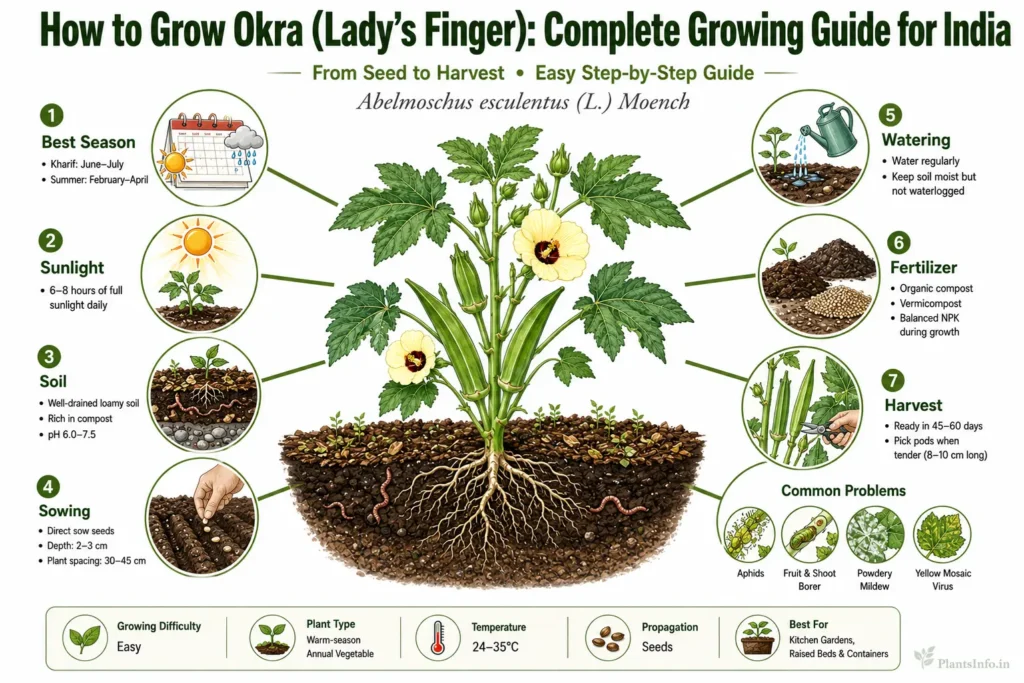
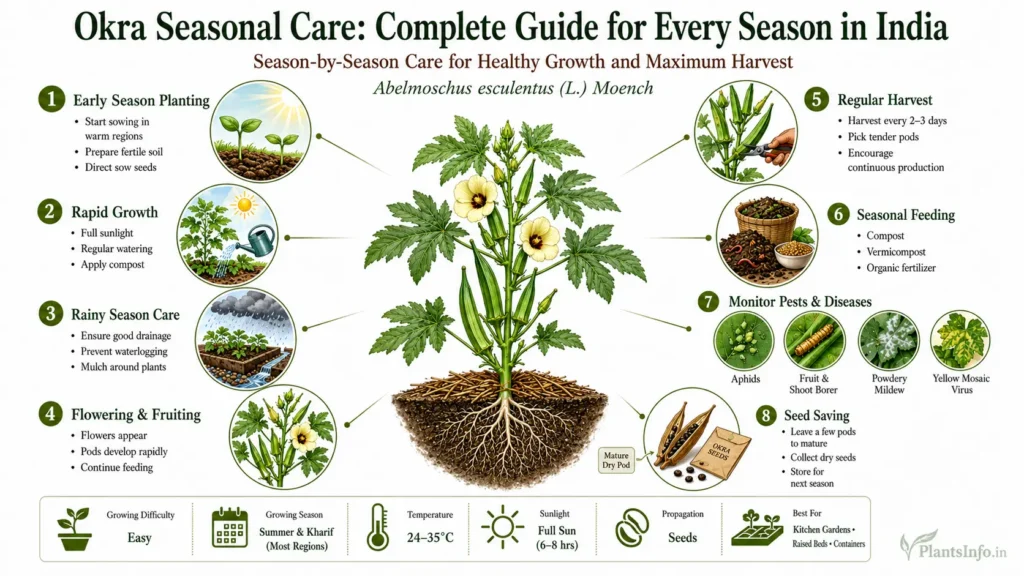
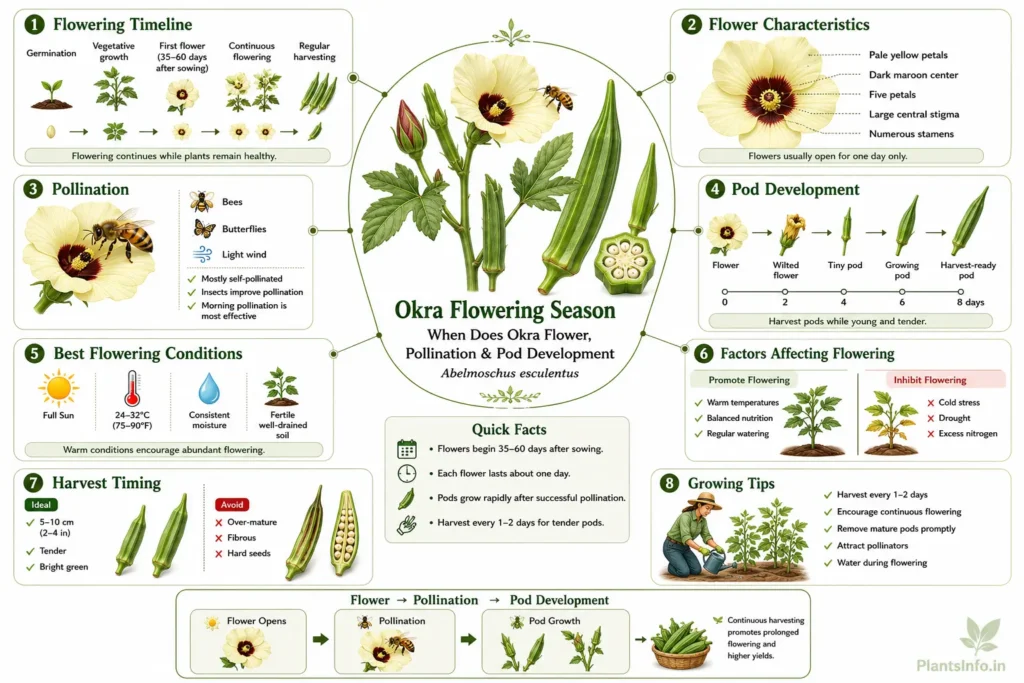
See also: Okra plant profile, how to grow it, seasonal care, its flowering season, and its benefits.
Many issues can be corrected without replacing the crop if identified early. Careful observation is usually more effective than applying treatments before the underlying cause has been identified.
Recommended Products
Disclosure: As an Amazon Associate, PlantsInfo may earn from qualifying purchases.
🌱 Growing Essentials
The following products can help with container gardening, potting, root development, soil management, and healthy plant growth.
Organic Potting Soil Mix
Provides nutrients, structure, and healthy growing conditions for container plants.
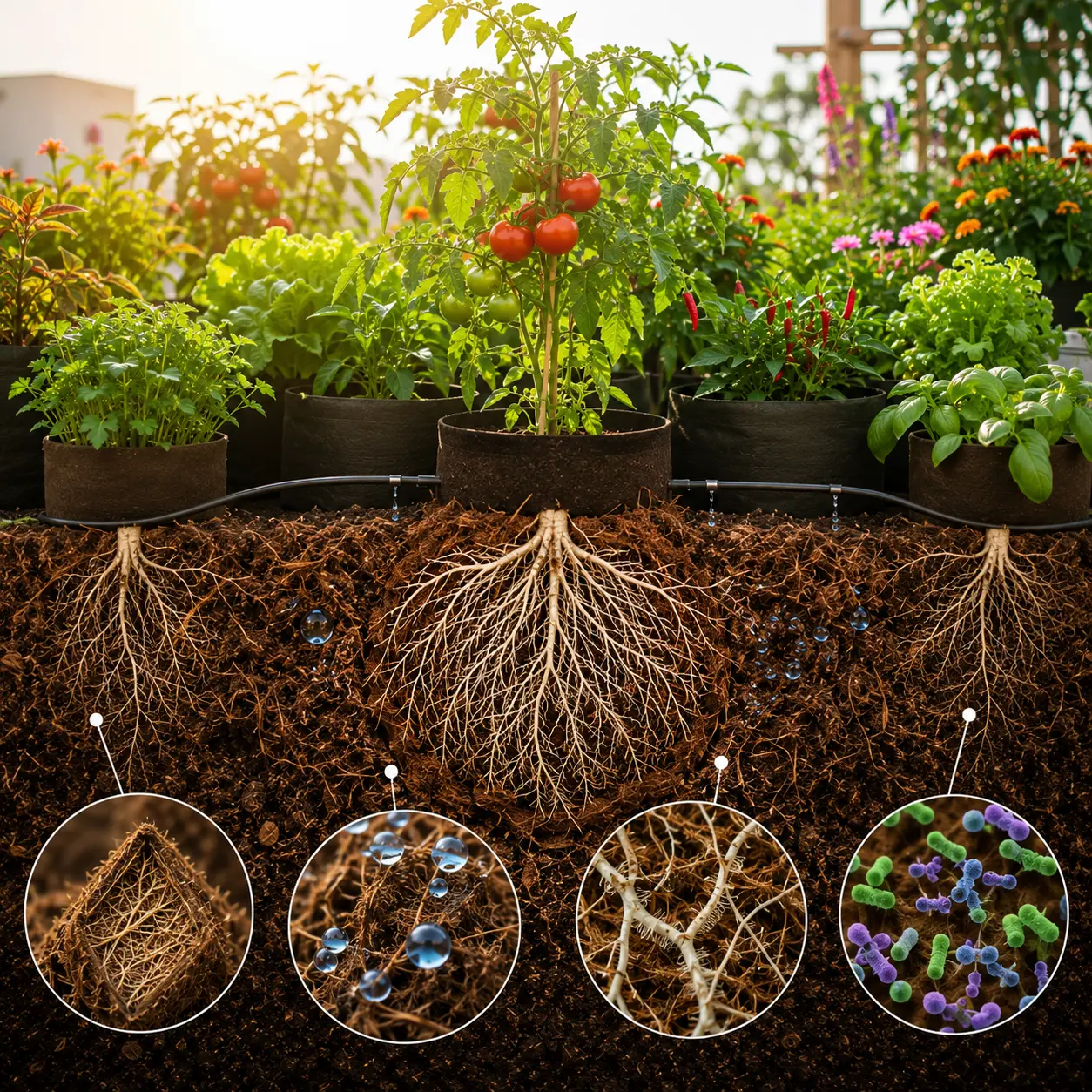
Coco Peat Growing Medium
Enhances moisture retention while maintaining excellent root-zone aeration.

Grow Bags for Plants
Improve drainage, root aeration, and vegetable production in limited spaces.

Plastic Pots for Plants
Ideal containers for seedlings, ornamentals, herbs, and balcony gardens.
Introduction
| Guide Objective | Purpose |
|---|---|
| Diagnose symptoms | Identify the most likely cause of plant problems |
| Prevent unnecessary treatment | Distinguish environmental issues from biological problems |
| Improve recovery | Recommend practical corrective actions |
| Reduce future problems | Explain preventive management practices |
Even well-maintained okra plants occasionally develop problems during their growing season. Because the crop grows rapidly, changes in weather, irrigation, or soil conditions often become visible within only a few days.
The challenge for gardeners is that different problems frequently produce similar symptoms. Yellow leaves, wilting, poor flowering, and reduced harvests may all result from multiple unrelated causes.
Successful troubleshooting therefore depends on systematic diagnosis rather than assumptions. Before applying fertilizers, increasing irrigation, or using plant protection products, first determine whether the problem originates from the environment, cultural practices, nutrient availability, pests, or disease.
This guide follows a step-by-step diagnostic approach, helping gardeners identify the underlying cause before selecting an appropriate solution.
How to Diagnose Okra Problems
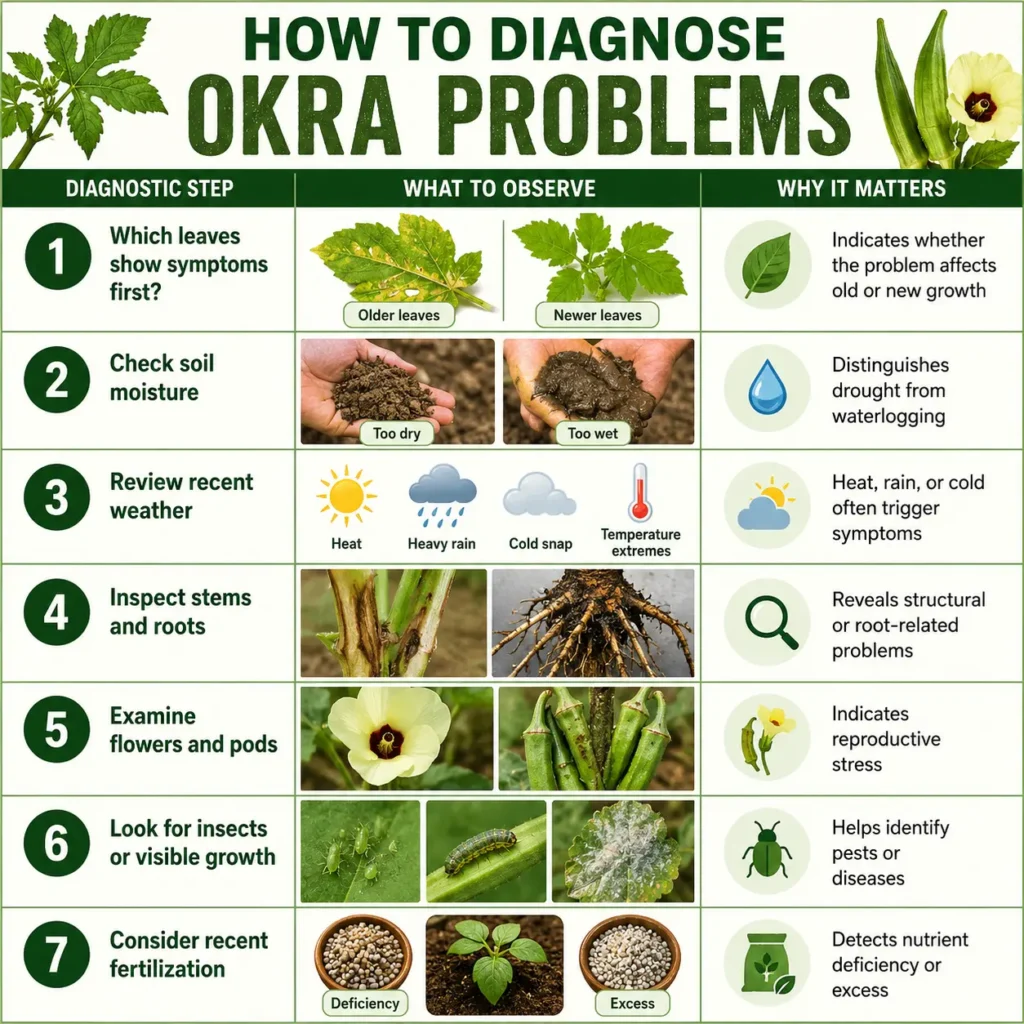
| Diagnostic Step | What to Observe | Why It Matters |
|---|---|---|
| 1 | Which leaves show symptoms first? | Indicates whether the problem affects old or new growth |
| 2 | Check soil moisture | Distinguishes drought from waterlogging |
| 3 | Review recent weather | Heat, rain, or cold often trigger symptoms |
| 4 | Inspect stems and roots | Reveals structural or root-related problems |
| 5 | Examine flowers and pods | Indicates reproductive stress |
| 6 | Look for insects or visible growth | Helps identify pests or diseases |
| 7 | Consider recent fertilization | Detects nutrient deficiency or excess |
Correct diagnosis should always begin with the whole plant, not a single damaged leaf.
Step 1: Identify the Pattern
Determine whether symptoms affect:
- Older leaves first
- Younger leaves first
- The entire plant
- Only one side of the plant
- Individual branches
- Flowers or developing pods
Patterns often provide stronger clues than the colour of the affected tissue.
Step 2: Examine Soil Moisture
Before watering or assuming drought, inspect the soil several centimetres below the surface.
Both excessively dry and excessively wet soils may produce:
- Wilting
- Yellow leaves
- Reduced growth
- Flower drop
Adding water to an already saturated root zone often worsens the problem.
Step 3: Review Recent Weather
Many temporary symptoms correspond directly with environmental conditions.
Ask:
- Has there been a recent heatwave?
- Has heavy rain occurred?
- Have temperatures fallen unexpectedly?
- Has the plant experienced strong winds?
Weather-related symptoms often appear suddenly and improve once conditions stabilise.
Step 4: Inspect the Entire Plant
Observe:
- Stem colour
- Leaf arrangement
- Pod development
- New shoot growth
- Root condition (if practical)
Healthy new growth often indicates that older damaged leaves reflect temporary stress rather than an active problem.
Step 5: Avoid Immediate Treatment
Applying fertilizer, pesticides, or excessive irrigation before diagnosis may delay recovery or create additional stress.
Whenever possible:
- Identify the probable cause.
- Correct environmental conditions.
- Monitor the plant for several days.
- Apply additional treatments only if symptoms continue progressing.
Symptoms at a Glance
| Symptom | Most Likely Causes | Urgency |
|---|---|---|
| Yellow lower leaves | Natural ageing, nitrogen deficiency, watering stress | Low to Moderate |
| Yellow young leaves | Iron deficiency, root stress | Moderate |
| Whole plant wilting | Heat, drought, root problems | Moderate to High |
| Leaf curling | Heat stress, moisture imbalance, pests | Moderate |
| Brown leaf margins | Water stress, salt accumulation | Moderate |
| Slow growth | Poor nutrition, cool weather, compacted soil | Moderate |
| Flower drop | Temperature fluctuations, inconsistent watering | Moderate |
| Small pods | Moisture stress or inadequate nutrition | Moderate |
| Tough pods | Delayed harvesting | Low |
| Stem breakage | Wind damage | Moderate |
| Root decline | Waterlogging or poor drainage | High |
| Uneven growth | Soil variability or root restriction | Low to Moderate |
Many symptoms overlap between different problems. Rather than relying on a single visible sign, evaluate several symptoms together before concluding.
Environmental Problems
Environmental stress is one of the most common causes of poor okra performance. Changes in temperature, sunlight, wind, or soil conditions can produce symptoms that resemble nutrient deficiencies, pests, or diseases. Before applying fertilizers or plant protection products, review recent weather conditions and growing conditions to determine whether an environmental factor is responsible.
Environmental Problems at a Glance
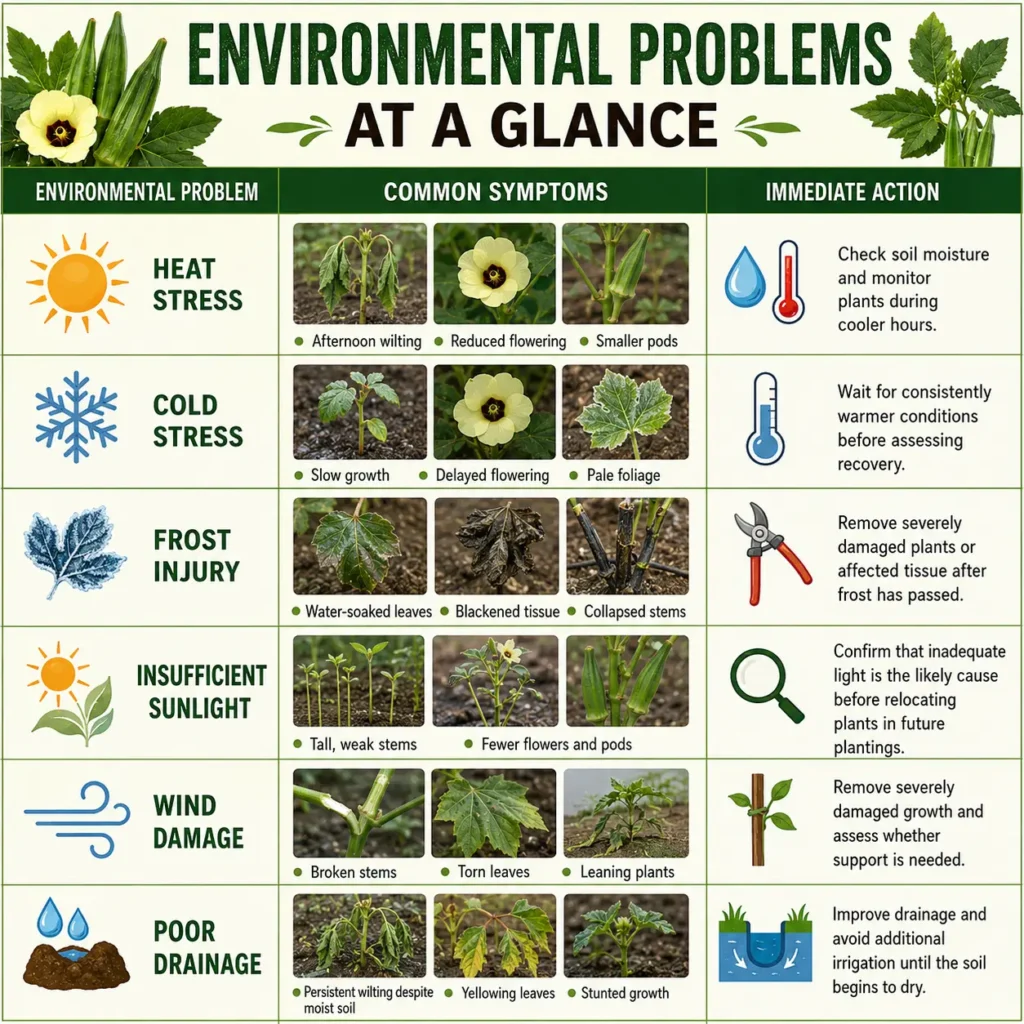
| Environmental Problem | Common Symptoms | Immediate Action |
|---|---|---|
| Heat stress | Afternoon wilting, reduced flowering, smaller pods | Check soil moisture and monitor plants during cooler hours |
| Cold stress | Slow growth, delayed flowering, pale foliage | Wait for consistently warmer conditions before assessing recovery |
| Frost injury | Water-soaked leaves, blackened tissue, collapsed stems | Remove severely damaged plants or affected tissue after frost has passed |
| Insufficient sunlight | Tall, weak stems, fewer flowers and pods | Confirm that inadequate light is the likely cause before relocating plants in future plantings |
| Wind damage | Broken stems, torn leaves, leaning plants | Remove severely damaged growth and assess whether support is needed |
| Poor drainage | Persistent wilting despite moist soil, yellowing leaves, stunted growth | Improve drainage and avoid additional irrigation until the soil begins to dry |
Heat Stress
Although okra tolerates high temperatures better than many vegetables, prolonged heat combined with dry soil can temporarily reduce growth and flowering.
Common symptoms include:
- Afternoon wilting
- Slower pod development
- Smaller pods
- Flower drop during periods of extreme heat
Plants that regain their normal appearance by evening are usually responding to temporary heat stress rather than permanent damage. If wilting persists overnight or the soil remains dry, investigate moisture availability before considering other causes.
Cold Stress
Okra is sensitive to cool conditions, particularly during germination and early growth. Extended periods of low temperatures may slow development without causing permanent injury.
Typical symptoms include:
- Slow seed germination
- Pale or slightly yellow foliage
- Reduced leaf size
- Delayed flowering
- Slow overall growth
If temperatures rise and new growth appears healthy, the plants usually recover without further intervention.
Frost Injury
Even a light frost can seriously damage okra because it is a warm-season crop.
Symptoms include:
- Water-soaked leaves
- Blackened or darkened foliage
- Collapsed stems
- Sudden plant decline
Minor leaf damage may be limited to exposed foliage, but severe frost often destroys the entire plant. Evaluate new growth only after temperatures have stabilised before deciding whether recovery is possible.
Insufficient Sunlight
Plants growing in shaded conditions often exhibit reduced vigour and lower productivity.
Common symptoms include:
- Tall, elongated stems
- Sparse branching
- Delayed flowering
- Reduced pod production
These symptoms develop gradually and may resemble nutrient deficiencies. Consider light availability alongside other growing conditions before reaching a diagnosis.
Wind Damage
Strong winds can cause both mechanical injury and temporary environmental stress.
Typical symptoms include:
- Broken stems
- Torn leaves
- Damaged flowers
- Leaning plants
Inspect damaged plants carefully to determine whether injuries are superficial or severe enough to affect future growth. Remove broken or badly damaged plant parts where necessary and continue monitoring new growth over the following days.
Poor Drainage
Poorly drained soil reduces oxygen around the roots and can produce symptoms similar to drought stress or root diseases.
Typical symptoms include:
- Persistent wilting despite moist soil
- Yellowing foliage
- Stunted growth
- Slow recovery after rainfall or irrigation
Before watering again, check soil moisture below the surface. Continuously wet soil is often a stronger indicator of drainage problems than the visible symptoms alone.
Watering Problems
Water management problems are among the most common causes of reduced growth and poor harvests in okra. Both insufficient and excessive moisture can produce similar symptoms, making it important to assess soil moisture before deciding whether additional watering is required.
Watering Problems at a Glance

| Watering Problem | Common Symptoms | Immediate Action |
|---|---|---|
| Underwatering | Wilting, dry soil, small pods | Confirm soil is dry before irrigating |
| Overwatering | Yellow leaves, slow growth, wet soil | Allow the root zone to partially dry before watering again |
| Waterlogging | Persistent wilting despite wet soil | Improve drainage and avoid further irrigation until conditions improve |
| Irregular watering | Flower drop, uneven pod development | Restore a consistent watering routine after checking soil moisture |
| Shallow watering | Weak surface roots, rapid wilting during hot weather | Check soil moisture deeper in the root zone and adjust irrigation accordingly |
Underwatering
Extended periods of dry soil reduce water availability to the plant and may limit growth and pod development.
Common symptoms include:
- Persistent wilting
- Smaller leaves
- Reduced flowering
- Tough or undersized pods
- Premature ageing of older foliage
Dry soil combined with wilting usually indicates insufficient moisture. If the plant recovers quickly after irrigation, permanent damage is unlikely unless drought stress has been prolonged.
Overwatering
Excess irrigation reduces oxygen availability around the roots, restricting normal root function.
Typical symptoms include:
- Yellowing leaves
- Reduced growth
- Soft stems
- Slow recovery after watering
Because overwatering and underwatering can both cause wilting, always inspect soil moisture before assuming the plant requires additional irrigation.
Waterlogging
Poorly drained soil can keep the root zone saturated for extended periods, increasing stress and reducing root function.
Typical symptoms include:
- Persistent wilting despite moist soil
- Yellowing foliage
- Stunted growth
- General decline in plant vigour
Waterlogged plants often resemble drought-stressed plants, but the soil remains noticeably wet. Correcting drainage is generally more effective than adding fertilizer or increasing irrigation.
Irregular Watering
Alternating between prolonged dry periods and heavy irrigation places repeated stress on developing flowers and pods.
Common symptoms include:
- Flower drop
- Uneven pod development
- Reduced harvest quality
- Temporary interruptions in growth
Review recent watering patterns before considering nutrient deficiencies or pest problems, as moisture fluctuations commonly produce similar symptoms.
Nutrient Deficiency Problems
Nutrient deficiencies develop when plants cannot obtain adequate nutrients for normal growth. However, yellowing leaves, slow growth, and poor flowering may also result from environmental stress, root problems, or watering issues. Confirm the likely cause before applying additional fertilizer.
Nutrient Deficiencies at a Glance
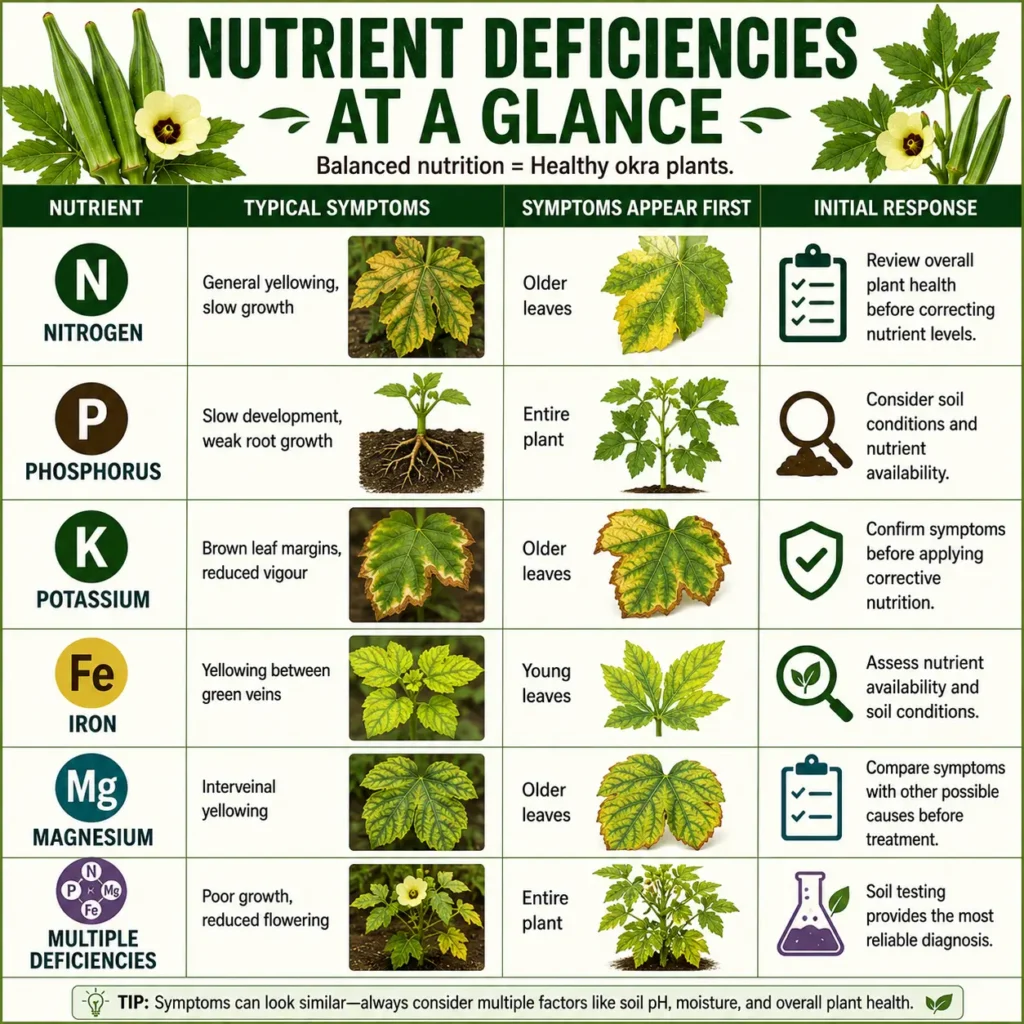
| Nutrient | Typical Symptoms | Symptoms Appear First | Initial Response |
|---|---|---|---|
| Nitrogen | General yellowing, slow growth | Older leaves | Review overall plant health before correcting nutrient levels |
| Phosphorus | Slow development, weak root growth | Entire plant | Consider soil conditions and nutrient availability |
| Potassium | Brown leaf margins, reduced vigour | Older leaves | Confirm symptoms before applying corrective nutrition |
| Iron | Yellowing between green veins | Young leaves | Assess nutrient availability and soil conditions |
| Magnesium | Interveinal yellowing | Older leaves | Compare symptoms with other possible causes before treatment |
| Multiple deficiencies | Poor growth, reduced flowering | Entire plant | Soil testing provides the most reliable diagnosis |
Nitrogen Deficiency
Nitrogen deficiency is one of the most common nutritional disorders affecting okra.
Typical symptoms include:
- Uniform yellowing of older leaves
- Reduced stem growth
- Smaller leaves
- Reduced overall vigour
Because older leaves naturally decline as plants mature, assess the overall growth pattern before concluding that nitrogen deficiency is the primary cause.
Iron Deficiency
Iron deficiency typically appears on the youngest leaves because iron is relatively immobile within the plant.
Common symptoms include:
- Yellow tissue between green veins
- Pale new growth
- Reduced vigour in severe cases
Iron deficiency often results from reduced nutrient availability rather than an actual shortage of iron in the soil. Environmental conditions affecting root function should also be considered.
Potassium Deficiency
Potassium shortages primarily affect older leaves and can reduce the plant’s ability to tolerate environmental stress.
Typical symptoms include:
- Brown or scorched leaf margins
- Reduced vigour
- Poor pod quality
- Increased sensitivity to drought stress
Similar symptoms may also occur from salt accumulation or moisture stress, so diagnosis should consider recent growing conditions.
Magnesium Deficiency
Magnesium deficiency commonly begins on older leaves because the nutrient is readily redistributed to younger growth.
Typical symptoms include:
- Yellowing between the leaf veins
- Green veins surrounded by yellow tissue
- Gradual decline in older foliage
Compare symptoms with potassium deficiency and natural leaf ageing before making a diagnosis.
Multiple Nutrient Deficiencies
Where soil fertility has declined over time, plants may develop overlapping symptoms that are difficult to distinguish visually.
Common indicators include:
- Slow overall growth
- Reduced flowering
- Pale foliage
- Smaller leaves
- Reduced productivity
When multiple deficiencies are suspected, visual assessment alone is rarely sufficient. Soil testing provides the most reliable basis for identifying nutrient imbalances and avoiding unnecessary fertilizer applications.
Pest Problems
Insect pests can reduce okra growth, flowering, and pod quality by feeding on leaves, stems, flowers, or developing pods. However, the presence of a few insects does not necessarily indicate a serious problem. Many healthy plants tolerate minor pest activity without significant loss of productivity.
Accurate identification is essential because several pests produce similar symptoms, such as curled leaves, yellowing foliage, or poor plant vigour. Inspect plants carefully before deciding on a management approach.
Pest Problems at a Glance

| Pest | Common Symptoms | Most Active Conditions | First Response |
|---|---|---|---|
| Aphids | Curled young leaves, sticky honeydew, distorted growth | Warm, humid weather | Inspect growing tips and assess infestation levels |
| Whiteflies | Yellowing leaves, sticky residue, weakened plants | Warm, dry to moderately humid conditions | Check the undersides of leaves for adults and immature stages |
| Jassids (Leafhoppers) | Yellowing leaf margins, curling, scorching | Warm growing season | Examine young leaves for feeding damage and active insects |
| Spider Mites | Fine webbing, pale speckling, bronzed leaves | Hot, dry weather | Inspect leaf undersides for mites and webbing |
| Fruit and Shoot Borers | Wilted shoots, entry holes in pods, frass | Warm growing season | Remove and inspect affected shoots and pods |
| Flea Beetles | Small holes in leaves, damaged seedlings | Early crop establishment | Assess the extent of feeding damage, particularly on young plants |
| Thrips | Silvery streaks, distorted flowers and leaves | Hot, dry weather | Inspect flowers and young foliage for feeding injury |
Integrated Pest Management (IPM) combines regular monitoring, accurate identification, sanitation, conservation of beneficial insects, and targeted intervention only when pest populations exceed acceptable levels.
Aphids
Aphids are among the most common sap-feeding insects found on young okra plants. They usually colonise tender shoots and the undersides of young leaves.
Typical symptoms include:
- Curled or distorted young leaves
- Sticky honeydew on foliage
- Reduced plant vigour
- Clusters of soft-bodied insects on growing tips
Honeydew may also encourage the development of black sooty mould, although the mould itself does not infect the plant.
Small aphid populations are often suppressed naturally by beneficial insects such as ladybird beetles, lacewings, and hoverflies. Monitor infestations regularly before considering additional control measures.
Whiteflies
Whiteflies feed on plant sap and are usually found on the undersides of leaves. Heavy infestations gradually weaken plants and reduce vigour.
Common symptoms include:
- Yellowing foliage
- Sticky honeydew on leaves
- Reduced growth
- Tiny white insects flying when foliage is disturbed
Because whiteflies reproduce rapidly during warm weather, early detection is important to prevent populations from increasing.
Jassids (Leafhoppers)
Jassids, also known as leafhoppers, damage plants by extracting sap from young leaves.
Typical symptoms include:
- Yellowing leaf margins
- Leaf curling
- Brown or scorched leaf edges
- Reduced plant vigour
Similar symptoms may also result from nutrient deficiencies or moisture stress, so inspect plants carefully for the presence of active insects before reaching a diagnosis.
Spider Mites
Spider mites are extremely small arachnids that become more active during prolonged hot and dry weather.
Common symptoms include:
- Fine pale speckles on leaves
- Bronze or dull foliage
- Fine webbing, particularly on the undersides of leaves
- Premature leaf drop during severe infestations
Because spider mites are difficult to see with the naked eye, inspect the undersides of affected leaves closely when bronzing or fine webbing is present.
Fruit and Shoot Borers
Fruit and shoot borers are caterpillar pests that tunnel into tender shoots and developing pods, reducing both plant growth and harvest quality.
Typical symptoms include:
- Wilted shoot tips
- Small entry holes in pods
- Internal feeding damage
- Frass (caterpillar droppings) near entry points
Fresh feeding damage accompanied by frass is one of the most reliable signs that fruit and shoot borers are present. Remove affected shoots and pods promptly to reduce further spread within the crop.
Flea Beetles
Flea beetles are small, jumping beetles that primarily attack young seedlings and newly established plants.
Typical symptoms include:
- Numerous small holes in leaves
- Shot-hole appearance
- Reduced seedling vigour
- Slower early growth
Damage is usually most significant during the early stages of plant development. Established plants often tolerate light feeding with little long-term impact.
Thrips
Thrips are tiny insects that feed by scraping plant tissues and sucking out cell contents. Their damage is often difficult to detect until symptoms become more pronounced.
Typical symptoms include:
- Silvery or bronze streaks on leaves
- Distorted flowers
- Curled young leaves
- Reduced pod quality in severe infestations
Because thrips are very small and often hide within flowers or folded leaves, careful inspection may be required to confirm their presence.
Distinguishing Pest Damage from Other Problems
Several pest-related symptoms resemble those caused by nutrient deficiencies, environmental stress, or diseases.
| Symptom | Possible Causes | What to Check First |
|---|---|---|
| Curled leaves | Aphids, jassids, moisture stress | Inspect young leaves for insects before adjusting irrigation |
| Yellow leaves | Whiteflies, nutrient deficiency, overwatering | Look for insects on the undersides of leaves and assess soil moisture |
| Brown leaf edges | Jassids, potassium deficiency, heat stress | Check for active pests before assuming nutrient deficiency |
| Wilting shoots | Fruit and shoot borers, drought, stem injury | Examine shoots for entry holes and frass |
Correct identification should always precede treatment. Applying insecticides when pests are absent will not resolve problems caused by environmental stress, watering issues, or nutrient imbalances.
Disease Problems
| Disease | Typical Symptoms | Favourable Conditions | Management Priority |
|---|---|---|---|
| Powdery Mildew | White powdery coating on leaves | Warm days with humid nights | Improve airflow and remove heavily affected foliage |
| Cercospora Leaf Spot | Dark leaf spots with yellow margins | Warm, humid weather | Reduce prolonged leaf wetness and improve sanitation |
| Fusarium Wilt | Progressive wilting despite adequate moisture | Soil-borne | Practice crop rotation and improve soil health |
| Root Rot | Yellowing, root decline, stunting | Poor drainage | Improve drainage immediately |
| Damping-off | Seedling collapse | Wet, cool soils | Use well-drained growing media and avoid overwatering |
| Mosaic Virus | Mottled leaves, distorted growth, reduced vigour | Spread by insect vectors | Remove affected plants and manage vector populations |
Disease management begins with prevention. Most diseases become severe only when favourable environmental conditions coincide with susceptible plants.
Powdery Mildew
Powdery mildew commonly appears during warm weather with periods of high humidity.
Symptoms include:
- White powder-like growth on leaves
- Premature yellowing
- Reduced photosynthesis
- Lower overall plant vigour
Improving air circulation and avoiding overcrowding help reduce the development of disease.
Cercospora Leaf Spot
Leaf spot diseases usually begin as small dark lesions.
As infection progresses:
- Spots enlarge
- Yellow halos may develop
- Leaves decline prematurely
- Severe infections reduce productivity
Removing heavily affected leaves and maintaining good sanitation reduces disease pressure.
Fusarium Wilt
Fusarium wilt affects the plant’s vascular system.
Symptoms include:
- Progressive wilting
- Yellowing lower leaves
- One-sided decline
- Poor recovery despite adequate watering
Because this pathogen survives in soil, long-term crop rotation is one of the most effective management practices.
Root Rot
Root diseases usually develop where drainage is poor.
Plants may show:
- Persistent wilting
- Slow growth
- Yellow foliage
- Dark, decaying roots
Correcting drainage problems is generally more important than applying additional fertilizer.
Viral Diseases
Virus-infected plants often display:
- Mottled leaf colour
- Distorted foliage
- Stunted growth
- Reduced flowering
- Poor pod development
Because viruses cannot be cured after infection, prevention focuses on removing infected plants and reducing insect vectors that spread disease.
Flowering & Fruiting Problems
| Problem | Possible Causes | Recommended Action |
|---|---|---|
| Flowers dropping | Heat stress, inconsistent watering, nutrient imbalance | Stabilise growing conditions |
| Few flowers | Poor sunlight, excessive nitrogen, cool weather | Increase light exposure and balance nutrition |
| Poor pod set | Environmental stress, irregular watering | Maintain consistent moisture |
| Small pods | Water stress, nutrient limitations | Improve irrigation consistency |
| Misshapen pods | Uneven growth conditions or insect injury | Improve overall plant health |
| Pods stop developing | Plant ageing or environmental stress | Continue harvesting and review growing conditions |
Flowering and pod development are the most sensitive stages of the okra life cycle. Even short periods of environmental stress may temporarily reduce production.
Flower Drop
Occasional flower loss is normal.
However, excessive flower drop may result from:
- Sudden temperature changes
- Drought stress
- Waterlogging
- Nutrient imbalance
- General plant stress
Restoring stable growing conditions usually improves future flowering.
Reduced Flower Production
Plants producing abundant leaves but few flowers often receive excessive nitrogen or insufficient sunlight.
Review:
- Daily light exposure
- Fertilizer programme
- Plant spacing
- Seasonal temperatures
Poor Pod Development
Pods may remain small or fail to enlarge when plants experience:
- Moisture fluctuations
- Root restriction
- Nutrient imbalance
- Extended cloudy weather
Improving overall growing conditions generally restores normal pod production.
Harvest Quality Problems
| Harvest Issue | Likely Cause | Corrective Action |
|---|---|---|
| Tough pods | Delayed harvesting | Harvest every 2–3 days |
| Fibrous texture | Overmature pods | Pick while young and tender |
| Small harvest | Environmental stress | Optimise growing conditions |
| Poor flavour | Stress during development | Maintain even moisture |
| Damaged pods | Insect feeding or mechanical injury | Harvest carefully and inspect regularly |
| Uneven pod size | Inconsistent growth conditions | Improve irrigation and nutrition consistency |
Many harvest quality issues originate weeks before the pods are picked.
Tough or Fibrous Pods
This is the most common harvest complaint.
Okra pods mature rapidly during warm weather and become increasingly fibrous if left on the plant too long.
Regular harvesting encourages both better eating quality and continued flowering.
Small Pods
Pods that remain unusually small may indicate:
- Moisture stress
- Reduced sunlight
- Nutrient limitations
- Plant ageing
Assess overall plant health rather than focusing solely on pod size.
Damaged Pods
Physical injury may occur through:
- Wind abrasion
- Improper harvesting
- Insect feeding
- Rough handling
Harvest carefully using clean tools where appropriate to minimise damage.
Container Growing Problems
| Problem | Cause | Solution |
|---|---|---|
| Slow growth | Small container | Use containers at least 30–40 cm deep |
| Frequent wilting | Potting mix dries rapidly | Monitor moisture more frequently |
| Yellow leaves | Poor drainage or nutrient depletion | Improve drainage and replenish nutrients |
| Root restriction | Overcrowded containers | Grow one plant per suitable container |
| Poor flowering | Limited sunlight or nutrition | Move containers to full sun and maintain balanced fertility |
| Reduced harvest | Combined root and nutrient limitations | Use larger containers with fertile growing media |
Container-grown okra often experiences different challenges from plants grown in open soil because roots are confined to a limited growing space.
Root Restriction
Insufficient container depth restricts the taproot and limits plant development.
Common symptoms include:
- Stunted growth
- Smaller leaves
- Reduced flowering
- Lower pod production
Choosing appropriately sized containers before planting prevents most root-related problems.
Rapid Drying
Containers lose moisture much faster than garden beds, especially during summer.
Rather than watering on a fixed schedule:
- Monitor soil moisture frequently.
- Water deeply when needed.
- Avoid allowing the growing medium to remain permanently saturated.
Nutrient Depletion
Repeated watering gradually leaches nutrients from container media.
Healthy growth is maintained by:
- Using compost-rich potting mixes.
- Applying balanced supplemental nutrition when required.
- Refreshing growing media between growing seasons.
With proper container size, consistent moisture, and balanced fertility, container-grown okra can produce harvests comparable to those grown in well-managed garden beds.
Recovery Plans
Successful recovery depends on identifying and correcting the underlying cause rather than treating visible symptoms alone. Many okra problems share similar symptoms, and applying fertilizer, pesticides, or additional irrigation without first confirming the cause may delay recovery or worsen plant stress.
Recovery Plans at a Glance
| Problem | First Response | Monitor For | If Recovery Does Not Occur |
|---|---|---|---|
| Heat stress | Confirm soil moisture and reduce further stress | Upright leaves, resumed flowering | Reassess watering practices and root health |
| Waterlogging | Improve drainage and allow the root zone to recover | Healthy new growth and firmer stems | Inspect roots for signs of rot |
| Nutrient deficiency | Confirm the deficiency before applying nutrients | Improved colour in new leaves | Consider soil testing for accurate diagnosis |
| Pest infestation | Identify the pest and assess infestation level | Reduced pest activity and healthy new growth | Escalate to appropriate IPM measures if necessary |
| Disease infection | Remove severely affected plant parts where appropriate | No further spread and healthy new growth | Review sanitation and disease management practices |
| Poor flowering | Review recent weather and overall plant condition | New flowers and improved pod set | Investigate environmental or nutritional stress |
| Poor harvest quality | Continue monitoring newly developing pods | Improved pod size and tenderness | Review possible environmental or physiological causes |
Step 1: Confirm the Cause
Before taking corrective action, determine the most likely source of the problem.
Consider whether symptoms are caused by:
- Environmental stress
- Water management issues
- Nutrient deficiency
- Pest activity
- Disease
- Natural ageing
Many problems produce similar symptoms, so diagnosis should always precede treatment.
Step 2: Correct the Immediate Problem
Once the cause has been identified, address the factor most likely responsible for plant stress.
Examples include:
- Improving drainage where soils remain saturated
- Correcting confirmed nutrient deficiencies
- Removing heavily infested or severely diseased plant material
- Reducing additional environmental stress where possible
Avoid making multiple major changes at the same time, as this can make it difficult to determine whether conditions are improving.
Step 3: Monitor New Growth
Recovery should be assessed by observing new growth, not damaged leaves.
Look for signs such as:
- Healthy green new leaves
- Improved stem growth
- Normal flower production
- Better pod development
- Increased overall vigour
Older damaged leaves often remain discoloured even after the plant has recovered.
Step 4: Reassess if Symptoms Continue
If symptoms continue to worsen despite corrective action:
- Re-examine the original diagnosis.
- Check for additional contributing factors.
- Inspect the root system where practical.
- Consider whether more than one problem is affecting the plant.
Multiple issues, such as waterlogging combined with nutrient deficiency or pest damage following environmental stress, may occur at the same time.
Prevention Checklist
Most serious problems can be avoided through regular observation and early intervention. Weekly inspections often detect developing issues before they significantly affect plant health or productivity.
Prevention Checklist
| Preventive Practice | Importance |
|---|---|
| Inspect plants weekly for changes in growth or leaf colour | ★★★★★ |
| Check soil moisture before watering | ★★★★★ |
| Remove heavily diseased or damaged plant material promptly | ★★★★★ |
| Monitor for pests, especially on young growth and leaf undersides | ★★★★★ |
| Keep the growing area free of heavily infested plant debris | ★★★★☆ |
| Practise crop rotation where possible | ★★★★☆ |
| Watch for sudden changes following extreme weather | ★★★★☆ |
| Monitor flowering and pod development regularly | ★★★★☆ |
| Investigate unusual symptoms before applying treatments | ★★★★★ |
During routine inspections, observe:
- Leaf colour and texture
- New shoot growth
- Flower production
- Pod development
- Soil moisture
- Signs of insects or disease
- Overall plant vigour
Early diagnosis is one of the most effective ways to reduce crop losses. Addressing problems promptly usually results in faster recovery than waiting until symptoms become widespread.
Seasonal Troubleshooting
| Season | Most Common Problems | Primary Solution |
|---|---|---|
| Spring | Poor germination, slow establishment | Wait for warm soil and maintain even moisture |
| Summer | Heat stress, rapid soil drying | Deep watering and maintain mulch |
| Monsoon | Waterlogging, root stress, vigorous weed growth | Improve drainage and reduce unnecessary irrigation |
| Autumn | Declining productivity | Continue regular harvesting and reduce excessive fertilization |
| Winter | Cold injury and frost damage | Complete harvesting before frost and prepare beds for the next season |
Spring
Most spring problems result from planting before soil temperatures have become sufficiently warm.
Common symptoms include:
- Slow germination
- Weak seedlings
- Uneven establishment
Delaying sowing until favourable temperatures return generally improves crop performance.
Summer
High temperatures increase water demand considerably.
Monitor plants regularly for:
- Afternoon wilting
- Dry soil
- Reduced flowering
- Smaller pods
Deep irrigation combined with organic mulch usually provides the most effective solution.
Monsoon
Excess rainfall creates a different set of challenges.
Focus on:
- Maintaining drainage.
- Preventing standing water.
- Controlling weeds.
- Inspecting plants after storms.
Avoid adding irrigation simply because it is part of a routine schedule.
Autumn
As plants naturally age:
- Flower production slows.
- Harvest frequency decreases.
- Older leaves begin declining.
These gradual changes are normal and should not automatically be interpreted as nutrient deficiencies.
Winter
In frost-prone regions, declining temperatures naturally end the crop.
Rather than attempting to maintain severely stressed plants, remove completed crops, improve the soil, and prepare for the following growing season.
Frequently Asked Questions
Why are my okra leaves turning yellow?
Yellow leaves may result from natural ageing, watering problems, nutrient deficiencies, poor drainage, or environmental stress. Examine which leaves are affected first and check soil moisture before deciding on corrective action.
Why are my okra plants wilting even though the soil is wet?
Persistent wilting in wet soil often indicates poor root function caused by waterlogging or root diseases rather than lack of water.
Why are flowers falling without producing pods?
Temporary flower drop may occur because of sudden temperature changes, inconsistent watering, nutrient imbalance, or other environmental stresses.
Why are my pods becoming hard?
Okra pods mature rapidly. Delaying harvest by only a few days may cause them to become fibrous and unsuitable for cooking.
Why is my plant growing leaves but producing few pods?
Excess nitrogen, insufficient sunlight, cool temperatures, or irregular harvesting commonly reduce flowering and pod production.
Can damaged leaves become green again?
No. Damaged leaves usually do not recover fully. Instead, monitor the health of newly emerging leaves to assess whether the plant is improving.
Should I fertilize every time the plant looks unhealthy?
No. Many symptoms resemble nutrient deficiency but actually result from environmental or watering problems. Diagnose the cause before applying fertilizer.
Why are my container-grown plants smaller?
Restricted root space, faster drying of the potting mix, and limited nutrient reserves commonly reduce plant size in containers.
How often should I inspect my plants?
A thorough inspection once or twice each week is usually sufficient for early detection of developing problems.
Can a severely stressed okra plant recover?
Yes. If the root system remains healthy and the underlying problem is corrected early, many plants recover and resume normal flowering and pod production.
Conclusion
Most problems encountered while growing okra originate from a relatively small number of causes: unsuitable environmental conditions, inconsistent watering, nutrient imbalances, pests, diseases, or natural ageing. Although many of these issues produce similar symptoms, careful observation of the entire plant—combined with an understanding of recent weather and cultivation practices—usually leads to an accurate diagnosis.
Effective troubleshooting follows a logical process rather than relying on immediate treatments. Checking soil moisture, reviewing recent environmental conditions, inspecting leaves, stems, roots, flowers, and pods, and identifying whether symptoms are progressing or stabilising helps determine the true cause of poor plant performance. Addressing that underlying cause is far more effective than applying fertilizer, pesticides, or additional irrigation without confirmation.
Long-term success depends on prevention as much as correction. Healthy soil, full sunlight, proper drainage, balanced nutrition, consistent moisture, good sanitation, crop rotation, and regular monitoring greatly reduce the likelihood of serious problems while improving overall plant resilience.
By combining sound cultivation practices with systematic diagnosis, gardeners can minimise crop losses, extend the productive life of their plants, and enjoy consistent harvests of healthy, tender okra throughout the growing season.