Okra Seasonal Care: Complete Guide for Every Season in India
Quick Info
| Seasonal Aspect | Key Recommendation |
|---|---|
| Primary Growing Season | Warm months with consistently high temperatures |
| Ideal Temperature | 20–35°C |
| Best Growth Period | Spring to early autumn, depending on the region |
| Peak Vegetative Growth | Late spring and summer |
| Peak Harvest Period | Summer through early autumn, depending on sowing time |
| Most Important Seasonal Factor | Maintaining warmth while preventing prolonged waterlogging |
| Highest Water Demand | Flowering and continuous pod production |
| Lowest Care Requirement | After harvesting is complete and plants are removed |
Quick Answer
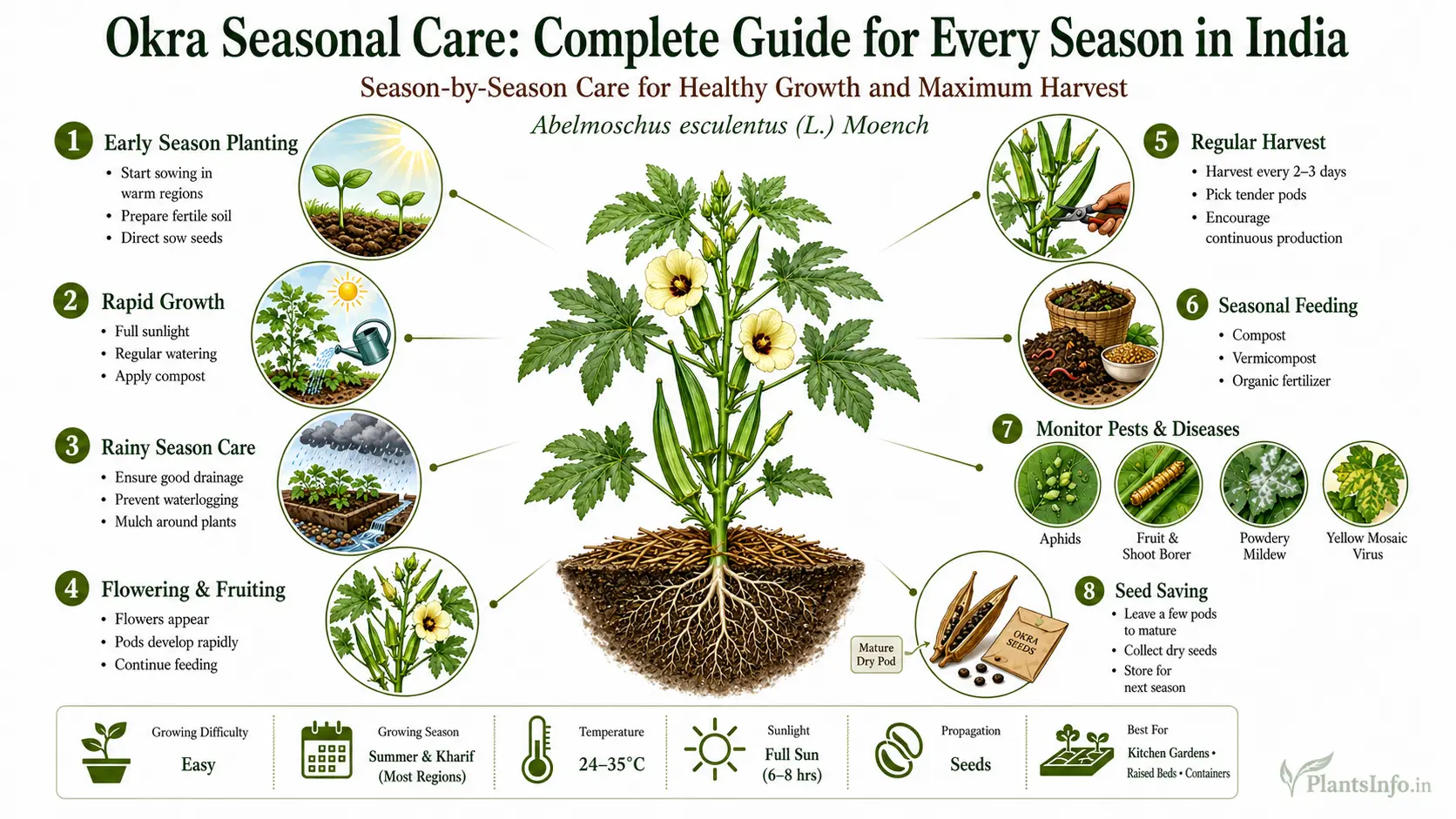
Okra (Abelmoschus esculentus) is a warm-season vegetable whose care requirements change mainly with temperature, rainfall, and growth stage rather than true seasonal dormancy. Unlike perennial plants, okra completes its life cycle within a single growing season, so timely seasonal management has a direct influence on growth, flowering, and harvest quality.
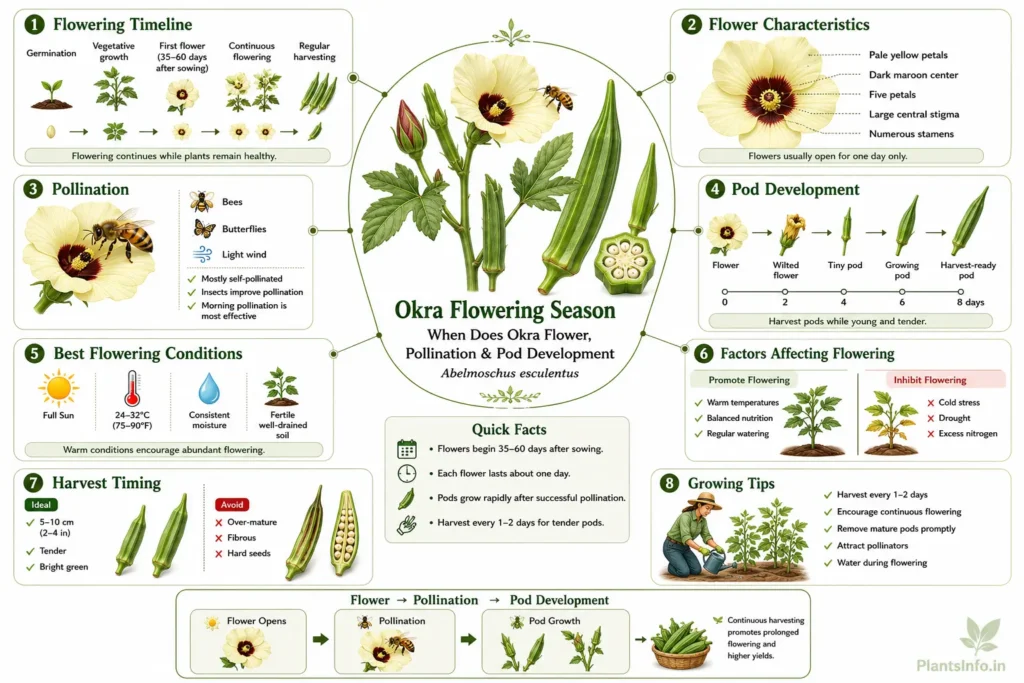
See also: Okra plant profile, how to grow it, common problems, its flowering season, and its benefits.
Successful seasonal care focuses on adjusting irrigation, nutrient management, and field maintenance according to changing weather conditions. In India, these adjustments vary between northern, southern, coastal, and hill regions, making local climate an important consideration for obtaining consistent yields.
Recommended Products
Disclosure: As an Amazon Associate, PlantsInfo may earn from qualifying purchases.
🌱 Growing Essentials
The following products can help with container gardening, potting, root development, soil management, and healthy plant growth.
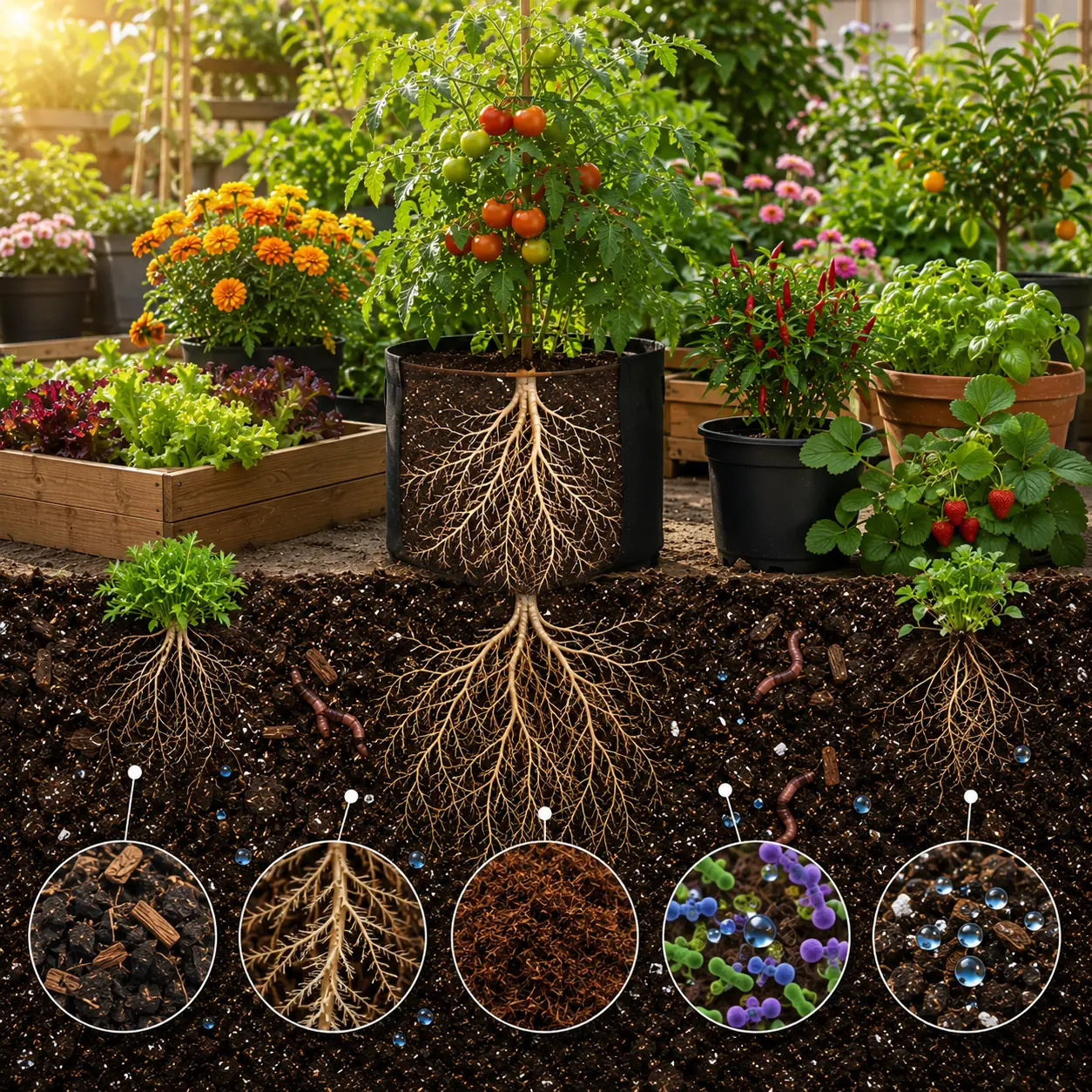
Organic Potting Soil Mix
Provides nutrients, structure, and healthy growing conditions for container plants.
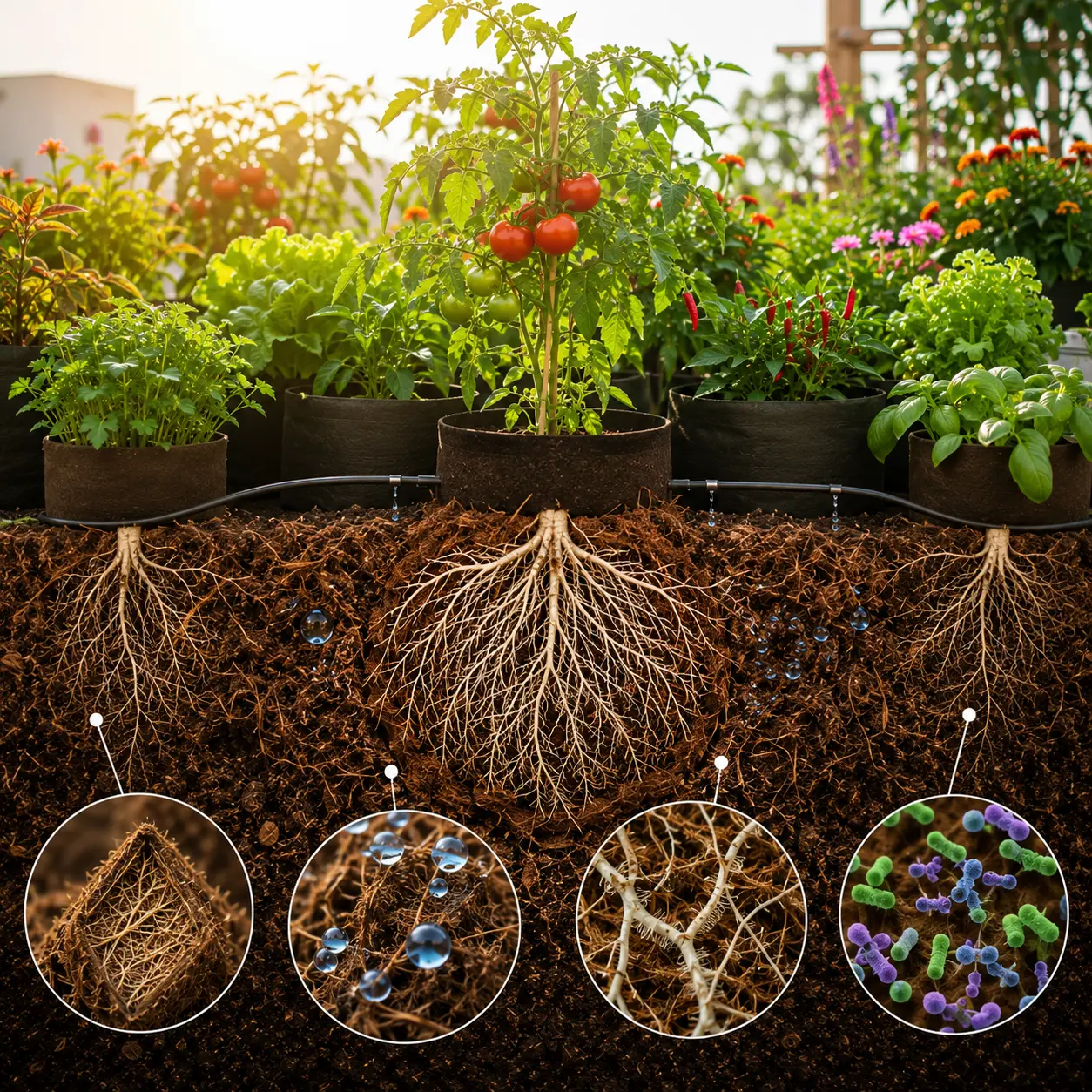
Coco Peat Growing Medium
Enhances moisture retention while maintaining excellent root-zone aeration.

Grow Bags for Plants
Improve drainage, root aeration, and vegetable production in limited spaces.

Plastic Pots for Plants
Ideal containers for seedlings, ornamentals, herbs, and balcony gardens.
Introduction
| Seasonal Characteristic | Information |
|---|---|
| Plant Type | Warm-season annual vegetable |
| Growth Pattern | Continuous vegetative growth followed by flowering and pod production |
| Dormancy | None |
| Frost Tolerance | Very poor |
| Heat Tolerance | Excellent once established |
| Rainfall Tolerance | Moderate with well-drained soil |
| Seasonal Management Goal | Maintain healthy growth and continuous pod production throughout the growing season |
Seasonal care focuses on how growing practices should be adjusted as weather conditions change throughout the year. Rather than explaining how to grow okra from the beginning, this guide highlights the seasonal changes in watering, nutrition, harvesting, and routine maintenance that help plants remain healthy and productive.
Across India, seasonal requirements vary with regional climate. Crops grown during dry summer conditions require different management from those growing through the monsoon, while northern regions have shorter growing seasons than tropical southern states. Understanding these seasonal adjustments helps gardeners reduce weather-related stress, maintain steady pod production, and make more efficient use of water and nutrients.
Quick Seasonal Summary
| Season | Plant Activity | Care Priority | Risk Level |
|---|---|---|---|
| Spring | Germination and rapid vegetative growth | Soil preparation, sowing, early establishment | Moderate |
| Summer | Vigorous growth, flowering and heavy pod production | Water management and regular harvesting | High |
| Monsoon | Continued growth where drainage is adequate | Prevent waterlogging and maintain airflow | High |
| Autumn | Slowing growth and final harvests | Maintain plant health and remove declining plants | Moderate |
| Winter | Limited or no growth in most regions | Protect from cold or prepare for next season | High in frost-prone areas |
The growing season varies considerably across India, but the overall management principles remain similar. Early growth focuses on strong establishment, mid-season care supports maximum productivity, and late-season management aims to maintain plant health until harvests naturally decline.
Rather than following fixed calendar dates, gardeners should adjust seasonal practices according to local temperatures, rainfall patterns, and crop stage.
Annual Growth Cycle
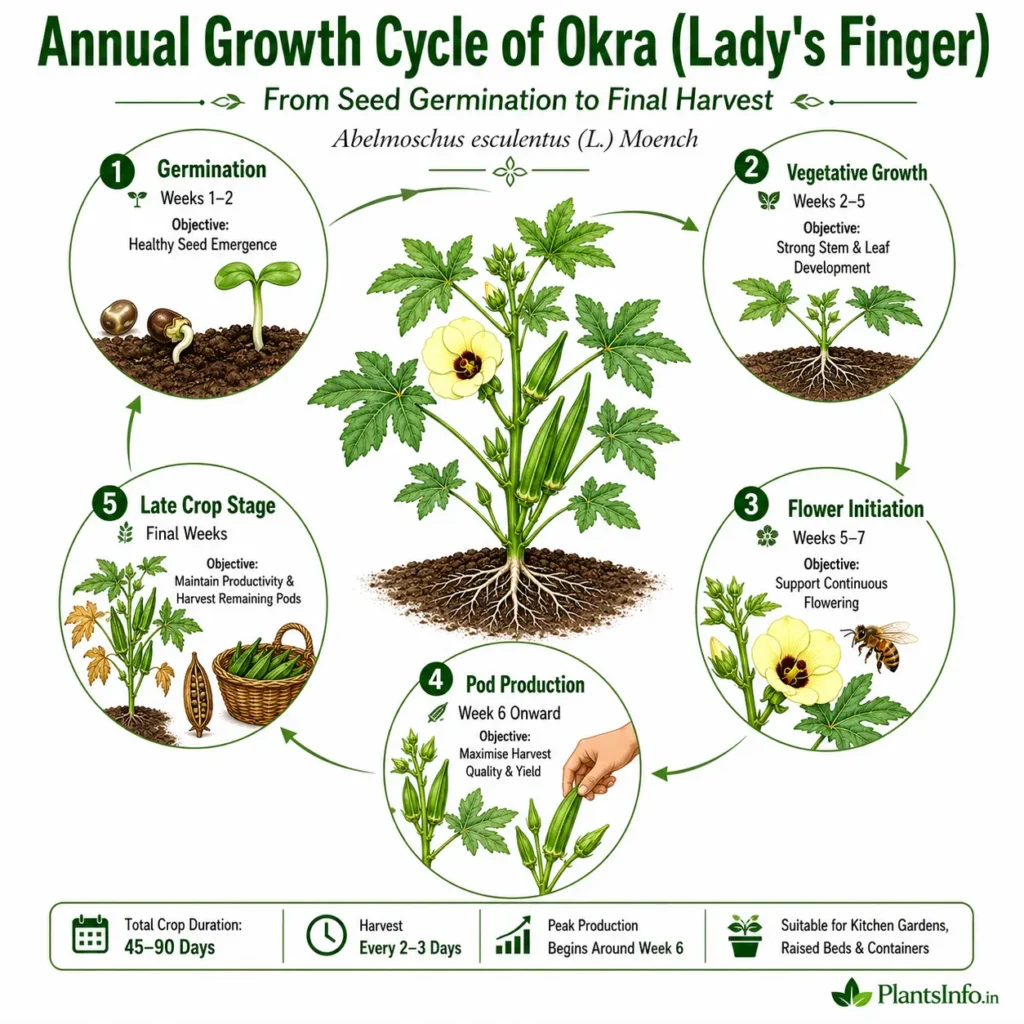
| Growth Stage | Typical Timing* | Primary Objective |
|---|---|---|
| Germination | First 1–2 weeks | Healthy seed emergence |
| Vegetative Growth | Weeks 2–5 | Strong stem and leaf development |
| Flower Initiation | Weeks 5–7 | Support continuous flowering |
| Pod Production | Weeks 6 onward | Maximise harvest quality and yield |
| Late Crop Stage | Final weeks | Maintain productivity and harvest remaining pods |
*Actual timing varies with cultivar, planting season, and local climate.
Okra follows a predictable annual growth cycle, although the rate of development depends largely on temperature and growing conditions. After germination, plants establish vigorous vegetative growth before entering a prolonged period of flowering and pod production. As the crop matures, productivity gradually declines until harvesting ends and the plants are removed.
Recognising these growth stages helps gardeners adjust seasonal care more effectively. Early growth requires attention to establishment, the productive phase benefits from consistent watering and regular harvesting, and late-season care focuses on maintaining plant health while preparing for crop completion.
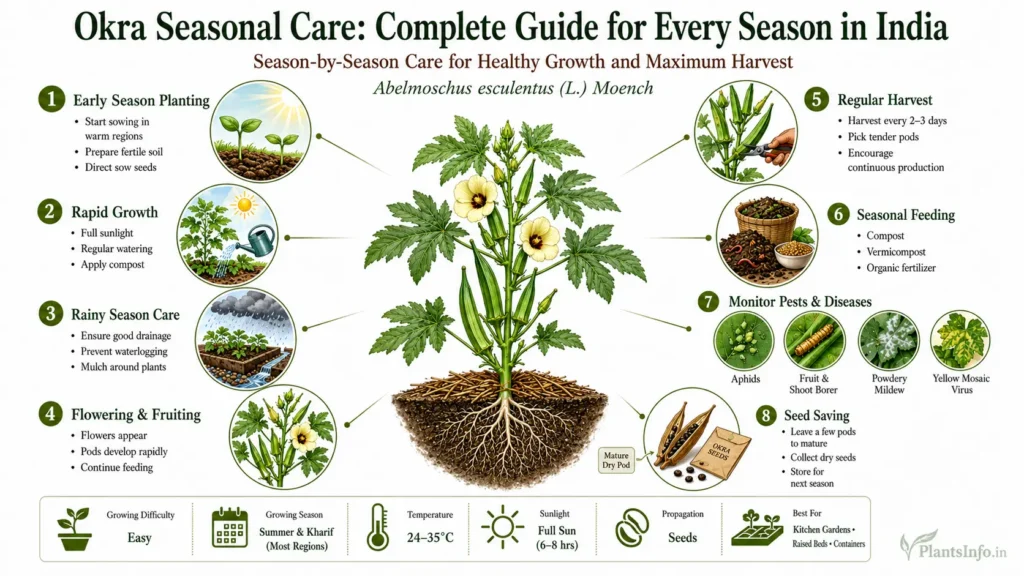
Spring Care
| Spring Task | Recommendation |
|---|---|
| Soil Preparation | Incorporate compost before planting |
| Sowing | Begin after the soil has warmed sufficiently |
| Irrigation | Maintain consistent moisture during germination |
| Weed Control | Remove weeds early before competition increases |
| Nutrient Management | Encourage balanced early growth |
| Plant Inspection | Monitor seedling establishment |
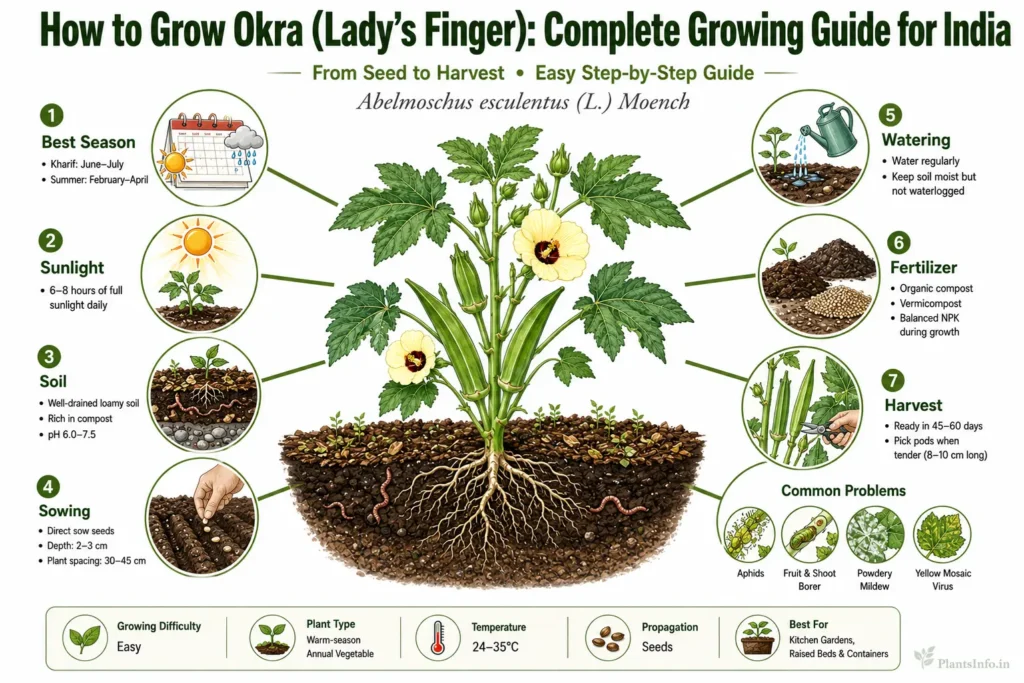
For much of northern and central India, spring marks the start of the okra growing season. As temperatures rise, conditions become favourable for seed germination and healthy early growth.
The priority during spring is establishing vigorous plants before flowering begins. Prepare the soil with organic matter before sowing, maintain consistent soil moisture during germination, and avoid waterlogging, which can slow root development.
Inspect seedlings regularly to ensure even establishment and thin overcrowded plants where necessary. Early weed control is equally important, as young plants compete poorly for moisture, nutrients, and sunlight. Strong spring establishment provides the foundation for healthy growth and productive harvests later in the season.
Summer Care
| Summer Task | Recommendation |
|---|---|
| Irrigation | Deep watering according to soil moisture |
| Harvesting | Pick pods every 2–3 days |
| Mulch Maintenance | Maintain mulch to reduce evaporation |
| Nutrient Support | Apply additional nutrients if required |
| Weed Management | Continue regular control |
| Plant Monitoring | Watch for heat and moisture stress |
Summer is the most active and productive period of the okra life cycle. High temperatures promote rapid vegetative growth, continuous flowering, and abundant pod production provided adequate moisture remains available.
Although okra tolerates heat remarkably well, prolonged dry conditions increase water demand considerably. Deep irrigation becomes more beneficial than frequent light watering because it encourages deeper root growth and improves drought resilience.
Maintaining organic mulch during summer helps moderate soil temperature, conserve moisture, and suppress weed growth. This becomes especially valuable in regions where daytime temperatures remain consistently high.
Regular harvesting is one of the most important seasonal maintenance practices. Pods grow rapidly during warm weather and quickly become fibrous if left on the plant. Harvesting every two to three days encourages continued flowering and extends the productive period.
Temporary leaf wilting during extremely hot afternoons is relatively common, even when soil moisture is adequate. If plants recover during the evening, this usually reflects temporary heat stress rather than a need for additional irrigation.
Summer is also an appropriate time to observe overall plant vigour. Healthy foliage, steady flowering, and regular pod development generally indicate that seasonal care practices are meeting the crop’s requirements.
Monsoon Care
| Monsoon Task | Recommendation |
|---|---|
| Drainage | Ensure rapid removal of excess rainwater |
| Irrigation | Water only when soil begins to dry |
| Soil Monitoring | Avoid prolonged waterlogging |
| Weed Control | Increase frequency due to rapid weed growth |
| Harvesting | Continue harvesting every 2–3 days |
| Plant Inspection | Regularly check for storm damage and declining foliage |
For many parts of India, the monsoon coincides with an active production period for okra. Warm temperatures continue to support vigorous growth, but heavy rainfall introduces new management priorities that differ from those of summer.
The single most important objective during the monsoon is maintaining excellent soil drainage. Okra thrives in moist soil but performs poorly when roots remain submerged in waterlogged conditions for extended periods. Raised beds, well-structured soil, and clear drainage channels help prevent excess water from accumulating around the root zone.
Natural rainfall often provides sufficient moisture during this season, making routine irrigation unnecessary. Instead of watering according to a schedule, monitor soil moisture and irrigate only when rainfall has been insufficient.
Weeds grow rapidly during warm, wet conditions and compete aggressively for nutrients, sunlight, and space. Frequent but careful weed removal prevents competition while improving airflow around the plants.
Heavy rain and strong winds may occasionally bend stems or damage leaves. Remove severely damaged foliage to improve air circulation and help plants direct energy toward healthy growth and pod production.
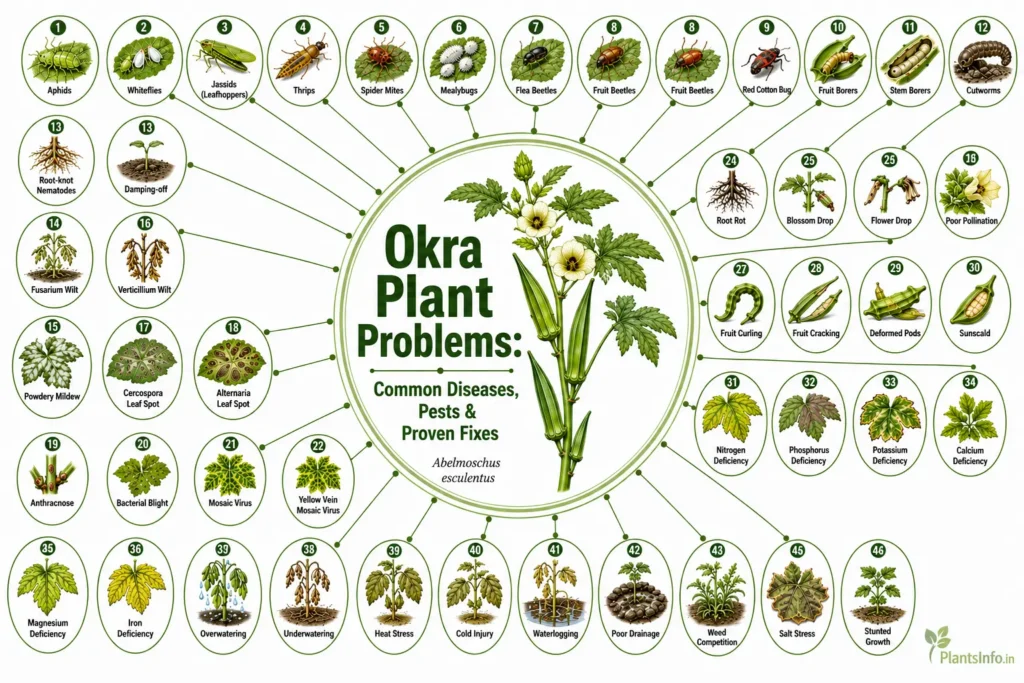
Although humid conditions may favour certain pests and diseases, detailed diagnosis and management are covered separately in the Okra Problems Guide.
Autumn Care
| Autumn Task | Recommendation |
|---|---|
| Continue Harvesting | Harvest tender pods regularly |
| Irrigation | Reduce frequency as temperatures decline |
| Remove Ageing Growth | Remove naturally declining foliage where necessary |
| Nutrition | Avoid excessive late-season fertilization |
| Crop Evaluation | Assess remaining productivity before crop completion |
In many parts of India, autumn marks the final productive stage of the okra growing season. Cooler nights and shorter days gradually slow growth, flowering, and pod production, although healthy plants may continue yielding where temperatures remain favourable.
Continue harvesting tender pods regularly to maintain quality and encourage any remaining flower production. As temperatures and evaporation decrease, reduce irrigation according to soil moisture rather than following the summer watering schedule.
Late-season fertilization provides little benefit once growth naturally slows, so focus instead on maintaining plant health. Remove severely yellowing or damaged leaves where necessary to improve airflow and keep the growing area tidy. Once harvesting declines significantly, remove the completed crop and prepare the bed for the next planting season.
Winter Care
| Winter Task | Recommendation |
|---|---|
| Frost Protection | Essential where frost occurs |
| Irrigation | Minimal in dormant or inactive beds |
| New Planting | Suitable only in frost-free regions |
| Soil Care | Improve beds with compost for future crops |
| Container Plants | Move to warmer, protected locations if possible |
Winter affects okra differently depending on regional climate. In tropical southern India, warm conditions may allow continued cultivation, whereas most northern regions become unsuitable because of low temperatures.
Okra has very poor tolerance to frost. Even brief exposure to freezing temperatures can severely damage foliage, flowers, and developing pods. Where frost is expected, established crops usually decline rapidly and are removed rather than protected for extended periods.
Gardeners in frost-free regions should continue providing adequate sunlight, moderate irrigation, and routine harvesting while warm conditions persist.
Winter is also an excellent time to improve growing beds for the following season. Incorporating compost and organic matter during the off-season enhances soil fertility and structure before spring planting.
In cooler climates, avoid sowing seeds until soil temperatures rise sufficiently, as cold soils significantly delay germination and weaken seedling establishment.
Seasonal Watering Schedule
| Season | Water Requirement | Irrigation Approach |
|---|---|---|
| Spring | Moderate | Maintain consistent moisture during establishment |
| Summer | High | Water deeply according to soil moisture and temperature |
| Monsoon | Low to Moderate | Irrigate only when rainfall is insufficient |
| Autumn | Moderate | Gradually reduce watering as temperatures decline |
| Winter | Low | Water only where plants continue active growth |
Water requirements change throughout the growing season in response to temperature, rainfall, and the plant’s stage of growth. Spring irrigation supports healthy establishment, while summer usually requires the most frequent watering because of increased evaporation and active pod production.
During the monsoon, natural rainfall often meets most of the crop’s water needs, making regular irrigation unnecessary. As temperatures decline in autumn, reduce watering gradually. In frost-free regions where winter cultivation continues, irrigate only as needed to prevent the soil from drying completely.
Adjust irrigation according to weather and soil moisture rather than following a fixed seasonal schedule.
Seasonal Fertilizing Schedule
| Season | Nutrient Focus | Objective |
|---|---|---|
| Spring | Organic matter and balanced nutrition | Establish vigorous early growth |
| Summer | Moderate supplemental feeding if required | Support flowering and pod production |
| Monsoon | Apply fertilizers cautiously | Reduce nutrient loss during heavy rainfall |
| Autumn | Minimal additional feeding | Maintain remaining productivity |
| Winter | Soil improvement rather than crop feeding | Prepare for future cultivation |
Nutrient requirements change as okra progresses through its annual growth cycle. Spring is the best time to build soil fertility before rapid growth begins, while summer may require moderate supplemental feeding to support continued flowering and pod production where soil fertility is limited.
During the monsoon, apply fertilizers cautiously, as heavy rainfall can increase nutrient loss, particularly in light soils. As growth slows in autumn, reduce additional feeding because late-season fertilization provides little benefit. Winter is best used to improve soil with compost or other organic matter before the next growing season.
Seasonal Pruning Calendar
| Season | Pruning Activity | Purpose |
|---|---|---|
| Spring | Minimal removal of weak seedlings | Improve plant establishment |
| Summer | Remove damaged or ageing leaves as required | Improve airflow and maintain vigour |
| Monsoon | Remove storm-damaged foliage | Reduce stress and improve air circulation |
| Autumn | Remove declining leaves after harvest | Maintain plant health during late production |
| Winter | Remove completed crop | Prepare the site for the next growing season |
Okra requires relatively little pruning throughout its annual life cycle. Seasonal pruning is therefore limited to maintaining plant health rather than shaping the plant.
During spring, thinning overcrowded seedlings is often more important than pruning. Selecting the strongest seedlings allows each plant sufficient space to develop.
Summer maintenance consists mainly of removing damaged, yellowing, or naturally ageing leaves when necessary. This helps improve airflow without significantly reducing the plant’s photosynthetic capacity.
Following heavy monsoon rain or wind, inspect plants for broken stems and severely damaged foliage. Prompt removal of damaged material allows the plant to direct resources toward healthy growth while maintaining better air circulation.
As the growing season ends in autumn, gradually remove declining foliage if necessary while continuing to harvest productive stems.
Once the crop has completed its life cycle or winter temperatures terminate growth, remove the entire plant from the bed. Clearing old crop residue at the end of the season helps prepare the area for future planting and supports good garden hygiene before the next cultivation cycle.
Extreme Weather Protection
| Weather Condition | Potential Impact | Recommended Action |
|---|---|---|
| Heatwave | Temporary wilting, reduced flowering, faster soil drying | Deep watering, maintain mulch, harvest regularly |
| Heavy Rain | Waterlogging, root stress, lodging | Improve drainage and avoid unnecessary irrigation |
| Strong Winds | Broken stems, leaning plants | Stake tall plants where necessary and remove severely damaged growth |
| Drought | Reduced pod size, lower yields | Water deeply at longer intervals and maintain mulch |
| Cold Weather | Slow growth and delayed flowering | Delay sowing until temperatures become favourable |
| Frost | Severe plant damage or crop loss | Harvest remaining pods and remove damaged plants |
Although okra is naturally adapted to warm climates, extreme weather can still reduce plant health and productivity. Anticipating seasonal weather changes allows gardeners to minimise stress and maintain more consistent harvests.
Heatwaves
High summer temperatures are generally well tolerated by established okra plants. However, prolonged heat combined with dry soil can reduce flower retention and produce smaller, tougher pods.
During heatwaves:
- Water deeply during the early morning.
- Maintain a 5–8 cm organic mulch layer.
- Avoid shallow daily watering.
- Harvest mature pods promptly to reduce plant stress.
- Delay fertilizer applications during periods of severe heat unless plants are actively growing.
Temporary afternoon wilting is common during extreme heat. If plants recover naturally by evening, additional watering is usually unnecessary.
Heavy Rainfall
Extended rainfall creates greater risk than high temperatures.
Maintain clear drainage channels around planting beds and avoid allowing water to collect near the root zone. Raised beds perform particularly well in regions receiving prolonged monsoon rainfall.
After heavy storms:
- Remove broken stems if necessary.
- Harvest mature pods promptly.
- Avoid walking on saturated soil to prevent compaction.
- Resume irrigation only after the soil begins drying.
Strong Winds
Tall okra plants carrying numerous pods may become unstable during storms.
Where strong seasonal winds are common:
- Install simple stakes for support.
- Harvest larger pods before severe weather.
- Remove severely damaged branches after storms.
- Ensure plants are spaced adequately for good air movement.
Cold Weather and Frost
Okra is among the least cold-tolerant vegetable crops.
Growth slows rapidly as temperatures decline, and frost usually causes irreversible damage to leaves, flowers, and pods.
In regions experiencing winter frost:
- Complete harvesting before freezing conditions.
- Remove finished plants after crop completion.
- Improve soil with compost during the off-season.
- Plan the next sowing only after warm conditions return.
Monthly Care Calendar
| Month | Northern India | Southern India | Primary Care Focus |
|---|---|---|---|
| January | Prepare for upcoming season | Possible continued cultivation in frost-free areas | Soil improvement |
| February | Begin sowing in warmer regions | Active growth or new sowing | Bed preparation |
| March | Main sowing season begins | Active production | Establish healthy plants |
| April | Rapid vegetative growth | Flowering and harvesting | Regular irrigation |
| May | Peak growth | Continuous harvesting | Moisture management |
| June | Flowering and heavy harvesting | Monsoon management begins | Drainage and harvesting |
| July | Active production | Active production | Weed and drainage management |
| August | Continued harvesting | Continued harvesting | Maintain airflow and harvest regularly |
| September | Late-season production | New sowing possible in suitable regions | Harvest and plant health |
| October | Productivity gradually declines | Active cultivation in warm areas | Continue harvesting |
| November | Remove completed crops | Continued production in tropical regions | Crop transition |
| December | Off-season in most northern regions | Warm-region cultivation continues | Soil preparation and planning |
Actual growing calendars vary depending on local climate, elevation, and sowing date. Rather than relying solely on calendar months, gardeners should adjust care according to temperature, rainfall, and the crop’s growth stage.
Regional Notes (India)
| Region | Seasonal Considerations |
|---|---|
| North India | Main cultivation from spring to early autumn; avoid winter frost |
| South India | Multiple growing seasons possible due to warm temperatures |
| Western India | Summer irrigation is essential in dry regions |
| Eastern India | Good productivity with attention to monsoon drainage |
| Central India | Excellent warm-season crop with regular irrigation |
| Coastal India | Monitor drainage and maintain airflow during humid weather |
| Hill Regions | Grow only during the warmest months at suitable elevations |
North India
Most northern states grow okra as a spring and summer crop. Seeds should be sown only after the danger of low temperatures has passed. Harvesting usually continues until cooler autumn weather slows production.
South India
Warm temperatures allow much greater flexibility. Depending on local rainfall, gardeners may grow multiple successive crops throughout the year. During periods of heavy rain, drainage becomes the primary management priority.
Western India
High summer temperatures combined with low rainfall increase irrigation requirements. Organic mulching is particularly beneficial for conserving soil moisture and reducing evaporation.
Eastern India
Warm temperatures favour excellent growth, but seasonal rainfall requires careful drainage management. Raised beds often improve long-term productivity during the monsoon.
Central India
Okra performs well throughout the warm season provided irrigation remains available during prolonged dry periods.
Coastal Regions
High humidity generally supports vigorous growth, although continuous airflow around plants becomes increasingly important during extended wet weather.
Hill Regions
Cultivation is best restricted to the warmest months. Cooler temperatures at higher elevations shorten the productive season considerably.
Seasonal Care Mistakes
| Mistake | Consequence | Better Practice |
|---|---|---|
| Following a fixed watering schedule | Overwatering or underwatering | Adjust irrigation according to weather and soil moisture |
| Ignoring seasonal rainfall | Waterlogged roots | Reduce irrigation during the monsoon |
| Delaying harvests in summer | Tough pods and reduced flowering | Harvest every 2–3 days |
| Excessive late-season fertilization | Unnecessary vegetative growth | Reduce feeding as productivity declines |
| Leaving completed crops in beds | Reduced garden hygiene | Remove plants after production finishes |
| Planting too early in cool weather | Slow establishment | Wait for consistently warm soil |
| Ignoring mulch maintenance | Increased evaporation and weeds | Replenish mulch as it decomposes |
Seasonal management problems usually arise from treating every month of the year the same.
Watering is perhaps the most common example. Plants that require regular irrigation during hot summer weather may need little or none during periods of consistent monsoon rainfall.
Similarly, nutrient demand changes as the crop matures. Heavy fertilization late in the season rarely restores declining productivity and often provides little practical benefit.
Many gardeners also underestimate the importance of timely harvesting. During warm weather, pods mature rapidly, making frequent harvesting one of the most effective seasonal maintenance practices.
Finally, delaying removal of finished crops can occupy valuable growing space and complicate preparation for the next planting cycle.
Frequently Asked Questions
Does okra need different care in different seasons?
Yes. Watering, nutrient management, and overall maintenance should be adjusted according to temperature, rainfall, and the plant’s stage of growth.
Which season produces the highest yields?
Summer generally provides the highest productivity because warm temperatures encourage rapid flowering and continuous pod development.
Should I continue watering during the monsoon?
Only if rainfall has been insufficient and the soil begins to dry. Always check soil moisture before irrigating.
Can okra survive winter?
Only in frost-free tropical climates. In regions with frost or prolonged cold, okra usually completes its life cycle before winter.
How often should I harvest during peak season?
Harvest every two to three days while pods remain young and tender.
Is afternoon wilting during summer normal?
Yes. Temporary wilting during extremely hot afternoons is common. If plants recover by evening, this is usually a normal response to heat rather than a sign of water deficiency.
Should fertilizer applications continue throughout the season?
No. Nutrient requirements gradually decrease as plants approach the end of their productive life. Fertilizer should be applied according to growth stage and soil fertility.
Does rainfall improve okra growth?
Moderate rainfall supports healthy growth, but prolonged waterlogging can reduce root health and overall productivity.
When should the crop be removed?
Once pod production declines significantly, or cold weather ends the growing season, remove the plants and prepare the bed for the next crop.
Can I grow more than one crop each year?
Yes. In many frost-free parts of southern India, successive sowings can provide multiple harvests throughout the year.
Conclusion
Successful seasonal care keeps okra healthy, productive, and resilient throughout its growing cycle. Although the crop naturally thrives in warm conditions, its water, nutrient, and maintenance requirements change as the seasons progress.
By adjusting routine care to match local weather, rainfall, and the plant’s stage of growth, gardeners can reduce environmental stress, maintain consistent pod production, and make more efficient use of water and nutrients. Whether growing okra in northern, southern, coastal, or hill regions of India, understanding these seasonal changes helps maximise harvest quality and extend the productive life of the crop.