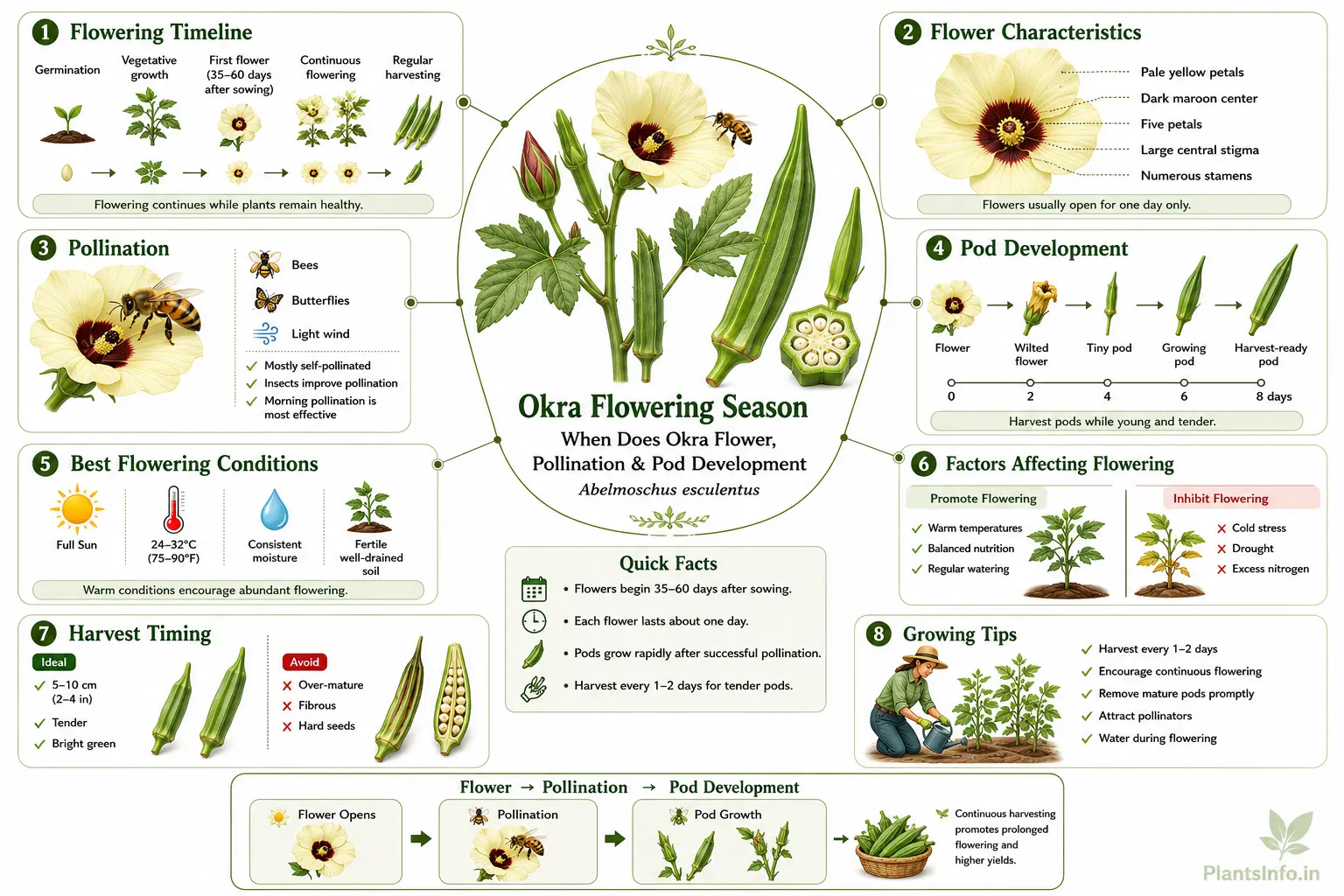
Okra Flowering Season Explained: Flowers, Pollination & Pod Formation
Quick Answer
| Aspect | Summary |
|---|---|
| Botanical Name | Abelmoschus esculentus |
| Flowering Season | Throughout the warm growing season under suitable conditions |
| First Flowers | Usually 45–60 days after sowing, depending on the variety and growing conditions |
| Peak Flowering | During periods of warm temperatures and active vegetative growth |
| Flower Lifespan | Individual flowers typically remain open for one day |
| Flower Colour | Cream to pale yellow with a dark maroon or purple centre in most cultivars |
| Flower Type | Large, bisexual (perfect) flowers |
| Pollination | Primarily self-pollinating |
| Fruit Development | Successful pollination is followed by rapid pod development |
| Guide Focus | Flowering season, flower biology, pollination, and fruit set |
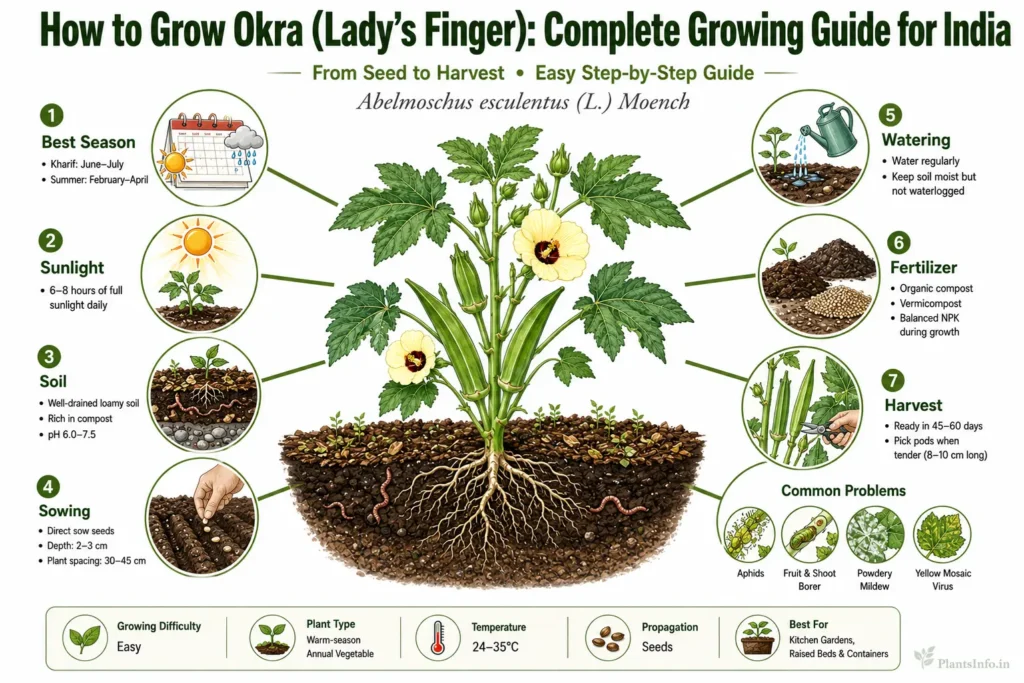
Okra produces large, hibiscus-like flowers that signal the transition from vegetative growth to the reproductive stage. Once plants reach flowering, they continue producing new blooms over an extended period under favourable warm-season conditions, supporting repeated pod production throughout the growing season.
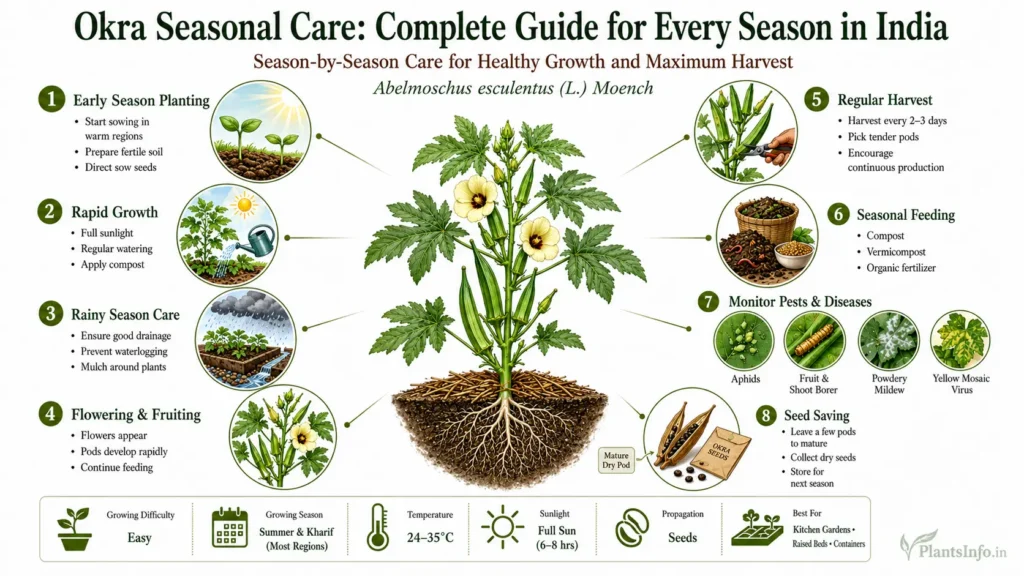
See also: Okra plant profile, how to grow it, common problems, seasonal care, and its benefits.
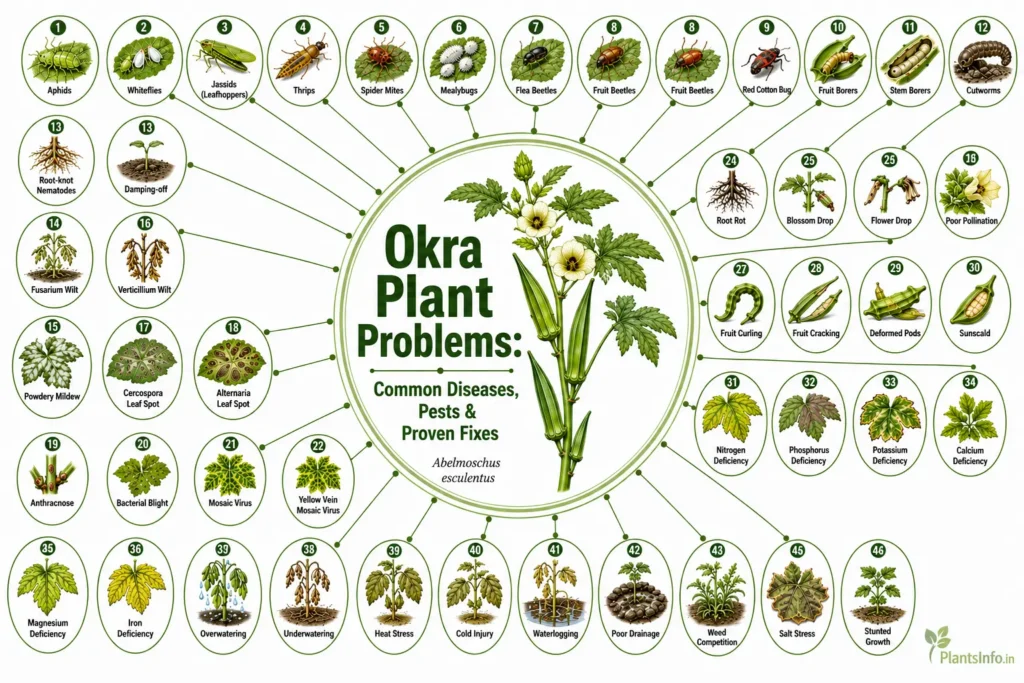
This guide explains the timing of flowering, flower development, pollination, fruit set, and the environmental factors that influence flowering, while distinguishing normal flowering behaviour from patterns that may require further investigation.
Recommended Products
Disclosure: As an Amazon Associate, PlantsInfo may earn from qualifying purchases.
🌱 Growing Essentials
The following products can help with container gardening, potting, root development, soil management, and healthy plant growth.
Organic Potting Soil Mix
Provides nutrients, structure, and healthy growing conditions for container plants.
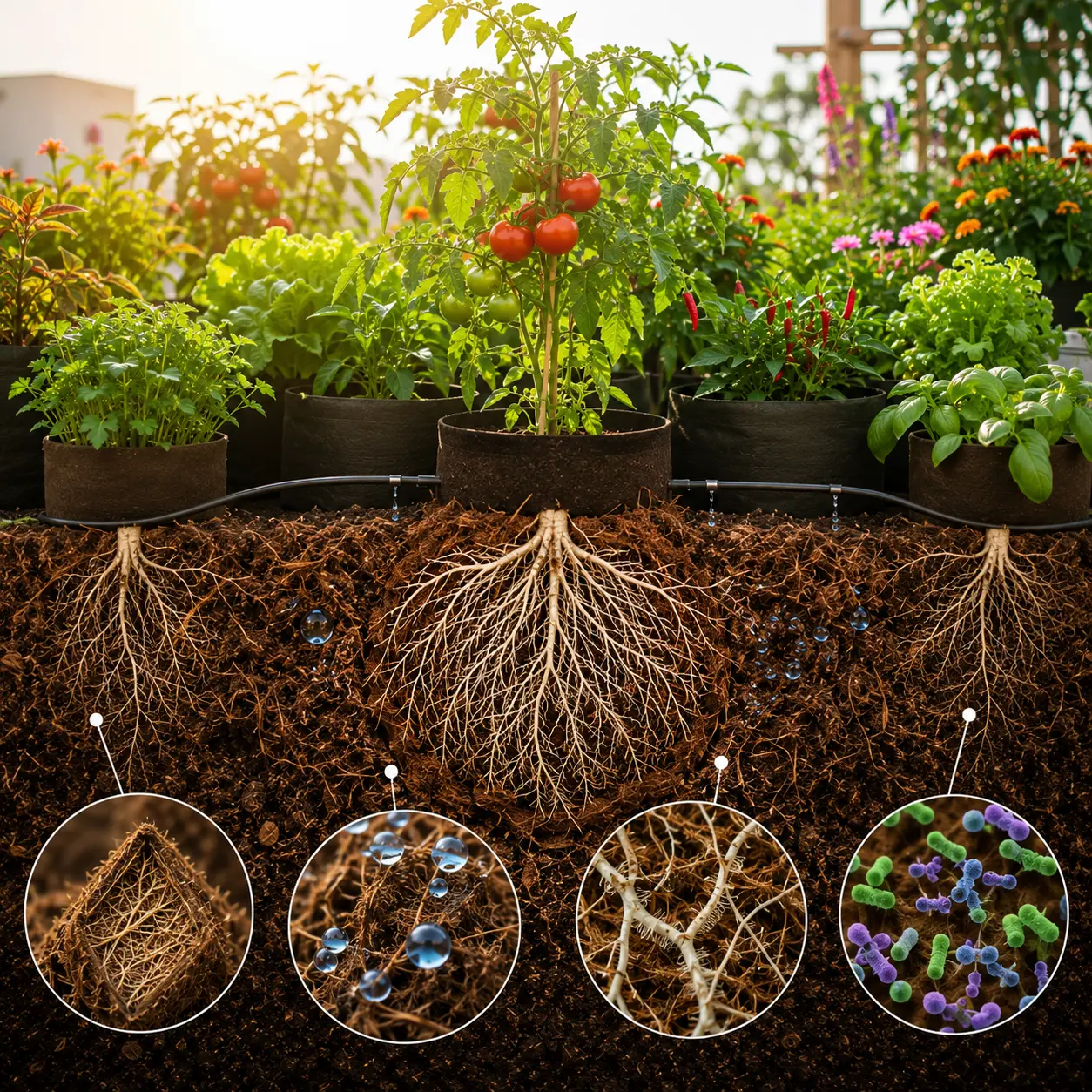
Coco Peat Growing Medium
Enhances moisture retention while maintaining excellent root-zone aeration.

Grow Bags for Plants
Improve drainage, root aeration, and vegetable production in limited spaces.

Plastic Pots for Plants
Ideal containers for seedlings, ornamentals, herbs, and balcony gardens.
Introduction
| Feature | Information |
|---|---|
| Plant Family | Malvaceae |
| Growth Habit | Fast-growing annual |
| Reproductive Structure | Large, bisexual flowers |
| Flowering Pattern | Sequential flowering over an extended growing season |
| Main Pollinators | Bees, butterflies, hoverflies, and other beneficial insects |
| Outcome of Successful Flowering | Pod and seed development |
| Guide Focus | Flowering biology and reproductive development |
Flowering marks the beginning of the reproductive phase in the life cycle of okra and directly determines pod production. After sufficient vegetative growth, flower buds develop in the leaf axils and open sequentially as the plant continues to produce new stems and leaves. This growth pattern allows flowering and pod development to occur simultaneously over much of the growing season.
Although individual flowers are short-lived, healthy plants continuously produce new flower buds under suitable environmental conditions. Each successfully pollinated flower has the potential to develop into a single okra pod, making sustained flowering essential for prolonged harvests.
This guide explores the flowering season, flower structure, developmental stages, pollination, fruit set, and the biological factors that influence flowering.
Flowering Season at a Glance
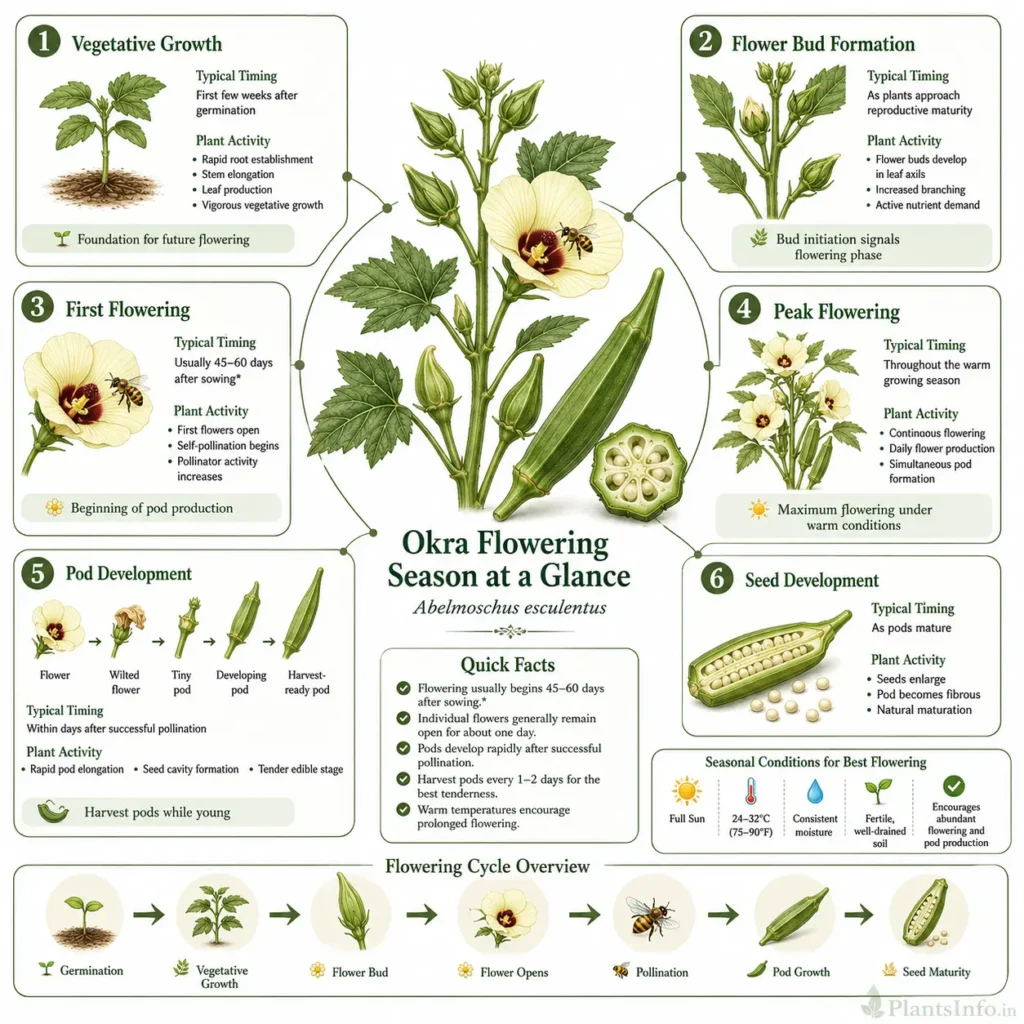
| Flowering Stage | Typical Timing | Plant Activity |
|---|---|---|
| Vegetative Growth | First few weeks after germination | Development of leaves, stems, and roots |
| Flower Bud Formation | As plants approach reproductive maturity | Flower buds develop in the leaf axils |
| First Flowering | Usually 45–60 days after sowing* | First flowers begin opening |
| Peak Flowering | Throughout the warm growing season | Continuous production of flowers and young pods |
| Pod Development | Within days after successful pollination | Young pods elongate rapidly |
| Seed Development | As pods mature | Seeds develop inside the pods |
*Flowering time varies with cultivar, temperature, and environmental conditions.
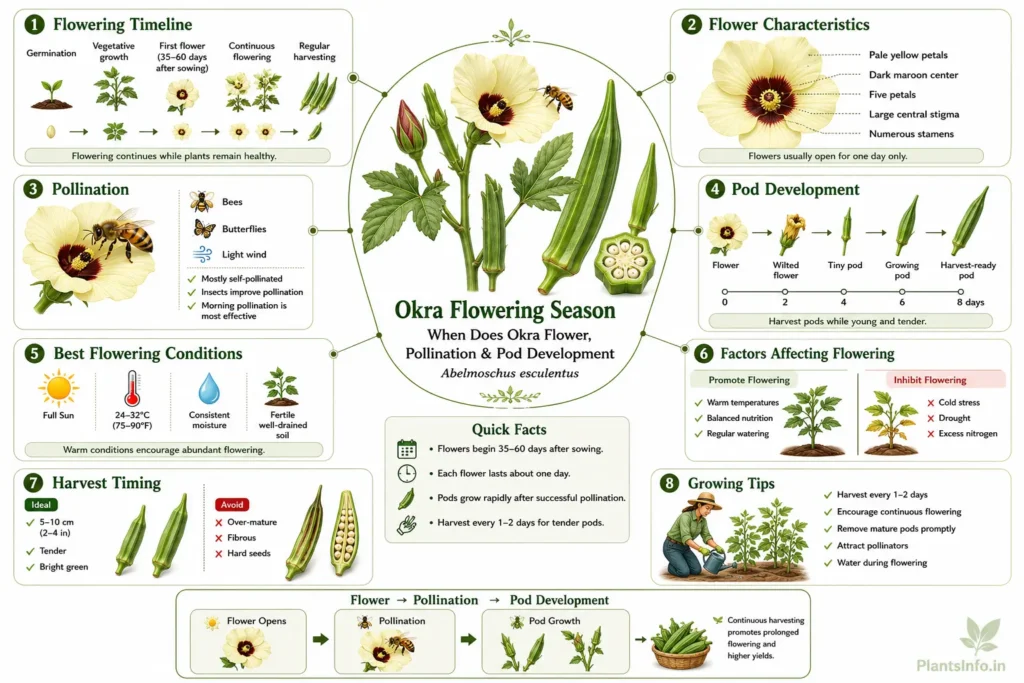
Okra transitions from vegetative growth to flowering after reaching reproductive maturity. Rather than flowering in a single flush, plants continue producing new flower buds at successive leaf nodes, allowing flowering and pod development to occur simultaneously over an extended period.
When Does Okra Flower?
| Growing Stage | Typical Development |
|---|---|
| Germination | Seedlings emerge and establish |
| Early Growth | Rapid development of leaves and stems |
| Pre-Flowering | Flower buds become visible in the leaf axils |
| First Flowering | Usually 45–60 days after sowing* |
| Active Flowering | New flowers continue to open as the plant grows |
| End of Flowering | Flower production gradually declines as plants age or growing conditions become less favourable |
*Timing varies among cultivars and environmental conditions.
Most okra plants begin flowering about 45–60 days after sowing, once sufficient vegetative growth has been achieved, and environmental conditions are favourable. Early-maturing cultivars may flower sooner than late-maturing types, while temperature and overall plant vigour influence the exact timing.
Flower buds first appear in the leaf axils, where leaves join the stem. As growth continues, new buds form at progressively higher nodes, resulting in sequential flowering throughout the productive life of the plant.
Flowering Stages
| Stage | Visible Characteristics | Biological Activity |
|---|---|---|
| Flower Bud Initiation | Small green buds develop in the leaf axils | Floral organs begin forming |
| Bud Enlargement | Buds increase in size and petals become visible | Flower matures before opening |
| Flower Opening | Petals fully expand, usually early in the morning | Flower becomes receptive to pollination |
| Pollination | Pollen reaches the stigma | Fertilisation may occur |
| Petal Senescence | Petals wilt and detach naturally | Ovary begins developing into a pod |
| Pod Formation | Young pod enlarges rapidly | Seed development begins |
1. Flower Bud Initiation
| Characteristic | Description |
|---|---|
| Location | Leaf axils along the main stem and branches |
| Appearance | Small, green, pointed buds enclosed by sepals |
| Duration | Several days before visible enlargement |
Flowering begins when vegetative growing points differentiate into flower buds. Initially small and enclosed by protective sepals, the buds gradually enlarge as the floral organs develop. This stage marks the plant’s transition from vegetative growth to reproductive development and precedes the visible opening of the flower.
2. Bud Enlargement
| Characteristic | Description |
|---|---|
| Size | Rapid increase before flowering |
| Petal Visibility | Cream to pale yellow petals begin to emerge |
| Development | Floral organs complete development before anthesis |
As the flower bud enlarges, the petals gradually become visible beyond the protective sepals. This stage indicates that the flower is approaching anthesis (flower opening), which usually occurs within a few days under favourable environmental conditions.
3. Flower Opening
| Characteristic | Description |
|---|---|
| Opening Time | Usually early in the morning |
| Flower Colour | Cream to pale yellow with a dark maroon or purple centre |
| Flower Lifespan | Typically one day |
| Biological Significance | Flower becomes receptive to pollination |
At anthesis, the petals expand fully, exposing the reproductive organs. This brief flowering period represents the plant’s peak reproductive stage, during which pollination and fertilisation can occur.
4. Pollination
| Characteristic | Description |
|---|---|
| Pollination Type | Primarily self-pollinating |
| Pollinator Assistance | Bees and other insects may enhance pollen transfer |
| Outcome | Successful fertilisation initiates pod development |
Because each okra flower contains both male and female reproductive organs, self-pollination usually occurs without requiring pollen from another flower. However, insect visitors frequently enhance pollen transfer and may improve fruit set under favourable conditions.
5. Petal Senescence and Pod Initiation
| Characteristic | Description |
|---|---|
| Flower Appearance | Petals wilt and detach naturally |
| Ovary | Begins enlarging after successful fertilisation |
| Visible Change | Young pod becomes visible |
Following successful fertilisation, the petals naturally wither and fall while the ovary enlarges into a developing pod.
Flower Characteristics
| Characteristic | Description |
|---|---|
| Flower Type | Bisexual (perfect), containing both male and female reproductive organs |
| Flower Size | Large, typically 5–8 cm (2–3 inches) across, depending on the cultivar |
| Flower Colour | Cream to pale yellow petals with a dark maroon or purple centre in most cultivars |
| Bloom Duration | Typically one day |
| Blooming Time | Usually early in the morning |
| Fragrance | Mild or absent |
| Fruit Potential | Each successfully pollinated flower can develop into a single pod |
Okra flowers are large, conspicuous blooms characteristic of the Malvaceae family. Their broad petals and prominent central reproductive column make the flowers readily accessible to pollinating insects while also facilitating efficient self-pollination.
Floral Structure
| Flower Part | Function |
|---|---|
| Petals | Attract pollinating insects |
| Stamens | Produce pollen |
| Pistil | Receives pollen and supports fertilisation |
| Ovary | Develops into the pod after fertilisation |
| Sepals | Protect the flower bud before opening |
The flower contains both male and female reproductive structures within a single bloom, enabling self-pollination while also allowing insects to assist with pollen transfer.
Flowering Pattern
| Characteristic | Description |
|---|---|
| Flower Position | Leaf axils along the main stem and branches |
| Flower Production | Sequential rather than simultaneous |
| Blooming Habit | New flowers open progressively during active growth |
| Pod Relationship | Each successfully pollinated flower can produce one pod |
Okra produces flowers sequentially at successive leaf nodes rather than in large clusters. This growth habit allows flowering, pod development, and continued vegetative growth to occur simultaneously, supporting an extended harvest period under favourable conditions.
Regional Flowering Calendar (India-Focused)
| Region | Typical Flowering Period* | Flowering Pattern |
|---|---|---|
| Northern Plains | Late spring to autumn | Peak flowering during the warm summer months |
| Southern India | Much of the year | Extended flowering where temperatures remain favourable |
| Western India | Spring to autumn | Regular flowering throughout the warm growing season |
| Eastern India | Spring to autumn | Continuous flowering during the warm season |
| Central India | Summer and monsoon growing season | Sustained flowering during active plant growth |
| Hills and Plateau Regions | Late spring to early autumn | Comparatively shorter flowering season |
*Flowering periods vary with sowing date, cultivar, elevation, and local climatic conditions.
Because okra flowers only after reaching reproductive maturity, the flowering season varies across India according to local growing conditions and planting schedules. Regions with longer periods of warm weather generally support a longer flowering season, while cooler regions experience a comparatively shorter flowering period.
Flowering in Containers
| Aspect | Information |
|---|---|
| Flowering Potential | Comparable to in-ground plants under suitable conditions |
| Best Plant Type | Compact or dwarf varieties |
| Flower Production | Sequential flowering after reproductive maturity |
| Pollination | Primarily self-pollinating |
| Suitable Locations | Balconies, patios, terraces, and other sunny spaces |
Okra follows the same flowering cycle in containers as it does in the ground. After reaching reproductive maturity, flower buds develop in the leaf axils, individual flowers open sequentially, and successful pollination is followed by pod development.
Compact or dwarf cultivars are generally preferred for container cultivation because their growth habit is better suited to limited growing space. Although pollinator visits may be less frequent in enclosed locations such as balconies, okra usually self-pollinates successfully.
Pollination & Fruit Set
| Aspect | Description |
|---|---|
| Pollination Type | Primarily self-pollinating |
| Main Pollinators | Bees, butterflies, hoverflies, and other beneficial insects |
| Peak Pollination Period | While flowers are fully open, usually during the morning |
| Fruit Set | Begins soon after successful fertilisation |
| Visible Pod Development | Usually within 1–3 days after pollination |
Pollination is the transfer of pollen from the anthers to the stigma, allowing fertilisation and the development of pods and seeds. Although okra is primarily self-pollinating, visiting insects frequently enhance pollen transfer and may improve fruit set under favourable conditions.
Pollination Process
| Stage | Description |
|---|---|
| Flower Opening | The flower opens, exposing the reproductive organs. |
| Pollen Transfer | Pollen reaches the stigma through self-pollination or insect activity. |
| Fertilisation | Fertilised ovules begin seed development. |
| Fruit Set | The ovary enlarges into a developing okra pod. |
Following successful fertilisation, the ovary rapidly develops into a young pod while seed formation begins inside the fruit.
Common Pollinators
| Pollinator | Role |
|---|---|
| Honey bees | Frequent flower visitors that enhance pollen transfer |
| Native bees | Efficient pollinators during flowering |
| Bumblebees | Effective pollinators where present |
| Butterflies | Occasional flower visitors |
| Hoverflies | Contribute to pollination while supporting beneficial insect diversity |
Although insect activity can improve pollination efficiency, healthy okra plants generally produce pods successfully without requiring cross-pollination.
Frequently Asked Questions
When does okra usually start flowering?
Most okra plants begin flowering approximately 45–60 days after sowing, although timing varies with cultivar, temperature, and growing conditions.
How long does an okra flower remain open?
Individual flowers generally remain open for only one day. After successful pollination, the petals naturally wilt and fall while the developing pod begins to enlarge.
Does every flower produce a pod?
Not always. Under favourable conditions, most successfully pollinated flowers develop into pods. Environmental stress or unsuccessful fertilisation may prevent some flowers from setting fruit.
Is okra self-pollinating?
Yes. Okra flowers contain both male and female reproductive organs and are primarily self-pollinating. Insects can enhance pollination efficiency but are usually not essential for pod production.
Which insects pollinate okra?
Honey bees, native bees, bumblebees (where present), hoverflies, and butterflies are among the insects that commonly visit okra flowers.
Can okra flower in containers?
Yes. Container-grown plants flower normally when provided with sufficient sunlight, appropriate container size, and favourable growing conditions.
Does flowering continue throughout the growing season?
Yes. Healthy plants typically continue producing new flowers throughout the warm growing season until growth slows because of plant age or less favourable environmental conditions.
Do red and green okra varieties flower differently?
Most red- and green-podded cultivars produce flowers with a similar structure and flowering pattern. The primary difference lies in pod pigmentation rather than flower biology.
Conclusion
| Key Takeaway | Summary |
|---|---|
| Flowering Habit | Okra flowers continuously throughout the warm growing season under suitable conditions. |
| Flower Biology | Large, hibiscus-like flowers usually bloom for a single day before pod development begins. |
| Pollination | Primarily self-pollinating, with insects enhancing pollination efficiency. |
| Fruit Set | Successful pollination leads rapidly to pod formation and seed development. |
Flowering represents the reproductive phase of the okra plant and marks the beginning of pod production. From flower bud initiation through pollination and fruit set, each stage follows a predictable biological sequence that supports continuous harvests during the warm growing season.