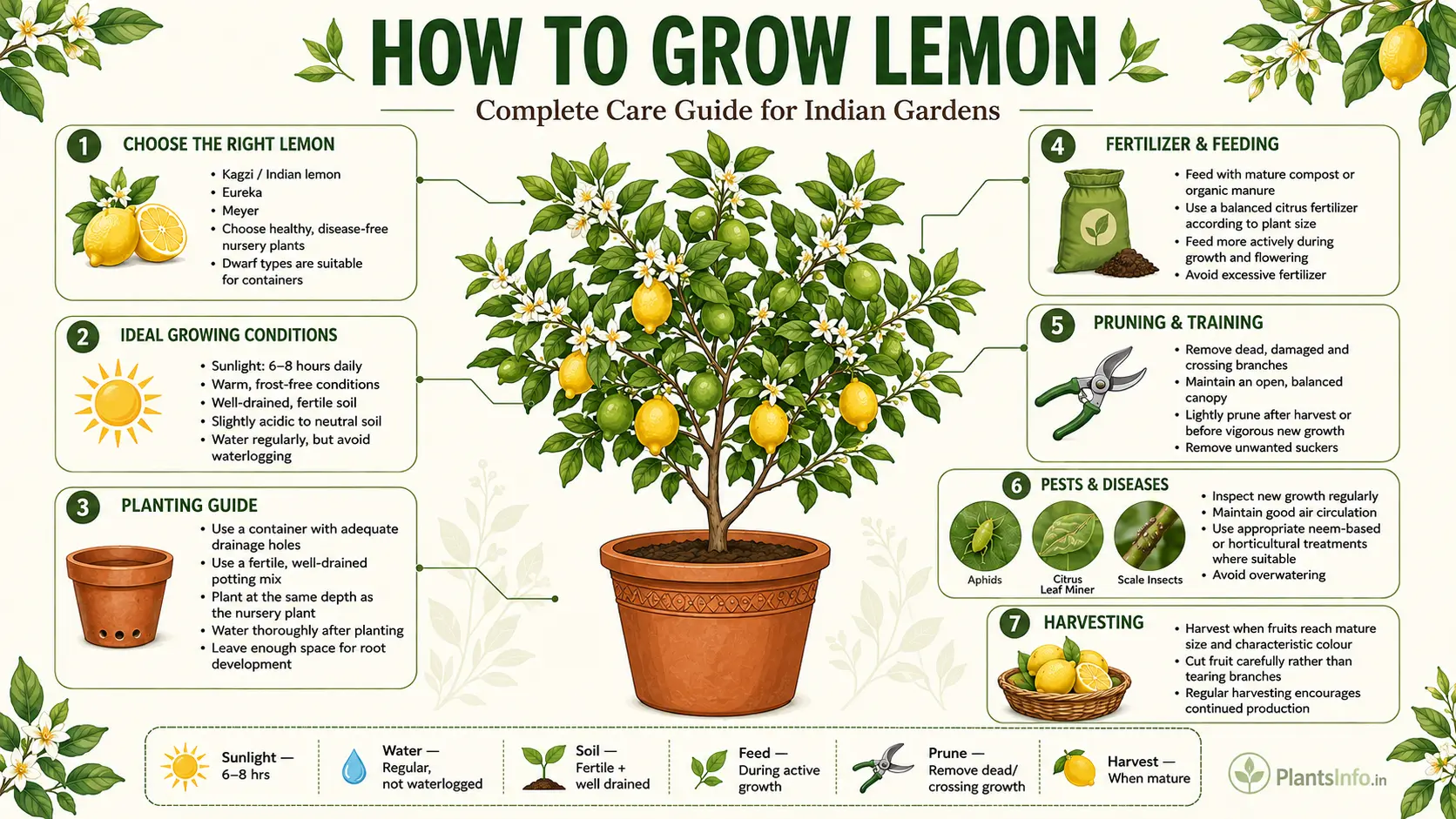
How to Grow Lemon: Complete Care Guide for Indian Gardens
Quick Answer
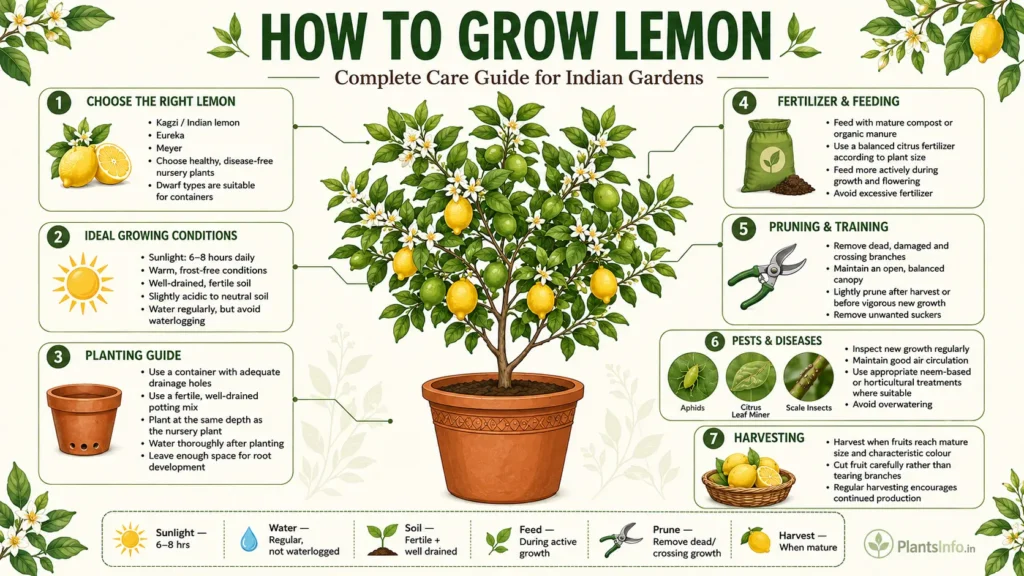
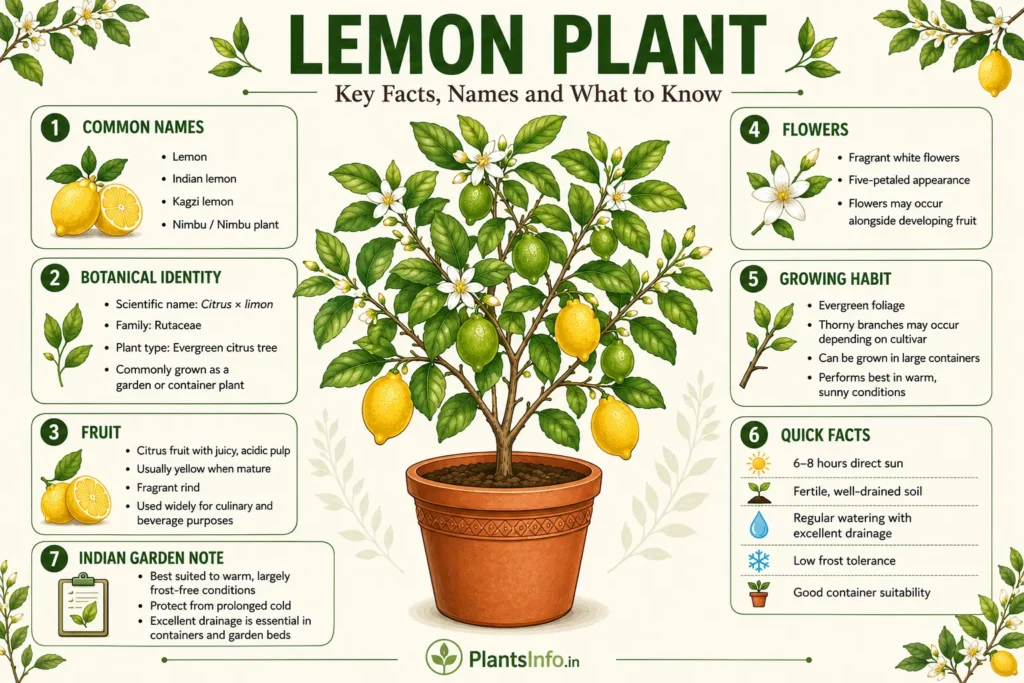
Lemon (Citrus limon) can be grown at home and is a Moderate-care fruit tree. It performs best with strong direct light, well-drained soil, regular moisture, and a healthy nursery-grown or grafted sapling.
See also: Lemon (Citrus limon) Plant plant profile, common problems, seasonal care, its flowering season, and its varieties.
Introduction
Brush a lemon tree’s leaves, and the familiar citrus fragrance is released almost immediately. One mistake beginners often make is assuming that more water always means faster growth.
Recommended Products
Disclosure: As an Amazon Associate, PlantsInfo may earn from qualifying purchases.
🌱 Growing Essentials
The following products can help with container gardening, potting, root development, soil management, and healthy plant growth.
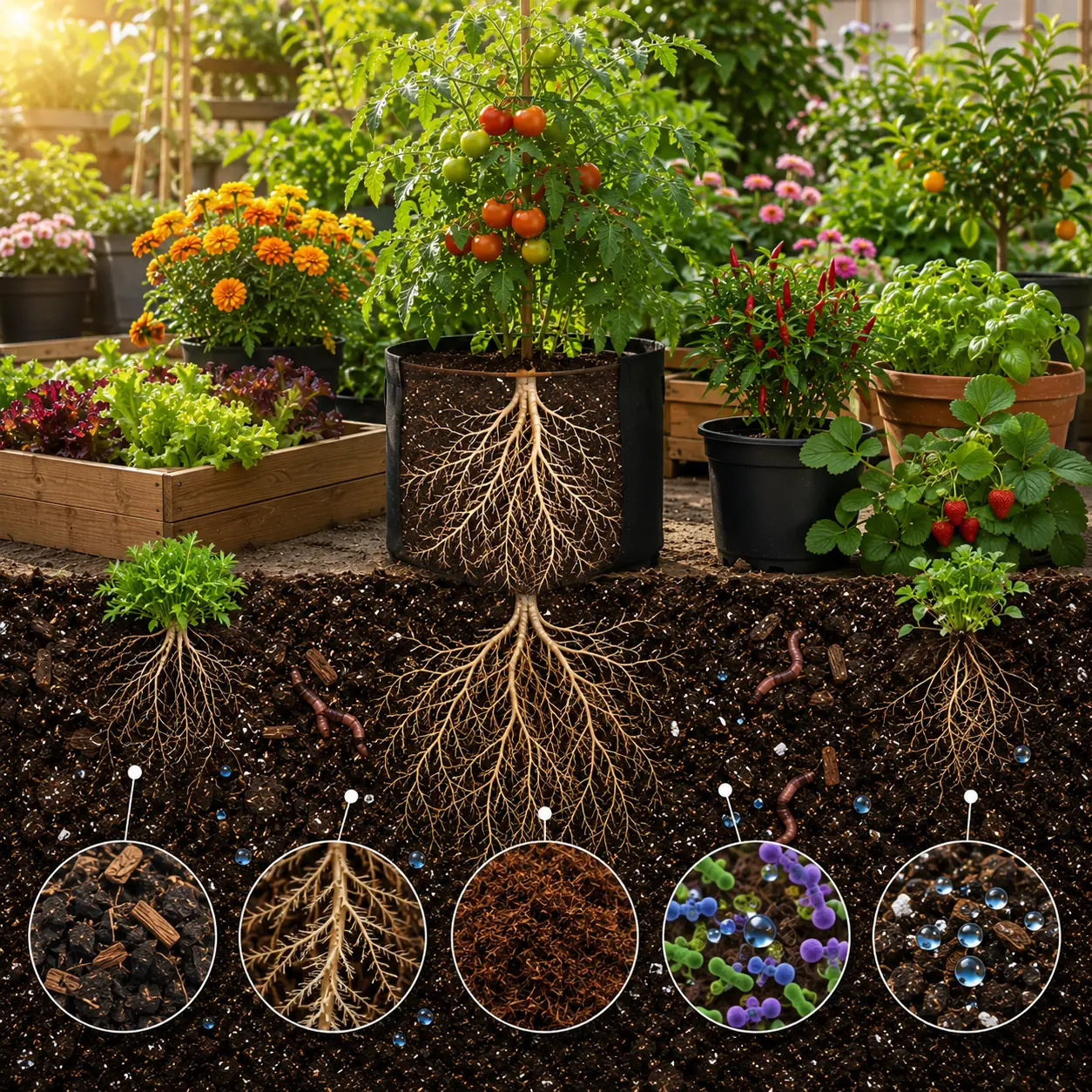
Organic Potting Soil Mix
Provides nutrients, structure, and healthy growing conditions for container plants.
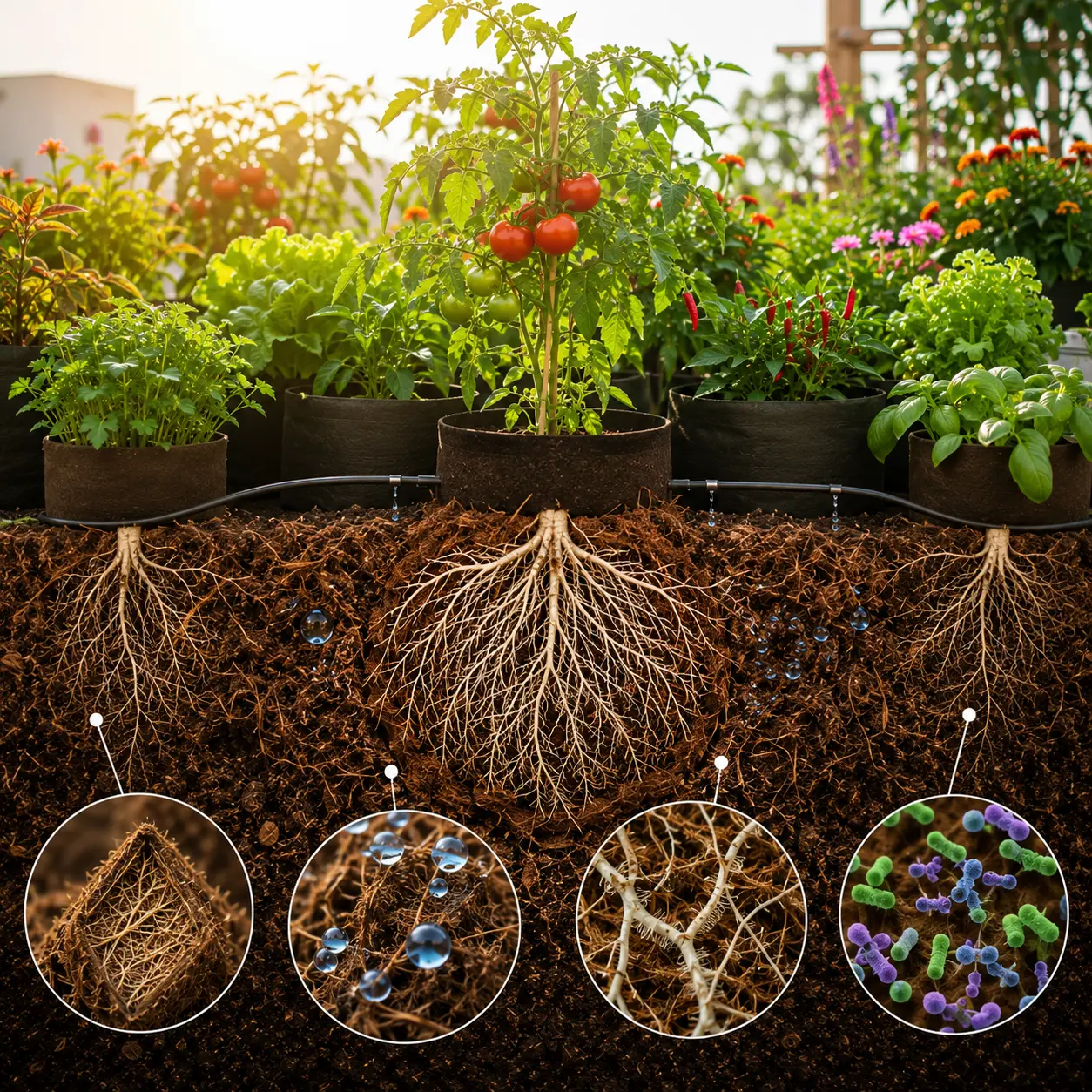
Coco Peat Growing Medium
Enhances moisture retention while maintaining excellent root-zone aeration.

Grow Bags for Plants
Improve drainage, root aeration, and vegetable production in limited spaces.

Plastic Pots for Plants
Ideal containers for seedlings, ornamentals, herbs, and balcony gardens.
Difficulty: Moderate.
Quick Facts
| Field | Lemon |
|---|---|
| Common names | Lemon, Nimbu, Kagzi nimbu |
| Scientific name | Citrus limon |
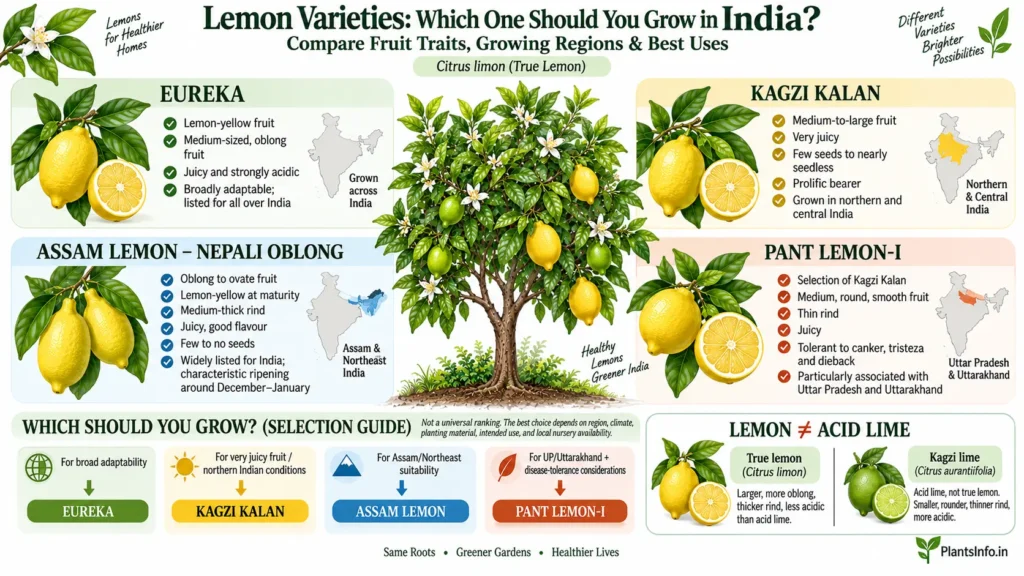
| Varieties | Kagzi, Eureka, Lisbon |
| Plant type | Evergreen fruit tree |
| Mature size | About 3–6 m in ground |
| Sunlight | Full sun |
| Water needs | Moderate; avoid prolonged wetness |
| Best season to plant | Pre-monsoon to early Monsoon |
| Suitable states | Most frost-free parts of India with suitable conditions |
Full variety comparison — see the Varieties Guide.
Quick Growing Requirements
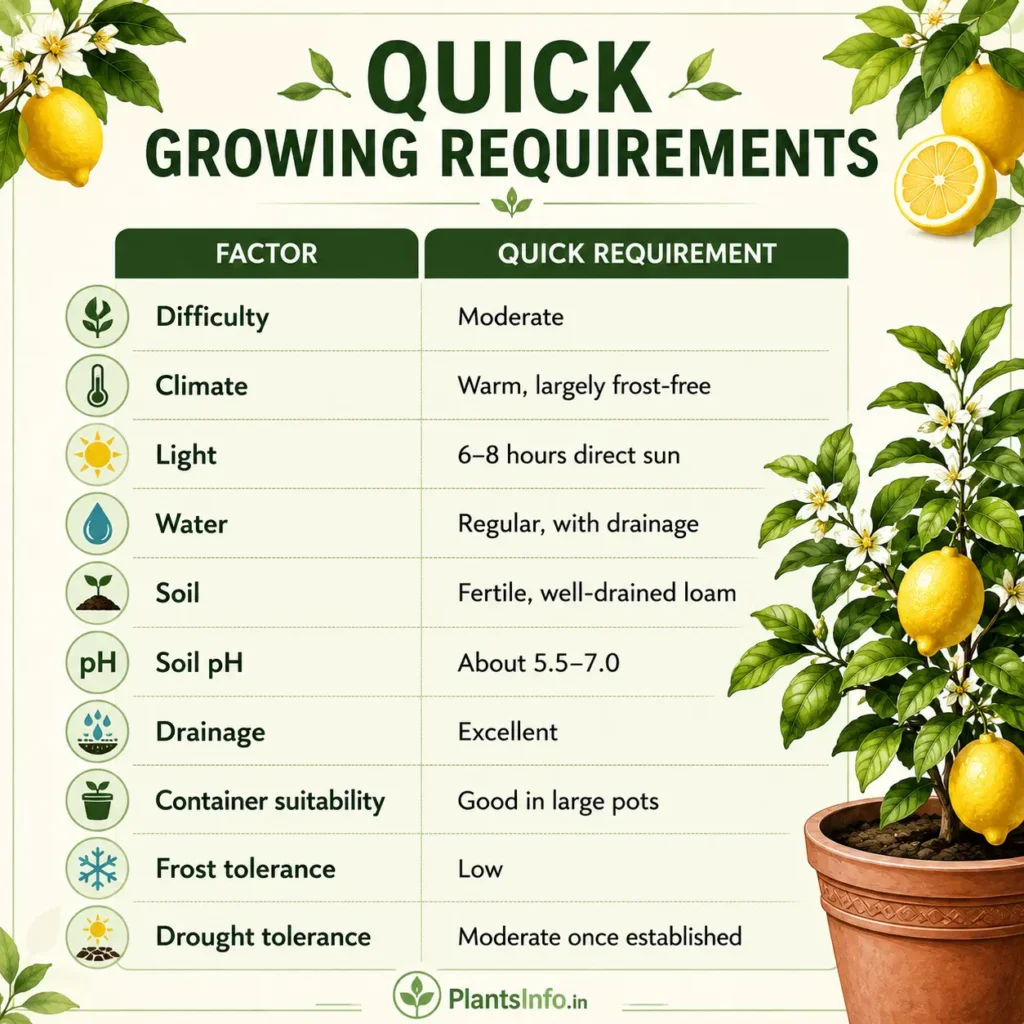
| Factor | Quick requirement |
| Difficulty | Moderate |
| Climate | Warm, largely frost-free |
| Light | 6–8 hours direct sun |
| Water | Regular, with drainage |
| Soil | Fertile, well-drained loam |
| Soil pH | About 5.5–7.0 |
| Drainage | Excellent |
| Container suitability | Good in large pots |
| Frost tolerance | Low |
| Drought tolerance | Moderate once established |
Choosing the Right Spot
Choose the brightest practical position, preferably one receiving around 6–8 hours of direct sunlight. In hotter parts of India, some protection from severe afternoon heat can be useful for young container plants, but a permanently shaded position is unsuitable.
For most gardeners with adequate land, ground planting works better than container growing because the root system has more room and soil moisture changes less abruptly. A container is the better choice where garden space is limited, or the plant needs to be moved.
Soil and Potting Mix
Use fertile, well-drained loam or sandy loam with a mildly acidic to neutral reaction. If ordinary garden soil is heavy, mix in mature organic matter and coarse material to improve its structure rather than creating a fine, compost-rich pocket that holds water.
A particularly common Indian-garden mistake is planting citrus in a low spot where rainwater collects around the root zone. The soil may look fertile while the roots remain short of air.
Planting — Season and Method
Best season: Pre-monsoon to early Monsoon. In many Indian regions, this corresponds broadly to the period immediately before or around the arrival of regular Monsoon moisture; local rainfall and heat should determine the exact planting date.
For home gardeners, a healthy grafted or nursery-grown sapling is more practical than seed when the aim is a predictable fruiting plant. Seed-grown trees can differ from the parent and usually require more time to reach useful production.
Dig a hole wider than the root ball and place the sapling at approximately its original nursery soil level. Keep the trunk base above the surrounding soil rather than burying it.
For ground planting, leave adequate room for the mature canopy rather than crowding several citrus trees together. Water thoroughly immediately after planting to settle the soil around the roots.
Watering
For the first 4–6 weeks, check the root zone regularly and water when the upper layer has begun to dry. Newly planted trees need dependable moisture while roots establish, but the soil should not remain saturated.
Once established, water more deeply and less frequently than a newly planted sapling, adjusting the interval for soil type, temperature, rainfall, and container size.
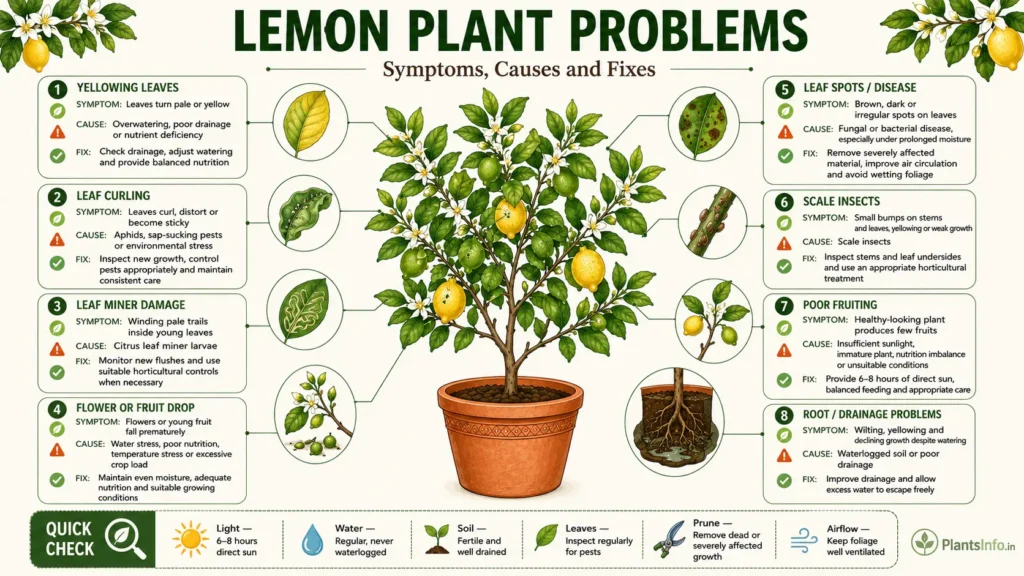
A specific sign of overwatering is soil that remains wet for several days while growth stays weak and the plant begins to decline despite having no prolonged dry spell. This pattern is more informative than yellow leaves alone, because yellowing can have several causes.
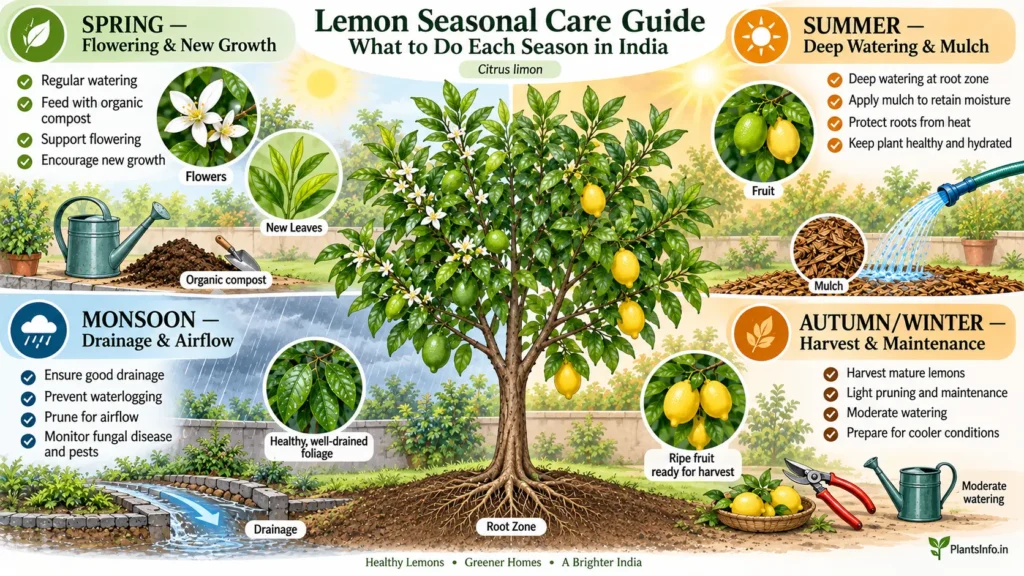
During the Monsoon, reduce irrigation according to actual rainfall — Seasonal watering changes — see the Seasonal Care Guide.
Fertiliser
Lemon benefits from regular nutrient supply during active growth and fruit production. Indian gardeners can use mature vermicompost or compost alongside a balanced citrus fertiliser or suitable NPK product according to the label.
Organic options include well-decomposed neem cake or mustard cake in modest amounts. Keep concentrated fertiliser and organic amendments away from direct contact with the trunk and exposed roots.
Apply major nutrient doses during periods of active growth rather than immediately before severe heat or into persistently saturated soil. A smaller, regular feeding approach is preferable to occasional heavy applications.
Common Problems and Fixes
Yellowing foliage
Yellowing can be associated with nutrient imbalance, root-zone stress, or a plant-health problem. The pattern and age of affected leaves help distinguish the possible cause categories.
Distorted young leaves
Distorted or curled new leaves can result from insect feeding or other biological problems affecting tender growth.
Branch decline
Progressive branch dieback can be associated with root, stem, environmental, or other plant-health problems.
For full diagnosis and treatment, see the Problems Guide.
When Will You See Results?
During Year 1, the main objective is establishment rather than maximum fruit production. A healthy grafted plant can begin flowering and fruiting while still relatively young, but the exact timing varies with the plant’s origin, rootstock, cultivar, and growing conditions.
For lemon, patience matters because a newly planted tree may need to establish its root and branch framework before it can carry a substantial crop.
Flowering and fruiting timing — see the Flowering & Fruiting Season Guide.
Common Mistakes
Forcing a heavy crop too early
A young tree carrying more fruit than its developing framework can comfortably support may remain weak. Let establishment take priority during the early years.
Leaving suckers unchecked
Shoots arising from below the graft union can compete with the desired plant framework and may eventually dominate if ignored. Remove unwanted below-graft growth as part of routine plant maintenance.
Damaging the trunk during garden work
Repeated contact from tools, strings, supports, or nearby digging can injure the bark. Keep routine garden work clear of the trunk and main root zone.
Buying an unidentified citrus plant
A nursery plant sold simply as “lemon” may not have a reliably identified cultivar. For a named variety, verify the nursery label and planting material before purchase.
Propagation
For a home gardener, budding or grafting onto a suitable citrus rootstock is the preferred propagation approach when maintaining known fruit characteristics matters. Seed propagation is simpler but does not reliably reproduce the parent plant.
Propagation is best attempted during active growth when suitable plant material is available. There is no single dependable success-rate percentage that applies across home-grafting attempts because results vary substantially with technique, rootstock, scion condition, season, and aftercare.
Pruning and Training
Use light formative pruning to establish a balanced framework and remove weak, damaged, crossing, or poorly positioned growth. Avoid severe routine cutting of a healthy, productive tree.
For Indian gardens, pruning can be tied to the plant’s active-growth cycle rather than a single nationwide date. Remove unwanted shoots cleanly and avoid repeatedly shortening all branch tips.
Container Growing
Lemon can be grown in containers where garden space is unavailable. For a long-term home plant, use a large container of at least about 45–60 cm in diameter, with substantial drainage holes; a sturdy plastic, fibre, or terracotta pot can work when its weight and drainage suit the location.
Use a free-draining mix that holds moisture without becoming compacted. Container plants generally need closer monitoring than ground-grown trees because their root volume and available moisture are limited.
Repot when roots have substantially occupied the available container or growth has become restricted. Move up gradually rather than placing a small plant immediately into an excessively large pot.
Harvesting
Harvest fruit when it has reached the expected mature size and the colour and firmness are appropriate for its intended use. Lemons can be harvested green when physiologically mature for some kitchen purposes or left to develop more yellow colour.
Cut or twist the fruit carefully from the plant rather than pulling hard on the branch. Avoid bruising the rind during harvest.
For short-term storage, keep sound fruit in a cool place; refrigeration can extend storage when a larger quantity needs to be held. Store damaged fruit separately from sound fruit.
Conclusion
A well-sited lemon tree rewards consistency more than complicated care: give its roots room, its canopy light, and its soil a reliable balance of moisture and air.