How to Grow Garden Strawberry in India: Complete Care Guide
Quick Answer
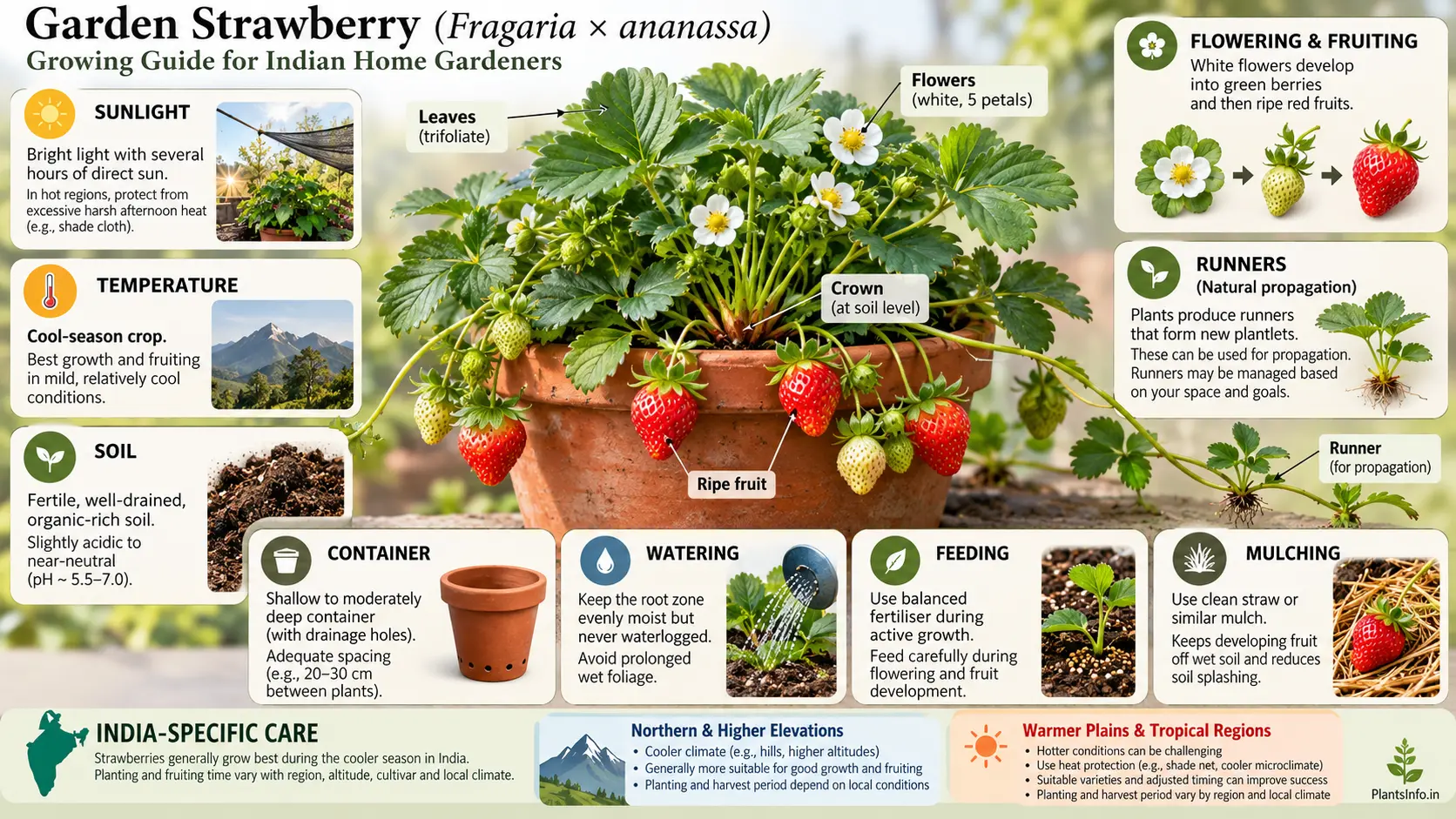
Garden strawberry (Fragaria × ananassa) can be grown successfully by Indian home gardeners, particularly where cool growing conditions are available. It is a Moderate-difficulty crop because it performs best with fertile, well-drained soil, steady moisture and a suitable cool-season environment.
See also: Garden Strawberry plant profile, common problems, seasonal care, its flowering season, and its benefits.
Introduction
A strawberry plant can look delicate, but its biggest challenge is usually below the leaves: the shallow root system is sensitive to both water shortage and waterlogged soil. A common beginner mistake is treating strawberry plants like a thirsty garden plant and keeping the soil constantly wet; good drainage is just as important as regular moisture.
Recommended Products
Disclosure: As an Amazon Associate, PlantsInfo may earn from qualifying purchases.
🌱 Growing Essentials
The following products can help with container gardening, potting, root development, soil management, and healthy plant growth.
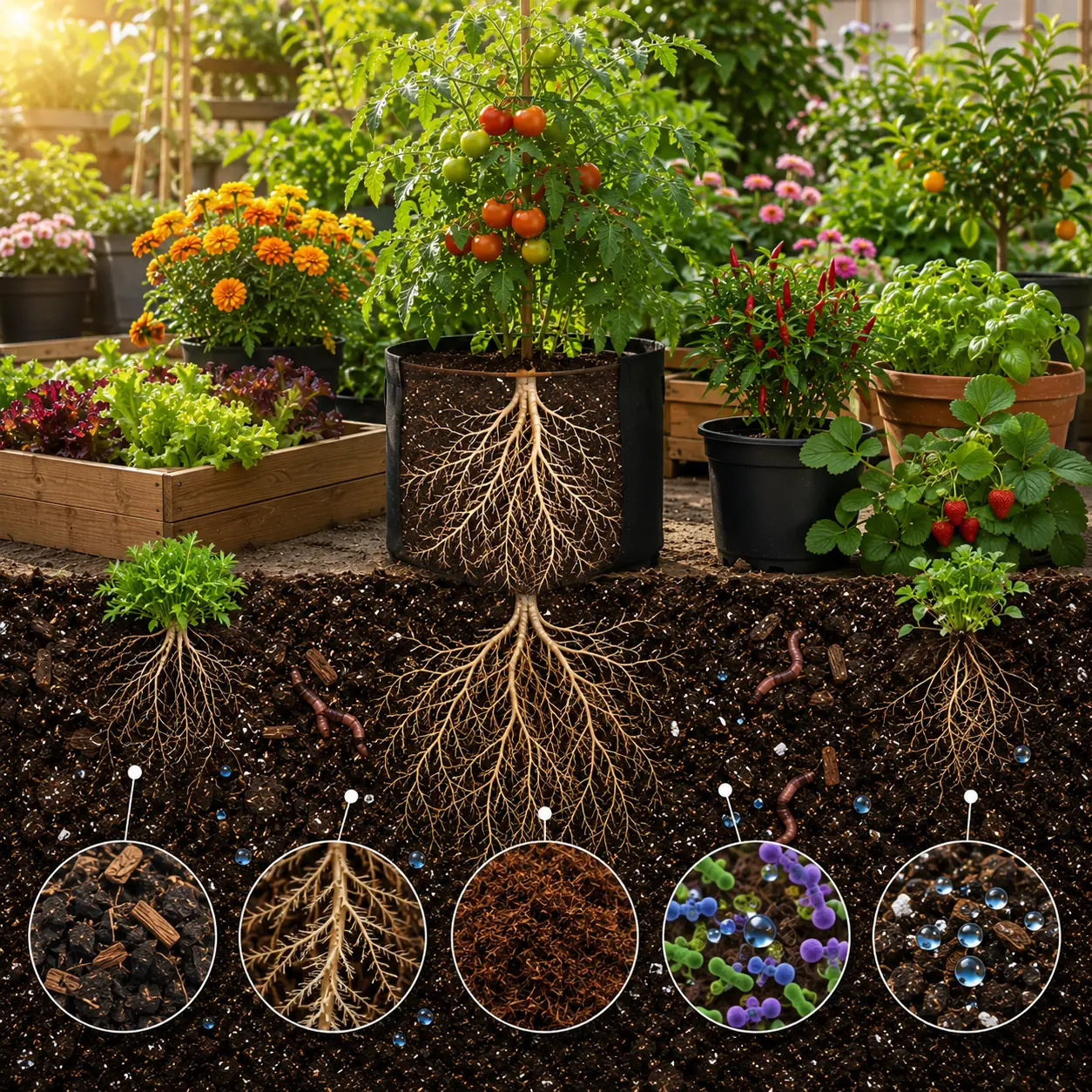
Organic Potting Soil Mix
Provides nutrients, structure, and healthy growing conditions for container plants.
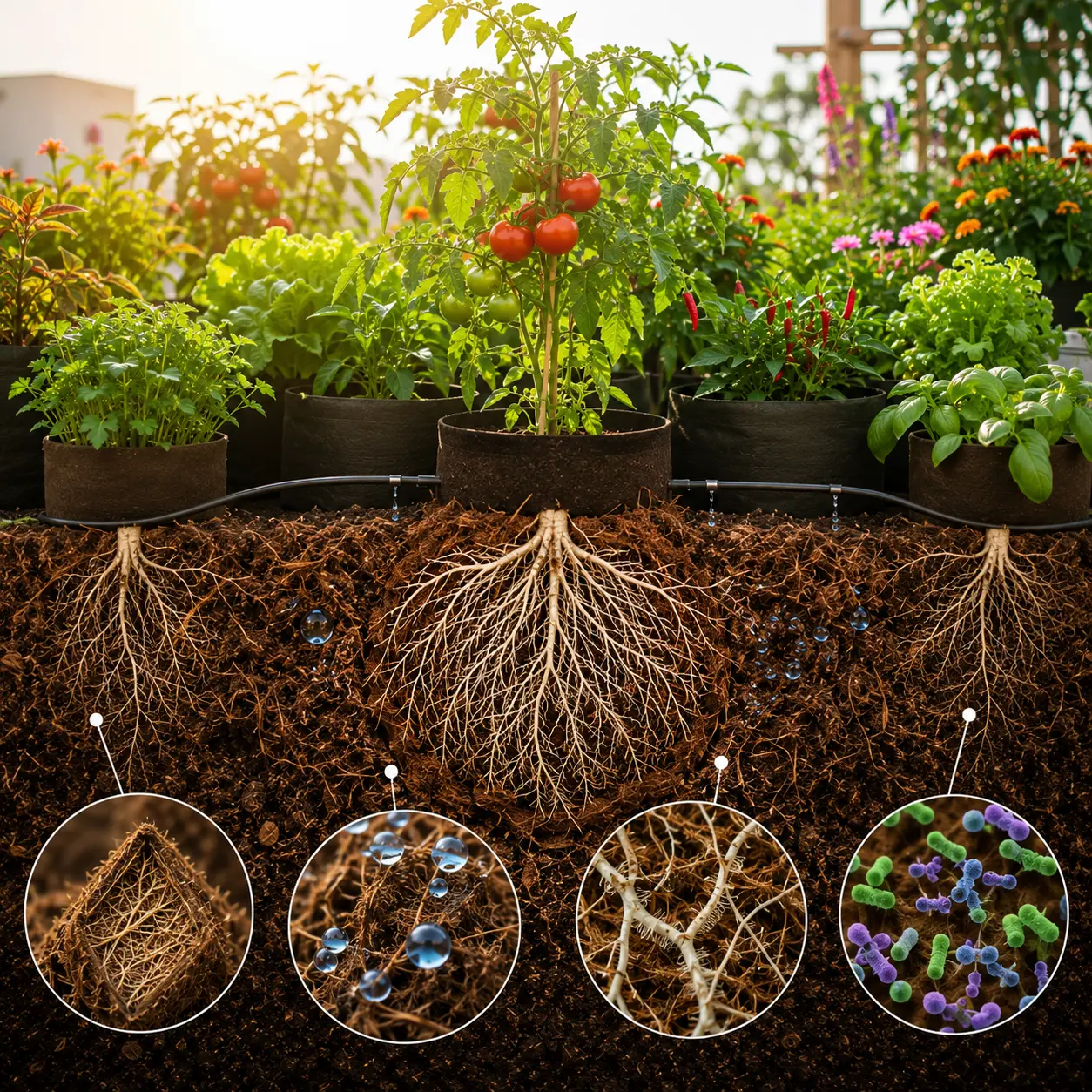
Coco Peat Growing Medium
Enhances moisture retention while maintaining excellent root-zone aeration.

Grow Bags for Plants
Improve drainage, root aeration, and vegetable production in limited spaces.

Plastic Pots for Plants
Ideal containers for seedlings, ornamentals, herbs, and balcony gardens.
Difficulty: Moderate.
Quick Facts
| Field | Garden Strawberry |
|---|---|
| Common names | Garden strawberry, strawberry |
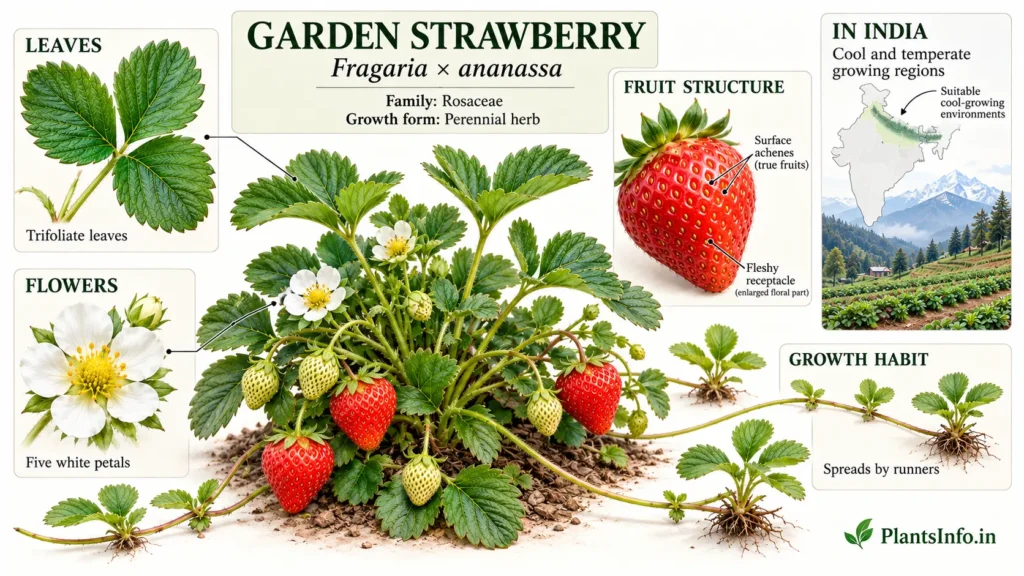
| Scientific name | Fragaria × ananassa |
| Common varieties | Chandler, Sweet Charlie, Festival |
| Plant type | Herbaceous perennial, commonly grown as a seasonal crop |
| Mature size | Low-growing; typically forms a compact crown with spreading runners |
| Sunlight | Full sun |
| Water needs | Regular, even moisture; avoid waterlogging |
| Best season to plant | Cool growing season |
| Suitable Regions | Suitable in temperate and subtropical regions; also grown in selected northern plains and high-altitude areas |
Indian cultivation research documents strawberry production across temperate and subtropical environments, including northern plains and hill regions.
Quick Growing Requirements
| Factor | Quick requirement |
|---|---|
| Difficulty | Moderate |
| Climate | Cool to mild growing conditions |
| Light | Full sun |
| Water | Regular and consistent |
| Soil | Fertile, organic-matter-rich, well drained |
| Soil pH | About 5.5–6.5 is suitable |
| Drainage | Excellent; avoid stagnant water |
| Container suitability | Yes |
| Frost tolerance | Limited; protect plants from severe frost |
| Drought tolerance | Low |
Strawberry performs well in well-drained soils with organic matter, with Indian sources reporting suitable soil conditions around the mildly acidic range.
Choosing the Right Spot
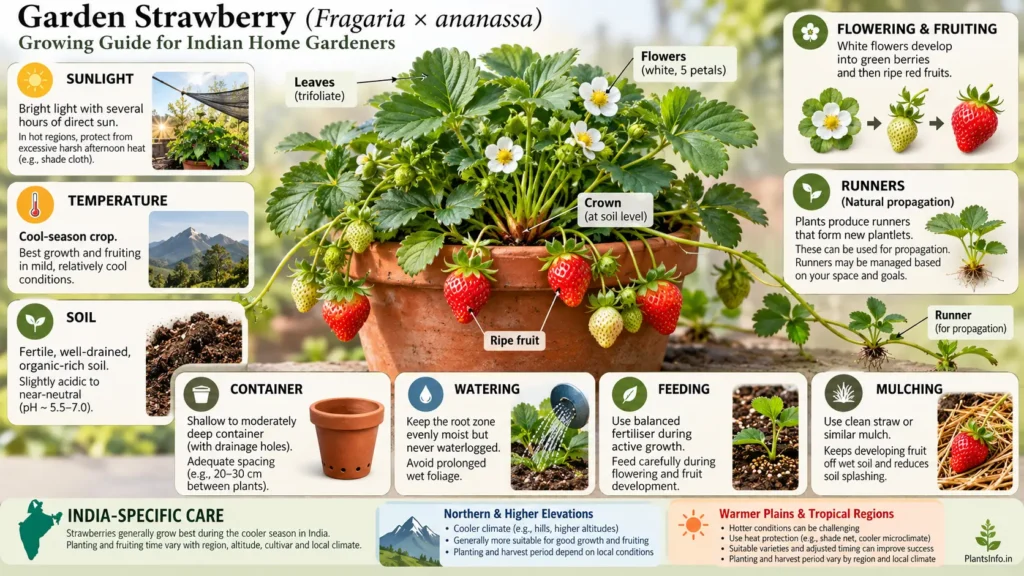
Choose a location that receives full sunlight for most of the day and has good air movement around the plants. A sunny terrace, balcony or open garden can work well when the root zone remains cool enough and does not stay waterlogged.
For most home gardeners, containers or raised beds are preferable to poorly drained ground soil because the growing medium and drainage can be controlled more easily. Terrace-gardening research in India has demonstrated successful strawberry production in containers using suitable soil-based substrates.
Soil and Potting Mix
Strawberries prefer a fertile, well-drained medium with substantial organic matter. A soil pH around 5.5–6.5 is a practical target for home cultivation.
If using ordinary garden soil, improve its structure with mature organic matter and a drainage-promoting component such as cocopeat or another suitable lightweight material. A terrace-gardening study in Delhi found equal proportions of soil, vermicompost or FYM, and cocopeat suitable for container strawberry production.
One common mistake in Indian home gardens is using heavy garden soil in a pot without improving drainage. Strawberry roots occupy a relatively shallow zone, so compacted or saturated soil can quickly create an unfavourable root environment.
Planting — Season and Method
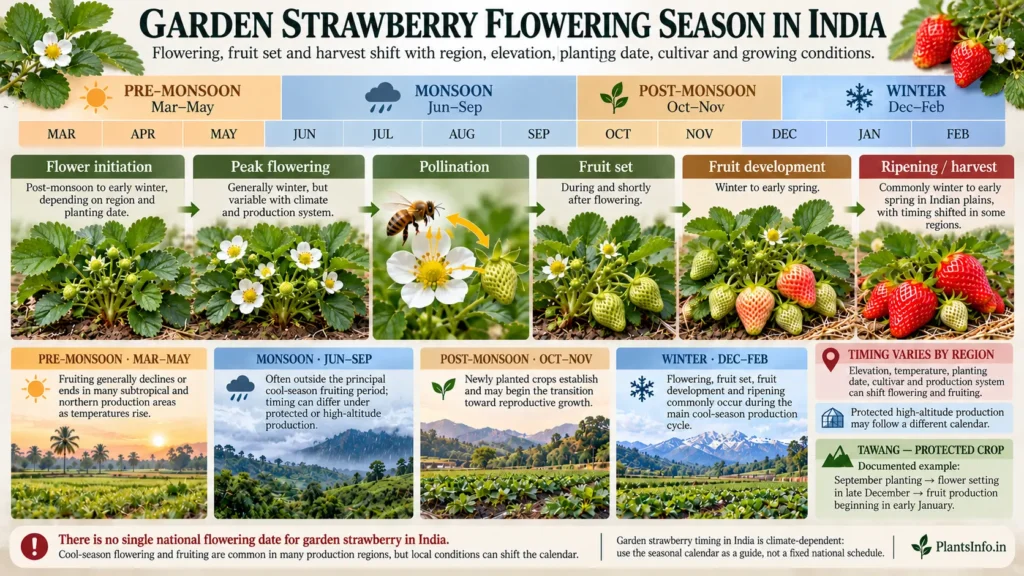
For many Indian plains and subtropical production systems, the principal planting window is post-monsoon, broadly October–November. The exact timing varies with region, elevation and production system.
Use healthy rooted runners or nursery plants rather than starting a home crop from seed. Commercial strawberry production commonly relies on runner-propagated plants, which establish more predictably for fruit production.
Set the plant so that the crown remains at soil level: cover the roots securely, but do not bury the central crown. Give each plant enough space for its leaves and runners to spread without becoming crowded.
Water thoroughly immediately after planting so the root zone settles around the roots. Raised beds, containers, or other well-drained planting systems are particularly useful where garden soil remains wet after irrigation.
Watering
During the first 4–6 weeks, keep the root zone evenly moist while the plant establishes. Water when the upper layer begins to dry rather than following a rigid daily schedule.
Once established, strawberries still need regular moisture because their root system is relatively shallow. Shorter, more frequent irrigation is generally preferable to occasional heavy watering, particularly in well-drained growing media.
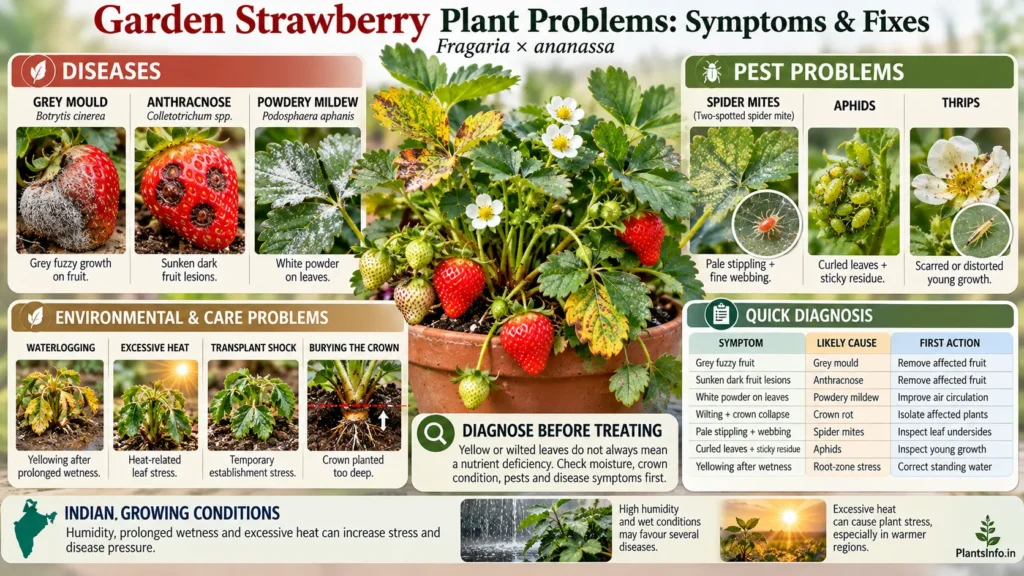
A useful overwatering warning is soil that remains saturated for prolonged periods together with soft, declining foliage despite adequate moisture; this points toward excessive root-zone moisture rather than simple thirst.
During the monsoon, reduce irrigation whenever rainfall is already keeping the root zone adequately moist.
Fertiliser
Start with well-decomposed organic matter incorporated into the growing medium. Suitable home-gardening options include vermicompost, mature farmyard manure and well-composted organic material.
For additional feeding, a balanced NPK fertiliser can be used according to the product label and the plant’s growth stage. Avoid applying large amounts of nitrogen simply to produce lush foliage; strawberry production requires balanced nutrition.
An organic alternative is vermicompost, which can be incorporated into the potting medium or used as a light top dressing during active growth. Indian strawberry production guidance also supports substantial organic-matter inputs alongside mineral fertilisation.
Common Problems
- Grey mould and fruit rot — soft or decaying fruit associated with moisture and disease pressure.
- Root-zone stress — declining growth associated with excessive moisture, poor drainage or unfavourable soil conditions.
- Sap-sucking pests — distorted or weakened new growth associated with insects feeding on plant sap.
These are signposts only; diagnosis and treatment belong to the dedicated Problems and Diseases spoke.
When Will You See Results?
A healthy nursery plant can establish and produce its first crop within the same general cool-season growing cycle when planted under suitable conditions. In Indian plains, fruit production is associated mainly with the cool growing period, while highland and other regional conditions can alter crop timing.
The useful patience rule for strawberries is simple: do not judge establishment by leaf growth alone. A plant that develops a strong crown and healthy root system is building the foundation needed for productive growth.
Common Mistakes
Keeping the Soil Constantly Wet
Strawberries need regular moisture, but permanently saturated soil restricts the root environment. Good drainage should be treated as a basic requirement rather than an optional improvement.
Planting the Crown Too Deep
Burying the crown can interfere with healthy plant development. The roots should be covered while the crown remains positioned at the soil surface.
Using Heavy, Compact Garden Soil
Dense soil can hold too much water around the shallow roots. A lighter, well-structured growing medium is more suitable for containers and poorly drained garden sites.
Overfeeding With Nitrogen
Excessive nitrogen can encourage leafy growth without providing a balanced growing environment for fruit production. Feed moderately and use a complete nutrient approach rather than relying on heavy nitrogen applications.
Container Growing
Strawberry is well suited to pots and grow bags, making it practical for balconies and terrace gardens. Indian research has specifically evaluated container strawberry production and found suitable results with soil-based mixtures incorporating organic matter and cocopeat.
Use a container that provides enough volume for the root system and, more importantly, has effective drainage holes. A wider container or grow bag is useful because strawberries remain low-growing and produce runners around the parent crown.
Keep the crown at soil level and avoid allowing irrigation water to remain trapped in the container. A clean mulch layer can also help keep developing fruit away from bare soil.
Harvesting
Pick strawberries when the fruit has developed its characteristic red colour and feels firm but fully ripe for immediate eating. Handle the berries gently because ripe strawberry fruit bruises easily.
Harvest by cutting or snapping the fruit with a small portion of stalk rather than pulling roughly on the berry itself. Pick regularly once ripe fruit begins appearing so overripe berries do not remain on the plant.
For short-distance home use, harvest at full eating ripeness. Fruit intended for transport should be handled more carefully and harvested slightly firmer.
Conclusion
Growing garden strawberries at home is achievable when the planting site provides cool conditions, full sunlight, fertile soil, and dependable drainage. The most important discipline is maintaining steady moisture without allowing the shallow root zone to remain waterlogged.