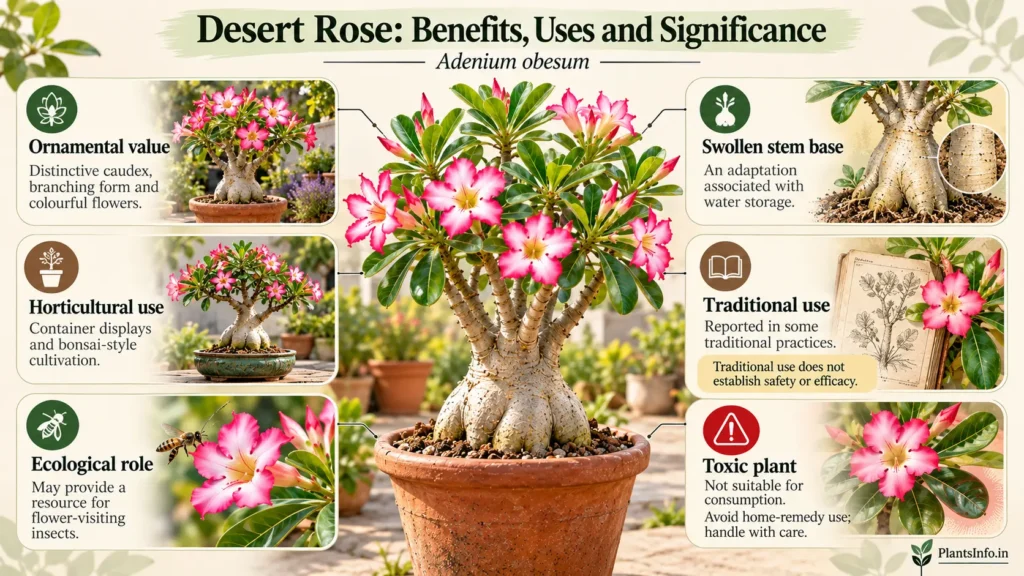
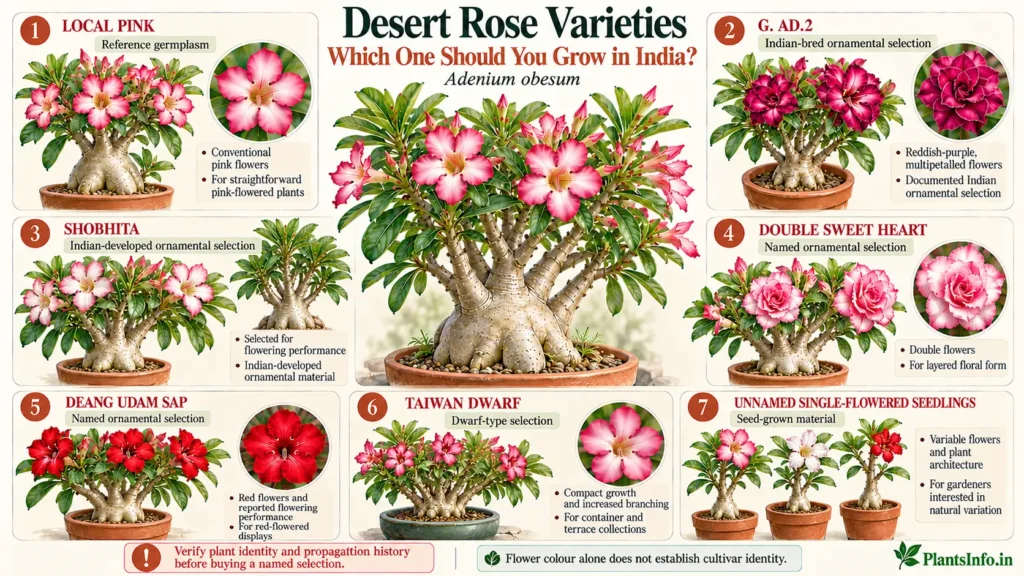
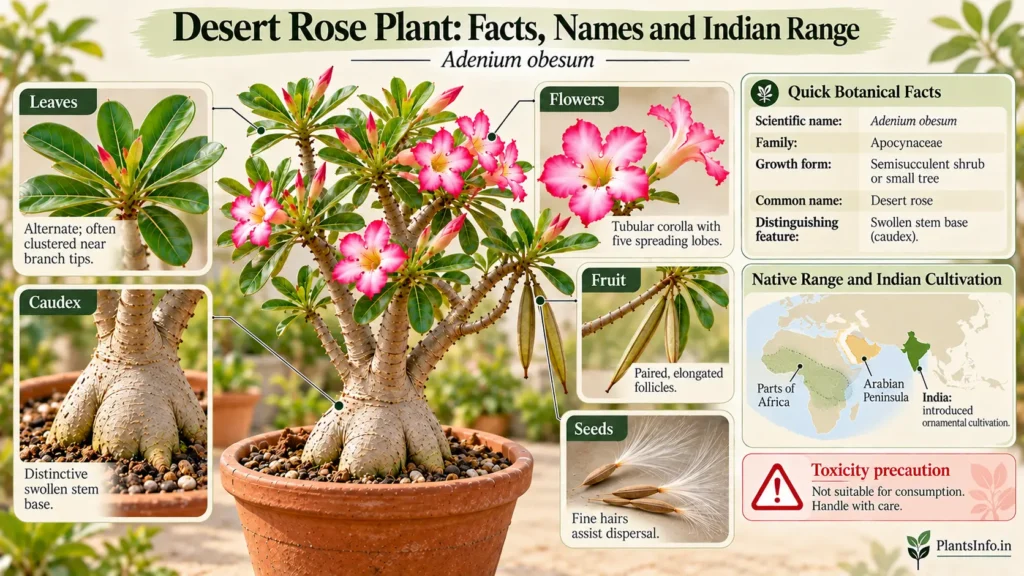
Desert Rose: Benefits, Uses, and Significance
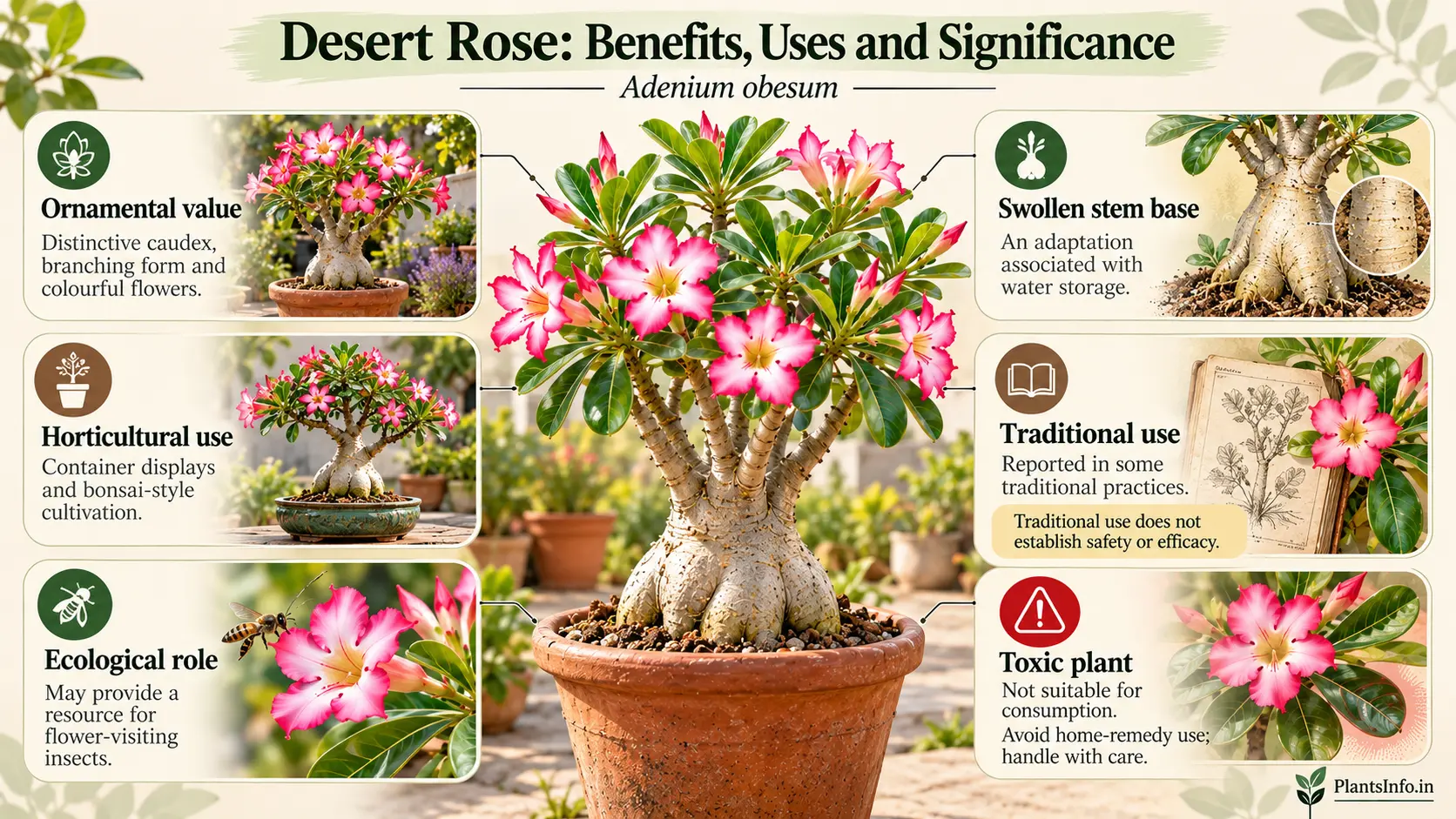
Desert rose (Adenium obesum) is valued primarily as an ornamental plant for its distinctive swollen stem base, branching form, and colourful flowers. It is also used in container displays and bonsai-style horticulture, while its toxic compounds make careful handling essential and rule out its use as a home remedy.
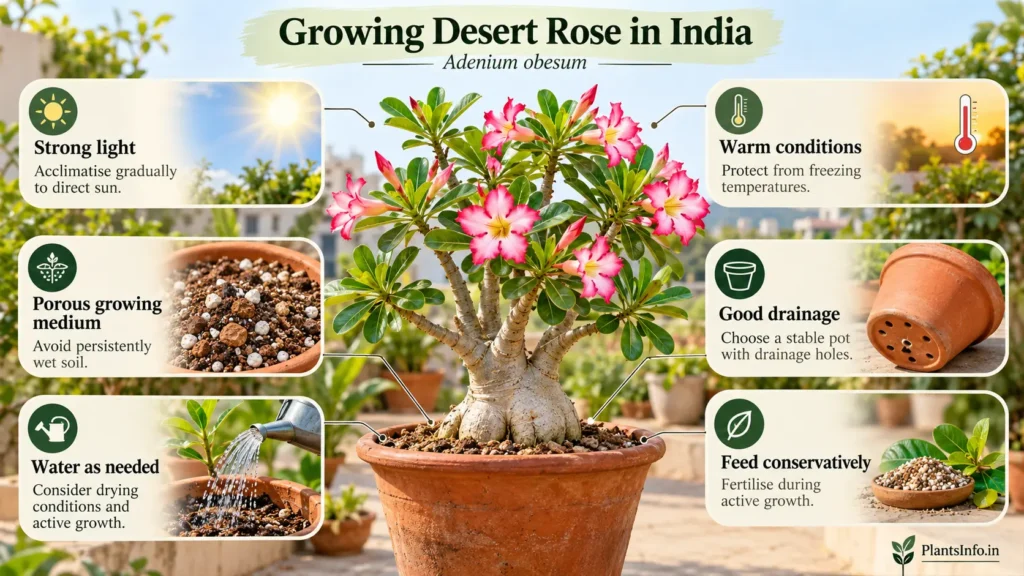
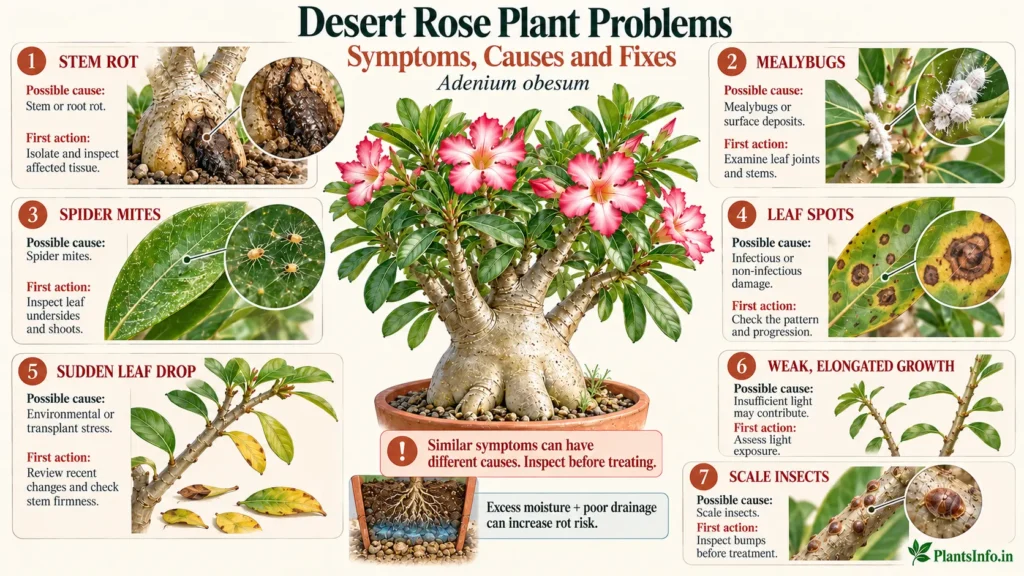
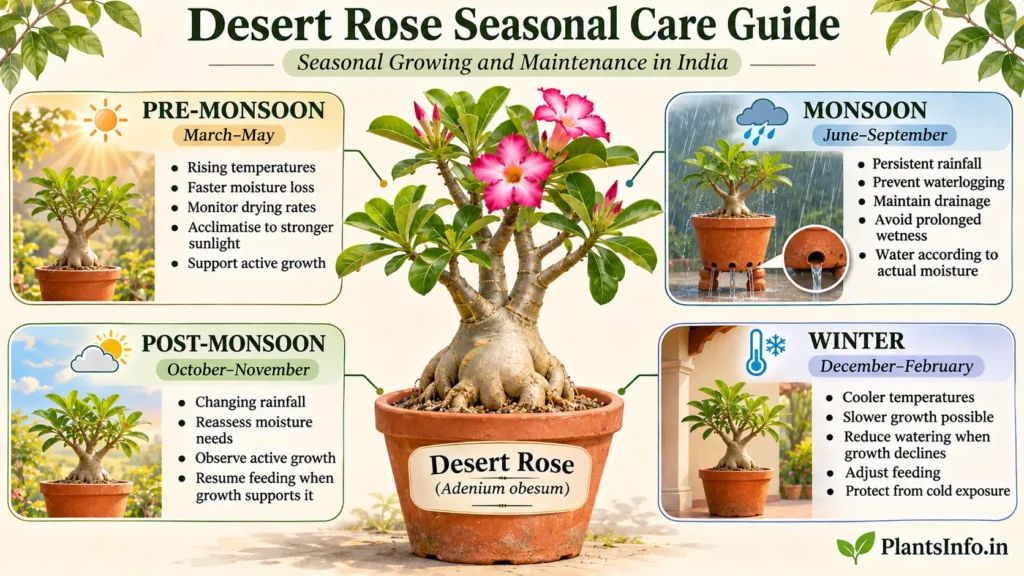
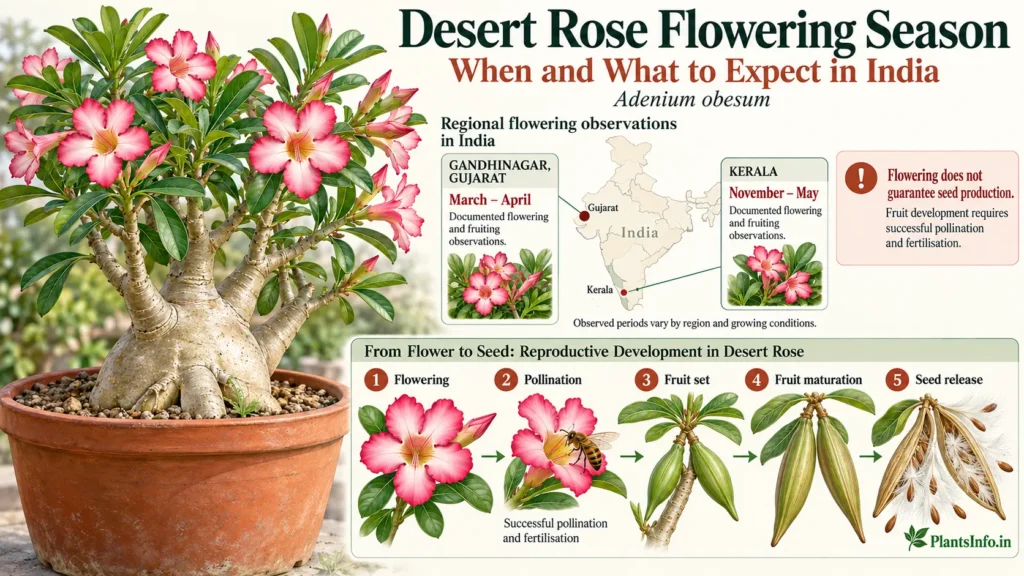
See also: Adenium obesum plant profile, how to grow it, common problems, seasonal care, and its flowering season.
Uses at a Glance
| Domain | Main use or significance | Important context |
|---|---|---|
| Food and culinary use | Not suitable for consumption | The plant contains toxic compounds. |
| Traditional medicinal use | Reported in some traditional practices | Traditional use does not establish safety or clinical efficacy. |
| Ornamental use | Flowering specimen, container plant and bonsai-style display | Its flowers and swollen stem base are major attractions. |
| Ecological role | Potential resource for flower-visiting insects | The contribution depends on local ecological conditions and supporting evidence. |
| Educational value | Example of plant structure and adaptation | Its swollen stem base provides an opportunity to discuss water storage and growth form. |
Introduction
Desert rose is a distinctive flowering shrub recognised for its thickened stem base, branching growth and conspicuous flowers. These features have made Adenium obesum popular in ornamental horticulture, particularly among growers who appreciate unusual plant architecture and specimen displays.
Recommended Products
Disclosure: As an Amazon Associate, PlantsInfo may earn from qualifying purchases.
🌱 Growing Essentials
The following products can help with container gardening, potting, root development, soil management, and healthy plant growth.
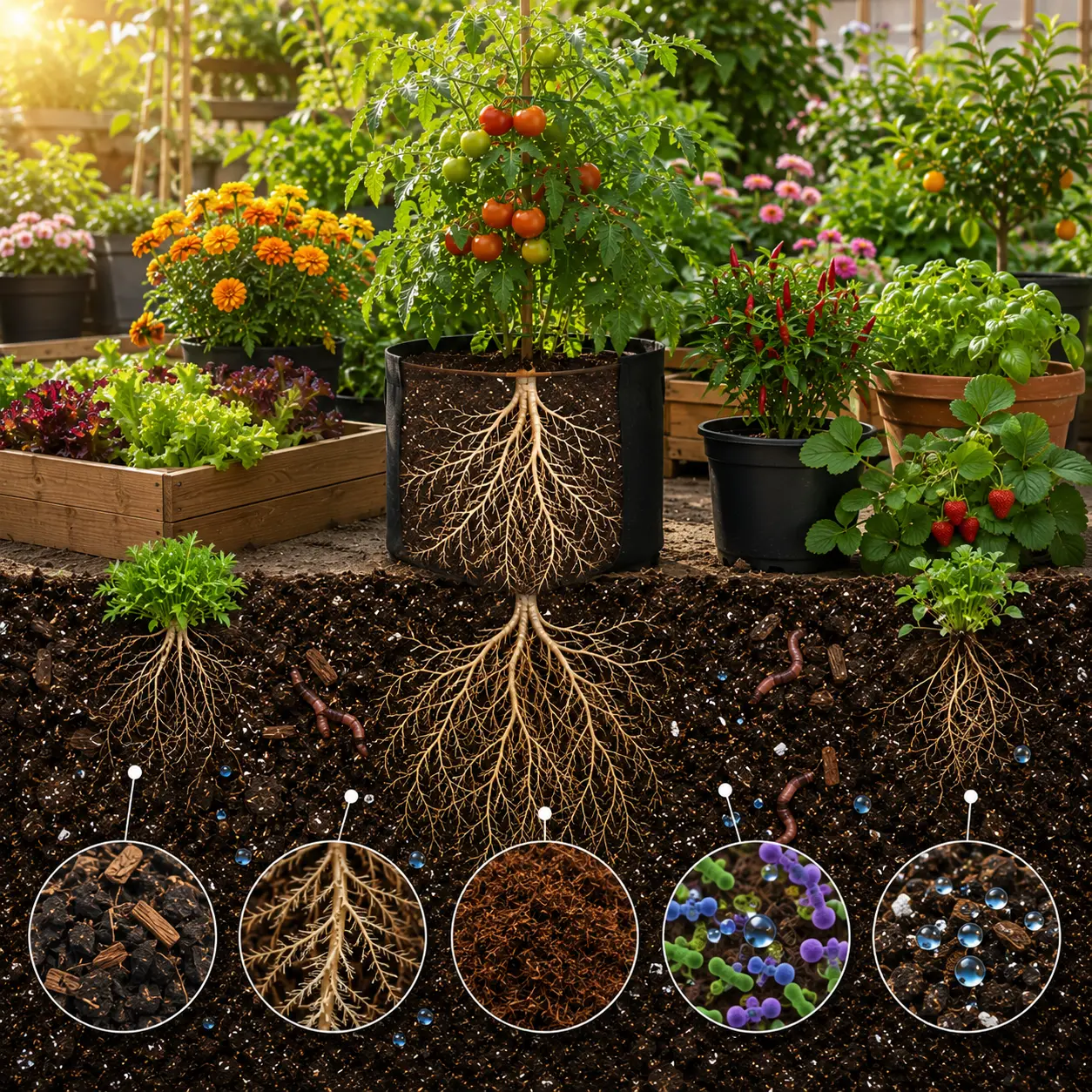
Organic Potting Soil Mix
Provides nutrients, structure, and healthy growing conditions for container plants.
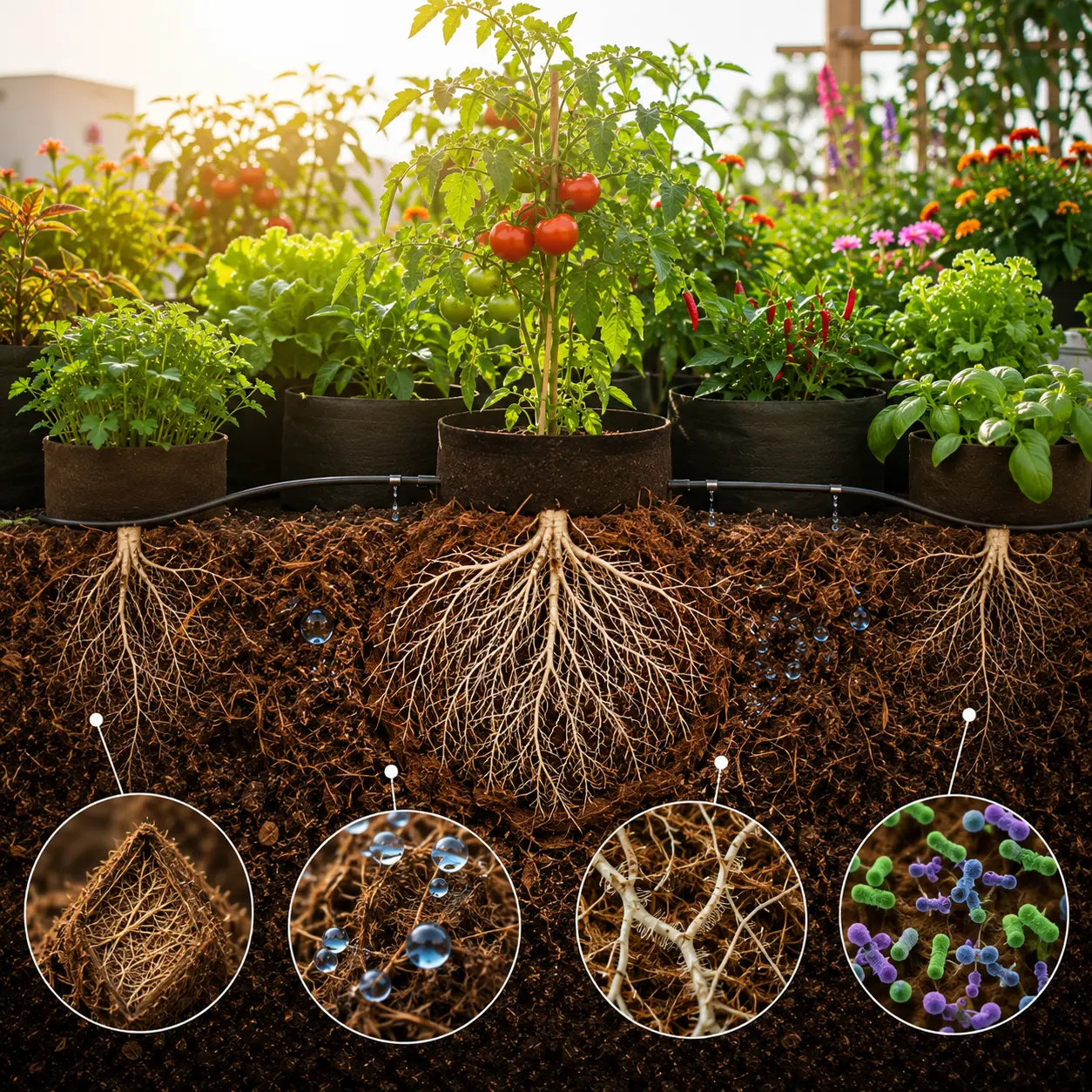
Coco Peat Growing Medium
Enhances moisture retention while maintaining excellent root-zone aeration.

Grow Bags for Plants
Improve drainage, root aeration, and vegetable production in limited spaces.

Plastic Pots for Plants
Ideal containers for seedlings, ornamentals, herbs, and balcony gardens.
Its significance is primarily ornamental and educational. Although traditional medicinal uses have been reported, the plant’s toxicity means that such uses should not be interpreted as evidence of safety or therapeutic benefit.
Ornamental Value of Desert Rose
The ornamental appeal of desert rose comes from its swollen stem base, sculptural branching, and showy flowers. Unlike plants valued mainly for foliage, it offers a distinctive form that can remain visually interesting even when it is not flowering.
Architectural and visual interest
The thickened stem base, commonly called the caudex in horticultural contexts, gives the plant a sculptural appearance. As the plant develops, its base and branching structure can form miniature tree-like shapes.
This growth habit has contributed to its popularity among succulent-plant collectors and enthusiasts of bonsai-style displays. The resulting appearance varies with the plant’s age, growth history and horticultural form.
Flower colour and variation
Desert rose flowers occur in shades that include pink, red and white, with additional combinations found among cultivated horticultural forms. Flower shape, colour patterns and other ornamental characteristics vary between plants.
This variation provides growers with a range of choices for decorative collections without requiring the plant to have a different species identity.
Uses in Indian Landscapes
In India, desert rose can be incorporated into different ornamental settings, particularly where it can receive suitable light and be displayed as an individual specimen.
- Terraces and balconies: A container-grown plant can serve as a focal point in a sunny outdoor space.
- Courtyards and entrances: Its distinctive form can complement other potted ornamentals.
- Rock gardens and succulent displays: Its thickened stem base contrasts with the forms and textures of other drought-adapted plants.
- Specialist plant collections: Individual specimens can be displayed to highlight their branching structure and floral characteristics.
Container display is especially useful where gardeners want to showcase the plant’s architecture or manage its growing environment separately from surrounding garden plants. Suitability for any particular site depends on local climate, available light, and the ability to protect the plant from unsuitable conditions.
Ecological Significance
The ecological role of Adenium obesum should be described cautiously. Its flowers may be visited by insects, but the presence of flower visitors alone does not establish how important the plant is to particular pollinator populations or local ecosystems.
Flower visitors and reproduction
Flower-visiting insects may contribute to pollen transfer when they interact with the reproductive structures of the flowers. However, the identity and effectiveness of visitors, as well as the extent of their contribution to seed production, require species-specific evidence.
For this reason, desert rose should not automatically be described as a major pollinator-support plant or an essential food source for particular insects or other animals.
Value in home gardens
As a flowering ornamental, desert rose can contribute to the variety of plants grown in home gardens and container collections. Any wider ecological benefit will depend on the surrounding vegetation, local insect communities, flowering conditions and the plant’s actual interactions with local wildlife.
Its ornamental presence should therefore be distinguished from a demonstrated conservation benefit.
Practical and Educational Value
Beyond its decorative use, desert rose offers several opportunities for plant observation and education.
- Specimen study: Its swollen stem base and branching form provide visible examples of how plant architecture changes during growth.
- Plant adaptation: The species can help illustrate structural adaptations associated with growth in seasonally dry environments.
- Horticultural observation: Growers can observe differences in plant form, flowering and development among cultivated specimens.
- Ornamental design: Its distinctive architecture can provide contrast in collections containing leafy plants, grasses, and other container-grown ornamentals.
These applications are primarily aesthetic and educational. They should not be confused with evidence of nutritional value or medicinal effectiveness.
Traditional Uses and Medicinal Claims
Traditional medicinal uses have been reported for Adenium species, including A. obesum. Such reports are part of the ethnobotanical record, but they do not establish that a preparation is safe, effective, or appropriate for treating a health condition.
The plant contains toxic cardiac glycosides, compounds that can interfere with normal heart function. Its biological activity should not be interpreted as proof of medicinal benefit, and homemade preparations should not be used for self-treatment.
Research into plant compounds and their biological effects is distinct from demonstrating the safety and effectiveness of a treatment in humans. Any claim of therapeutic value requires appropriate scientific evidence.
Toxicity and Safety Precautions
Desert rose is a toxic ornamental plant. Veterinary toxicology references identify cardiac glycosides and related cardioactive compounds among its toxic constituents, and ingestion can cause serious effects in animals. All plant parts should be treated as potentially hazardous.
Safe handling
- Do not consume the plant: Leaves, stems, roots, and other plant parts should not be treated as edible.
- Avoid contact with sap: Damaged tissues may release milky latex. Avoid contact with the eyes and mouth, and wash exposed skin promptly.
- Use protective gloves: Wear gloves when pruning, repotting or handling damaged plant material, and wash your hands afterwards.
- Keep plant material out of reach: Place the plant where children and pets cannot chew it or access discarded leaves, cuttings and pruning waste.
- Do not prepare home remedies: Do not assume that boiling, drying or other household processing makes the plant safe to consume.
If ingestion is suspected, seek urgent medical advice or contact a poison-information service. If an animal may have ingested the plant, contact a veterinarian promptly. Do not wait for symptoms to appear.
Conclusion
Desert rose is valued for its sculptural growth, distinctive flowers and versatility in ornamental displays. Its ecological role should be described according to available evidence, while its reported traditional uses must be kept separate from proven therapeutic benefits. Responsible cultivation also requires recognising its toxicity and preventing accidental ingestion or exposure.