How to Grow Desert Rose in India
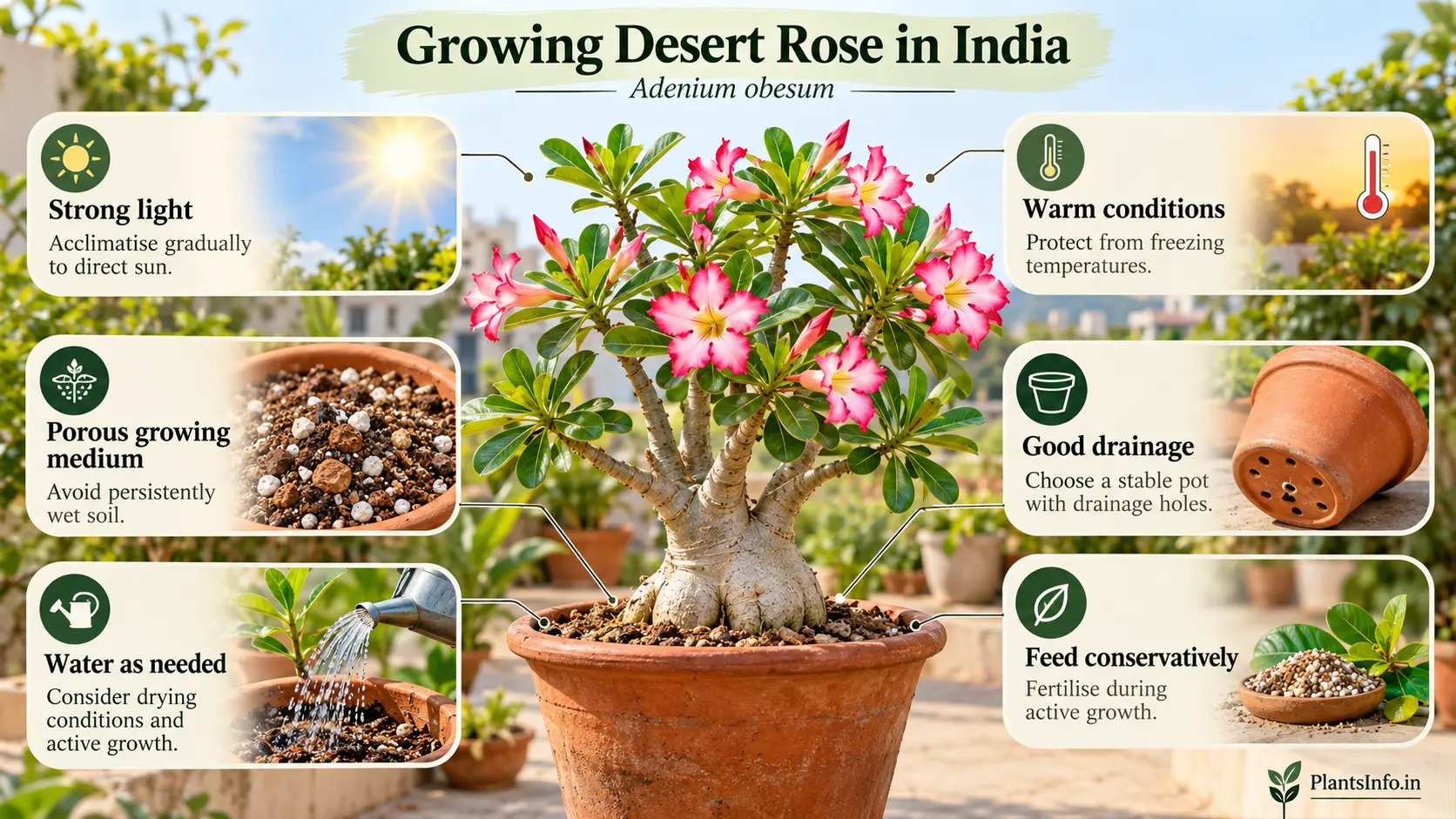
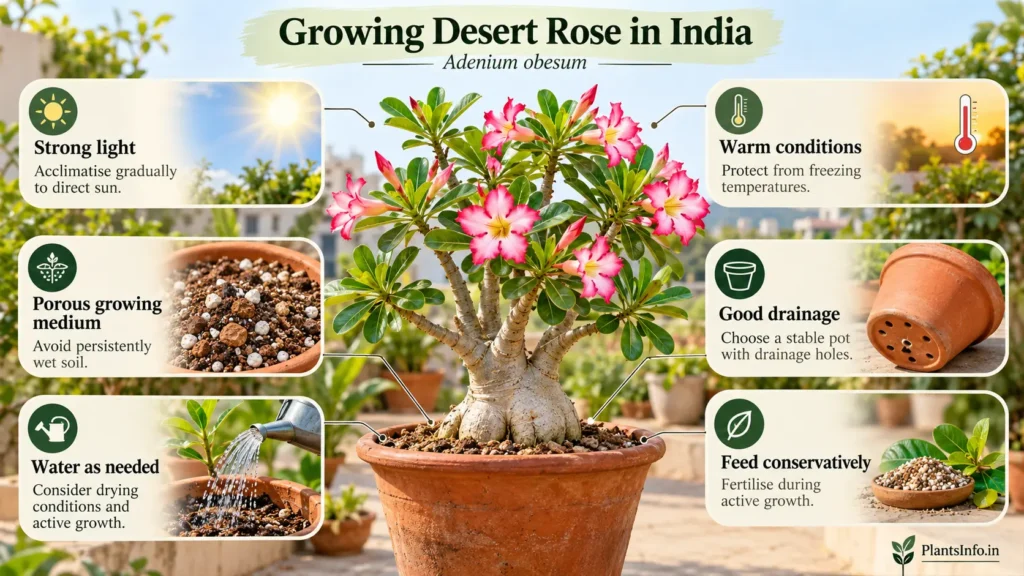
You can grow desert rose (Adenium obesum) at home in India if you provide strong light, a freely draining growing medium and watering suited to its growth and local conditions. Container cultivation is a practical choice because it allows you to manage the root environment and move the plant when necessary.
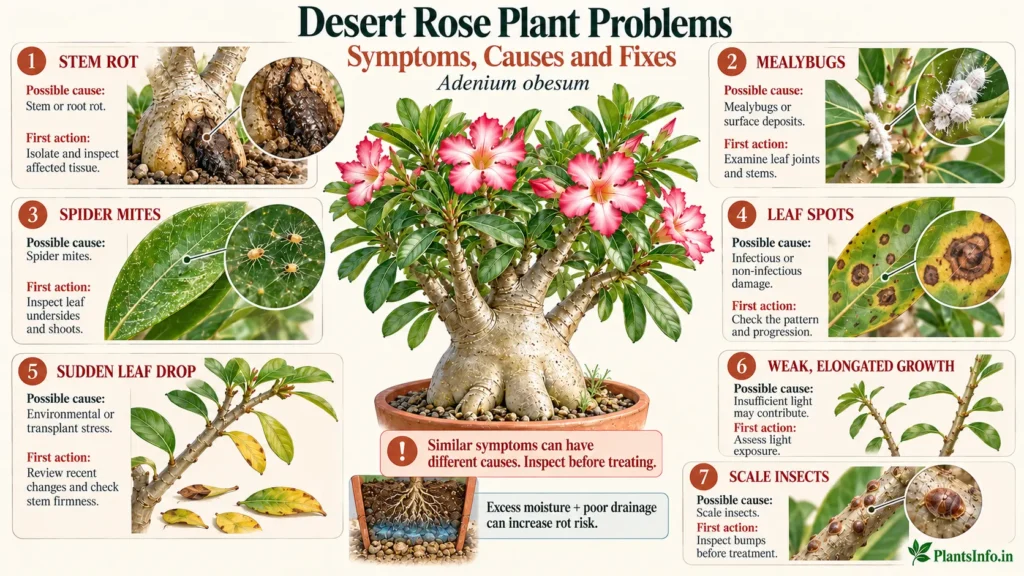
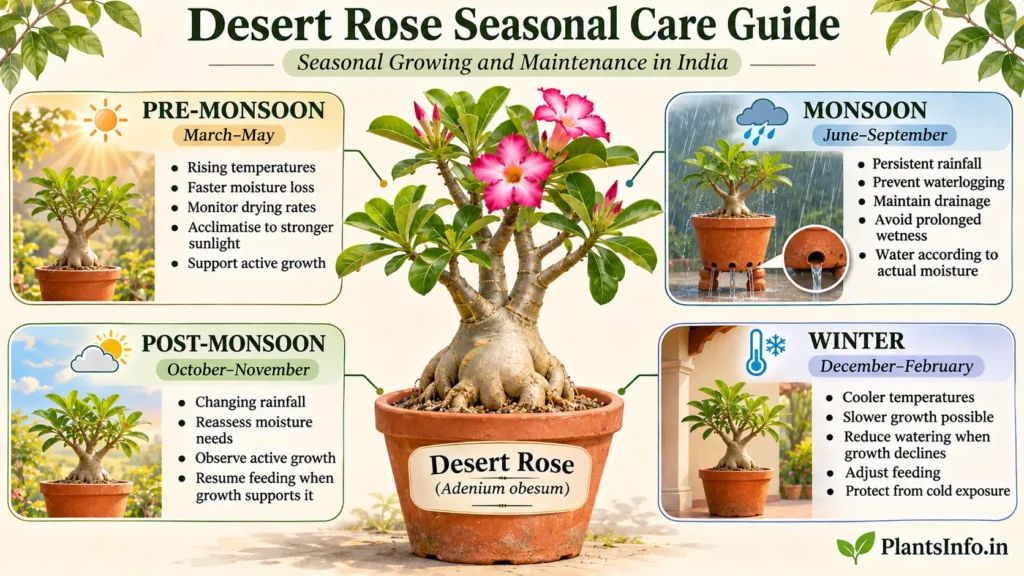
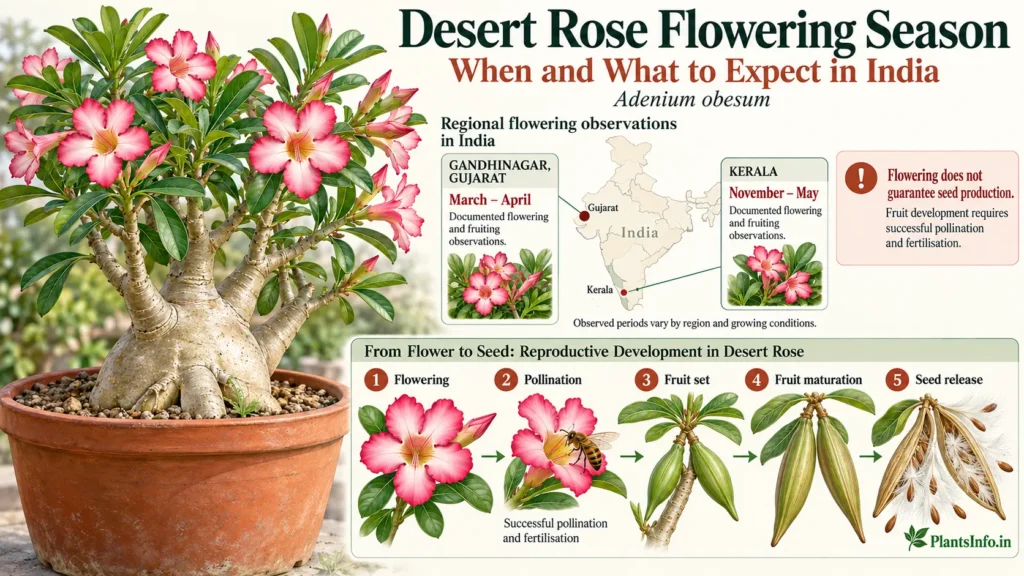
See also: Adenium obesum plant profile, common problems, seasonal care, its flowering season, and its benefits.
Introduction
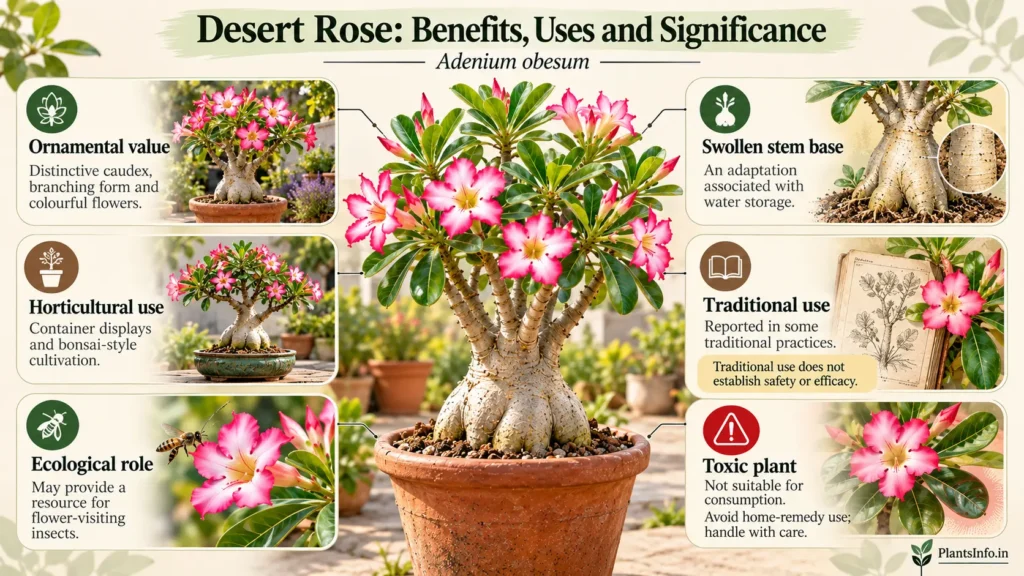
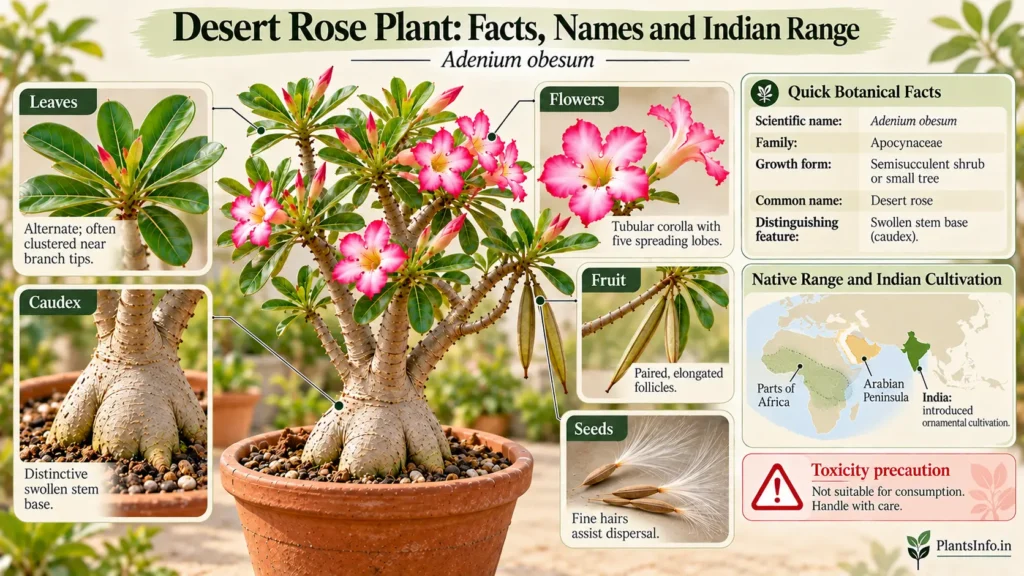
The swollen stem base of a desert rose gives the plant a sculptural appearance, often resembling a miniature tree. Its branching form and ornamental flowers make it suitable for balconies, terraces, and sunny home gardens. The main challenge for beginners is providing conditions that support healthy roots without keeping the growing medium persistently wet.
Recommended Products
Disclosure: As an Amazon Associate, PlantsInfo may earn from qualifying purchases.
🌱 Growing Essentials
The following products can help with container gardening, potting, root development, soil management, and healthy plant growth.

Organic Potting Soil Mix
Provides nutrients, structure, and healthy growing conditions for container plants.

Coco Peat Growing Medium
Enhances moisture retention while maintaining excellent root-zone aeration.

Grow Bags for Plants
Improve drainage, root aeration, and vegetable production in limited spaces.

Plastic Pots for Plants
Ideal containers for seedlings, ornamentals, herbs, and balcony gardens.
Quick Growing Requirements
| Factor | Requirement |
|---|---|
| Climate | Warm conditions; protect from freezing temperatures |
| Light | Strong light, with gradual acclimatisation to direct sun |
| Growing medium | Porous and free-draining |
| Container | A stable pot with unobstructed drainage holes |
| Watering | Adjust to how quickly the growing medium dries and whether the plant is actively growing |
| Fertiliser | Use conservatively during active growth |
| Propagation | Seeds, stem cuttings or grafting |
Choosing the Right Spot
A sunny outdoor location is generally a suitable starting point. A balcony, terrace or open garden area can work if the plant receives sufficient light and the pot is not exposed to persistently unsuitable conditions.
If the plant has been kept in shade, introduce stronger sunlight gradually. Moving it abruptly into intense sun can stress foliage that has not acclimatised.
Indoor cultivation is more challenging when natural light is limited. Avoid placing the plant in a dim corner and expecting the same compact growth as a well-lit outdoor specimen.
Soil and Potting Mix
Choose a lightweight growing medium that allows excess water to drain away. Dense garden soil, particularly heavy clay, can be unsuitable for container cultivation when it remains wet for too long.
A homemade mix can combine:
- A suitable lightweight potting medium.
- Coarse horticultural sand or fine mineral grit.
- A porous material such as perlite or pumice.
- A modest amount of mature organic material, if appropriate for the mix.
These ingredients are options, not a scientifically validated universal recipe. Their proportions should not be treated as fixed: the finished medium needs to remain open and drain freely under the conditions in which the plant is grown. A suitable commercial succulent mix is another option.
Use washed horticultural sand rather than fine construction sand. Choose a container with drainage holes that remain unobstructed, and do not allow drained water to collect beneath the pot.
Planting: Season and Method
Choose a planting or repotting period when temperatures are warm enough for establishment, and the plant can be kept away from prolonged cold or wet conditions. The suitable period varies across India, so local temperature and rainfall are more useful guides than a single nationwide calendar.
Seed or nursery-grown sapling?
A healthy nursery-grown sapling is often the more straightforward choice for a beginner. Growing from seed requires additional attention during germination and early establishment.
When planting a nursery specimen:
- Select a plant with firm, healthy-looking stems.
- Choose a container that accommodates its roots without leaving excessive unused growing medium.
- Keep the swollen caudex at approximately its existing planting depth; do not bury it deeply.
- Settle the medium around the roots without compacting it.
- Water according to the condition of the roots and growing medium, allowing excess water to drain away.
For seeds, use a clean, warm, and well-aerated medium. Sow them shallowly and avoid conditions that keep the medium saturated.
Watering
Water according to the condition of the growing medium rather than following a rigid calendar. The rate at which it dries changes with temperature, rainfall, container material, plant size, and the composition of the mix.
For an established plant, water thoroughly when the medium has dried substantially. Let excess water escape freely, and do not leave the container standing in collected water.
Newly planted specimens need monitoring while their roots establish. Avoid both prolonged saturation and a fixed watering schedule that ignores changing conditions.
Fertiliser
Use a balanced fertiliser formulated for ornamental plants or succulents when the plant is actively growing. Follow the product label and avoid applying more than the recommended amount.
Mature vermicompost may be used conservatively as an organic amendment when suitable for the growing medium. Avoid combining several fertilisers simply to accelerate growth. Fertiliser cannot compensate for unsuitable growing conditions.
When Will You See Results?
A nursery-grown plant may establish roots and produce additional growth during its first year, but the pace varies with its initial condition and growing environment. A fixed deadline for reaching a particular size or flowering is not reliable.
Plants grown from seed, cuttings, or grafted material may develop differently. Choose the propagation method according to your objective rather than expecting every plant to develop the same mature form.
Common Mistakes
Repotting too frequently
Repeated repotting to expose or enlarge the caudex does not guarantee a more attractive plant. Allow the plant to establish before deciding whether a change of container is necessary.
Pruning too aggressively
Removing too much healthy growth at once can reduce the plant’s capacity to recover. Use selective pruning to shape the branches rather than cutting indiscriminately.
Handling the plant without accounting for toxic sap
Desert rose produces latex that can be harmful. Wear gloves when pruning or repotting, avoid contact with the sap, and keep plant parts and pruning debris away from children and pets. Do not use the plant as a home remedy.
Propagation
Desert rose can be propagated by seeds, stem cuttings, or grafting. The most suitable method depends on whether you want to raise new plants or reproduce selected ornamental characteristics.
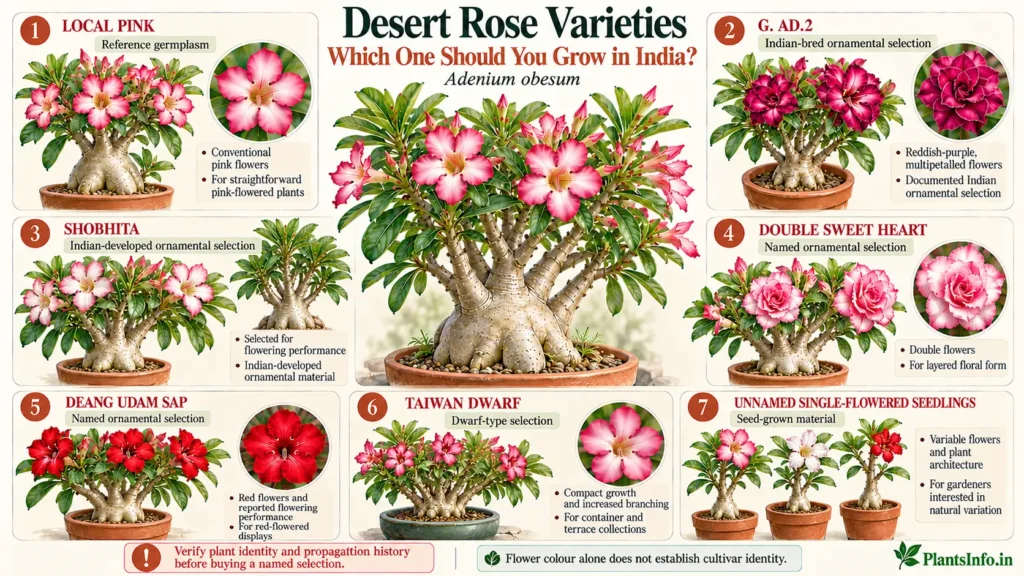
- Seeds: Seedlings vary genetically and may differ from the parent in flower characteristics and mature form.
- Stem cuttings: Cuttings can preserve many characteristics of the selected parent, although the resulting plant may develop a less prominent caudex.
- Grafting: Grafting can be used to reproduce selected ornamental flowering characteristics on a separate rootstock.
Use clean tools and a well-drained propagation medium. For cuttings, allow the cut surface to dry appropriately before planting and avoid keeping the medium continuously wet.
Pruning and Training
Prune when the plant has sufficient healthy growth to recover. Selective pruning can help manage branch structure and encourage a desired shape.
Use clean, sharp tools and avoid indiscriminate cuts into the swollen stem base. Wear gloves to reduce contact with the latex, and handle the plant carefully throughout the process.
Container Growing
Choose a container that fits the root system and keeps the plant stable. A relatively broad or shallow pot can display the caudex, but appearance should not take priority over the plant’s root space and stability.
- Pot size: A pot around 20–25 cm in diameter may suit some small nursery plants, but the appropriate size depends on the actual root system.
- Material: Terracotta, plastic, and glazed ceramic are all possible choices.
- Repotting: Move the plant into a slightly larger container when its roots or growth make the current container unsuitable.
Do not choose a much larger pot solely to encourage faster growth. Select the container based on the plant’s needs rather than on a fixed size recommendation.
Conclusion
Successful cultivation depends on matching the light, growing medium, watering, and container to the plant’s conditions. Allow the desert rose to establish and develop gradually rather than forcing rapid growth.