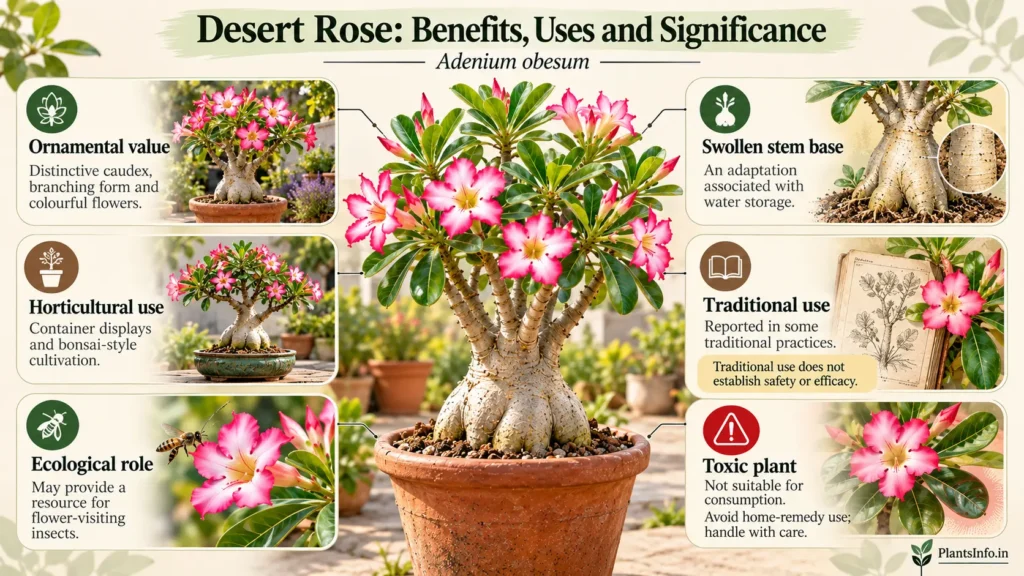
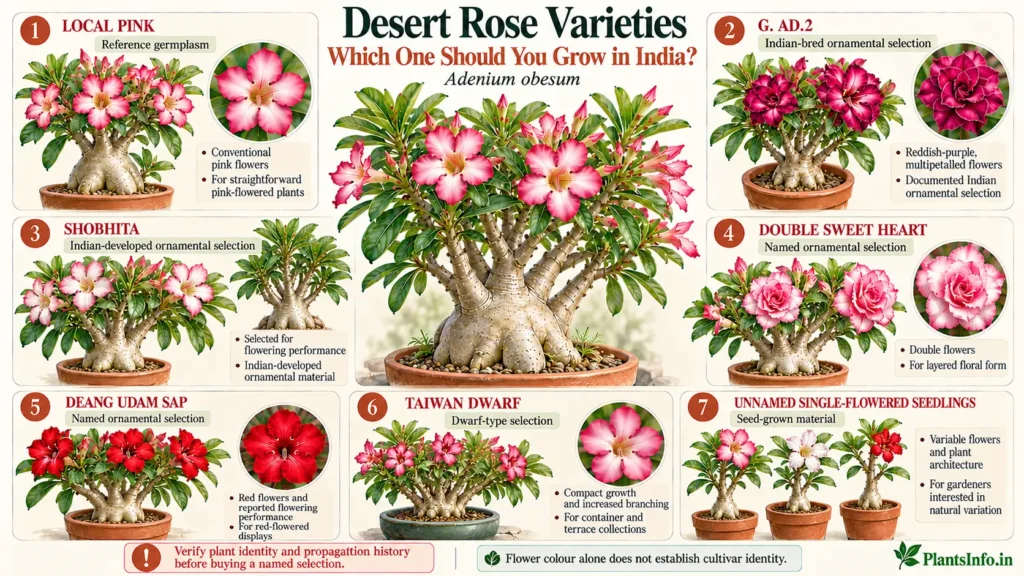
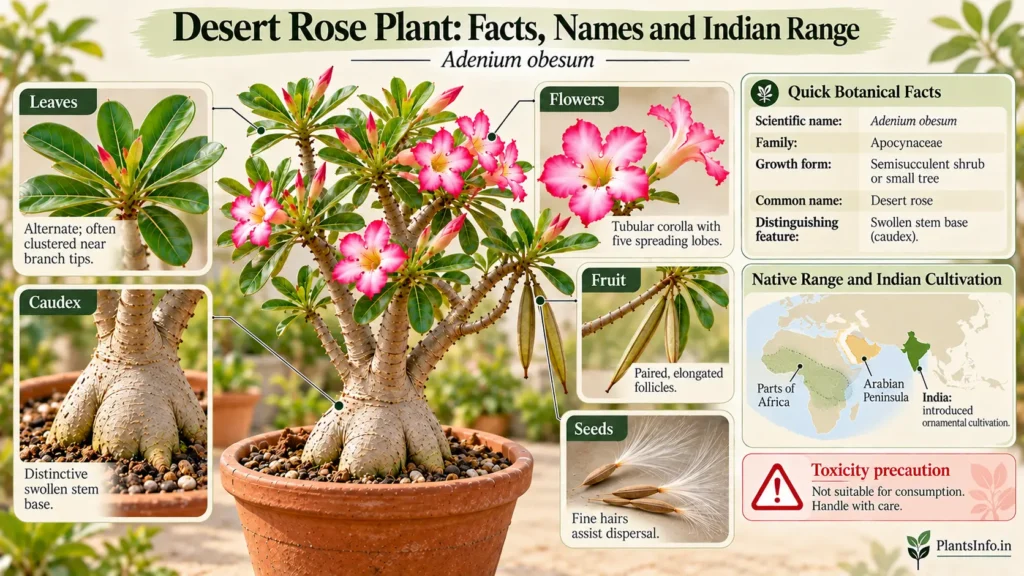
Desert Rose Seasonal Care Guide for Indian Climate

Seasonal care for desert rose (Adenium obesum) in India should respond to rainfall, temperature, growing activity and the moisture level of the potting medium. During the monsoon, prioritise drainage and protection from prolonged wetness; during cooler periods, adjust watering and fertiliser use to the plant’s reduced or continuing growth.
See also: Adenium obesum plant profile, how to grow it, common problems, its flowering season, and its benefits.
Quick Seasonal Overview
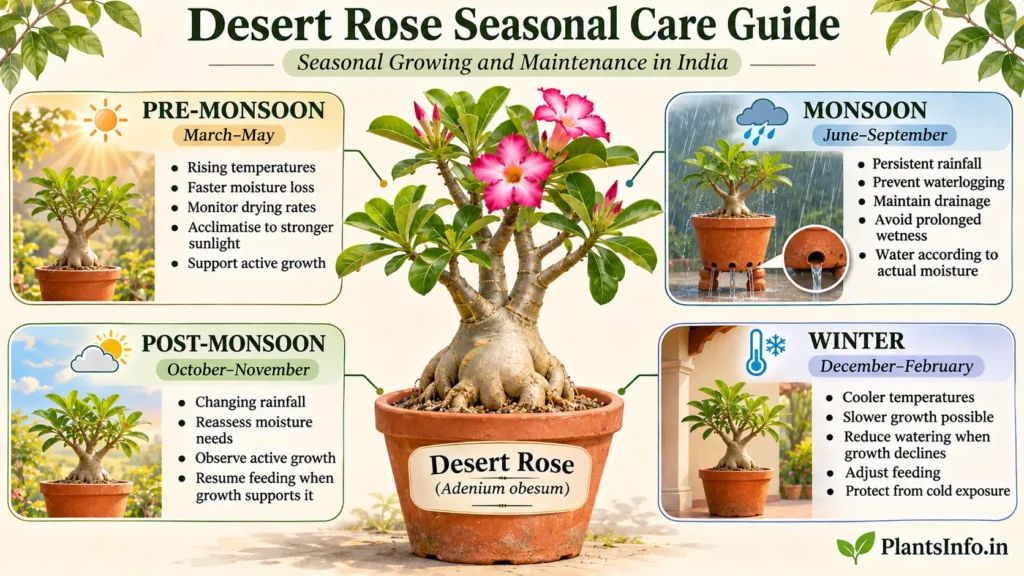
| Season | Main concern | Care priority |
|---|---|---|
| Pre-monsoon (March–May) | Rising temperatures and faster moisture loss | Monitor drying rates, acclimatise plants to stronger sunlight and support active growth |
| Monsoon (June–September) | Persistent rainfall and waterlogged growing media | Protect drainage, prevent standing water and adjust watering to actual moisture conditions |
| Post-monsoon (October–November) | Changing rainfall and temperature | Reassess moisture needs and resume routine feeding only when growth supports it |
| Winter (December–February) | Cooler temperatures and potentially slower growth | Reduce watering and feeding when moisture use and growth decline; protect plants from cold exposure |
These periods are broad planning guides for India, not fixed schedules. Local weather, elevation, growing conditions and the plant’s current activity may shift the appropriate timing.
Recommended Products
Disclosure: As an Amazon Associate, PlantsInfo may earn from qualifying purchases.
🌱 Growing Essentials
The following products can help with container gardening, potting, root development, soil management, and healthy plant growth.
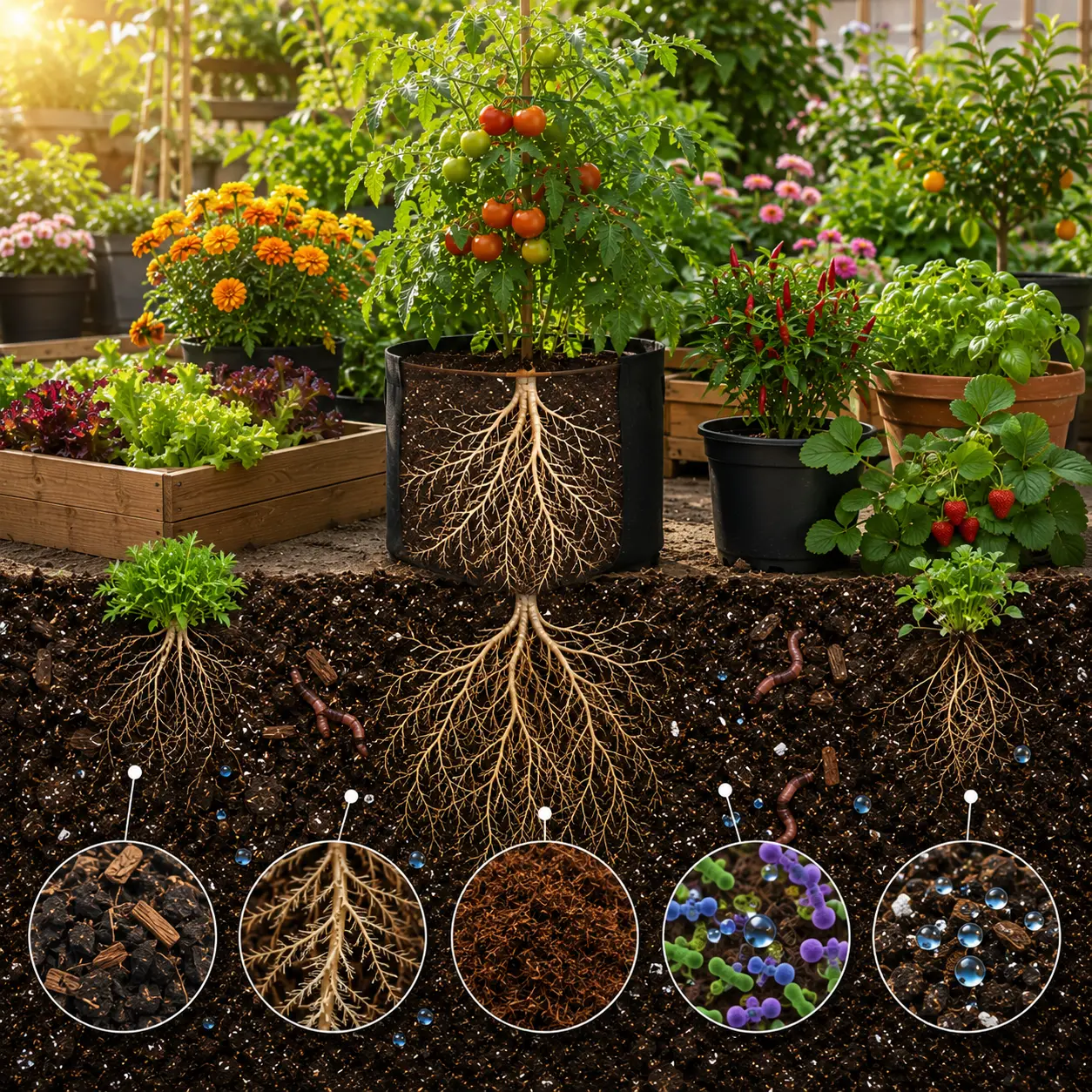
Organic Potting Soil Mix
Provides nutrients, structure, and healthy growing conditions for container plants.
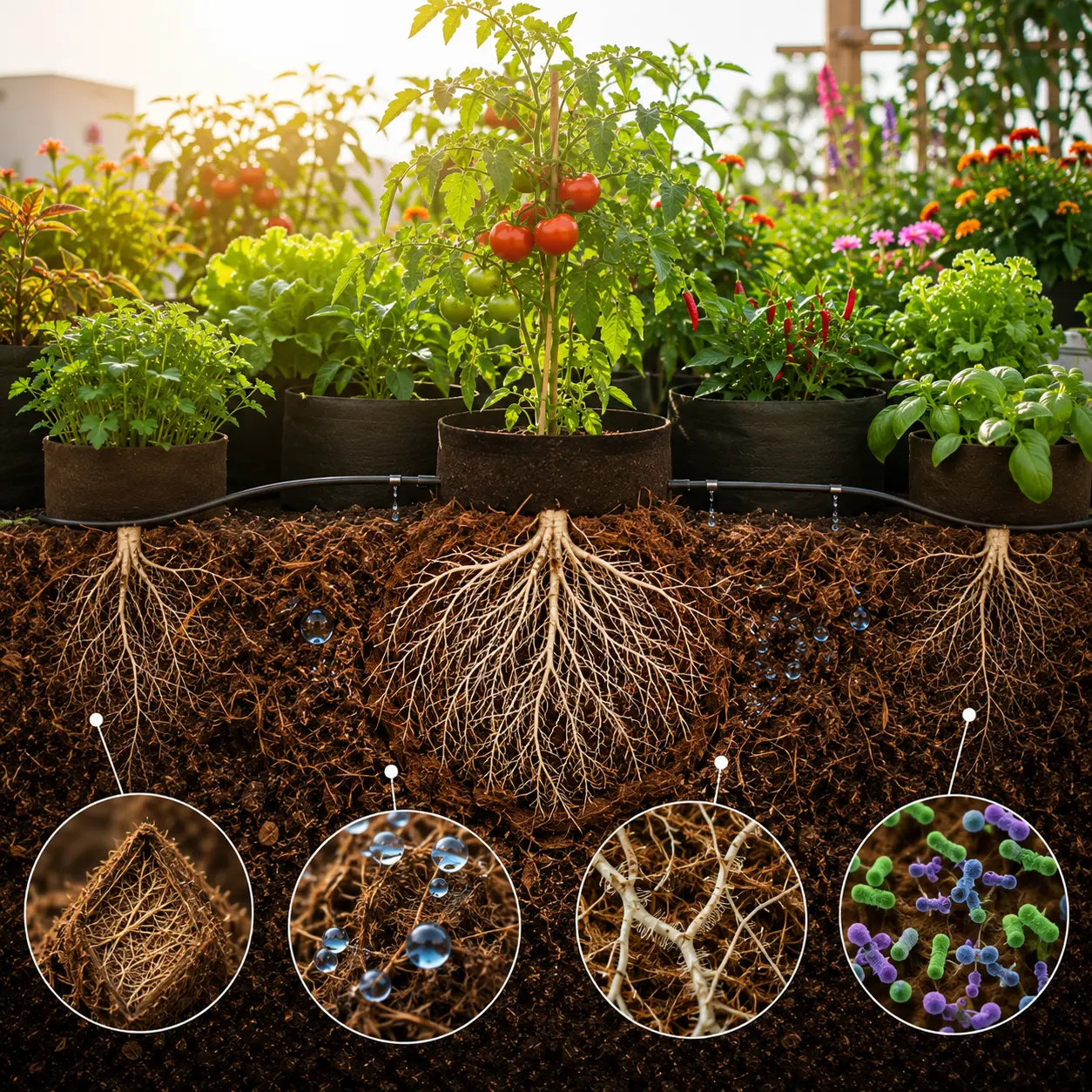
Coco Peat Growing Medium
Enhances moisture retention while maintaining excellent root-zone aeration.

Grow Bags for Plants
Improve drainage, root aeration, and vegetable production in limited spaces.

Plastic Pots for Plants
Ideal containers for seedlings, ornamentals, herbs, and balcony gardens.
Pre-Monsoon Care: March–May
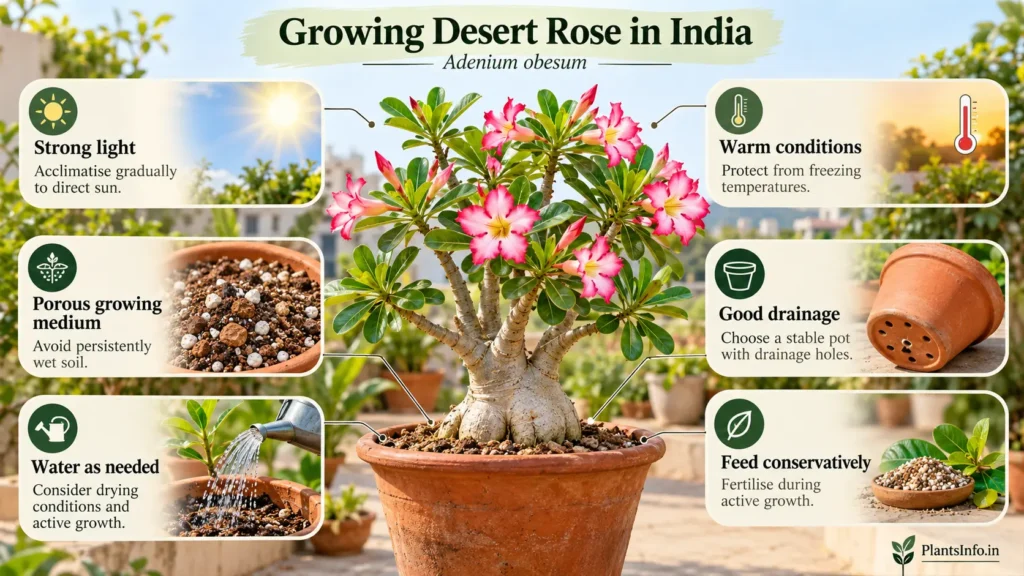
As temperatures rise, container-grown desert roses may use water more quickly. However, the surface of the growing medium can dry before the deeper root zone, so watering should depend on the medium’s actual moisture condition rather than a fixed daily schedule.
- Watering: Check the growing medium before watering. Account for pot size, drainage, exposure and recent weather.
- Fertilising: Apply an appropriate fertiliser when the plant is actively growing, following the product label. Avoid routine feeding when growth is inactive or the root zone remains excessively wet.
- Sunlight: If moving a plant into stronger direct sunlight, increase exposure gradually to reduce the risk of sun scorch.
- Heat protection: During heatwaves, monitor container moisture and plant condition more frequently. Do not compensate for heat by keeping the medium continuously wet.
The objective is to support active growth without allowing either prolonged saturation or excessive drying of the root zone.
Monsoon Care: June–September
Persistent rain presents a particular challenge for desert rose because repeated wetting can keep the growing medium saturated and reduce the aeration available to roots. The level of risk depends on rainfall exposure, drainage, the medium and the time it takes the pot to dry.
- Control excess moisture: Move container plants to a rain-sheltered position when prolonged rainfall is expected, while maintaining suitable light and airflow.
- Check drainage: Ensure that drainage holes are unobstructed and that pots do not stand in collected water.
- Adjust watering: Suspend additional watering when rainfall has already moistened the medium sufficiently. Resume according to actual drying, not the calendar.
- Review fertiliser use: Avoid automatic applications when growth slows or the medium remains persistently wet. Follow the product label and the plant’s condition.
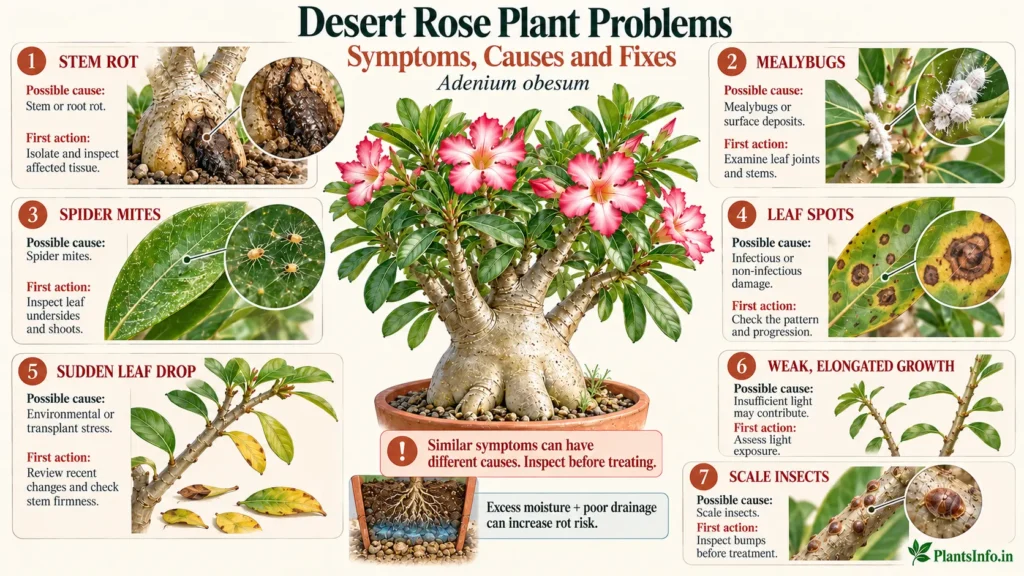
- Monitor plant condition: Watch for persistent wilting despite wet soil, softening near the stem base, or other signs of deterioration. These symptoms warrant investigation but do not establish a diagnosis on their own.
A sheltered position and a well-drained medium are more useful than a rigid monsoon watering schedule.
Post-Monsoon Care: October–November
After the main rainy period, conditions may become more suitable for routine maintenance, but the transition varies across India. Some areas remain wet, while others experience a rapid reduction in rainfall.
- Reassess watering: Adjust frequency as rainfall, temperature and drying rates change.
- Resume feeding selectively: Fertilise when the plant is actively growing and the growing medium is suitable for normal root function.
- Inspect the growing medium: Check for persistent wetness, compaction or drainage problems.
- Consider repotting only when needed: Repot if there is a clear horticultural reason, such as an unsuitable medium or a drainage problem that cannot otherwise be corrected. Consider local temperatures and the plant’s condition before proceeding.
The end of October is not a universal deadline for repotting, fertilising or changing watering routines. Base these decisions on local conditions and plant activity.
Winter Care: December–February
Winter conditions vary considerably across India. Cooler northern and elevated locations may experience a marked slowdown in growth, while milder southern and coastal areas may allow continued activity.
- Watering: When growth slows and the medium dries more slowly, reduce watering accordingly. Do not use a fixed winter interval across all locations and potting conditions.
- Fertilising: Reduce or pause routine feeding when the plant is not actively growing, following the requirements of the fertiliser and the plant’s condition.
- Cold protection: Protect container plants from frost and potentially damaging cold exposure. Move pots to a more sheltered position when necessary.
- Leaf loss: Some leaf shedding may accompany seasonal changes, but it should not automatically be attributed to winter. Consider moisture conditions, temperature exposure and other signs of stress.
Winter care should reflect the temperatures actually experienced by the plant rather than the season’s name alone.
Protection During Extreme Weather
Seasonal averages do not cover every growing condition. Heatwaves, cold spells and unusually heavy rainfall may require temporary changes to routine care.
| Weather condition | Main risk | Practical response |
|---|---|---|
| Heatwave | Rapid moisture loss and heat stress | Check the root-zone moisture more frequently and provide suitable protection from extreme exposure when needed |
| Heavy or persistent rain | Saturated medium and reduced root-zone aeration | Shelter container plants, maintain free drainage and avoid unnecessary watering |
| Frost or severe cold | Cold injury to exposed plant tissues | Move containers to a protected location and avoid leaving plants exposed to damaging conditions |
| Coastal storms | Wind damage, heavy rain and unstable containers | Secure pots and protect plants from prolonged saturation and damaging winds |
These are temporary protective measures, not substitutes for appropriate growing conditions throughout the year.
Monthly Seasonal Care Calendar
Use this calendar as a reminder to inspect conditions. It does not prescribe mandatory watering, fertilising or repotting dates.
| Month | Main care check |
|---|---|
| January | Check for cold exposure and slow drying |
| February | Assess growth and adjust watering to actual moisture use |
| March | Monitor faster drying as temperatures rise |
| April | Check heat exposure and the condition of the growing medium |
| May | Prepare container plants for periods of heavy rainfall |
| June | Review shelter, drainage and rainfall exposure |
| July | Check for persistent saturation and avoid unnecessary watering |
| August | Continue monitoring drainage and plant condition |
| September | Reassess rainfall patterns and drying rates |
| October | Review growing conditions before changing feeding or repotting routines |
| November | Adjust care to local temperatures and active growth |
| December | Monitor cooler conditions and reduce watering if moisture use declines |
A plant’s condition and local weather take precedence over this calendar.
Seasonal Care Mistakes to Avoid
- Watering by date alone: A monthly schedule cannot account for rainfall, pot size, drainage or local temperature.
- Keeping the medium continuously wet: Frequent watering during rainy or cool weather can prolong saturation.
- Reducing water automatically in every region during winter: Milder areas may support continued growth and different moisture requirements.
- Applying fertiliser regardless of growth: Feeding should reflect active growth and suitable growing conditions.
- Repotting according to a fixed seasonal deadline: Repotting should address a specific need and take local conditions into account.
- Assuming every seasonal symptom has the same cause: Leaf loss, wilting and reduced growth can have multiple explanations and may require separate diagnosis.
Regional Seasonal Variation in India
| Region | Seasonal consideration |
|---|---|
| Northern plains | Summer heat, winter cold and local frost risk may require substantial changes in exposure and watering |
| Southern and coastal areas | Warmer conditions may support longer periods of growth, while local rainfall and humidity affect drying rates |
| Western and drier regions | Rapid moisture loss may occur during hot periods, but watering should still account for the medium and container |
| Hill stations and elevated locations | Cooler temperatures and slower drying may affect watering and cold-protection requirements |
These are broad regional patterns, not universal rules. Conditions can differ substantially within each region, especially between exposed outdoor plants, sheltered balconies and indoor growing areas.
Conclusion
Successful seasonal care for desert rose (Adenium obesum) depends on responding to the plant’s growing activity, local temperature, rainfall and the moisture behaviour of its growing medium. Prioritise drainage during prolonged wet weather, adjust watering and feeding when growth slows, and provide protection from damaging heat or cold when necessary. Use seasonal calendars as reminders for inspection rather than as rigid instructions.