Desert Rose Plant: Facts, Names, and Indian Range
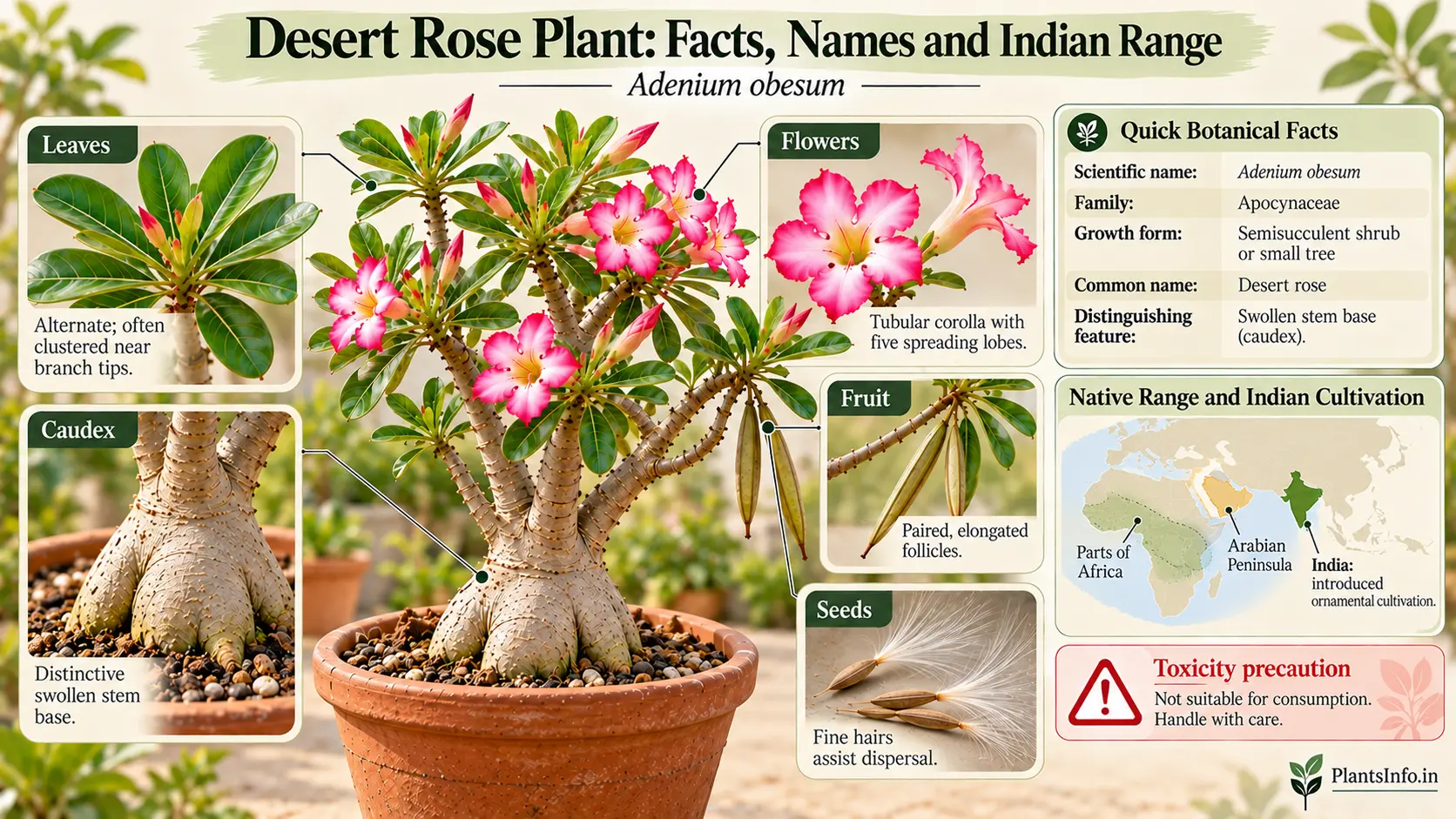
Desert rose (Adenium obesum) is a semisucculent shrub native to parts of Africa and the Arabian Peninsula. In India, it is cultivated as an introduced ornamental plant rather than being native to the country.
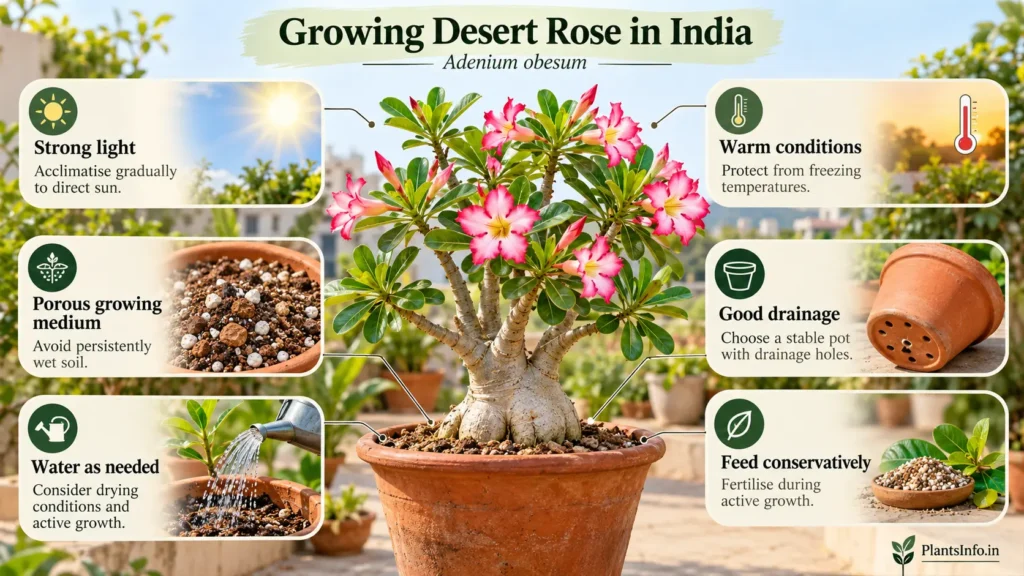
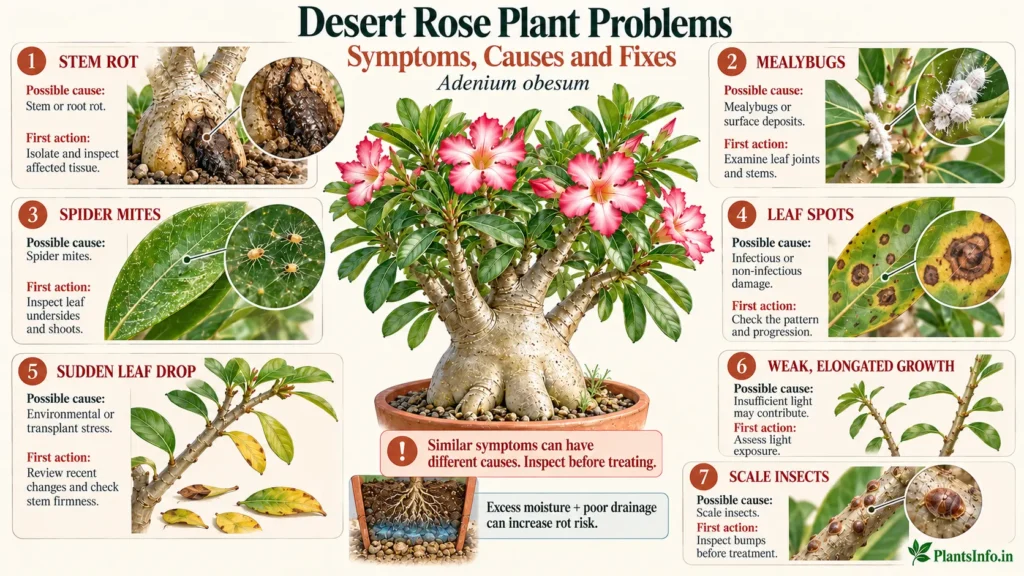
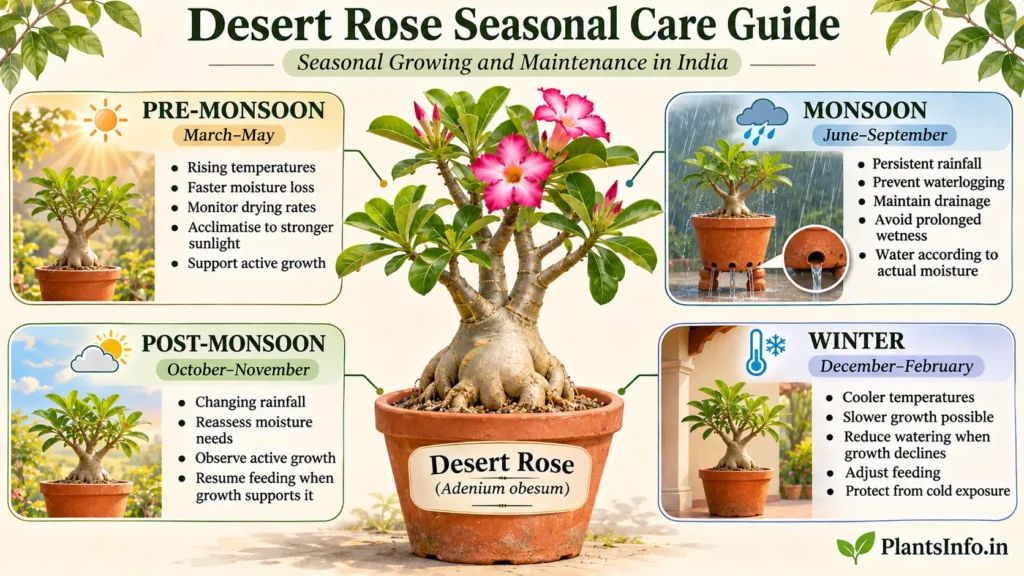
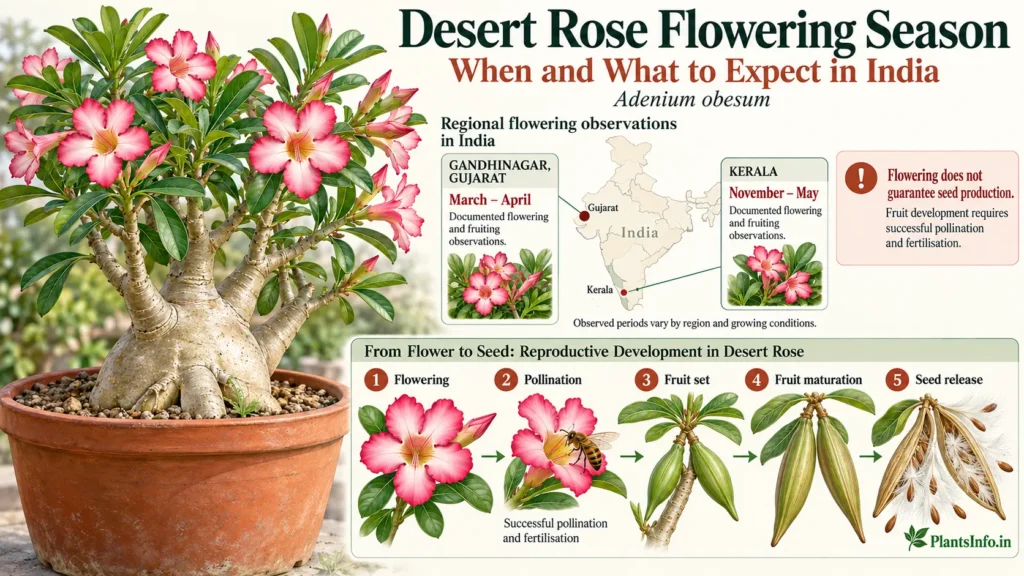
See also: Adenium obesum plant profile, how to grow it, common problems, seasonal care, and its flowering season.
Introduction
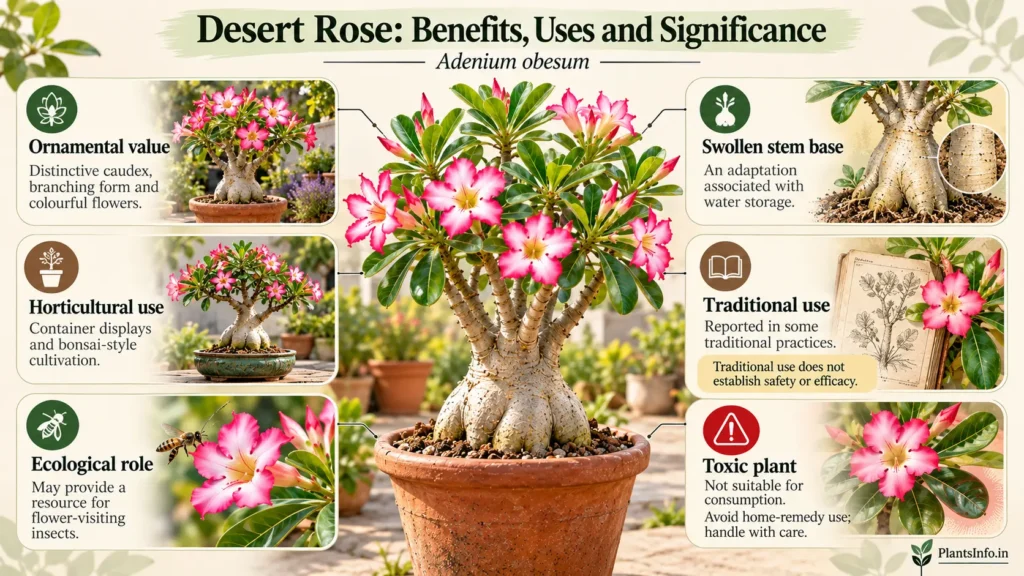
A desert rose can develop a striking, swollen stem base that gives it the appearance of a miniature tree. This distinctive architecture, together with its flowering habit, makes the species recognisable among ornamental shrubs.
Recommended Products
Disclosure: As an Amazon Associate, PlantsInfo may earn from qualifying purchases.
🌱 Growing Essentials
The following products can help with container gardening, potting, root development, soil management, and healthy plant growth.

Organic Potting Soil Mix
Provides nutrients, structure, and healthy growing conditions for container plants.

Coco Peat Growing Medium
Enhances moisture retention while maintaining excellent root-zone aeration.

Grow Bags for Plants
Improve drainage, root aeration, and vegetable production in limited spaces.

Plastic Pots for Plants
Ideal containers for seedlings, ornamentals, herbs, and balcony gardens.
Quick Facts Table
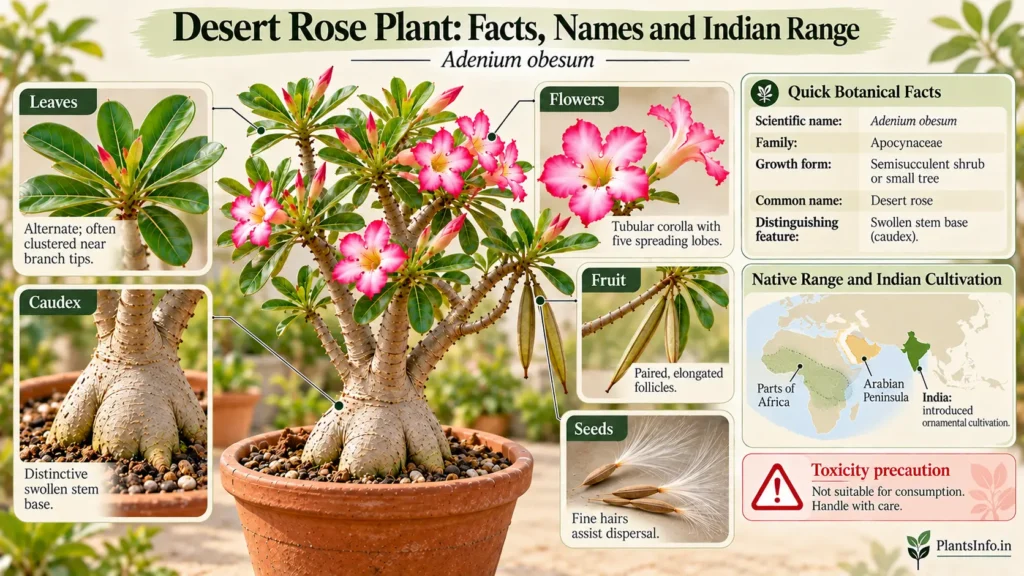
| Feature | Characteristic |
|---|---|
| Scientific name | Adenium obesum |
| Family | Apocynaceae |
| Growth form | Semisucculent shrub or small tree |
| Leaf arrangement | Alternate, often concentrated near branch tips |
| Flower structure | Tubular corolla with five spreading lobes |
| Fruit type | Paired, elongated follicles |
| Seed feature | Tufts of fine hairs that assist dispersal |
| Distinguishing structure | Swollen stem base, commonly called a caudex |
Names in Different Languages
Common names vary between botanical references and horticultural settings. The scientific name is the most reliable identifier when precise species identification matters.
| Language or context | Name | Qualification |
|---|---|---|
| English | Desert rose | Documented common name |
| English | Impala lily | Documented alternative common name |
| Malayalam | Desert Rose | Recorded as a vernacular name in an Indian botanical resource |
| Hindi | रेगिस्तानी गुलाब | Descriptive translation; not confirmed here as an established regional common name |
| Other Indian languages | Not listed | No additional names are included without adequate verification |
Alternative common names may be applied inconsistently, including names shared with other ornamental plants. A translated name should not be presented as an established regional name unless a reliable source documents that usage.
What Does It Look Like?
The plant’s overall appearance reflects its thickened stem base, branching shoots, and terminal clusters of leaves and flowers.
- Stem: The lower stem may become conspicuously swollen, creating the sculptural form for which the species is widely recognised in horticulture.
- Leaves: The leaves are simple, with smooth margins. Their shape varies from oval or obovate to more elongated forms.
- Flowers: The flowers are typically pink to red, although cultivated plants may show white areas and contrasting colour patterns.
- Fruit: The paired follicles elongate as they develop and split open at maturity.
- Seeds: Fine hair-like tufts at the ends of the seeds can assist dispersal by wind.
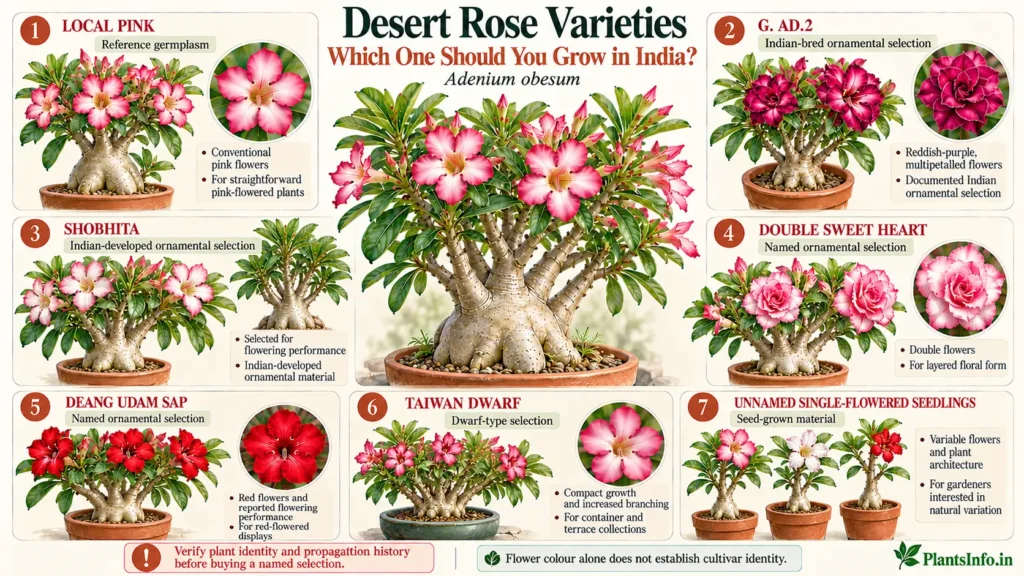
The appearance of cultivated plants can vary with age, growing conditions and horticultural selection. Flower colour alone is not sufficient to distinguish A. obesum from other Adenium species or cultivated hybrids.
Where Does It Grow in India?
Distribution in cultivation
Desert rose is grown in Indian gardens, nurseries, terraces and ornamental plant collections. These cultivation records should not be interpreted as evidence of natural wild populations.
Indian botanical records document cultivation in parts of the country, including Kerala and other states. However, available records do not establish a complete, current state-by-state inventory of cultivated plants.
Native habitat and climate context
In its native range, A. obesum occurs in warm, relatively dry environments, including dry shrubland and related habitats. Its natural distribution extends from parts of tropical Africa towards the Arabian Peninsula and Tanzania.
The environmental conditions of its native habitats provide context for understanding the species, but they do not by themselves establish where it has naturalised outside that range. Indian cultivation records and native-range records should therefore be treated as separate kinds of evidence.
Special Flags
- Toxicity: The plant contains toxic cardiac glycosides. Ingestion can cause serious poisoning, including in pets. Keep plant material inaccessible to children and animals, and seek prompt professional advice if ingestion is suspected.
- Identification: Other Adenium species and cultivated hybrids can resemble A. obesum. Flower colour alone is not a dependable identification criterion.
- Regional names: Common-name translations are not necessarily established local names. Use the scientific name when communicating about the species in botanical or scientific contexts.
Frequently Asked Questions
Is desert rose a true rose?
No. Despite its common name, Adenium obesum belongs to Apocynaceae, not the rose family, Rosaceae.
Is desert rose native to India?
No. Its natural range includes parts of Africa and the Arabian Peninsula. In India, it is cultivated as an introduced ornamental plant.
Can flower colour confirm the species?
No. Flower colour varies among cultivated plants and may overlap with that of related species or hybrids. Reliable identification may require additional botanical characteristics and information about the plant’s origin.
Conclusion
Adenium obesum is a distinctive semisucculent shrub with a characteristic swollen stem base and showy flowers. Accurate identification depends on botanical characteristics rather than common names or flower colour alone, while its toxicity remains an important consideration in ornamental cultivation.