Bougainvillea Varieties: Which to Grow in India?

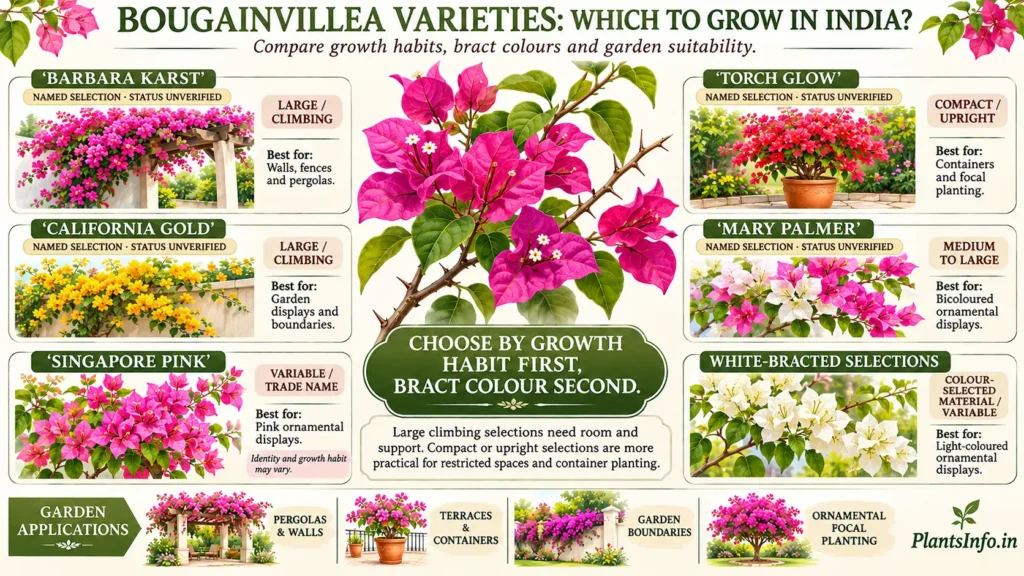
For Indian home gardeners, growth habit and mature size are the most useful starting points when choosing bougainvillea. Vigorous climbing selections suit larger structures and open gardens, while compact or upright plants are more practical for terraces, containers and restricted spaces.
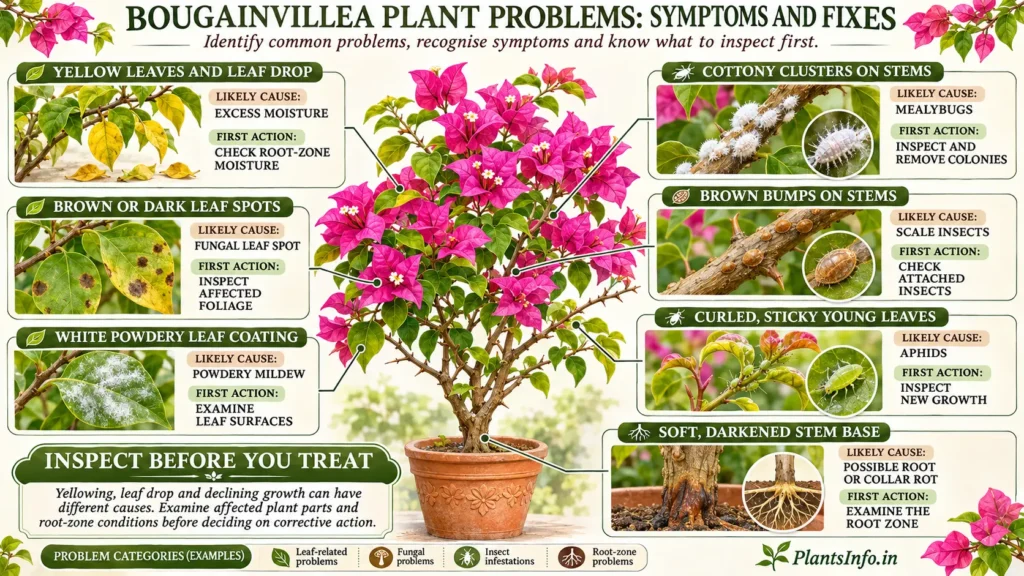
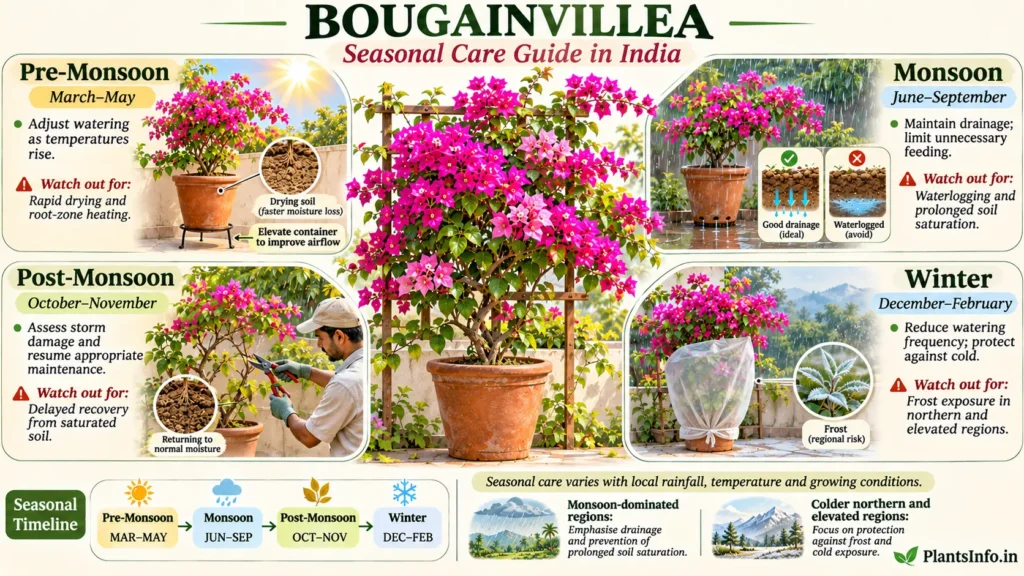
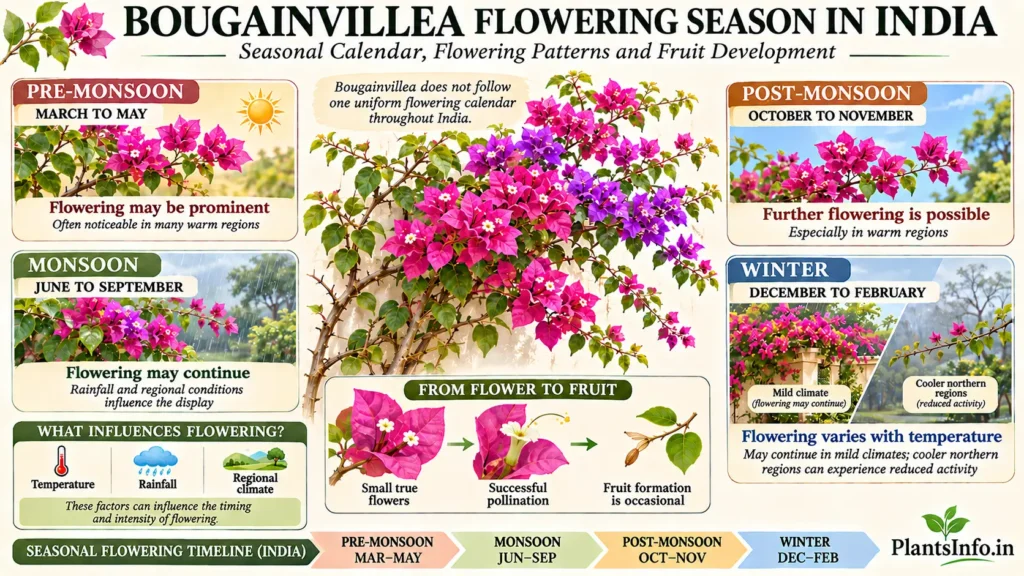
See also: Bougainvillea Comm. ex Juss. plant profile, how to grow it, common problems, seasonal care, and its flowering season.
Introduction
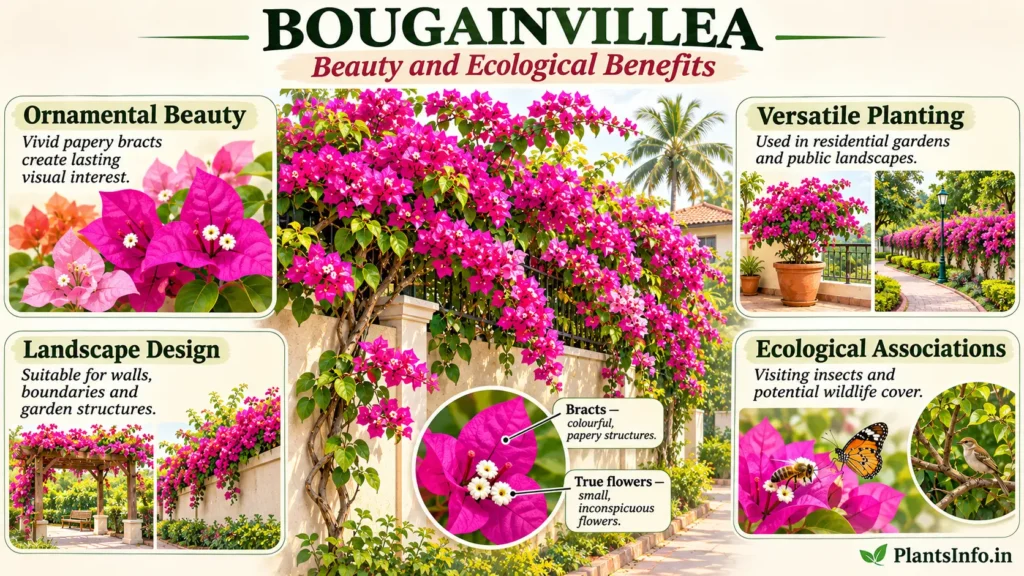
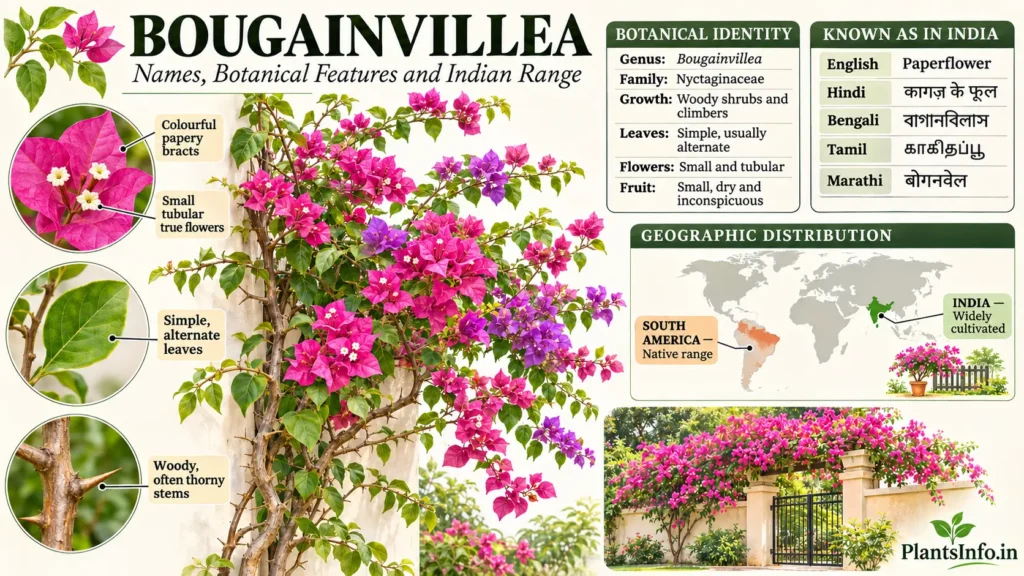
Bougainvillea selections range from sprawling, vigorous climbers to compact plants with a more upright form. Their bracts also occur in several colours, including magenta, yellow, pink, and white. Gardeners often purchase whichever selection is available locally, without checking whether its growth habit suits the intended planting space.
Recommended Products
Disclosure: As an Amazon Associate, PlantsInfo may earn from qualifying purchases.
🌱 Growing Essentials
The following products can help with container gardening, potting, root development, soil management, and healthy plant growth.

Organic Potting Soil Mix
Provides nutrients, structure, and healthy growing conditions for container plants.

Coco Peat Growing Medium
Enhances moisture retention while maintaining excellent root-zone aeration.

Grow Bags for Plants
Improve drainage, root aeration, and vegetable production in limited spaces.

Plastic Pots for Plants
Ideal containers for seedlings, ornamentals, herbs, and balcony gardens.
Quick Variety Selector
| Variety or selection | Type | Plant Size | Best For | Suited To |
|---|---|---|---|---|
| ‘Barbara Karst’ | Named selection; status unverified | Large | Walls, fences, pergolas | Warm regions |
| ‘Torch Glow’ | Named selection; status unverified | Compact to medium | Containers, focal planting | Warm regions |
| ‘California Gold’ | Named selection; status unverified | Large | Garden displays, boundaries | Warm regions |
| ‘Mary Palmer’ | Named selection; status unverified | Medium to large | Bicoloured displays | Warm regions |
| ‘Singapore Pink’ | Trade name; identity variable | Variable | Pink ornamental displays | Warm regions |
| White-bracted selections | Colour-selected material | Variable | Light-coloured displays | Warm regions |
Formal hybrid status and cultivar-specific regional performance are not established by the information available for these entries. The size descriptions are comparative horticultural guidance, not verified mature-size measurements.
Varieties in Detail
The available descriptions establish some useful visual and growth characteristics, but they do not provide sufficient documented origin histories and cultivar-specific regional recommendations to justify six full cultivar profiles. The following identification notes therefore distinguish recognisable selection characteristics from claims that still require verification.
‘Barbara Karst’
This selection is associated with vivid reddish-magenta to crimson bracts and vigorous, climbing or spreading growth. Its main ornamental strength is its ability to produce a prominent display across larger structures and boundaries. Its vigorous habit is a limitation in restricted gardens and small containers. It is a candidate for larger gardens in warm regions, although specific regional performance data are not established here.
‘Torch Glow’
‘Torch Glow’ is distinguished by a comparatively compact and upright growth habit rather than the extensive climbing form associated with vigorous selections. Its concentrated ornamental display makes it a useful candidate for smaller gardens and container arrangements. Its main advantage is its more restrained form; actual dimensions and growth behaviour can vary with the plant material and growing conditions. It is a practical selection for restricted spaces in warm regions, subject to checking the identity and form of the nursery specimen.
‘California Gold’
‘California Gold’ is recognised by its golden-yellow to yellow-orange bracts. The colour provides contrast with green foliage and the pink and purple tones commonly found in bougainvillea displays. Its principal strength is its distinctive yellow ornamental effect. However, colour intensity can vary with environmental conditions, and the identity of plants sold under this name should be confirmed before purchase. Its mature growth habit should also be checked rather than inferred from bract colour.
‘Mary Palmer’
‘Mary Palmer’ is associated with a bicoloured display, commonly showing pink and white bracts. Its main ornamental strength is the contrast within the same display, which distinguishes it from selections with a predominantly single-colour appearance. Its suitability for a particular garden depends on the actual growth habit and available space. The information available here does not establish a reliable cultivar-specific regional recommendation.
‘Singapore Pink’
‘Singapore Pink’ is a name used for pink-bracted ornamental bougainvillea material in the horticultural trade. Plants sold under this name may not have consistent identification or documented provenance. Its appeal is the pink display, but the trade name alone does not establish mature size, growth habit, or cultivar identity. Buyers should evaluate the actual plant and request reliable identification information from the nursery.
White-bracted selections
White-bracted bougainvilleas are sold under both named cultivar labels and general descriptions such as white bougainvillea. Their pale bracts provide contrast in ornamental planting schemes. However, the general description may refer to different selections rather than one uniform cultivar. Buyers should therefore assess the actual plant’s bract characteristics and growth form instead of assuming that all white-bracted plants share the same mature size or habit.
Head-to-Head Comparison
‘Barbara Karst’ vs ‘Torch Glow’
These selections serve different planting purposes. ‘Barbara Karst’ is the more suitable choice when extensive climbing or spreading growth is wanted over a wall, fence, or pergola. ‘Torch Glow’ is the more practical choice for a comparatively compact, upright display in a container or smaller garden. For restricted spaces, its more restrained form is the main advantage. For larger landscape structures, the vigorous growth associated with ‘Barbara Karst’ is more useful. Actual mature dimensions should be checked with the nursery because growing conditions and plant material can affect final size.
‘California Gold’ vs ‘Mary Palmer’
The principal difference is their ornamental colour effect. ‘California Gold’ is associated with golden-yellow to yellow-orange bracts, while ‘Mary Palmer’ is known for pink-and-white bicoloured displays. Choose ‘California Gold’ when yellow is the preferred colour in the planting scheme. Choose ‘Mary Palmer’ when a contrasting two-colour display is the priority. Neither selection should be chosen on colour alone where space is restricted; the actual plant’s growth habit should also be assessed.
How to Choose for Your Space
Container or terrace garden
‘Torch Glow’ is a practical starting choice because of its comparatively compact, upright growth. White-bracted selections may also suit terraces where a pale ornamental display is preferred, provided the actual plant has a manageable form.
Small ground plot (under 100 sq ft)
A compact or moderately growing selection is generally more suitable than a vigorous climber. Among the named selections discussed here, ‘Torch Glow’ is the more practical starting choice. Check the plant’s actual growth habit before purchasing.
Larger garden or backyard
‘Barbara Karst’ is a suitable candidate where substantial climbing or spreading growth is wanted. ‘California Gold’ and ‘Mary Palmer’ offer alternative colour effects for larger ornamental displays. The available space should accommodate the selected plant’s eventual spread.
Regional Suitability
Cultivar-specific regional trials are not established by the information available here. The following guidance therefore describes broad climatic suitability for bougainvillea cultivation rather than proven performance differences among the named selections.
- North India: Warm parts of the northern plains can accommodate bougainvillea, although colder winter conditions can restrict exposed plants.
- South India: Warm tropical and subtropical conditions generally favour outdoor cultivation of ornamental bougainvillea selections.
- Western and coastal India: Warm landscapes are broadly suitable, although local exposure and coastal conditions can influence individual plant performance.
- Eastern India: Warm areas can accommodate bougainvillea, while local rainfall and humidity may influence plant performance.
- Hill stations and high-altitude zones: Outdoor cultivation is less consistently suitable because lower temperatures can restrict growth and flowering.
These regional observations should not be interpreted as cultivar-specific performance rankings.
Watch Out for Mislabeling
Bougainvillea is frequently sold by bract colour, common name, or nursery trade label. A plant labelled simply as pink, purple or yellow may not have a verified cultivar identity. Even a familiar cultivar name does not guarantee that the supplied plant has been correctly identified.
Before purchasing:
- Compare the plant’s visible bract colour and growth habit with the description supplied by the nursery.
- Ask whether the name refers to a documented cultivar or a general trade description.
- Request information about the plant’s propagation source and identification.
- Prefer nurseries that maintain consistent plant labels and can explain the identity of their stock.
For selections such as ‘Singapore Pink’ and general white-bracted material, particular care is needed because the trade description may not identify one uniform cultivar.
Conclusion
Choose bougainvillea by matching its growth habit and expected mature size to the available space; bract colour should be the next consideration.