Nirgundi Plant Problems: Symptoms, Causes and Fixes
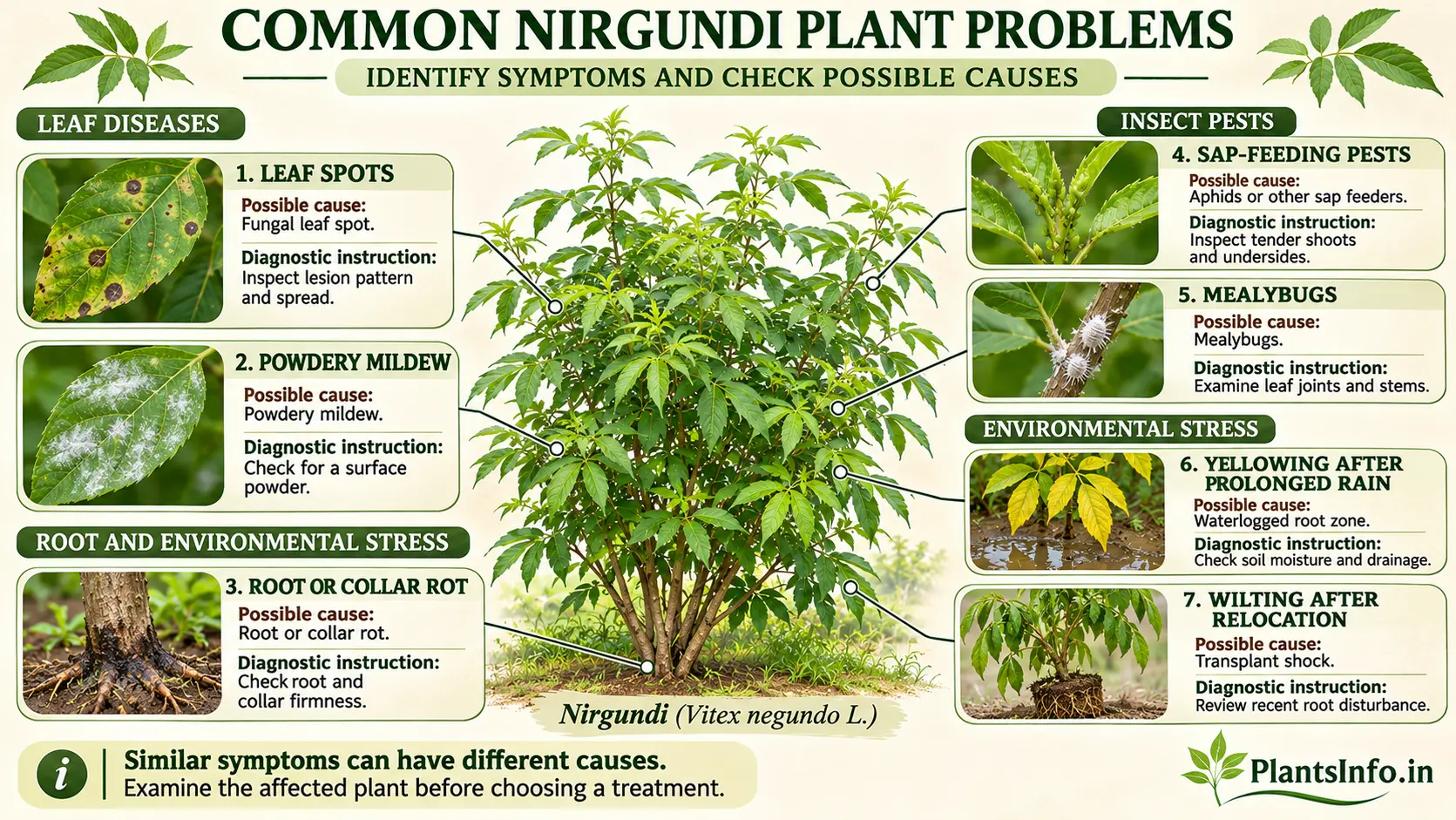
Nirgundi (Vitex negundo) is a relatively hardy shrub, but it can develop leaf diseases, pest infestations and problems associated with unsuitable growing conditions. Identifying the cause of visible symptoms is important because similar signs can result from different problems. Early, appropriate management can limit damage and support recovery.
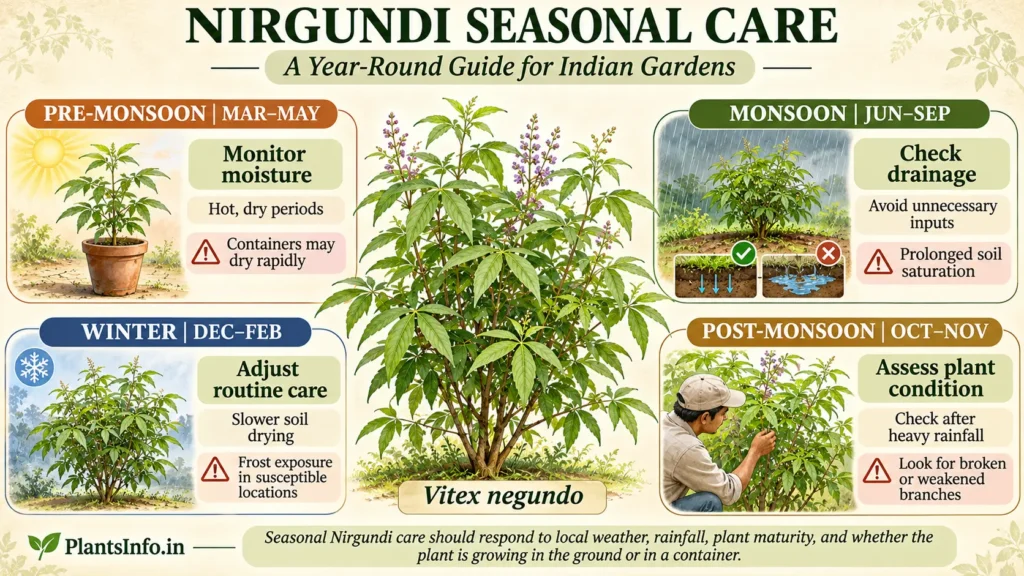
See also: Nirgundi plant profile, how to grow it, seasonal care, its flowering season, and its benefits.
Introduction
A Nirgundi shrub may remain alive while its foliage gradually loses its healthy appearance. Leaf spots, curling, discolouration, and premature leaf fall can indicate disease, insect activity, or environmental stress, so symptoms should be examined before choosing a treatment.
Recommended Products
Disclosure: As an Amazon Associate, PlantsInfo may earn from qualifying purchases.
🌱 Growing Essentials
The following products can help with container gardening, potting, root development, soil management, and healthy plant growth.

Organic Potting Soil Mix
Provides nutrients, structure, and healthy growing conditions for container plants.

Coco Peat Growing Medium
Enhances moisture retention while maintaining excellent root-zone aeration.

Grow Bags for Plants
Improve drainage, root aeration, and vegetable production in limited spaces.

Plastic Pots for Plants
Ideal containers for seedlings, ornamentals, herbs, and balcony gardens.
Quick Diagnosis
| Symptom | Possible cause | First diagnostic action |
|---|---|---|
| Brown or black leaf spots | Fungal leaf spot | Inspect lesion pattern and spread |
| White powdery coating | Powdery mildew | Check for a surface powder |
| Soft or darkened stem base | Root or collar rot | Check root and collar firmness |
| Sticky leaves with insects | Aphids or other sap feeders | Inspect tender shoots and undersides |
| White cotton-like clusters | Mealybugs | Examine leaf joints and stems |
| Yellowing after prolonged rain | Waterlogged root zone | Check soil moisture and drainage |
| Wilting after relocation | Transplant shock | Review recent root disturbance |
Diseases
Species-specific information on the frequency of diseases affecting Nirgundi in Indian gardens is limited. The following are possible problems to consider when symptoms appear; visual inspection alone cannot always establish the causal organism.
Fungal Leaf Spot
Fungal leaf spot may produce small brown, dark-brown or black lesions on the foliage. Lesions can enlarge, merge into discoloured areas and contribute to premature leaf fall.
Fungal organisms can cause these symptoms, particularly when foliage remains wet for extended periods. Remove badly affected leaves and avoid conditions that keep the foliage wet for prolonged periods.
Powdery Mildew
Powdery mildew produces pale white or grey powder-like patches on leaf surfaces. More affected leaves may become distorted or yellow.
The powdery coating distinguishes this problem from cotton-like insect colonies, although close inspection may be necessary. Improve air movement around dense growth and remove heavily affected leaves.
Root and Collar Rot
Root or collar rot may cause persistent wilting, declining growth, and deterioration around the lower stem. The stem base may become soft or darkened as the damage progresses.
Prolonged soil saturation can favour root decay associated with soil-borne pathogens. Check whether the roots and collar remain firm, and remove severely decayed plant material where practical. Advanced decay can be difficult to reverse.
Pest Problems
Aphids
Aphids are small, soft-bodied insects that gather on tender shoots and the undersides of leaves. Their sap feeding can cause leaf curling, shoot distortion, and sticky deposits on foliage.
A strong stream of water can dislodge small colonies. For persistent infestations, an appropriately labelled insecticidal soap may be considered if its label permits use on ornamental plants against aphids.
Pesticide safety: Use only products whose labels explicitly permit the intended plant use and target pest. Follow the label’s application rate, frequency, protective-equipment requirements and precautions for children, pets, beneficial insects and nearby water. Do not assume that a product approved for one pest or plant use is suitable for another.
Mealybugs
Mealybugs form white, cotton-like clusters around leaf joints, tender stems and other sheltered plant surfaces. Their sap feeding can weaken shoots and contribute to leaf yellowing or distortion.
Remove small colonies manually or dislodge them with water. For persistent infestations, an insecticidal soap may be considered only when its label specifically permits use against mealybugs on ornamental plants.
Spider Mites
Spider mites are tiny pests that can be difficult to see without close inspection. Their feeding produces fine pale stippling on leaves, which may develop into bronze or yellow discolouration; fine webbing can appear during heavier infestations.
Wash affected foliage, paying attention to leaf undersides, and remove severely affected leaves. If the infestation persists, consider a product only when its label specifically lists spider mites and permits use on ornamental plants. A product intended for aphids or mealybugs should not automatically be assumed to control mites.
Environmental and Care Problems
Insufficient Light
Weak, elongated shoots and sparse foliage can develop when Nirgundi receives too little light. A persistently shaded position may reduce the shrub’s vigour.
For a container-grown specimen, move the plant gradually towards a brighter location rather than making an abrupt change.
Transplant Shock
A recently relocated Nirgundi may temporarily wilt, lose leaves, or show reduced growth. Root disturbance or damage can limit water uptake while the plant re-establishes.
Avoid repeated relocation and unnecessary disturbance during recovery. Allow the plant time to re-establish before making further changes.
Prevention Protocol
- Check drainage: Avoid containers and planting areas where water remains standing.
- Monitor foliage: Inspect leaves for spotting, discolouration and other changes, particularly during prolonged wet periods.
- Inspect for pests: Examine tender shoots, leaf joints and leaf undersides regularly.
- Maintain air movement: Avoid allowing dense foliage to become excessively crowded.
- Limit root disturbance: Avoid repeated relocation or unnecessary interference with the root system after transplanting.
Frequently Asked Questions
Can leaf symptoms alone confirm a Nirgundi disease?
No. Different diseases and environmental problems can produce similar symptoms. Examine the affected plant parts and growing conditions before deciding on a treatment.
Can Nirgundi recover from fungal leaf problems?
Recovery depends on the extent of damage. Limited leaf infections may be manageable, while extensive damage can take longer to recover from.
Are white patches on Nirgundi leaves always powdery mildew?
No. Powdery mildew produces a powder-like coating on leaf surfaces, whereas mealybugs form cotton-like insect clusters, often around leaf joints and stems.
Conclusion
Regular inspection of Nirgundi foliage, shoots, and stem bases helps distinguish possible diseases, pest infestations, and environmental problems before damage becomes extensive.
🌿 About Nirgundi (Vitex negundo)
🌿 View Complete Nirgundi (Vitex negundo) Plant Profile →🌱 Growing Guide
Practical guidance on planting, growing conditions, and routine plant care.
⚠️ Problems & Diseases
Information on common plant problems, diseases, and their identification.
🍂 Seasonal Care
Season-specific guidance for maintaining plant health and growth.
🌸 Flowering Season
Information about flowering periods, seasonal patterns, and bloom development.

🍃 Benefits
An overview of documented uses, benefits, and relevant plant characteristics.

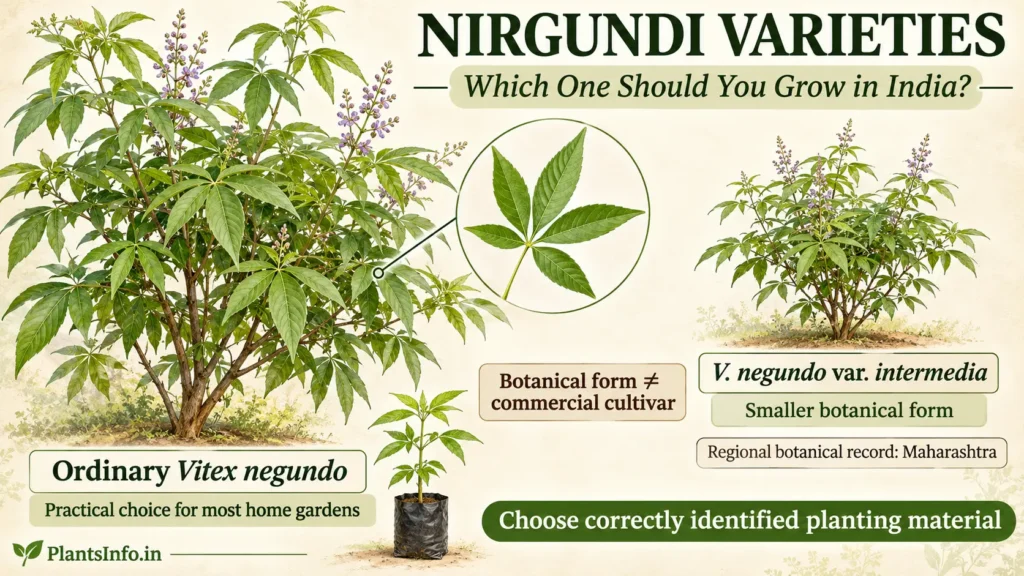
🧬 Varieties
Explore recognised varieties, cultivars, and related forms of this plant.
📊 Quick Facts
A concise reference to important botanical and cultivation facts.