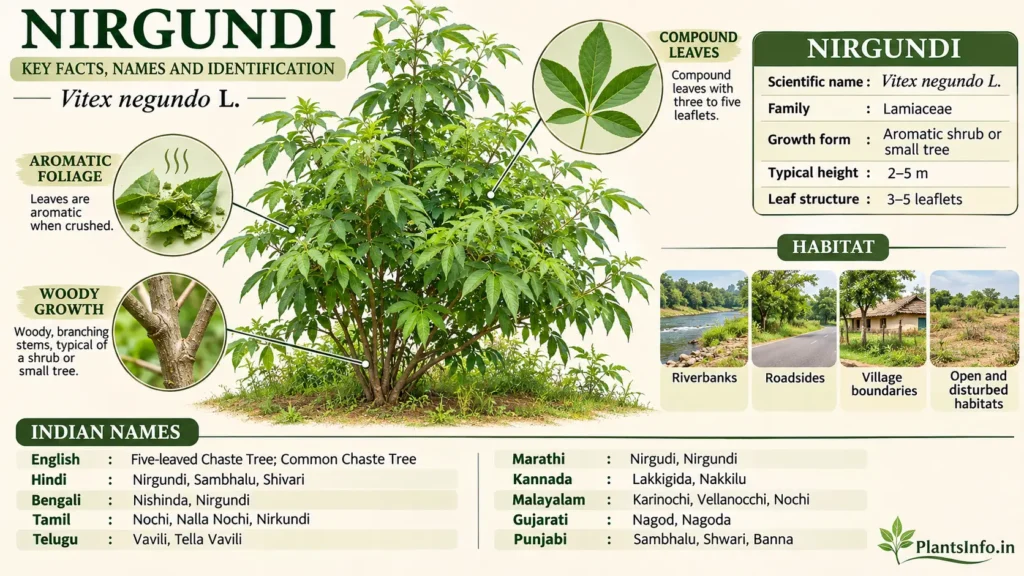
Nirgundi Seasonal Care Guide for Indian Gardens
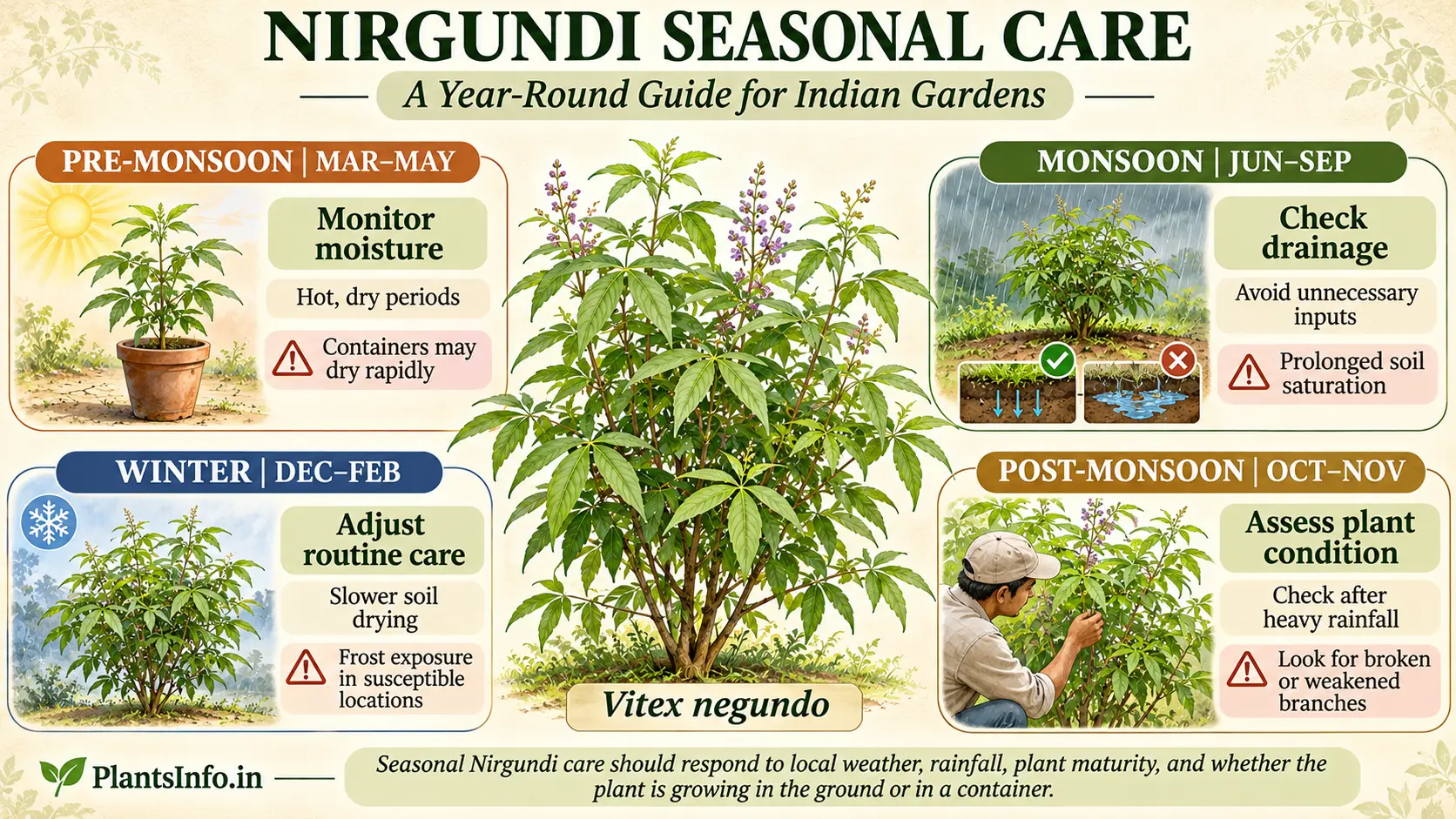
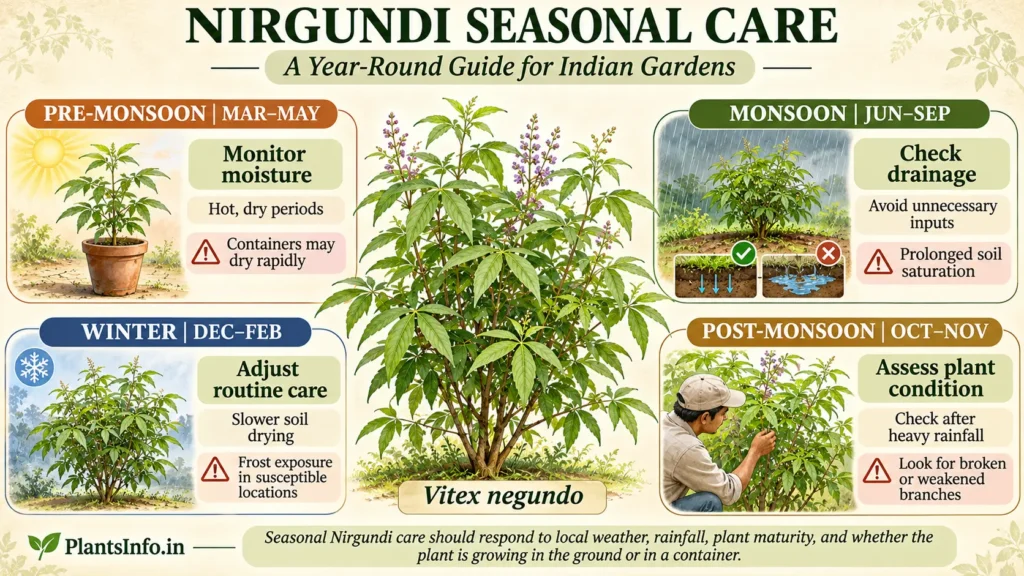
For young and container-grown Nirgundi, the pre-monsoon period (March–May) generally needs closer attention because hot, dry conditions can increase moisture loss. Established plants usually need less intervention, although prolonged waterlogging and unusually severe weather still require attention.
See also: Nirgundi plant profile, how to grow it, common problems, its flowering season, and its benefits.
The same Nirgundi plant can face different growing conditions throughout the year. Seasonal care should reflect local rainfall, temperature, and whether the plant is growing in the ground or in a container.
Recommended Products
Disclosure: As an Amazon Associate, PlantsInfo may earn from qualifying purchases.
🌱 Growing Essentials
The following products can help with container gardening, potting, root development, soil management, and healthy plant growth.
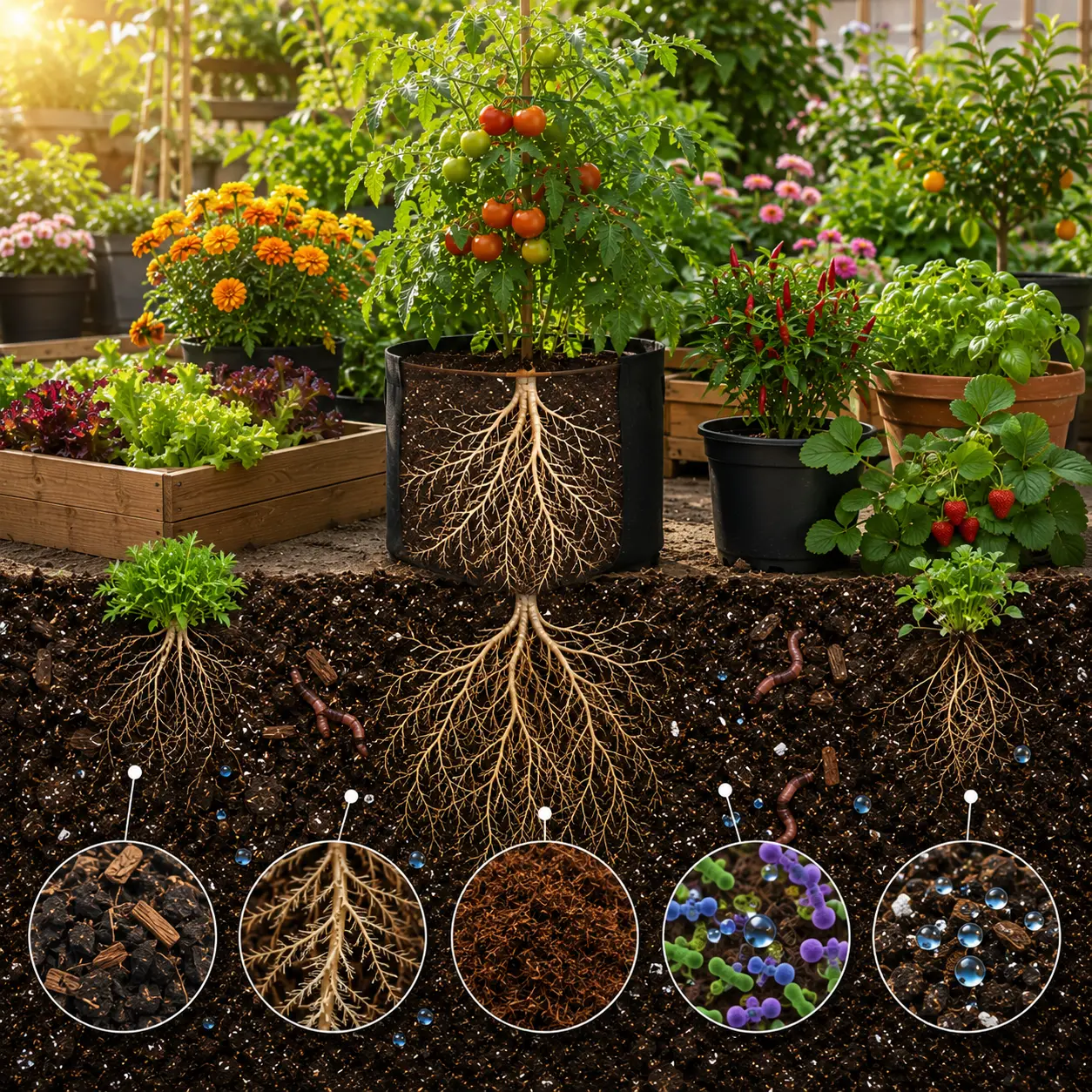
Organic Potting Soil Mix
Provides nutrients, structure, and healthy growing conditions for container plants.
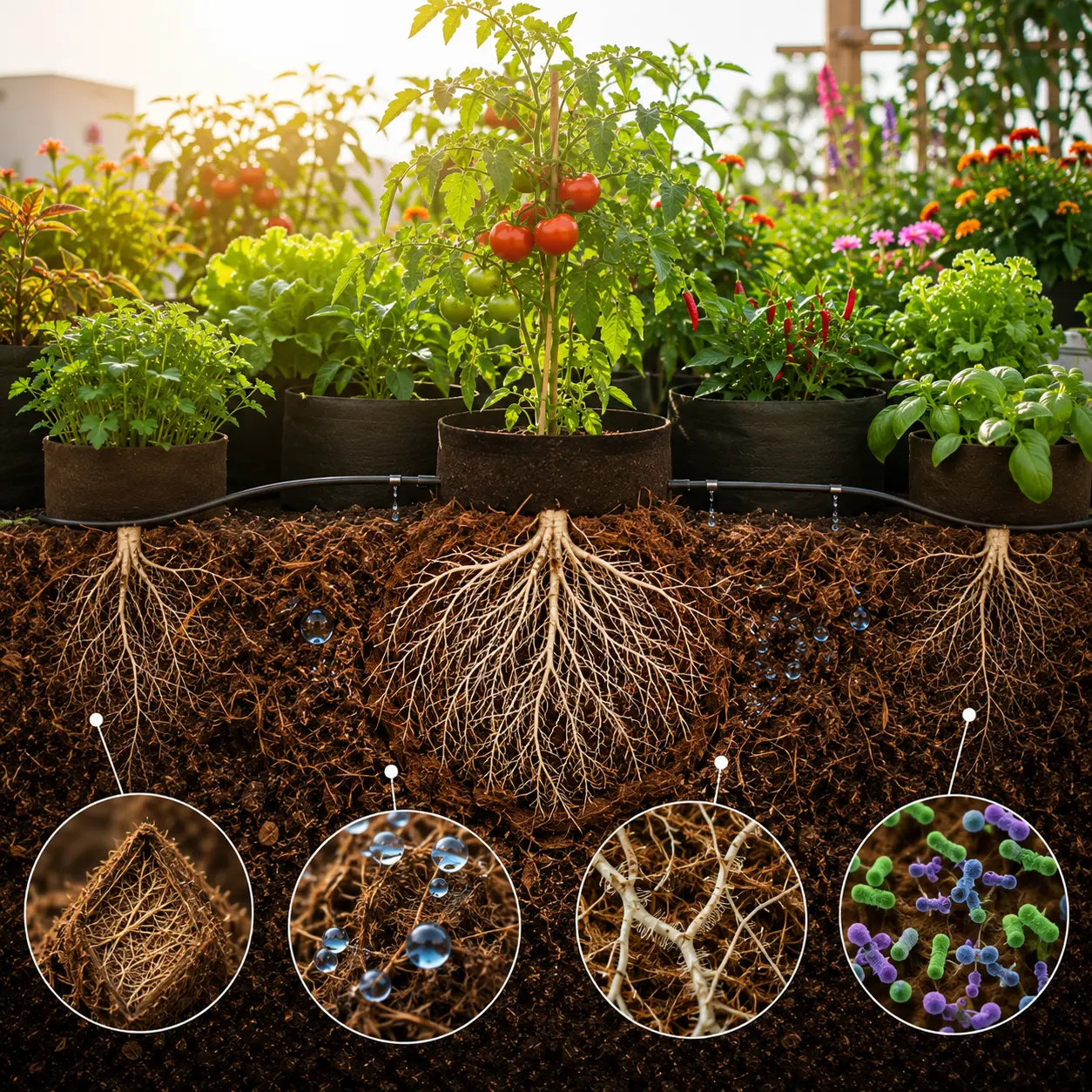
Coco Peat Growing Medium
Enhances moisture retention while maintaining excellent root-zone aeration.

Grow Bags for Plants
Improve drainage, root aeration, and vegetable production in limited spaces.

Plastic Pots for Plants
Ideal containers for seedlings, ornamentals, herbs, and balcony gardens.
Quick Seasonal Overview
| Season | Care Focus | Watch Out For |
|---|---|---|
| Pre-monsoon (Mar–May) | Monitor moisture during hot, dry periods | Rapid drying in containers |
| Monsoon (Jun–Sep) | Check drainage and avoid unnecessary inputs | Prolonged soil saturation |
| Post-monsoon (Oct–Nov) | Assess physical condition after heavy rainfall | Broken or weakened branches |
| Winter (Dec–Feb) | Adjust routine care to slower drying conditions | Frost exposure in susceptible locations |
Pre-Monsoon Care (Mar–May)
As temperatures rise, recently established and container-grown plants may require closer attention than mature plants growing in the ground. The rate at which the growing medium dries is more useful than following a fixed watering calendar.
Avoid heavy fertiliser applications during severe heat, particularly when a plant is already showing signs of environmental stress. There is no need to encourage additional growth through intensive feeding during such conditions.
- Watering: Increase moisture monitoring during prolonged hot, dry spells.
- Fertilising: Avoid heavy applications during extreme heat.
- Heat-stress risk: Young and container-grown plants may be more affected by rapid moisture loss.
- Action point: Check container moisture during heatwaves.
Monsoon Care (Jun–Sep)
Prolonged rainfall makes excess moisture around the roots the main seasonal concern. Containers, poorly drained planting areas and low-lying locations deserve particular attention.
Routine watering may be unnecessary while rainfall keeps the growing medium moist. Avoid unnecessary fertiliser applications when the soil remains saturated; persistently wet conditions can also increase the risk of fungal problems.
- Watering: Do not continue routine watering when rainfall supplies sufficient moisture.
- Fertilising: Avoid unnecessary applications during prolonged soil saturation.
- Action point: Check drainage in containers and planting areas after heavy rainfall.
Post-Monsoon Care (Oct–Nov)
After prolonged rainfall, assess the plant’s physical condition. Look for broken branches, storm damage, and weakened growth, removing damaged material where necessary.
As rainfall declines, reassess the plant rather than immediately returning to a fixed maintenance routine. Container-grown specimens can also be checked for structural stability and whether their containers remain suitable.
- Watering: Reassess moisture requirements as rainfall decreases.
- Fertilising: Resume moderate feeding only when the plant is actively growing, and conditions are suitable.
- Action point: Inspect the plant for damage sustained during the monsoon.
Winter Care (Dec–Feb)
In much of India, established Nirgundi plants can remain outdoors under ordinary winter conditions. The need for protection depends on local cold exposure, particularly in frost-prone inland and northern locations.
Cooler conditions may slow moisture loss from the growing medium. Container-grown plants deserve particular attention because excess moisture can persist when drying is slower.
- Watering: Reduce watering when the growing medium takes longer to dry.
- Fertilising: Avoid unnecessary heavy feeding during periods of limited growth.
- Cold-sensitivity risk: Young plants in frost-prone locations may be more vulnerable than established specimens.
- Action point: Monitor young plants during unusually cold weather.
Extreme Weather Protection
Heatwaves
During an unusually prolonged heatwave, prioritise recently planted and container-grown specimens. Where afternoon exposure is exceptionally intense, temporary protection from the harshest sun may help limit stress. Avoid additional fertiliser applications while the plant is under severe environmental stress.
Frost and Severe Cold
In locations where frost occurs, young plants may need temporary protection during unusually cold nights. Established plants generally require less intervention, but inspect them after exceptional cold exposure rather than assuming that all specimens tolerate frost equally.
Heavy Rain and Coastal Storms
During exceptional rainfall or a severe coastal storm, check that containers are not standing in collected water. After strong winds, inspect the plant for broken branches and physical instability. Secure vulnerable young plants where necessary.
Seasonal Care Calendar
| Month | Care Task |
|---|---|
| January | No active care needed under ordinary conditions; monitor young plants during severe cold. |
| February | Check whether containers retain moisture unusually long. |
| March | Begin closer moisture monitoring as temperatures rise. |
| April | Inspect container-grown plants during prolonged hot spells. |
| May | Avoid unnecessary heavy feeding during severe heat. |
| June | Check drainage as monsoon rainfall begins. |
| July | No active watering needed when rainfall keeps the growing medium moist. |
| August | Check for accumulated rainwater around containers and planting areas. |
| September | Inspect for physical damage after heavy rainfall. |
| October | Assess branch condition and plant stability after the monsoon. |
| November | Reassess moisture requirements as rainfall declines. |
| December | Monitor young plants when unusually cold nights are expected. |
Seasonal Mistakes to Avoid
- Carrying the summer watering routine into the monsoon: Rainfall may already supply sufficient moisture, making additional watering unnecessary.
- Continuing heavy feeding during extreme heat: Additional fertiliser is an unnecessary intervention when the plant is already under environmental stress.
- Keeping the monsoon watering routine into winter: Slower drying during cooler conditions can allow excess moisture to persist around the roots.
Conclusion
Adjust Nirgundi care to local weather and growing conditions rather than relying on a rigid year-round schedule.
🌿 About Nirgundi (Vitex negundo)
🌿 View Complete Nirgundi (Vitex negundo) Plant Profile →🌱 Growing Guide
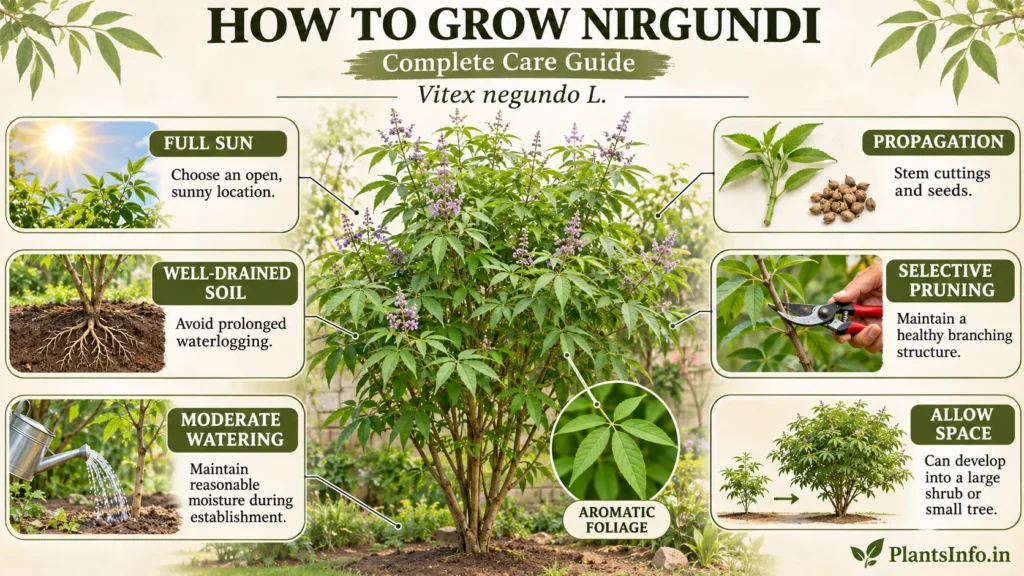
Practical guidance on planting, growing conditions, and routine plant care.
⚠️ Problems & Diseases
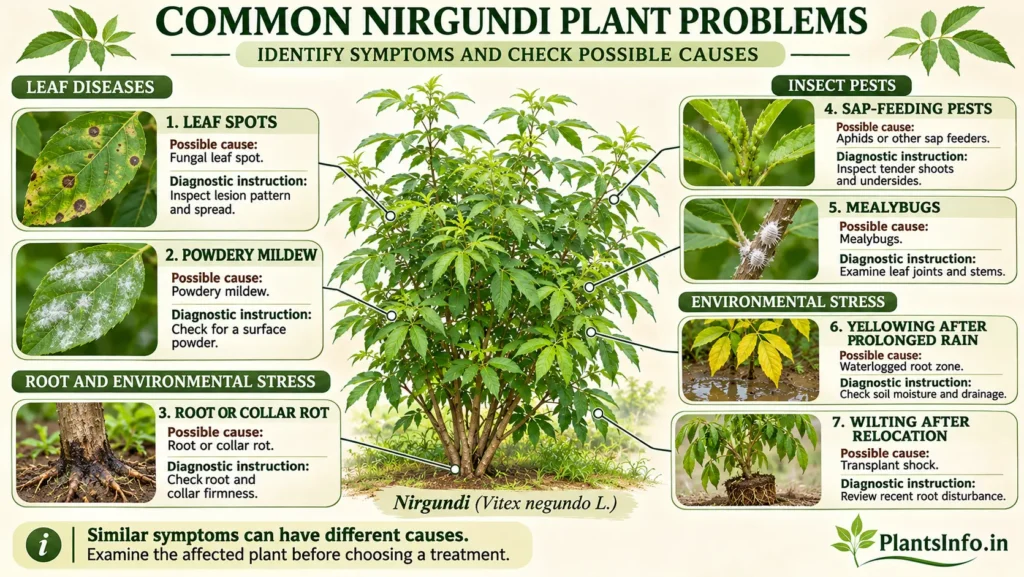
Information on common plant problems, diseases, and their identification.
🍂 Seasonal Care
Season-specific guidance for maintaining plant health and growth.
🌸 Flowering Season
Information about flowering periods, seasonal patterns, and bloom development.

🍃 Benefits
An overview of documented uses, benefits, and relevant plant characteristics.

🧬 Varieties
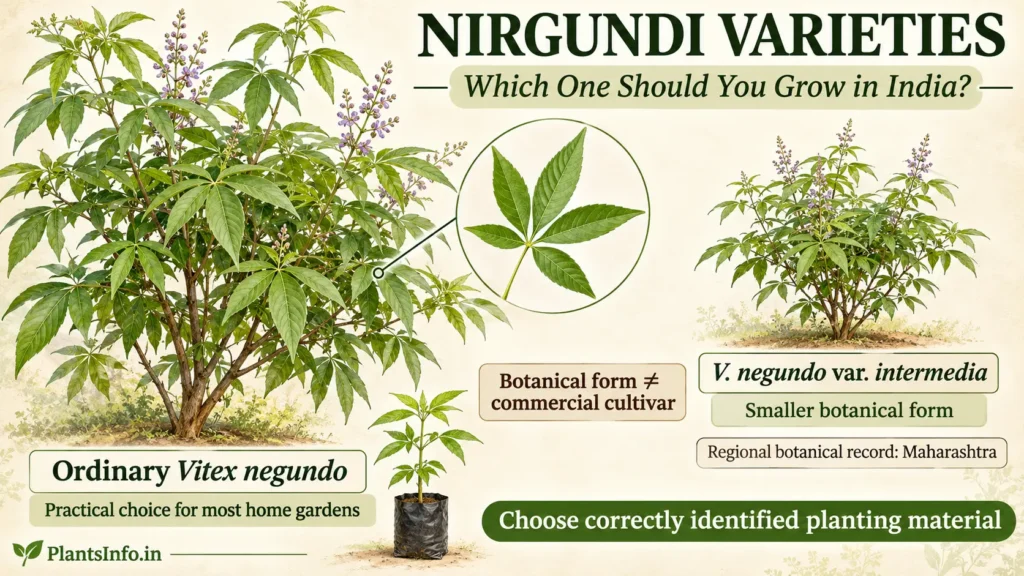
Explore recognised varieties, cultivars, and related forms of this plant.
📊 Quick Facts
A concise reference to important botanical and cultivation facts.