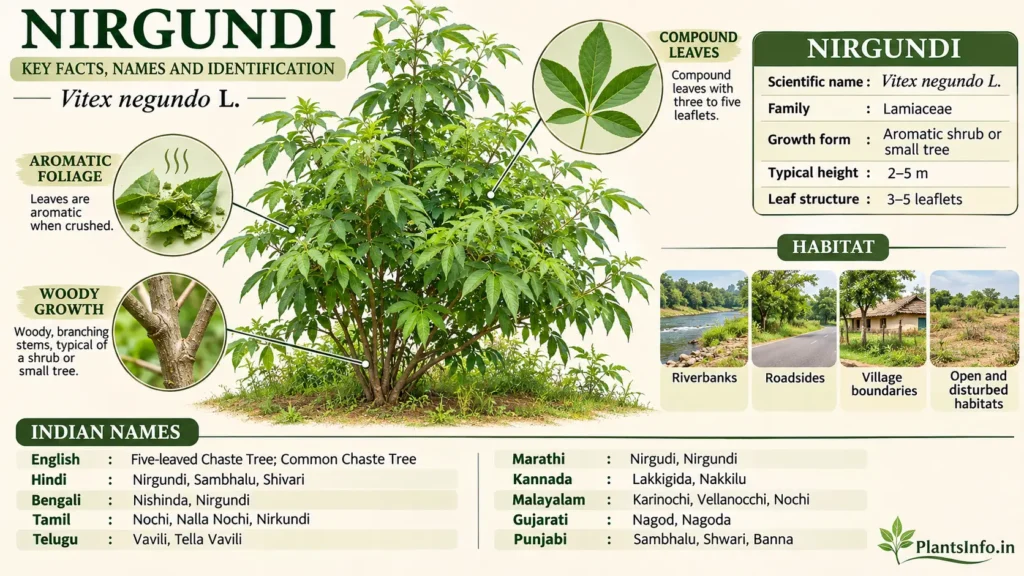
When Does the Nirgundi Flower in India? A Seasonal Guide
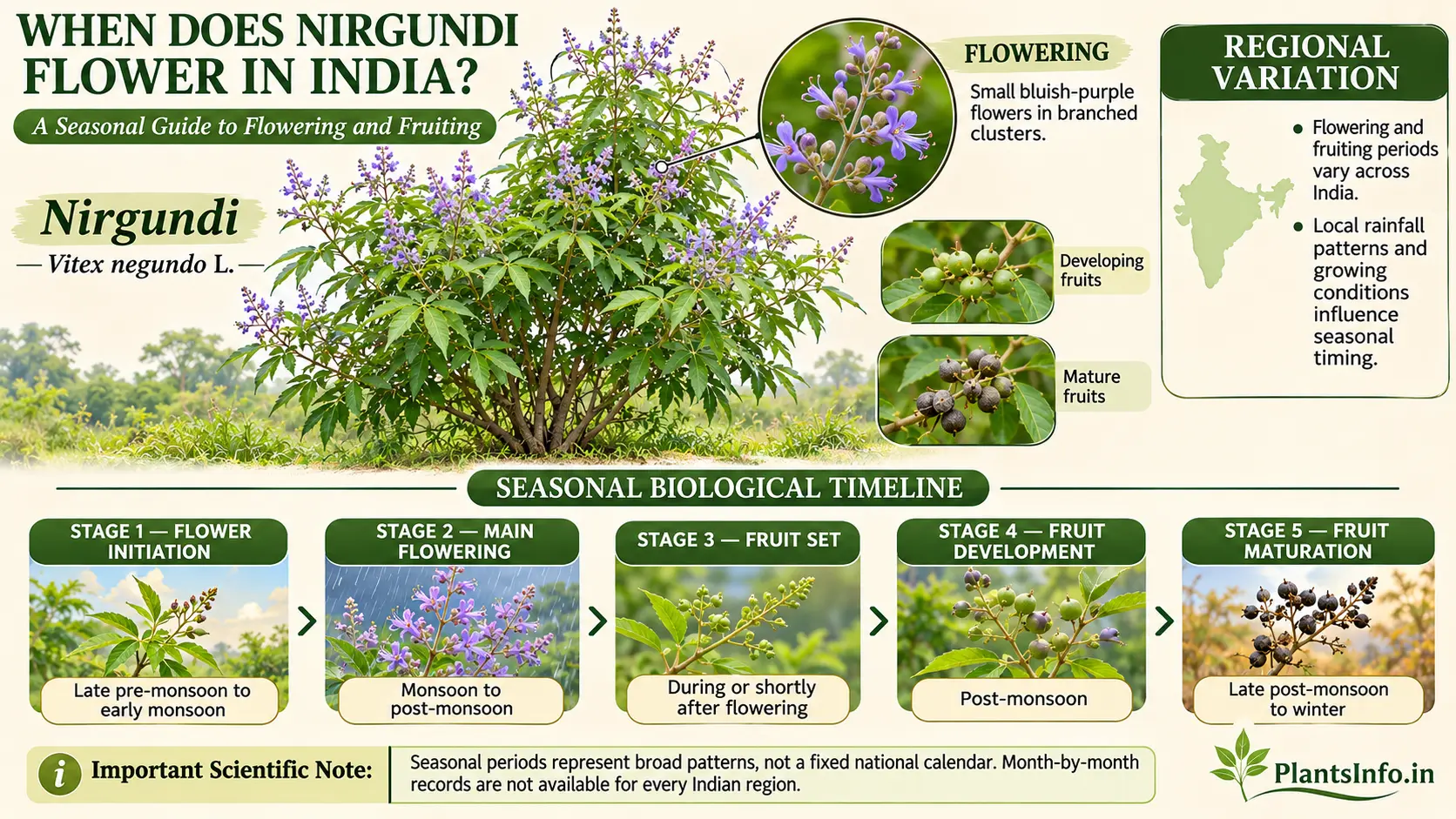
Nirgundi (Vitex negundo) generally flowers during the monsoon and post-monsoon periods in India, although the onset and duration vary by region. Fruits develop after flowering and typically mature from the post-monsoon period into winter.
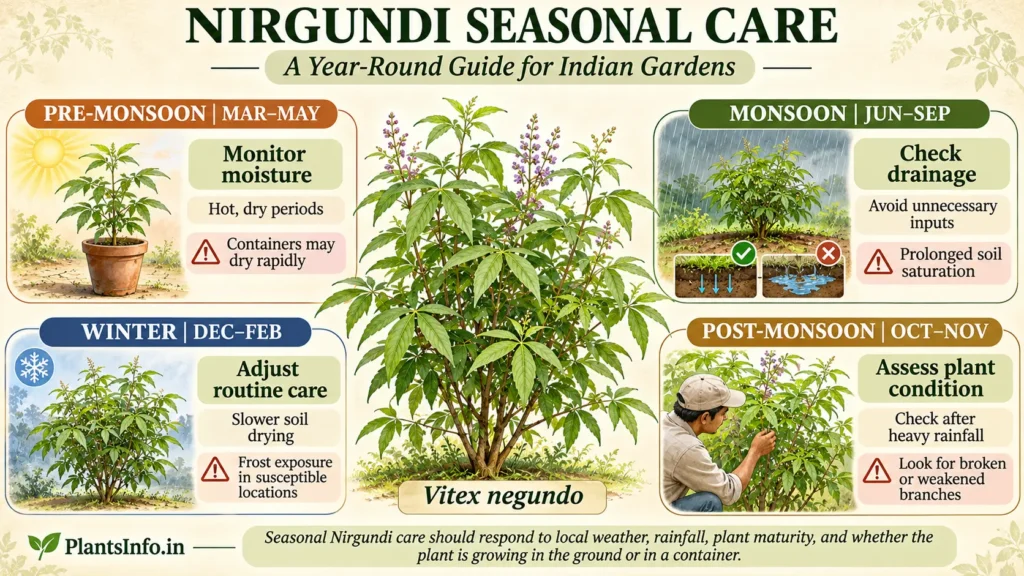
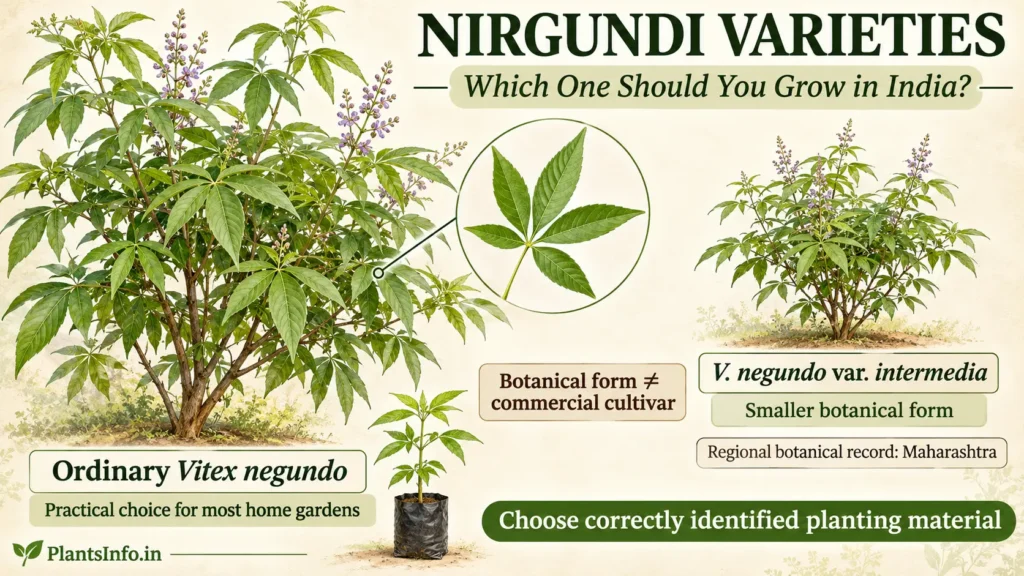
See also: Nirgundi plant profile, how to grow it, common problems, seasonal care, and its benefits.
Introduction
The small bluish-purple flowers of Nirgundi grow in branched clusters above its foliage. Their appearance is seasonal, but the timing is not identical across India because local rainfall patterns and growing conditions differ.
Recommended Products
Disclosure: As an Amazon Associate, PlantsInfo may earn from qualifying purchases.
🌱 Growing Essentials
The following products can help with container gardening, potting, root development, soil management, and healthy plant growth.

Organic Potting Soil Mix
Provides nutrients, structure, and healthy growing conditions for container plants.

Coco Peat Growing Medium
Enhances moisture retention while maintaining excellent root-zone aeration.

Grow Bags for Plants
Improve drainage, root aeration, and vegetable production in limited spaces.

Plastic Pots for Plants
Ideal containers for seedlings, ornamentals, herbs, and balcony gardens.
Biological Timing at a Glance
| Biological stage | Broad seasonal pattern |
|---|---|
| Flower initiation | Late pre-monsoon to early monsoon |
| Main flowering period | Monsoon to post-monsoon |
| Fruit set | During or shortly after flowering |
| Fruit development | Post-monsoon |
| Fruit maturation | Late post-monsoon to winter |
These periods describe a broad seasonal pattern, not a fixed national calendar. The timing may shift between locations, and reliable month-by-month phenological records are not available for every Indian region.
Flowering Season in India
When do flower buds appear?
Flower-bud development may begin during the transition from the hotter pre-monsoon period into the rainy season. The onset is not uniform, so the first visible buds may appear at different times in different regions.
When does Nirgundi flower?
The main flowering period is generally associated with the monsoon and post-monsoon seasons. Depending on local conditions, flowering may begin earlier or continue beyond the usual seasonal period.
How long do the flowers last?
Individual flowers are short-lived. However, a branched inflorescence carries multiple flowers that open over time, allowing the overall floral display to continue beyond the lifespan of an individual flower. A precise flowering duration applicable across Indian growing conditions is not established.
What influences flowering?
Seasonal rainfall and warm growing conditions are relevant to Nirgundi’s growth cycle. However, a specific temperature, rainfall, or day-length threshold that determines flowering across Indian regions has not been established.
Fruiting Season
When do Nirgundi fruits develop?
Fruit formation follows successful flowering and pollination. The small, rounded fruits develop from the flowers and gradually darken as they mature.
Fruit development generally extends through the post-monsoon period, with maturation continuing into winter in some growing conditions. The timing depends partly on when flowering occurred.
How can ripe fruits be recognised?
Mature Nirgundi fruits are generally dark purple to nearly black. This colour change provides a visible indication of maturity.
Fruit retention can vary. Mature fruits may remain on the plant for a period before drying or falling, so their presence and visibility are not necessarily consistent throughout winter.
Best Time to Plant Nirgundi
The onset of the local monsoon is often a practical planting window where seasonal rainfall provides sufficient soil moisture for establishment. The suitable period should follow the actual arrival and pattern of rainfall rather than a single June–September schedule for the whole country.
Early post-monsoon planting may also be possible in locations where the soil retains adequate moisture. Where rainfall is limited, or the soil dries quickly after the monsoon, the planting window needs to be adjusted to local conditions.
Understanding Regional Differences
Nirgundi does not follow one reliable flowering and fruiting calendar across India. The onset of seasonal rainfall, local temperature patterns, and growing conditions can shift the timing of flower development, flowering, and fruit maturation.
For this reason, observations from a particular state, district or garden should not automatically be treated as a schedule for the entire country. Recording the first visible buds, main flowering period, and fruit maturation at the local site provides a more useful reference for subsequent years.
Conclusion
Nirgundi’s flowering is broadly associated with the monsoon and post-monsoon seasons, followed by fruit development and maturation. Localobservations ares more reliable than applying fixed national dates.
🌿 About Nirgundi (Vitex negundo)
🌿 View Complete Nirgundi (Vitex negundo) Plant Profile →🌱 Growing Guide
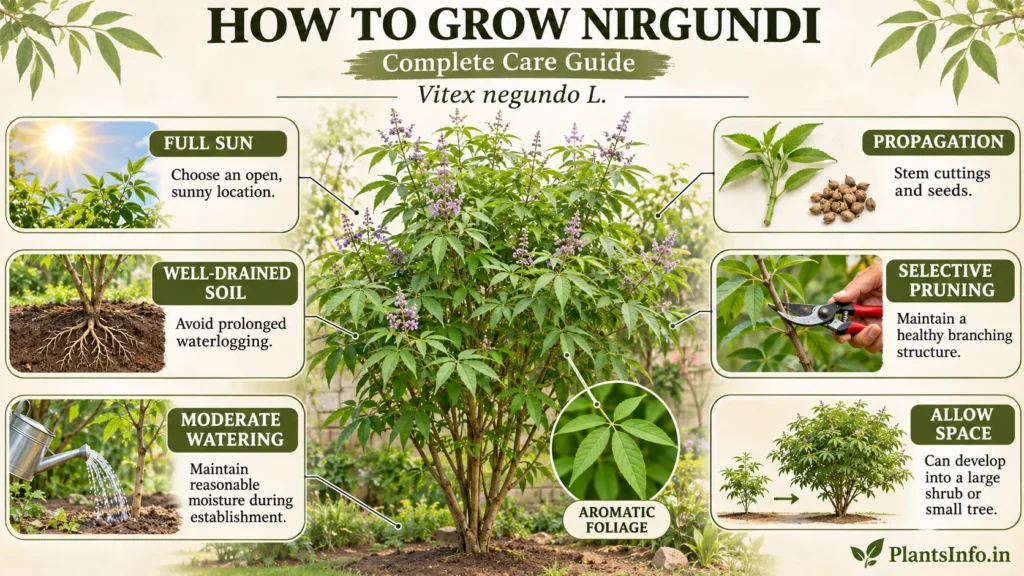
Practical guidance on planting, growing conditions, and routine plant care.
⚠️ Problems & Diseases
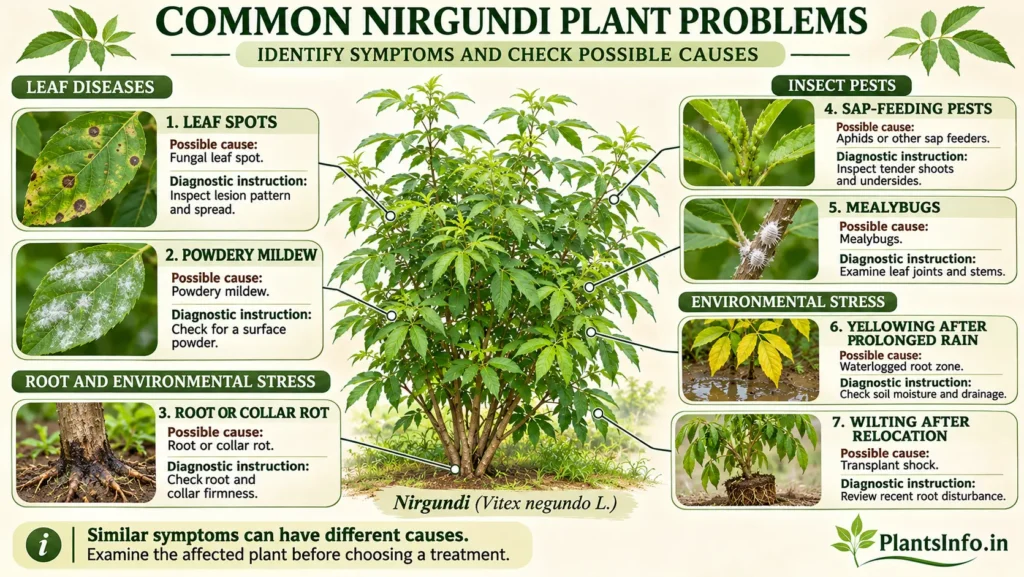
Information on common plant problems, diseases, and their identification.
🍂 Seasonal Care
Season-specific guidance for maintaining plant health and growth.
🌸 Flowering Season
Information about flowering periods, seasonal patterns, and bloom development.

🍃 Benefits
An overview of documented uses, benefits, and relevant plant characteristics.

🧬 Varieties
Explore recognised varieties, cultivars, and related forms of this plant.
📊 Quick Facts
A concise reference to important botanical and cultivation facts.