Plant Guides

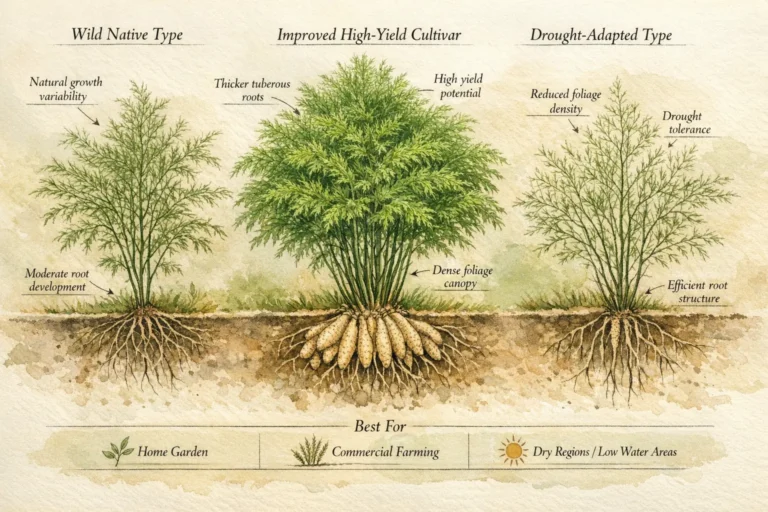
Shatavari Varieties: Which One Should You Grow in India?

Botanical atlas illustration comparing three Shatavari (Asparagus racemosus) types—wild native, improved high-yield cultivar, and drought-adapted—showing differences in cladode foliage density, plant structure, and tuberous root systems in a soil cross-section.

Shatavari Varieties: Which One Should You Grow in India? Quick Answer: Most Indian home gardeners grow the standard wild-type Shatavari because it is the most available — but improved varieties developed by Indian agricultural research institutes offer meaningfully better root…

Shatavari Plant Problems: Symptoms, Causes and Fixes

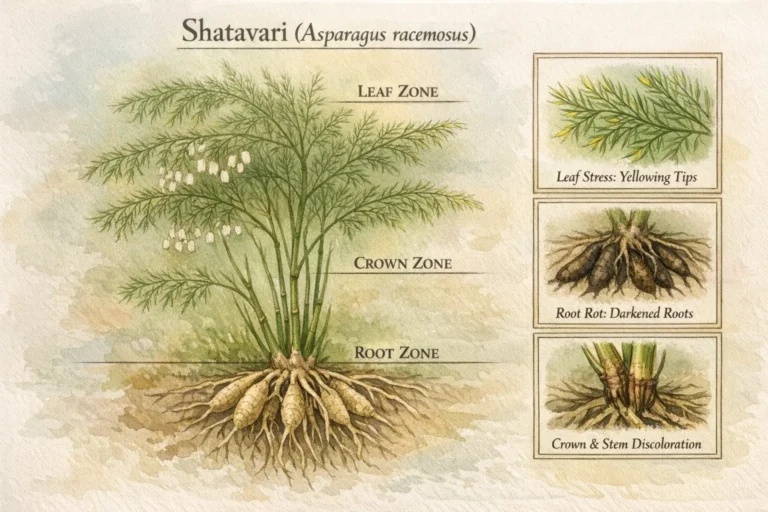
Botanical diagnostic illustration of Shatavari (Asparagus racemosus) showing labeled leaf, crown, and root zones with inset panels depicting yellowing cladode tips, root rot in tuberous roots, and crown discoloration in an atlas-style watercolor layout

Shatavari Plant Problems: Symptoms, Causes, and Fixes Quick Answer: Root rot from waterlogging during the monsoon is the single most common — and most preventable — cause of Shatavari failure in Indian gardens. Most other problems, including pest damage and…

Shatavari Flowering Season: When and What to Expect in India

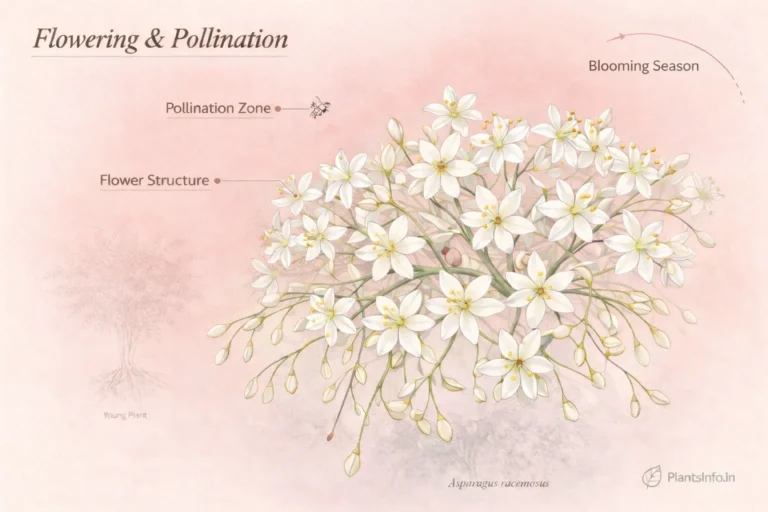
Atlas-style botanical illustration of Shatavari flowers showing star-shaped blooms with pollination zone, flower structure, and blooming season callouts

Quick Answer: Shatavari flowers in winter — typically November to February across most of India, with the peak bloom in December–January. Fruiting follows in February–March. The best time to plant is pre-monsoon (March–May), with early monsoon (June–July) as a reliable…

Shatavari Plant: Key Facts, Names and What You Should Know

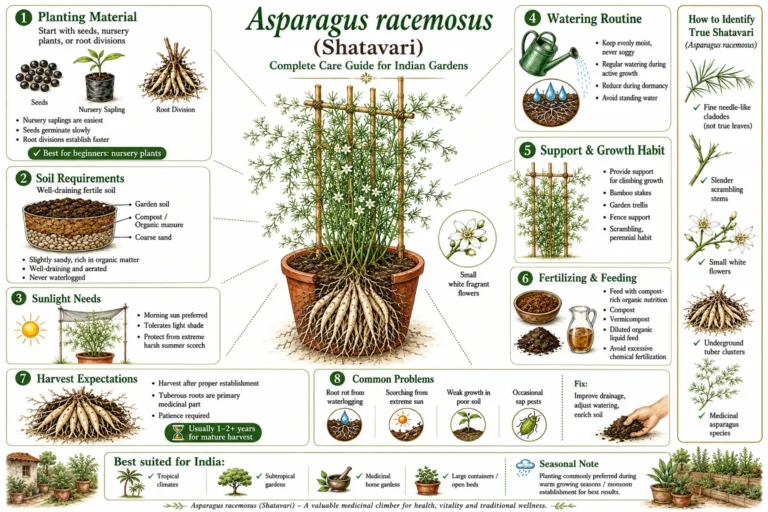
Atlas-style botanical illustration of Shatavari plant showing full structure with feathery canopy, white flowers, and tuberous root system with identification callouts

Shatavari Plant: Key Facts, Names, and What You Should Know Beneath its feathery, almost ornamental foliage, Shatavari carries one of the longest documented medicinal histories of any plant native to the Indian subcontinent — a climber that has been gathered…

Shatavari Benefits: What Ayurveda and Modern Research Say

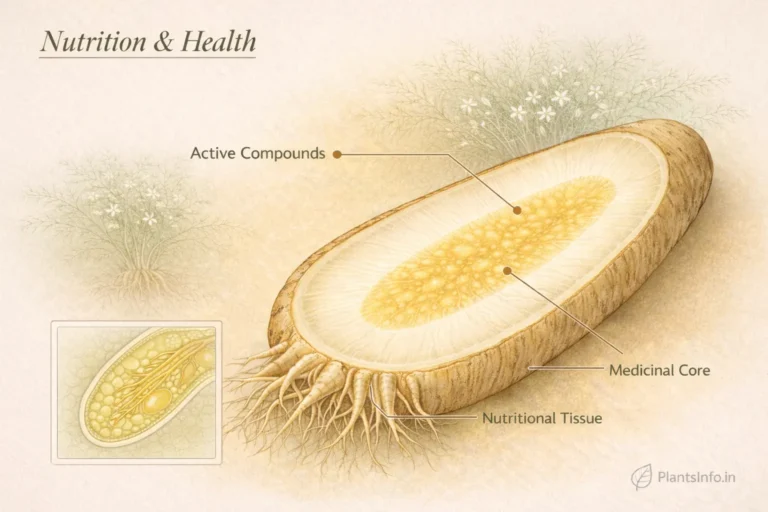
Atlas-style botanical illustration of Shatavari root cross-section showing medicinal core, nutritional tissue, and active compounds with clean scientific callouts

Shatavari Benefits: What Ayurveda and Modern Research Say Quick Answer: Shatavari is one of the most important rasayana herbs in Ayurveda, used for over two millennia primarily as a women’s tonic and adaptogen. Modern research has identified active compounds including…

Pudina Varieties: Which One Should You Grow in India?

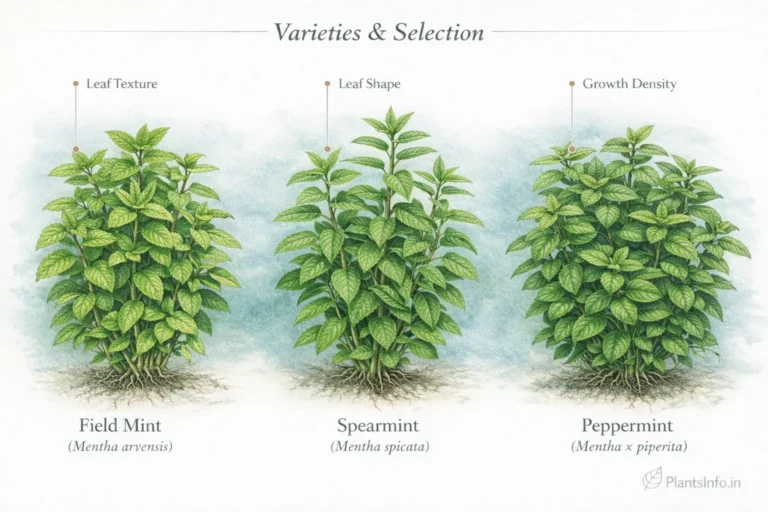
Botanical atlas illustration comparing three mint varieties—Field Mint (Mentha arvensis), Spearmint (Mentha spicata), and Peppermint (Mentha × piperita)—highlighting differences in leaf texture, leaf shape, and growth density.

Pudina Varieties: Which One Should You Grow in India? Quick Answer: Most pudina sold in Indian markets is spearmint (Mentha spicata) or a hybrid of it — but several distinct varieties exist, and they differ meaningfully in flavour, climate tolerance,…