Plant Guides

Papaya Plant Problems & Diseases: Symptoms, Causes, and Fixes
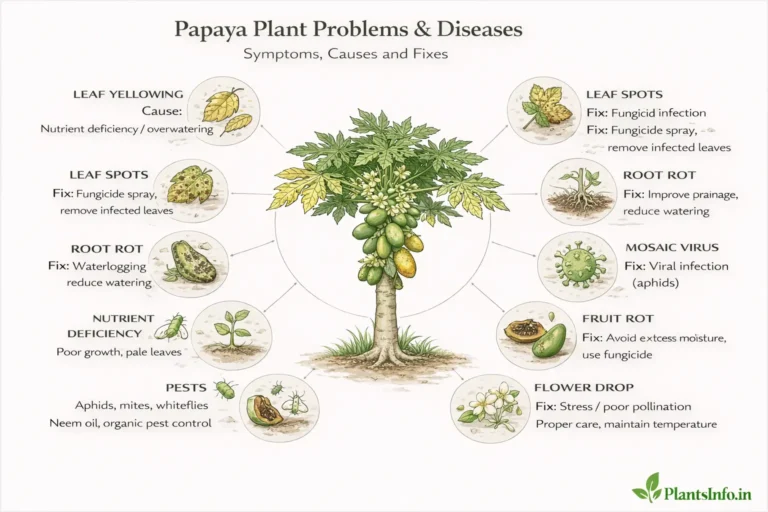
Semi-infographic botanical illustration of Carica papaya showing common plant problems and diseases including leaf yellowing, leaf spots, root rot, mosaic virus, fruit rot, pests, nutrient deficiency, and flower drop with causes and fixes in a radial layout.

Quick Answer: The most common papaya problems in India are papaya ringspot virus, stem rot caused by Phytophthora, and mealybug infestations. Most viral diseases cannot be cured — remove affected plants immediately. Fungal and pest problems, caught early, respond well…

Papaya Flowering Season: When and What to Expect in India

Semi-infographic botanical illustration of Carica papaya flowering stage showing flowers and early fruits with key information on flowering time, climate, pollination, fruit set, and common problems in India arranged in a radial layout

Quick Answer: Papaya flowers 4–5 months after planting in most Indian conditions, with peak flowering from October to February depending on planting season. Fruit ripens 4–6 months after flowering. The best planting windows are monsoon onset (June–July) and post-monsoon (September–October),…

Papaya Plant: Key Facts, Names, and What You Should Know

Semi-infographic botanical illustration of the Carica papaya plant showing key facts including scientific name, common names, origin, growth, flowers, fruit type, uses, and plant characteristics in a clean radial layout.

Quick Answer: Papaya (Carica papaya) is a fast-growing herbaceous plant native to Central America, now cultivated across tropical and subtropical India. It produces nutritious fruit within a year and is easy to grow in warm, well-drained conditions. Both ripe fruit…

Papaya Fruit: Nutritional Benefits and Culinary Uses

Semi-infographic botanical illustration of papaya fruit showing whole and cut Carica papaya with labeled benefits including vitamins, digestion, immunity, heart health, skin benefits, and culinary uses in a clean radial layout.

Quick Answer: Papaya is a nutritional powerhouse rich in papain (a digestive enzyme), vitamin C, and carotenoids. It aids digestion, supports immune function, and is used across Indian cuisine in both ripe and green forms. The fruit, seeds, and leaves…

Chalta (Elephant Apple) Plant Facts: Origin and Overview

Semi-infographic botanical illustration of Dillenia indica (Chalta / Elephant Apple) showing a mature tree with glossy leaves and segmented fruits, along with labeled sections for scientific classification, native range in South and Southeast Asia, habitat, plant type, growth size, lifespan, and detailed leaf, flower, and fruit diagrams.

Quick Answer: Chalta (Dillenia indica) is a tropical evergreen tree native to South and Southeast Asia, widely found across the wetter parts of India — particularly Bengal, Assam, Odisha, and the northeastern states. It produces large, dramatic white flowers and…

Pumpkin Flowering Season: When and What to Expect in India

Landscape semi-infographic photorealistic illustration of pumpkin plant growth cycle in India showing Cucurbita maxima and Cucurbita moschata from sowing to harvest, including vegetative growth, flowering with male and female flowers, bee-assisted pollination, fruit development, and harvest stages, with a seasonal timeline and climate bands.

Quick Answer: Pumpkin flowers from approximately 5–7 weeks after sowing. In India, this typically falls between May and August for the main pre-monsoon crop, and between October and November for a second sowing. Fruit ripens 6–8 weeks after flowering. Timing…