How to Grow Papaya: Complete Care Guide for Indian Gardens

Quick Answer: Papaya is one of the easiest fruit trees for Indian home gardens. Plant during monsoon, give full sun and well-drained soil, and you’ll see fruit within 8–10 months. The biggest mistake beginners make is overwatering, which causes root rot and kills the plant faster than neglect ever could.
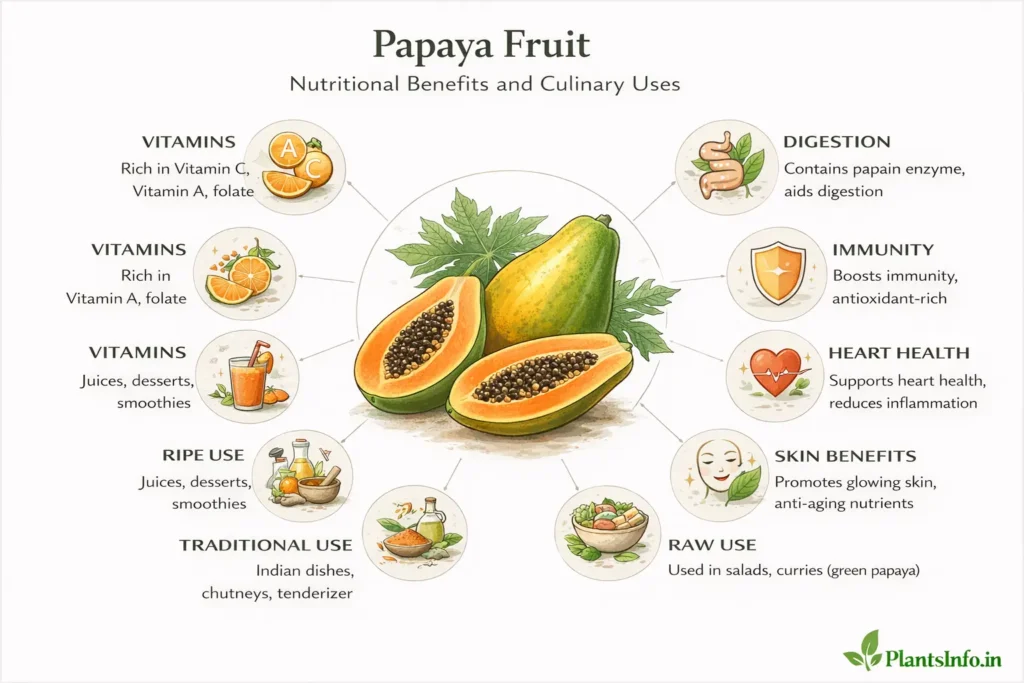
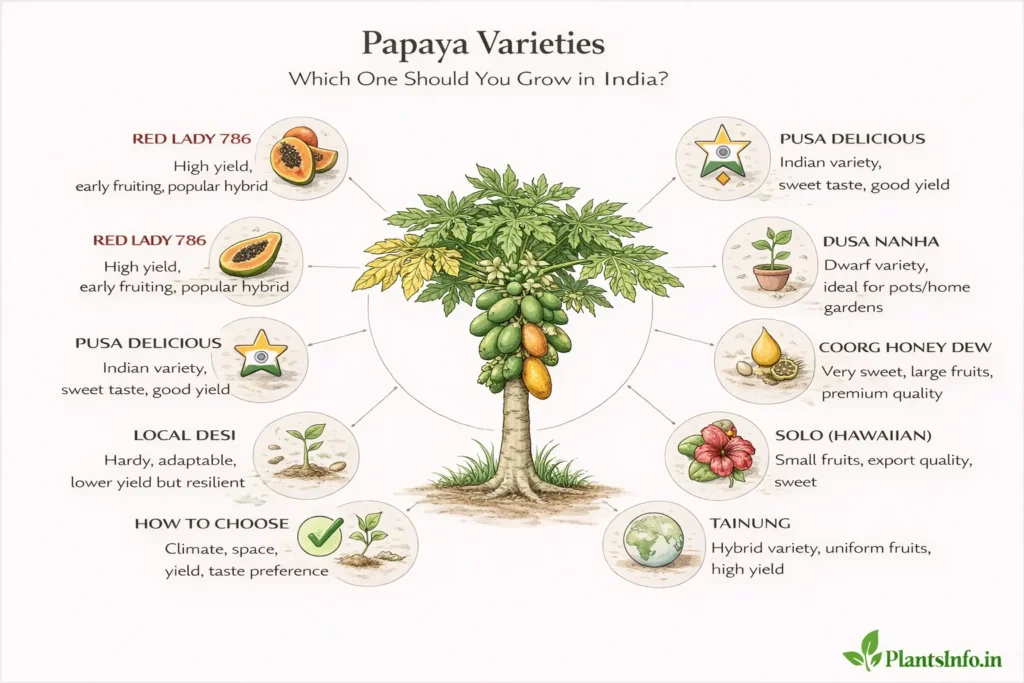
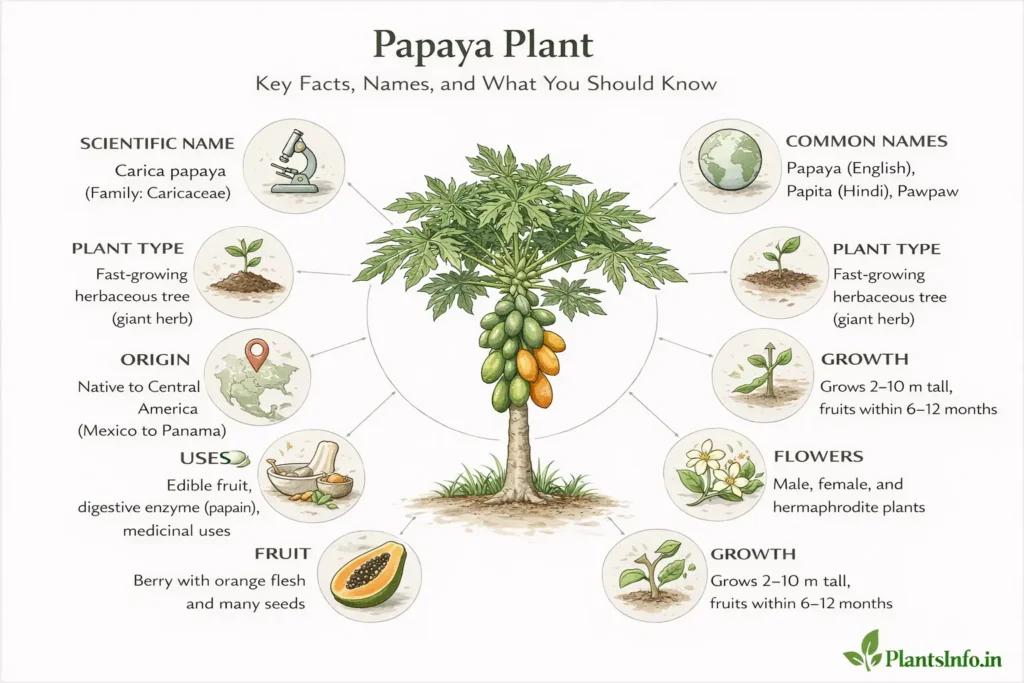
See also: Papaya Plant plant profile, common problems, its flowering season, its benefits, and its varieties.
Most Indian gardeners are surprised to learn that papaya isn’t actually a tree — it’s a giant herb with a hollow stem. This fast-growing plant rewards you with fruit in less than a year, needs minimal care once established, and thrives in the same tropical heat that stresses other crops. It’s genuinely beginner-friendly if you avoid the one common error that kills more papayas than pests and disease combined: loving it to death with too much water.
Recommended Products
Disclosure: As an Amazon Associate, PlantsInfo may earn from qualifying purchases.
🌱 Growing Essentials
The following products can help with container gardening, potting, root development, soil management, and healthy plant growth.
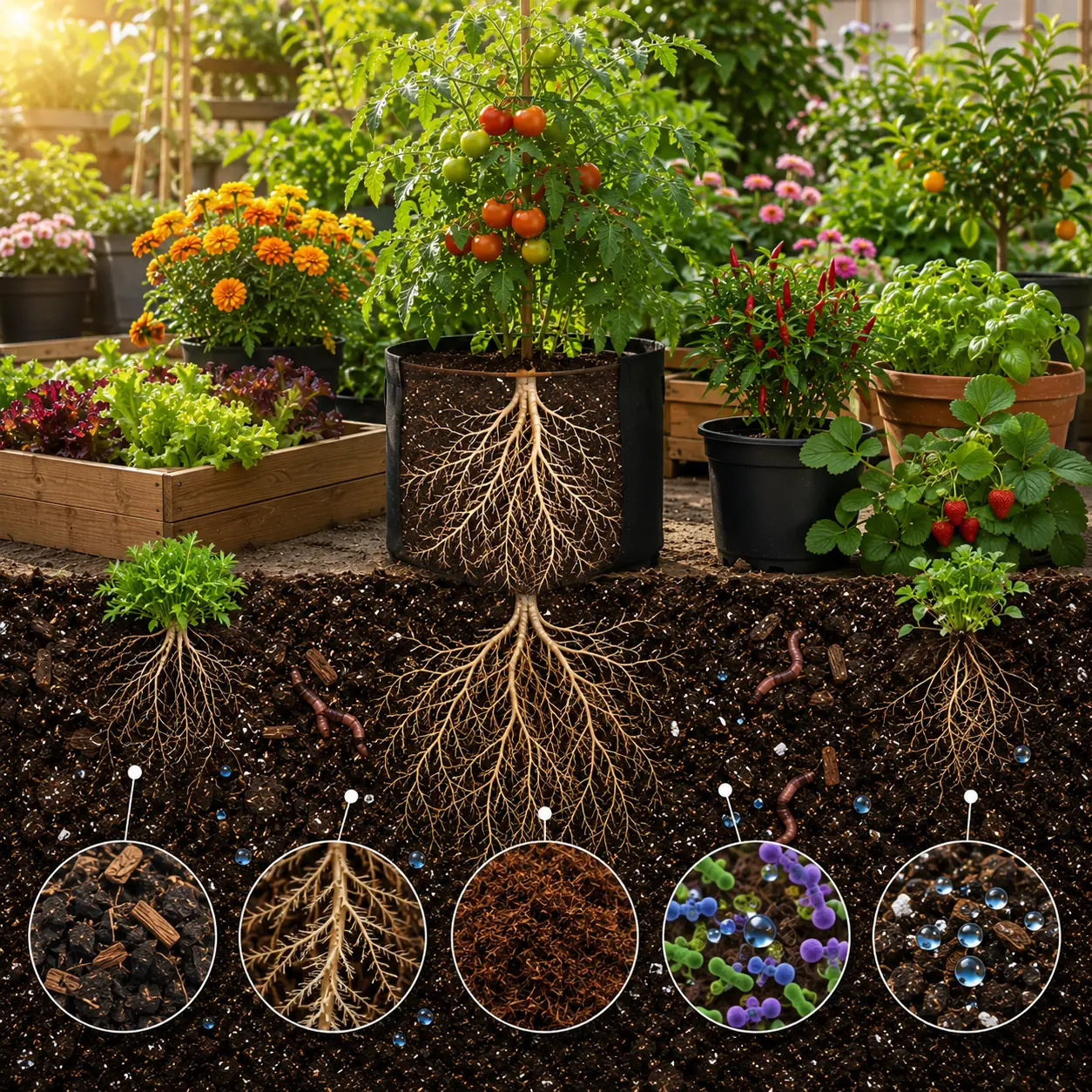
Organic Potting Soil Mix
Provides nutrients, structure, and healthy growing conditions for container plants.
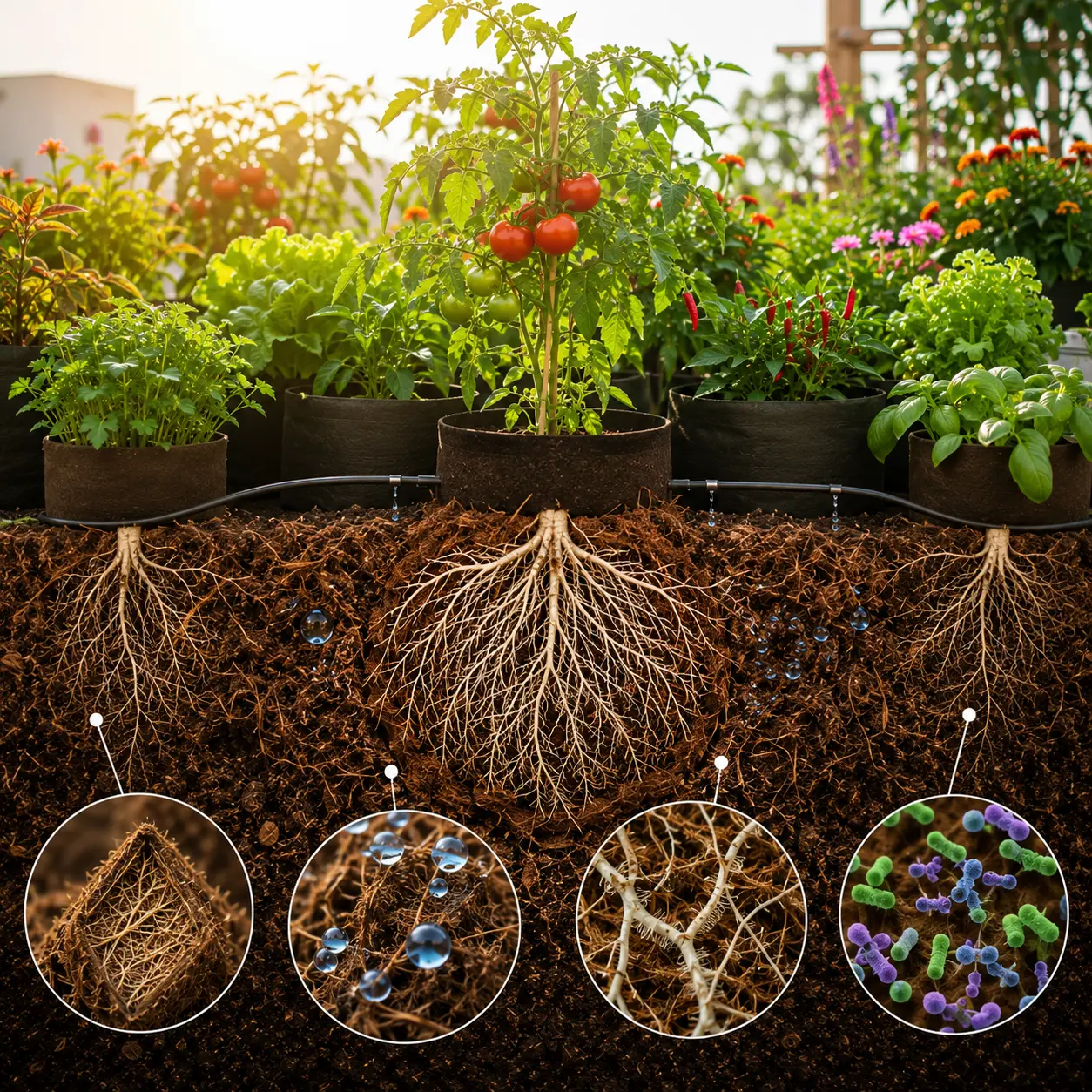
Coco Peat Growing Medium
Enhances moisture retention while maintaining excellent root-zone aeration.

Grow Bags for Plants
Improve drainage, root aeration, and vegetable production in limited spaces.

Plastic Pots for Plants
Ideal containers for seedlings, ornamentals, herbs, and balcony gardens.
Growing papaya at home gives you access to fruit varieties you’ll never find in markets, picked at perfect ripeness instead of rock-hard for transport. The plant is easy to grow in most Indian conditions.
Quick Facts
| Attribute | Detail |
|---|---|
| Common names | Papaya, Papita, Pappali, Omakka |
| Scientific name | Carica papaya |
| Varieties | Red Lady, Taiwan Red, Pusa Dwarf |
| Plant type | Herbaceous perennial (grown as annual/biennial) |
| Mature size | 2–3 metres (dwarf), 4–6 metres (tall varieties) |
| Sunlight | Full sun (6+ hours direct) |
| Water needs | Moderate; hates waterlogging |
| Best season to plant | Monsoon onset (June–July) or post-monsoon (Sept–Oct) |
| Suitable states | All states except high-altitude regions above 1,500 metres |
Choosing the Right Spot
Papaya demands full sun — at least 6 hours of direct light, ideally 8. Planted in partial shade, it grows tall and spindly, produces fewer flowers, and fruit ripens unevenly. In South India, afternoon shade during peak summer (April–May) prevents leaf scorch, but morning sun is non-negotiable.
Plant at least 2 metres away from walls, compound boundaries, or other trees. The shallow root system spreads wide but stays near the surface. Crowding against a wall restricts root spread on one side, causing the plant to lean dangerously as it grows top-heavy with fruit.
Container growing works only with dwarf varieties like Pusa Dwarf or Pusa Nanha in containers of at least 60 litres. Taller varieties become unstable in pots once they start fruiting. Ground planting is always more reliable.
Soil and Potting Mix
Papaya tolerates a wide pH range (6.0–7.0) but insists on perfect drainage. Waterlogged soil kills the plant within days through root rot. Sandy loam or red soil works best. If you have heavy clay, dig a pit 60 cm deep, fill the bottom third with broken bricks or gravel, then refill with a mix of excavated soil, sand, and compost in equal parts.
For regular garden soil, add 5 kg well-rotted cow dung or vermicompost per planting pit. Mix in a handful of neem cake to deter root-knot nematodes, which papaya attracts aggressively in some soils.
The mistake most Indian gardeners make: adding too much organic matter. Papaya likes fertility but not richness that holds water. A 2:1:1 ratio of soil to sand to compost is ideal. More compost than that, and you’re creating a sponge.
Planting — Season and Method
The best time to plant papaya is at monsoon onset (June–July) in most of India. The combination of warm soil, natural rainfall, and high humidity gives seedlings the perfect start. In South India and coastal areas with extended monsoons, post-monsoon planting (September–October) works equally well and avoids the risk of fungal issues from excessive rain.
Avoid planting during summer (March–May) — seedlings struggle in the heat — or during peak winter (December–January) in North India, where cold slows growth dramatically.
Seed vs. sapling: Seeds germinate in 10–15 days and are extremely cheap, but you won’t know the plant’s sex until it flowers at 4–5 months. Papaya is dioecious (separate male and female plants), though some varieties produce hermaphrodite flowers. Saplings from nurseries are often sold as “fruiting types,” but there’s no guarantee. The practical approach: plant 3–4 seeds per spot, thin to the strongest seedling, and accept that roughly half will be male (useful as pollinators if you plant multiple spots).
Dig a pit 45 cm wide and 45 cm deep. Plant seeds 1 cm deep, 3–4 seeds per pit spaced in a triangle. Water gently. Once seedlings reach 15 cm height (around 4 weeks), keep the strongest and remove the rest. Transplant nursery saplings at the same depth they were growing — papaya doesn’t tolerate deep planting.
Watering
For the first 4–6 weeks, water daily in the early morning if there’s no rain, keeping the soil moist but never soggy. Check by pressing your finger 5 cm into the soil — if it feels damp, skip watering that day. Overwatering at the seedling stage is the single fastest way to lose a papaya.
Mature plants need watering 2–3 times per week outside the monsoon, adjusting for your soil type. Sandy soil dries faster; water every 2 days. Clay-rich soil holds moisture longer; water twice a week. The plant will tell you if you’re overdoing it — yellowing lower leaves and a soft, darkening stem base mean root rot has started. By the time you notice, it’s often too late.
During the monsoon, stop watering entirely unless you have a prolonged dry spell. If your garden has poor drainage and water pools around the base during heavy rain, dig shallow trenches to channel water away. Papaya tolerates drought stress far better than wet feet.
In summer, increase frequency to every alternate day for young plants, every 3 days for established ones. Mulch around the base with dry leaves or coconut coir to retain moisture, but keep mulch 15 cm away from the stem — direct contact invites stem rot.
Fertiliser
Papaya is a heavy feeder and responds dramatically to regular nutrition. Apply vermicompost or well-rotted cow dung (2–3 kg per plant) every month during the growing season. Work it gently into the top 10 cm of soil in a ring 30 cm away from the stem.
For faster growth and higher yields, supplement with NPK 19:19:19 at 50 grams per plant every 6 weeks, dissolved in water and applied around the root zone (not directly against the stem). Switch to NPK 10:26:26 once flowering starts to boost fruit set — apply 75 grams per plant every month until harvest ends.
Organic alternative: fermented rice water (the starchy water left after soaking rice) applied weekly provides trace nutrients and beneficial microbes. Boil 10–12 crushed eggshells in 2 litres of water for 10 minutes, cool, and pour around the base monthly for calcium, which prevents fruit cracking.
In monsoon, reduce or skip chemical fertiliser — natural rainfall provides nitrogen through atmospheric deposition, and excess nutrients wash away anyway.
Common Problems and Fixes
Papaya ringspot virus (PRSV): Leaves develop yellow mottling, fruit shows raised rings and bumps, and growth stunts. No cure exists. Remove and destroy the plant immediately to prevent spread to others. The virus spreads through aphids. Plant resistant varieties like Pusa Dwarf or Red Lady, and spray neem oil (5 ml per litre of water) weekly as a preventive during aphid season (post-monsoon).
Powdery mildew: White powdery coating on leaves, worse in humid coastal areas during October–November. Spray a solution of 10 grams of baking soda + 2 ml liquid soap in 1 litre of water every 5 days. Improve air circulation by removing lower leaves once the plant is above 1 metre tall.
Fruit fly infestation: Small puncture marks on ripening fruit, larvae inside. Commonly misdiagnosed as “natural spoilage.” Bag individual fruits when they’re marble-sized using newspaper cones or cloth bags tied at the top — this physical barrier is more effective than sprays. Remove and bury damaged fruit immediately to break the breeding cycle.
When Will You See Results?
In the first year, expect vegetative growth for 4–5 months, then flowering. Dwarf varieties like Pusa Dwarf flower faster (3.5–4 months), while taller types like Taiwan Red take 5–6 months. The first few flowers often drop — this is normal as the plant establishes.
First fruit appears 8–10 months after planting from seed, 6–8 months from a nursery sapling. Fruit takes 4–6 months from flower to ripe, depending on the season — faster in summer, slower in winter. Peak production happens in Year 2, with each plant yielding 30–60 fruits depending on variety and care.
Papaya is a short-lived plant. Commercial productivity drops sharply after 3 years. Most home gardeners replace plants every 2–3 years, staggering new plantings so there’s always a productive tree in the garden.
Propagation
Papaya propagates easily from seed — in fact, most papayas you eat contain viable seeds. Scoop seeds from a ripe fruit, wash off the gel coating, and dry in shade for 2 days. Germination rate stays high for up to 2 years if seeds are stored in a cool, dry place.
Sow fresh seeds in small pots or directly in the ground. Germination is 70–90% for fresh seeds from hybrid varieties like Red Lady, lower (50–60%) for seeds from non-hybrid market fruit. Seedlings appear in 10–18 days, depending on temperature — faster in summer, slower in winter.
Cuttings don’t work reliably with papaya. Air layering fails. Grafting is experimentally possible but impractical for home gardeners. Stick with seeds.
Pruning and Training
Papaya naturally grows as a single unbranched stem in most varieties. Pruning isn’t necessary for fruit production. In fact, cutting the main growing tip often triggers branching, which reduces fruit quality and makes the plant structurally weak.
Remove only the lower leaves once the plant reaches 1.5 metres tall — this improves air circulation, reduces fungal disease, and makes fruit inspection easier. Use clean, sharp secateurs and cut the leaf petiole (stem) close to the main trunk without damaging the bark.
If your variety branches naturally after fruiting or damage, select the strongest 2–3 branches and remove the rest. Too many branches mean smaller fruit and a top-heavy plant prone to wind damage.
After the main harvest ends (typically after 18–24 months), some gardeners cut the stem 60–80 cm above ground to force new growth from the base. This “ratooning” can give a second crop, but fruit quality is usually inferior. Most find it easier to start fresh plants.
Container Growing
Dwarf varieties like Pusa Dwarf, Pusa Nanha, or compact Red Lady selections can fruit successfully in large containers. Use a pot with a minimum 60-litre capacity — a 45 cm diameter × 60 cm deep container works well. Anything smaller and the plant becomes rootbound within 6 months, causing premature leaf drop and poor fruiting.
Drainage holes are critical — drill at least 6 holes of 2 cm diameter in the base. Use a potting mix of equal parts garden soil, cocopeat (or compost), and river sand. Add 200 grams of neem cake and 500 grams of bone meal per pot before planting.
Container plants dry out faster than ground-planted ones. Water daily in summer, every alternate day during cooler months, checking soil moisture at 5 cm depth before each watering. Feed every 3 weeks with diluted liquid fertiliser (19:19:19 at 5 grams per litre) during the growing phase.
Repot annually during the monsoon season — gently remove the plant, trim outer roots by 5 cm, replace 30% of the old soil with a fresh mix, and replant. This becomes impractical after 2 years as the plant grows too large. Most container-grown papayas are productive for 18–24 months, then replaced.
Harvesting
Papaya fruit ripens 4–6 months after flowering. Harvest when the skin shows the first yellow blush (around 10–20% color change) for fruit that will ripen indoors over 3–5 days. Fruit left to ripen fully on the tree has the best flavor but risks bird damage and fruit fly infestation.
Cut the fruit with a sharp knife or secateurs, leaving a 2 cm stem stub. Papaya latex (milky sap) flows from the cut end — avoid skin contact as it can irritate sensitive individuals. Wear gloves or wash your hands immediately.
Handle gently — papaya bruises easily. Stack no more than 2 layers deep during transport or storage.
Store unripe fruit at room temperature (25–30°C) away from direct sunlight. Ripe fruit keeps for 3–5 days in the refrigerator. Freezing works for smoothies but ruins the texture for fresh eating. To speed ripening, place fruit in a paper bag with a ripe banana — the ethylene gas triggers faster color change.
Green papayas harvested early (before any color change) are used as a vegetable across India. These keep for a week at room temperature and up to 2 weeks refrigerated.
Seasonal Protection
Summer stress (March–May): Leaves wilt during peak afternoon heat, even with adequate soil moisture. This is normal heat stress, not a watering problem. Provide temporary afternoon shade using a shade net (40–50% density) or plant on the east side of a building. Mulch heavily to keep roots cool. Increase watering frequency but reduce quantity per watering — light, frequent irrigation prevents root zone temperature spikes.
Winter dormancy (December–January in North India): Growth slows significantly below 15°C. Fruit takes much longer to ripen — up to 8 months from flowering for fruit set in November. In Punjab, Haryana, and Uttar Pradesh, protect young plants (first year) with temporary plastic or jute windbreaks during cold waves. Established plants survive light frost (0 to -2°C) for short periods, but fruit quality suffers. Avoid fertilising from December to February — it encourages soft growth that’s frost-sensitive.
Monsoon risks (June–September): Excessive rain creates two problems: waterlogging and fungal disease. If water stands around the base for more than 2 hours after heavy rain, dig shallow drainage channels immediately. Spray Bordeaux mixture (10 grams copper sulfate + 10 grams lime in 1 litre of water) on leaves every 15 days to prevent anthracnose and black spot. Stake plants in areas with strong monsoon winds — the shallow root system makes them prone to toppling when the canopy is heavy with water.
Key Takeaways
- Papaya produces fruit within 8–10 months from seed, making it one of the fastest returns in home fruit growing.
- Overwatering kills more papayas than all pests and diseases combined — water only when the top 5 cm of soil feels dry.
- Monsoon planting (June–July) gives the best establishment in most Indian states; post-monsoon (September–October) works in high-rainfall areas.
- Harvest fruit at 10–20% yellow for indoor ripening, which avoids fruit fly damage and gives you control over when the fruit is eaten.
- Productivity peaks in Year 2 and declines sharply after Year 3 — plan to replace plants every 2–3 years for continuous harvest.
Conclusion
Papaya rewards fast and asks for little. Get the planting season right, resist the urge to overwater, and you’ll harvest your first fruit before most other trees even finish their first growth flush.