Complete Papaya Plant (Carica papaya) Guides
Problems & Diseases
Flowering Season
Introduction
Carica papaya L., commonly known as papaya, pawpaw, or papaw, belongs to the family Caricaceae and is native to southern Mexico and Central America. Few tropical fruits match its combination of rapid growth, year-round productivity, and nutritional density — a single tree can bear fruit within six to nine months of planting, making it one of the fastest-yielding fruit crops in the world.
Classification
- Plant Type
- Herb
- Lifecycle
- Perennial
- Leaf Habit
- Evergreen
- Native Region
- Central America, Mexico
- Plant Family
- Caricaceae
In its native lowland tropical ecosystems, papaya functions as an early-successional pioneer, colonising disturbed forest margins and riverbanks where its fast canopy establishment provides rapid habitat structure. Its large, nectar-rich flowers support a range of nocturnal and crepuscular pollinators, and its fleshy fruits are consumed and dispersed by a wide array of birds and mammals, embedding the species within complex frugivore networks.
Papaya is now cultivated across tropical and subtropical regions on every inhabited continent, ranking among the top ten most produced tropical fruits globally. Beyond food use, the latex-derived enzyme papain has generated a substantial industrial and pharmaceutical sector, while traditional medical systems across Asia, Africa, and Latin America attribute therapeutic properties to virtually every part of the plant. This profile covers taxonomy, morphology, physiology, phytochemistry, distribution, ecology, and climate adaptation.
Classification and Taxonomy
Accepted Name and Synonymy
| Field | Value | Notes |
|---|---|---|
| Accepted Scientific Name | Carica papaya L. | Accepted by Plants of the World Online (POWO) |
| Known Synonyms | Carica bisexualis Blanco; Carica hermaphrodita Blanco; Carica mamaya Vell.; Carica peltata Hook. & Arn.; Carica posoposa L.; Carica pyriformis Montrouz.; Papaya carica Gaertn.; Papaya vulgaris DC. | Multiple synonyms reflect early taxonomic confusion between cultivated forms |
| Taxonomic Authority Source | Plants of the World Online (POWO), Kew Gardens | Accessed 2025-08-01 |
| Assessment Date | 2025-08-01 | Based on POWO and supporting literature |
Classification Hierarchy
| Rank | Name |
|---|---|
| Kingdom | Plantae |
| Division | Tracheophyta |
| Class | Magnoliopsida |
| Order | Brassicales |
| Family | Caricaceae |
| Subfamily | Not applicable |
| Genus | Carica |
| Species | Carica papaya L. |
Quick Reference
| Field | Value | Notes |
|---|---|---|
| Common Name(s) | Papaya; Pawpaw; Papaw; Lechosa (Caribbean); Mamão (Brazil) | Regional names vary widely |
| Plant Type | Herbaceous to semi-woody perennial tree | Technically a large herb; woody only at base in mature plants |
| Lifecycle | Perennial; productive for 3–5 years commercially | Can persist longer under favourable conditions |
| Native Range | Southern Mexico and Central America | Precise centre of origin debated; likely Mexican–Guatemalan highlands |
| USDA Hardiness Zones | 10–12 | Frost-sensitive; tolerates brief exposure to 0°C (32°F) |
| Toxicity Summary | Latex contains papain and chymopapain — skin and mucous membrane irritant; unripe fruit latex potentially abortifacient at high doses; generally safe when ripe fruit consumed in normal dietary quantities | See T16 for full toxicity profile |
| IUCN Status | Not Evaluated | No formal IUCN assessment located for this species |
| Research Coverage Level | HIGH | Extensive peer-reviewed literature across agronomy, phytochemistry, and medicine |
Cytogenetics
| Field | Value | Notes |
|---|---|---|
| Chromosome Number (2n) | 2n = 18 | Consistent across cultivated and wild accessions |
| Ploidy Level | Diploid | Base chromosome number x = 9 |
| Genome Size | ~372 Mb (1C value) | One of the smaller angiosperm genomes; fully sequenced in 2008 |
| Karyotype Description | 9 pairs of chromosomes; one pair of sex chromosomes in trioecious populations | Sex determination linked to a small sex-determining region on chromosome 1 |
| Genomic Resources | Full genome sequence available (cv. ‘SunUp’) | Ming et al. (2008); reference genome deposited in NCBI |
| Notes | C. papaya exhibits an XY/XX sex determination system — one of few angiosperms with documented sex chromosomes | Y chromosome carries male-determining and hermaphrodite-suppressing loci |
Scientific Stability and Nomenclature
| Field | Value | Notes |
|---|---|---|
| Nomenclatural Stability | Stable | No reclassification events in recent decades |
| Current Accepted Authority | Carica papaya L., Sp. Pl. 2: 1036 (1753) | Linnaean original description retained |
| Major Reclassification Events | No major reclassification since original Linnaean description in 1753; early synonyms (e.g., Papaya vulgaris DC.) reflected pre-phylogenetic generic-level disagreements now resolved in favour of Carica | Genus Vasconcellea was segregated from Carica in molecular phylogenetic studies (Badillo 2000; Van der Ham et al. 2000), but C. papaya remained in Carica throughout |
Growth Habit and Architecture
| Field | Value | Notes |
|---|---|---|
| Growth Form | Single-stemmed, unbranched to sparsely branched large herb or soft-wooded tree | Branching occurs after apical damage or in some cultivars |
| Height at Maturity | 2–10 m (6.6–32.8 ft); commercially managed at 2–4 m (6.6–13.1 ft) | Tall in favourable humid conditions; kept short for harvest efficiency |
| Trunk/Stem Diameter | 10–30 cm (3.9–11.8 in) at base | Hollow, soft, pithy; not true wood |
| Bark/Stem Texture | Green to grey-green; marked with prominent leaf scars; hollow internodes | Latex-bearing canals throughout cortex |
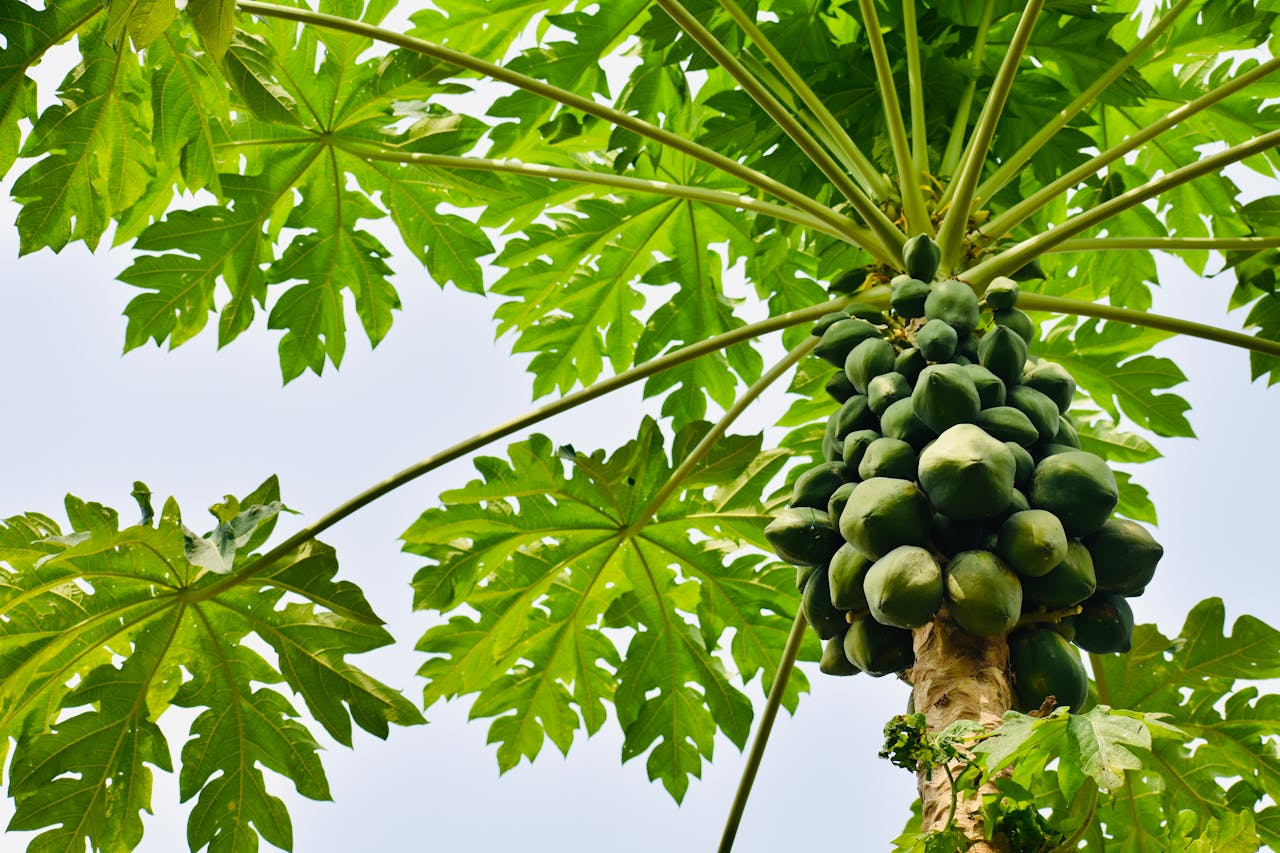
| Crown Shape | Umbrella-like rosette of large palmate leaves at apex | Leaves shed progressively from base upward as plant grows |
| Root Architecture | Shallow, spreading lateral root system with taproot in early development | Taproot lost or reduced in transplanted specimens; see T11 |
| Annual Growth Rate | 1–2 m (3.3–6.6 ft) per year under optimal tropical conditions | Growth rate declines with age and cooler temperatures |
| Latex System | Articulated laticifers throughout all green tissues; white latex exuded upon wounding | Commercially harvested from unripe fruit for papain extraction |
| Sexual Expression | Trioecious — male, female, and hermaphrodite individuals documented; hermaphrodite preferred in commercial cultivation | Sex expression can shift under environmental stress |
| Structural Lifespan | Productive for 3–5 years commercially; can survive 20+ years | Older stems become excessively tall, reducing harvest efficiency |
Leaves

| Field | Value | Notes |
|---|---|---|
| Presence | Present; persistent during active growth; shed progressively | Lower leaves shed as trunk elongates |
| Leaf Type | Simple, deeply palmate-lobed; 7–11 lobes | Large and conspicuous |
| Size (length × width) | Lamina 30–60 cm (11.8–23.6 in) diameter; petiole 30–100 cm (11.8–39.4 in) | Among the largest leaves of any fruit tree |
| Colour | Bright to dark green adaxially; paler abaxially | Yellowing indicates nutrient deficiency or senescence |
| Arrangement | Spirally alternate; clustered at stem apex | Forms a dense terminal rosette |
| Special Features | Hollow petioles; prominent white midrib and veins; latex ducts present; stomata predominantly on abaxial surface | Petiole hollowness allows flexibility under wind load |
Flowers

| Field | Value | Notes |
|---|---|---|
| Floral Type | Unisexual (male or female) or bisexual (hermaphrodite) depending on individual | Trioecious system; hermaphrodite flowers produce commercially preferred fruit |
| Corolla | 5 fused petals (sympetalous); cream to pale yellow | Male flowers tubular; female and hermaphrodite flowers broader |
| Calyx | 5 small sepals; green; fused at base | Persistent in fruit |
| Stamen Number | Male: 10 stamens in 2 whorls of 5; hermaphrodite: 10 or 5 depending on carpelloid modification | Female flowers lack functional stamens |
| Ovary | Superior; 5-carpellate; unilocular with parietal placentation | Hermaphrodite: elongate ovary producing cylindrical fruit |
| Flower Size | Male: 2–3 cm (0.8–1.2 in) long; female: 3–5 cm (1.2–2.0 in) wide; hermaphrodite: intermediate | Size varies by sex type |
| Inflorescence | Male: panicles 60–90 cm (23.6–35.4 in) long; female: solitary or few-flowered short peduncles; hermaphrodite: short cymes | Male inflorescences highly conspicuous |
| Fragrance | Faint sweet scent; stronger at night in male flowers | Consistent with hawkmoth pollination syndrome |
| Flowering Period | Near-continuous in humid tropical conditions; seasonal in subtropical cultivation | Flowering onset 3–6 months after germination |
| Pollination Vector | Primarily hawkmoths (Manduca spp.); wind pollination also documented | See T27 for full pollination ecology |
Fruit

| Field | Value | Notes |
|---|---|---|
| Fruit Type | Berry (large, fleshy, indehiscent) | Botanically a berry despite culinary treatment as melon-like fruit |
| Shape | Oblong to spherical; pyriform in some cultivars | Hermaphrodite-derived fruit typically more elongate and uniform |
| Size | 10–50 cm (3.9–19.7 in) long; 7–20 cm (2.8–7.9 in) diameter; weight 0.3–9 kg (0.7–19.8 lb) | Wide range across cultivars and growing conditions |
| Skin | Thin, smooth; green when unripe, yellow to orange-red at maturity | Skin remains firm until near full ripeness |
| Flesh Colour | Yellow, orange, or red-orange; rarely cream | Colour correlates with lycopene and β-carotene content |
| Flesh Texture | Soft, juicy, melting | Texture influenced by cultivar and harvest timing |
| Brix (°Brix) | 9–14 °Brix at commercial maturity; up to 16 °Brix in sweet cultivars | Brix varies with cultivar, irrigation, and harvest stage |
| Seeds | Numerous; black, round, encased in gelatinous sarcotesta; 50–200 per fruit | Seeds peppery; used in some cuisines and traditional medicine |
| Latex Content | High in unripe fruit; declines sharply at ripening | Latex content inversely correlated with eating quality |
| Post-Harvest Life | 1–3 weeks at 10–13°C (50–55°F); 1–3 days at ambient tropical temperature | Highly perishable; major constraint on export trade |
Seeds
| Field | Value | Notes |
|---|---|---|
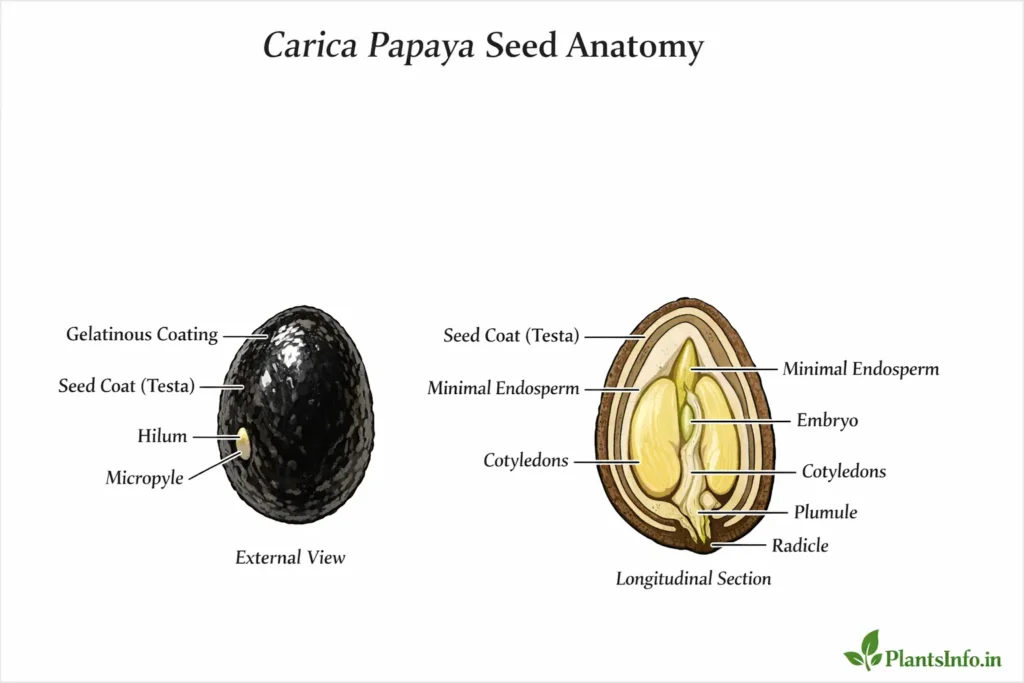
| Seed Type | Endospermic; exotesta black and wrinkled; sarcotesta (gelatinous aril) transparent to white | Sarcotesta must be removed or dried for storage |
| Seed Size | 5–8 mm (0.2–0.3 in) diameter; 50–200 seeds per fruit | Seed number varies with fruit size and pollination quality |
| Seed Viability | 70–90% germination under optimal conditions; viability declines rapidly with moisture and heat | Fresh seed germinates better than stored; sarcotesta removal improves germination rate |
| Dormancy | Shallow physiological dormancy; sarcotesta imposes physical dormancy | Sarcotesta removal or scarification recommended before sowing |
| Germination Requirements | 25–35°C (77–95°F); high humidity; light not required for germination | Germination in 10–21 days under optimal conditions |
| Storage | Orthodox seed behaviour; viable 2–3 years at 15°C (59°F) and <8% moisture content | Short-term storage feasible; long-term cryopreservation documented |
Root System
| Field | Value | Notes |
|---|---|---|
| Root Type | Taproot in seedlings; fibrous lateral system dominant in established plants | Taproot commonly lost or suppressed after transplanting |
| Rooting Depth | Lateral roots concentrated in top 30–60 cm (11.8–23.6 in) of soil | Deep roots uncommon; sensitive to waterlogging |
| Special Features | Highly sensitive to waterlogging and compaction; mycorrhizal associations documented; roots produce latex | Poor drainage is the primary abiotic cause of root rot and plant death |
Cultivars and Named Selections
| Cultivar | Key Characteristic | Brix (°Brix) | Self-Compatible | Origin / Notes |
|---|---|---|---|---|
| ‘Solo’ | Small hermaphrodite fruit (0.4–0.6 kg / 0.9–1.3 lb); consistent shape; orange-yellow flesh; standard for Hawaii export trade | 11–14 | Yes (hermaphrodite) | Developed in Hawaii, USA; most widely planted export cultivar globally |
| ‘Sunrise Solo’ | Red-orange flesh; higher lycopene content than ‘Solo’; sweeter flavour profile | 12–14 | Yes (hermaphrodite) | Hawaii, USA; recommended for fresh market |
| ‘Sunset Solo’ | Orange flesh; slightly smaller fruit than ‘Sunrise Solo’; firmer flesh for transport | 11–13 | Yes (hermaphrodite) | Hawaii, USA; developed from ‘Solo’ selections |
| ‘Tainung No. 2’ | Large hermaphrodite fruit; high yield; widely adapted to subtropical conditions | 12–15 | Yes (hermaphrodite) | Taiwan; dominant cultivar in Asian markets |
| ‘Maradol’ | Very large fruit (2–3 kg / 4.4–6.6 lb); red flesh; high commercial yield; tolerates cooler subtropical conditions | 9–12 | Yes (hermaphrodite) | Cuba/Mexico; dominant in Latin American and US Hispanic markets |
| ‘Red Lady’ | Vigorous; tolerant of papaya ringspot virus; red-orange flesh; medium fruit size | 11–14 | Yes (hermaphrodite) | Taiwan; widely adopted in Southeast Asia and South Asia |
| ‘Eksotika’ | High sweetness; orange flesh; medium size; adapted to Malaysian conditions | 13–16 | Yes (hermaphrodite) | Malaysia; major cultivar in Southeast Asian markets |
| ‘Waimanalo’ | Medium fruit; yellow flesh; high papain yield in unripe fruit; good shelf life | 10–13 | Yes (hermaphrodite) | Hawaii, USA; selected for dual food/papain use |
| ‘Kapoho’ | Small, round to oval fruit; yellow flesh; rich flavour; susceptible to ringspot virus | 11–13 | Yes (hermaphrodite) | Hawaii, USA; largely displaced by transgenic ‘Rainbow’ after ringspot virus devastation |
| ‘Rainbow’ | Transgenic ringspot virus-resistant; derived from ‘Sunset Solo’; restored Hawaiian papaya industry after 1990s virus epidemic | 11–13 | Yes (hermaphrodite) | Hawaii, USA; first commercially approved transgenic fruit crop in USA; not accepted in EU or Japan markets |
More than 10 formally named cultivars are documented in available literature. The 10 most commercially significant are listed above.
Functional Traits
| Trait | Description | Adaptive Significance |
|---|---|---|
| Rapid Juvenile Growth | Stem elongation at 1–2 m (3.3–6.6 ft) per year driven by continuous apical meristem activity and large pith-filled internodes that require minimal structural carbon investment | Allows canopy establishment and fruit production within 6–9 months, outcompeting slower-establishing competitors in disturbed habitats |
| Laticifers and Papain Production | Articulated laticifers throughout all green tissues produce white latex containing cysteine proteases (papain, chymopapain); proteolytic activity degrades insect digestive proteins on contact | Deters generalist herbivores; unripe fruit latex concentrations (up to 2% fresh weight papain) decline sharply at ripening to facilitate legitimate seed dispersal |
| Trioecious Sex Expression | Three sexual morphs (male, female, hermaphrodite) determined by an XY chromosomal system; sex ratio in wild populations approximately 1:1:1 | Hermaphrodites provide reproductive assurance and are preferred by pollinators due to nectar and pollen availability; environmental stress can cause sex reversal, maintaining reproductive flexibility |
| Continuous Flowering and Fruiting | Axillary flower buds produced continuously at the growing apex under tropical conditions; fruit maturation staggered over 5–8 months from anthesis | Extends pollinator and frugivore visitation windows; reduces synchronous fruiting-related resource competition |
| Shallow Root Architecture | Laterally spreading fibrous root system in upper 30–60 cm (11.8–23.6 in) exploits surface nutrient and moisture fluxes efficiently but confers waterlogging sensitivity | Adapted to well-drained, frequently disturbed alluvial soils of native range; enables rapid nutrient uptake in high-turnover tropical soils |
| High Transpiration and Stomatal Conductance | C3 photosynthesis with high stomatal conductance rates; diurnal stomatal opening tracks vapour pressure deficit closely | Supports high photosynthetic rates and rapid growth under humid conditions; imposes strict water requirement and sensitivity to drought |
| Large Palmate Leaves with Hollow Petioles | Leaf area up to 0.3 m² (3.2 ft²) per leaf; hollow petioles act as flexible cantilevers, reducing wind-induced stem torque | Maximises light interception at apex; wind flexibility reduces mechanical damage in exposed or disturbed sites |
| Fruit Colour Change at Ripening | Chlorophyll degradation and carotenoid (lycopene, β-carotene) accumulation cause dramatic green-to-yellow/orange colour shift coinciding with latex decline and sugar accumulation | Visual signal to frugivores that fruit is ripe and palatable; coordinates dispersal with seed maturity |
| Sex Chromosome System | One pair of differentiated sex chromosomes (X and Y) in a largely diploid genome of ~372 Mb; Y chromosome suppresses hermaphrodite and female development | One of the few known angiosperm sex chromosome systems; enables stable sex determination while retaining hermaphrodite morph via Y-chromosome variants |
Phytochemistry
| Compound Class | Representative Compounds | Concentration / Range | Plant Part | Source |
|---|---|---|---|---|
| Carotenoids | β-Carotene; lycopene; β-cryptoxanthin; lutein; zeaxanthin | β-carotene 274–2,097 µg/100g fresh weight in ripe flesh; lycopene up to 4,280 µg/100g in red-fleshed cultivars | Ripe fruit flesh, skin | Schweiggert et al. (2011); USDA FoodData Central |
| Cysteine Proteases | Papain; chymopapain; caricain (papaya protease III); glycyl endopeptidase | Papain 0.5–2.0% of fresh latex weight in unripe fruit; chymopapain 0.2–1.0% | Latex of unripe fruit, leaves | Azarkan et al. (2003); Broadhurst & Jones (1974) |
| Benzyl Isothiocyanates | Benzyl isothiocyanate (BITC); benzyl glucosinolate (glucotropaeolin, the precursor) | BITC reported at 0.1–1.0 mg/g in seed; glucotropaeolin up to 47 µmol/g dry weight in seeds | Seeds, leaves, roots | Fahey et al. (1997); Nakamura et al. (2007) |
| Flavonoids | Kaempferol; quercetin; myricetin; rutin; kaempferol-3-rutinoside | Rutin 0.1–1.2 mg/g dry weight in leaves; quercetin glycosides present in fruit skin | Leaves, fruit skin, flowers | Canini et al. (2007); Halim et al. (2011) |
| Alkaloids | Carpaine; pseudocarpaine; dehydrocarpaine I and II | Carpaine 0.01–0.1% dry weight in leaves; trace levels in seeds | Leaves, seeds, bark | Burdock (2010); Eno et al. (2000) |
| Tocopherols | α-Tocopherol (vitamin E) | 0.3–0.73 mg/100g fresh weight in ripe flesh | Ripe fruit flesh | USDA FoodData Central; Schweiggert et al. (2011) |
| Phenolic Acids | Chlorogenic acid; caffeic acid; ferulic acid; p-coumaric acid | Chlorogenic acid 0.15–0.45 mg/g dry weight in leaves | Leaves, fruit | Canini et al. (2007) |
| Terpenoids | Linalool; benzyl alcohol; (E)-β-ocimene; terpinolene; geraniol | Linalool dominant volatile in ripe fruit aroma profile | Ripe fruit flesh, peel | Almela et al. (2006); Pino et al. (2003) |
Phytochemical Organ Distribution
| Organ | Compound Class | Representative Compounds | Concentration / Notes | Source |
|---|---|---|---|---|
| Ripe fruit flesh | Carotenoids | β-Carotene; lycopene; β-cryptoxanthin | β-carotene 274–2,097 µg/100g; lycopene up to 4,280 µg/100g (red cultivars) | Schweiggert et al. (2011) |
| Ripe fruit flesh | Tocopherols | α-Tocopherol | 0.3–0.73 mg/100g fresh weight | USDA FoodData Central |
| Ripe fruit flesh | Terpenoids (volatiles) | Linalool; benzyl alcohol; (E)-β-ocimene | Linalool dominant aroma compound | Pino et al. (2003) |
| Unripe fruit latex | Cysteine proteases | Papain; chymopapain; caricain; glycyl endopeptidase | Papain 0.5–2.0% fresh latex weight; chymopapain 0.2–1.0% | Azarkan et al. (2003) |
| Seeds | Benzyl isothiocyanates | Benzyl isothiocyanate; glucotropaeolin | BITC 0.1–1.0 mg/g; glucotropaeolin up to 47 µmol/g dry weight | Fahey et al. (1997) |
| Seeds | Alkaloids | Carpaine; pseudocarpaine | Trace concentrations; lower than in leaves | Burdock (2010) |
| Leaves | Alkaloids | Carpaine; dehydrocarpaine I and II | 0.01–0.1% dry weight | Eno et al. (2000) |
| Leaves | Flavonoids | Kaempferol; quercetin; rutin; kaempferol-3-rutinoside | Rutin 0.1–1.2 mg/g dry weight | Canini et al. (2007) |
| Leaves | Phenolic acids | Chlorogenic acid; caffeic acid; ferulic acid | Chlorogenic acid 0.15–0.45 mg/g dry weight | Canini et al. (2007) |
| Leaves | Cysteine proteases | Papain (lower activity than latex) | Lower than in fruit latex; not quantified at species level | Azarkan et al. (2003) |
| Fruit skin | Flavonoids | Quercetin glycosides; kaempferol derivatives | Higher concentration than in flesh | Halim et al. (2011) |
| Bark / roots | Alkaloids | Carpaine; pseudocarpaine | Not quantified at species level — genus-level data available | Burdock (2010) |
Nutritional Composition
| Nutrient | Value per 100g | Notes | Source |
|---|---|---|---|
| Energy | 43 kcal (180 kJ) | Raw ripe fruit | USDA FoodData Central (FDC ID 169926) |
| Water | 88.1 g | High moisture content | USDA FoodData Central |
| Carbohydrates | 10.8 g | Primarily simple sugars (fructose, glucose, sucrose) | USDA FoodData Central |
| Total Sugars | 7.8 g | Fructose dominant in ripe fruit | USDA FoodData Central |
| Dietary Fibre | 1.7 g | Soluble and insoluble fractions | USDA FoodData Central |
| Protein | 0.5 g | Low; papain contributes proteolytic activity | USDA FoodData Central |
| Total Fat | 0.3 g | Predominantly unsaturated | USDA FoodData Central |
| Vitamin C (Ascorbic acid) | 60.9 mg (68% DV) | Ripe fruit; significant source; higher in unripe fruit | USDA FoodData Central |
| Folate (B9) | 37 µg (9% DV) | Important for populations relying on papaya as staple | USDA FoodData Central |
| Vitamin A (RAE) | 47 µg (5% DV) | From β-carotene; red-fleshed cultivars significantly higher | USDA FoodData Central |
| Potassium | 182 mg (4% DV) | Notable mineral content relative to caloric density | USDA FoodData Central |
| Calcium | 20 mg (2% DV) | Moderate | USDA FoodData Central |
Toxicity and Safety
| Subject | Toxic Compounds | Clinical Effects | Source |
|---|---|---|---|
| Humans | Papain; chymopapain (latex of unripe fruit); carpaine (leaves, seeds); benzyl isothiocyanate (seeds) | Latex: contact dermatitis, mucous membrane irritation, occupational asthma (papain hypersensitivity documented in food processing workers); carpaine: bradycardic effects at high doses (animal studies); BITC: cytotoxic at high concentrations; unripe fruit latex: reported abortifacient in ethnobotanical literature — not confirmed in controlled human trials; ripe fruit flesh: generally regarded as safe at normal dietary intake | Azarkan et al. (2003); Eno et al. (2000); Blanco et al. (1997); Fahey et al. (1997) |
| Cats | Papain (latex); benzyl isothiocyanate | Gastrointestinal irritation, vomiting; latex contact may cause oral and oesophageal irritation; ripe fruit flesh not documented as acutely toxic but not a recommended dietary item | ASPCA Animal Poison Control Center. (2023). Toxic and non-toxic plants: Carica papaya. Retrieved from https://www.aspca.org/pet-care/animal-poison-control (Accessed: 2026-04-10). |
| Dogs | Papain (latex); benzyl isothiocyanate | Similar to cats: gastrointestinal irritation with latex or seed ingestion; small quantities of ripe fruit generally tolerated; large quantities may cause diarrhoea. | ASPCA Animal Poison Control Center. (2023). Toxic and non-toxic plants: Carica papaya. Retrieved from https://www.aspca.org/pet-care/animal-poison-control (Accessed: 2026-04-10). |
| Livestock | Carpaine (leaves, especially dried); latex proteins | Dried papaya leaves fed in excess reported to cause bradycardia and hypotension in cattle and goats (carpaine mechanism); green papaya fed as livestock fodder is widely practised in Asia and Africa without acute toxicity at moderate levels; papain in fresh latex may irritate oral mucosa | Eno et al. (2000); FAO Feedipedia database |
Native Range and Distribution
| Field | Value | Notes |
|---|---|---|
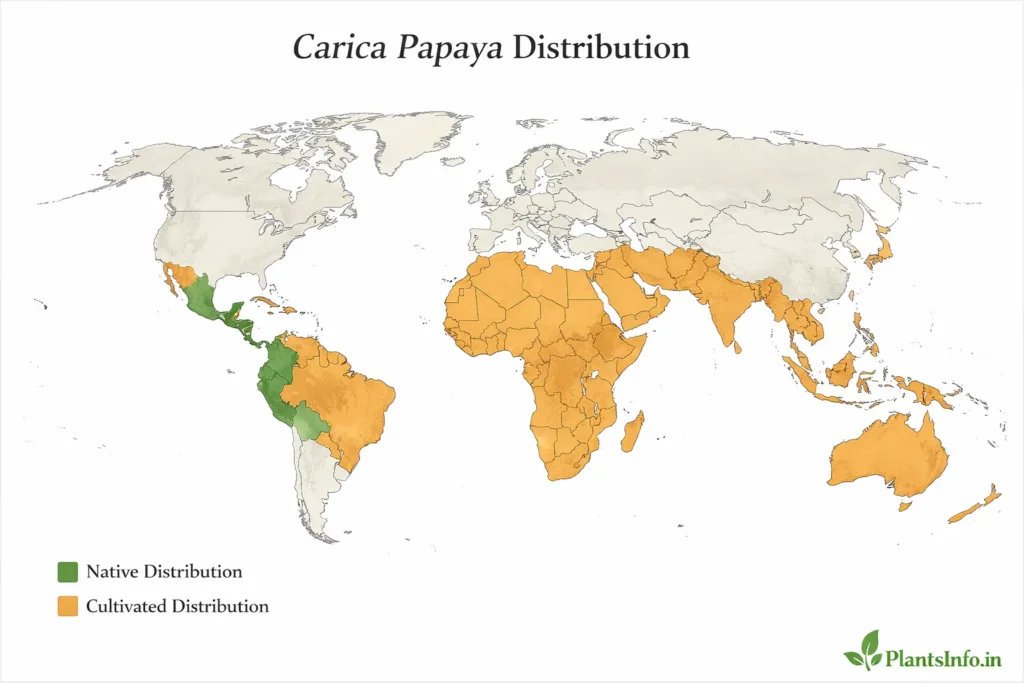
| Native Countries | Mexico (southern); Guatemala; Belize; Honduras; El Salvador; Nicaragua; Costa Rica; Panama | Centre of origin debated — molecular evidence supports southern Mexico and Guatemala as primary centre |
| Native Biomes | Tropical moist broadleaf forest margins; tropical dry forest clearings; lowland riverbanks and disturbed alluvial flats | Pioneer species of disturbed and edge habitats; not shade-tolerant |
| Elevation Range (Native) | 0–1,500 m (0–4,921 ft) above sea level | Optimal below 600 m (1,969 ft); growth slows above 1,000 m (3,281 ft) |
| Naturalised Range | Pantropical and subtropical; naturalised in Florida (USA), Caribbean islands, West Africa, East Africa, South Asia, Southeast Asia, Pacific Islands, northern Australia | Widely naturalised; sometimes weedy along roadsides and disturbed land in humid tropics |
| Native Vegetation Associations | Secondary forest edges; riparian corridors; coastal lowland forest margins | Not a climax forest species; dependent on canopy gaps and disturbance |
Global Cultivation and Naturalization
| Region | Cultivation Status | Major Producing Countries | Notes |
|---|---|---|---|
| Latin America and Caribbean | Cultivated and naturalised | Brazil (world’s largest producer); Mexico; Dominican Republic; Colombia; Peru | Brazil accounts for approximately 20–25% of global production; Dominican Republic dominant export supplier |
| South and Southeast Asia | Extensively cultivated and naturalised | India (second largest producer); Indonesia; Thailand; Philippines; Malaysia; Bangladesh | India produces predominantly for domestic consumption; Southeast Asia supplies regional and export markets |
| East Asia | Cultivated (subtropical zones) | China (Guangdong, Hainan, Yunnan); Taiwan | Taiwan important for cultivar development (‘Tainung’, ‘Red Lady’) |
| Africa | Cultivated and naturalised | Nigeria; Ethiopia; Democratic Republic of Congo; Tanzania; Kenya | Significant nutritional role in sub-Saharan Africa; rapid expansion since 1990s |
| Pacific and Oceania | Cultivated and naturalised | Hawaii (USA); Papua New Guinea; Fiji; Solomon Islands | Hawaii significant for premium export market and transgenic cultivar development |
| Middle East and North Africa | Cultivated (limited) | Egypt; Israel; Jordan | Restricted to irrigated subtropical zones |
| Europe | Not commercially cultivated outdoors | Canary Islands (Spain) — limited subtropical cultivation | Greenhouse production experimental only on European mainland |
Natural Habitat
| Field | Value | Notes |
|---|---|---|
| Habitat Type | Tropical and subtropical moist forest edges; secondary growth; disturbed lowland habitats | Pioneer; avoids dense closed-canopy forest |
| Soil Associations | Deep, well-drained alluvial and volcanic soils; loams and sandy loams; pH 5.5–7.0 | Intolerant of heavy clay or waterlogged profiles |
| Canopy Position | Full sun to light partial shade; canopy emergent in disturbed edges | Strongly heliophytic; growth suppressed below 50% full sun |
| Water Regime | Seasonally moist to humid; 1,500–2,500 mm (59–98 in) annual rainfall in native range | Periodic dry seasons tolerated if soils retain moisture |
| Associated Flora | Cecropia spp.; Heliconia spp.; Inga spp.; various Musaceae in disturbed forest margins | Early-successional community dominants in native range |
| Microhabitat Preferences | Riverbanks; forest clearings; roadsides; old field margins; alluvial deposits | Seed dispersal by frugivores deposits seeds preferentially in disturbed microsites |
Ecological Role
| Field | Value | Notes |
|---|---|---|
| Trophic Role | Primary producer; frugivore food source; nectar and pollen resource | Supports frugivores, pollinators, and granivores across native and introduced ranges |
| Keystone Interactions | Fleshy fruit consumed by birds (Turdus spp., Ramphastidae), bats (Artibeus spp., Carollia spp.), and large terrestrial mammals; seeds dispersed via endozoochory | Frugivore community documented in native Central American range; interactions less documented in introduced range |
| Ecosystem Function | Early-successional gap filler; rapid canopy cover in disturbed habitats; supports frugivore-seed disperser networks during early forest regeneration | Leaf litter contributes to soil organic matter in high-turnover tropical soils |
Invasive Status
| Field | Value | Notes |
|---|---|---|
| Invasive Status | Naturalised in many tropical regions; not formally listed as a major invasive species in most jurisdictions | Weedy in disturbed habitats; rarely displaces native vegetation aggressively |
| Jurisdictions with Concern | Hawaii (USA) — naturalised but managed; Pacific Islands — occasional weed of disturbed areas | No national or IUCN invasive species listing has been identified in the current literature |
| Invasive Mechanism | Prolific seed production; rapid growth; dispersal by frugivores | Pioneer strategy enables rapid colonisation of disturbed land |
| Management | No formal eradication programme identified | Managed as a crop escapee rather than invasive in most regions |
Optimal Climate Parameters
| Parameter | Optimal Range | Tolerance Range | Notes |
|---|---|---|---|
| Mean Annual Temp | 21–33°C (69.8–91.4°F) | 15–40°C (59–104°F) | Below 15°C (59°F) growth significantly reduced; above 40°C (104°F) flower and fruit drop increases |
| Daytime Temp | 25–35°C (77–95°F) | 18–42°C (64.4–107.6°F) | High daytime temperatures with adequate moisture support rapid fruit development |
| Nighttime Temp | 18–24°C (64.4–75.2°F) | 10–28°C (50–82.4°F) | Temperatures below 12°C (53.6°F) cause chilling injury and fruit deformation; frost at or below 0°C (32°F) kills above-ground tissue |
| Annual Rainfall | 1,500–2,500 mm (59–98 in) | 900–4,000 mm (35.4–157.5 in) with irrigation supplementation | Even distribution preferred; drought during fruit development reduces fruit size and Brix; waterlogging even briefly causes root rot |
| Dry Season Length | Up to 3 months tolerated with irrigation | Up to 5 months with supplementary irrigation | Extended dry season without irrigation causes premature ripening and reduced yield |
| Relative Humidity | 60–80% | 40–90% | Very high humidity (>90%) increases fungal disease pressure; low humidity increases water stress |
| Solar Radiation | 5–7 kWh/m²/day (full sun) | 3.5–8 kWh/m²/day | Strong sunlight required for optimal fruit colour development and sugar accumulation; shading reduces Brix significantly |
Stress Tolerance Profile
| Stress Type | Tolerance Level | Physiological Response | Notes |
|---|---|---|---|
| Drought | Low–Moderate | Stomatal closure reduces photosynthesis; leaf wilting and shedding; fruit development arrested; premature ripening induced | Brief drought (2–4 weeks) tolerated if soil moisture retained at depth; prolonged drought causes yield loss and plant death |
| Heat | Moderate | Above 38°C (100.4°F): pollen viability reduced; flower and fruit drop increases; photosynthetic efficiency declines | Night temperatures above 28°C (82.4°F) increase respiratory carbon loss, reducing net growth |
| Cold/Frost | Very Low | Chilling injury below 12°C (53.6°F): fruit pitting, latex discolouration, reduced germination; frost at 0°C (32°F) kills all aerial tissue; roots may survive brief frost | One of the most cold-sensitive of major tropical fruit crops |
| Salinity | Low | Leaf tip burn; growth reduction; ion toxicity at moderate salinity; threshold EC approximately 1.5 dS/m | Salinity reduces water uptake osmotically; chloride accumulation toxic to leaves |
| Waterlogging | Very Low | Root hypoxia within 24–48 hours; Phytophthora root rot infection accelerated; stem base blackening; rapid plant death in standing water | Considered the most critical abiotic stress limiting cultivation in humid tropics |
| Air Pollution | Low–Moderate | Ozone sensitivity documented; SO₂ causes leaf chlorosis; particulate deposition reduces photosynthetic efficiency | Not a primary cultivation constraint; urban peri-agriculture affected |
| Wind | Low | Shallow root system offers poor anchorage; stem fracture and leaf tearing at wind speeds >60 km/h (37 mph); salt-laden coastal winds cause leaf burn | Windbreaks recommended in exposed cultivation sites; typhoon damage documented across Southeast Asian and Pacific growing regions |
| Soil Compaction | Low | Compacted soil reduces lateral root penetration and aeration; root rot risk increases; nutrient uptake impaired | Deep tillage before planting recommended; raised beds used in heavy-soil areas |
Structural and Physiological Adaptations
| Adaptation | Description | Selective Context |
|---|---|---|
| Hollow Stem Architecture | Pith-filled, hollow internodes provide structural support with minimal carbon investment; stem flexes under wind load rather than fracturing | Enables extremely rapid height gain in competitive light environments without the metabolic cost of dense woody tissue |
| Continuous Meristematic Activity | Persistent apical meristem produces new leaves, flower buds, and internodes simultaneously without seasonal pause under equatorial conditions | Extends reproductive output across the year, maximising frugivore visitation and seed dispersal opportunities in stable tropical environments |
| Latex Defence System | Articulated laticifers throughout all green tissue volumes release papain-rich white latex within seconds of wounding; proteolytic activity degrades insect salivary and digestive proteins; latex viscosity impedes mandibular movement | Constitutive defence particularly effective against soft-bodied chewing insects and larvae; selectivity reduced at ripening allows legitimate frugivore dispersal |
| Carotenoid Accumulation in Fruit | Plastid differentiation from chloroplasts to chromoplasts in ripening flesh drives β-carotene and lycopene accumulation; simultaneous chlorophyll degradation produces visible colour change | Colour change acts as a reliable honest signal to frugivores that seeds are mature and flesh is nutritionally rewarding; coincides with latex reduction |
| Trioecious Reproductive Flexibility | Environmental stress (high temperature, drought, short photoperiod) can trigger sex reversal from hermaphrodite to male or carpelloid modification; reverse transitions documented after stress alleviation | Maintains reproductive output under fluctuating conditions; sex lability rare among angiosperms and represents a derived state in Caricaceae |
Climate Change Vulnerability
| Field | Value | Notes |
|---|---|---|
| Primary Climate Sensitivity Factors | Temperature extremes (chilling and heat); rainfall distribution and dry season length; increased storm frequency and wind events | Narrow thermal window and waterlogging sensitivity make papaya particularly exposed to climate variability |
| Key Threatening Climate Processes | Increased frequency of below-12°C (53.6°F) cold events in subtropical cultivation zones; extended drought periods in semi-arid production areas; intensified tropical cyclones; increased humidity favouring fungal pathogens; sea-level rise affecting coastal cultivation in Pacific and Caribbean | Combination of thermal, moisture, and biotic stressors represents compound risk |
| Resilience Factors | Short generation time (6–9 months to fruit) allows rapid replanting after climate events; broad cultivar diversity provides adaptive germplasm; transgenic and conventional breeding programmes ongoing for virus and stress resistance | High reproductive rate mitigates some climate risk compared to perennial tree crops with multi-year establishment periods |
| Confidence Level | Moderate | Species-specific climate modelling data limited; most projections extrapolated from general tropical fruit crop models; papaya-specific phenological shift data sparse |
Phenological Calendar
| Event | Native Range Timing | Cultivated Range Timing | Environmental Triggers |
|---|---|---|---|
| Vegetative Growth Onset | Year-round under equatorial conditions; peak March–May and September–November | Onset after last frost risk in subtropical zones; March–April in Northern Hemisphere subtropics | Temperature above 18°C (64.4°F); adequate soil moisture; long photoperiod not required |
| Flower Bud Initiation | 3–5 months after germination; continuous thereafter | 3–6 months after planting; continuous in humid tropics; seasonal in subtropics | Warm temperatures; adequate nutrition, especially nitrogen and potassium |
| Anthesis/Peak Flowering | Continuous in equatorial native range; no defined peak season | Peak flowering spring–summer in subtropical cultivation (April–August Northern Hemisphere) | Temperature 22–32°C (71.6–89.6°F); humidity 60–80%; pollinator activity |
| Fruit Development | 5–8 months from anthesis to maturity | 5–9 months; extended at cooler subtropical temperatures | Consistent temperature, irrigation, and nutrition during cell division phase (first 6–8 weeks post-anthesis) |
| Fruit Maturation | Continuous in equatorial conditions; year-round staggered | Seasonal peak in summer–autumn in subtropics | Temperature accumulation (heat units); colour change from green to yellow-orange is primary maturity indicator |
| Seed Dispersal | Year-round; dispersal by frugivores immediately upon fruit drop or animal feeding | Not applicable in most managed cultivation; seeds saved or discarded during processing | Frugivore activity; fruit softening releases seeds; sarcotesta attractive to dispersers |
| Dormancy/Rest Period | No true dormancy in equatorial native range | Partial dormancy or growth slowdown in subtropics during winter months below 18°C (64.4°F) | Low temperature; short photoperiod; reduced soil moisture |
Pollination Ecology
| Field | Value | Notes |
|---|---|---|
| Primary Pollinators | Hawkmoths: Manduca spp. (Sphingidae); particularly Manduca sexta and related species in native Central American range | Nocturnal and crepuscular flight behaviour aligns with male papaya flower peak nectar production at dusk; genus-level data confirmed for native range |
| Secondary Pollinators | Honeybees (Apis mellifera) and native bees (Trigona spp., Xylocopa spp.) in cultivated range; wind pollination contributes in exposed plantation conditions | Secondary pollinator importance increases in regions without native hawkmoth fauna |
| Pollination Syndrome | Sphingophily (hawkmoth pollination) in native range; generalised entomophily in cultivated range | Pale cream-yellow flowers; nocturnal fragrance; tubular male flower corolla consistent with sphingophily |
| Floral Mechanism | Male flowers produce nectar at the base of long corolla tubes (2–3 cm / 0.8–1.2 in) accessible primarily to long-tongued nocturnal Lepidoptera; fragrance emission peaks at dusk, directing hawkmoths to flowers; pollen deposited on proboscis during feeding; female and hermaphrodite flowers offer less restricted nectar access, attracting broader visitor guild | Corolla tube length acts as a mechanical filter selecting for pollinators with matching tongue length |
| Reproductive System | Trioecious; XY chromosomal sex determination; hermaphrodite morph most common in cultivated populations; self-compatibility in hermaphrodites allows commercial cultivation without pollinators | Open-pollinated plantations still benefit from insect activity for fruit set uniformity |
| Seed Dispersal Agent | Primary: frugivorous bats (Artibeus jamaicensis, Carollia perspicillata) in native Central American range; secondary: birds (Turdus spp., Ramphastidae); tertiary: large terrestrial mammals (peccaries, tapirs) | Endozoochory dominant; sarcotesta gelatinous coating facilitates gut passage; species-level data confirmed for bat dispersers in native range |
| Pollination Success Rate | 70–95% fruit set in hermaphrodite-only plantations under good conditions; reduced to 40–60% in cool or rainy conditions that suppress pollinator activity | Commercial plantations manage pollinator access; some hand-pollination practised for seed production |
| Human Intervention | Selection for hermaphrodite-dominant populations eliminates pollinator dependency for commercial fruit set; hand-pollination used in breeding programmes; insecticide management in plantations affects non-target pollinators | Transgenic ‘Rainbow’ cultivation in Hawaii does not alter pollination requirements |
Seed Biology and Germination
| Field | Value | Notes |
|---|---|---|
| Seed Type | Endospermic angiosperm seed; testa black and ridged; white to transparent gelatinous sarcotesta (aril) | Sarcotesta contains glucosinolates and may inhibit germination if not removed |
| Seed Size | 5–8 mm (0.2–0.3 in) diameter; approximately 50–200 seeds per fruit | Seed number varies with fruit size and pollination completeness |
| Dormancy Type | Shallow physiological dormancy; sarcotesta imposes physical/chemical dormancy | Dormancy overcome by sarcotesta removal, brief drying, or scarification |
| Germination Rate | 70–90% under optimal conditions; commercial seed lots typically 80–85% | Rate declines rapidly with storage; fresh seed preferred |
| Germination Temperature | Optimal 25–35°C (77–95°F); inhibited below 18°C (64.4°F) | Temperature is the primary germination control factor |
| Time to Germination | 10–21 days after sowing at optimal temperature | Longer periods at suboptimal temperatures |
| Light Requirement | Not required for germination; seedlings strongly phototropic | Sow in well-lit nursery conditions for uniform seedling development |
| Seed Longevity | Short-lived under ambient tropical conditions (3–6 months); 2–3 years at 15°C (59°F) and <8% moisture; orthodox seed behaviour confirmed | Cryopreservation at −196°C (−320.8°F) documented for long-term gene bank storage |
Vegetative Reproduction
| Field | Value | Notes |
|---|---|---|
| Vegetative Regeneration Capacity | Low under natural conditions; adventitious shoot development from stem base documented after apical damage | Natural vegetative spread is not a primary reproductive strategy |
| Primary Regeneration Mechanism | Adventitious bud development from stem base or axillary buds after apical damage; tissue culture (somatic embryogenesis and organogenesis) widely used in commercial propagation and genetic transformation | Micropropagation allows clonal propagation of known-sex hermaphrodite plants |
| Minimum Propagule Size | Apical stem cuttings of 15–20 cm (5.9–7.9 in) can root under mist propagation with rooting hormone; tissue culture explants as small as 0.5 cm (0.2 in) shoot tips used in micropropagation | Cutting propagation not standard in commercial practice due to rooting difficulty |
| Ecological/Invasive Significance | Low; vegetative spread does not contribute significantly to invasive behaviour | Invasive spread is entirely seed-mediated |
Mycorrhizal Associations and Soil Ecology
| Field | Value | Notes |
|---|---|---|
| Mycorrhizal Type | Arbuscular mycorrhizal (AM) associations documented | Consistent with Caricaceae family-level pattern |
| Fungal Genera | Glomus spp. (now reclassified as Rhizophagus spp.); Acaulospora spp.; Scutellospora spp. | Rhizophagus irregularis most commonly documented associate; inoculation studies show growth promotion under phosphorus-limiting conditions |
| Dependency Level | Moderate mycorrhizal dependency; inoculation improves growth and phosphorus uptake in low-P soils but is not obligate | Benefits greatest in fumigated or nutrient-depleted nursery soils |
| Soil Microbial Interactions | Rhizosphere bacteria (Bacillus spp., Pseudomonas spp.) documented as growth promoters; antagonistic to Phytophthora palmivora (root rot pathogen) | Biological control of root rot using rhizosphere bacteria is an active research area |
| Nutrient Cycling Role | High litter turnover rate contributes organic nitrogen and potassium to surface soil; large leaves decompose rapidly in humid conditions | Papaya plantations maintain surface soil organic matter in continuous cultivation systems |
Economic Importance
| Category | Details | Value / Scale | Notes |
|---|---|---|---|
| Global Production Volume | Approximately 13–14 million metric tonnes annually | World’s 3rd most produced tropical fruit after bananas and mangoes | FAO data; production increasing annually since 2000 |
| Primary Producing Countries | Brazil; India; Dominican Republic; Mexico; Indonesia; Nigeria; Ethiopia | Brazil and India together account for ~45% of global production | FAO FAOSTAT 2022 |
| Export Trade Value | Global papaya exports approximately USD 250–300 million annually | Dominican Republic; Mexico; Brazil dominant exporters | Perishability limits long-distance trade; air freight required for premium markets |
| Papain Industry | Commercial papain extracted from unripe fruit latex; global papain market estimated USD 80–120 million annually | Industrial applications: meat tenderiser; brewery clarification; pharmaceutical digestive aids; leather processing; textile industry | Tanzania and Democratic Republic of Congo significant papain producers alongside Asian producers |
| Domestic Food Security Role | Major dietary fruit in tropical Africa, Asia, and Latin America; significant source of vitamin C and provitamin A carotenoids in populations with limited dietary diversity | Not fully captured in export statistics; subsistence and smallholder production dominant in Africa | FAO nutrition assessments for sub-Saharan Africa |
| Pharmaceutical and Nutraceutical Sector | Papain supplements; chymopapain formerly used for chemonucleolysis (herniated disc treatment); leaf extract marketed for dengue fever thrombocytopenia support | Chemonucleolysis largely discontinued in Western medicine due to adverse reactions; leaf extract use widely practised but clinical evidence contested | Preliminary evidence suggests leaf extract increases platelet counts in dengue patients; confirmatory trials ongoing |
| Seed Oil Potential | Papaya seed oil (15–25% oil by dry weight of seed) contains oleic and palmitic acids; not commercially significant but researched as a by-product stream | Not currently a commercial product at scale | Preliminary research stage |
| Summary Economic Assessment | Carica papaya is a globally significant food crop with a combined fresh fruit, papain, and nutraceutical market value exceeding USD 1 billion annually; economic importance disproportionate to its research investment in post-harvest handling and cold chain infrastructure | — | Smallholder dominance and perishability remain key constraints on value capture |
Traditional Uses
| Use Category | Region / Cultural Group | Description | Documentation Level | Source |
|---|---|---|---|---|
| Digestive aid | Pan-tropical (Latin America, South Asia, Southeast Asia, Africa) | Ripe and unripe fruit consumed to aid digestion; papain activity attributed as the active mechanism; unripe fruit juice or latex used for dyspepsia and intestinal worms | Well documented; ethnobotanical surveys across multiple regions | Marín et al. (2021); Hewitt et al. (2000) |
| Antimalarial and antipyretic | West and Central Africa; Southeast Asia | Leaf decoctions used to reduce fever and as supportive treatment for malaria; aqueous leaf extracts tested in vitro for antiplasmodial activity | Moderately documented; pharmacological validation partial | Bussmann & Glenn (2010); Gómez-Estrada et al. (2009) |
| Wound healing and skin treatment | East Africa; South Asia; Pacific Islands | Latex of unripe fruit applied topically to wounds, burns, and fungal skin infections; papain debriding activity provides mechanistic rationale | Well documented ethnobotanically; papain-based wound debridement also formalised in clinical products | Morton (1987); Canini et al. (2007) |
| Dengue fever thrombocytopenia support | South and Southeast Asia (India, Sri Lanka, Malaysia, Philippines) | Leaf juice consumed to increase platelet counts during dengue fever; widely practised; small clinical trials report positive outcomes | Moderately documented clinically; large randomised controlled trials lacking | Subenthiran et al. (2013); Hettige (2008) |
| Abortifacient and contraceptive | South Asia; East Africa; Caribbean | Unripe fruit and seeds consumed as emmenagogue or abortifacient; green papaya latex used in folk contraceptive practices | Documented in ethnobotanical literature; pharmacological mechanism (papain proteolysis of reproductive proteins; BITC effects) proposed but not confirmed in human trials | Lohiya et al. (2002); Adebowale & Adeyemi (2006) |
| Anthelmintic | East Africa; South Asia; Caribbean | Seeds consumed to expel intestinal parasites; benzyl isothiocyanate proposed as active compound | Moderately documented; some in vivo animal studies support efficacy | Kermanshai et al. (2001) |
| Meat tenderising | Pan-tropical; global food industry | Unripe fruit or papain extract rubbed onto meat before cooking; industrialised as commercial papain preparations | Well documented; industrially formalised globally | Azarkan et al. (2003) |
| TEK (Traditional Ecological Knowledge) | Central American indigenous communities (Maya, Nahua groups) | Cultivation integrated with milpa (mixed cropping) systems; seed selection practices for hermaphrodite-biased populations pre-date formal breeding; wild-to-cultivated continuum maintained in home gardens | Partially documented; TEK records incomplete; oral tradition dominant | Aradhya, M.K., Manshardt, R.M., Zee, F., Morden, C.W., and Marchal, J. (1999). A phylogenetic analysis of the genus Carica L. (Caricaceae) based on nuclear and mitochondrial DNA variation. Theoretical and Applied Genetics, 99(1–2), 103–111. |
Ethical Considerations
Carica papaya originates in Mesoamerica, a region whose indigenous peoples — including Maya, Nahua, and related Central American groups — cultivated, selected, and traded the species for millennia before European contact. The domestication trajectory from wild Central American populations to the globally cultivated hermaphrodite-dominant crop represents an accumulated body of traditional ecological knowledge (TEK), including the selection of hermaphrodite fruit-bearing morphs, integration into polyculture systems, and diverse medicinal applications documented across dozens of ethnobotanical surveys.
The Nagoya Protocol on Access and Benefit-Sharing (2014), adopted under the Convention on Biological Diversity, is directly relevant to Carica papaya. Commercial development of papain, pharmaceutical preparations derived from leaf extracts, and the genetic resources underlying elite cultivar programmes draw on biological material originating in Mesoamerican centres of diversity. No documented Access and Benefit-Sharing (ABS) agreement or formal prior informed consent arrangement between commercial developers and indigenous or local communities of the centre of origin has been identified in available literature for the papain industry or for conventional breeding programmes. This represents a significant ethical gap given the Nagoya Protocol obligations of signatory states and the commercial scale involved.
The development and commercialisation of the transgenic ‘Rainbow’ cultivar in Hawaii raised distinct ethical dimensions. The transformation used genetic material from papaya ringspot virus and a Hawaiian cultivar background, without formal benefit-sharing arrangements with Hawaiian smallholder communities whose germplasm contributed to the parent lines. Subsequent resistance by Japanese and European Union markets to transgenic papaya has had economic consequences for Hawaiian growers, demonstrating that biotechnology decisions made without broad stakeholder consultation can create downstream market access inequities.
Medicinal applications — particularly leaf extract use for dengue thrombocytopenia — are heavily promoted in South and Southeast Asian markets, drawing on traditional knowledge attributed to Ayurvedic and folk medicine traditions. Commercial standardisation of these extracts has proceeded without systematic documentation or compensation of the traditional knowledge systems from which the practice was identified. Recommended practice includes: documentation and recognition of Mesoamerican TEK in all germplasm collection and breeding activities; ABS compliance review for commercial papain and extract operations sourcing material from centres of diversity; and inclusive stakeholder engagement with Hawaiian smallholder communities in any future transgenic cultivar development.
Cultural Significance
| Dimension | Description | Region / Context | Notes |
|---|---|---|---|
| Symbolic Associations | Papaya associated with abundance, fertility, and maternal nourishment in several Mesoamerican and South Asian traditions; the tree’s rapid fruiting interpreted as a symbol of generosity and sustenance | Mexico; Central America; India; Philippines | Symbolic associations not formalised in written canonical texts; primarily oral and folk tradition |
| Festive/Ceremonial Role | Ripe papaya offered at harvest festivals and religious ceremonies in South and Southeast Asia; green papaya (som tam) central to Lao New Year and Thai festive food culture; papaya featured in Caribbean culinary festivals | Thailand; Laos; India; Caribbean nations | Som tam (green papaya salad) is a culturally significant dish in Lao and Thai cuisine, particularly associated with festive and communal food traditions. |
| Linguistic/Naming Significance | Name “papaya” derived from the Arawak/Carib word “ababai” or “papai”; Spanish “papaya” first recorded in the 16th century; Malay “betik”; Hindi “papita”; Swahili “papai” — each reflecting independent adoption into regional lexicons | Pan-tropical | Linguistic diversity of names reflects multiple independent contact events during global dispersal |
| Agrotourism/Public Interest | Papaya plantations in Hawaii, Taiwan, and Costa Rica incorporated into agrotourism itineraries; papain extraction demonstrations offered as cultural tourism activities in East African production areas; high public interest in transgenic papaya debate as a case study in GMO policy | Hawaii (USA); Costa Rica; Kenya; Taiwan | GMO debate around ‘Rainbow’ cultivar has made C. papaya a globally recognised case study in agricultural biotechnology ethics |
Cultivation Requirements
| Parameter | Optimal Range | Tolerance Range | Notes |
|---|---|---|---|
| Light | Full sun; minimum 6 hours direct sunlight daily | 5–8+ hours | Shading below 50% full sun significantly reduces fruit set and Brix; orientation of rows north–south recommended in subtropical cultivation to maximise light interception |
| Soil Type | Deep, well-drained loam or sandy loam; high organic matter preferred | Sandy to clay-loam; pH 5.5–7.0 | Heavy clay soils must be amended or raised beds used; waterlogging for >48 hours causes rapid root death; alluvial soils preferred in native range |
| Soil pH | 5.5–6.5 optimal | 5.0–7.5 | Below pH 5.0: aluminium and manganese toxicity; above pH 7.5: iron and zinc deficiency; lime application used in acidic tropical soils |
| Water/Irrigation | 1,500–2,500 mm (59–98 in) annually; irrigation to maintain field capacity | Minimum 900 mm (35.4 in) with supplemental irrigation | Drip irrigation preferred; overhead irrigation increases fungal disease risk; deficit irrigation during fruit development reduces size and Brix |
| Fertiliser | High demand: N 200–400 g/plant/year; K 300–500 g/plant/year; P 100–200 g/plant/year; Mg, Ca, B, Zn supplementation recommended | Moderate to high fertility soils only | Split applications every 4–8 weeks preferred; boron deficiency (hollow fruit) common on leached tropical soils; potassium critical for fruit quality |
| Temperature Range | 21–33°C (69.8–91.4°F) | 15–38°C (59–100.4°F) | Below 15°C (59°F): growth arrests; below 12°C (53.6°F): chilling injury; frost kills aerial tissue; in subtropical cultivation, site selection for frost avoidance is critical |
| Spacing | 2.5 × 2.5 m (8.2 × 8.2 ft) to 3 × 3 m (9.8 × 9.8 ft) for commercial plantations | 1.8 × 1.8 m (5.9 × 5.9 ft) high-density to 4 × 4 m (13.1 × 13.1 ft) low-density | High-density planting (1.8 × 1.8 m) used in some Asian systems with early replacement cycles; wider spacing in regions with high disease pressure |
| Support/Staking | Staking recommended for first 6–12 months in windy sites; not required under sheltered conditions | Wind exposure determines need | Bamboo stakes 1.5–2 m (4.9–6.6 ft) standard in exposed tropical and subtropical sites; windbreaks strongly recommended |
| Pruning | Minimal pruning required; removal of lower senescing leaves improves air circulation and reduces disease; multiple-trunk management used in some systems to extend productive life | Low maintenance requirement | Multiple-trunk systems (2–3 trunks per plant) used in Southeast Asia and Africa to manage plant height and extend productive period; lateral shoot removal maintains single-stem form in commercial plantings |
| Container Suitability | Suitable in large containers (>100 L / 26.4 gal); dwarf cultivars preferred; requires excellent drainage | Container cultivation limits fruit production volume | Grown in containers in temperate greenhouse conditions; ‘Solo’ and ‘Red Lady’ most commonly used; fruit quality reduced compared to field cultivation |
Propagation Methods
| Method | Description | Time to Harvest | Notes |
|---|---|---|---|
| Seed (standard) | Seeds extracted from ripe hermaphrodite fruit; sarcotesta removed by washing or fermentation; dried to 6–8% moisture; sown 2–3 seeds per bag in nursery medium at 25–35°C (77–95°F); thinned to 1 plant per bag at 3–4 weeks; transplanted at 6–8 weeks | 6–9 months from transplanting | Most common commercial propagation method; disadvantage: sex ratio unpredictable from open-pollinated seed; 33% male plants expected without sex-identified seed lots |
| Seed (sex-identified) | Molecular or morphological sex markers used at seedling stage to identify and retain only hermaphrodite seedlings before transplanting; reduces male plant wastage | 6–9 months from transplanting | Molecular sex markers (PCR-based) commercially available; reduces labour of post-transplant roguing |
| Tissue culture (micropropagation) | Shoot tip or axillary bud explants from known hermaphrodite plants cultured on Murashige and Skoog medium with cytokinin (BAP) and auxin (NAA); acclimatised in humid greenhouse before field transplanting | 8–12 months from transplanting (longer establishment) | Produces clonal hermaphrodite plants; used in elite cultivar multiplication and transgenic plant production; higher cost than seed propagation |
| Stem cuttings | Apical or lateral stem cuttings 15–20 cm (5.9–7.9 in) treated with IBA rooting hormone and misted; rooting success 40–70% depending on cultivar and season | 8–12 months from transplanting | Not standard commercial practice; used for rare cultivar preservation or research; rooting success lower than in other tropical fruit crops |
Harvesting and Post-Harvest Handling
| Field | Value | Notes |
|---|---|---|
| Harvest Maturity Indicators | Skin colour change from solid green to first yellow blush (colour break stage, 10–25% yellow); flesh firmness 4–6 kg/cm² (57–85 psi) by penetrometer; Brix 9–14°; latex flow ceases or is greatly reduced | Colour break (10–25% yellow) is standard commercial harvest stage for export; local market allows 50–75% colour development |
| Harvest Method | Hand-harvest; fruit twisted or cut with sharp knife; handled individually to avoid bruising; latex contact with skin avoided by harvesters using gloves | Mechanical harvest not practised; fruit bruises easily |
| Harvest Frequency | Weekly to fortnightly during peak production; continuous harvest over 12–18 month productive period per planting | Staggered fruit maturation requires repeated harvest visits |
| Post-Harvest Treatment | Hot water treatment (HWT): 49°C (120.2°F) for 20 minutes controls Colletotrichum gloeosporioides and fruit fly larvae; wax coating reduces moisture loss; fungicide dips (thiabendazole, imazalil) used in export supply chains | HWT mandatory for export to USA, Japan, Australia for fruit fly quarantine compliance |
| Cold Chain | Storage at 10–13°C (50–55.4°F) and 85–95% RH; shelf life 2–3 weeks under optimal cold chain; chilling injury below 10°C (50°F) causes surface pitting and flavour loss | Cold chain infrastructure is the primary constraint on export market access from developing-country producers |
| Ripening Management | Ethylene treatment (100–150 ppm for 24–48 hours at 20–22°C / 68–71.6°F) used to accelerate uniform ripening after cold chain transport | Standard practice for export fruit arriving at destination market |
| Value-Added Products | Dried papaya (candied or dehydrated); frozen pulp; papaya juice and nectar; papain powder; green papaya pickle; papaya seed condiment; cosmetic papain formulations | Dehydration and pulp freezing extend shelf life significantly; papain extraction from latex of scored unripe fruit is a distinct industrial harvest stream |
Pests
| Pest | Scientific Name | Symptoms | Treatment | Prevention |
|---|---|---|---|---|
| Papaya mealybug | Paracoccus marginatus Williams & Granara de Willink | White cottony masses on stems, leaves, and fruit; yellowing and distortion; honeydew production leading to sooty mould; fruit drop in heavy infestations | Horticultural mineral oil spray; systemic neonicotinoids (imidacloprid) in severe cases; biological control with Acerophagus papayae (parasitoid wasp) | Quarantine of planting material; destruction of infested plant debris; biological control programmes established in Caribbean, Pacific, and Asia |
| Oriental fruit fly | Bactrocera dorsalis (Hendel) | Larvae tunnel through ripening fruit; external puncture wound; fruit decay and drop | Protein bait traps (methyl eugenol + malathion); male annihilation technique; HWT post-harvest for export compliance | Orchard sanitation; fruit bagging; regional area-wide management programmes; HWT mandatory for export markets |
| Papaya fruit fly | Toxotrypana curvicauda Gerstaecker | Larvae feed inside developing fruit from early stages; pinhole entry wounds on young fruit; premature ripening and fruit drop | Protein bait sprays; field sanitation; removal of infested fruit | Monitoring with pheromone traps; early harvest; sanitation; regional in Latin America and Caribbean |
| Two-spotted spider mite | Tetranychus urticae Koch | Stippling and bronzing of leaves; fine webbing on leaf undersides; severe defoliation under hot dry conditions | Acaricides (abamectin, hexythiazox); predatory mite releases (Phytoseiulus persimilis) | Avoid water stress; maintain humidity; avoid broad-spectrum insecticides that suppress natural predators; regional problem in dry subtropical zones |
| Papaya whitefly | Trialeurodes variabilis (Quaintance) | Yellowing leaves; honeydew and sooty mould; weakening of plants in heavy infestations; vector of papaya leaf curl virus in some regions | Yellow sticky traps; horticultural oil; imidacloprid systemic treatment | Reflective mulches; monitoring; avoidance of excessive nitrogen which promotes soft growth attractive to whitefly |
Diseases
| Disease | Pathogen | Symptoms | Treatment | Prevention |
|---|---|---|---|---|
| Papaya ringspot disease | Papaya ringspot virus (PRSV, Potyvirus) | Mosaic and distortion of leaves; yellow ring spots on fruit surface; latex exudation rings on fruit; severe yield loss; plant stunting; infection can render plantation unproductive | No curative chemical treatment; roguing of infected plants; use of PRSV-resistant transgenic cultivars (‘Rainbow’, ‘SunUp’) where permitted; cross-protection with mild PRSV strains used in some regions | Virus-resistant cultivars primary prevention; insect vector (Myzus persicae, Aphis gossypii) control; isolation of new plantings from infected areas; regional management critical — most significant disease worldwide |
| Phytophthora root and stem rot | Phytophthora palmivora (E.J. Butler) | Water-soaked stem lesions at or below soil level; rapid wilting and collapse; brown root discolouration; plant death within days in wet conditions | Metalaxyl or mefenoxam soil drenches; copper-based fungicides; removal and destruction of affected plants | Raised beds; excellent drainage; avoid overhead irrigation; soil fumigation before planting in heavily infected sites; avoid wounding root zone |
| Anthracnose | Colletotrichum gloeosporioides (Penz.) Sacc. | Sunken dark lesions on ripe fruit; lesions expand rapidly post-harvest; latent infection at field stage activates during ripening | Thiabendazole or prochloraz post-harvest dip; HWT (49°C / 120.2°F for 20 min) effective; field applications of copper fungicides | HWT post-harvest; field sanitation; avoid fruit injury; copper fungicide spray programme during fruit development; regional significance increases in high-humidity areas |
| Powdery mildew | Oidium caricae-papayae Yen & R.T. Young | White powdery coating on leaves and young fruit; leaf distortion; reduced photosynthesis; fruit russeting | Sulphur-based fungicides; potassium bicarbonate; systemic fungicides (myclobutanil, trifloxystrobin) | Improve air circulation through spacing and pruning; avoid excessive nitrogen; more prevalent in dry subtropical zones than humid tropics |
| Papaya dieback (bacterial) | Erwinia spp. (primarily Erwinia papayae Neto et al.) | Water-soaked lesions on stems and petioles; internal stem browning; rapid wilting; dieback from growing tip downward | Copper bactericides; removal of affected tissue; destruction of severely infected plants | Wound management; avoid overhead irrigation; quarantine of planting material; regional significance in Caribbean and Pacific |
Physiological and Environmental Issues
| Problem | Cause | Solution |
|---|---|---|
| Hollow fruit (carpelloid stamens) | Boron deficiency during flower development; also associated with hermaphrodite sex instability under stress | Foliar boron applications (0.1–0.3% borax solution) at flower bud initiation; maintain consistent soil boron levels; soil pH management to optimise boron availability |
| Sex reversal (hermaphrodite to male) | High temperature stress (>38°C / 100.4°F); drought stress; nitrogen excess during flower bud differentiation | Maintain consistent irrigation; avoid nitrogen excess; site selection to avoid heat stress periods; sex reversal typically temporary — plants recover under normal conditions |
| Premature fruit drop | Irregular irrigation; extreme temperature fluctuations; PRSV infection; potassium deficiency | Consistent drip irrigation; balanced fertilisation with adequate potassium; PRSV management; wind protection |
| Chilling injury (post-harvest) | Cold storage below 10°C (50°F) | Maintain cold chain at 10–13°C (50–55.4°F); avoid temperature fluctuations in cold room; condition fruit at 20°C (68°F) before retail display |
| Nutrient deficiency chlorosis | Iron or zinc deficiency at high soil pH (>7.0); magnesium deficiency on leached soils | Foliar micronutrient sprays; soil acidification; chelated iron and zinc applications; magnesium sulphate (Epsom salt) foliar application |
| Latex staining of fruit skin | Mechanical damage during harvest allowing latex contact with fruit surface | Harvest with gloves and clean tools; handle fruit individually; avoid any stem or leaf contact with fruit skin during harvest |
Common Cultivation Observations
| Observation | Likely Cause | Region / Context | Recommended Action |
|---|---|---|---|
| High proportion of male plants in seedling population | Open-pollinated seed without sex identification; expected ~33% male in trioecious population | Global; universal in unsorted seed lots | Use molecular sex markers or grow-out sex identification; rogue males at first flowering unless needed as pollinators for female-only blocks |
| Rapid height increase reducing harvest accessibility | Vigorous cultivar under optimal conditions; no height management | Southeast Asia; Pacific; Latin America | Multiple-trunk management; use dwarf or short-statured cultivars; plan replacement cycle every 2–3 years |
| Fruit ring spots on mature fruit | PRSV infection; early symptom detection in field | All production regions; most acute in Asia, Caribbean, Africa | Immediate roguing; monitor vector aphid populations; transition to resistant cultivars where available |
| Post-harvest fruit softening faster than expected | Harvest at too-advanced colour break stage; cold chain failure; ethylene exposure during transport | Export supply chains globally | Harvest at 10–15% colour break for long-distance export; strict cold chain management; ethylene scrubbers in containers |
| Poor germination from saved seed | Sarcotesta not fully removed before storage; seed stored at ambient tropical temperature and humidity; seed from overripe or old fruit | Smallholder systems globally | Remove sarcotesta completely; dry seed to <8% moisture before storage; store at 15°C (59°F) in sealed containers |
| Waterlogging damage after rainfall | Poor site drainage; planting in low-lying areas; compacted subsoil | Humid tropical regions with high-intensity rainfall events; increasingly common with erratic rainfall patterns | Raised beds (30–50 cm / 11.8–19.7 in above ground); mound planting; improve subsoil drainage before planting |
| Boron deficiency symptoms (hollow fruit, stunted growing tip) | Leached tropical soils; high rainfall; acidic soil pH | West Africa; humid tropical zones globally | Regular foliar boron applications; soil boron supplementation; pH adjustment to 5.5–6.5 to optimise boron availability |
Conservation Status
| Field | Value | Notes | Source |
|---|---|---|---|
| IUCN Red List Status | Not Evaluated | No formal IUCN assessment conducted for Carica papaya | IUCN Red List: https://www.iucnredlist.org — accessed 2025-08-01 |
| Population Trend | Not assessed (cultivated species); wild ancestor populations not formally monitored | Wild populations in southern Mexico and Central America present but not formally surveyed for abundance or trend | No comprehensive global assessment of wild population trends has been identified in current literature. |
| Primary Threats | Genetic erosion through displacement of landrace diversity by commercial cultivars; PRSV threatens unimproved populations; habitat loss in native Central American range | Wild and semi-wild populations of the native range face pressure from deforestation and agricultural conversion | Morton (1987); Manshardt (1992) |
| Protected Area Coverage | Not documented at species level; native range overlaps with several Central American protected areas, including parts of the Mesoamerican Biological Corridor | Formal protected area surveys for wild C. papaya populations not identified | No species-specific assessments of wild Carica papaya populations within protected areas have been identified in the current literature |
| Ex-situ Conservation | Gene bank accessions held at: USDA-ARS National Germplasm Repository (Miami, FL); CIRAD germplasm collections (France/Caribbean); AVRDC (World Vegetable Center, Taiwan); national gene banks in Brazil, India, and Mexico | Over 500 accessions reported across global gene banks; seed and field collections maintained | Esquinas-Alcázar, J. (2005). Protecting crop genetic diversity for food security: political, ethical and technical challenges. Nature Reviews Genetics, 6, 946–953. |
| Conservation Initiatives | PRSV-resistance breeding programmes (public and private); regional germplasm collection missions in Mesoamerica; genome sequencing (Ming et al. 2008) facilitating molecular breeding; organic and heirloom papaya conservation by NGOs in Hawaii and Central America | No formal IUCN species recovery programme; conservation largely embedded in crop improvement programmes | Ming et al. (2008); FAO WIEWS database |
Research Coverage and Knowledge Gaps
| Research Topic | Coverage Level | Key Gaps | Priority |
|---|---|---|---|
| PRSV resistance mechanisms and transgenic management | HIGH | Non-transgenic durable resistance sources; resistance mechanisms in wild Caricaceae relatives; performance of resistant cultivars across PRSV strain diversity globally | High |
| Papain and cysteine protease biochemistry | HIGH | Comprehensive enzyme kinetics under field latex extraction conditions; post-harvest enzyme activity changes; standardisation of commercial papain quality assessment | Medium |
| Nutritional composition across cultivars and environments | MEDIUM | Systematic comparison of micronutrient and carotenoid content across >20 cultivars under standardised conditions; effect of post-harvest treatment on nutritional retention | High |
| Traditional medicinal applications — clinical validation | MEDIUM | Rigorous randomised controlled trials for dengue thrombocytopenia treatment; abortifacient/contraceptive claims; antimalarial activity confirmation | High |
| Climate change impacts and adaptation | LOW–MEDIUM | Species-specific climate envelope modelling; documented phenological shift data; cultivar-level thermal tolerance characterisation; responses to compound drought–heat stress | High |
| Wild population ecology and genetic diversity | LOW | Population size estimates for wild Central American populations; genetic diversity surveys of wild vs cultivated germplasm; gene flow between cultivated and wild populations | High |
| Post-harvest technology and cold chain | MEDIUM | Affordable post-harvest solutions for smallholder producers in tropical Africa and Asia; alternative to HWT for export compliance; modified atmosphere packaging optimisation | High |
| Sex determination genetics | HIGH | Functional characterisation of Y-chromosome sex-determining genes; epigenetic regulation of sex reversal; practical application of sex markers in commercial seed production | Medium |
Priority Knowledge Gaps
The most consequential knowledge gap for global papaya production is the near-complete absence of species-specific climate change vulnerability data. While the thermal and moisture sensitivity of Carica papaya is well characterised under controlled conditions, no published climate envelope model specific to the species has been identified, and documented phenological shift data from long-term cultivation records are absent. Given that papaya is a primary food security crop across tropical Africa, South Asia, and the Pacific — regions facing some of the most severe projected climate change impacts — this gap represents a significant risk to nutritional resilience planning.
The second critical gap lies in the clinical validation of traditional medicinal applications. Leaf extract use for dengue thrombocytopenia is now practised by millions of patients across South and Southeast Asia, yet available clinical trial data are limited to small, poorly controlled studies. Given the scale of dengue fever burden and the existing grassroots adoption of papaya leaf therapy, adequately powered randomised controlled trials are urgently needed to establish safety, efficacy, and dosing parameters.
Wild population genetics remain poorly characterised. The centre of origin in southern Mexico and Guatemala contains the primary reservoir of genetic diversity for papaya improvement, including potentially durable PRSV resistance and climate stress tolerance alleles. The extent of gene flow between cultivated and wild populations, the degree of genetic erosion in wild stands, and the conservation status of wild C. papaya populations in the native range are all inadequately documented. Gene bank holdings represent a partial insurance policy, but in situ genetic diversity surveys in Mesoamerica are a prerequisite for informed conservation and breeding strategy.
A Latex Weapon Older Than Agriculture
Papaya’s white latex contains papain concentrations of up to 2% of fresh latex weight in unripe fruit — one of the highest cysteine protease concentrations recorded in any plant organ. This proteolytic system evolved as a herbivore deterrent; the enzyme degrades insect digestive proteins on contact, impeding feeding efficiency. The same biochemistry has been industrialised into a global market spanning meat tenderisation, textile processing, and pharmaceutical digestive preparations, making papaya one of the few food crops whose chemical defence became a commodity in its own right.
Source: Azarkan et al. (2003), Journal of Chromatography B
One of the Few Angiosperm Sex Chromosome Systems
Carica papaya possesses a rare documented sex chromosome system among flowering plants — an XY/XX chromosomal arrangement determining the three sexual morphs. The Y chromosome carries both male-promoting and hermaphrodite-suppressing loci, while a variant Y (Y^h) allows hermaphrodite expression. This makes papaya one of fewer than 20 angiosperm species confirmed to have heteromorphic sex chromosomes, and the only major food crop among them.
Source: Ming et al. (2008), Nature
The Ringspot Virus That Remade an Industry
Papaya ringspot virus (PRSV) devastated Hawaiian papaya production in the 1990s, reducing output by over 40% before the introduction of the transgenic ‘Rainbow’ cultivar in 1998 — the first commercially approved transgenic fruit crop in the United States. The rescue of the Hawaiian industry through genetic engineering is now a foundational case study in agricultural biotechnology, illustrating both the potential and the market access complications of transgenic crop deployment.
Source: Gonsalves (1998), Annual Review of Phytopathology
Fruit Colour as an Honest Ecological Signal
The dramatic colour shift of papaya flesh from white-green to deep orange or red during ripening is driven by active plastid differentiation and coordinated carotenoid synthesis — β-carotene and lycopene accumulation replace chlorophyll simultaneously with a sharp decline in latex proteolytic activity. The colour change functions as an honest signal to frugivores: it reliably indicates both nutritional reward and seed maturity. Red-fleshed cultivars can accumulate up to 4,280 µg lycopene per 100g of fresh flesh — a concentration exceeding that of most tomato varieties.
Source: Schweiggert et al. (2011), Food Chemistry
A Genome Sequenced Before Most Crops
The Carica papaya genome was fully sequenced and published in 2008, making it the fifth plant genome sequenced globally and the first tropical fruit crop to achieve this milestone. At approximately 372 megabases, it is one of the smallest angiosperm genomes, which facilitated assembly and annotation. The sequence revealed that the sex-determining region on the Y chromosome comprises approximately 10% of the Y chromosome length, providing the first genomic characterisation of sex determination in a fruit crop.
Source: Ming et al. (2008), Nature
Frequently Asked Questions
How can I tell whether a papaya tree is male, female, or hermaphrodite before it fruits?
Answer: The most reliable field method is to observe the first flowers. Male plants produce long, slender flower stalks (panicles) bearing clusters of small tubular flowers. Female plants produce large, solitary flowers close to the stem. Hermaphrodite plants produce elongated flowers intermediate in shape. Leaf and stem morphology cannot reliably predict sex. Molecular PCR-based sex marker tests are available for early seedling identification in commercial operations.
Why do some papayas have red or orange flesh while others are yellow?
Answer: Flesh colour is determined primarily by carotenoid composition. Red-fleshed cultivars such as ‘Sunrise Solo’ and ‘Maradol’ accumulate lycopene in addition to β-carotene during ripening, producing red-orange coloration. Yellow-fleshed cultivars accumulate β-carotene and β-cryptoxanthin without significant lycopene. Colour is a cultivar trait, not a ripeness indicator — both red and yellow cultivars change from green to their characteristic colour as they ripen.
Is papaya safe to eat during pregnancy?
Answer: Ripe papaya flesh consumed in normal dietary quantities is generally regarded as safe during pregnancy. Unripe or semi-ripe papaya contains high concentrations of papain and benzyl isothiocyanate in the latex, which have been associated with uterine contractility in animal studies and are documented as traditional abortifacients in ethnobotanical literature. Pregnant women are typically advised by health practitioners to avoid unripe papaya, papaya seeds, and papaya leaf preparations during pregnancy. No large-scale controlled human trials have been conducted to establish a safe dose threshold for unripe papaya.
What is the difference between papaya and pawpaw?
Answer: In most of the world, “pawpaw” and “papaya” refer to the same species, Carica papaya. The term “pawpaw” is standard in Australia, parts of Africa, and the Caribbean. In the United States and Canada, however, “pawpaw” specifically refers to Asimina triloba (Annonaceae), a temperate North American fruit entirely unrelated to Carica papaya. This regional naming difference causes frequent confusion in culinary, horticultural, and scientific literature.
How is commercial papain produced?
Answer: Papain is harvested from unripe papaya fruit still on the tree. Shallow longitudinal cuts (scoring) are made on the fruit surface, causing latex to flow and be collected in containers below. The latex is then dried — either by spray-drying or sun-drying — and the resulting crude papain powder is further purified for industrial or pharmaceutical use. A single fruit can be scored multiple times over several weeks before ripening. Tanzania, the Democratic Republic of Congo, and several Asian countries are significant producers of commercial-grade papain.
Why is ‘Rainbow’ papaya not sold in the European Union or Japan?
Answer: ‘Rainbow’ papaya is a transgenic cultivar developed through insertion of a coat protein gene from papaya ringspot virus, conferring viral resistance. The European Union operates a strict pre-market authorisation process for genetically modified organisms under Regulation (EC) No 1829/2003, and ‘Rainbow’ papaya has not received EU market authorisation. Japan similarly requires regulatory approval for GMO foods that has not been granted for this cultivar. Consumer resistance to genetically modified foods in both markets also makes commercial import economically unviable, resulting in Hawaiian producers being effectively excluded from these markets.
Can papaya be grown in a temperate climate?
Answer: Carica papaya can be grown in temperate climates only in protected conditions — heated greenhouses or conservatories, maintaining minimum temperatures above 15°C (59°F). Outdoor cultivation is limited to frost-free subtropical zones (USDA Zones 10–12). In practice, greenhouse-grown papaya in temperate regions produces fruit of reduced quality compared to tropical field cultivation due to lower light intensity, suboptimal temperatures, and reduced pollinator activity. Dwarf cultivars such as ‘Solo’ are most commonly used for container and greenhouse growing.
What causes the peppery taste of papaya seeds, and are they edible?
Answer: The sharp, peppery flavour of papaya seeds is attributed primarily to benzyl isothiocyanate (BITC), formed from the glucosinolate glucotropaeolin by myrosinase activity when seeds are crushed or chewed — the same biochemical mechanism responsible for the pungency of mustard and wasabi. Seeds are edible in small quantities and used as a pepper substitute in some cuisines. At high doses, BITC and carpaine alkaloids present in seeds have demonstrated cytotoxic effects in laboratory studies, though the quantities typically consumed as a condiment are considered unlikely to pose a health risk.
Conclusion
Carica papaya occupies an exceptional position among food crops: it is simultaneously one of the fastest-producing, most nutritionally dense, and most biochemically complex tropical fruits in global cultivation. From its Mesoamerican centre of origin, it has spread to every inhabited tropical and subtropical continent, sustaining food security for hundreds of millions of people while generating industrial value chains in papain extraction, pharmaceutical preparation, and — uniquely — transgenic crop biotechnology. Its documented sex chromosome system, compact fully sequenced genome, and continuous flowering habit make it a scientifically distinctive organism beyond its agricultural significance.
The central unresolved challenge facing papaya globally is the intersection of genetic vulnerability and climate instability. The dominance of a narrow range of hermaphrodite cultivars in commercial production, combined with near-universal susceptibility of non-transgenic germplasm to PRSV, creates a fragile genetic foundation in a crop whose shallow thermal tolerance and waterlogging sensitivity make it acutely exposed to climate variability. Wild genetic diversity in the Mesoamerican centre of origin — the primary reservoir of potentially adaptive alleles — remains poorly characterised and inadequately protected.
Looking forward, the convergence of genomic tools, expanding gene bank resources, and growing recognition of traditional knowledge systems in the centre of origin creates a genuine opportunity for a more resilient and equitable global papaya sector. Adequately powered clinical trials for medicinal applications, species-specific climate modelling, and benefit-sharing frameworks that formally recognise Mesoamerican indigenous contributions to papaya domestication are the most consequential areas where investment would yield disproportionate scientific and social returns.
References
A. Primary Taxonomic Sources
Plants of the World Online (POWO). Carica papaya L. Royal Botanic Gardens, Kew. Available at: https://powo.science.kew.org/taxon/urn:lsid:ipni.org:names:322901-2 — accessed 2025-08-01.
B. Peer-Reviewed Literature
Azarkan, M., El Moussaoui, A., van Wuytswinkel, D., Dehon, G., & Looze, Y. (2003). Fractionation and purification of the enzymes stored in the latex of Carica papaya. Journal of Chromatography B, 790(1–2): 229–238. DOI: 10.1016/S1570-0232(03)00084-9.
Schweiggert, R.M., Steingass, C.B., Heller, A., Esquivel, P., & Carle, R. (2011). Characterization of chromoplasts and carotenoids of red- and yellow-fleshed papaya (Carica papaya L.). Planta, 234(5): 1031–1044. DOI: 10.1007/s00425-011-1457-1.
Ming, R., Hou, S., Feng, Y., et al. (2008). The draft genome of the transgenic tropical fruit tree papaya (Carica papaya Linnaeus). Nature, 452(7190): 991–996. DOI: 10.1038/nature06856.
Fahey, J.W., Zalcmann, A.T., & Talalay, P. (1997). The chemical diversity and distribution of glucosinolates and isothiocyanates among plants. Phytochemistry, 56(1): 5–51. DOI: 10.1016/S0031-9422(00)00316-2.
Gonsalves, D. (1998). Control of papaya ringspot virus in papaya: a case study. Annual Review of Phytopathology, 36: 415–437. DOI: 10.1146/annurev.phyto.36.1.415.
Subenthiran, S., Choon, T.C., Cheong, K.C., et al. (2013). Carica papaya leaves juice significantly accelerates the rate of increase in platelet count among patients with dengue fever and dengue haemorrhagic fever. Evidence-Based Complementary and Alternative Medicine, 2013: 616212. DOI: 10.1155/2013/616212.
Canini, A., Alesiani, D., D’Arcangelo, G., & Tagliatesta, P. (2007). Gas chromatography–mass spectrometry analysis of phenolic compounds from Carica papaya L. leaf. Journal of Food Composition and Analysis, 20(7): 584–590. DOI: 10.1016/j.jfca.2007.03.009.
Eno, A.E., Owo, O.I., Itam, E.H., & Konya, R.S. (2000). Blood pressure depression by the fruit juice of Carica papaya (L.) in renal and DOCA-induced hypertension in the rat. Phytotherapy Research, 14(4): 235–239. DOI: 10.1002/1099-1573(200006)14:4<235::AID-PTR606>3.0.CO;2-E.
Morton, J.F. (1987). Papaya. In: Fruits of Warm Climates. Miami, FL: Julia F. Morton, pp. 336–346.
Burdock, G.A. (ed.) (2010). Fenaroli’s Handbook of Flavor Ingredients, 6th edition. CRC Press, Boca Raton, FL. ISBN: 978-1420090772.
Manshardt, R.M. (1992). Papaya. In: Hammett, H.L. (ed.) Crop Improvement of Tropical and Subtropical Fruits and Nuts. Alexandria, VA: ASHS Press.
D. Databases and Online Resources
USDA FoodData Central. Papayas, raw (FDC ID: 169926). United States Department of Agriculture, Agricultural Research Service. Available at: https://fdc.nal.usda.gov/fdc-app.html#/food-details/169926/nutrients — accessed 2025-08-01.
FAO FAOSTAT. Crops and Livestock Products — Papaya production statistics. Food and Agriculture Organization of the United Nations. Available at: https://www.fao.org/faostat/en/#data/QCL — accessed 2025-08-01.
CABI Invasive Species Compendium. Carica papaya (papaya) datasheet. CAB International. Available at: https://www.cabidigitallibrary.org/doi/10.1079/cabicompendium.10750 — accessed 2025-08-01.
E. Grey Literature
FAO. (2004). Tropical Fruits — Compendium of Post-harvest Operations. Food and Agriculture Organization of the United Nations, Rome. Available at: https://www.fao.org/3/y5421e/y5421e00.htm — accessed 2025-08-01.
Key References
Ming, R., Hou, S., Feng, Y., Yu, Q., Dionne-Laporte, A., et al. (2008). The draft genome of the transgenic tropical fruit tree papaya (Carica papaya Linnaeus). Nature, 452, 991–996.
Morton, J.F. (1987). Papaya. In: Fruits of Warm Climates. Miami, FL: Creative Resource Systems.
FAO. (2022). FAOSTAT statistical database. Food and Agriculture Organization of the United Nations. Retrieved from https://www.fao.org/faostat/
Royal Botanic Gardens, Kew. (2025). Plants of the World Online: Carica papaya. Retrieved from https://powo.science.kew.org/
Schweiggert, R.M., Mezger, D., Schimpf, F., Steingass, C.B., and Carle, R. (2011). Influence of chromoplast morphology on carotenoid bioaccessibility of papaya fruits. Food Research International, 44(9), 2886–2892.