Papaya Varieties: Which One Should You Grow in India?

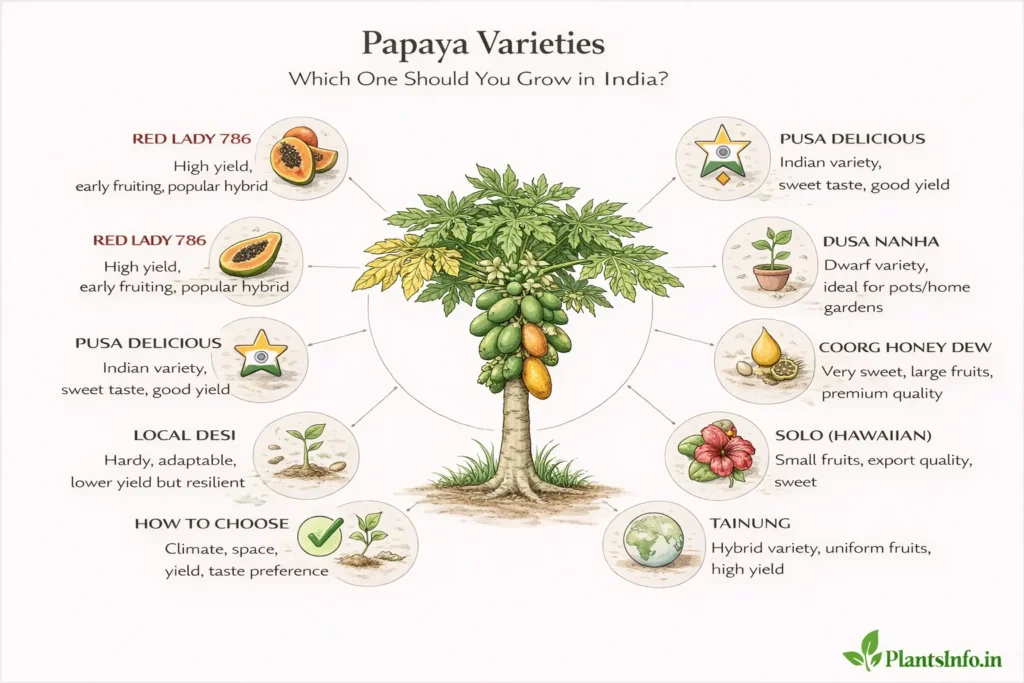
Quick Answer: For most Indian home gardeners, Red Lady or PUSA Dwarf are the best starting choices — both are compact, early-fruiting, and widely available. Red Lady offers superior virus tolerance; PUSA Dwarf is better suited to containers and small plots. Full variety detail below.
See also: Papaya Plant plant profile, how to grow it, common problems, its flowering season, and its benefits.
Most gardeners buy whatever papaya sapling is available at the local nursery and discover later that it grows too tall for their terrace, produces male flowers only, or isn’t suited to their state’s climate. Choosing the right variety before you plant makes every difference — and in India, the options are better than most people realise.
Recommended Products
Disclosure: As an Amazon Associate, PlantsInfo may earn from qualifying purchases.
🌱 Growing Essentials
The following products can help with container gardening, potting, root development, soil management, and healthy plant growth.
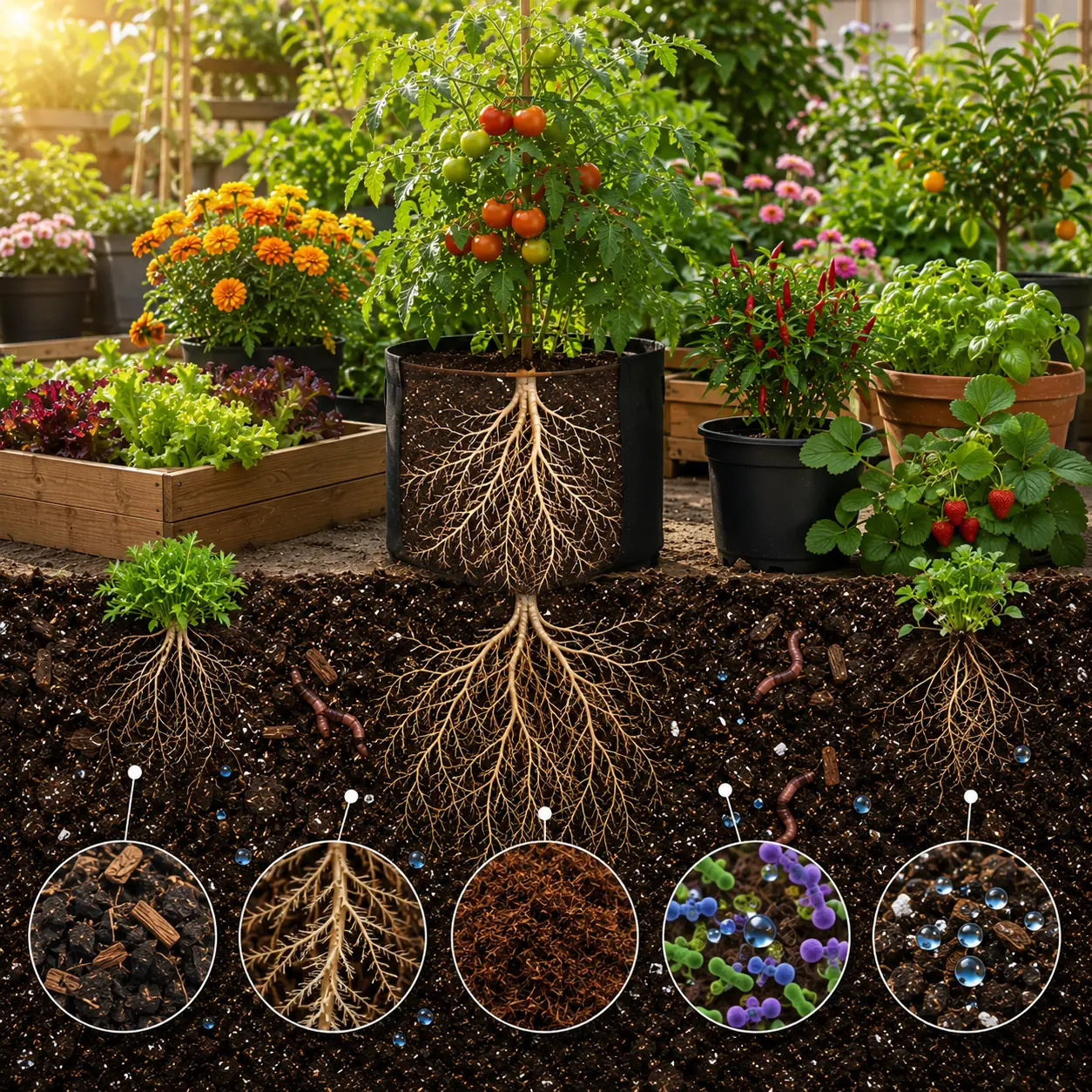
Organic Potting Soil Mix
Provides nutrients, structure, and healthy growing conditions for container plants.
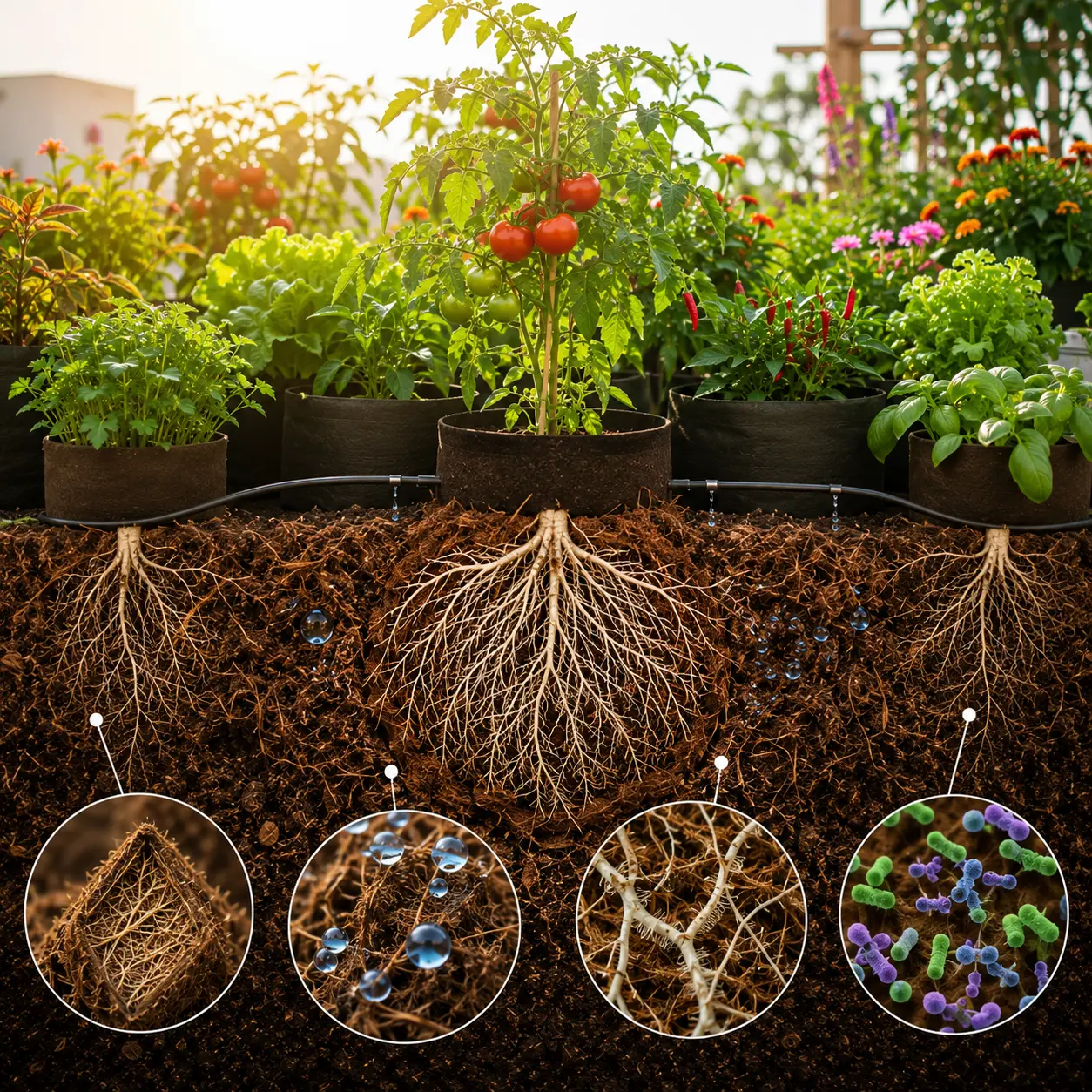
Coco Peat Growing Medium
Enhances moisture retention while maintaining excellent root-zone aeration.

Grow Bags for Plants
Improve drainage, root aeration, and vegetable production in limited spaces.

Plastic Pots for Plants
Ideal containers for seedlings, ornamentals, herbs, and balcony gardens.
Quick Variety Selector
| Variety | Type | Plant Size | Best For | Suited To |
|---|---|---|---|---|
| Red Lady (786) | Hybrid (F1) | Compact | Home use, containers, small plots | All India; performs in most climates |
| PUSA Dwarf | Improved open-pollinated | Compact | Containers, terraces, small gardens | South India: humid, high-rainfall zones |
| PUSA Nanha | Dwarf improved | Very compact | Pots, terraces | North India plains; arid zones |
| Coorg Honey Dew | Open-pollinated (desi) | Medium-large | High yield, flavour, processing | South India: Tamil Nadu, Andhra Pradesh |
| CO-7 (Tamil Nadu) | Improved hybrid | Medium | Commercial and home use | South India; Tamil Nadu, Andhra Pradesh |
| Surya | Hybrid | Medium | Year-round fruiting | Peninsular India, Maharashtra |
| Washington | Open-pollinated | Large | Commercial; large gardens | Maharashtra, Gujarat, Karnataka |
Varieties in Detail
Red Lady (786) Developed by a Taiwanese seed company and now the most widely grown papaya variety in India, Red Lady became dominant for one reason: it carries field tolerance to papaya ringspot virus (PRSV), the disease that destroys conventional papaya without warning. Plants are compact — typically 1.5 to 2 metres at fruiting height — and begin fruiting within eight to ten months of planting.
Fruit is oval, red-fleshed, and weighs between 1 and 2 kg on average. Its key strength is PRSV tolerance combined with early fruiting. Its notable weakness is that it is an F1 hybrid — seeds saved from Red Lady fruit will not breed true, so every planting cycle requires fresh purchased seed.
PUSA Dwarf, developed by IARI (Indian Agricultural Research Institute), PUSA Dwarf is an open-pollinated variety with a genuine claim to being the most container-friendly papaya in India. Plants stay under 1.5 metres and begin fruiting at a lower height than most varieties, making harvest easy without a ladder.
Fruit is small to medium, yellow-fleshed, and sweet. Its strength is manageability — it fits in a 20–25 litre container and does well on apartment terraces with five or more hours of direct sunlight. Its weakness is that it has no PRSV tolerance, so aphid control is important, especially in states with high virus pressure.
PUSA Nanha, also from IARI, is the smallest papaya variety widely available in India. Plants typically reach 0.9 to 1.2 metres. It was specifically bred for container cultivation in limited spaces and rooftop gardens.
Fruit production is lower than that of larger varieties, and individual fruit size is small, but for urban gardeners growing on a fifth-floor terrace in Delhi or Jaipur, it is a genuinely practical option. It performs best in dry, hot climates — the North Indian plains suit it well. Coastal humidity causes more disease pressure on this variety.
Coorg Honey Dew This is the traditional papaya of Karnataka’s Coorg region — a large-fruited, flavour-forward variety that has been grown in South India for generations. Plants grow tall (2.5 metres and above) and require ground planting. Fruit is elongated, heavy (often 2–4 kg), yellow-fleshed, and exceptionally sweet when fully ripe. Coorg Honey Dew is not the right choice for containers or small urban plots. Its strength is flavour and yield in humid, high-rainfall growing conditions; its weakness is susceptibility to PRSV and the space it demands.
CO-7, released by Tamil Nadu Agricultural University, CO-7 is a hybrid variety bred specifically for South Indian conditions. It combines decent PRSV field tolerance with medium plant size and consistent fruiting across the year.
Popular among small commercial growers in Tamil Nadu and Andhra Pradesh, it also works well for home gardeners who want reliable production without the higher seed cost of Red Lady. Fruit is oval, red to orange-fleshed, and medium in size.
Surya, a hybrid released for peninsular India, is valued for nearly year-round fruiting under Maharashtra and Karnataka conditions. It performs well in black cotton soil with proper drainage — a specific advantage given how common that soil type is in Marathwada and Vidarbha. Plants are medium-sized and suit ground planting in larger home gardens. Not widely available outside Western and peninsular India.
Washington. An older, large-growing open-pollinated variety still popular in commercial orchards in Maharashtra, Gujarat, and northern Karnataka. Washington plants are tall, high-yielding, and produce large, flavourful fruit — but they require significant space, regular staking as they grow, and are highly susceptible to PRSV.
For a home gardener with a small plot, Washington is rarely the right choice. For someone with a large garden who prioritises fruit size and flavour over disease resistance, it remains a legitimate option.
Head-to-Head Comparison
Red Lady vs. PUSA Dwarf
These are the two varieties most commonly compared by Indian home gardeners — and for good reason, since they occupy similar spaces in the market. Red Lady wins on disease resistance: its PRSV tolerance makes it the safer choice in states like Andhra Pradesh, Tamil Nadu, Maharashtra, and Gujarat, where the virus is endemic.
PUSA Dwarf wins on size — it is meaningfully smaller, more container-compatible, and easier to manage on a terrace. For someone in a flat with a large balcony in Delhi or Lucknow, PUSA Dwarf is the practical choice. For someone with a small ground plot in a PRSV-heavy region, Red Lady is the safer bet.
Coorg Honey Dew vs. CO-7 (South India)
Coorg Honey Dew is the flavour choice: larger fruit, richer sweetness, better for eating fresh. CO-7 is the productivity and disease-management choice: more compact, better PRSV tolerance, and easier to manage over a full season. For home use where flavour matters most, Coorg Honey Dew wins if you have the space and are willing to manage PRSV risk. For a South Indian gardener who wants consistent, low-intervention fruiting, CO-7 is the more forgiving choice.
How to Choose for Your Space
Container or terrace garden: PUSA Nanha is the first choice for very limited space (balconies, small terraces with pot restrictions). PUSA Dwarf is the first choice when a 20–25 litre container or a larger terrace planter is available. Avoid Coorg Honey Dew, Washington, and Surya in containers — they will not perform.
Small ground plot (under 100 sq ft): Red Lady is the strongest choice here — compact enough to not dominate the plot, PRSV-tolerant, and widely available across India. PUSA Dwarf is a close second if seed/sapling access is easier locally.
Larger garden or backyard: Coorg Honey Dew (South India), Washington (West India), or Surya (Maharashtra, Karnataka) reward the additional space with better yields and larger fruit. Red Lady remains a reliable choice if disease management is a priority.
Commercial-leaning or high-yield home orchard: CO-7 in South India; Red Lady or Surya in peninsular and western India. Both combine reasonable disease tolerance with consistent production.
Regional Suitability
North India (Punjab, Haryana, UP, Rajasthan, Delhi): PUSA Dwarf and PUSA Nanha perform best — both were bred for plains conditions and handle hot summers and relatively dry air. Red Lady also grows well here.
South India (Tamil Nadu, Andhra Pradesh, Telangana): CO-7 is the recommended choice for PRSV-heavy regions. Red Lady is a strong alternative. Coorg Honey Dew performs well in Karnataka’s Coorg and Malnad belt specifically.
Coastal regions (Kerala, Goa, coastal Karnataka, coastal Maharashtra): High humidity increases disease pressure — PRSV-tolerant varieties (Red Lady, CO-7) are strongly preferred. Coorg Honey Dew can perform in Kerala but requires vigilant disease management.
Hill stations and high-altitude zones: Papaya is frost-sensitive and does not grow well above approximately 1,000 metres. In the Himalayan foothills, cultivation is possible in sheltered valley locations — PUSA Dwarf is the most manageable variety in these marginal zones. Do not attempt high-altitude papaya planting without local agricultural extension guidance.
Desi vs. Hybrid — What Nobody Tells You
Hybrid varieties like Red Lady and CO-7 offer real advantages: earlier fruiting, more uniform fruit size, and — critically in India — PRSV tolerance that most open-pollinated desi varieties lack. What they do not offer is seed saving.
Every F1 hybrid plant grown from saved seed will produce variable offspring — some male-only, some lower-yielding, some reverting to tall growth — and most will lose the PRSV tolerance entirely.
Open-pollinated varieties like Coorg Honey Dew and Washington can be grown from saved seed reliably, and over generations in a specific location, they develop a degree of local climate adaptation that purchased hybrid seed cannot match.
The honest trade-off: if PRSV is a serious risk in your area, the inability to save seed from a hybrid is a minor inconvenience compared to losing an entire planting to a disease the hybrid tolerates. If PRSV pressure is low and you have the space to grow large plants, a well-selected desi variety can outperform hybrids on flavour and long-term economics.
Watch Out for Mislabelling
Papaya mislabelling in Indian nurseries is a documented and widespread problem. The most common issue: saplings sold as “Red Lady” that are actually generic tall-growing papayas with no PRSV tolerance and no compact growth habit. You typically discover this when the plant reaches 2.5 metres, produces large, bland fruit, and succumbs to PRSV within eighteen months.
What to verify at purchase: Genuine Red Lady saplings from certified sources will have consistent leaf shape and vigour. Request that the nursery show you the original seed packet — reputable sellers will have it. If you are buying from a push-cart vendor or an uncertified street nursery, treat the variety name as unverified.
Reliable sources: State government nurseries, KVK (Krishi Vigyan Kendra) outlets, and certified seed retailers affiliated with ICAR or state agriculture universities. For Red Lady seed specifically, look for the original Taiwan East-West Seed-sourced stock or certified Indian distributors — not unverified resellers.
Where to Source These Varieties in India
PUSA Dwarf and PUSA Nanha seeds are available directly from IARI, New Delhi, and from authorised IARI seed sellers. CO-7 material is available through Tamil Nadu Agricultural University (TNAU) and associated extension centres in Tamil Nadu and Andhra Pradesh.
Red Lady seed is widely available through agricultural input shops across India, but quality varies. Purchase from shops that can produce a batch certificate or the original sealed packet.
When buying any papaya seed or sapling, verify: the variety name matches the seed packet label, the sapling is under six weeks old (older transplants suffer more shock), and the seller can tell you whether the variety is hybrid or open-pollinated. If they cannot answer the last question, source elsewhere.
The single most important choice is not which variety has the best flavour — it is which variety suits your space and manages the diseases common to your region. Get those two things right, and the flavour will follow.