Papaya Plant Problems & Diseases: Symptoms, Causes, and Fixes

Quick Answer: The most common papaya problems in India are papaya ringspot virus, stem rot caused by Phytophthora, and mealybug infestations. Most viral diseases cannot be cured — remove affected plants immediately. Fungal and pest problems, caught early, respond well to treatment.
See also: Papaya Plant plant profile, how to grow it, its flowering season, its benefits, and its varieties.
Papaya is one of the fastest-fruiting plants in an Indian garden, but it has a short fuse. One week of waterlogged roots, one visit from a whitefly colony, or one infected cutting can undo months of growth. Most problems are not mysterious — they announce themselves clearly if you know what to look for.
Recommended Products
Disclosure: As an Amazon Associate, PlantsInfo may earn from qualifying purchases.
🌱 Growing Essentials
The following products can help with container gardening, potting, root development, soil management, and healthy plant growth.
Organic Potting Soil Mix
Provides nutrients, structure, and healthy growing conditions for container plants.
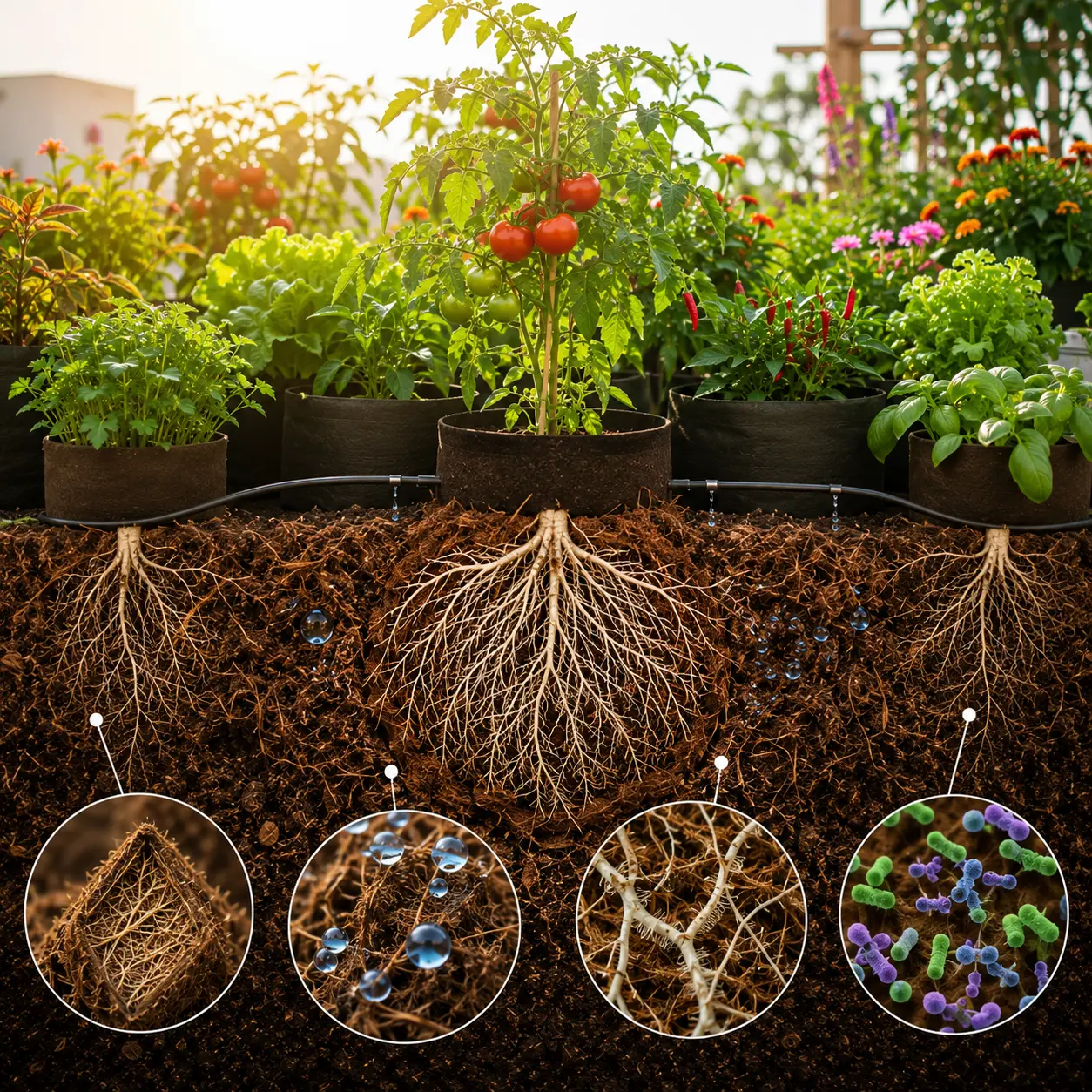
Coco Peat Growing Medium
Enhances moisture retention while maintaining excellent root-zone aeration.

Grow Bags for Plants
Improve drainage, root aeration, and vegetable production in limited spaces.

Plastic Pots for Plants
Ideal containers for seedlings, ornamentals, herbs, and balcony gardens.
Quick Diagnosis
| Symptom | Most Likely Cause | First Action |
|---|---|---|
| Yellow mosaic pattern on leaves | Papaya Ringspot Virus (PRSV) | Water-soaked stem at the soil level |
| White cottony masses on the stem/leaves | Phytophthora stem rot | Reduce watering; apply fungicide |
| Leaves curling inward, stunted growth | Mite infestation or leaf curl virus | Inspect undersides; treat with miticide |
| Lower leaves are yellowing uniformly | Mealybugs | Wipe with neem oil solution |
| Fruit with dark sunken spots | Anthracnose (post-harvest fungus) | Harvest earlier; avoid wetting fruit |
| Lower leaves yellowing uniformly | Nitrogen deficiency or overwatering | Check drainage; apply nitrogen fertiliser |
| Papery, bleached leaf patches | Powdery mildew | Apply sulphur-based fungicide |
Diseases
Papaya Ringspot Virus (PRSV)
This is the single most destructive disease of papaya in India, and the reason many gardeners lose entire plants without understanding why.
- What it looks like: Leaves develop a distinctive yellow-green mosaic or mottling. Leaf stalks show dark oily streaks. Fruit, if it forms at all, develops a ring-spot pattern on the skin and becomes distorted. Growth stalls visibly.
- What causes it: PRSV is a viral disease transmitted by aphids — a single aphid visit from an infected plant is enough. There is no cure. Once a plant is infected, the virus is systemic and permanent.
- Can it be cured? No. Remove and destroy infected plants immediately. Do not compost them. The longer an infected plant stays in your garden, the greater the risk of aphids spreading the virus to healthy plants nearby.
- Prevention: Grow virus-tolerant varieties (PUSA Dwarf, Red Lady). Control aphid populations proactively. Never plant papaya near cucurbit crops — cucumbers, bottle gourds, and related plants carry PRSV and act as a reservoir.
Phytophthora Stem and Root Rot (Collar Rot)
This fungal disease is the leading cause of sudden papaya death in India, particularly during the monsoon and in gardens with poor drainage.
- What it looks like: A water-soaked, dark brown lesion appears at the stem base at or just below soil level. The stem collapses inward. The plant wilts rapidly — often within two to three days — even when the soil appears moist. Roots are brown and mushy rather than white and firm.
- What causes it: Phytophthora palmivora thrives in waterlogged, poorly aerated soil. Monsoon conditions, over-irrigation, and planting in low-lying areas are the primary triggers in India.
- Can it be cured? Early-stage infections can be managed. Remove affected soil from around the base, apply copper oxychloride paste directly to the lesion, and drastically reduce watering. Advanced collapse is not recoverable.
- Prevention: Plant papaya in raised beds or mounds. Never allow water to pool at the base. In container-grown papaya, ensure drainage holes are clear before every monsoon.
Powdery Mildew
- What it looks like: White, powdery patches appear on the upper surface of older leaves. Leaves may yellow and drop. The coating is dry, not wet — this distinguishes it from downy mildew.
- What causes it: The fungus Oidium caricae thrives in dry weather with cool nights — common in North India from October to February. Poor air circulation between plants worsens outbreaks.
- Can it be cured? Yes. Powdery mildew responds well to treatment if caught before it spreads across the canopy.
- Prevention: Space plants adequately. A spray of dilute neem oil (5 ml per litre) every two weeks during the susceptible season acts as an effective preventive.
Anthracnose
What it looks like: Dark, water-soaked, sunken spots on ripening fruit. In humid conditions, the spots develop a salmon-pink spore mass. Leaves may show irregular brown lesions.
What causes it: The fungus Colletotrichum gloeosporioides. Infection typically occurs at the flower stage, but symptoms appear as the fruit ripens. Kerala, coastal Karnataka, and Assam — with high humidity and rainfall — see the highest incidence.
Can it be cured? Post-harvest sprays of mancozeb or copper fungicide at the fruiting stage reduce severity. Infected fruit cannot be treated — harvest early if the disease is active.
Prevention: Avoid overhead irrigation. Harvest fruit before it fully ripens if anthracnose is a recurring issue in your garden.
Pest Problems
Mealybugs
How to identify: White, cottony masses clustered on the stem, leaf axils, and underside of leaves. The insects themselves are soft-bodied, oval, and covered in white wax. A black sooty mould often develops on the honeydew they excrete.
Damage: Mealybugs suck sap, causing leaf yellowing, distorted growth, and premature fruit drop. Heavy infestations weaken the entire plant.
Organic fix: Spray a solution of neem oil (5 ml) and a few drops of liquid soap per litre of water directly onto colonies. Repeat every five to seven days for three weeks.
Chemical option: Imidacloprid-based systemic insecticide applied as a soil drench or foliar spray at label-recommended dilution. Do not apply within the harvest withholding period stated on the label.
This information is for general guidance only. Always read product labels before applying any pesticide or fungicide. Follow state agriculture department guidelines for food crops. Keep children and pets away during and after application.
Papaya Mites (Tetranychus spp.)
How to identify: Tiny, barely visible red or yellowish mites on the underside of leaves. Fine webbing between leaves is a diagnostic sign. Upper leaf surfaces show pale stippling — hundreds of tiny white or yellow dots.
Damage: Severe infestations cause leaves to bronze, curl, and drop. Mite populations explode during hot, dry conditions — April and May in most of India.
Organic fix: Strong jets of water to dislodge colonies; follow with neem oil spray. Introduce predatory insects if available through agricultural extension services.
Chemical option: Abamectin or dicofol-based miticide. Mites develop resistance quickly — do not use the same chemical for more than two consecutive applications.
This pest is commonly mistaken for a nutrient deficiency because the stippling pattern resembles iron or magnesium deficiency. The key difference: mite damage appears first on older leaves in concentrated patches; nutrient deficiency usually progresses uniformly from the lower canopy.
Whiteflies
How to identify: Small, white-winged insects that fly up in a cloud when the plant is disturbed. Nymphs are flat, scale-like, and found on leaf undersides.
Damage: Direct sap feeding causes yellowing. More critically, whiteflies are vectors for leaf curl virus — a secondary infection more damaging than the feeding itself.
Organic fix: Yellow sticky traps to monitor and reduce adult populations. Neem oil spray on leaf undersides.
Chemical option: Thiamethoxam or acetamiprid foliar spray. Rotate chemicals to prevent resistance.
Environmental and Care Mistakes
Waterlogging and Root Suffocation Symptoms: sudden wilting despite moist soil, lower leaf drop, and stem yellowing at the base. Cause: Papaya has a shallow, poorly branched root system with almost no tolerance for anaerobic conditions. Even two to three days of standing water in the root zone causes irreversible damage. Fix: improve drainage immediately; create a raised planting mound if replanting. See the Growing Guide for soil and drainage details.
Nitrogen Excess Symptoms: lush, dark-green vegetative growth with no flowers or fruit. Cause: too much nitrogen fertiliser delays the transition to reproductive growth. This is an extremely common mistake — new gardeners assume more fertiliser means more fruit. Fix: stop nitrogen application; switch to a phosphorus-potassium dominant fertiliser during the pre-flowering phase.
Transplant Shock Symptoms: drooping, pale leaves within the first week after transplanting; some leaf drop. Cause: Papaya develops a taproot quickly and dislikes root disturbance. Plants moved after more than three to four weeks in a nursery bag frequently show shock. Fix: transplant papaya young (ideally under four weeks). Water immediately after planting and provide partial shade for the first week.
Excessive Pruning or Defoliation Symptoms: stunted recovery, failure to set fruit, trunk scarring. Cause: Papaya is not a plant that recovers well from heavy pruning. Unlike many fruit trees, its crown is its engine — removing too many leaves directly reduces fruit production. Fix: remove only dead or diseased leaves. See the Growing Guide for what to remove and what to leave.
Prevention Protocol
Inspect plants weekly during monsoon — Phytophthora and anthracnose spread fastest when humidity is high, and plants go unchecked. Before monsoon onset, ensure drainage around every papaya is clear, and the base is free of standing water contact.
Apply neem oil spray once a fortnight from February through May, when mite and mealybug populations peak in most Indian climates. Control aphids and whiteflies proactively, not reactively — these are the primary virus vectors, and viral infections are permanent.
Never plant papaya in a bed where a previous papaya was lost to stem rot or viral disease. Wait at least one full season and amend the soil thoroughly before replanting. Grow virus-tolerant varieties in areas where PRSV is endemic — parts of Tamil Nadu, Andhra Pradesh, and Maharashtra have high regional PRSV pressure.
When to Give Up on a Plant
Some papaya problems are unrecoverable. Knowing when to remove a plant saves the rest of your garden.
Remove immediately if: leaves show ringspot virus mosaic with no new healthy growth; the stem has collapsed at the base and the plant wilts despite correct watering; more than 60% of the canopy is infected with a confirmed viral disease.
What to do: Pull the entire plant, including roots. Do not compost. Bag and dispose of it or burn it. If stem rot was the cause, drench the affected soil with copper oxychloride solution before replanting.
Do not replant papaya in the same spot for at least one season after a confirmed Phytophthora or viral loss. If replanting, raise the bed level and improve drainage before planting again.
Frequently Asked Questions
Can I eat fruit from a plant that has anthracnose?
Fruit without visible lesions from an affected plant is generally safe to eat, but discard any fruit showing dark sunken spots. The fungus affects the flesh quality and flavour even when the infection looks minor.
My papaya leaves have yellow patches but no mosaic — is it ringspot virus?
Uniform yellowing without a mosaic pattern is more likely a nutrient issue or overwatering. PRSV mosaic has a characteristic irregular, interlocking green-and-yellow pattern. Look at the leaf stalks — oily streaks on the petiole strongly suggest a virus.
Is it safe to eat papaya from a plant treated with imidacloprid?
Imidacloprid has a withholding period — the time between application and safe harvest. Always check the product label for this period and do not harvest until it has passed.
Papaya problems are serious but rarely mysterious. Most can be caught before they become fatal — if you inspect your plants every week rather than every month. The plants that die are almost always the ones that were checked too late.