Plant Guides

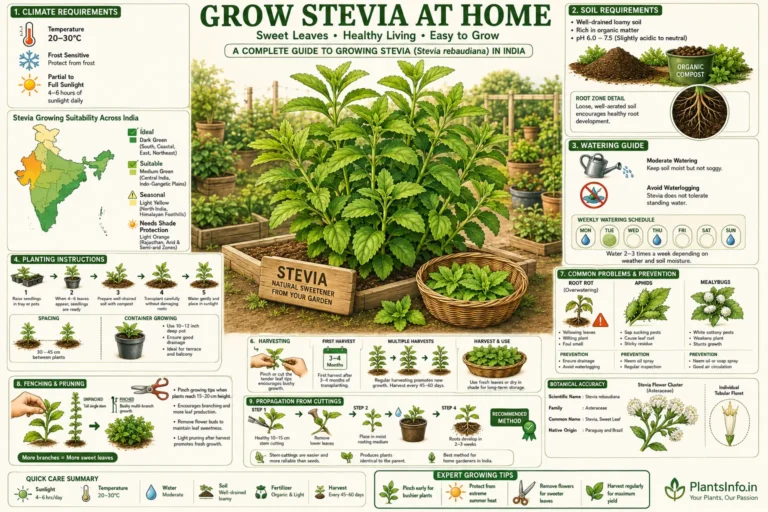
Stevia Plant Problems: Symptoms, Causes, and Fixes
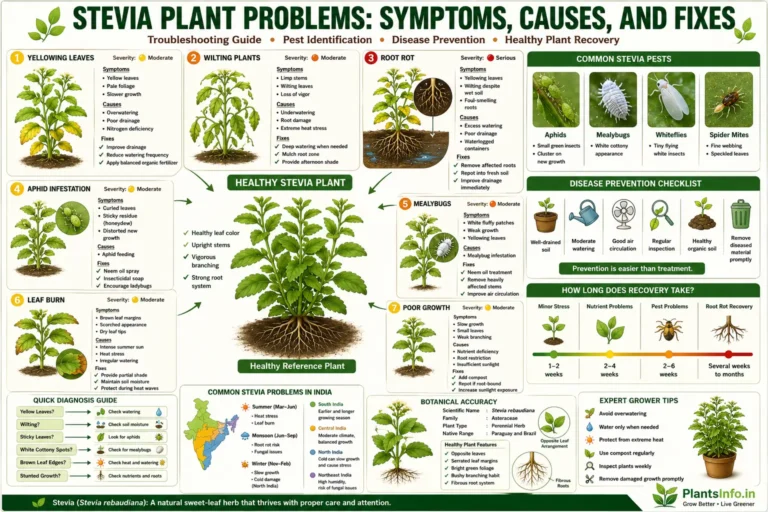
Stevia plant problems infographic showing yellow leaves, wilting, root rot, aphids, mealybugs, leaf burn, poor growth, common pests, symptoms, causes, and treatment solutions for Stevia rebaudiana.

Quick Answer: The most common stevia problems in Indian gardens are stem rot from overwatering and powdery mildew from poor air circulation during monsoon. Most stevia problems are preventable with correct drainage and seasonal management. A plant that collapses at…

Stevia Flowering Season: When and What to Expect in India

Stevia flowering season infographic showing bloom timeline in India, flower structure, flowering stages, pollinators, seed production, and the effects of flowering on leaf sweetness in Stevia rebaudiana.

Quick Answer: Stevia flowers in the cool winter months — typically December through February across most of India. Planting is best done in October–November (post-monsoon) or February–March (late winter). The plant is most productive for leaf harvest in the months…

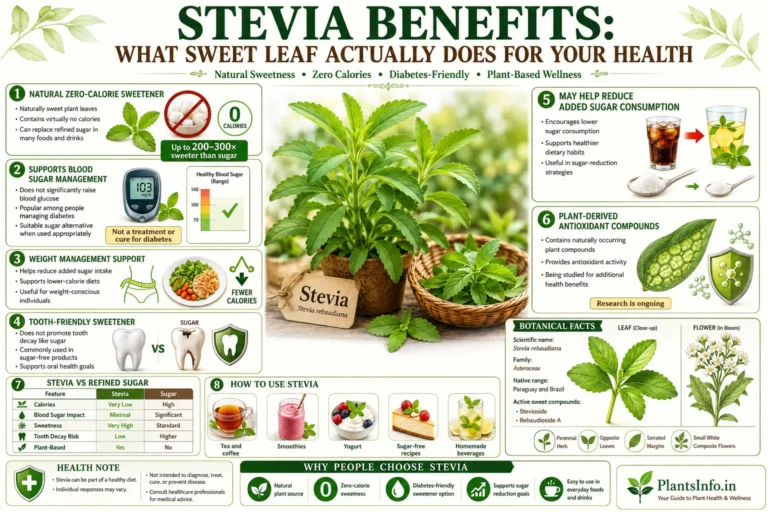
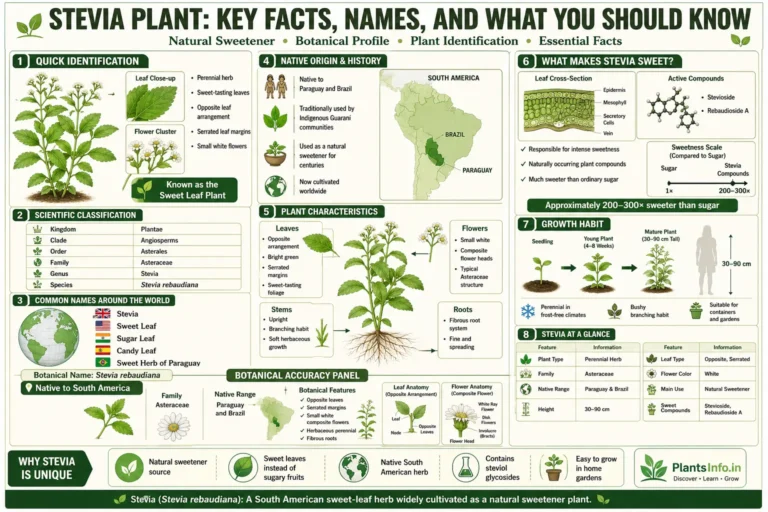
Stevia Plant: Key Facts, Names, and What You Should Know

Stevia plant infographic showing botanical classification, plant characteristics, native origin, growth habit, sweet compounds, identification features, and key facts about Stevia rebaudiana.

Quick Answer: Stevia (Stevia rebaudiana) is a small perennial herb native to South America, now commercially cultivated across several Indian states for its intensely sweet leaves. The leaves contain zero calories and do not raise blood sugar. The plant grows…

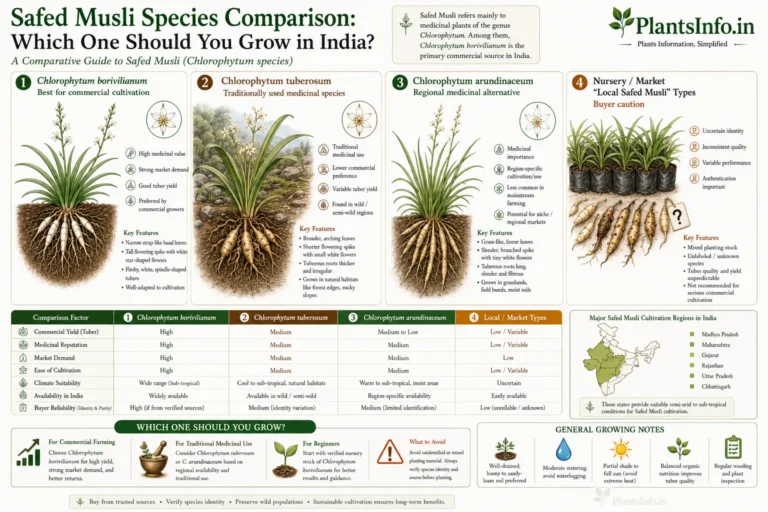
Safed Musli Varieties: Which One Should You Grow in India?

Botanical comparison infographic of Safed Musli (Chlorophytum species) in India showing Chlorophytum borivilianum, C. tuberosum, C. arundinaceum, cultivation suitability, species differences, and buyer guidance.

Quick Answer: For home gardeners in central and North India, RC-2 (RAU Udaipur) or Jawahar Safed Musli 405 (Mandsaur, MP) are the most accessible, well-documented choices with proven yield and high saponin content. MDB-13 and MDB-14 offer disease-resistant advantages. The…

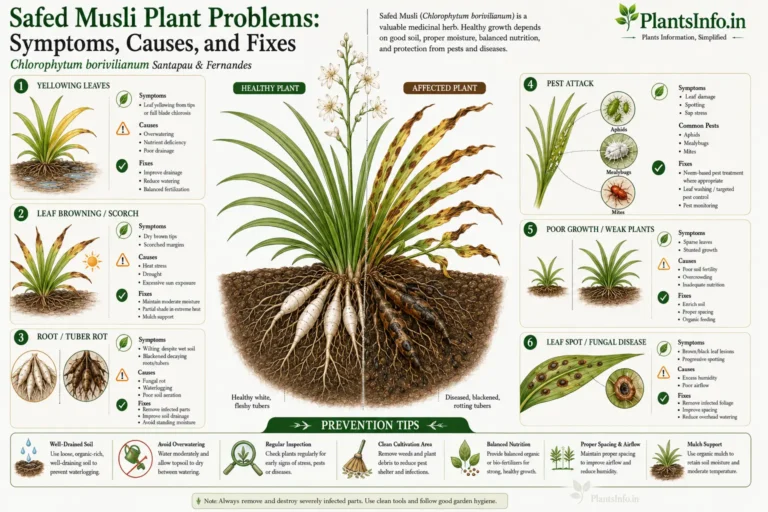
Safed Musli Plant Problems: Symptoms, Causes, and Fixes

Botanical infographic of Safed Musli (Chlorophytum borivilianum) plant problems showing symptoms, causes, fixes, pest damage, root rot, leaf spots, and prevention tips.

Quick Answer: Safed Musli’s three main problems are leaf blight (a fungal disease during the monsoon), tuber and collar rot (from waterlogged soil), and leaf-eating caterpillars. All three are manageable when caught early. Most are preventable with raised bed planting…

Safed Musli Benefits: What Ayurveda and Modern Research Say

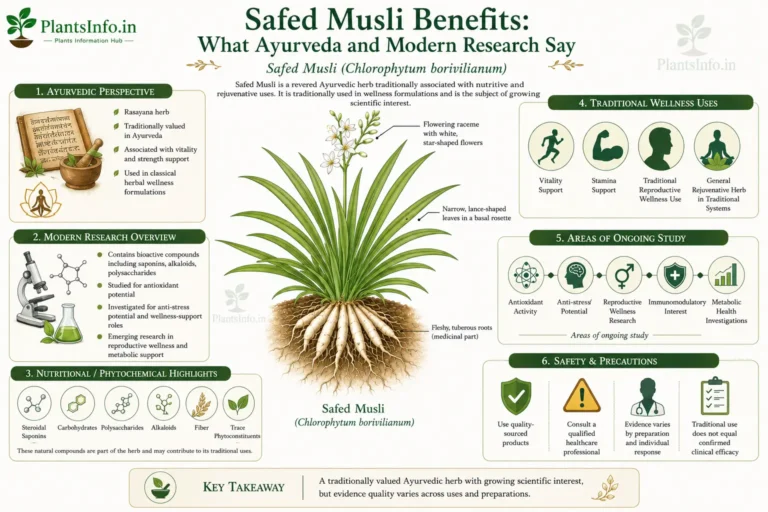
Educational infographic on Safed Musli benefits, traditional Ayurvedic uses, phytochemicals, modern research, and safety precautions for Chlorophytum borivilianum.

Quick Answer: Safed Musli is Ayurveda’s pre-eminent vajikarana rasayana — a rejuvenative tonic for vitality, reproductive health, and stamina. Its fleshy white tubers contain steroidal saponins and immunomodulatory polysaccharides that research has begun to validate. It is used most widely…