Stevia Flowering Season: When and What to Expect in India

Quick Answer: Stevia flowers in the cool winter months — typically December through February across most of India. Planting is best done in October–November (post-monsoon) or February–March (late winter). The plant is most productive for leaf harvest in the months just before it flowers; once flowering begins, leaf sweetness drops and harvesting priority shifts.
See also: Stevia rebaudiana plant profile, how to grow it, common problems, its benefits, and its varieties.
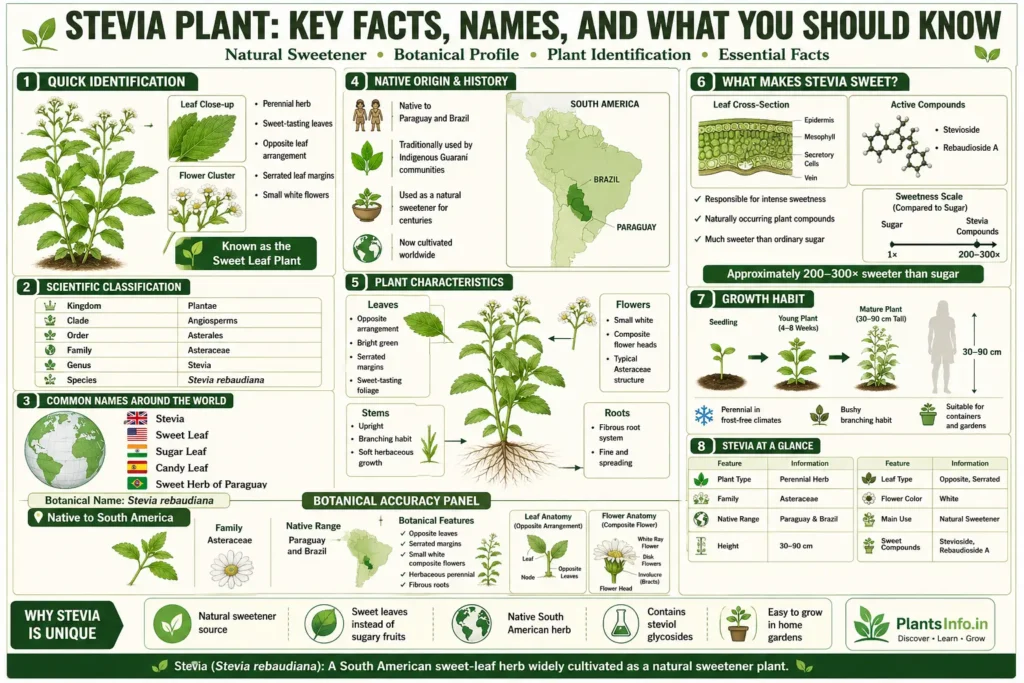
In December, a stevia plant announces its transition with a change you can taste before you see it. The new growth at each stem tip turns narrower and more pointed, the leaves become slightly smaller, and if you pick one and chew it, the sweetness is a shade less intense than it was in November. A few days later, the first tiny white buds appear — clusters no bigger than a fingernail — and the plant has shifted its energy from leaves to flowers.
Recommended Products
Disclosure: As an Amazon Associate, PlantsInfo may earn from qualifying purchases.
🌱 Growing Essentials
The following products can help with container gardening, potting, root development, soil management, and healthy plant growth.
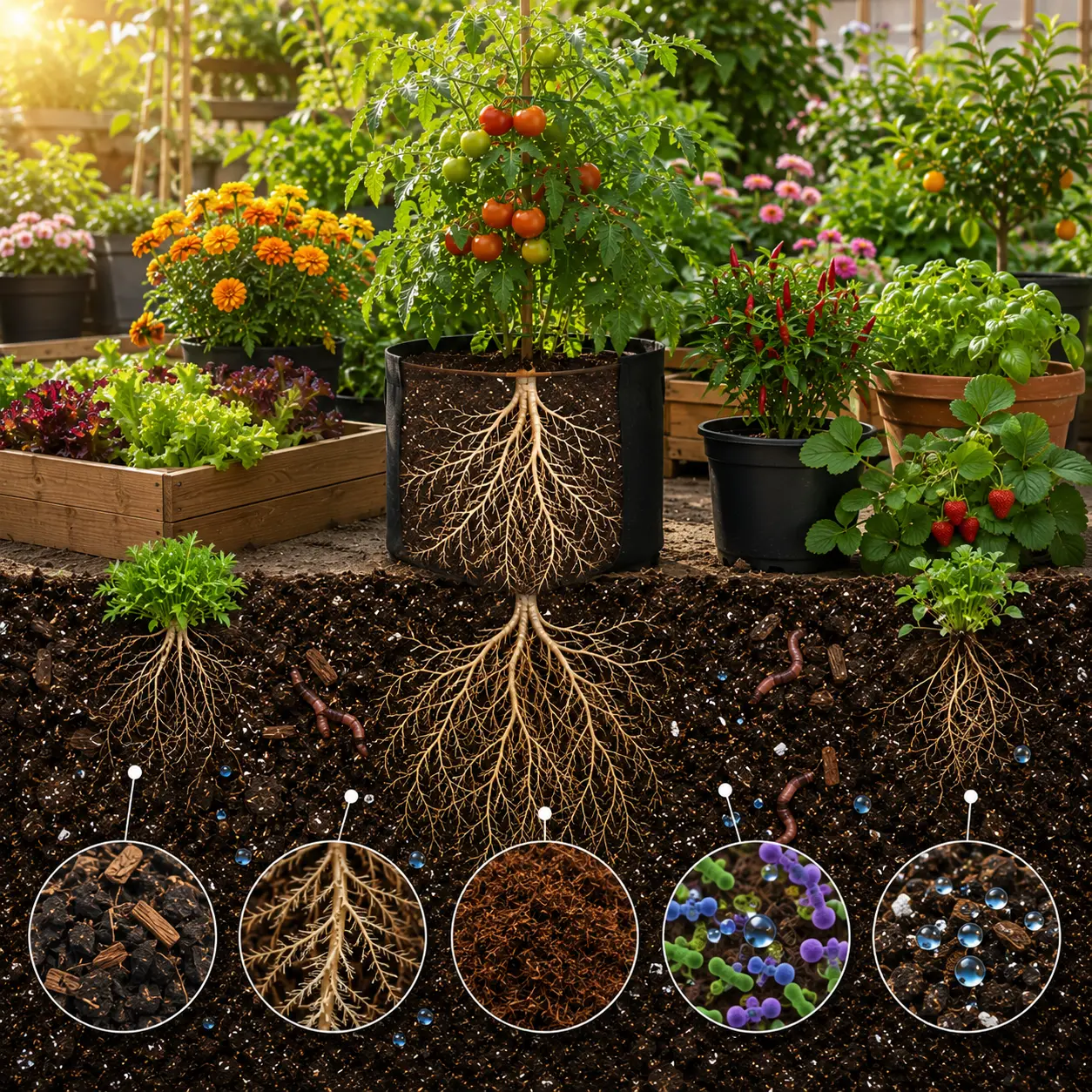
Organic Potting Soil Mix
Provides nutrients, structure, and healthy growing conditions for container plants.
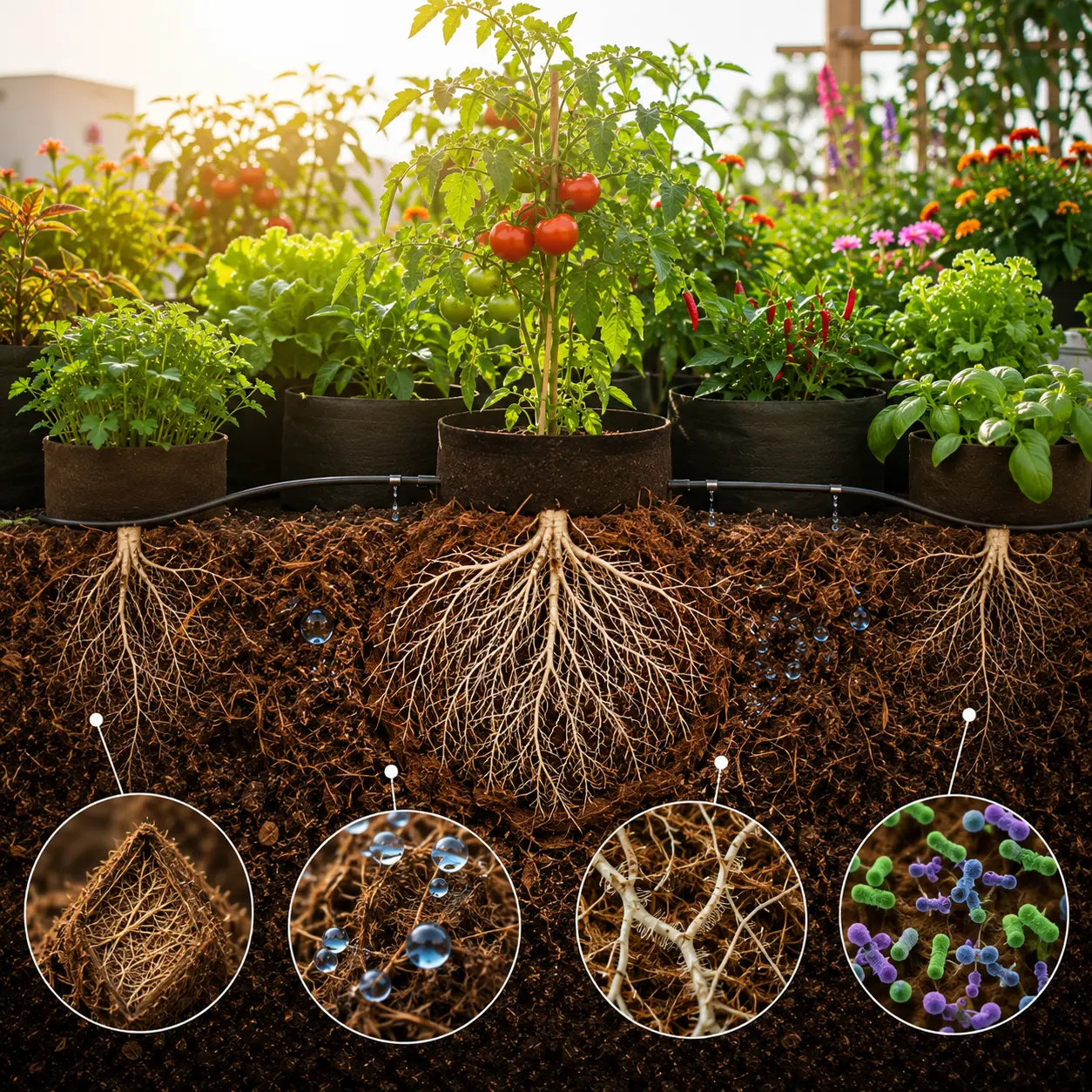
Coco Peat Growing Medium
Enhances moisture retention while maintaining excellent root-zone aeration.

Grow Bags for Plants
Improve drainage, root aeration, and vegetable production in limited spaces.

Plastic Pots for Plants
Ideal containers for seedlings, ornamentals, herbs, and balcony gardens.
India’s Seasons and This Plant
| Season (months) | What the plant is doing |
|---|---|
| Pre-monsoon (Mar–May) | Active growth if planted in Feb–Mar; established plants may slow as temperatures rise above 35°C |
| Monsoon (Jun–Sep) | Slowest period; plant survives but does not thrive; high humidity and waterlogging risk |
| Post-monsoon (Oct–Nov) | Most active growth period; ideal establishment window for new plantings |
| Winter (Dec–Feb) | Peak productivity followed by flowering; harvest leaves in Dec–Jan before flowering begins in Jan–Feb |
Flowering Season in Detail
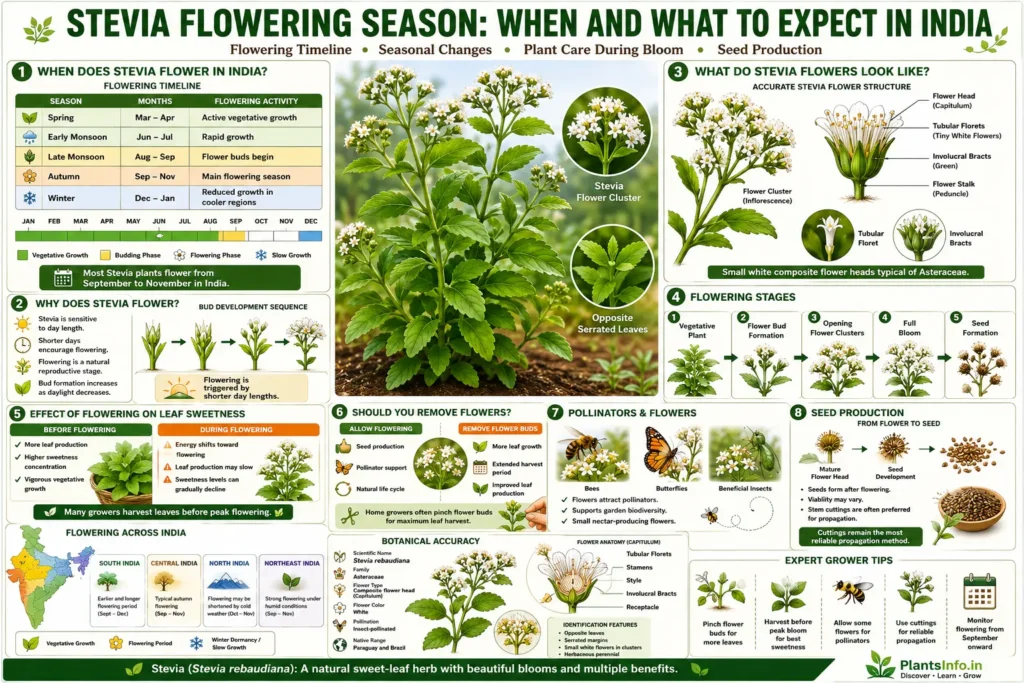
Flower buds typically begin forming at the tips of stem branches in late December to early January in most Indian plains conditions. The trigger is primarily a shortening of day length — stevia is a short-day plant, meaning it begins reproductive growth as days shorten after the October equinox. Cooler temperatures below 20°C accelerate this transition.
Peak bloom in most of India falls in January–February. The flowers are small, white, and clustered in loose terminal groups — delicate but not showy. Each flower lasts only a few days, but the plant produces them continuously over a 4–6 week period, creating an extended but low-intensity flowering display.
In cooler upland regions — Himachal Pradesh, Uttarakhand, the Nilgiris — flowering may be delayed by 3–4 weeks compared to plains conditions, as lower overall temperatures affect the timing slightly. In warmer coastal zones (Mumbai, Kochi, Chennai), flowering may begin as early as late November. Regional variation of 3–6 weeks is typical.
Fruiting Season
Stevia sets seed after flowering concludes — typically February to March. The seeds are small, feathery, and dispersed by wind. However, seed viability in commercially grown stevia is notoriously inconsistent; widely improved varieties produce seeds with poor germination rates, and propagation through stem cuttings is far more reliable than seed for home gardeners. If seed saving is not a goal, deadheading spent flowers extends the leaf-productive phase slightly and tidies the plant’s appearance.
Best Time to Plant
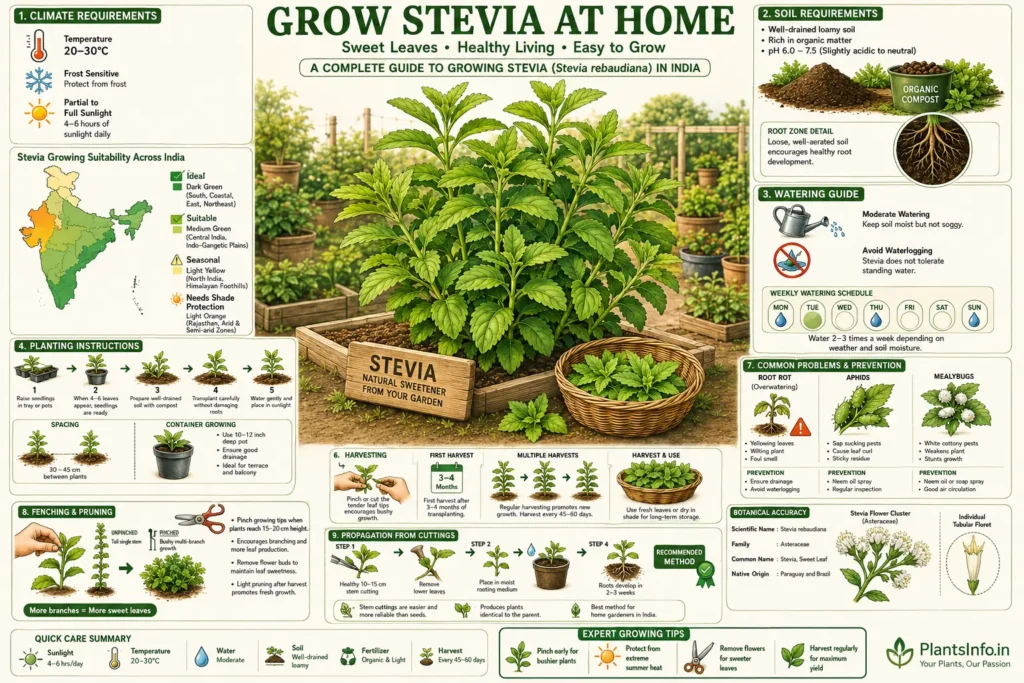
Primary window: Post-monsoon (October–November). This is the single best planting window across most of India. Temperatures have dropped to a comfortable 20–30°C range, humidity has eased, and the plant has a full 10–12 weeks of productive cool-season growth before flowering begins in January. A plant established in October will yield multiple harvests before it flowers.
Secondary window: Late winter (February–March). This works for northern India and upland zones. The plant establishes in mild temperatures and begins productive growth through March–April before summer heat arrives. This window is shorter but viable.
Container vs. ground timing: Both follow the same seasonal windows. Container plants can be started 2–3 weeks earlier in October because pots warm up and drain faster than the ground soil after the monsoon, giving a slightly longer establishment period.
Month-by-Month Calendar
| Month | Season | What to Do |
|---|---|---|
| January | Winter | Harvest leaves before full flowering begins; watch for first flower buds at stem tips |
| February | Winter | Peak flowering; harvest remaining leaves; note which plants flowered earliest for variety selection |
| March | Late winter | Seed sets and disperses; consider replanting from cuttings if plants have declined; second planting window in the north |
| April | Pre-monsoon | Monitor for heat stress; move containers to afternoon shade in hot regions |
| May | Pre-monsoon | Most plants slow significantly; reduce watering; do not fertilise |
| June | Monsoon onset | Shelter containers from heavy rain; check drainage in ground plantings |
| July | Monsoon | Minimal intervention; plant survives but is not productive — observe for stem rot |
| August | Monsoon | As July; ensure containers are not waterlogged |
| September | Monsoon/post-monsoon | Temperatures begin easing; light recovery growth may begin |
| October | Post-monsoon | Primary planting window opens; plant new saplings or cuttings |
| November | Post-monsoon | Peak vegetative growth; harvest leaves regularly; pinch stem tips to delay flowering |
| December | Early winter | Most productive harvest month; leaf sweetness peaks before bud formation |
What Can Go Wrong Seasonally?
Premature flowering in October–November is occasionally seen in plants that experienced temperature stress (excessive heat or cold) in September. Prematurely flowering plants can sometimes be reset by pinching all flower buds immediately and moving to a slightly warmer, sheltered spot — this delays the flowering trigger long enough to recover a few weeks of leaf harvest.
Post-monsoon stem rot is sometimes mistaken for late-season natural decline. If the plant collapses at the base in September–October rather than dying back gradually, stem rot from monsoon waterlogging is the more likely cause — not seasonal senescence. Check soil drainage before replanting in the same spot.
Yellowing after flowering is normal and expected — the plant has completed its reproductive cycle and is declining naturally. This is commonly mistaken for a nutrient deficiency or disease. If yellowing follows a full flowering season in February–March, it is seasonal, not pathological.
Post-Harvest and Post-Bloom Care
After the flowering period concludes in February–March, cut the plant back by roughly one-third — removing spent flower stems and any leggy growth. This light pruning encourages the plant to push new basal shoots rather than continuing to invest energy in the spent upper growth.
In cooler hill zones, plants cut back after flowering often remain dormant through April–May and regrow from the base when autumn temperatures return in September. In warmer plains, this regrowth is less reliable, and many gardeners treat stevia as an annual — replanting fresh cuttings each October rather than carrying plants through the hot season.
The rhythm of a stevia plant is simple: establish in October, harvest through December, let it flower in January, and cut it back in March. Follow that cycle, and you will have sweet leaves every cool season.