How to Grow Stevia: Complete Care Guide for Indian Gardens
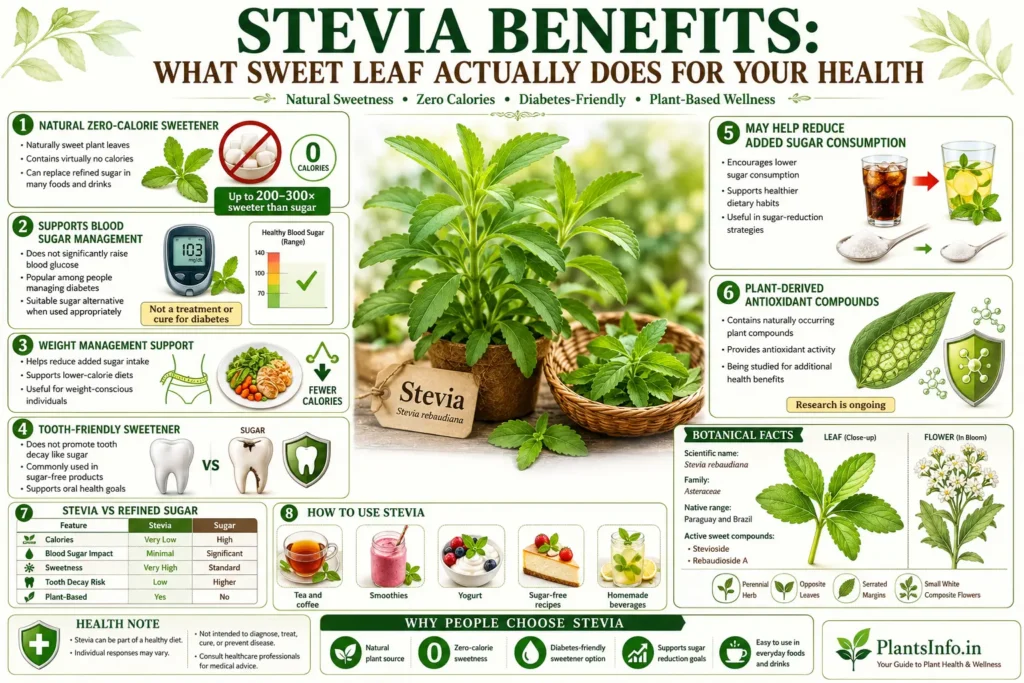
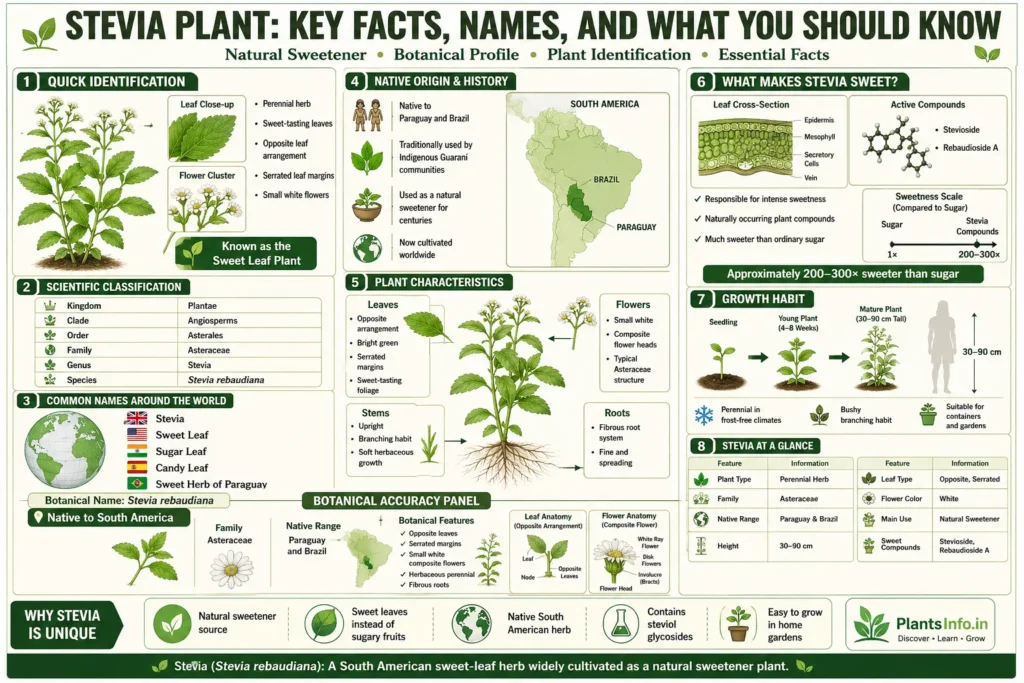
Quick Answer: Stevia (Stevia rebaudiana) is a small, easy-to-grow herb that produces leaves up to 300 times sweeter than sugar with zero calories. It grows best in India during the cooler months — October through February — and does well in pots or garden beds with full sun and well-drained soil. Most home gardeners succeed on the first try if they get the watering right.
See also: Stevia rebaudiana plant profile, common problems, its flowering season, its benefits, and its varieties.
Here is the counterintuitive truth about stevia: the plant that could replace your sugar bowl is cheaper to grow than a bag of sugar, thrives in ordinary pots on a sunny balcony, and asks almost nothing of you — yet most Indian gardeners who try it fail in the first month because they water it like a tropical herb. Stevia hates wet feet. Get drainage right, and this plant practically grows itself.
Recommended Products
Disclosure: As an Amazon Associate, PlantsInfo may earn from qualifying purchases.
🌱 Growing Essentials
The following products can help with container gardening, potting, root development, soil management, and healthy plant growth.
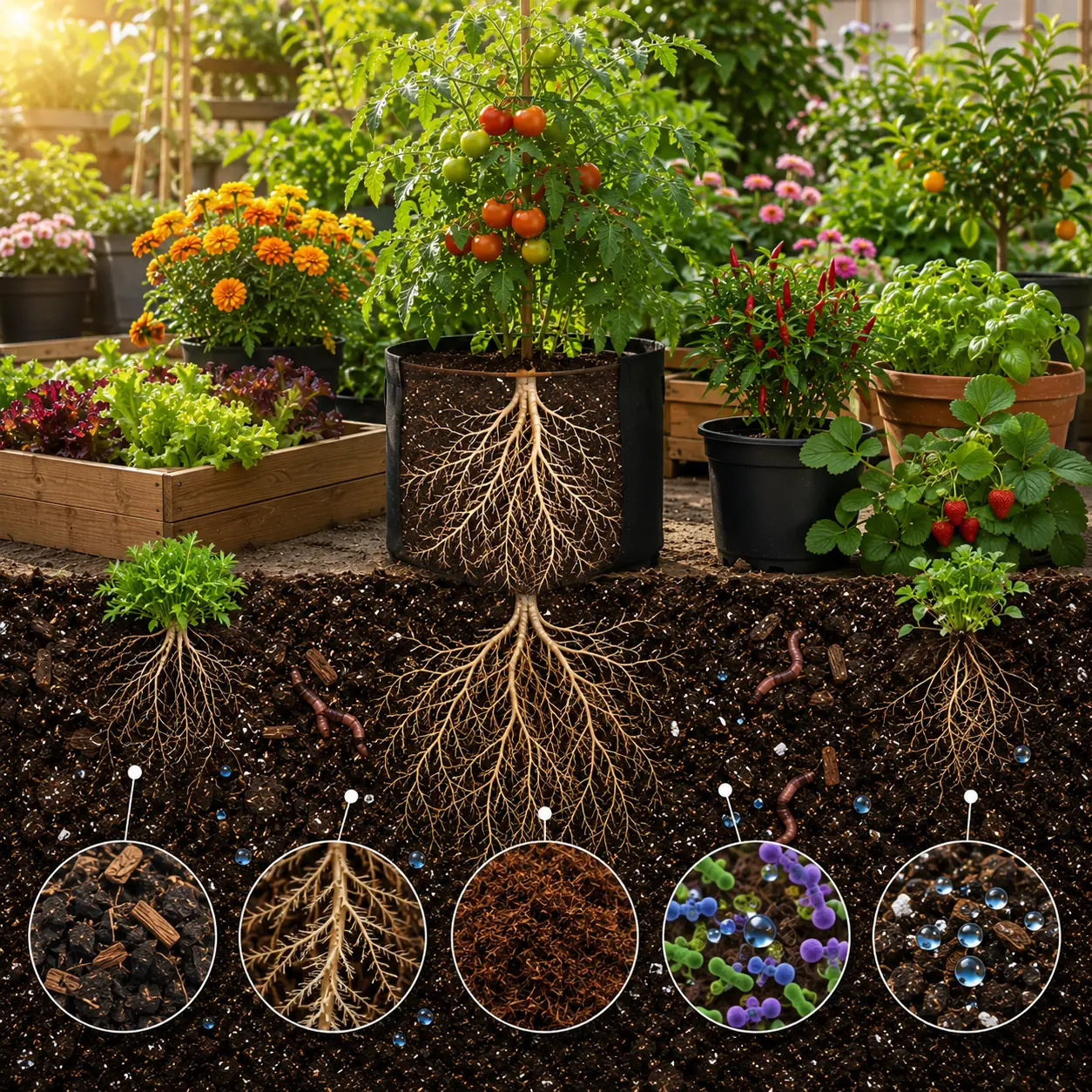
Organic Potting Soil Mix
Provides nutrients, structure, and healthy growing conditions for container plants.
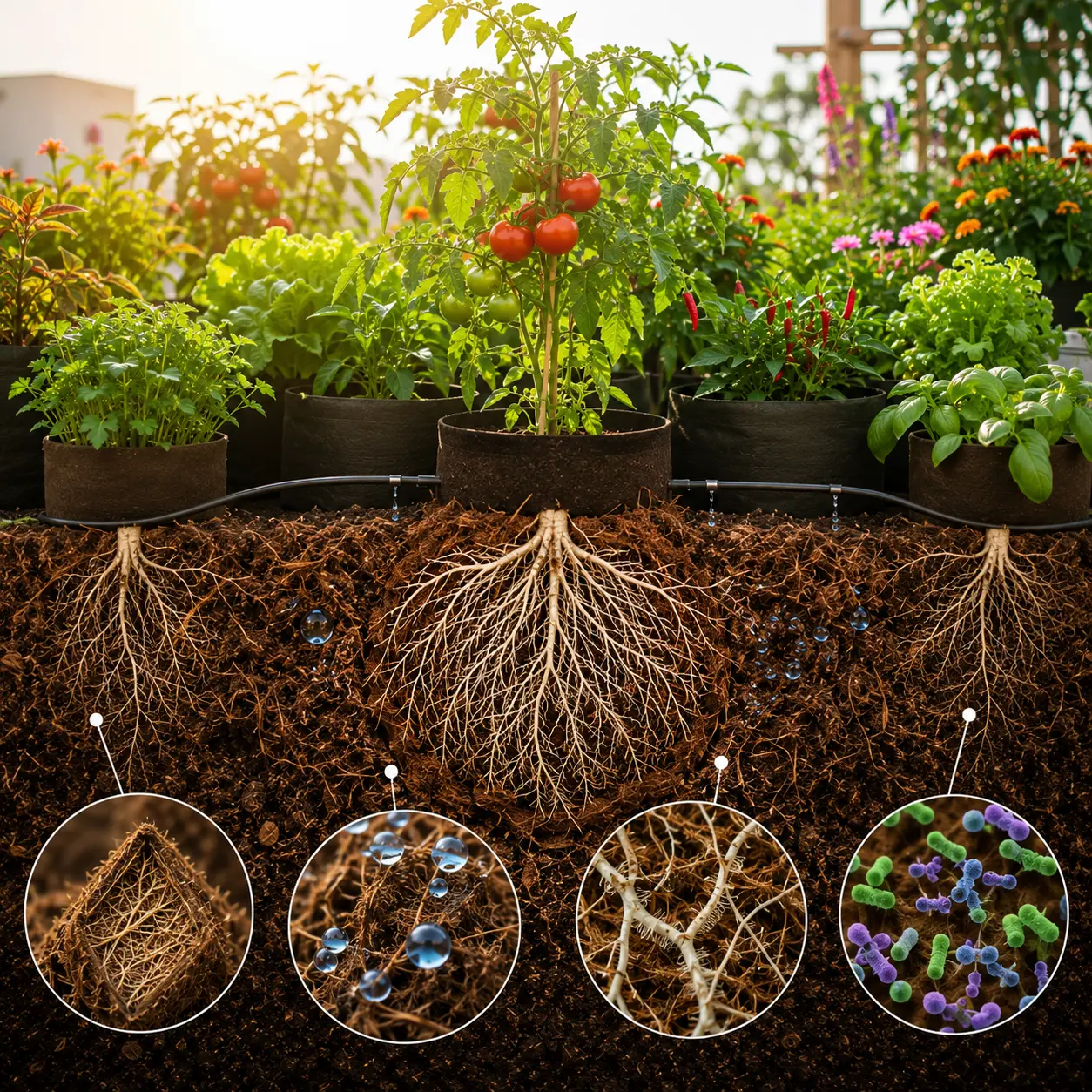
Coco Peat Growing Medium
Enhances moisture retention while maintaining excellent root-zone aeration.

Grow Bags for Plants
Improve drainage, root aeration, and vegetable production in limited spaces.

Plastic Pots for Plants
Ideal containers for seedlings, ornamentals, herbs, and balcony gardens.
Difficulty: Easy.
Quick Facts
| Attribute | Detail |
|---|---|
| Common names | Stevia, Meethi Tulsi (Hindi/Gujarati), Madhura Tulasi (Kannada/Telugu), Sweet Leaf |
| Scientific name | Stevia rebaudiana Bertoni |
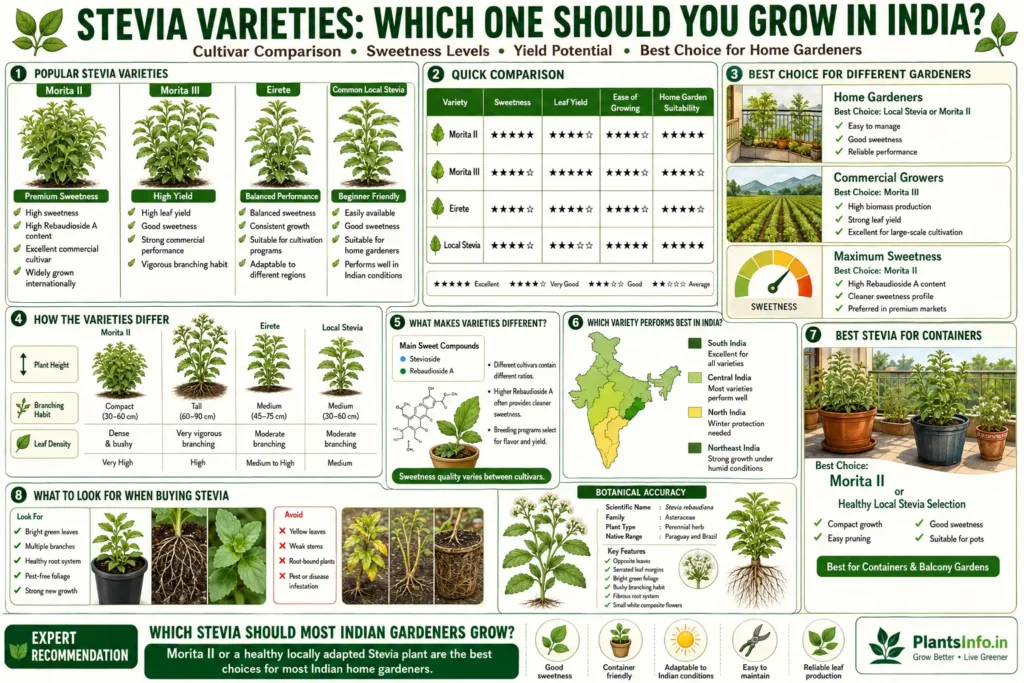
| Varieties | Morita II, SRT-1 (MPKV selection), Magnum (large-leaf); see Varieties Guide for full comparison. |
| Plant type | Herbaceous perennial shrub |
| Mature size | 40–60 cm tall, 30–40 cm wide |
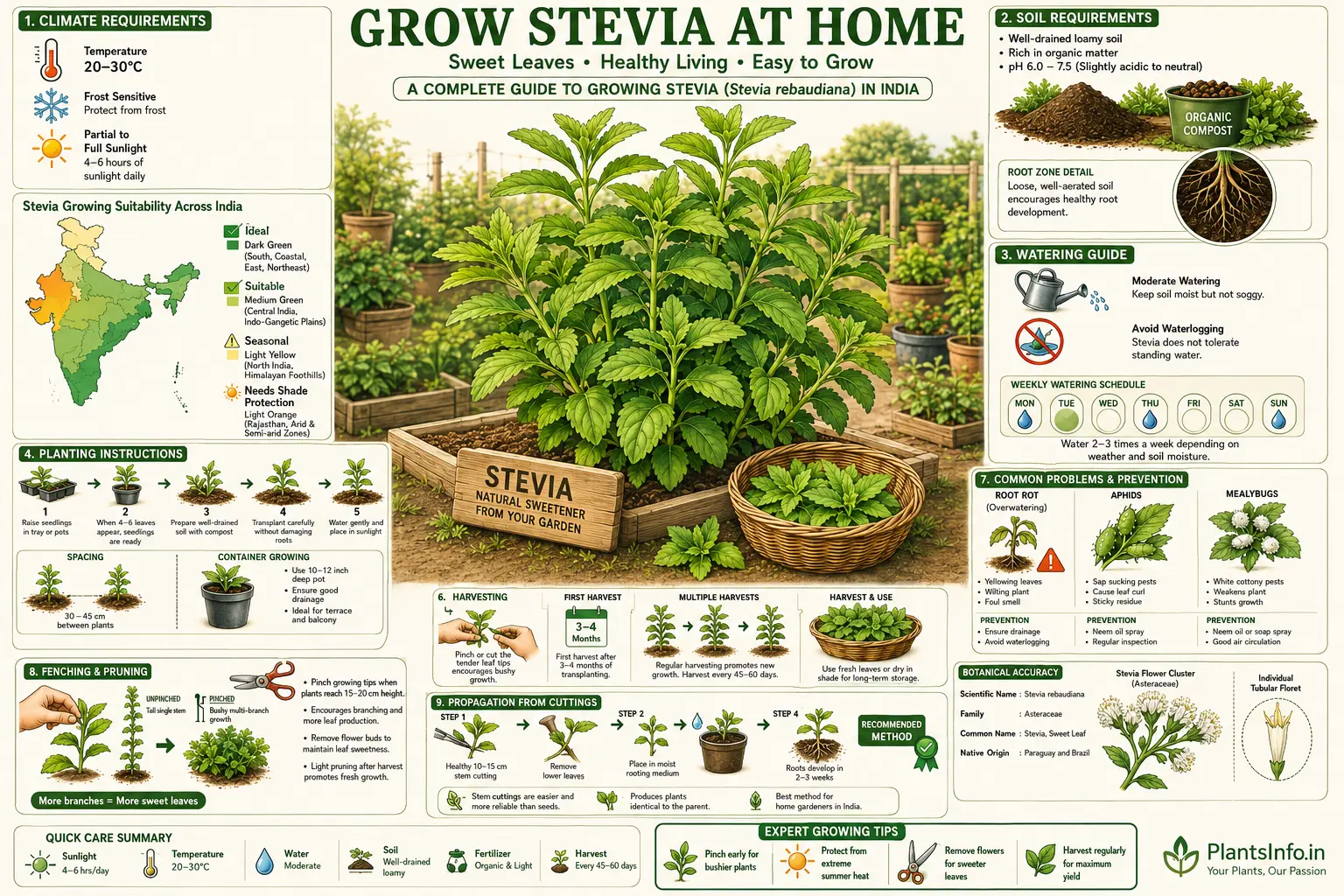
| Sunlight | Full sun, minimum 6 hours direct sunlight daily |
| Water needs | Moderate; consistent moisture with excellent drainage |
| Best season to plant | Post-monsoon (October–November) or late winter (February–March) |
| Suitable states | Maharashtra, Karnataka, Andhra Pradesh, Telangana, Tamil Nadu, Gujarat, Punjab, Himachal Pradesh, Uttarakhand |
Choosing the Right Spot
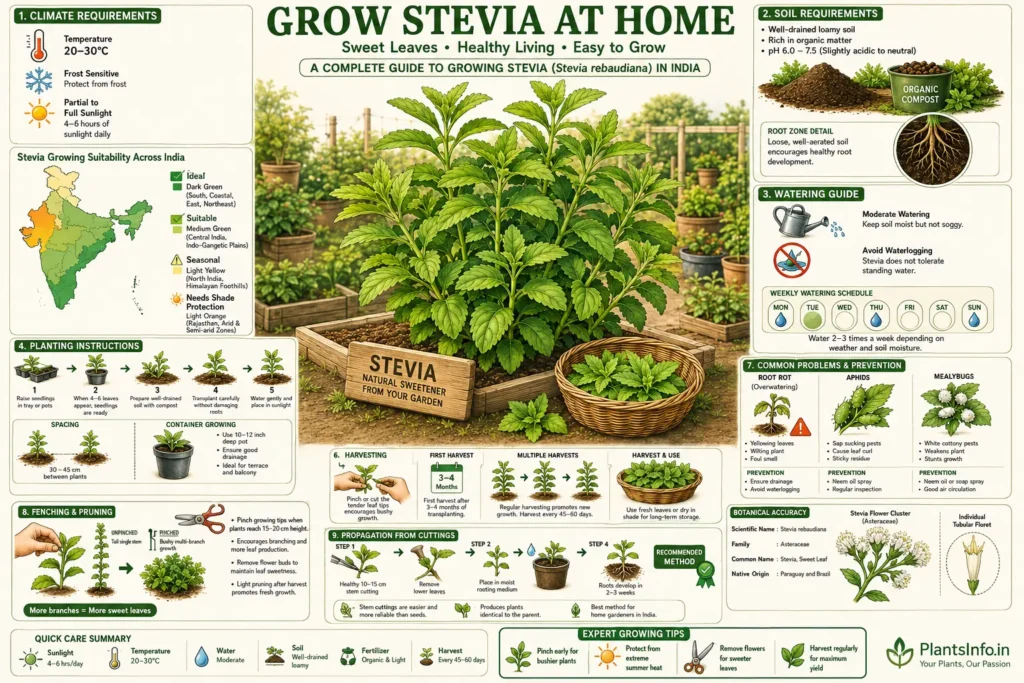
Stevia needs at least 6 hours of direct sunlight a day, and in most Indian plains conditions, morning sun with partial afternoon shade is ideal — especially in coastal zones like Mumbai, Chennai, and Vizag, where summer afternoons tip past 40°C. In hill stations and upland areas (Coorg, Nashik, Dehradun), full all-day sun suits the plant perfectly.
Keep the plant away from wall-facing spots that trap heat and humidity after monsoon rains. Good air circulation around the plant significantly reduces fungal problems, which are the biggest threat in humid climates.
Container vs. ground: Containers win for most Indian home gardeners. A pot allows you to move the plant under cover during heavy monsoon rain, control the soil mix precisely, and prevent the waterlogging that kills stevia faster than any pest. In the ground, stevia performs well only where the soil is genuinely sandy-loam and the drainage is reliable.
Soil and Potting Mix
Stevia prefers a light, well-drained sandy-loam soil with a pH of 6.5–7.5. Compact clay soils are the single most common reason stevia fails in Indian gardens — roots sit in moisture, rot begins, and the plant collapses within weeks.
For containers, a practical mix is: 40% cocopeat, 30% garden soil, 20% coarse river sand, and 10% vermicompost. This replicates the plant’s preferred free-draining environment while retaining just enough moisture between waterings. If using regular garden soil directly, work in at least 30% coarse sand and a generous handful of perlite or crushed brick per pot.
Common soil mistake: Indian gardeners often add too much compost, thinking richer is better. Stevia does not need high fertility — excess nitrogen from over-composted soil produces more stems and less of the sweet stevioside compounds in the leaves.
Planting — Season and Method
The best time to plant stevia in most of India is post-monsoon (October–November) when temperatures drop to 20–30°C and humidity eases. This gives the plant a full cool season to establish before summer stress. A late winter planting (February–March) also works in northern plains, but the plant will have a shorter productive window before April heat arrives.
Seed vs. sapling: Seeds are technically available, but germination is unreliable — stevia seeds have variable viability, and the process is slow. Stem cuttings or nursery-grown saplings are far more practical for home gardeners and give results weeks faster. Choose saplings with at least 4–6 nodes and healthy green foliage.
For planting, set saplings 30–40 cm apart (or one per 25–30 cm pot). Plant at the same depth the sapling sat in its nursery bag — burying the stem deeper invites rot. Water gently immediately after planting to settle the roots, then hold back and allow the surface to dry partially before the next watering.
Watering
In the first 4–6 weeks, water every 2–3 days, allowing the top 2 cm of soil to dry out between waterings. The goal is consistent moisture — not wet soil. Roots need to establish contact with the growing medium, but stevia detests standing water at any stage.
Mature plants in the ground need watering every 3–4 days in dry weather. Potted plants may need watering every 1–2 days in summer, as containers dry faster. A simple finger-test — soil is damp at 3 cm depth but not saturated — is the most reliable guide.
One specific overwatering sign: The stems just above the soil line turn translucent or water-soaked in appearance, followed by a soft, collapsing base. This is stem rot in progress, not just yellowing leaves. It is almost always fatal if not caught within two days.
Monsoon adjustment: Move container plants under a rain shelter or covered balcony during heavy monsoon spells. For ground-planted stevia, ridge the soil around the plant base to direct water away from the stem and add extra coarse sand to the surface as a drainage mulch.
Fertiliser
Stevia is a light feeder. Over-fertilisation — particularly with nitrogen — reduces leaf sweetness, which defeats the purpose of growing it.
Apply vermicompost (a small handful per pot, or 100–150 g per plant in the ground) at planting time and once again mid-season in December–January. Neem cake worked into the top soil at the same intervals provides slow nutrition and helps deter soil-borne pests. If using granular fertiliser, a balanced NPK 10:10:10 applied once at the start of the cool season is sufficient — one light application, not repeated doses.
One organic alternative: A diluted mustard cake solution (soak 50 g mustard cake in 2 litres of water overnight, dilute 1:4, apply monthly as a soil drench) provides gentle, sustained nutrition and improves soil structure. This is widely used by commercial stevia farmers in Maharashtra and Gujarat.
Common Problems and Fixes
The three problems most likely to affect stevia in Indian home gardens are:
- Stem rot/root rot — stem base becomes soft and dark; caused by overwatering or poorly drained soil.
- Powdery mildew — white powdery patches on leaves; caused by poor air circulation and high humidity during and after the monsoon.
- Aphid infestation — small clusters of soft insects on new growth and stem tips; more common in dry winter months.
For full diagnosis and treatment, see the Stevia Problems Guide.
When Will You See Results?
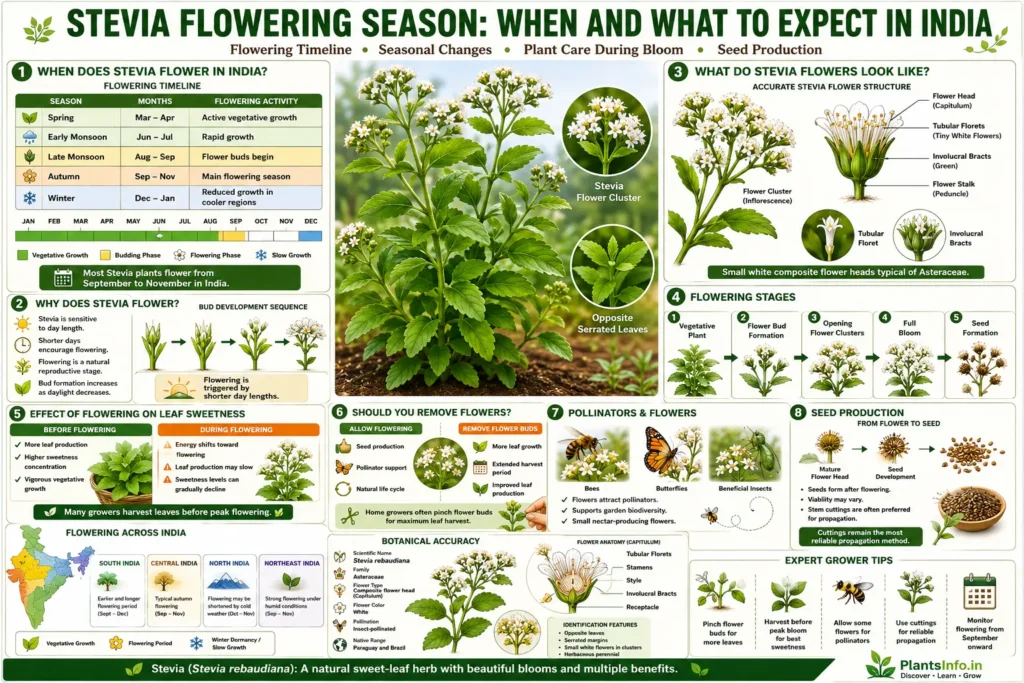
A healthy sapling planted in October will begin producing harvestable leaves within 6–8 weeks — typically by mid-November to early December. The plant will have reached a usable size of 30–40 cm by December–January, which is also its peak sweetness season in Indian conditions. First flowering — small white blooms — usually appears in January or February. Harvest leaves before the plant flowers for the highest stevioside content. In year one, expect 3–4 harvest rounds from a single plant.
Propagation
Stevia propagates best from stem cuttings, which is why most nursery saplings are cutting-grown rather than seed-raised. Take 10–12 cm cuttings just below a node, strip the lower leaves, and dip the base in a rooting hormone powder (widely available at Indian agri-inputs shops). Place in a mix of cocopeat and river sand, keep moist and in partial shade, and roots typically form within 15–20 days.
Success rates from cuttings run at 70–85% with basic care; seeding success is considerably lower and timing-dependent. The best time to take cuttings is September–October, just before the planting season, or February for a second cycle.
Container Growing
A pot with a minimum diameter of 25–30 cm and equivalent depth suits one stevia plant well. Terracotta pots are preferred in humid coastal cities — the clay’s breathability reduces root rot risk. Plastic pots work in drier zones (Rajasthan, interior Maharashtra) where moisture retention is helpful.
Use the drainage-focused mix described in the Soil section above. Ensure the pot has at least 3–4 drainage holes; add a layer of broken terracotta or gravel at the base to prevent holes from clogging.
Repot annually, at the start of the post-monsoon planting season, when roots begin emerging from the drainage holes or the plant begins wilting faster than usual between waterings.
Harvesting
Harvest leaves when the plant reaches 20–30 cm in height and before it begins to flower. Once flowering starts, leaf sweetness drops noticeably. Pinch off the top 5–8 cm of each branch — this harvests the sweetest young leaves and simultaneously encourages bushier, more productive growth.
For home use, harvest by hand in the morning hours when leaf moisture is at its peak. Dry-harvest leaves in thin layers on a clean tray in indirect sunlight or a well-ventilated shaded spot for 2–3 days. Store dried leaves in an airtight glass container away from moisture and direct light; properly dried leaves retain their sweetness for 8–12 months.
Seasonal Protection
Summer stress (April–June): In the north Indian plains, temperatures above 38–40°C will stress stevia significantly. Move containers to a spot with afternoon shade, increase watering frequency, and mist the foliage in the morning. Plants may die back to the base in peak summer — this is not necessarily fatal; they often regrow from roots when temperatures ease in September.
Winter dormancy: Stevia tolerates light frost poorly. In Punjab, Uttarakhand, and Himachal Pradesh, bring containers indoors or under a transparent plastic sheet during cold snaps below 5°C. The plant is not fully winter-hardy above 1,000 m elevation without protection.
Monsoon risks: Prolonged standing water and high humidity are the primary monsoon threats. Raised container placement, reduced watering, and shelter from direct heavy rain keep the plant healthy through July–September.
Key Takeaways
- Plant stevia in October–November for the most productive cool-season window in most Indian states.
- Container growing in a well-drained cocopeat-sand mix beats ground planting for most home gardeners — waterlogging is the number one killer.
- Harvest before flowering to get the sweetest leaves; pinching also keeps the plant compact and productive.
- Go light on fertiliser — excess nitrogen actively reduces leaf sweetness.
- Stem cuttings are far more reliable than seeds; look for saplings or cutting-grown stock at nurseries.
Start with one pot, one sapling, and one sunny windowsill — stevia will convince you it belongs in every Indian kitchen garden.
References
Brandle, J.E. and Rosa, N., 1992. Heritability for yield, leaf: stem ratio, and stevioside content estimated from a landrace cultivar of Stevia rebaudiana. Canadian Journal of Plant Science, 72(4), pp.1263–1266.
Ceunen, S. and Geuns, J.M.C., 2013. Steviol glycosides: Chemical diversity, metabolism, and function. Journal of Natural Products, 76(6), pp.1201–1228.
Kinghorn, A.D., 2002. Stevia: The Genus Stevia. London: Taylor & Francis.
Lemus-Mondaca, R., Vega-Gálvez, A., Zura-Bravo, L. and Ah-Hen, K., 2012. Stevia rebaudiana Bertoni, source of a high-potency natural sweetener: A comprehensive review on the biochemical, nutritional and functional aspects. Food Chemistry, 132(3), pp.1121–1132.
Midmore, D.J. and Rank, A.H., 2002. A New Rural Industry – Stevia – To Replace Imported Chemical Sweeteners. Rural Industries Research and Development Corporation Publication No. 02/022.
Ramesh, K., Singh, V. and Megeji, N.W., 2006. Cultivation of stevia (Stevia rebaudiana Bertoni): A comprehensive review. Advances in Agronomy, 89, pp.137–177.
Shock, C.C., Feibert, E.B.G., and Seddigh, M., 1995. Tolerance of Stevia rebaudiana to water stress. Journal of Herbs, Spices & Medicinal Plants, 3(4), pp.35–40.
Singh, S.D. and Rao, G.P., 2005. Stevia: The herbal sugar of the 21st century. Sugar Tech, 7(1), pp.17–24.
United States Department of Agriculture (USDA), Germplasm Resources Information Network (GRIN). Stevia rebaudiana Bertoni. Available from the USDA GRIN database.
World Health Organization (WHO) and Food and Agriculture Organization (FAO), Joint Expert Committee on Food Additives (JECFA). Safety evaluation of steviol glycosides and related reports.