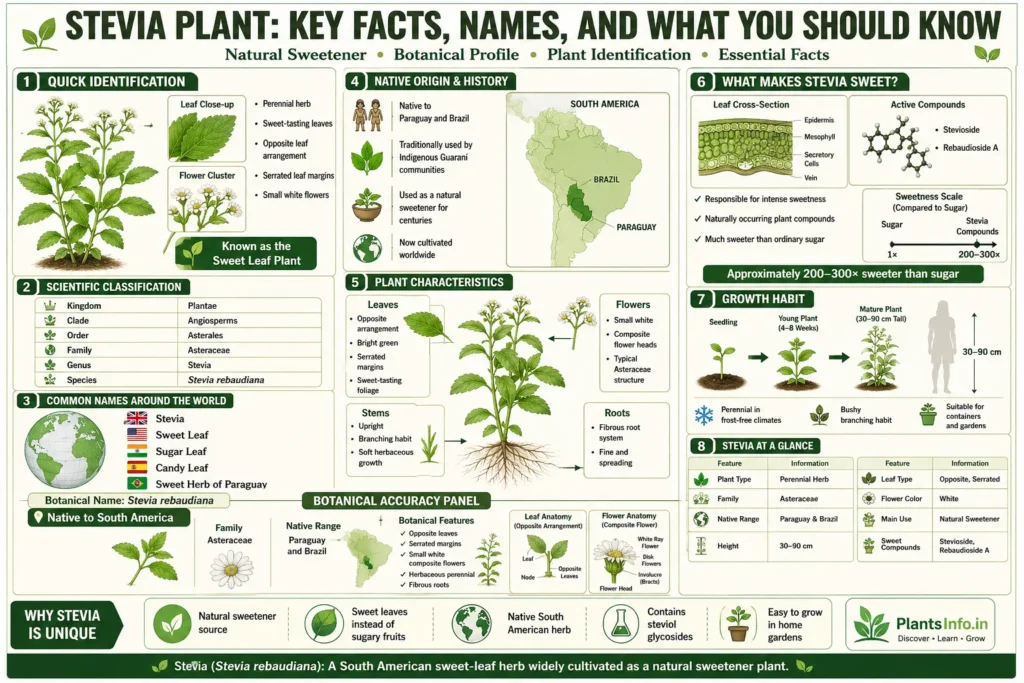
Stevia Plant Problems: Symptoms, Causes, and Fixes
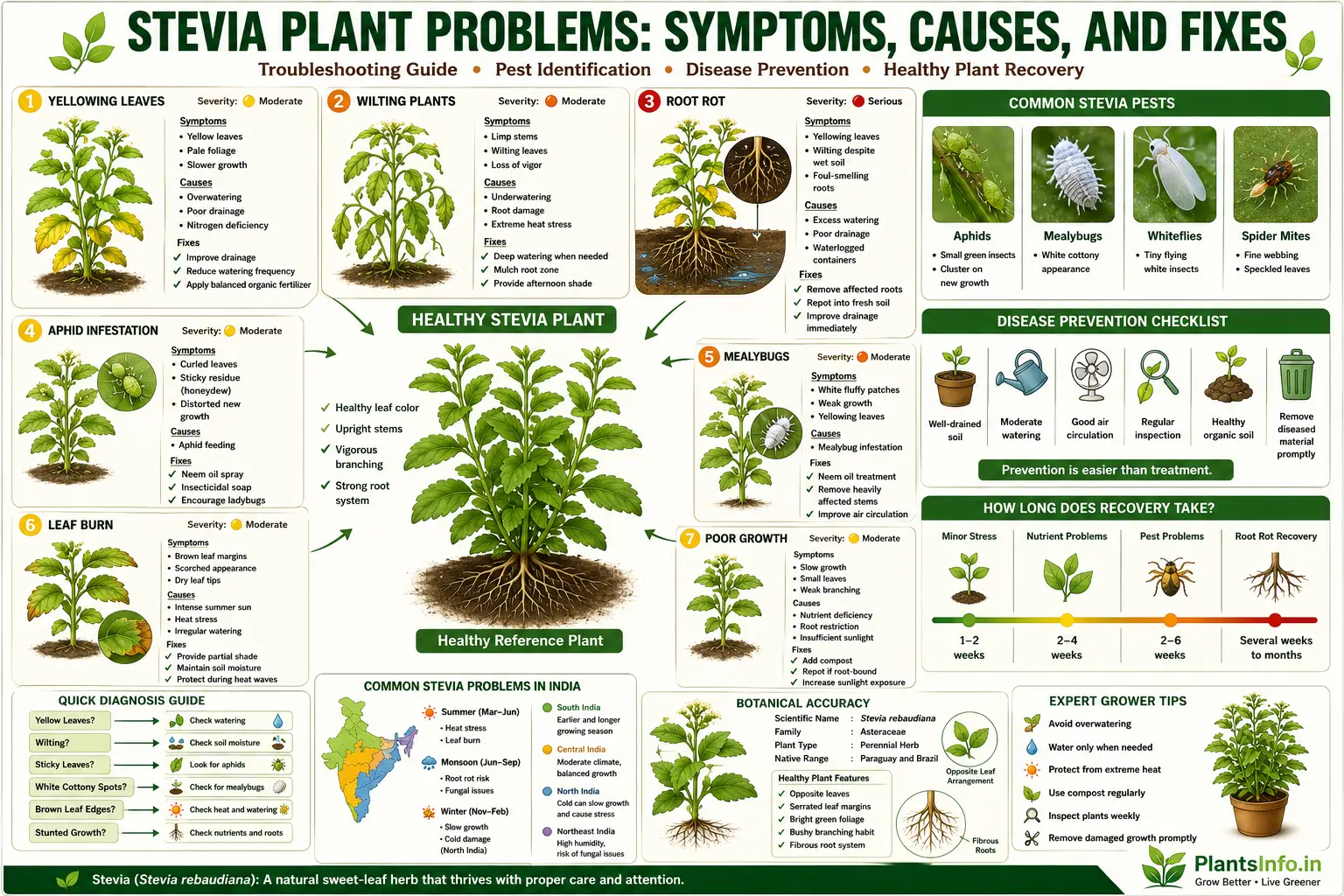
Quick Answer: The most common stevia problems in Indian gardens are stem rot from overwatering and powdery mildew from poor air circulation during monsoon. Most stevia problems are preventable with correct drainage and seasonal management. A plant that collapses at the base in wet conditions almost always has stem rot — the most urgent and common problem to know.
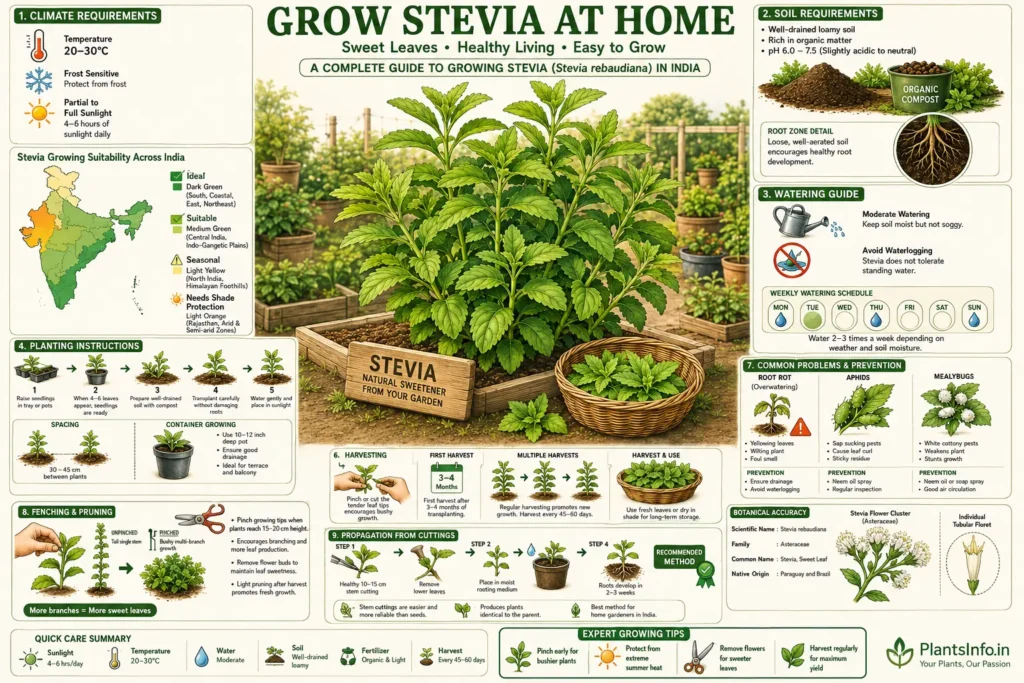
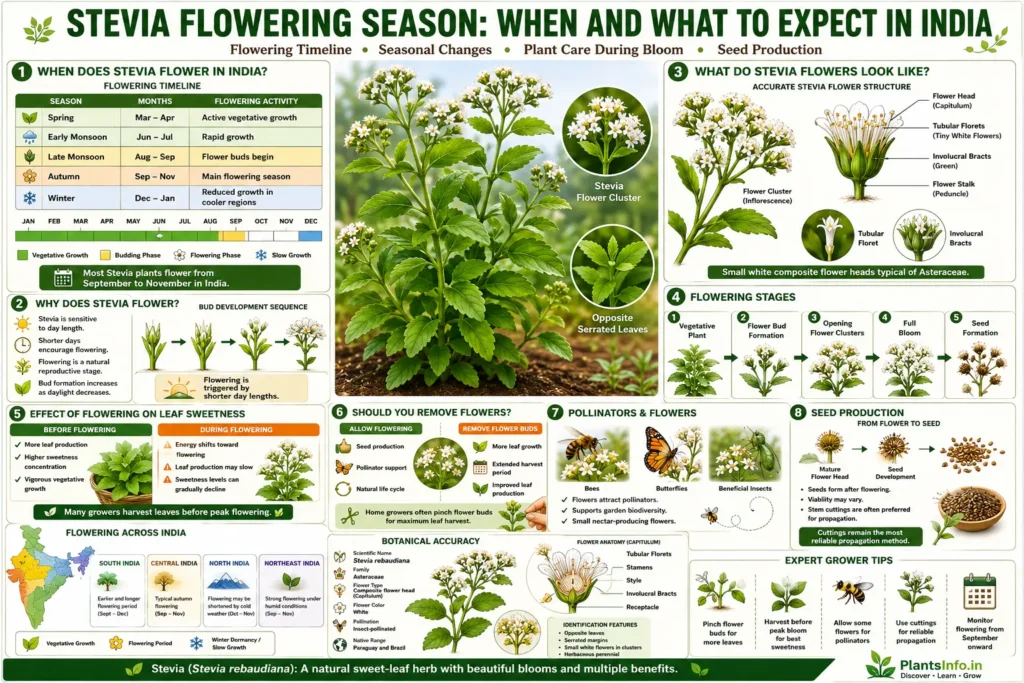
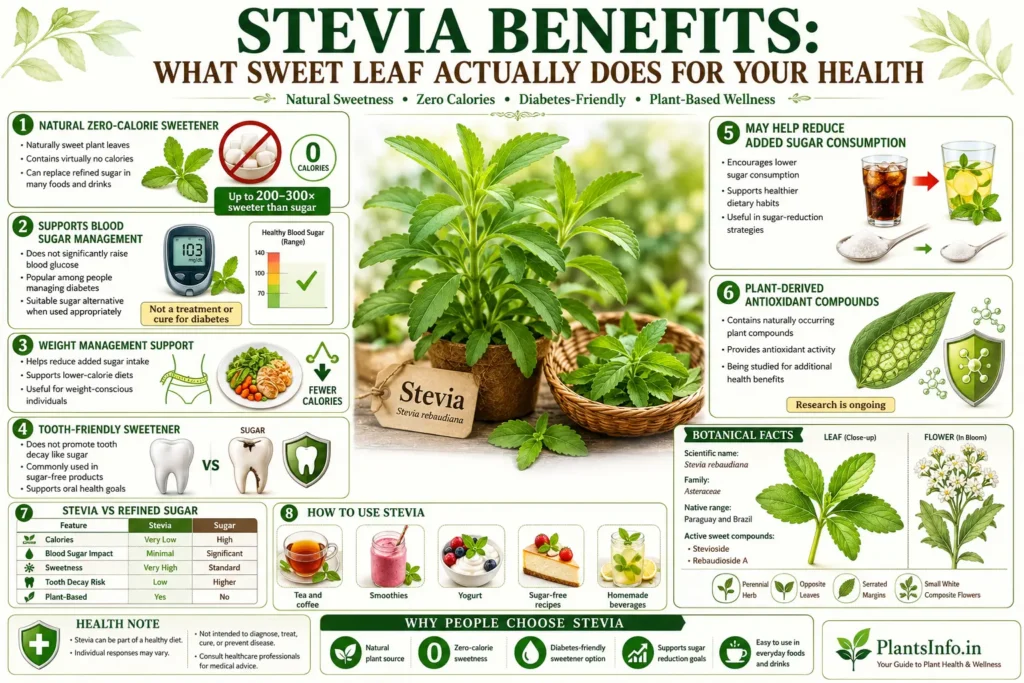
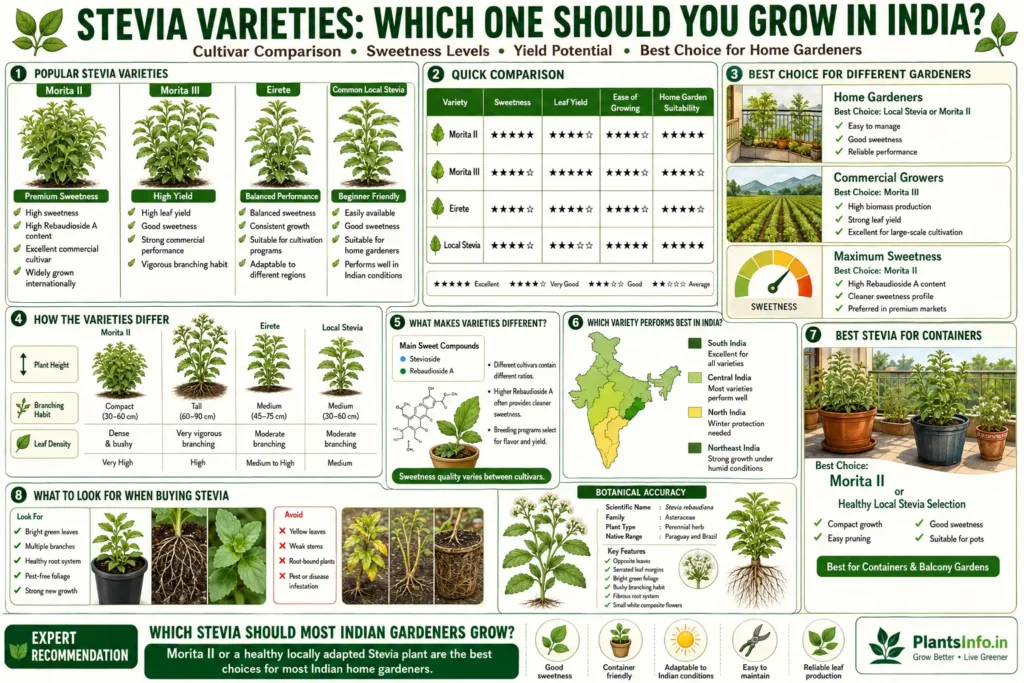
See also: Stevia rebaudiana plant profile, how to grow it, its flowering season, its benefits, and its varieties.
Most stevia problems arrive the same way: gradually, then all at once. The stem softens slightly at the base for a day or two, the gardener notices the plant looks “a little tired,” and by the time wilting becomes obvious, the rot has already reached the roots. Stevia is not a fragile plant — but it is unforgiving of wet soil, and most problems trace back to that single mistake.
Recommended Products
Disclosure: As an Amazon Associate, PlantsInfo may earn from qualifying purchases.
🌱 Growing Essentials
The following products can help with container gardening, potting, root development, soil management, and healthy plant growth.
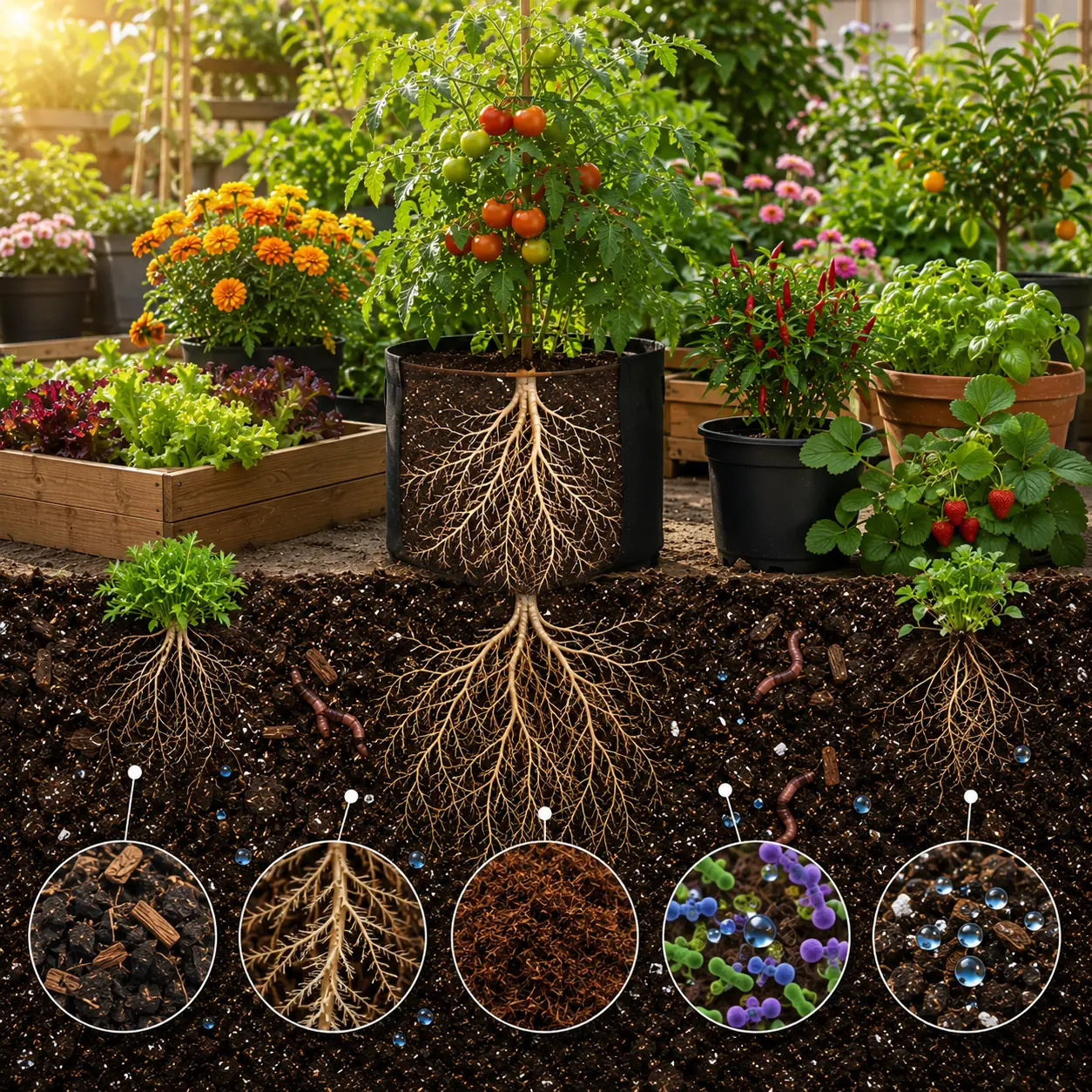
Organic Potting Soil Mix
Provides nutrients, structure, and healthy growing conditions for container plants.
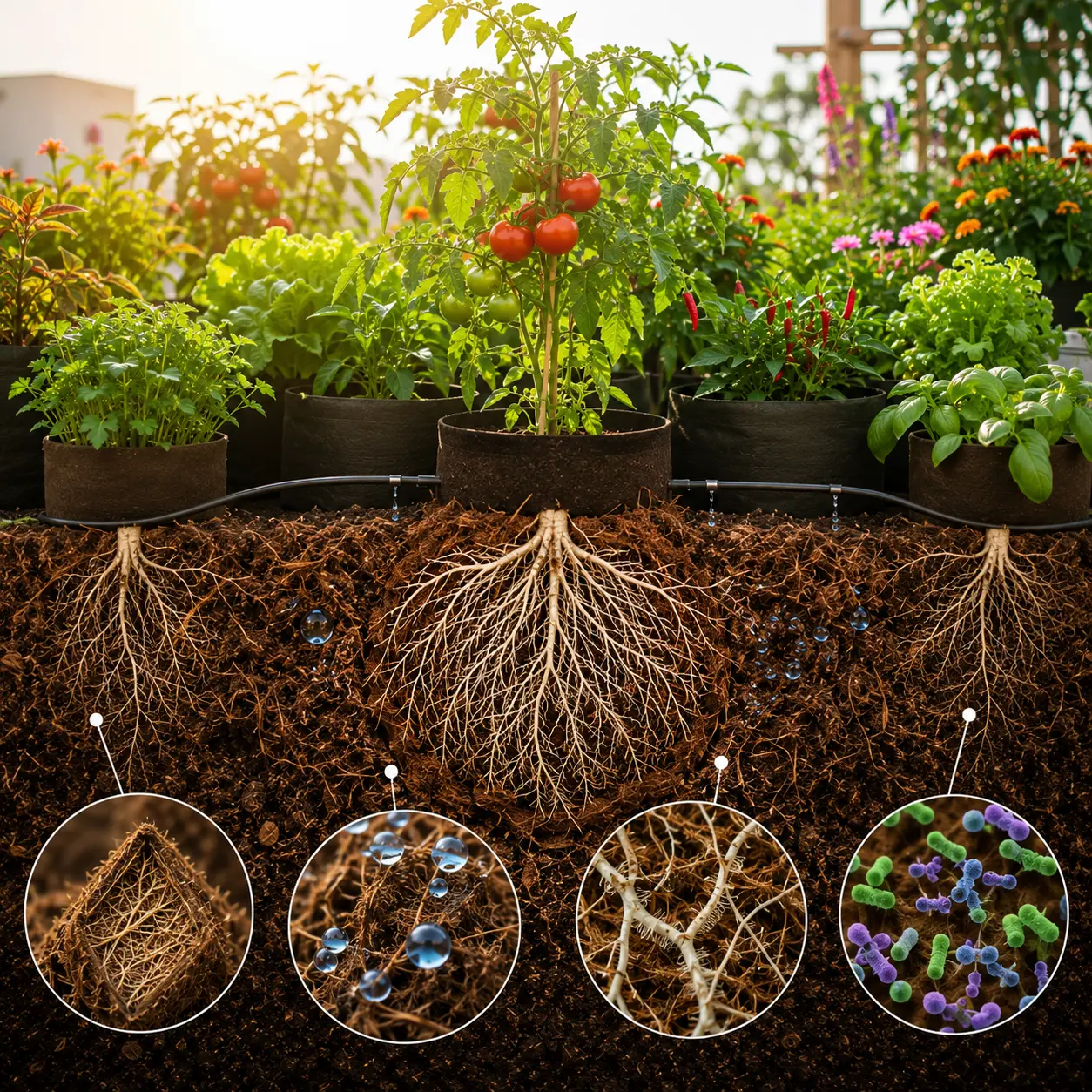
Coco Peat Growing Medium
Enhances moisture retention while maintaining excellent root-zone aeration.

Grow Bags for Plants
Improve drainage, root aeration, and vegetable production in limited spaces.

Plastic Pots for Plants
Ideal containers for seedlings, ornamentals, herbs, and balcony gardens.
Quick Diagnosis
| Symptom | Most Likely Cause | First Action |
|---|---|---|
| Soft, translucent stem base | Stem rot (fungal/overwatering) | Remove from wet soil; trim affected stem |
| White powdery patches on leaves | Powdery mildew | Improve air circulation; apply neem oil |
| Sticky residue on new shoots | Aphid infestation | Blast with water; apply neem solution |
| Yellowing lower leaves, plant still upright | Overwatering or nitrogen excess | Reduce watering; check drainage |
| Leaves crinkled, distorted new growth | Viral mosaic or mite damage | Isolate plant; inspect with magnifier |
| Browning leaf tips and margins | Heat stress or salt buildup in soil | Move to shade; flush pot with fresh water |
| Sudden wilt without visible rot | Root rot or severe drought stress | Check roots — brown and mushy = rot; dry = water immediately |
Diseases
Stem Rot and Root Rot
Stem rot is the most common disease affecting stevia in Indian conditions, and it is almost always caused by overwatering combined with poor drainage rather than a soil pathogen alone. The visual progression is specific: the stem tissue just above the soil line becomes water-soaked and translucent, then darkens to brown or black, then the plant wilts suddenly as vascular transport fails. Root rot follows the same pattern below the soil surface — roots become brown, mushy, and smell faintly sour.
The fungal agents most commonly involved are Pythium and Fusarium species, which are ubiquitous in Indian garden soils and activate when conditions are persistently wet. Once stem rot has progressed past the first node above the soil, the plant is unlikely to recover. If caught early, soft tissue limited to the very base — cutting the affected portion cleanly and repotting in a dry, well-drained mix gives the plant a chance. Prevention is the only reliable strategy: coarse well-drained potting mix, adequate drainage holes, and watering restraint, especially during and after the monsoon.
Powdery Mildew
Powdery mildew appears as white or grey powdery patches on the upper surface of leaves, particularly on older lower leaves and stems. Unlike many fungal diseases, powdery mildew does not require leaf wetness to spread — it thrives in conditions of high humidity combined with poor air circulation and moderate temperatures (20–28°C), which describes most Indian gardens from September through November.
The disease does not kill stevia plants directly but significantly reduces photosynthetic capacity and leaf quality. Heavily infected leaves are not suitable for consumption. The condition can be managed but not fully cured once established — affected leaves should be removed and destroyed, and the plant moved to a better-ventilated location. Preventive sprays of diluted neem oil (2–3 ml per litre of water) applied every 10–14 days from September are the most reliable organic management approach. Wettable sulphur is an effective conventional option.
Leaf Spot (Fungal)
Circular brown spots with a slightly darker border on the leaf surface, often with a yellow halo, indicate fungal leaf spot. The most common causative agents in Indian conditions are Alternaria and Cercospora species. Infection is spread by water splash during overhead irrigation or rain, which is why it is most frequent in monsoon and immediately post-monsoon conditions.
Leaf spot is manageable rather than fatal. Remove and destroy all infected leaves promptly. Avoid overhead watering — water at the soil level. A copper oxychloride spray (per label instructions) applied at 10-day intervals controls the spread effectively. In mild infections, improved drainage and ventilation alone often arrest the disease without chemical intervention.
Viral Mosaic
Mosaic virus in stevia presents as irregular yellow-green mottling on leaves, with new growth appearing distorted, puckered, or unusually narrow. The plant’s overall vigour declines, and leaf sweetness drops noticeably. Viral diseases are spread primarily by aphids and thrips acting as vectors.
There is no cure for mosaic virus once a plant is infected. The plant must be removed and destroyed — do not compost infected material, as the virus can persist. The priority after removal is controlling aphid populations on nearby plants to prevent spread. Soil in the container or ground spot can be reused after allowing it to dry out and replenishing it with a fresh mix; the virus does not persist in soil.
Pest Problems
Aphids
Aphids on stevia are small, soft-bodied insects — typically pale green or yellowish — clustering densely on new shoot tips and the undersides of young leaves. They feed by piercing the leaf tissue and extracting sap, causing new growth to curl, distort, and become sticky from their honeydew secretion. A black sooty mould often grows on this honeydew, coating leaf surfaces.
Aphid infestations are worst in dry, cool weather — October through February — when natural predators are less active.
Organic fix: A forceful jet of water from a hose or spray bottle dislodges most colonies immediately and is the first line of response. Follow with a neem oil spray (5 ml neem oil + 1 ml liquid soap in 1 litre water) every 5–7 days until the infestation clears.
Chemical option: Imidacloprid-based insecticide diluted per label instructions — note that this is a systemic insecticide, and treated leaves should not be harvested for at least 14 days after application on an edible crop.
Note: A heavy aphid infestation on stevia is sometimes mistaken for a disease because of the associated leaf distortion and sooty mould coating. Wipe a leaf surface — if the black coating transfers and sticky insects are visible underneath, it is aphid-related, not a primary fungal disease.
Spider Mites
Spider mites are too small to see individually but leave characteristic signs: a fine bronze or silver stippling on the upper leaf surface where individual cells have been drained, and — in heavier infestations — fine silk webbing on stem tips and leaf undersides. Infestations escalate rapidly in hot, dry conditions (April–June) and in plants that are drought-stressed.
Mites are not insects and do not respond to most standard insecticides.
Organic fix: Neem oil spray is effective and safe on an edible crop; spray thoroughly on leaf undersides where mites concentrate. Increasing humidity around the plant (misting, grouping with other plants) reduces mite populations.
Chemical option: Specific acaricides (miticides) such as abamectin or spiromesifen are effective for severe infestations — use as per label instructions and observe the required pre-harvest interval.
Whiteflies
Whiteflies appear as tiny (1–2 mm) white moth-like insects that burst into flight when the plant is disturbed. They feed on leaf undersides and, like aphids, produce honeydew that encourages sooty mould. Stevia is not their preferred host, but infestations occur when whitefly populations on nearby plants are high.
Organic fix: Yellow sticky traps placed near the plant catch adults effectively and serve as a monitoring tool. Neem oil spray on leaf undersides weekly breaks the population cycle.
Chemical option: Thiamethoxam-based contact sprays are effective; observe pre-harvest intervals on edible crops.
This information is for general guidance only. Always read product labels before applying any pesticide or fungicide. Follow state agriculture department guidelines for food crops. Keep children and pets away during and after application.
Environmental and Care Mistakes
Overwatering (The Universal First Mistake)
The symptom is a plant that looks waterlogged and tired — leaves lose their firm texture, lower leaves yellow and drop, and the stem base begins to soften. The cause is always excess water combined with insufficient drainage. This is the single mistake almost every first-time stevia grower makes — the plant looks thirsty because it is wilting, more water is applied, and the cycle accelerates.
The fix is to stop watering immediately, allow the soil to dry out partially, and assess the stem base. If rot has not yet reached woody stem tissue, recovery is possible. Long-term, the solution is in the soil and pot — not the watering schedule. See the Growing Guide for the correct soil mix and drainage setup.
Insufficient Sunlight
Stevia grown in less than 4–5 hours of direct sun becomes visibly etiolated: stems lengthen abnormally between nodes, leaves become smaller and paler, and the plant takes on a sparse, reaching appearance. Critically, leaf sweetness also drops — stevioside synthesis is light-dependent, and shaded plants produce less of it.
Move the plant to a location with at least 6 hours of direct sun. If this is not possible in the current spot, the plant will remain unproductive regardless of other care. Recovery after moving is typically visible within 2–3 weeks.
Transplant Shock
A newly transplanted stevia sapling often wilts within the first 2–3 days, alarming new gardeners into overwatering. The cause is root disturbance — the plant has not yet established contact with the new soil. The correct response is to water once gently after planting, then hold back until mild leaf recovery is visible. Excessive post-transplant watering is a very common mistake that converts normal transplant stress into fatal stem rot.
Keep newly transplanted plants in partial shade for the first 5–7 days before moving them to full sun.
Monsoon Mismanagement
Stevia left outdoors in uncovered ground or pots through Indian monsoon conditions — particularly in coastal and central India — is routinely killed by the combination of excess water and reduced sunlight. This is mistaken for seasonal natural death, but it is avoidable. Move container plants under a covered area during heavy monsoon spells; ridge the soil around ground-planted specimens to direct water away from the stem base.
Prevention Protocol
Before monsoon onset (late May), move all container stevia to a rain-sheltered spot or prepare raised ridges around ground plants to redirect runoff. During October planting, verify that the potting mix drains visibly within 30 seconds of watering — if it does not, add more coarse sand before planting. From September through November, inspect stem bases weekly for the first sign of soft tissue. Keep a gap of at least 20–25 cm between stevia and neighbouring plants to maintain airflow and reduce powdery mildew risk. Apply a neem oil spray preventively at 14-day intervals from September through November, before disease pressure typically builds.
Frequently Asked Questions
Why are my stevia leaves turning yellow?
Yellow leaves on stevia are most commonly caused by overwatering and poor drainage. The lower leaves usually turn pale yellow first before dropping. In other cases, excessive fertiliser, prolonged shade, or natural ageing after flowering can also cause yellowing. Check the soil before watering again — if it feels wet several centimetres below the surface, excess moisture is the most likely cause. Improving drainage and reducing watering frequency usually resolves the problem.
Can a stevia plant recover from root rot?
A stevia plant can sometimes recover from root rot if the problem is detected early. Remove the plant from the soil and inspect the roots. Healthy roots are firm and light coloured, while rotted roots are brown, soft, and mushy. Trim away damaged roots, discard waterlogged soil, and repot the plant in a fresh, free-draining growing mix. If rot has spread into the main stem and the stem base has become black or soft, recovery is unlikely, and replacement is usually the better option.
Why is my stevia plant wilting?
Wilting in stevia can result from either too much water or too little. Overwatered plants often wilt despite wet soil because damaged roots can no longer absorb oxygen and water effectively. Drought-stressed plants wilt because the soil has become excessively dry. Before watering, always check the soil moisture level and inspect the stem base for signs of rot. Sudden wilting during hot weather may also be caused by heat stress, particularly when temperatures remain above 35°C for extended periods.
How do I treat powdery mildew on stevia?
Powdery mildew appears as white or grey powdery patches on leaves and stems, especially during humid weather with poor air circulation. Remove heavily affected leaves and improve airflow around the plant by increasing spacing and pruning overcrowded growth. Avoid wetting foliage unnecessarily and keep the growing area well ventilated. Preventive applications of diluted neem oil can help slow the spread, while wettable sulphur products may be used according to label directions when infections become severe. Leaves heavily covered with powdery mildew should not be harvested for consumption.
When to Give Up on a Plant
If the stem is black and mushy from the soil level upward for more than 3–4 cm, and the rot has reached the first node above the soil, the plant will not recover. Remove it from the pot or soil immediately. Do not compost any diseased material — bag and dispose of it. If the plant showed viral mosaic symptoms, remove and discard it entirely; there is no treatment, and the virus spreads by insect vectors.
Before replanting stevia in the same pot or ground spot, empty the soil completely, wash the container with a diluted bleach solution, and refill with fresh potting mix. In ground plantings, allow the spot to rest for at least one season. Replanting directly into soil that hosted a rotted stevia plant in the same season significantly increases recurrence risk.
Stevia is forgiving on most fronts — but wet roots and poor airflow are the two things it will not tolerate. Address those two conditions, and most of the problems on this page become unlikely rather than inevitable.