Pudina Flowering Season: When and What to Expect in India
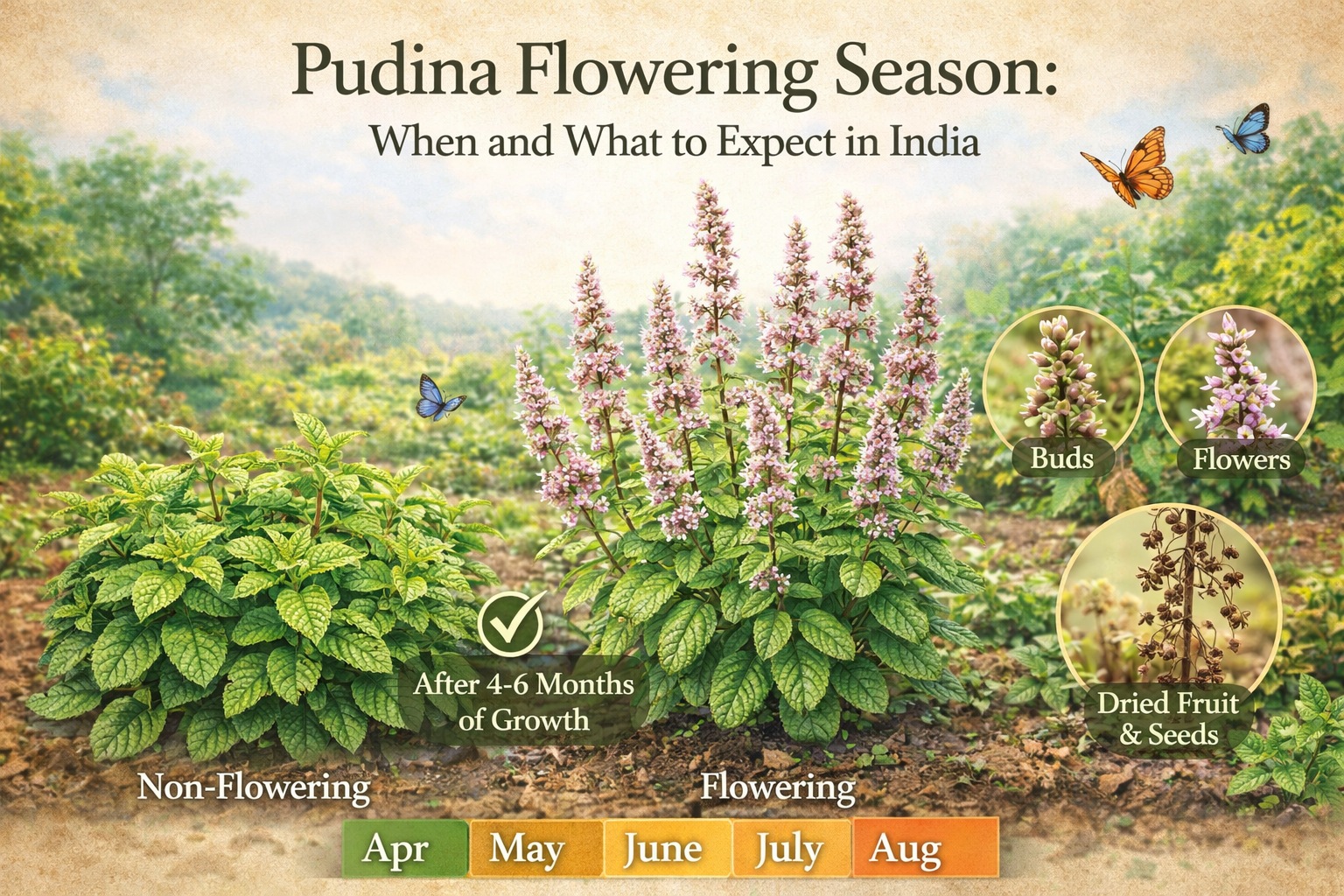
Quick Answer: Pudina flowers during monsoon and post-monsoon months (July–October) in most of India, producing small purple or pink flower spikes. The best time to plant is October–February during cooler weather. Pudina grows actively most of the year but slows during extreme heat and cold.
See also: Mint Plant plant profile, how to grow it, common problems, its benefits, and its varieties.
If you’re waiting for pudina to flower before harvesting, you’re already too late. Those purple flower spikes signal the plant’s shift from vegetative growth to reproduction — and the leaves turn bitter. Smart growers pinch off flower buds as soon as they appear, keeping the plant focused on producing the tender, aromatic leaves you actually want. Timing varies by region, but in most of India, expect flowering attempts from the monsoon onward.
Recommended Products
Disclosure: As an Amazon Associate, PlantsInfo may earn from qualifying purchases.
🌱 Growing Essentials
The following products can help with container gardening, potting, root development, soil management, and healthy plant growth.
Organic Potting Soil Mix
Provides nutrients, structure, and healthy growing conditions for container plants.
Coco Peat Growing Medium
Enhances moisture retention while maintaining excellent root-zone aeration.

Grow Bags for Plants
Improve drainage, root aeration, and vegetable production in limited spaces.

Plastic Pots for Plants
Ideal containers for seedlings, ornamentals, herbs, and balcony gardens.
India’s Seasons and This Plant
| Season (months) | What the plant is doing |
|---|---|
| Pre-monsoon (Mar–May) | Active growth in cooler regions; slows in hot plains. Requires frequent watering. Harvest regularly to prevent flowering. |
| Monsoon (Jun–Sep) | Peak growth period. Flowers appear in August–September if not pinched. Reduce watering as rainfall increases. Watch for fungal issues. |
| Post-monsoon (Oct–Nov) | Second growth flush. Flowering continues if allowed. Best time for planting new stock. Moderate water needs. |
| Winter (Dec–Feb) | Steady growth in most regions. Slows in very cold areas. Ideal for planting cuttings. Minimal water needed. Leaves most aromatic. |
Flowering Season in Detail
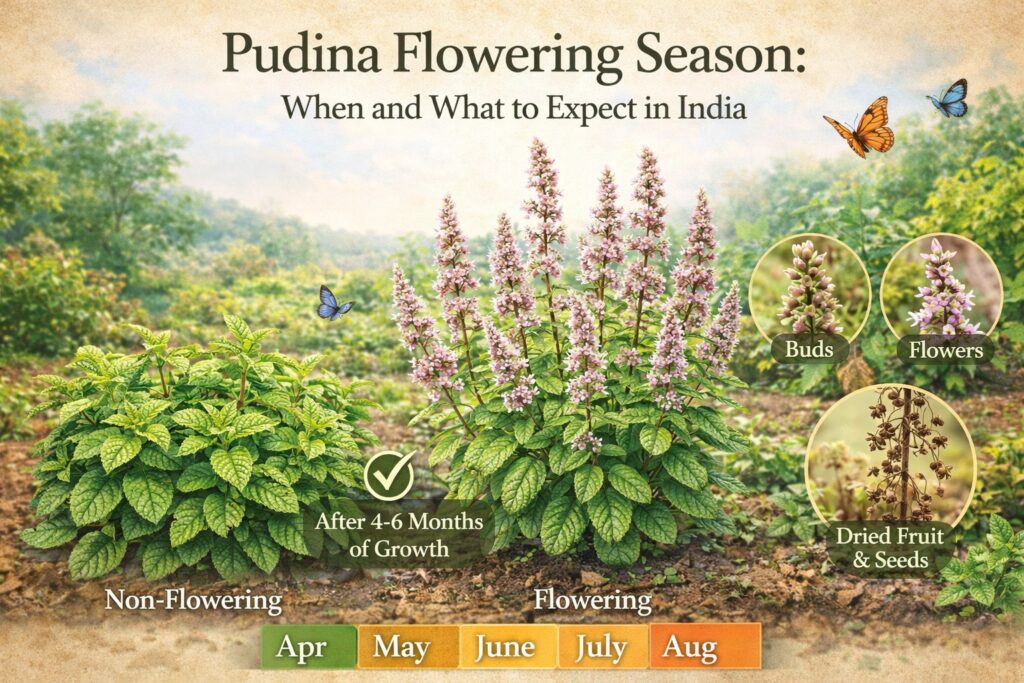
Pudina typically flowers during the monsoon and post-monsoon period, roughly July through October, with peak bloom in August–September. However, flowering depends more on plant maturity and stress than on strict calendar timing.
Flower buds form at the tips of stems as small, tight clusters. These elongate into spikes 3–5 cm long, covered in tiny tubular flowers that open progressively from bottom to top. The flowers are pale purple to pinkish-white and attract bees and other pollinators.
Flowering lasts 3–4 weeks if allowed to proceed. The flowers themselves are mildly fragrant but less aromatic than the leaves.
What triggers flowering: Several factors prompt pudina to bloom. Long day length (14+ hours) in summer signals the plant to reproduce. Stress from drought, root crowding, or nutrient depletion accelerates flowering. Mature plants flower more readily than young ones.
Regional variation: In cooler hill regions, flowering may occur later, in September–October. In hot plains, the first flowering attempt can come as early as May–June if the plant is stressed. Container plants flower earlier than ground-planted ones due to root restriction.
Why you should prevent flowering: Once pudina flowers, leaf production slows and flavor quality drops. The leaves become tougher, smaller, and develop a bitter edge. The essential oil composition changes, reducing the pleasant cooling sensation.
Regular pinching of the stem tips prevents flowering entirely. If buds appear, remove them immediately. This keeps the plant in vegetative mode, producing tender leaves continuously.
Best Time to Plant
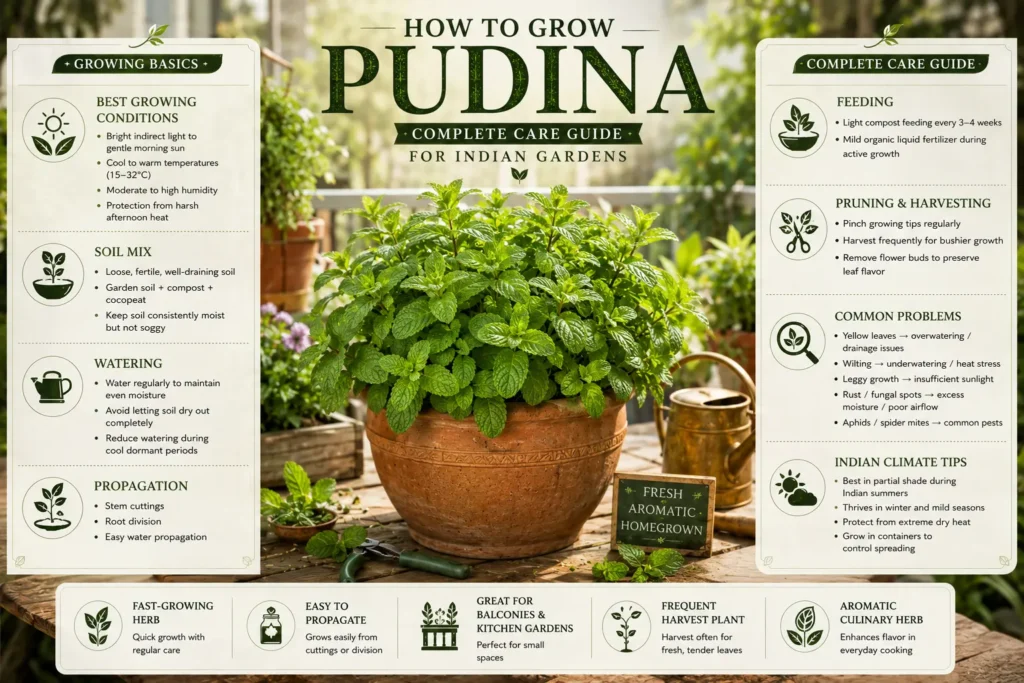
The ideal planting window is October through February — India’s cooler season. Temperatures ranging from 15°C to 25°C are optimal for establishing new plants without heat stress.
Why this season works: Cooler weather reduces water stress on newly planted cuttings or transplants. The plant establishes strong roots before facing summer heat. Growth is steady and reliable. Pest and disease pressure is lower.
In regions with mild winters (most plains), planting any time from October to March works well. In very cold hill regions, wait until late February or early March when severe frost risk passes.
Second-best option: Early monsoon (June–July) also works, provided you manage moisture carefully. Abundant rainfall reduces the need for manual watering, but excessive wetness increases fungal disease risk. Ensure good drainage.
Avoid planting: Late summer (April–May) in hot regions. High temperatures above 35°C stress young plants, requiring intensive watering and shade. Survival rates drop, and growth slows.
Container vs. ground timing: Container planting is less season-dependent because you can control water and move pots to shade. Ground planting should follow seasonal guidelines more strictly — October–February remains best.
Month-by-Month Care Calendar
| Month | Season | Key Task |
|---|---|---|
| January | Winter | Light harvest. Water weekly. Plant new cuttings. Apply compost if leaves yellow. |
| February | Winter | Begin regular harvesting. Prepare beds for spring planting. Divide overcrowded clumps. |
| March | Pre-monsoon | Increase watering frequency. Mulch around plants. Watch for aphids on new growth. |
| April | Pre-monsoon | Water deeply every 2–3 days. Provide afternoon shade in hot regions. Pinch stem tips. |
| May | Pre-monsoon | Daily watering may be needed. Remove flower buds immediately. Harvest lightly to reduce plant stress. |
| June | Monsoon | Reduce watering as rains arrive. Ensure drainage to prevent waterlogging. Plant new stock if desired. |
| July | Monsoon | Monitor for powdery mildew and fungal spots. Remove affected leaves. Harvest actively. |
| August | Monsoon | Best month for planting. Reduce watering as the soil retains moisture. Divide and replant crowded areas. |
| September | Monsoon | Continue pinching flowers. Heavy harvest possible. Feed with compost or liquid fertilizer. |
| October | Post-monsoon | Resume regular watering schedule. Prune back overgrown plants. Harvest before the winter slowdown in cold regions. |
| November | Post-monsoon | Resume regular watering schedule. Prune back overgrown plants. Harvest before winter slowdown in cold regions. |
| December | Winter | Light watering. Mulch in very cold areas. Allow established plants to rest slightly. Minimal feeding. |
What Can Go Wrong Seasonally?
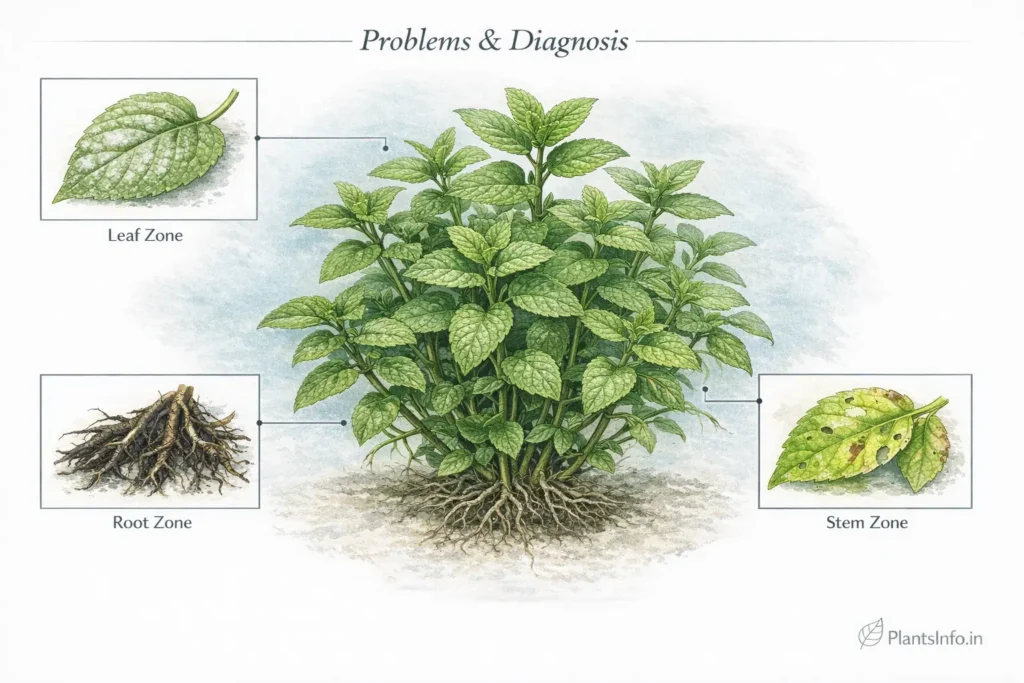
Monsoon fungal infections: High humidity during June–September promotes powdery mildew (white coating on leaves) and leaf spot (brown patches). Improve air circulation by spacing plants wider. Remove and discard infected leaves — don’t compost them. Spray diluted neem oil as a preventive.
Summer drought stress: In April–May, inadequate water causes leaves to wilt, edges to brown, and growth to halt. The plant may prematurely flower as a stress response. Water deeply and regularly. Mulch the soil surface to retain moisture.
Winter growth slowdown mistaken for disease: In regions where temperatures drop below 10°C (North India hills), pudina naturally slows growth or even dies back to ground level. This is normal dormancy, not death. The plant regrows from roots when warmth returns. Don’t overwater dormant plants.
Conclusion
Pudina’s growing season spans most of the year in India, with cooler months offering the easiest cultivation. Pinch flowers to keep leaves coming and time your planting to October–February for best results.