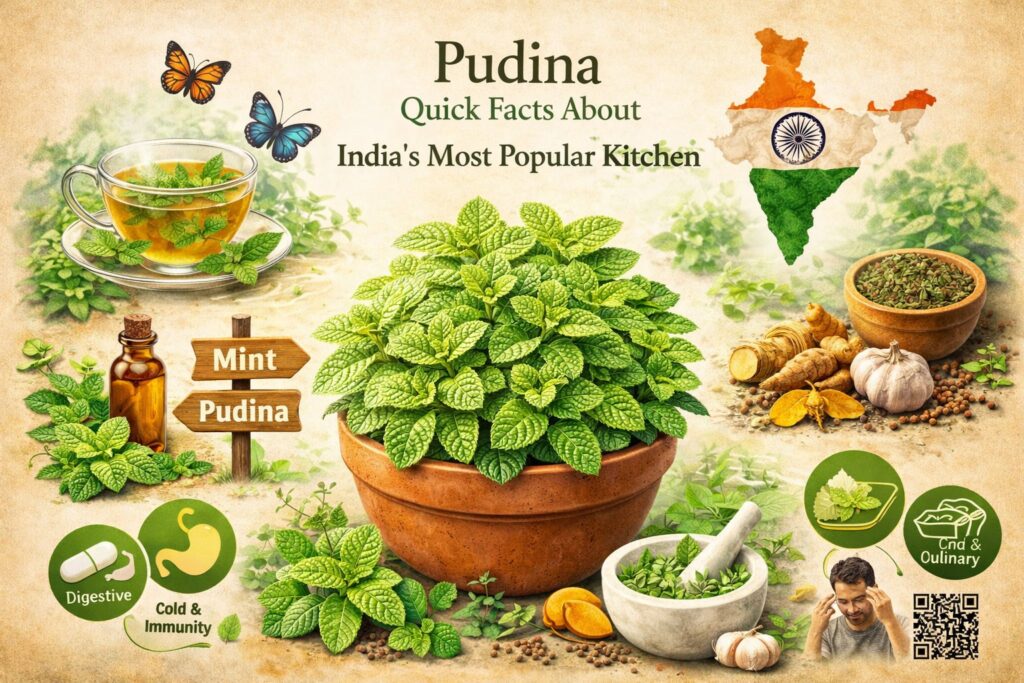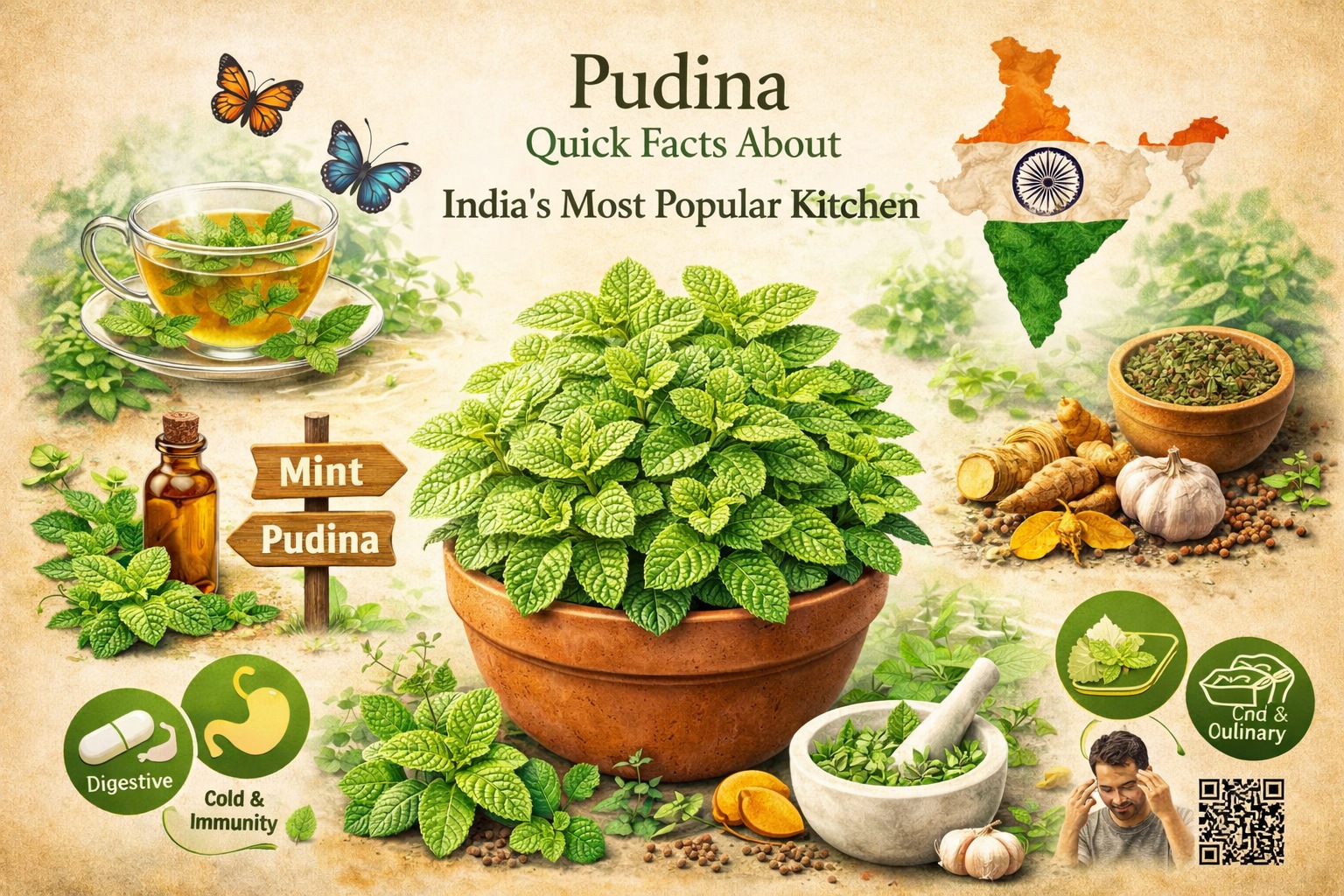
Pudina: Quick Facts About India’s Most Popular Kitchen Herb
Quick Answer: Pudina (Mentha spicata) is a perennial herb native to Europe and Asia, now widely cultivated across India. It grows 30–60 cm tall with aromatic leaves used for culinary, medicinal, and cosmetic purposes. Easy to grow but spreads aggressively.
See also: Mint Plant plant profile, how to grow it, common problems, its flowering season, and its benefits.
Most Indian households can identify pudina by smell alone — that sharp, cooling aroma that cuts through spices and heat. The name “pudina” comes from Persian, borrowed into virtually every Indian language with minor variations. Despite being a foreign introduction centuries ago, it’s naturalized so completely that it grows wild near water sources across the country.
Recommended Products
Disclosure: As an Amazon Associate, PlantsInfo may earn from qualifying purchases.
🌱 Growing Essentials
The following products can help with container gardening, potting, root development, soil management, and healthy plant growth.
Organic Potting Soil Mix
Provides nutrients, structure, and healthy growing conditions for container plants.
Coco Peat Growing Medium
Enhances moisture retention while maintaining excellent root-zone aeration.

Grow Bags for Plants
Improve drainage, root aeration, and vegetable production in limited spaces.

Plastic Pots for Plants
Ideal containers for seedlings, ornamentals, herbs, and balcony gardens.
Regional Names in India
| Language | Name |
|---|---|
| Hindi | पुदीना Pudina |
| Bengali | পুদিনা Pudina, Podina |
| Tamil | புதினா Pudina, Puthina |
| Telugu | పుదీనా Pudina |
| Kannada | ಪುದೀನ Pudina Soppu |
| Malayalam | പുതിന Puthina |
| Marathi | पुदिना Pudina |
| Gujarati | ફુદીનો Phudino |
| Punjabi | ਪੁਦੀਨਾ Pudina |
| Scientific name | Mentha spicata L. |
| Family | Lamiaceae (mint family) |
Most searched: Pudina is the dominant search term across all regional languages in India.
What Does It Look Like?
Pudina is a low-growing perennial herb that spreads horizontally rather than growing tall. Mature plants reach 30–60 cm in height but spread much wider through underground runners.
The leaves are the plant’s defining feature — lance-shaped, dark green, with serrated edges and a slightly wrinkled texture. They’re arranged in opposite pairs along square stems, a characteristic of the mint family.
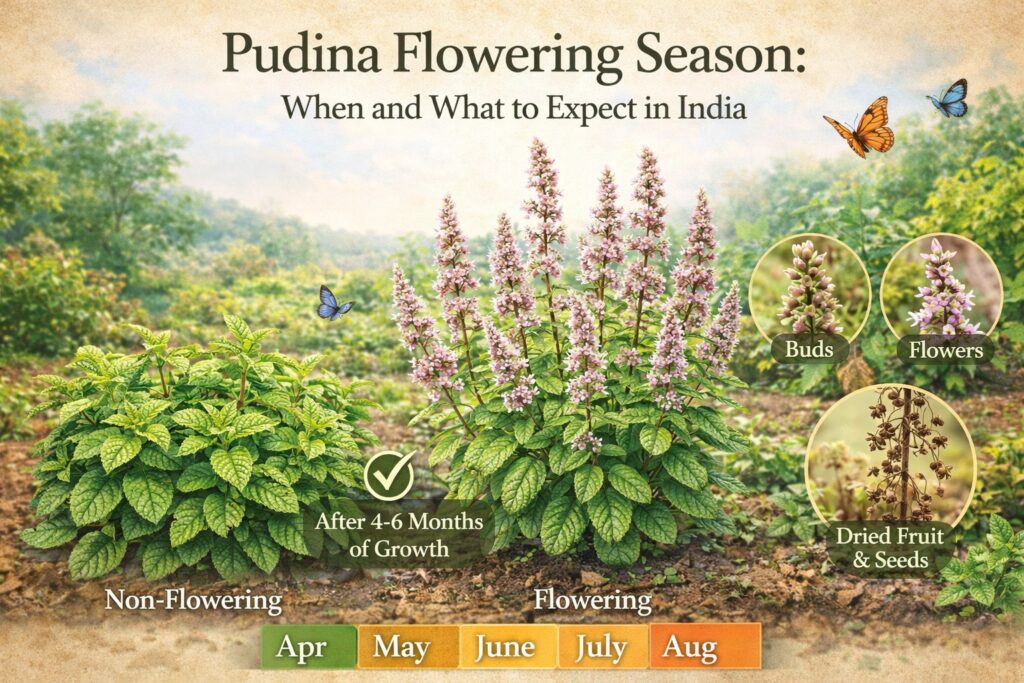
Small purple or pinkish flowers appear in dense clusters (spikes) at the stem tips, usually during monsoon and post-monsoon months. The flowers are tiny, tubular, and attract bees, though most gardeners pinch them off to keep the leaves flavourful.
The entire plant — leaves, stems, flowers — releases a strong minty aroma when crushed. This scent comes from essential oils concentrated in tiny glands on the leaf surface. Even brushing against the plant releases fragrance.
One unmistakable detail: the square stem. Roll a pudina stem between your fingers — you’ll feel four distinct corners, never round.
Where Does It Grow in India?
Pudina originated in the Mediterranean region and temperate parts of Europe and Asia. It arrived in India centuries ago and has naturalized completely.
Today, it’s cultivated across all states, but grows particularly well in:
- Uttar Pradesh and Punjab (major commercial cultivation for mint oil)
- West Bengal, Assam, and northeastern states (abundant moisture)
- Maharashtra, Karnataka (kitchen gardens and small-scale farming)
- Himachal Pradesh, Uttarakhand (cooler hill regions)
Pudina thrives from sea level up to 2,000 metres altitude. It prefers cooler temperatures between 15°C and 25°C but tolerates 10°C to 35°C. It grows year-round in most of India, with peak growth during cooler months.
In urban areas, pudina appears in virtually every terrace and kitchen garden. In rural areas, it often grows semi-wild near ponds, streams, drainage ditches, and areas with consistent moisture. The plant escapes cultivation easily — a single stem fragment carried by water can establish a new colony downstream.
What Is It Used For?
Culinary: Pudina is essential in Indian cuisine. Fresh leaves flavor chutneys (ground with coriander, lemon, green chilli), raitas, biryanis, and rice dishes. It’s added to beverages like lemonade, lassi, and mojitos for a cooling effect.
Digestive aid: The most common medicinal use. Pudina tea or fresh leaves relieve indigestion, bloating, gas, and stomach cramps. Ayurveda considers it a digestive stimulant that balances pitta dosha.
Respiratory relief: Pudina leaves or oil in steam inhalation, clear nasal congestion. Pudina tea with honey soothes a cough and sore throat.
Cooling and skin care: Crushed leaves applied to skin provide cooling relief from heat, sunburn, and insect bites. Pudina face packs reduce oiliness and soothe acne-prone skin.
Oral hygiene: Chewing fresh leaves freshens breath. Pudina extract is used in toothpaste, mouthwash, and mouth fresheners for its antimicrobial properties.
Is It Easy to Grow?
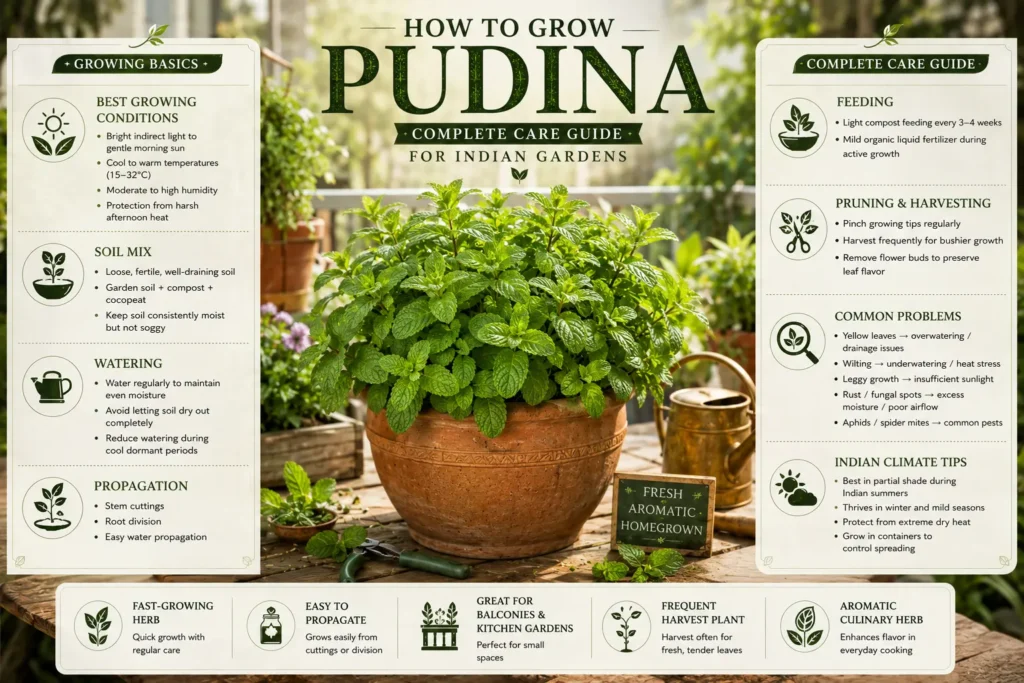
Pudina is one of the easiest herbs to grow in India — almost too easy. The challenge isn’t getting it to thrive; it’s keeping it contained.
Difficulty: Easy. It tolerates a range of soil types, survives occasional neglect, and propagates from cuttings in days. Even complete beginners succeed with pudina.
Space requirement: Moderate to high. A single plant spreads through underground runners, potentially covering several square metres if unrestricted. Containers solve this problem and make harvesting easier.
Climate suitability: Grows across all climate zones in India. It prefers cooler weather (October–March) but produces leaves year-round with adequate water. In extreme summer heat above 40°C, provide afternoon shade. In very cold regions below 5°C, growth slows, but plants survive and regrow.
The main caution: pudina is mildly invasive in garden settings. Plant it in the ground only if you’re willing to manage its spread. Containers or raised beds with barriers work better for most home gardeners.
Special Notes
Invasive potential: Pudina spreads aggressively through underground stolons. In favourable conditions (moist soil, partial shade), it can overtake other plants. Some gardeners intentionally use it as ground cover, but most prefer containers. Once established in the ground, complete removal is difficult — even small root fragments regrow.
Toxicity: Pudina is generally safe for consumption in normal food amounts. However, pure pudina oil should not be applied to infants’ skin or inhaled by young children — high menthol concentration can cause respiratory distress.
Pudina is safe for most adults. Some people experience allergic reactions (skin rash, digestive upset). Pregnant women should stick to culinary amounts and avoid medicinal doses without medical advice.
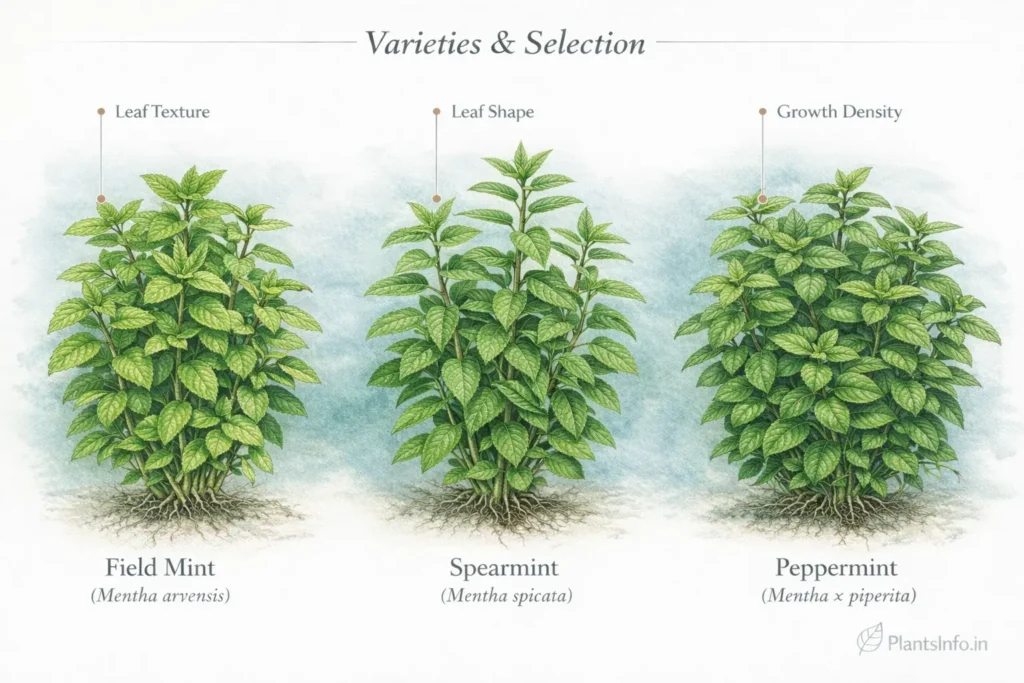
Commonly confused species: Several mint varieties grow in India — peppermint (Mentha × piperita), spearmint (Mentha spicata), and field mint (Mentha arvensis). The common garden “pudina” in India is usually Mentha spicata (spearmint), though the name “pudina” is applied to multiple mint species. Peppermint has a stronger menthol flavor; spearmint is milder and sweeter. For most culinary uses, the distinction doesn’t matter.
Conclusion
Pudina combines ease of cultivation with year-round utility. Whether you need a digestive aid, cooling refreshment, or culinary flavor, pudina delivers with minimal effort.