Tomato Plant Problems and Diseases: Diagnosis, Prevention and Management
Quick Answer
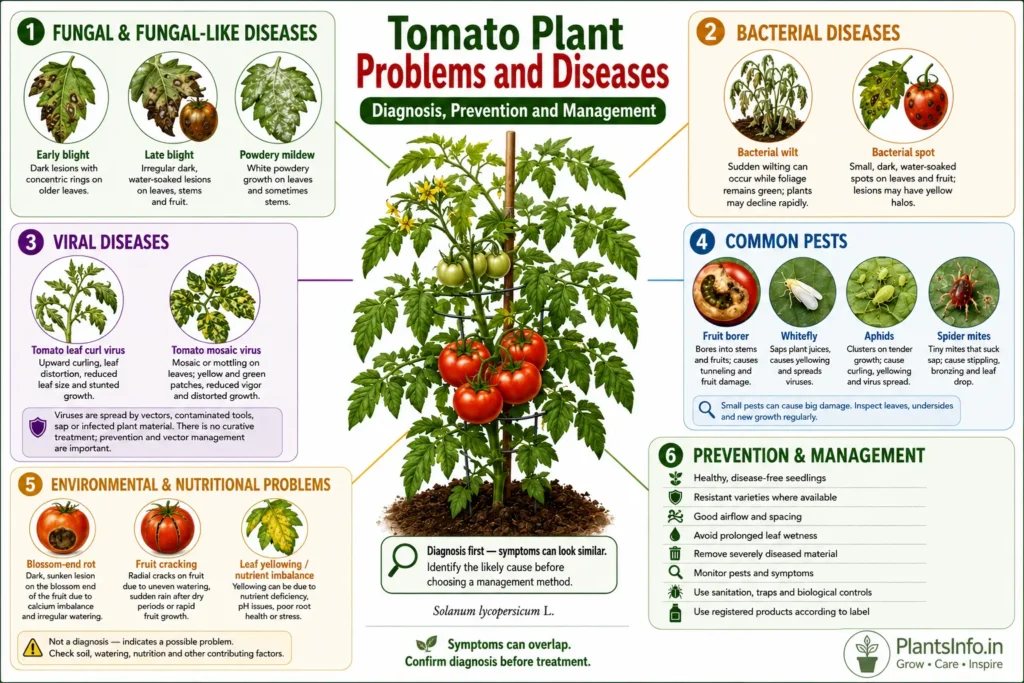
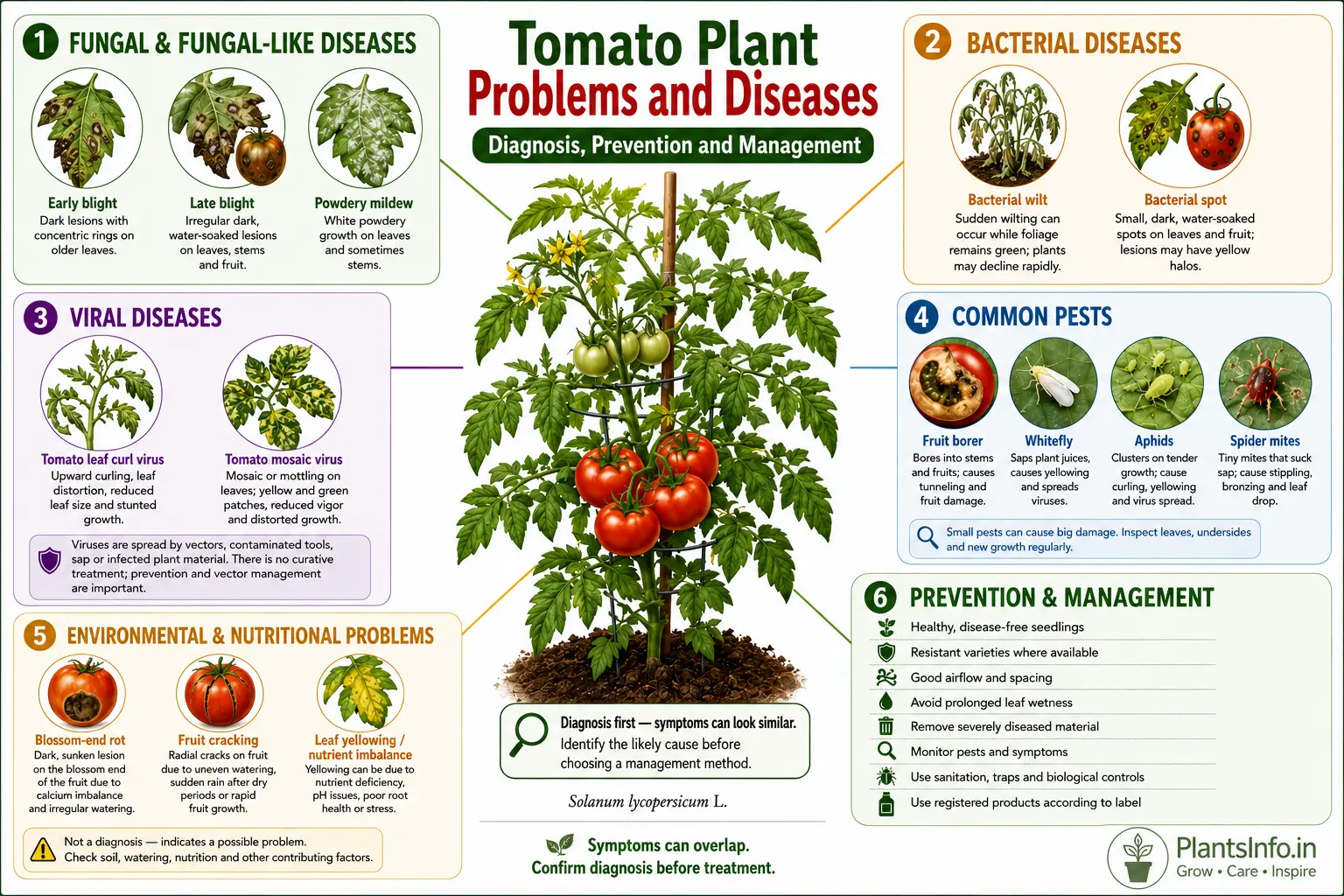
In Indian tomato gardens, disease and pest pressure can be recurring problems, particularly during humid or rainy conditions when foliage remains wet for long periods. Fungal and fungus-like diseases can spread rapidly under favourable weather, while bacterial and viral diseases require different management approaches. Many problems can be managed when detected early, but severe systemic viral infection and advanced bacterial wilt may leave a plant unlikely to recover.
See also: Tomato Plant plant profile, how to grow it, its flowering season, its benefits, and its varieties.
Tomato problems rarely announce themselves with one perfectly diagnostic symptom. A spreading leaf spot, distorted new growth, or sudden wilting needs to be interpreted as a pattern before deciding what action is appropriate.
Recommended Products
Disclosure: As an Amazon Associate, PlantsInfo may earn from qualifying purchases.
🌱 Growing Essentials
The following products can help with container gardening, potting, root development, soil management, and healthy plant growth.
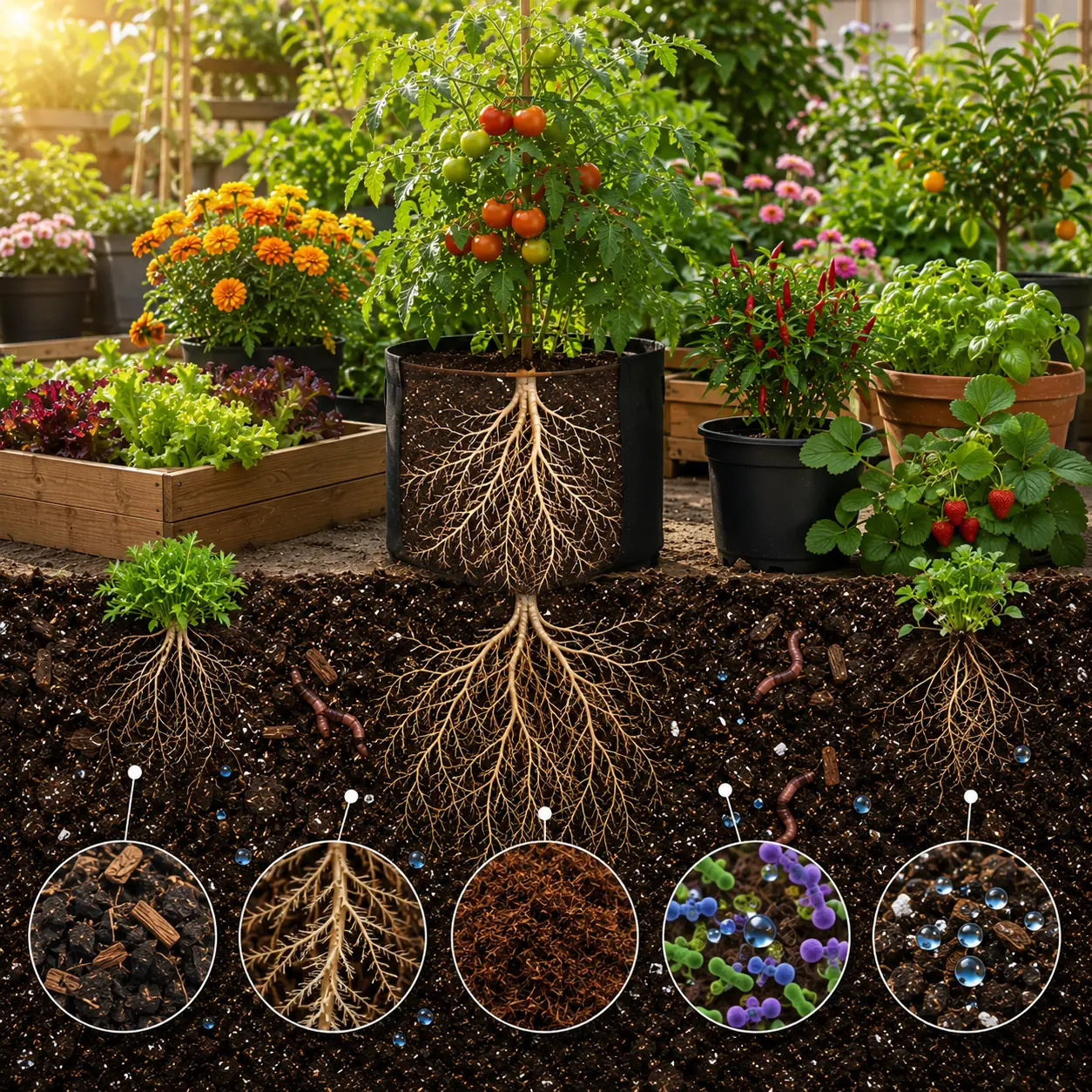
Organic Potting Soil Mix
Provides nutrients, structure, and healthy growing conditions for container plants.
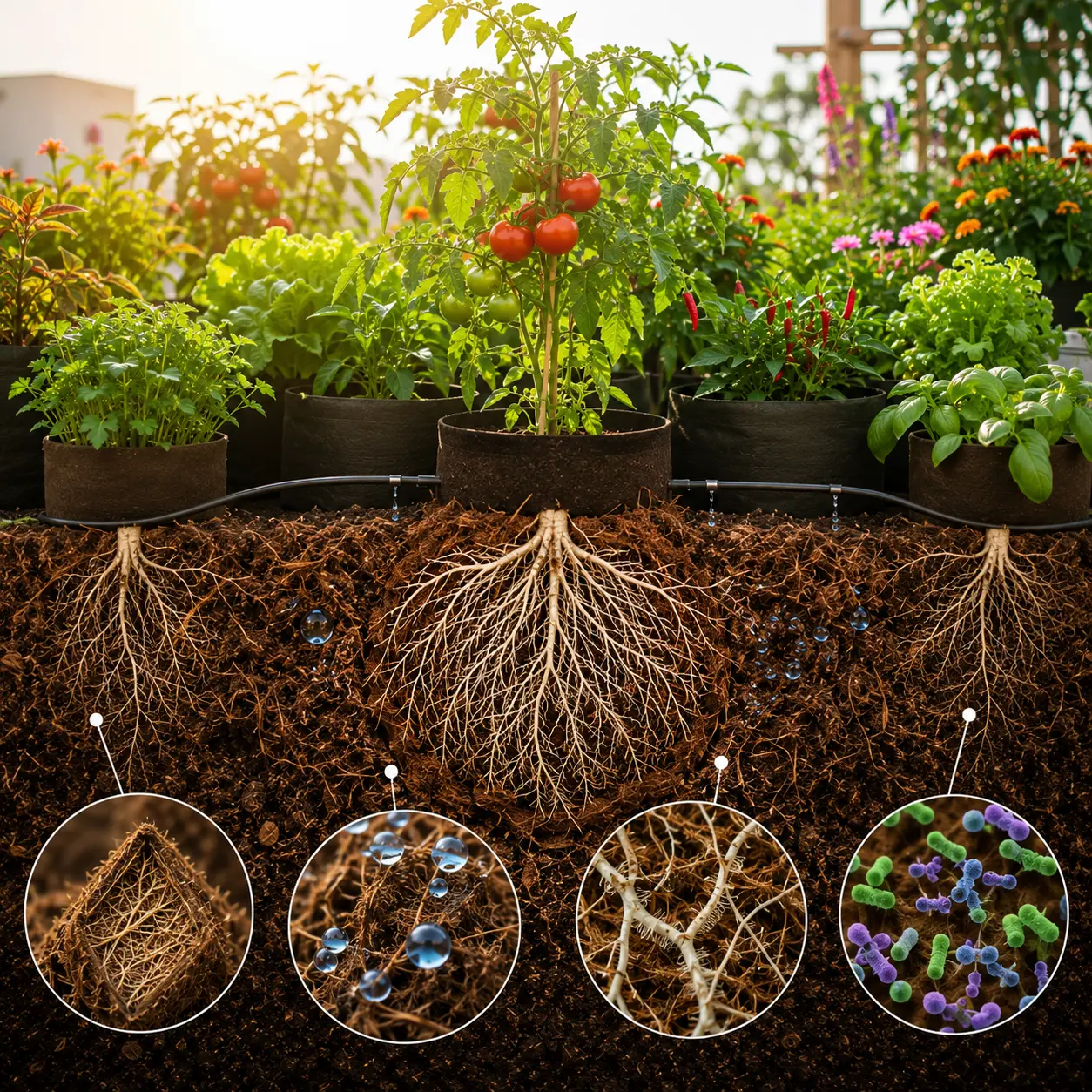
Coco Peat Growing Medium
Enhances moisture retention while maintaining excellent root-zone aeration.

Grow Bags for Plants
Improve drainage, root aeration, and vegetable production in limited spaces.

Plastic Pots for Plants
Ideal containers for seedlings, ornamentals, herbs, and balcony gardens.
Most problems are easier to manage when gardeners combine sanitation, suitable spacing, good drainage, healthy planting material, regular inspection, and appropriate moisture management.
Quick Diagnosis
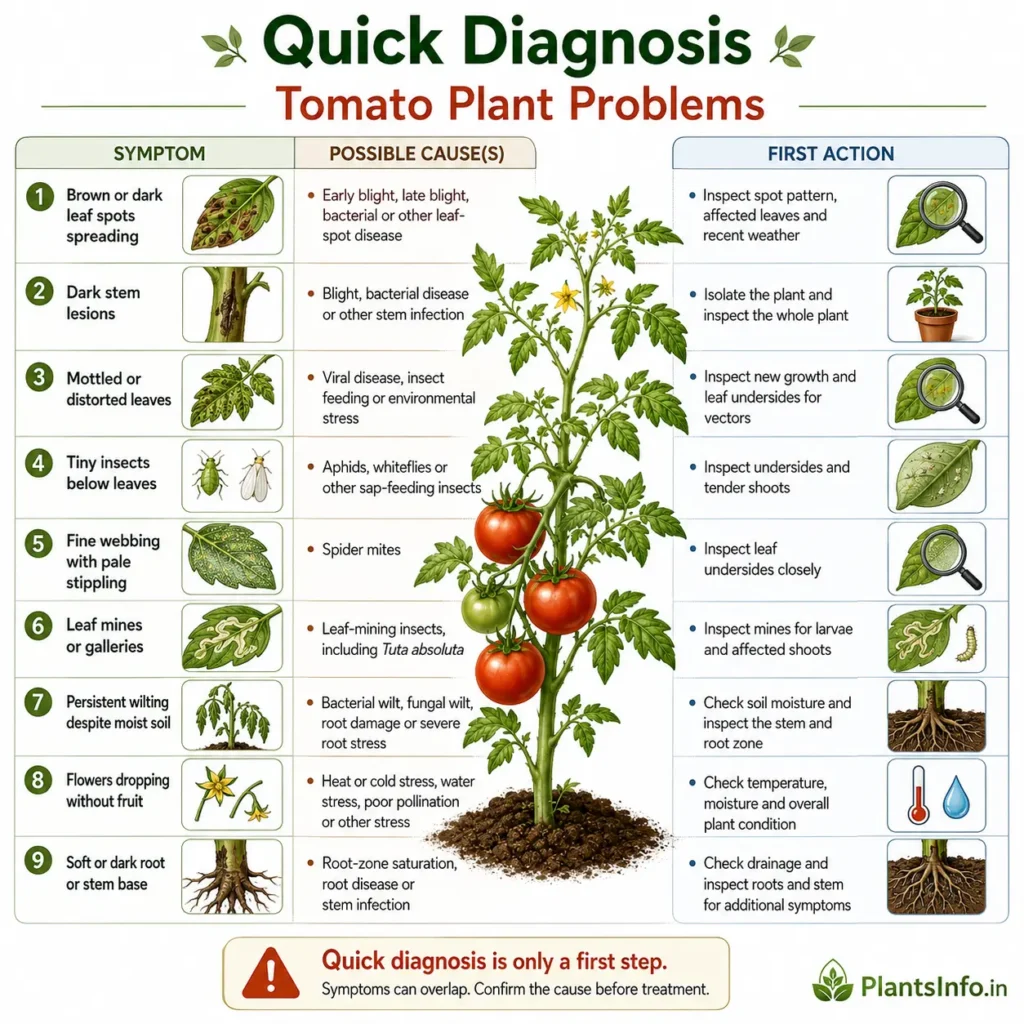
| Symptom | Possible cause(s) | First action |
|---|---|---|
| Brown or dark leaf spots spreading | Early blight, late blight, bacterial or other leaf-spot disease | Inspect spot pattern, affected leaves and recent weather |
| Dark stem lesions | Blight, bacterial disease or other stem infection | Isolate the plant and inspect the whole plant |
| Mottled or distorted leaves | Viral disease, insect feeding or environmental stress | Inspect new growth and leaf undersides for vectors |
| Tiny insects below leaves | Aphids, whiteflies or other sap-feeding insects | Inspect undersides and tender shoots |
| Fine webbing with pale stippling | Spider mites | Inspect leaf undersides closely |
| Leaf mines or galleries | Leaf-mining insects, including Tuta absoluta | Inspect mines for larvae and affected shoots |
| Persistent wilting despite moist soil | Bacterial wilt, fungal wilt, root damage or severe root stress | Check soil moisture and inspect the stem and root zone |
| Flowers dropping without fruit | Heat or cold stress, water stress, poor pollination or other stress | Check temperature, moisture and overall plant condition |
| Soft or dark root or stem base | Root-zone saturation, root disease or stem infection | Check drainage and inspect roots and stem for additional symptoms |
Symptoms alone do not always identify the exact cause. When several problems produce similar symptoms, consider the pattern, plant age, affected plant parts, weather, moisture conditions, and presence of insects before choosing a treatment.
Diseases
Early Blight
Early blight produces brown to dark leaf spots, often with concentric markings, and commonly becomes noticeable on older foliage first. It is associated with Alternaria species and is favoured by conditions that keep foliage wet.
Early or limited infection may be manageable, although severe defoliation can substantially weaken the plant.
Remove badly affected foliage where practical and reduce sources of repeated infection. Clear infected tomato debris from the growing area after the crop rather than leaving diseased material around the next planting.
Good spacing and airflow can also help reduce prolonged leaf wetness and disease pressure.
Late Blight
Late blight can produce rapidly expanding dark lesions on leaves and stems and is associated with cool, humid and wet conditions. It is caused by the oomycete Phytophthora infestans and can progress rapidly when weather remains favourable.
Severe infection can become destructive rather than readily recoverable.
Remove badly affected plant material and avoid carrying infected debris into the next crop. Reduce prolonged leaf wetness where possible and avoid dense planting that restricts airflow.
Because late blight can progress quickly under favourable conditions, rapidly worsening dark lesions during cool, wet weather deserve prompt attention.
Bacterial Wilt
Bacterial wilt causes progressive wilting that may occur even when the soil contains adequate moisture. Soil-associated bacteria can enter the plant and interfere with water movement internally, making established systemic disease particularly difficult to reverse.
There is no reliable cure for a severely systemically infected plant.
Remove severely affected plants and avoid moving contaminated soil, roots, or plant material elsewhere in the garden. Do not automatically treat persistent wilting as simple water shortage.
Where bacterial wilt is suspected, avoid immediately replacing the affected plant with tomato or another susceptible solanaceous crop in the same contaminated area.
Tomato Viral Diseases
Viral infections can produce mosaic or mottled foliage, distorted new growth, shortened internodes, poor development, and general stunting. Different viruses can produce overlapping symptoms, so appearance alone may not identify the specific virus.
Tomato leaf curl disease is an important viral problem in many tomato-growing areas and is associated with whitefly transmission. Symptoms can include leaf curling, puckering, distorted growth, and reduced plant development.
Systemic viral diseases cannot be cured with fungicides. Where viral infection is strongly suspected or confirmed, remove severely affected plants rather than expecting a fungicide to reverse the infection.
Starting with healthy seed or nursery plants and reducing insect-vector pressure can help limit future spread.
Pest Problems
Aphids
Aphids are small, soft-bodied insects that often cluster around tender shoots and leaf undersides. Their feeding can distort young growth, and some aphid species can transmit plant viruses.
For light infestations, dislodge aphids with a strong stream of water where practical. An appropriate insecticidal soap or neem-based product may also be used where suitable and according to its label.
For severe infestations, use only a pesticide registered and labelled for the crop and pest, following the specified dose, safety precautions and pre-harvest interval.
Whiteflies
Whiteflies are tiny pale insects that flutter from leaf undersides when disturbed. Their feeding can weaken plants, and some whitefly species can transmit tomato viruses.
For a light infestation, remove heavily infested foliage where practical and use an appropriate soap or neem-based treatment according to the product label.
A registered insecticide may be considered for severe infestations, but repeated use of the same chemical mode of action should be avoided where resistance is a concern.
Whiteflies can be mistaken for a disease problem because virus symptoms may appear after vector feeding.
Spider Mites
Spider mites are extremely small and are often first noticed through fine webbing, pale stippling or bronzing of leaves. Outbreaks are favoured by hot, dry conditions.
Rinsing foliage can help reduce light infestations. Horticultural oil or an appropriate miticide may be considered when necessary.
Follow the product label carefully. Horticultural oils can cause foliage injury under unsuitable conditions, particularly during very hot weather.
Avoid repeatedly using the same chemical mode of action when pesticide treatment is necessary.
Tomato Fruit Borer
Fruit-boring caterpillars can damage developing tomatoes by creating holes and feeding inside the fruit. Damaged fruit may subsequently rot or become unsuitable for consumption.
Inspect developing fruit and foliage regularly. Remove and destroy visibly damaged fruit where practical and use an integrated pest-management approach rather than relying automatically on repeated broad-spectrum insecticide applications.
For serious infestations, use only products registered and labelled for tomato and the specific pest, following the required pre-harvest interval.
Tomato Leaf Miner — Tuta absoluta
Tuta absoluta is an important tomato pest that can damage leaves, shoots, buds, flowers and fruit.
Larvae create irregular mines or galleries within leaves and may also enter developing fruit. Leaf-miner damage can sometimes be mistaken for a leaf-spot disease.
Inspect leaves regularly for fresh mines and larval activity. Remove heavily damaged plant material where practical and use integrated pest-management measures appropriate to the crop and local recommendations.
Environmental and Care Problems
Overwatering
Persistent root-zone saturation can cause root stress and may contribute to root or stem-base problems. However, soft or darkened tissue is not diagnostic of overwatering by itself.
When excess moisture is suspected, check:
- whether the soil remains wet for prolonged periods;
- whether the container drains freely;
- whether recent rainfall has saturated the bed;
- whether roots show signs of decay or poor health.
Adjust watering according to actual soil moisture rather than following a fixed daily schedule.
Watering frequency — see the Growing Guide.
Excessive Heat
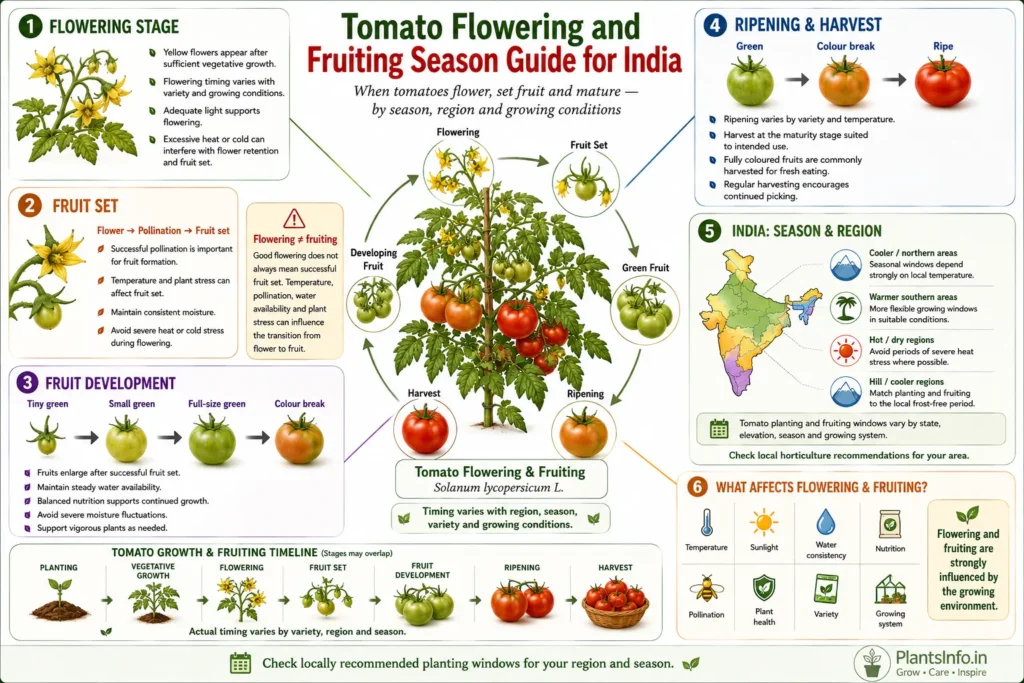
Tomato flowers may drop without setting fruit when plants experience prolonged high temperatures. Heat stress can also reduce overall plant performance and fruit development.
However, flower drop is not caused by heat alone. Cold temperatures, water stress, poor pollination, and other environmental or nutritional stresses can also interfere with fruit set.
During severe heat:
- maintain consistent root-zone moisture;
- use mulch to moderate soil conditions;
- avoid unnecessary root disturbance;
- provide temporary protection from intense afternoon exposure where appropriate for young plants;
- avoid excessive nitrogen feeding.
Heat protection — see the Seasonal Care Guide.
Transplant Shock
A recently transplanted seedling may wilt temporarily or pause growth while its roots adjust to the new environment.
Reduce stress by:
- transplanting healthy seedlings;
- watering thoroughly after planting;
- maintaining even moisture during establishment;
- avoiding unnecessary root disturbance;
- gradually hardening seedlings before outdoor planting.
Transplanting technique — see the Growing Guide.
Insufficient Light
Plants receiving inadequate direct light may become weak, elongated and less productive.
Move container plants to a brighter location where practical. Avoid assuming that fertiliser can compensate for inadequate sunlight.
Light requirements — see the Growing Guide.
The Most Common Beginner Mistake
Assuming every wilted tomato needs more water.
Before watering a wilted plant, check the soil.
Wilting can result from drought, root damage, waterlogging, bacterial wilt, fungal wilt, heat stress, transplant shock, and other problems. The correct response depends on the underlying cause.
Prevention Protocol
- Remove diseased tomato debris from the growing area after each crop.
- Before the local monsoon season, make sure containers and beds have unrestricted drainage.
- Inspect nursery plants carefully for insects, disease symptoms, and severe damage before placing them beside established tomatoes.
- Use healthy seed or nursery plants rather than saving seed from plants showing unexplained viral symptoms.
- Avoid carrying soil from a diseased tomato bed into another planting area.
- Maintain adequate spacing to improve airflow through the canopy.
- Avoid prolonged leaf wetness where practical.
- Water the root zone rather than repeatedly wetting foliage.
- Clean pruning tools between visibly diseased plants, particularly when cutting stems or foliage.
- Remove severely diseased plants promptly when recovery is unlikely.
- Rotate away from tomato and other susceptible solanaceous crops where a serious soil-borne disease is suspected.
- Monitor plants regularly so pests and disease symptoms are detected early.
When to Give Up on a Plant
A tomato is unlikely to recover when it has severe systemic viral disease, advanced bacterial wilt, or extensive disease that has destroyed most productive growth.
Remove and isolate the affected plant rather than leaving it among healthy tomatoes.
Where a soil-borne disease is suspected, avoid immediately planting another tomato or susceptible solanaceous crop in the same affected soil.
Do not move contaminated soil, roots or diseased plant debris to otherwise healthy parts of the garden.
Frequently Asked Questions
Can I eat tomatoes from a diseased plant?
Avoid fruit that is rotten, mouldy or otherwise spoiled.
If a pesticide has been used, follow the product label’s crop-specific pre-harvest interval (PHI) before harvesting treated fruit for consumption.
When in doubt about the safety of visibly damaged or contaminated fruit, discard it.
Can yellow leaves alone identify a tomato disease?
No.
Yellowing can result from several causes, including natural ageing, nutrient problems, root stress, excessive moisture, insufficient light, pests and disease.
The pattern of yellowing and the accompanying symptoms are needed for a more useful diagnosis.
Can a fungicide cure tomato viral disease?
No.
Fungicides do not cure viral infections. Once systemic viral infection is strongly suspected or confirmed, management focuses on removing severely affected plants and reducing future spread, particularly by controlling insect vectors and using healthy planting material.
Does wilting always mean the tomato needs water?
No.
Check the soil before watering. Wilting can result from both insufficient and excessive moisture, as well as bacterial wilt, fungal wilt, root damage, heat stress, and transplant shock.
Should I remove every spotted leaf?
Not necessarily.
A few damaged leaves do not automatically mean the entire plant is diseased. First determine whether the spots are spreading, whether new growth is affected, whether other plants show similar symptoms, and whether environmental conditions favour disease.
Remove severely affected foliage when appropriate, but avoid stripping healthy leaves unnecessarily.
Conclusion
When a tomato starts declining, identify the pattern first and act early.
Brown spots, wilting, distorted leaves and flower drop can have several different causes, so symptoms should be interpreted alongside plant age, weather, moisture, affected plant parts and pest activity.
Good sanitation, healthy planting material, adequate spacing, unrestricted drainage, consistent moisture and regular inspection prevent many avoidable problems.
When a serious systemic disease is strongly suspected, prompt removal can be more useful than repeated attempts to rescue a plant that is unlikely to recover.