

India, with its diverse climatic zones, offers an incredible opportunity for growing a wide variety of fruit plants. From the scorching plains of Rajasthan to the cool hills of Himachal Pradesh, the country’s climate allows gardeners and farmers alike to cultivate fruits that not only provide delicious produce but also help maintain ecological balance.
If you’re wondering about the best fruit plants to grow in the Indian climate, this article will be your comprehensive guide. We will explore over 50 fruit plants suited for different weather conditions, soils, and regions across India and share expert tips to help you successfully grow these fruits in your own garden or farm.
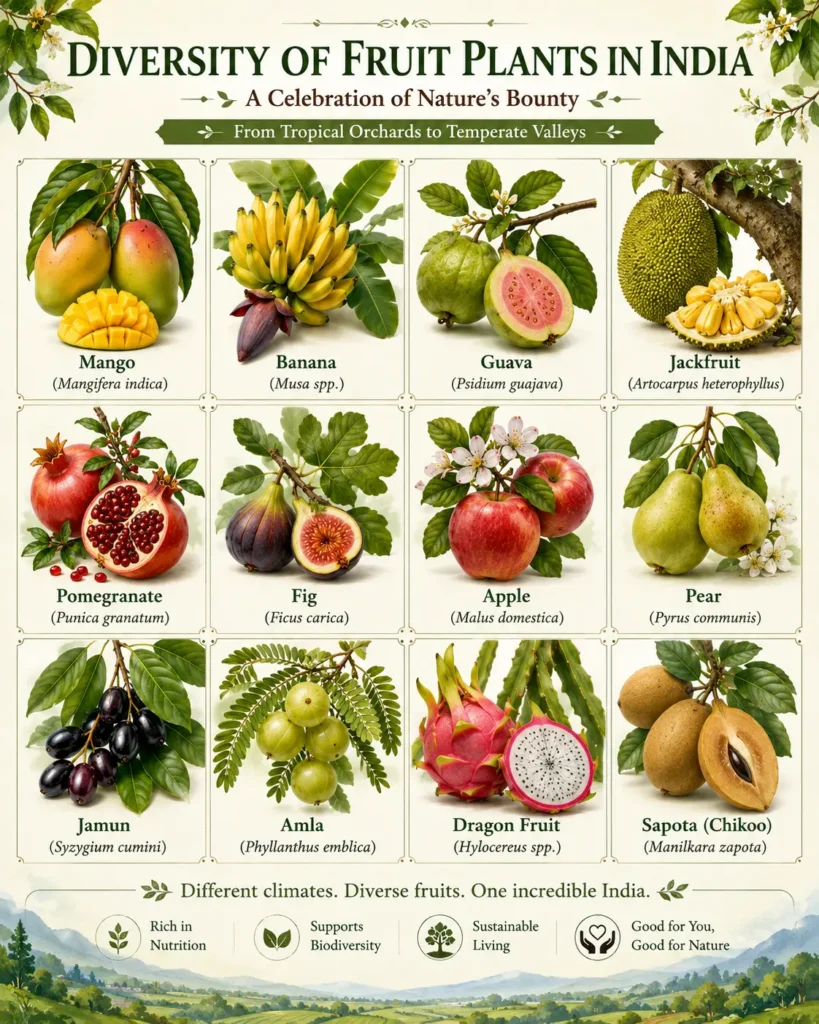
Quick Fruit Selection
| Fruit Plant | Climate | Water Need | Growth Speed |
|---|---|---|---|
| Mango | Tropical | Moderate | Medium |
| Guava | Tropical/Subtropical | Low | Fast |
| Pomegranate | Semi-arid | Low | Medium |
| Apple | Temperate | Moderate | Slow |
Understanding the Indian Climate Zones and Their Impact on Fruit Growing
India’s climate can be broadly divided into four zones: tropical wet, tropical dry, subtropical humid, and mountain climate. Each zone represents a unique environment that either favors or limits the growth of certain fruit plants. Knowing your region’s climatic conditions can help you select the right fruit plants that will thrive.
- Tropical Wet Climate: This includes coastal areas and regions with heavy rainfall, such as Kerala and West Bengal. The climate is hot and humid, favoring fruits like mangoes and bananas.
- Tropical Dry Climate: Areas like Rajasthan and parts of Gujarat fall under this category. These areas receive scant rainfall and have hot summers, supporting drought-resistant fruits such as pomegranates and figs.
- Subtropical Humid Climate: North Indian plains and parts of Madhya Pradesh and Uttar Pradesh come under this. These places have hot summers, cold winters, and moderate rainfall, ideal for apples and pears.
- Mountain Climate: Regions such as Himachal Pradesh and Uttarakhand with cooler temperatures and diverse altitudes are ideal for temperate fruits like cherries and plums.
Factors to Consider When Growing Fruit Plants in the Indian Climate
Before choosing which fruit plants to grow, keep the following factors in mind:
| Factor | Why It Matters | Impact on Fruit Growing |
|---|---|---|
| Temperature Range | Fruits require specific temperature ranges for flowering and fruiting | Choosing fruits that match local temperatures ensures healthy growth and yield |
| Soil Type | Soil pH, texture, and drainage affect the root health | Amending the soil or selecting plants compatible with the soil avoids disease and nutrient deficiency |
| Rainfall/Water Availability | Water stress can inhibit flowering and fruit development | Choosing drought-resistant species or implementing irrigation helps maintain healthy plants |
| Sunlight | Most fruit plants need full sunlight for optimal photosynthesis | Planting in shaded or overly exposed areas could stunt growth or cause sunscald |
50+ Best Fruit Plants to Grow in the Indian Climate
Here is a well-rounded list of fruit plants suited for various Indian climates, including tips on their adaptability and growth requirements.
Tropical and Subtropical Fruit Plants
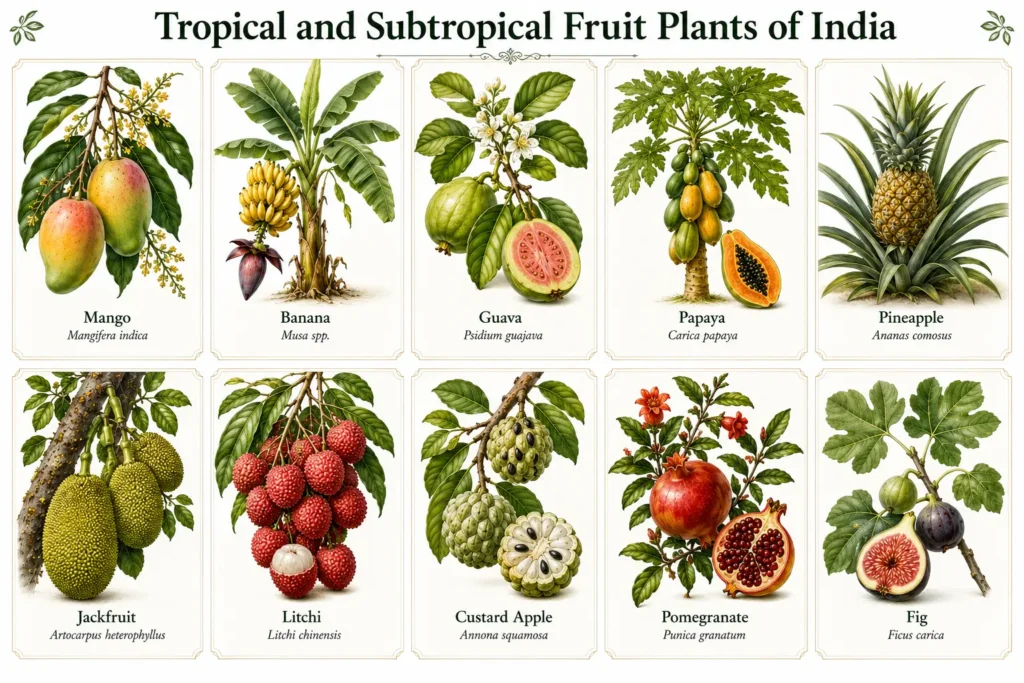
Tropical and subtropical fruits thrive in warm, humid to semi-arid climates. These fruits are commonly seen across India and require relatively less care when matched properly to the local conditions.
- Mango (Mangifera indica): Known as the “king of fruits,” mangoes flourish in tropical and subtropical regions. They require full sun and well-drained soil and can tolerate some drought.
- Banana (Musa spp.): Bananas grow exceptionally well in humid climates with rich, water-retentive soils.
- Guava (Psidium guajava): This hardy fruit can grow in almost any soil but prefers warm weather.
- Papaya (Carica papaya): Fast-growing and productive, papaya requires warm temperatures and consistent watering.
- Pineapple (Ananas comosus): Suited for humid tropical climates with sandy, well-drained soil.
- Jackfruit (Artocarpus heterophyllus): Needs heavy rainfall regions and well-drained soil.
- Litchi (Litchi chinensis): Prefers subtropical climates and acidic, well-drained soils.
- Custard Apple (Annona squamosa): Drought-tolerant but grows better under humid conditions with sandy loam soil.
- Pomegranate (Punica granatum): Suited to dry and semi-arid conditions; prefers well-drained soil.
- Fig (Ficus carica): Tolerates poor soils and drought; grows well in subtropical dry areas.
Temperate Fruit Plants for Cooler Indian Regions

The Himalayan foothills and northern Indian plains support various temperate fruits that require a period of chilling (cold dormancy) to bear fruit effectively.
- Apple (Malus domestica): Needs cold winters and well-drained loamy soil, best grown in Himachal Pradesh, Jammu & Kashmir.
- Pear (Pyrus spp.): Prefers cool climates and fertile, acidic soil.
- Plum (Prunus domestica): Grows well in regions with cold winters and moderate summers.
- Peach (Prunus persica): Requires chilling hours and well-drained soils.
- Nectarine (Prunus persica var. nucipersica): Climate and soil similar to peaches.
- Cherry (Prunus avium): Prefers cold winter regions with well-drained sandy loam soils.
- Apricot (Prunus armeniaca): Suited for dry temperate climates with chilling requirements.
- Strawberry (Fragaria × ananassa): Grows well in cool, temperate climates with fertile soil.
Miscellaneous Fruit Plants You Can Grow Across Various Indian Regions
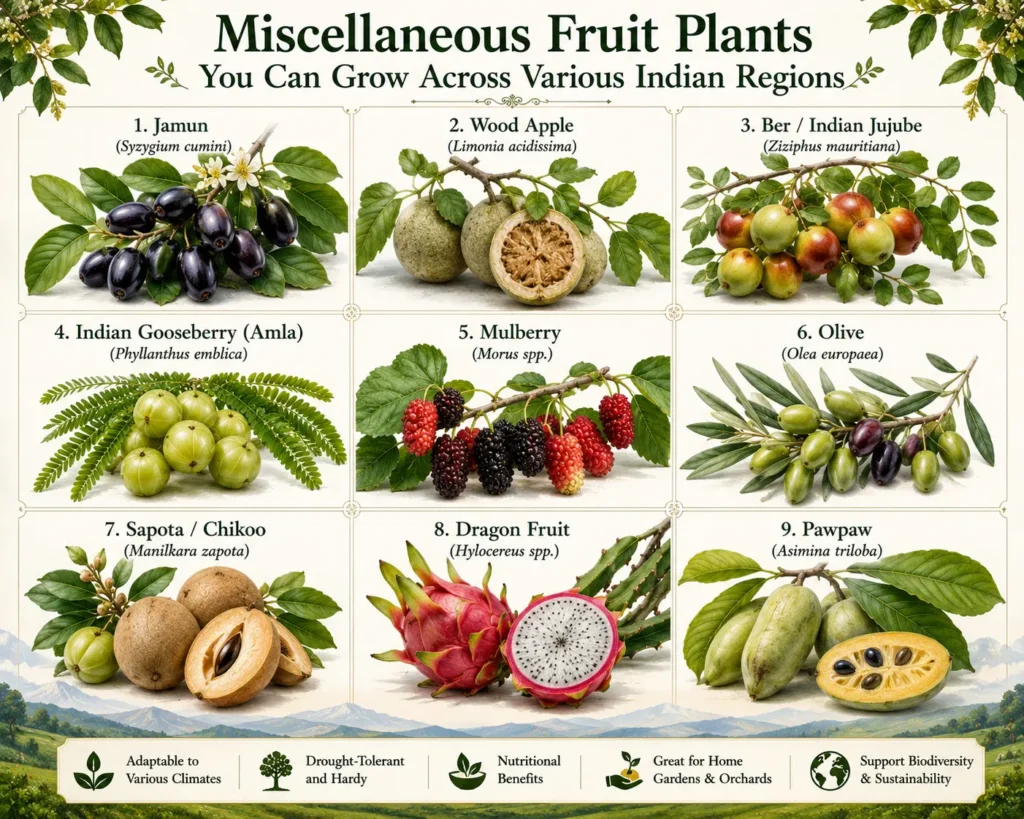
Several fruit plants are versatile and can adapt to different Indian climates, making them ideal choices for gardeners looking for variety.
- Jamun (Syzygium cumini): A hardy tree fruit that can grow in tropical and subtropical zones.
- Wood Apple (Limonia acidissima): Drought-tolerant and prefers dry, tropical climates.
- Ber or Indian Jujube (Ziziphus mauritiana): Thrives in arid and semi-arid regions.
- Indian Gooseberry (Amla) (Phyllanthus emblica): Easy to grow, drought-resistant, and used widely for health benefits.
- Mulberry (Morus spp.): Grows well in tropical to subtropical climates and supports sericulture.
- Olive (Olea europaea): Increasingly grown in dry regions like Ladakh and parts of Rajasthan.
- Sapota/Chikoo (Manilkara zapota): Grows well in tropical to subtropical climates with good drainage.
- Dragon Fruit (Hylocereus spp.): A cactus that grows well in hot, arid zones with well-drained soil.
- Pawpaw (Asimina triloba): Gaining popularity, good for subtropical regions with some chilling requirements.
Expert Tips for Growing Fruit Plants in the Indian Climate
Growing fruit plants in India might seem daunting due to the variability in weather and soil conditions, but with some smart practices, you can ensure great yields. Here are meaningful tips to help you succeed:
1. Soil Preparation and Testing
Before planting any fruit tree, test your soil’s pH and nutrient content with a soil test kit. Most fruit plants prefer a slightly acidic to neutral pH (around 6.0 to 7.0). Amend the soil with organic compost to improve texture, water retention, and fertility. For sandy soils, add organic matter; for clay soils, improve drainage.
2. Proper Plant Selection
Choose fruit plants well-adapted to your climatic zone. For instance, don’t try to grow apples in tropical areas or mangoes in cold hill stations. Also, select disease-resistant varieties when possible.
3. Water Management
Fruit plants generally require regular watering in the establishment phase. Use drip irrigation for water efficiency and to prevent fungal diseases caused by overhead watering. Mulching with organic material helps retain soil moisture.
4. Fertilization
Apply balanced fertilizers rich in nitrogen, phosphorus, and potassium according to the plant’s growth stage. Organic fertilizers and manure enrich soil microbiology, improving long-term fertility.
5. Pruning and Training
Pruning helps shape the plant, improves sunlight penetration, removes dead wood, and encourages healthy fruiting. Different fruit plants require different pruning methods; learn about your specific fruit to prune correctly.
6. Pest and Disease Management
Maintain hygiene in your garden, remove fallen fruits, and control pests with organic sprays like neem oil or use integrated pest management (IPM) strategies. Early detection is key to avoiding serious damage.
Best Fruit Plants by Indian Region: A Quick Reference Table
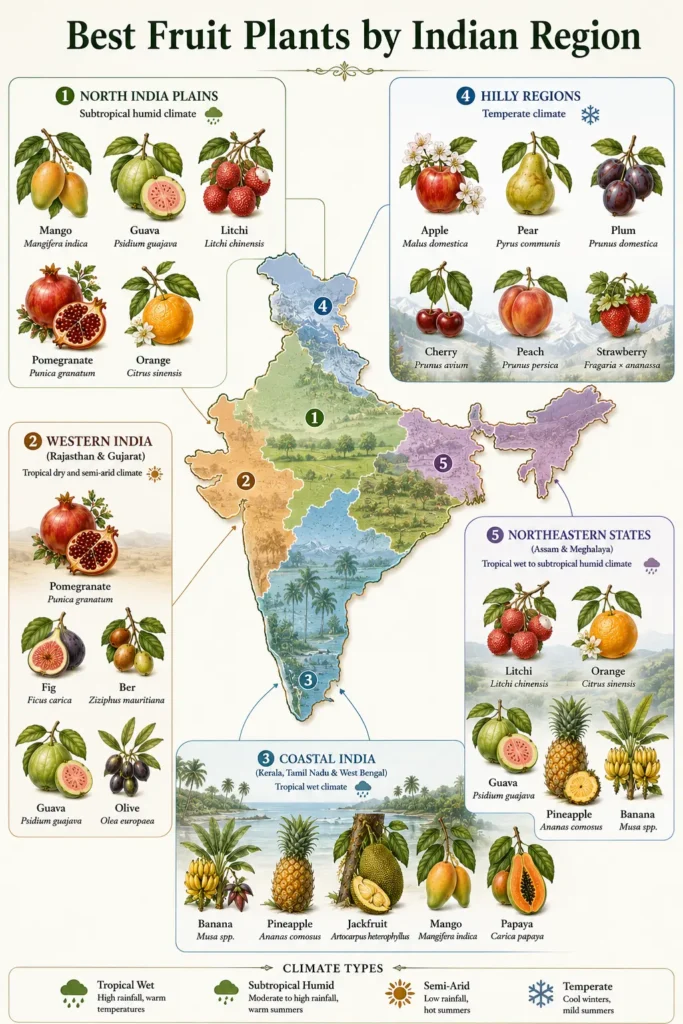
| Region | Climate Type | Recommended Fruit Plants |
|---|---|---|
| North India Plains | Subtropical humid | Mango, Guava, Litchi, Pomegranate, Orange |
| Western India (Rajasthan, Gujarat) | Tropical dry/semi-arid | Pomegranate, Fig, Ber, Guava, Olive |
| Coastal Areas (Kerala, Tamil Nadu, West Bengal) | Tropical wet | Banana, Pineapple, Jackfruit, Mango, Papaya |
| Hilly Areas (Himachal Pradesh, Uttarakhand) | Temperate | Apple, Pear, Plum, Cherry, Peach, Strawberry |
| Northeastern States (Assam, Meghalaya) | Tropical wet/subtropical humid | Litchi, Orange, Guava, Pineapple, Banana |
Nurturing Your Fruit Garden: Sustainable Practices for the Indian Climate
To ensure the longevity and productivity of your fruit plants, adopting sustainable gardening practices is essential. Mulching conserves moisture and suppresses weeds. Composting kitchen waste reduces the need for chemical fertilizers. Rainwater harvesting can store crucial water in dry periods, especially for trees needing frequent irrigation. Promoting beneficial insects like ladybugs and bees supports natural pollination and pest control.
Additionally, intercrop your fruit trees with nitrogen-fixing plants such as legumes to improve soil fertility naturally. Avoid monoculture to reduce vulnerability to disease outbreaks. Rotate crops in smaller garden setups to maintain soil health.
Varieties and Hybrids: Modern Breeding for Indian Climate Resilience
Plant breeders in India have developed many fruit varieties tailored to local climates and conditions. These improved cultivars often show enhanced resistance to drought, pests, and diseases while also offering better fruit quality and yield. For example:
- Alphonso and Dasheri Mango varieties are suited for Maharashtra and Uttar Pradesh, respectively.
- Succari and Chausa Mango for hotter zones.
- Apple varieties like Red Delicious and Royal Delicious for cooler regions.
- Guava varieties such as Allahabad Safeda and Sardar.
Choosing these popular varieties increases the chances of success, but also ensures local nursery advice before planting.
Seasonal Care and Harvesting Timelines
Understanding the seasonality of fruit trees helps you plan your yearly garden care.
| Fruit Plant | Flowering Season | Harvest Season |
|---|---|---|
| Mango | February–April | April–June |
| Guava | All year, peak Feb-Apr | Year-round, peaks May–June & Oct-Dec |
| Apple | March–April | August–October |
| Pomegranate | April–May | September–October |
| Jackfruit | March–June | June–August |
| Banana | Year-round under right conditions | 9–12 months after planting |
Knowing these timelines helps in applying fertilizers and pesticides at the right time and harvesting when fruits are at their best.
Challenges in Fruit Plant Cultivation and How to Overcome Them
Cultivating fruit plants in the Indian climate faces a few challenges:
- Pest and Disease Pressure: Warm and humid climates encourage fungal and insect infestation.
- Water Scarcity: Erratic rainfall or drought in dry regions demands efficient irrigation methods.
- Soil Salinity and Degradation: Overuse of chemical fertilizers can harm soil health.
- Climate Change: Variation in weather patterns may affect flowering and fruiting times.
Overcome these by adopting organic growing methods, using disease-resistant varieties, employing drip irrigation, and practicing regular soil amendments. Also, creating microclimates with windbreaks or shade can protect delicate fruit trees.
Where to Source Quality Saplings and Seeds in India
For starting your fruit garden, buying quality saplings and seeds is crucial. Look for:
- Government-run nurseries, such as those under State Horticulture Departments.
- Reputed private nurseries known for disease-free plant material.
- Certified organic or tissue-culture plantlets for certain fruits like banana and papaya.
- Online retailers offer doorstep delivery, but ensure certification and warranty.
Healthy saplings with a strong root system reduce the risk of plant death and establish faster.
Final Thoughts on Growing Fruit Plants in the Indian Climate
India’s vast climatic diversity offers immense potential for fruit cultivation, whether you live in hot plains, arid deserts, or cool hills. The key to successfully growing the best fruit plants in the Indian climate lies in understanding your local conditions and choosing the right species and varieties accordingly.
With careful soil preparation, proper watering, pest management, and organic care, you can enjoy a bountiful harvest season after season. Growing your own fruit plants not only adds fresh and nutritious food to your table but also contributes to a greener environment and can become a rewarding lifelong hobby or business.
So go ahead, pick from this extensive list of 50+ fruit plants suited for Indian soil and climate, and turn your garden into a vibrant orchard brimming with fresh fruits. Happy gardening!
Conclusion
The journey of cultivating fruit plants in the Indian climate is rich with opportunities if approached with informed decisions and consistent care. By selecting suitable fruit species, understanding regional climatic nuances, and embracing best horticultural practices, anyone can succeed in growing a healthy and productive fruit garden.
Whether you want to grow tropical fruits like mangoes and bananas, temperate fruits like apples and pears, or hardy, drought-tolerant varieties like pomegranate and fig, there are abundant choices to match your specific region and lifestyle.
Remember, successful fruit gardening is a blend of knowledge, patience, and passion—qualities that transform a simple garden into a flourishing fruit sanctuary. So gear up with the right plants, nurture them with love, and watch your Indian climate fruit garden thrive beautifully!

