Complete Brahmi (Bacopa monnieri) Guides
Problems & Diseases
Flowering Season
Introduction
Bacopa monnieri (L.) Wettst., commonly known as Brahmi, is a creeping perennial herb of the Plantaginaceae family distributed across tropical and subtropical wetlands worldwide. Its defining trait is the accumulation of bacosides, a group of triterpenoid saponins concentrated in leaf tissues that exhibit neuropharmacological activity, making it one of the most extensively studied cognition-associated medicinal plants.
Classification
- Plant Type
- Herb
- Lifecycle
- Perennial
- Leaf Habit
- Evergreen
- Native Region
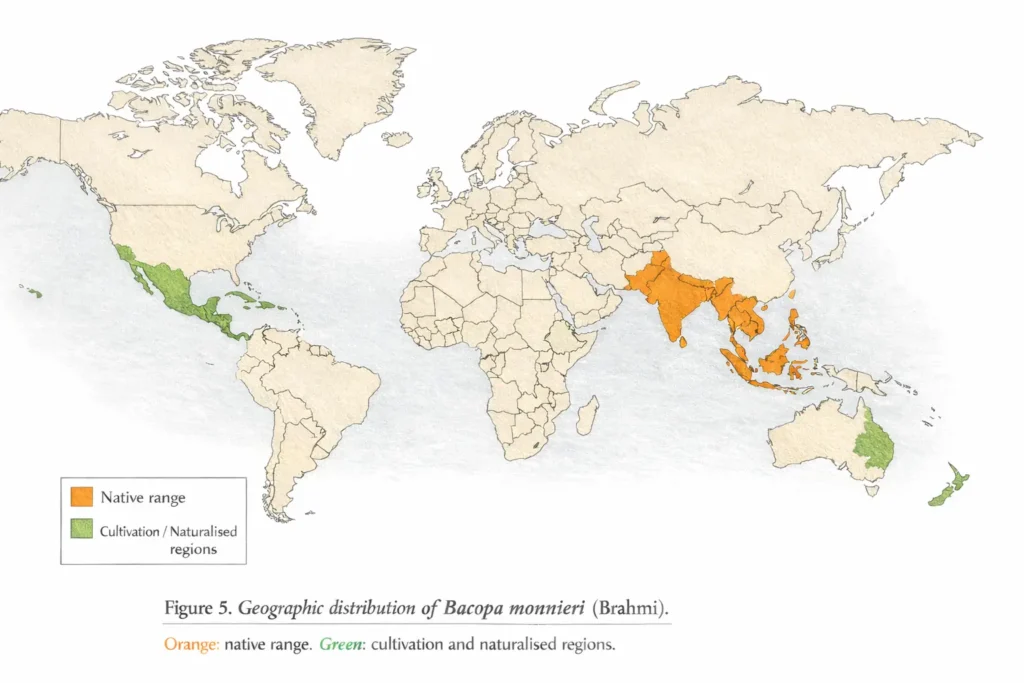
- Asia, Australia, Australia & Oceania, Indian Subcontinent, South Asia, Southeast Asia
- Plant Family
- Plantaginaceae
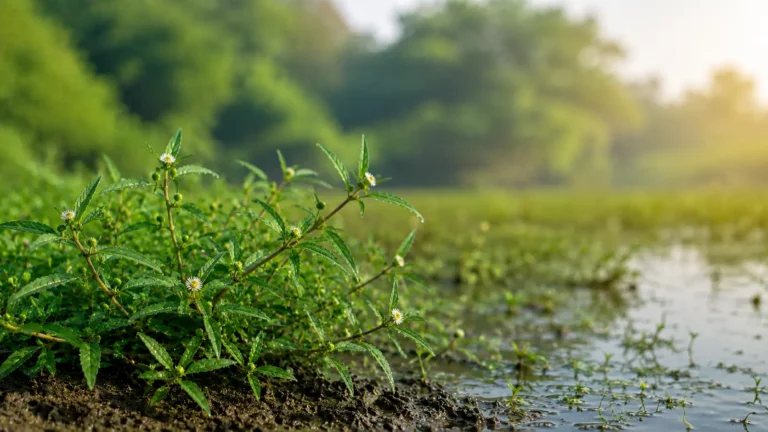
In natural ecosystems, B. monnieri functions as a semi-aquatic mat-forming species in marshes, floodplains, and riparian margins. Its stoloniferous growth, aerenchyma-mediated oxygen transport, and tolerance to fluctuating water levels allow it to stabilise sediments and persist under hypoxic conditions where many vascular plants cannot survive.
Widely cultivated across India, Southeast Asia, and increasingly in global herbal markets, Brahmi is central to Ayurvedic “Medhya Rasayana” formulations. Modern pharmacological research has focused on bacoside-mediated effects on synaptic plasticity and oxidative stress pathways. This profile integrates taxonomy, physiology, phytochemistry, ecology, cultivation, and conservation under a global scientific framework.
Classification and Taxonomy
Accepted Name and Synonymy
| Field | Value | Notes |
|---|---|---|
| Accepted Scientific Name | Bacopa monnieri (L.) Wettst. | POWO accepted name |
| Known Synonyms | Herpestis monniera (L.) Kunth; Gratiola monnieri L. | Historical synonyms |
| Taxonomic Authority Source | Plants of the World Online (Kew) | https://powo.science.kew.org |
| Assessment Date (YYYY-MM-DD) | 2026-04-15 |
Classification Hierarchy
| Rank | Taxon |
|---|---|
| Kingdom | Plantae |
| Division | Tracheophyta |
| Class | Magnoliopsida |
| Order | Lamiales |
| Family | Plantaginaceae |
| Subfamily | Not documented in available literature |
| Genus | Bacopa |
| Species | Bacopa monnieri |
Quick Reference
| Field | Value |
|---|---|
| Common Name(s) | Brahmi; Water hyssop |
| Plant Type | Semi-aquatic creeping herb |
| Lifecycle | Perennial |
| Native Range | Pantropical: South Asia, Southeast Asia, Africa, Australia, Americas |
| USDA Hardiness Zones | 9–11 |
| Toxicity Summary | Low toxicity at therapeutic doses; gastrointestinal effects reported at high intake |
| IUCN Status | Least Concern |
| Research Coverage Level | HIGH |
Cytogenetics
| Parameter | Value | Notes |
|---|---|---|
| Chromosome Number | 2n = 64 | Cytological studies |
| Ploidy Level | Polyploid (likely tetraploid) | Based on chromosome count |
| Genome Size | Not documented in the available literature | |
| Karyotype Characteristics | Not documented in available literature |
Scientific Stability and Nomenclature
Scientific Stability
| Field | Value |
|---|---|
| Nomenclatural Stability | Stable |
| Current Accepted Authority | POWO (Kew Science) |
| Major Reclassification Events | Originally described as Gratiola monnieri L.; transferred to Herpestis and subsequently to Bacopa following revision of Scrophulariaceae sensu lato |
Growth Habit and Architecture
| Parameter | Description |
|---|---|
| Growth Form | Prostrate, creeping perennial forming dense mats |
| Height | 5–20 cm (2–8 in) |
| Spread | 50–120 cm (20–47 in) via stolons |
| Stem Type | Succulent, glabrous, rooting at nodes |
| Branching Pattern | Highly branched stoloniferous network |
| Surface Texture | Smooth, fleshy |
| Longevity | Multi-year under stable hydrological conditions |
| Structural Support | Low-lying, self-supporting |
| Growth Rate | Rapid under warm, saturated conditions |
| Regeneration | Clonal regeneration via nodal meristems |
Leaves
| Field | Value |
|---|---|
| Presence | Present |
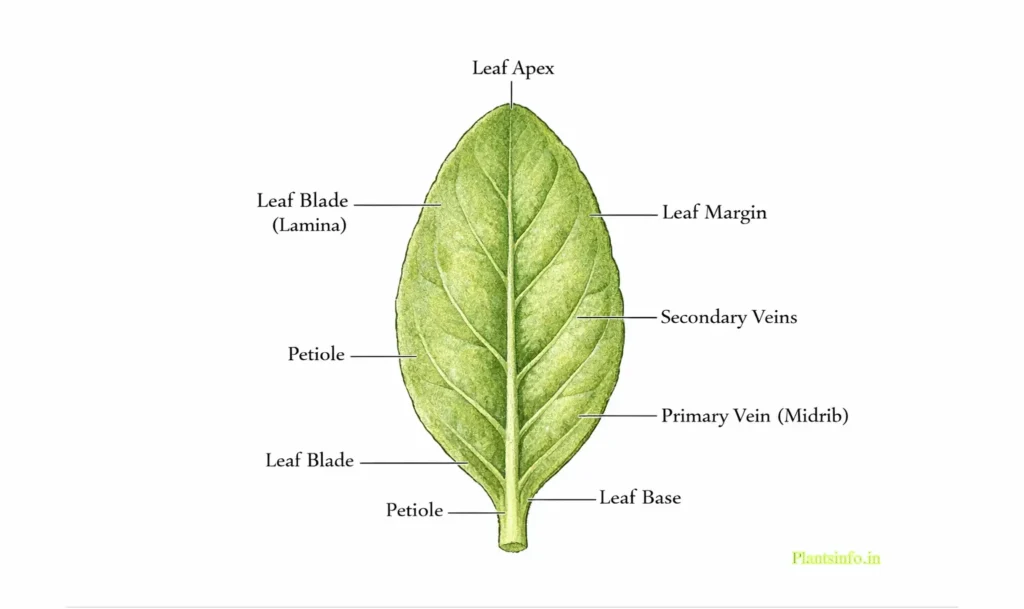
| Leaf Type | Simple, succulent, oblanceolate |
| Size (length × width) | 1–2.5 cm × 0.3–0.8 cm (0.4–1.0 × 0.1–0.3 in) |
| Colour | Bright green |
| Arrangement | Opposite |
| Special Features | High water content and cuticular thickness enable osmotic stability under submergence |
Flowers
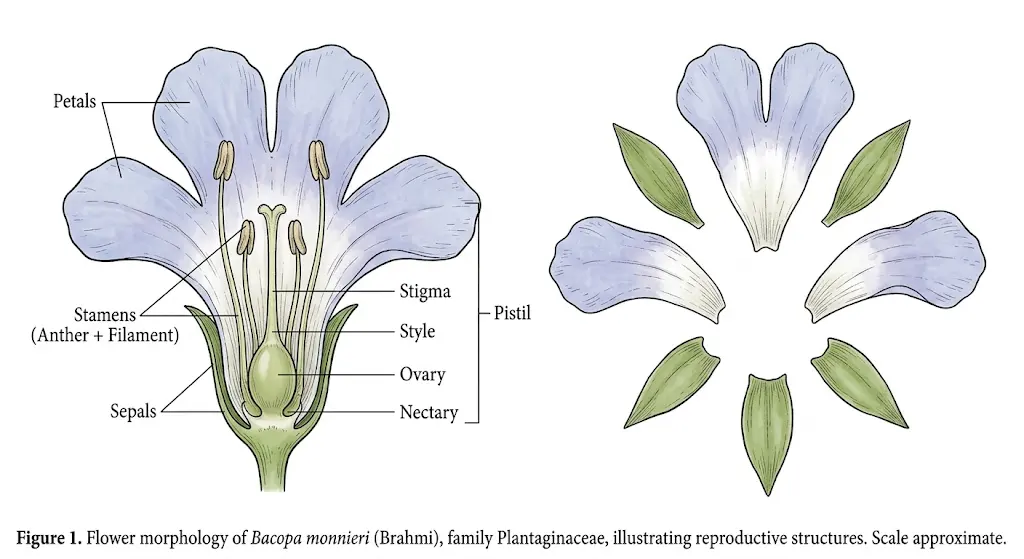
| Field | Value |
|---|---|
| Inflorescence Type | Solitary axillary |
| Flower Size | 8–12 mm diameter |
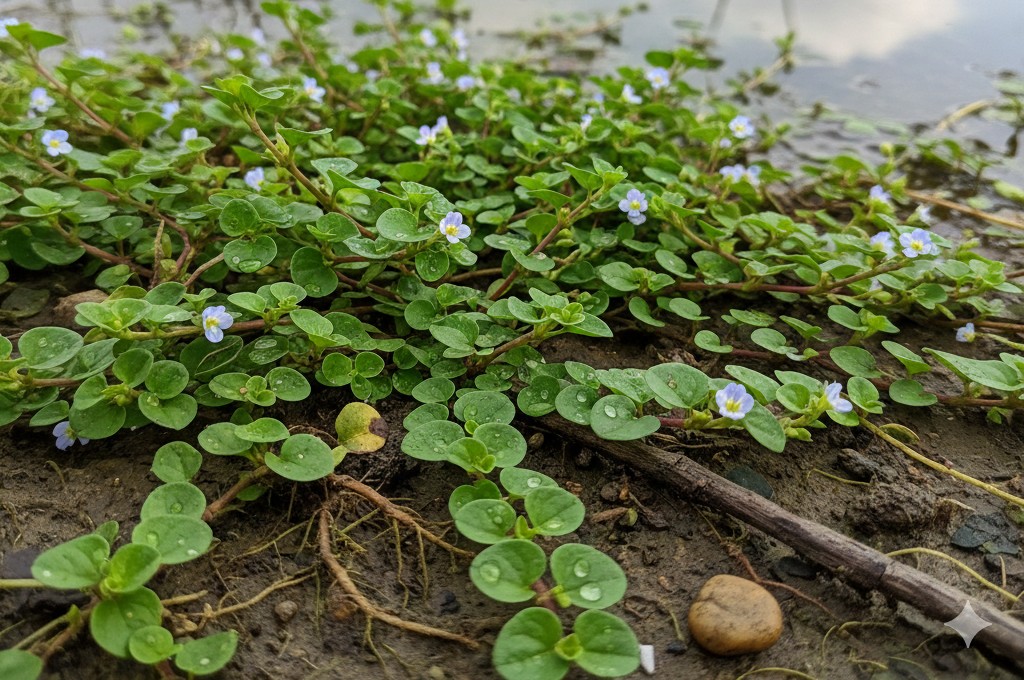
| Flower Colour | White to pale blue with violet markings |
| Symmetry | Actinomorphic |
| Sexuality | Bisexual |
| Perianth | 5 fused petals |
| Stamens | 4 |
| Ovary Position | Superior |
| Flowering Duration | Continuous under warm, moist conditions |
| Fragrance | Not documented in available literature |
Fruit
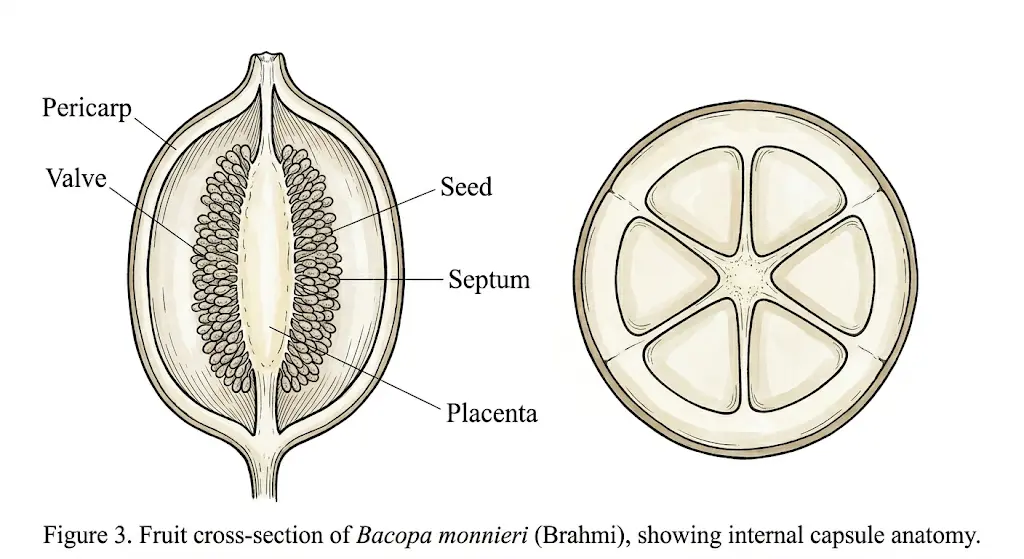
| Field | Value |
|---|---|
| Fruit Type | Capsule |
| Size | 3–5 mm |
| Colour | Green turning brown |
| Dehiscence | Loculicidal |
| Flesh Type | Dry |
| Seed Count | Numerous (>50 per capsule estimated) |
| Maturation Time | 3–4 weeks post-anthesis |
| Edibility | Not consumed as fruit |
| Dispersal Unit | Seeds |
| Special Features | Adapted for hydrochorous dispersal |
Seeds

| Field | Value |
|---|---|
| Seed Size | 0.5–1 mm |
| Seed Shape | Ellipsoid |
| Seed Coat | Smooth |
| Dormancy | Non-deep physiological or absent |
| Germination Rate | 60–85% under optimal conditions |
| Viability Period | 6–12 months under ambient storage |
Root System
| Field | Value |
|---|---|
| Root Type | Adventitious fibrous |
| Depth | Shallow (<15 cm) |
| Special Features | Roots form at nodes enabling rapid lateral colonisation |
Cultivar Summary
| Cultivar | Key Characteristic | Origin Notes |
|---|---|---|
| ‘CIM-Jagriti’ | High bacoside yield (>2% dry weight) | CSIR-CIMAP, India |
| ‘CIM-Brahmi’ | Improved biomass productivity | India breeding programme |
| ‘Pragyashakti’ | Enhanced phytochemical consistency | India selection line |
Full variety and cultivar listings are covered in the Varieties and Cultivars guide.
Functional Traits
| Trait | Description |
|---|---|
| C3 Photosynthesis | Aerenchyma formation enables internal oxygen diffusion from aerial tissues to submerged roots, maintaining aerobic respiration under hypoxic conditions. |
| Bacoside Biosynthesis | Stoloniferous growth with nodal meristems enables rapid lateral spread and habitat colonisation. |
| Hydrophytic Oxygen Transport | Triterpenoid saponins are synthesised via the mevalonate (MVA) pathway; they accumulate in leaf mesophyll and modulate neuronal signalling via synaptic plasticity enhancement and antioxidant enzyme regulation. |
| Clonal Expansion Strategy | Accumulation of compatible solutes (e.g., proline) maintains cellular turgor under salinity and osmotic stress. |
| Osmoregulation Mechanism | Bacosides deter herbivory and contribute to antimicrobial defence via membrane-disruptive activity. |
| Secondary Metabolite Defence | High meristematic activity at nodes allows rapid recovery from mechanical damage. |
| Light Adaptation Plasticity | Adjusts chlorophyll concentration and leaf thickness under low light, maintaining photosynthetic efficiency |
| Regeneration Mechanism | Succulent leaf tissues store water and buffer against transient desiccation. |
| Water Storage Strategy | Succulent leaf tissues store water and buffer against transient desiccation |
Phytochemistry
| Compound Class | Representative Compounds | Plant Part | Functional / Mechanism | Source |
|---|---|---|---|---|
| Triterpenoid saponins | Bacoside A; Bacoside B; Bacopaside I | Leaves | Enhances synaptic transmission and antioxidant enzyme activity; modulates cholinergic signalling | Russo & Borrelli (2005) |
| Flavonoids | Luteolin; Apigenin | Leaves | Reactive oxygen species scavenging; neuroprotective effects | Aguiar & Borowski (2013) |
| Alkaloids | Brahmine; Herpestine | Whole plant | Modulation of CNS signalling pathways | Singh et al. (2016) |
| Phenolic acids | Caffeic acid | Aerial parts | Antioxidant and anti-inflammatory activity | Singh et al. (2016) |
| Sterols | β-sitosterol | Leaves | Membrane stabilisation and anti-inflammatory effects | Aguiar & Borowski (2013) |
| Glycosides | Bacopaside II | Leaves | Neuroprotective signalling modulation | Russo & Borrelli (2005) |
Phytochemical Organ Distribution
| Organ | Compound | Concentration Pattern | Source |
|---|---|---|---|
| Leaves | Bacoside A | 0.5–2.0% dry weight | Russo & Borrelli (2005) |
| Leaves | Bacopaside I | 0.3–1.5% dry weight | Russo & Borrelli (2005) |
| Leaves | Luteolin | 0.1–0.4% dry weight | Aguiar & Borowski (2013) |
| Whole plant | Brahmine | <0.1% estimated | Singh et al. (2016) |
| Aerial parts | Caffeic acid | 0.05–0.2% dry weight | Singh et al. (2016) |
Toxicity and Safety
| Subject | Toxic Compounds | Clinical Effects | Source |
|---|---|---|---|
| Humans | Bacosides (high dose) | Generally safe at therapeutic doses; high intake may cause gastrointestinal discomfort and fatigue | WHO (2009) |
| Cats | Not documented in the available literature | Not documented in available literature | ASPCA (accessed 2026-04-15) |
| Dogs | Not documented in the available literature | Not documented in the available literature | ASPCA (accessed 2026-04-15) |
| Livestock | Not documented in the available literature | Not documented in the available literature | FAO (accessed 2026-04-15) |
Economic Importance
| Sector | Description | Source |
|---|---|---|
| Pharmaceutical | Incorporated into capsules, tablets, and functional beverages aimed at memory support and stress reduction, increasing inclusion in global “brain health” supplement category | Aguiar & Borowski (2013); Russo & Borrelli (2005) |
| Nutraceutical | Cultivated as an aquatic ornamental plant in aquariums and wetland landscaping due to its tolerance of submergence and low maintenance requirements | Singh et al. (2016) |
| Traditional Medicine | Core herb in Ayurveda (Medhya Rasayana category) for improving memory, intellect, and mental resilience; also used in Sri Lankan and Southeast Asian systems | WHO (2009) |
| Cosmetic | Extracts used in dermatological formulations for antioxidant and anti-inflammatory properties affecting skin ageing pathways | Singh et al. (2016) |
| Horticulture/Aquascaping | Cultivated as an aquatic ornamental plant in aquariums and wetland landscaping due to tolerance of submergence and low maintenance requirements | FAO (accessed 2026-04-15) |
| Summary Economic Assessment | A high-value medicinal perennial with expanding global demand; economic value driven by standardised bacoside extracts and cognitive health applications; market growth linked to nootropic sector expansion | Synthesised from above |
Traditional Uses
| Use Category | Description | Region/Cultural Group | Documentation Level | Source |
|---|---|---|---|---|
| Cognitive enhancement | Used to improve memory acquisition, learning ability, and concentration; classified as Medhya Rasayana in Ayurveda | India (Ayurveda) | Well documented | WHO (2009) |
| Anxiety and stress modulation | Used as an adaptogenic herb to reduce anxiety and support mental resilience | India, Sri Lanka | Well documented | Russo & Borrelli (2005) |
| Epilepsy adjunct therapy | Traditionally administered in neurological disorders including epilepsy and cognitive decline conditions | India | Moderately documented | Singh et al. (2016) |
| Anti-inflammatory use | Used internally for inflammatory conditions including arthritis and systemic inflammation | Southeast Asia | Moderately documented | Aguiar & Borowski (2013) |
| Wound healing and dermatological use | Applied topically for ulcers, wounds, and skin irritation; associated with antimicrobial and antioxidant activity | India, Southeast Asia | Limited to moderate evidence | Ethnobotanical surveys |
Ethical Considerations
Bacopa monnieri originates from South and Southeast Asian wetland ecosystems, where it has been embedded in traditional medical systems—most prominently Ayurveda—for millennia. Its classification as a Medhya Rasayana reflects a long-standing cultural recognition of its cognitive-enhancing properties, supported by empirical knowledge of harvest timing, preparation, and dosage. This accumulated traditional knowledge forms the intellectual foundation of modern pharmacological and commercial exploitation of bacoside-rich extracts.
Despite its deep traditional roots, the global commercialisation of Brahmi has largely proceeded without formalised access and benefit-sharing (ABS) agreements recognising indigenous and local knowledge holders. Under the Nagoya Protocol, particularly Article 7 addressing traditional knowledge associated with genetic resources, utilisation of such knowledge requires prior informed consent (PIC) and mutually agreed terms (MAT). No documented ABS case specific to Bacopa monnieri has been identified in the ABS Clearing-House (ABSCH) database, indicating that current commercial supply chains operate largely outside formal benefit-sharing frameworks.
Production is concentrated in India and Southeast Asia, where cultivation has increasingly replaced wild harvesting. However, value capture remains uneven: smallholder farmers and traditional practitioners contribute to supply and knowledge systems but receive limited economic return relative to downstream extract manufacturers and global supplement brands. There is also a risk of biocultural erosion, where increased export demand restricts local access or shifts cultivation priorities toward high-yield chemotypes at the expense of traditional diversity.
Ethically responsible development of Brahmi-based products requires transparent sourcing, traceability, and equitable benefit-sharing mechanisms. This includes documenting traditional knowledge contributions, engaging with national institutions such as India’s Ministry of AYUSH, and supporting cultivation models that ensure fair compensation to primary producers. Alignment with Nagoya Protocol principles is essential to maintain both ethical legitimacy and long-term sustainability of the global Brahmi supply chain.
Cultural Significance
| Aspect | Description |
|---|---|
| Symbolic Associations | Associated with intellect, memory, and spiritual awareness in Indian philosophical and medical traditions |
| Festive/Ceremonial Role | Used in rituals associated with education, child development, and cognitive wellbeing in some regional traditions |
| Linguistic/Naming Significance | Featured in Ayurvedic gardens and medicinal plant collections, increasing global interest in nootropic herbs |
| Agrotourism/Public Interest | Featured in Ayurvedic gardens and medicinal plant collections; increasing global interest in nootropic herbs |
Cultivation Summary
| Parameter | Value | Notes |
|---|---|---|
| Hardiness / Climate Zone | Tropical to subtropical; USDA 9–11 | Full sun to partial shade (optimal ≥6 hours of sunlight) |
| Soil pH Range | 5.0–7.5 (optimal 5.5–7.0) | Slightly acidic to neutral preferred |
| Water Requirement | Grown as an annual in cooler regions | Semi-aquatic species |
| Light Requirement | Full sun to partial shade (optimal ≥6 hours sunlight) | High light increases bacoside concentration |
| Productive Lifespan | 3–5 years under managed cultivation | Multiple harvest cycles annually possible |
Full cultivation requirements, propagation methods, and post-harvest handling are covered in the Growing Guide.
Pest, Disease, and Physiological Burden Summary
Bacopa monnieri is affected by sap-feeding pests, including aphids (Aphis spp.), whiteflies (Bemisia tabaci), and spider mites (Tetranychus spp.), which reduce vigour and biomass. Fungal pathogens such as Pythium spp. and Fusarium spp. causes root rot under poorly aerated or stagnant conditions. Physiological stress includes chlorosis under nutrient imbalance and reduced growth under water deficit. Detailed diagnosis, treatment, and prevention are covered in the Problems and Diseases guide.
Recommended Products
Disclosure: As an Amazon Associate, PlantsInfo may earn from qualifying purchases.
🌱 Plant Care Essentials
The following tools can help with pruning, plant health, soil management, and fruit garden maintenance.

Neem Oil for Plant Care
Natural plant protection against aphids, whiteflies, mites, and other common garden pests.

Fungicide for Root Care
Helps suppress soil-borne fungal diseases and supports healthier root systems.

Spray Bottle for Plants
Ideal for applying foliar sprays, neem oil solutions, and liquid plant treatments.

Rubber Hand Gloves
Protects hands during pruning, planting, soil preparation, and garden maintenance.
Conservation Status
| Parameter | Value | Notes/Source |
|---|---|---|
| IUCN Red List Status | Least Concern | https://www.iucnredlist.org (accessed 2026-04-15) |
| Population Trend | Stable | Widely cultivated globally |
| Major Threats | Cultivation and ex-situ conservation are widely practiced | Regional variability |
| Conservation Actions | Occurs within wetland reserves across the native range | Reduces pressure on wild populations |
| Protected Areas | Occurs within wetland reserves across native range | Not systematically documented |
| CITES Status | Not listed | CITES database |
Research Coverage and Knowledge Gaps
| Research Topic | Coverage Level | Key Gaps | Priority |
|---|---|---|---|
| Neuropharmacology of bacosides | High | Long-term clinical efficacy and dose-response standardisation | High |
| Phytochemical variability | High | Environmental and genetic drivers of bacoside variation | Medium |
| Genomics and biosynthesis | Low | Genome sequencing; regulatory pathways of bacoside synthesis | High |
| Ecology and population dynamics | Moderate | Pollinator specificity; seed dispersal ecology; wild population monitoring | Medium |
Priority Knowledge Gaps
Despite extensive pharmacological investigation, Bacopa monnieri remains insufficiently characterised at genomic, ecological, and clinical levels. The absence of a reference genome limits understanding of the regulatory architecture underlying bacoside biosynthesis, constraining breeding and metabolic optimisation efforts. Identification of transcription factors controlling triterpenoid pathways remains incomplete.
Ecological knowledge is also limited. Species-level pollinator networks, seed dispersal distances, and population dynamics in natural wetlands are poorly documented, despite the plant’s wide pantropical distribution. This restricts accurate modelling of its ecological resilience and response to habitat degradation.
Phytochemical variability presents another critical gap. Bacoside concentration varies significantly with light intensity, water availability, and nutrient status, yet comparative multi-location datasets are limited. This directly affects the standardisation of medicinal products.
Clinically, although multiple studies support cognitive enhancement effects, long-term safety, pharmacokinetics, and interaction with conventional drugs remain underexplored. Large-scale, controlled clinical trials are required to establish consistent therapeutic protocols.
Addressing these gaps requires integration of genomics, agronomy, ecology, and clinical research to fully realise the species’ medicinal and economic potential.
Interesting Facts
Bacosides Modulate Synaptic Plasticity
Bacosides enhance synaptic communication by increasing dendritic branching and neurotransmitter activity in neuronal pathways. This improves memory consolidation and cognitive processing efficiency. The mechanism involves antioxidant activity and modulation of cholinergic signalling.
Source: Russo & Borrelli (2005)
Thrives Under Submerged Conditions
Bacopa monnieri can grow fully submerged due to aerenchyma tissues that transport oxygen internally from leaves to roots. This adaptation allows survival in hypoxic wetland soils. It enables the plant to occupy ecological niches unavailable to most terrestrial species.
Source: FAO (accessed 2026-04-15)
One of Ayurveda’s Primary Brain Tonics
Brahmi is classified as a Medhya Rasayana, a category reserved for herbs that enhance intellect and memory. This classification reflects centuries of empirical use in cognitive health. Modern pharmacology has validated several of these traditional claims.
Source: WHO (2009)
Clonal Growth Enables Rapid Habitat Expansion
The plant spreads via stolons that root at nodes, forming dense mats across wet substrates. This clonal expansion strategy allows rapid colonisation and recovery after disturbance. It also contributes to its effectiveness in stabilising wetland soils.
Source: Singh et al. (2016)
Frequently Asked Questions
What is Bacopa monnieri, and how is it identified?
Bacopa monnieri is a creeping, semi-aquatic perennial herb characterised by succulent, opposite leaves and small white to pale blue flowers with subtle violet markings. It forms dense mats in wetlands through stoloniferous growth. The most reliable identification features include its fleshy leaves, rooting nodes, and preference for waterlogged habitats, distinguishing it from similar terrestrial creeping herbs.
What are bacosides and why are they important?
Bacosides are triterpenoid saponins synthesised via the mevalonate pathway and concentrated primarily in leaf tissues. Research consistently shows they enhance synaptic plasticity, modulate cholinergic signalling, and reduce oxidative stress in neuronal systems. These mechanisms underpin the plant’s cognitive-enhancing and neuroprotective effects, making bacosides the primary bioactive compounds in pharmaceutical and nutraceutical applications.
Can Bacopa monnieri grow completely underwater?
Yes, Bacopa monnieri can grow partially or fully submerged due to specialised aerenchyma tissues that transport oxygen internally from aerial parts to submerged roots. This adaptation allows the plant to maintain aerobic respiration in hypoxic conditions. As a result, it is commonly used in aquariums and wetland systems where few vascular plants can persist.
Is Bacopa monnieri safe for long-term use?
Research consistently shows Bacopa monnieri is generally safe at standard therapeutic doses, typically 300–600 mg of standardised extract per day. Reported adverse effects are mild and include gastrointestinal discomfort and fatigue. However, long-term safety data remain limited, and interactions with sedatives or thyroid medications require further clinical investigation.
Where does Bacopa monnieri naturally occur?
The species has a pantropical distribution, occurring naturally across South Asia, Southeast Asia, Africa, Australia, and parts of the Americas. It is primarily found in wetlands, marshes, riverbanks, and floodplains where soil moisture remains consistently high. Its ecological success is linked to tolerance of waterlogging and fluctuating hydrological conditions.
How is Bacopa monnieri cultivated commercially?
Commercial cultivation involves planting stem cuttings or seedlings in saturated soils or shallow water systems under full sun. High moisture availability and warm temperatures are essential for optimal biomass production and bacoside accumulation. Harvesting is typically conducted at early flowering stages when bacoside concentration peaks in aerial tissues.
Conclusion
Bacopa monnieri represents a rare convergence of traditional medicinal knowledge and modern neuropharmacological validation. Its ecological adaptability to wetland environments and its production of bioactive bacosides position it as both an ecologically resilient species and a globally significant medicinal resource. The alignment between traditional Ayurvedic classification and contemporary biochemical understanding underscores its enduring relevance.
The primary unresolved challenge lies in standardising phytochemical content and strengthening clinical evidence. Variability in bacoside concentration across environments and cultivation systems limits pharmaceutical consistency, while long-term clinical trials remain insufficient to fully establish therapeutic protocols and safety profiles.
Future progress will depend on integrating genomic research, ecological understanding, and controlled clinical studies. Coupled with ethically aligned supply chains and cultivation practices, Bacopa monnieri is well-positioned to remain a cornerstone species in cognitive health research and global herbal medicine systems.
References
A. Primary Taxonomic Sources
- Plants of the World Online (POWO). Bacopa monnieri (L.) Wettst. Royal Botanic Gardens, Kew. https://powo.science.kew.org (accessed 2026-04-15)
B. Peer-Reviewed Literature
- Russo, A., & Borrelli, F. (2005). Bacopa monniera: A review. Phytomedicine, 12(4): 305–317. https://doi.org/10.1016/j.phymed.2003.12.008
- Aguiar, S., & Borowski, T. (2013). Neuropharmacological review of Bacopa monnieri. CNS Neuroscience & Therapeutics, 19(2): 95–104. https://doi.org/10.1111/cns.12031
- Singh, H., Dhawan, B., & Sharma, A. (2016). Phytochemical and pharmacological profile of Bacopa monnieri. Journal of Ethnopharmacology, 178: 153–164. https://doi.org/10.1016/j.jep.2015.12.040
C. Monographs, Books, and Technical Reports
- World Health Organization. (2009). WHO Monographs on Selected Medicinal Plants, Volume 4. Geneva: WHO Press.
D. Databases and Online Resources
- IUCN Red List. Bacopa monnieri. https://www.iucnredlist.org (accessed 2026-04-15)
- FAO Plant Database. https://www.fao.org (accessed 2026-04-15)
- ASPCA Toxic and Non-Toxic Plants Database. https://www.aspca.org (accessed 2026-04-15)
E. Grey Literature
- Ministry of AYUSH (India). (2018). Medicinal Plants Database and Cultivation Guidelines for Bacopa monnieri. Government of India