Petunia Plant Problems: Symptoms, Causes and Fixes
Petunia Plant Problems: Symptoms, Causes, and Fixes
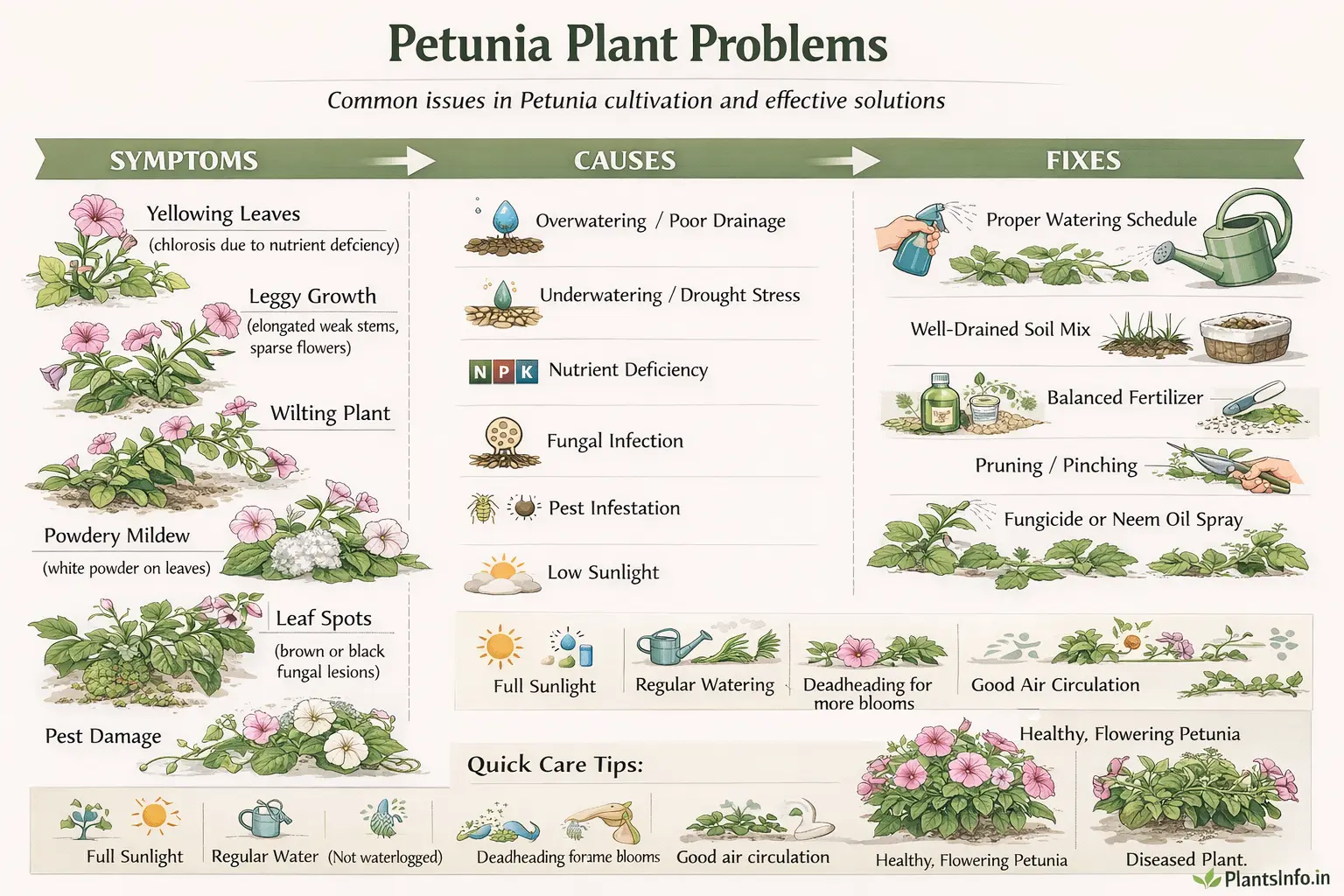
Petunias in India often look magnificent in October and then collapse by January — not from cold, but from a wet spell nobody accounted for. Most petunia problems in Indian conditions trace back to a handful of causes, and almost all of them are recoverable if caught early.
Quick Answer: The most common petunia problems in India are fungal diseases from humidity, aphid and whitefly infestations, and root rot from overwatering. Most are preventable with good airflow, correct watering, and a seasonal spray routine.
Recommended Products
Disclosure: As an Amazon Associate, PlantsInfo may earn from qualifying purchases.
🌱 Growing Essentials
The following products can help with container gardening, potting, root development, soil management, and healthy plant growth.
Organic Potting Soil Mix
Provides nutrients, structure, and healthy growing conditions for container plants.
The most frequently seen petunia disease in Indian gardens, particularly during the post-monsoon season, when humidity is high but rainfall has stopped. It appears as a white or pale grey powdery coating on the upper surface of leaves, starting on older foliage and spreading upward.
It is caused by the fungus Podosphaera xanthii and thrives in conditions where nights are cool and humid but days are warm and dry — exactly the October–November window across much of India. Powdery mildew can be managed effectively if caught early. It rarely kills a plant outright but weakens it and reduces flowering.
Prevention: space plants at least 20–25 cm apart to ensure airflow, and avoid overhead watering in the evening.
Botrytis Blight (Grey Mould)
Botrytis appears as brown, water-soaked patches on petals and leaves, which quickly develop a characteristic grey fuzzy coating. It spreads rapidly in cool, damp conditions and is most common during the monsoon months and in hill-station gardens through winter.
Unlike powdery mildew, botrytis can destroy an entire plant quickly. Remove affected parts immediately. Fungicides containing chlorothalonil or mancozeb can slow the spread, but if the crown is affected, the plant is unlikely to recover fully.
Prevention: never let fallen petals accumulate on the soil surface — this is the primary entry point for the fungus.
Phytophthora Root and Crown Rot
This water mould causes sudden wilting even when the soil appears moist. The stem base turns dark and soft, and the roots are brown and mushy when examined. It is not a true fungus but behaves like one and is triggered almost entirely by waterlogged soil.
It cannot be cured once the crown is infected. Remove and discard the plant; do not compost it. Treat the container soil with a copper-based fungicide before replanting.
Prevention: ensure containers have adequate drainage holes and never allow pots to sit in standing water — a common problem on Indian balconies during monsoon season.
Tobacco Mosaic Virus (TMV)
Infected plants show irregular yellow-green mottling on leaves, distorted new growth, and stunted flowering. There is no cure. TMV is spread by aphids and by handling infected plants without washing hands, which is how it moves quickly through a collection.
Remove and destroy infected plants immediately. Do not replant petunias in the same container soil for at least one season.
Pest Problems
Aphids
Aphids cluster on new growth and flower buds — soft, pear-shaped insects ranging from pale green to black, often found in large colonies on stem tips. They damage plants by sucking sap and, more critically, by transmitting viral diseases, including TMV.
A strong jet of water dislodges them effectively. For persistent infestations, neem oil spray (5 ml neem oil + 1 ml liquid soap per litre of water) applied every 5–7 days controls them well. Chemical option: imidacloprid-based systemic insecticides at label rates.
Whitefly
Whiteflies are tiny white-winged insects that fly up in a cloud when the plant is disturbed. They feed on the undersides of leaves, leaving yellowing patches and a sticky residue called honeydew that encourages sooty mould.
Yellow sticky traps are useful for monitoring. Neem oil spray is effective for moderate infestations. For severe infestations, pyrethrins or spirotetramat-based insecticides are the chemical option. Whitefly populations build rapidly in warm, still conditions — balcony gardens in April and May are particularly vulnerable.
Note: Whitefly damage (yellowing patches on leaves, sticky residue) is frequently mistaken for a fungal disease. The distinguishing sign is the cloud of white insects when you disturb the plant — no insect, no whitefly.
Budworm (Helicoverpa and Tobacco Budworm)
Budworms are caterpillars that bore into flower buds before they open, leaving small, round holes in petals and destroying the bloom before it can develop. Damage is often noticed only when buds fail to open or open with ragged petals.
Check the undersides of leaves and inside buds after dusk. Remove caterpillars manually for small infestations. Bacillus thuringiensis (Bt) spray is an effective, safe biological control. Chemical option: chlorpyrifos or spinosad at recommended label rates for ornamentals.
This information is for general guidance only. Always read product labels before applying any pesticide or fungicide. Follow state agriculture department guidelines for food crops. Keep children and pets away during and after application.
Environmental and Care Mistakes
Overwatering (the most common first-timer mistake): Leaves turn yellow from the base upward, stems look weak, and the plant stops flowering. New gardeners almost universally water petunias as frequently as they water vegetables. Petunias prefer to dry out slightly between waterings. The fix is simple: water only when the top 2 cm of soil feels dry to the touch, and ensure every pot drains freely. For routine watering guidance, see the Petunia Growing Guide.
Insufficient sunlight, Petunias grown in partial shade or on north-facing balconies become leggy — long, weak stems with few flowers. This is not a disease, though it is frequently treated as one with fertiliser, which makes the problem worse. The fix is relocation to a spot with at least 5–6 hours of direct sun. If relocation is not possible, cut the plant back hard and accept reduced flowering.
Fertiliser burn Brown, crispy leaf edges following a fertilisation are fertiliser burn, not a fungal problem. It is caused by applying fertiliser to dry soil or using too high a concentration. Flush the pot thoroughly with water and withhold fertiliser for two to three weeks. For correct fertiliser timing and quantities, see the Petunia Growing Guide.
Monsoon stress: The single most common seasonal mistake: leaving petunias fully exposed to prolonged heavy monsoon rain. Continuous wet soil and zero airflow create the perfect conditions for root rot and botrytis simultaneously. Move containers under a covered area or overhang during extended rain periods. This is especially critical in coastal regions and the Western Ghats, where the monsoon is long and intense.
Prevention Protocol
Good petunia care prevents the majority of problems before they start. Follow these habits tied to Indian seasons:
Before monsoon onset (late May), move containers to a sheltered spot with overhead cover and reduce watering frequency in anticipation of increased humidity. Space plants generously — crowded petunias are significantly more prone to fungal problems than well-spaced ones. Deadhead spent blooms regularly, removing them at the base of the flower stem rather than just the petals, so fallen organic matter does not accumulate on the soil. Apply a preventive neem oil spray at the start of cooler weather (October–November) when powdery mildew risk peaks. Inspect new growth weekly, particularly stem tips and bud clusters, for early signs of aphid colonies — colonies caught at five to ten insects are trivial to remove; colonies of hundreds are not.
When to Give Up on a Plant
Remove and discard any petunia showing confirmed TMV symptoms (mosaic leaf mottling, distorted new growth) immediately — there is no recovery, and every day the plant stays in place risks spreading the virus to neighbouring plants via aphids.
A plant with root rot that has reached the crown — identifiable by a soft, dark, collapsed stem at soil level — is not recoverable. Discard the plant and the potting mix together; do not reuse the soil in the same container without treating it with a copper-based fungicide.
Do not replant petunias in confirmed TMV- or Phytophthora-infected soil for at least one full season. If growing in containers, replace the potting mix entirely before the next planting.
Frequently Asked Questions
Can I eat petunias from a plant that was sprayed with a pesticide?
Petunias are ornamental and not typically eaten, but if you grow them alongside edible plants, observe the re-entry interval stated on the pesticide label before handling neighbouring crops.
My petunia looks completely dead in summer — is it gone?
Not necessarily. Petunias struggle badly in the Indian summer heat above 38°C and often go into severe stress that looks like death. Cut the plant back to half its height, move it to filtered light, and reduce watering. Many revive once temperatures drop in September.
Are petunias toxic to pets?
Petunias are generally considered non-toxic to cats and dogs, but individual animals may have digestive sensitivity to any plant material. Keep pets from grazing on them as a precaution.
Petunia problems are almost always fixable — what defeats most gardeners is not identifying them at all. A weekly five-minute inspection catches the majority of issues before they become serious.