
Petunia Flowering Season: When and What to Expect in India
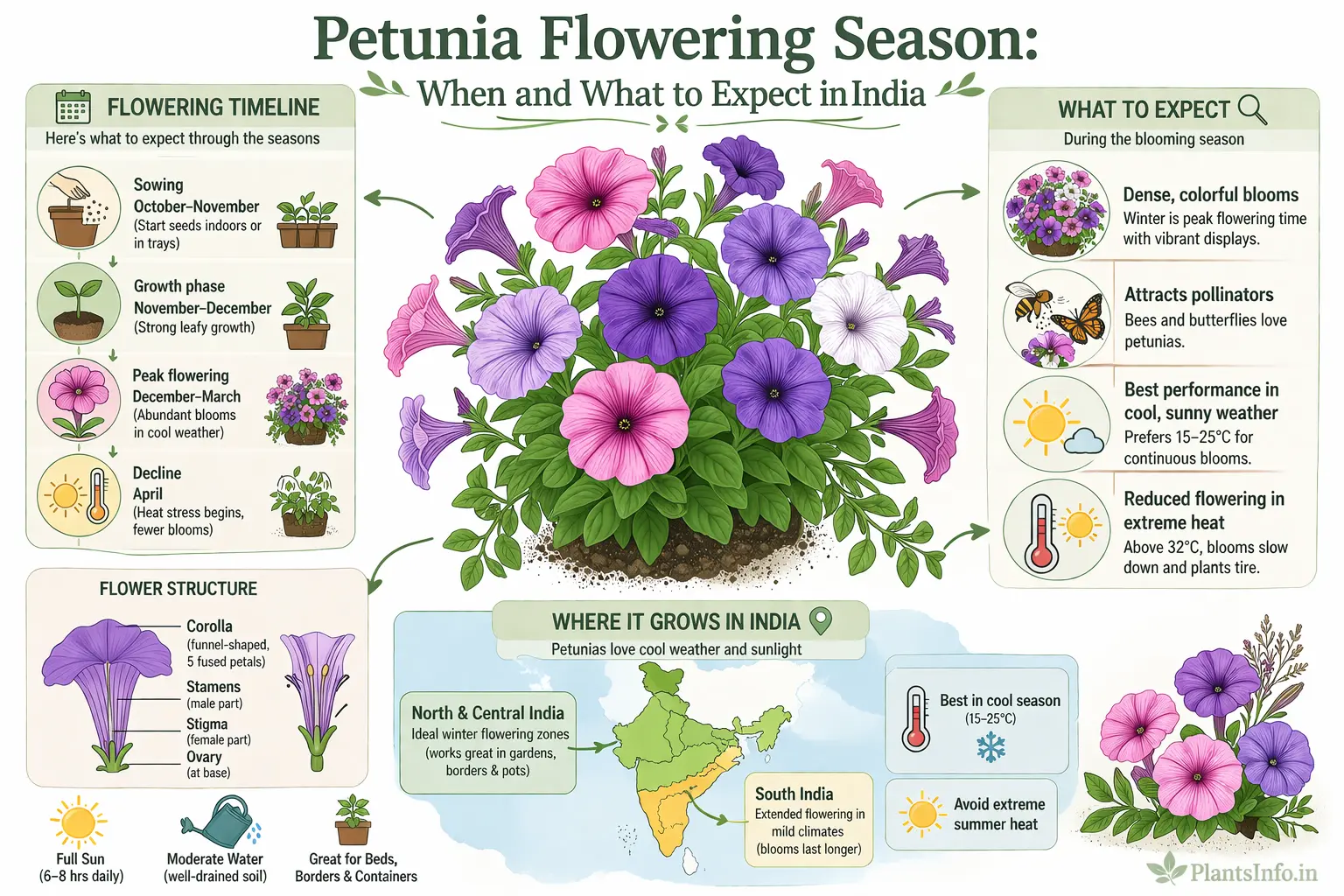
Quick Answer: Petunias flower during India’s cool season — primarily December through February in the plains, and across a much longer window in hill stations. The best time to plant is October to November, giving the plant time to establish before peak blooming begins.
See also: Petunia Plant plant profile, how to grow it, common problems, its benefits, and its varieties.
By the time December arrives, a petunia planted in October is already in full stride. That two-month head start is the entire secret to a long, generous flowering season — and the reason gardeners who plant in December often feel short-changed by March. Timing is everything with petunias.
Recommended Products
Disclosure: As an Amazon Associate, PlantsInfo may earn from qualifying purchases.
🌱 Growing Essentials
The following products can help with container gardening, potting, root development, soil management, and healthy plant growth.
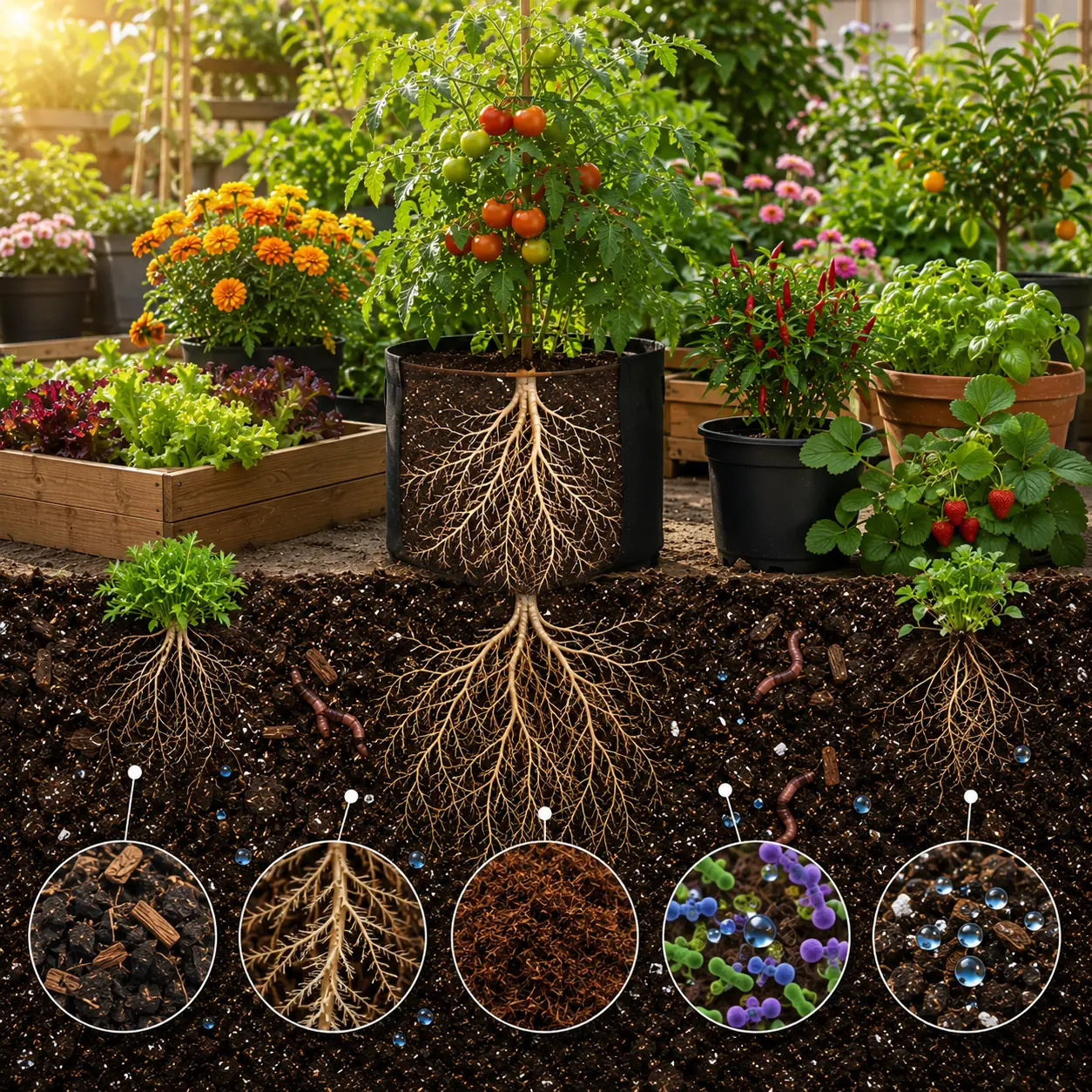
Organic Potting Soil Mix
Provides nutrients, structure, and healthy growing conditions for container plants.
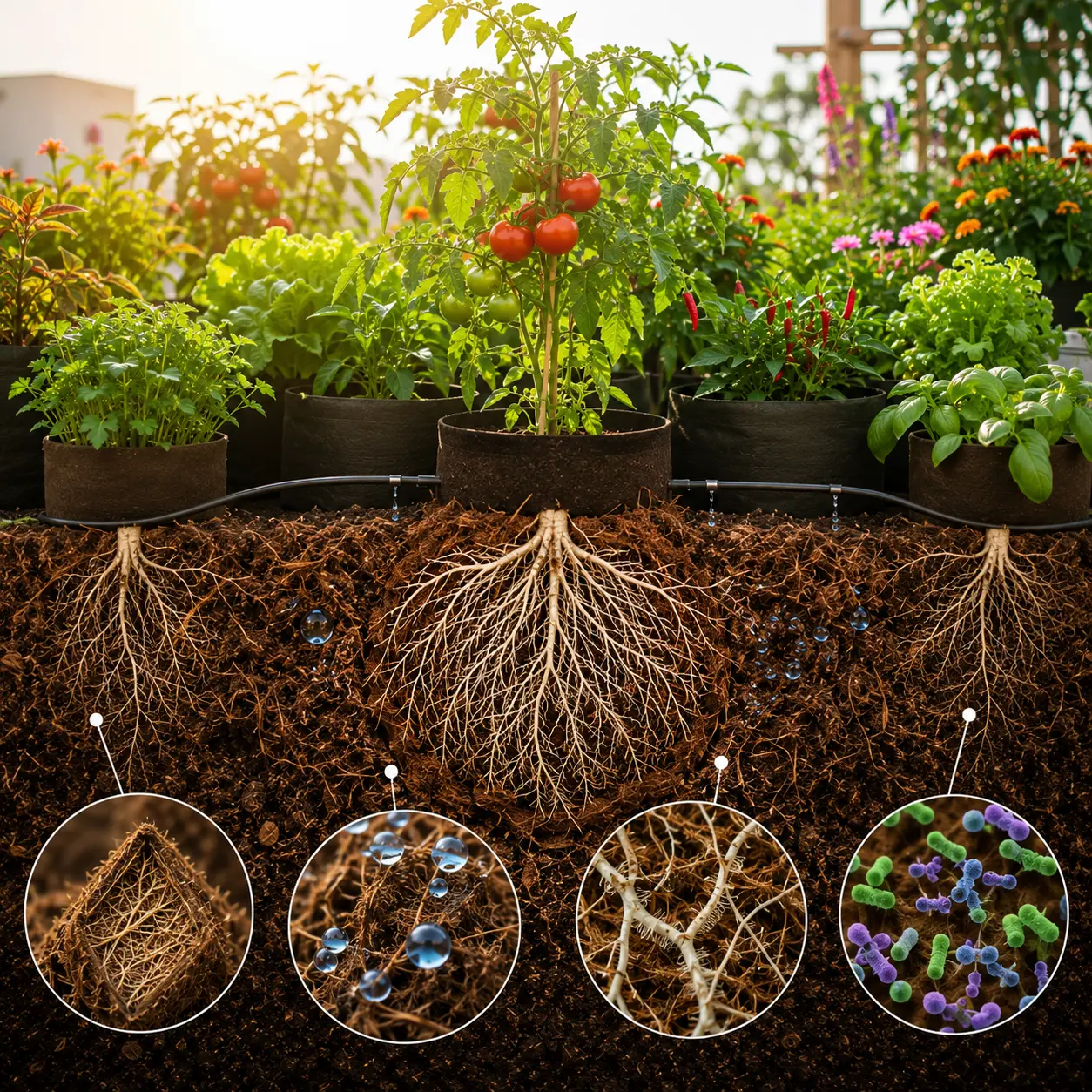
Coco Peat Growing Medium
Enhances moisture retention while maintaining excellent root-zone aeration.

Grow Bags for Plants
Improve drainage, root aeration, and vegetable production in limited spaces.

Plastic Pots for Plants
Ideal containers for seedlings, ornamentals, herbs, and balcony gardens.
India’s Seasons and This Plant
| Season (months) | What the plant is doing |
|---|---|
| Pre-monsoon (Mar–May) | Flowering slows and stops in the plains as heat rises; plants decline rapidly above 35°C. In hill stations, spring planting begins in March–April. |
| Monsoon (Jun–Sep) | Not in season in most of India. In temperate hills (Shimla, Darjeeling, Ooty), established plants may continue with reduced blooming; new planting is generally paused. |
| Post-monsoon (Oct–Nov) | Key planting window for the plains and peninsula. Nurseries stock fresh seedlings. Soil is moist and warm — ideal establishment conditions. |
| Winter (Dec–Feb) | Peak flowering season. Cool temperatures, clear days, and low humidity produce the best blooms. This is when petunias are at their most productive. |
Flowering Season in Detail
In most Indian plains cities — Delhi, Mumbai, Pune, Bangalore, Chennai, Kolkata — petunia buds begin forming 4–6 weeks after planting, which means November plantings show first flowers by late November or early December.
Peak bloom falls in December, January, and February. During this window, a healthy plant in good sun produces a near-continuous succession of flowers. Individual blooms last approximately 3–7 days; since new buds open constantly alongside fading ones, the plant always appears in flower.
The key trigger for flowering in petunias is cool temperature combined with adequate light. Once daytime temperatures consistently exceed 30–32°C, bud formation slows and eventually stops. This threshold is what ends the season in the plains — not a calendar date, but a temperature one.
In North India, February is often the last reliable month for peak flowering in open positions. In coastal cities like Mumbai and Chennai, the warmer baseline means the peak season is slightly shorter — December and January tend to be the strongest months. In Bangalore, which sits higher and stays cooler longer, March flowering is common.
In hill stations — Shimla, Ooty, Darjeeling, Munnar, Kodaikanal, Mussoorie, Manali — petunias can bloom for 6–9 months of the year, with only the peak monsoon months causing a pause. Many hill-station gardens keep petunias almost continuously across the cool months.
Best Time to Plant
The ideal planting window is October to mid-November across most of India. At this point, the monsoon has withdrawn, soil moisture is good, and temperatures are dropping toward the range petunias prefer. Seedlings planted in this window have 4–6 weeks to establish roots before the peak flowering period begins.
October planting works best in North India, where winters arrive early and sharply. In South India and coastal regions, November planting is equally effective — the season arrives slightly later.
The second-best option is early December. Plants will flower, but the productive window is shorter — by the time they’re established and blooming well, February is approaching.
For hill stations, the spring window (March–April) is an additional planting opportunity that plains gardeners don’t have. This catches the long cool season before the monsoon and gives plants a full pre-monsoon run.
Container planting and ground planting follow the same timing. Containers have a slight edge because they can be moved to optimise sun exposure as the season progresses.
Month-by-Month Calendar
| Month | Season | What to Do |
|---|---|---|
| January | Winter | Peak flowering. Deadhead regularly. Mid-month, consider a one-third cutback on leggy stems to prompt a second flush. |
| February | Winter | Flowering slows in plains cities as temperatures rise. Enjoy the remaining blooms. Plants are approaching end of the season in North India. |
| March | Late winter/Pre-monsoon | Flowering slows in plains cities as temperatures rise. Enjoy the remaining blooms. Plants are approaching the end of the season in North India. |
| April | Pre-monsoon | Season ends in all plains regions. Plants decline rapidly in heat. Clear pots and prepare for summer alternatives. |
| May | Pre-monsoon/Summer | Not in season in the plains. Hill stations: may still have late-season plants; prepare for monsoon. |
| June | Monsoon onset | Not in season across most of India. |
| July | Monsoon | Fully off-season in the plains. |
| August | Monsoon | Fully off-season. Hill stations: assess plant condition after peak rains. |
| September | Late monsoon | Still off-season. Nurseries begin preparing new seedling stock. |
| October | Post-monsoon | Prime planting month. Nursery seedlings become available. Plant early in October for the longest season. |
| November | Post-monsoon/Early winter | Active planting window. Seedlings establishing. First buds may appear by late November. |
| December | Winter | First flowers open. Peak season begins. Ensure full sun positioning. |
What Can Go Wrong Seasonally?
1. Plants flower briefly, then crash in February (most common complaint). This almost always traces back to late planting — December or later. The plant barely finishes establishing before the warmth of March arrives. The fix is planting in October–November, the following season. This is the single most commonly misdiagnosed seasonal problem: gardeners blame the variety or the soil when the real issue is a six-week planting delay.
2. No flowers during a mild spell in January. In some years, particularly in coastal South India, January can bring a brief warm spell that slows bud formation. This is temporary — cooler nights resume and flowering restarts. No action required.
3. Sudden collapse in March. When temperatures spike suddenly in late February or March, petunias can decline within days — wilting, browning, losing flowers rapidly. This is heat stress, not disease. It signals the natural end of the season in that region. Move containers to a shaded, cooler spot to extend by a week or two, but accept that the season is finishing.
Post-Bloom Care
Once flowering ends in the plains (typically March–April), petunias are generally composted and replaced with summer alternatives like portulaca, zinnia, or vinca.
If you want to attempt saving the plant — possible in coastal or South Indian gardens where summers are warm but not extreme — cut back by half, reduce watering significantly, and move to a shaded position. Some plants survive to reflower the following winter, though they are usually less vigorous than fresh seedlings.
In hill stations, a post-monsoon cutback (September–October) rejuvenates plants that have been through the rainy season and prepares them for another cool-season flowering cycle.
Conclusion
Plant petunias in October, enjoy them through February, and time everything to India’s cool season — that’s the whole calendar in one sentence.


