Amla Plant Problems: Symptoms, Causes and Fixes
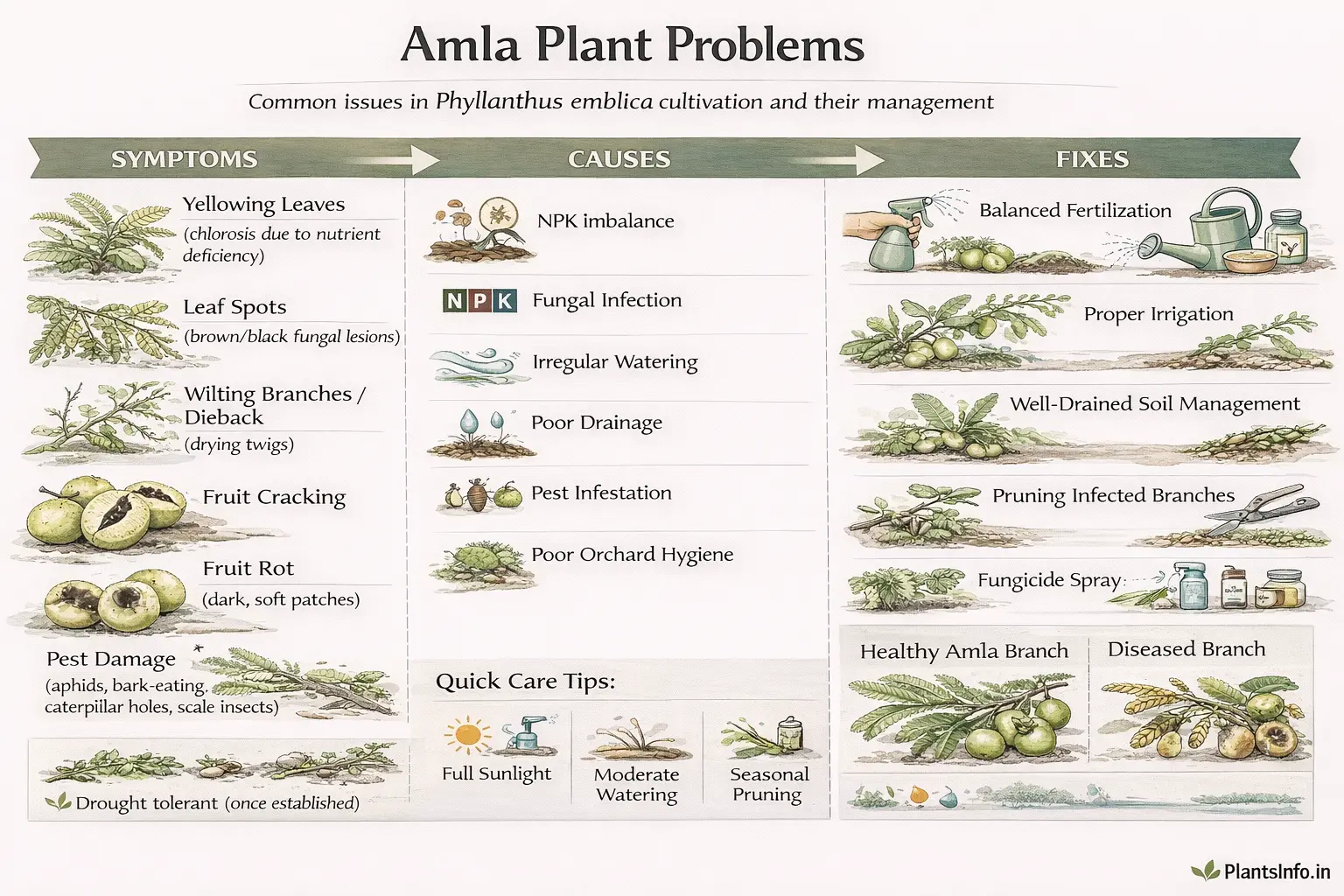
Quick Answer: The most common amla problems in India are rust, anthracnose, bark-eating caterpillars, and fruit drop. Most are preventable with seasonal monitoring and clean planting practices. Caught early, nearly all are manageable.
See also: Amla Plant plant profile, how to grow it, its flowering season, its benefits, and its varieties.
Amla (Phyllanthus emblica) is a hardy tree, but “hardy” doesn’t mean invincible. Waterlogged roots, a wet post-monsoon, or a missed bark pest through winter can cost an entire season’s fruit. The majority of problems show clear early symptoms — weekly observation is the most effective tool a home gardener has.
Recommended Products
Disclosure: As an Amazon Associate, PlantsInfo may earn from qualifying purchases.
🌱 Growing Essentials
The following products can help with container gardening, potting, root development, soil management, and healthy plant growth.

Organic Potting Soil Mix
Provides nutrients, structure, and healthy growing conditions for container plants.
Coco Peat Growing Medium
Enhances moisture retention while maintaining excellent root-zone aeration.

Grow Bags for Plants
Improve drainage, root aeration, and vegetable production in limited spaces.

Plastic Pots for Plants
Ideal containers for seedlings, ornamentals, herbs, and balcony gardens.
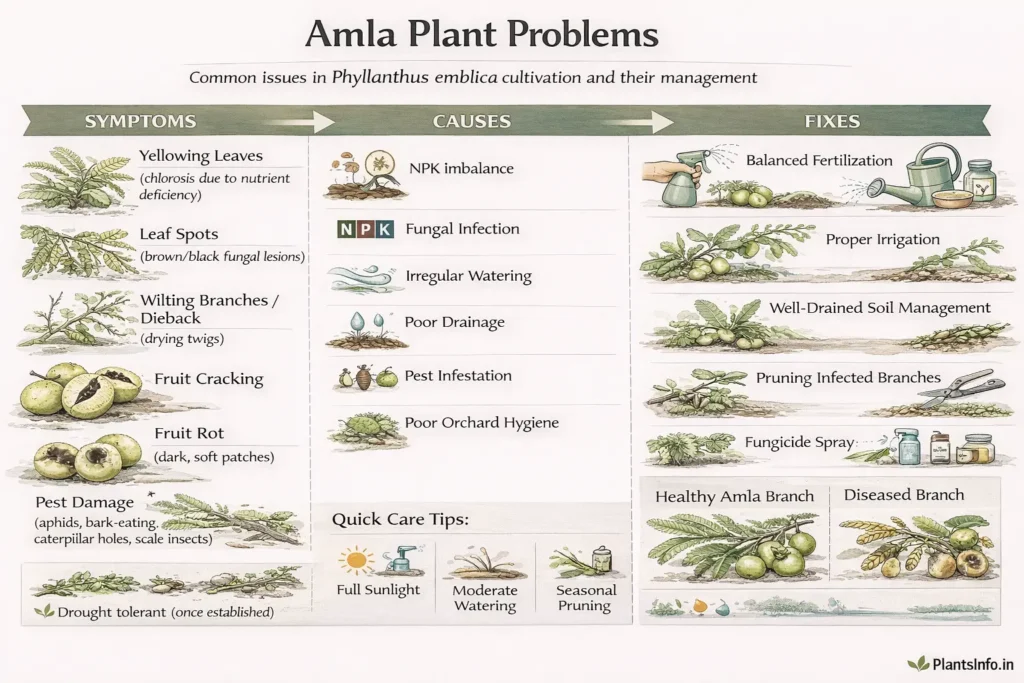
Quick Diagnosis
| Symptom | Most Likely Cause | First Action |
|---|---|---|
| Orange-yellow pustules on leaf undersides | Rust (Phakopsora phyllanthi) | Remove affected leaves; apply mancozeb |
| Premature fruit drop before harvest | Fruit borer or water stress | Check fruit for entry holes; inspect soil moisture |
| Bark peeling with frass and tunnels | Bark-eating caterpillar (Indarbela) | Probe tunnel; apply chlorpyrifos paste |
| Uniform yellowing, older leaves first | Nitrogen deficiency or waterlogging | Check drainage; review fertiliser schedule |
| Examine the root zone for mushy, dark tissue | Anthracnose (Colletotrichum) | Remove affected fruit; apply copper fungicide |
| Wilting despite adequate watering | Root rot or collar rot | Examine root zone for mushy, dark tissue |
| Pale new leaves, stunted growth | Zinc or iron deficiency | Apply foliar zinc sulphate or ferrous sulphate |
Diseases
Rust (Phakopsora phyllanthi)
Rust is the most common foliar disease of amla in India, peaking in the post-monsoon period between October and December. Bright orange-yellow powdery pustules appear on leaf undersides, with pale patches on the upper surface. Severe infection causes early leaf drop, reducing photosynthetic area and affecting fruit size in the same season.
Rust cannot be cured on an already-infected leaf — remove and destroy affected leaves immediately. Mancozeb or copper oxychloride sprays applied at first symptom appearance, repeated every 10–14 days through the high-risk window, arrest further spread effectively.
Anthracnose (Colletotrichum gloeosporioides)
Anthracnose causes small, dark, sunken spots on amla fruit that expand in humid conditions and trigger premature drop. The fungus persists in fallen fruit, dead twigs, and leaf litter through the dry season. Post-monsoon sanitation — clearing all debris from around the tree — is the most effective prevention available to a home gardener.
Copper-based fungicides applied at fruit set protect the critical early development window. There is no cure once the fruit is heavily infected; remove and dispose of the affected fruit away from the tree.
Collar Rot (Phytophthora spp.)
Collar rot attacks the tree at the soil line, causing dark, water-soaked lesions at the base of the trunk. The bark in this zone turns brown, soft, and begins to peel. In advanced cases, the entire root collar rots, and the tree wilts and collapses rapidly — this stage is unrecoverable.
The primary cause is consistently waterlogged soil, particularly in heavy clay or black cotton soil during the monsoon. Improving drainage before planting and avoiding mulch contact with the trunk base are the two most effective preventive measures. Early-stage infections can be managed with Metalaxyl-based fungicide drenches at the root zone.
Cercospora Leaf Spot (Cercospora phyllanthi)
Cercospora causes small, angular, grey-brown spots with darker borders on leaves, appearing primarily during and just after the monsoon. Unlike rust, which shows as powdery pustules, Cercospora spots are flat and dry. Heavy infection leads to defoliation but rarely causes permanent damage to a well-established tree.
Copper oxychloride sprays at 15-day intervals during high-humidity periods provide adequate control. Ensure good canopy ventilation through annual pruning — dense, unpruned trees show significantly higher Cercospora pressure.
Pest Problems
Bark-Eating Caterpillar (Indarbela tetraonis)
This is the most structurally damaging pest of amla in India. The larvae tunnel under the bark, creating irregular galleries packed with frass — a mixture of excrement and chewed wood — that is the most visible sign of infestation. Entry holes, usually found at branch junctions or the main trunk, are surrounded by dried frass webbing.
To confirm and treat, clear the frass from the tunnel entrance, probe with a wire to gauge tunnel depth, then insert a chlorpyrifos-soaked swab or inject with a syringe, and seal the hole with mud. Inspect trees in September–October when larvae are most active. One missed infestation can hollow a branch enough to cause structural failure.
Amla Fruit Borer (Virachola isocrates)
The fruit borer is the primary cause of premature fruit drop in amla. The moth lays eggs on young fruit; larvae bore into the fruit and feed on the pulp and seed. Externally, entry holes are small and easy to miss — fallen fruit with a clean hole near the calyx end is the clearest field sign.
Remove and destroy all fallen fruit immediately to break the lifecycle. Spinosad-based sprays applied at fruit set, when the fruit is pea-sized, provide the most effective protection window. Chemical options include carbaryl or malathion applied at the same stage.
Aphids and Mealybugs
Aphids cluster on new shoots and leaf undersides during the dry winter months, causing leaf curl and stunted flush growth. Mealybugs colonise branch junctions and the fruit calyx, leaving cottony white deposits. Both are primarily cosmetic concerns on established trees, but can significantly affect young saplings in their first two years.
Neem oil spray (3–5 ml per litre of water) applied fortnightly controls both pests organically. For severe mealybug infestations on mature trees, imidacloprid soil drench provides systemic control.
Mealybug deposits on fruit are frequently mistaken for a fungal disease — the cottony white texture and its location at the calyx end are the distinguishing features.
This information is for general guidance only. Always read product labels before applying any pesticide or fungicide. Follow state agriculture department guidelines for food crops. Keep children and pets away during and after application.
Environmental and Care Mistakes
Waterlogging in Black Cotton Soil
Amla planted in black cotton soil — common across Maharashtra, Madhya Pradesh, and Telangana — faces a serious waterlogging risk during the monsoon. The tree’s roots cannot tolerate standing water for more than a few days. The first symptom is wilting, followed by yellowing, which is easily confused with drought stress. The fix is improved drainage before the problem develops; see the Amla Growing Guide for bed preparation details.
Overpruning Young Trees
The most common mistake with young amla trees is pruning too hard in the first three years. Amla fruits on current season’s growth emerging from older wood — heavy pruning delays the first fruiting by a full season or more. Limit early pruning to crossing branches and dead wood only.
Mistaking Normal Leaf Drop for Disease
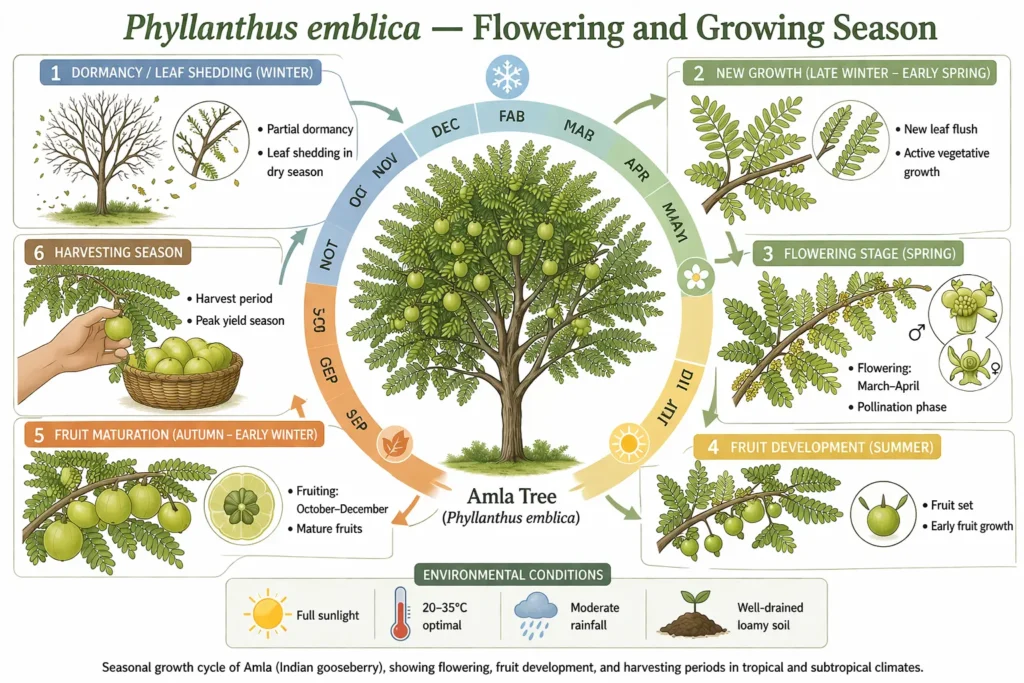
Amla is briefly deciduous in late winter — January through February in most of India. Healthy trees drop their leaves and appear bare before the new flush emerges in March. First-time growers consistently panic and treat for disease during this period. If the tree drops leaves uniformly in winter with no spots or lesions, it is dormant, not diseased.
Transplant Stress in Grafted Saplings
Grafted amla saplings — now the standard planting material for named varieties — are sensitive to transplant stress for the first 8–10 weeks. Pale, papery leaves and slow growth in this period are normal. Over-fertilising to accelerate recovery burns the young root system and extends the stress period. Hold all fertiliser for the first month after transplanting.
Prevention Protocol
Begin with certified grafted material from a reliable nursery — ungrafted seedlings carry more disease variability and delay fruiting by several years. Before monsoon onset, clear all leaf litter and fallen fruit from the tree base and apply a fresh copper oxychloride paste to the lower 60 cm of the trunk to deter bark pests and collar rot.
Inspect branch junctions and the main trunk for Indarbela frass in September and October, treating any active tunnels immediately. Ensure drainage channels around the tree are clear before the first monsoon rains. Apply a preventive mancozeb spray in late September at the onset of the post-monsoon rust season.
When to Give Up on a Plant
Amla trees rarely need to be abandoned — they are genuinely long-lived and recover well from most problems. The exceptions are advanced collar rot, where the root collar has completely girdled and the tree is wilting irreversibly, and severe Indarbela infestation, where the main trunk has been hollowed structurally.
In both cases, remove the tree and do not replant amla in the same spot for at least one full season. For collar rot sites, solarise the soil through April–May before replanting and switch to a raised planting bed with improved drainage.
Frequently Asked Questions
My amla tree drops fruit every year before it ripens — is this a pest or a watering problem?
Check fallen fruit for a small entry hole near the calyx end — that indicates fruit borer. If no hole is visible, erratic watering or sudden dry spells during fruit development are the most likely cause.
Is it safe to eat amla fruit from a tree that had rust on its leaves?
Yes. Rust affects only the leaves and does not infect the fruit. Fruit from a rust-affected tree is completely safe to eat.
The bark at my amla tree’s base looks cracked and dark — should I be worried?
Some bark roughening on mature trunks is normal. If the dark area is soft, wet, or peeling away from the wood, that is collar rot — improve drainage immediately and apply a Metalaxyl drench at the base.
Most amla problems are seasonal and predictable. A pre-monsoon cleanup, a post-monsoon rust check, and a winter bark inspection cover the majority of what this tree will ever face.