Shatavari Plant: Key Facts, Names and What You Should Know
Shatavari Plant: Key Facts, Names, and What You Should Know
Beneath its feathery, almost ornamental foliage, Shatavari carries one of the longest documented medicinal histories of any plant native to the Indian subcontinent — a climber that has been gathered from wild hillsides and cultivated in kitchen gardens for well over two thousand years.
See also: Shatavari plant profile, how to grow it, common problems, its flowering season, and its benefits.
Names in Different Languages
| Language | Name |
|---|---|
| English | Indian Asparagus, Wild Asparagus |
| Hindi | Shatavar, Satavar, Satawar |
| Bengali | Shatamuli, Satamul |
| Tamil | Thanneervittan Kizhangu, Kilwari |
| Telugu | Pilli Teega, Satavari |
| Marathi | Shatavari, Asvel |
| Kannada | Maje Mahadabare, Aheruballi |
| Malayalam | Shatavali, Churuli |
| Gujarati | Satavri, Ekalkanto |
| Punjabi | Satawar, Borashari |
| Scientific name | Asparagus racemosus Willd. |
| Family | Asparagaceae |
Most searched name: “Shatavari” in Hindi/English is by far the dominant search term nationally. In Tamil Nadu, “Thanneervittan Kizhangu” is the most recognised local name.
Recommended Products
Disclosure: As an Amazon Associate, PlantsInfo may earn from qualifying purchases.
🌱 Growing Essentials
The following products can help with container gardening, potting, root development, soil management, and healthy plant growth.
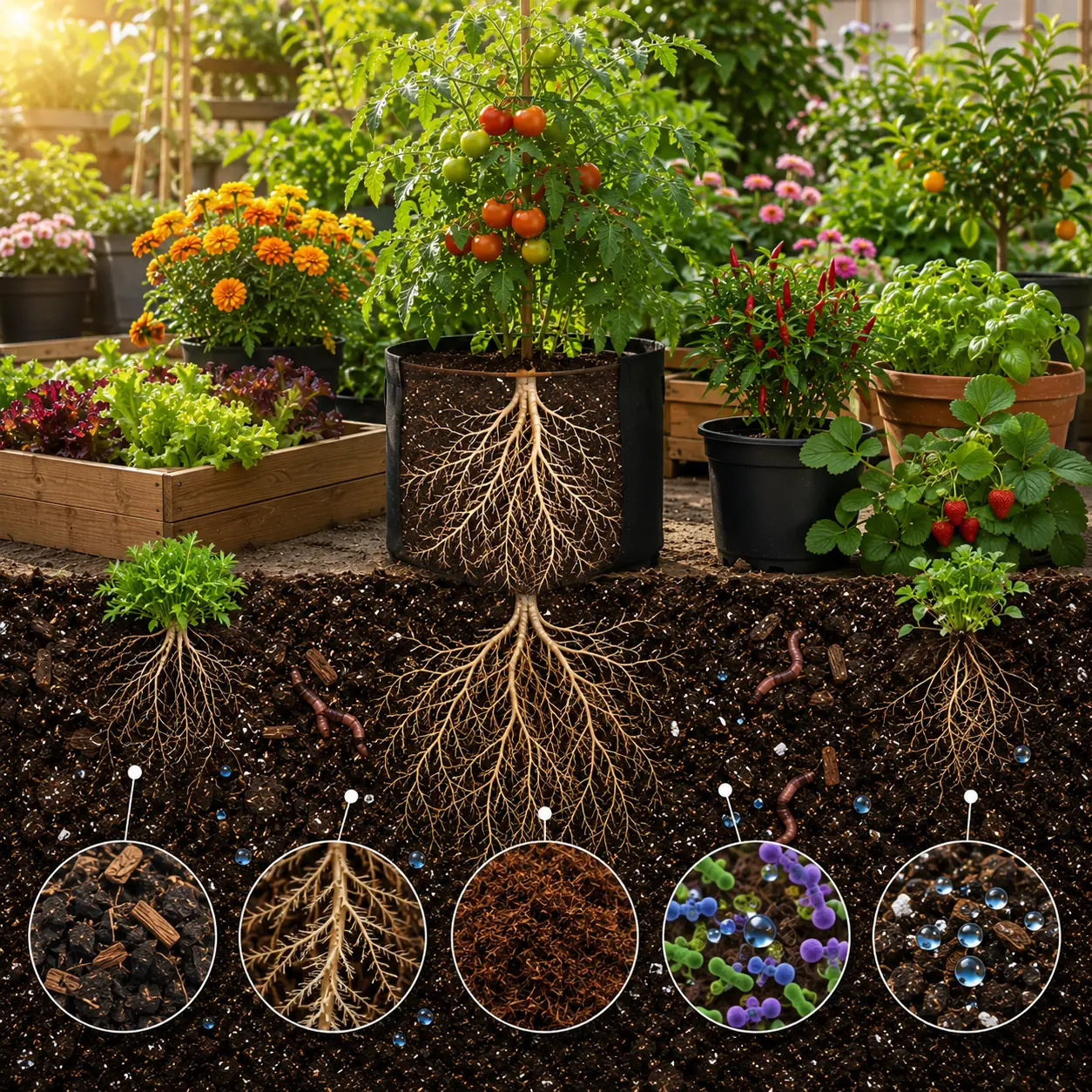
Organic Potting Soil Mix
Provides nutrients, structure, and healthy growing conditions for container plants.
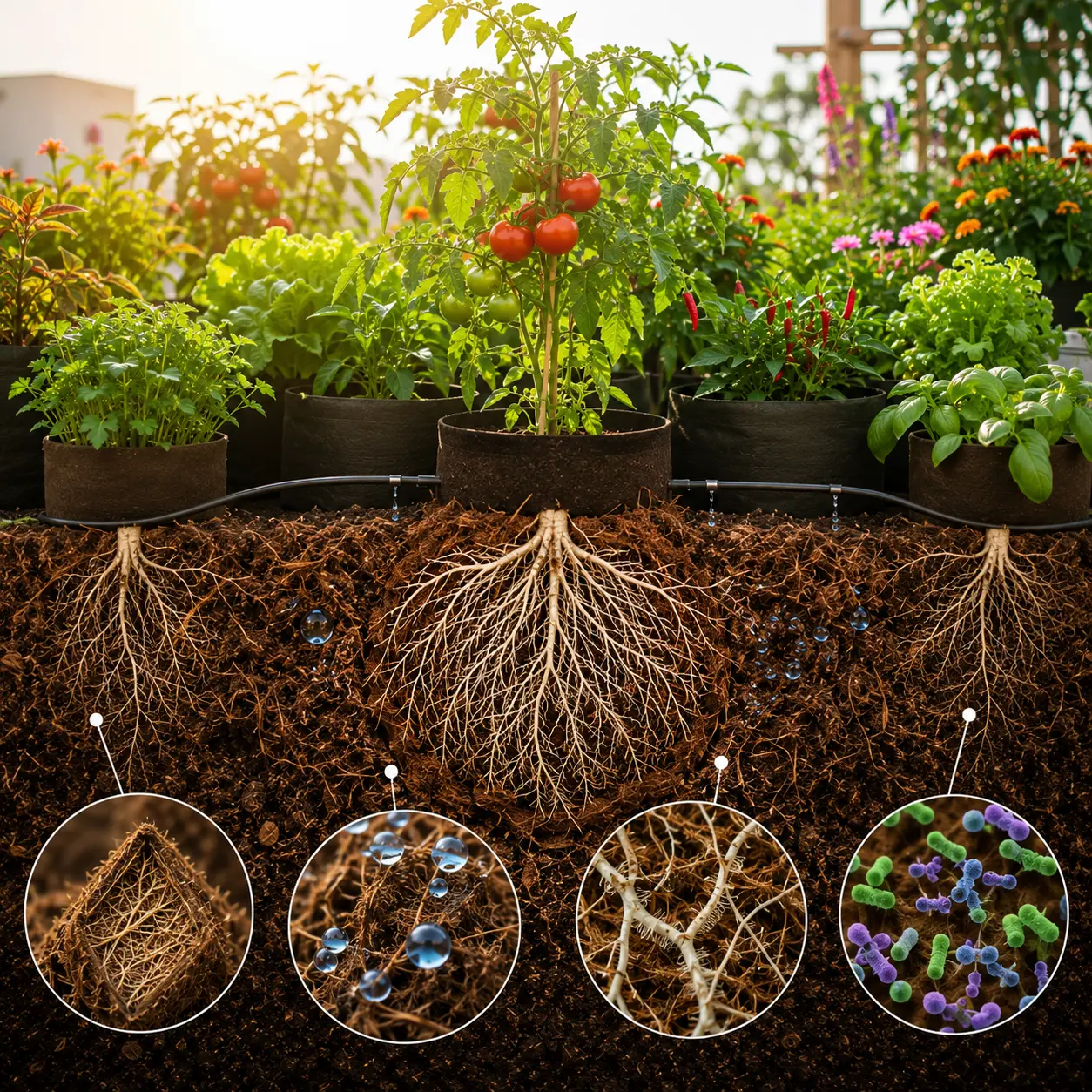
Coco Peat Growing Medium
Enhances moisture retention while maintaining excellent root-zone aeration.

Grow Bags for Plants
Improve drainage, root aeration, and vegetable production in limited spaces.

Plastic Pots for Plants
Ideal containers for seedlings, ornamentals, herbs, and balcony gardens.
What Does It Look Like?
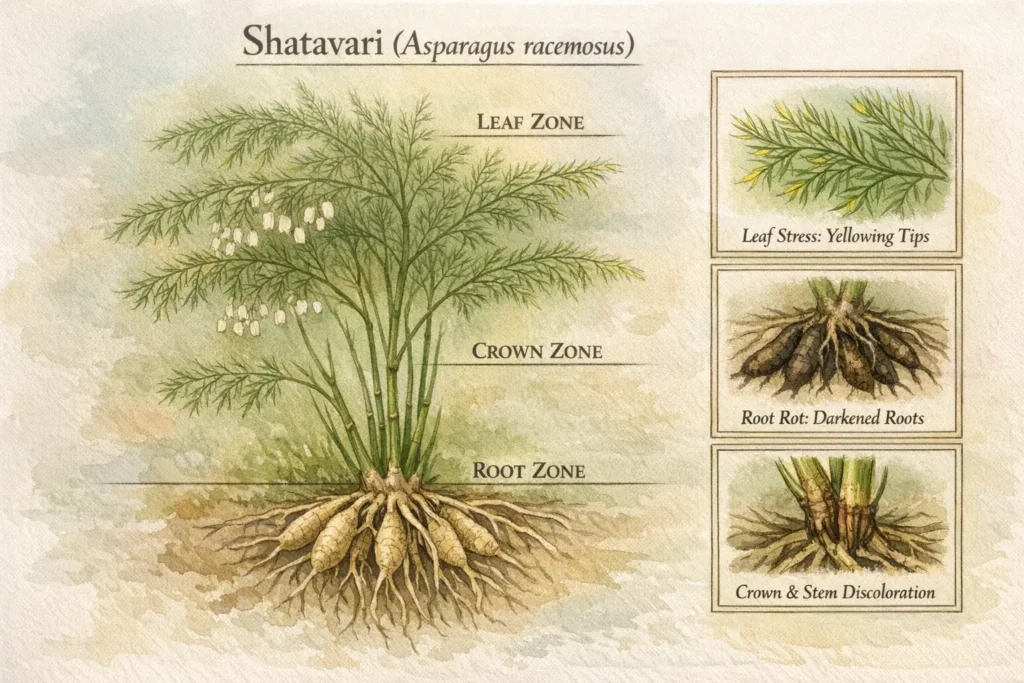
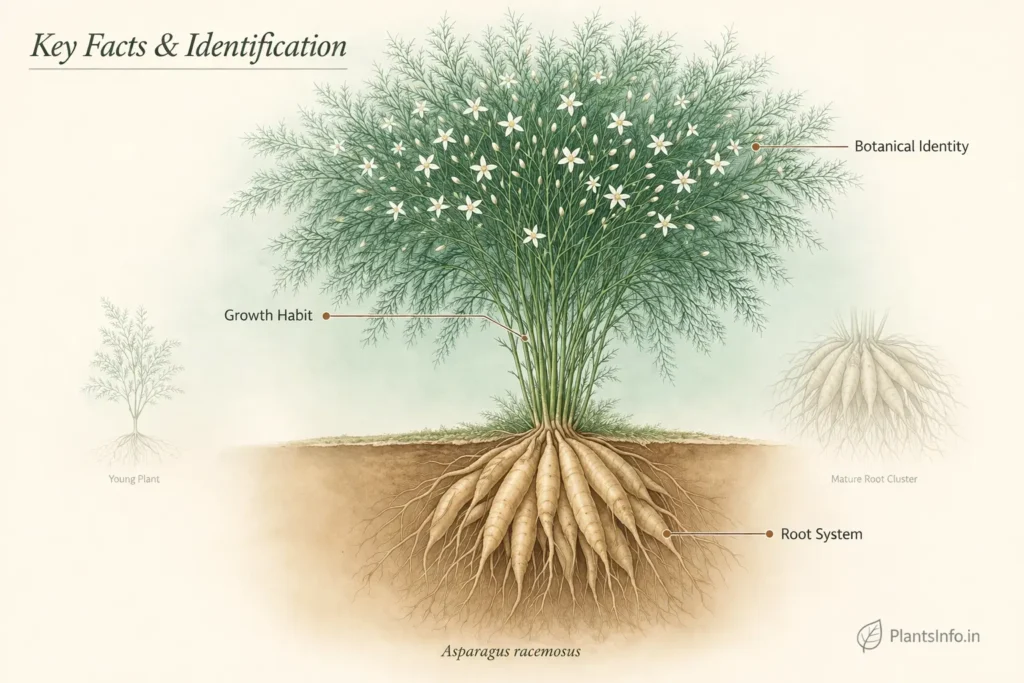
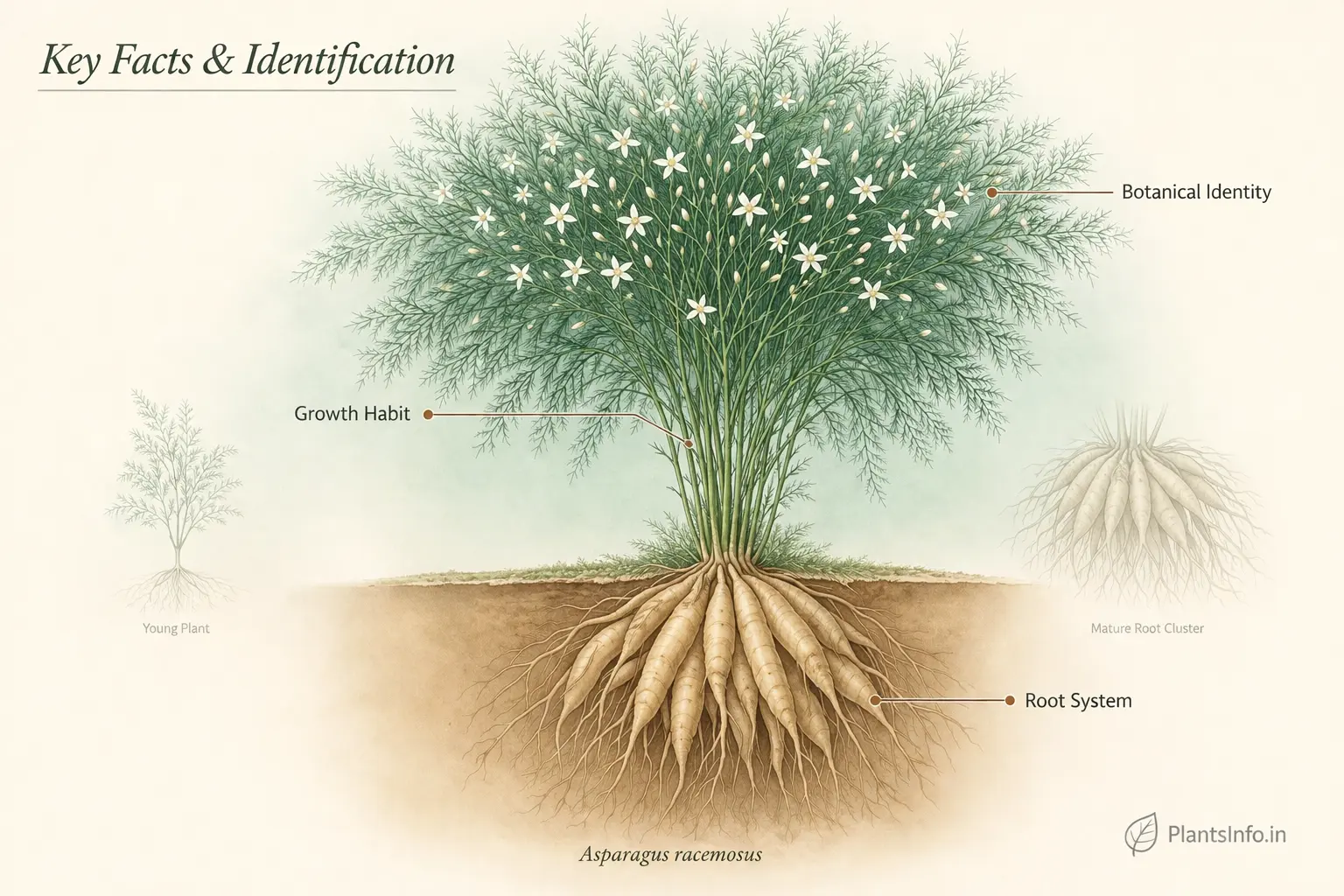
Shatavari is a woody climbing shrub that reaches 1–2 metres in height when supported. The stems are slender and armed with small, recurved spines — handle with care when training on a trellis.
The leaves are not true leaves, but cladodes — small, flat, needle-like modified stems that give the plant its soft, feathery appearance. They grow in clusters of 2–6 along the stem and are bright green, turning slightly olive in dry conditions.
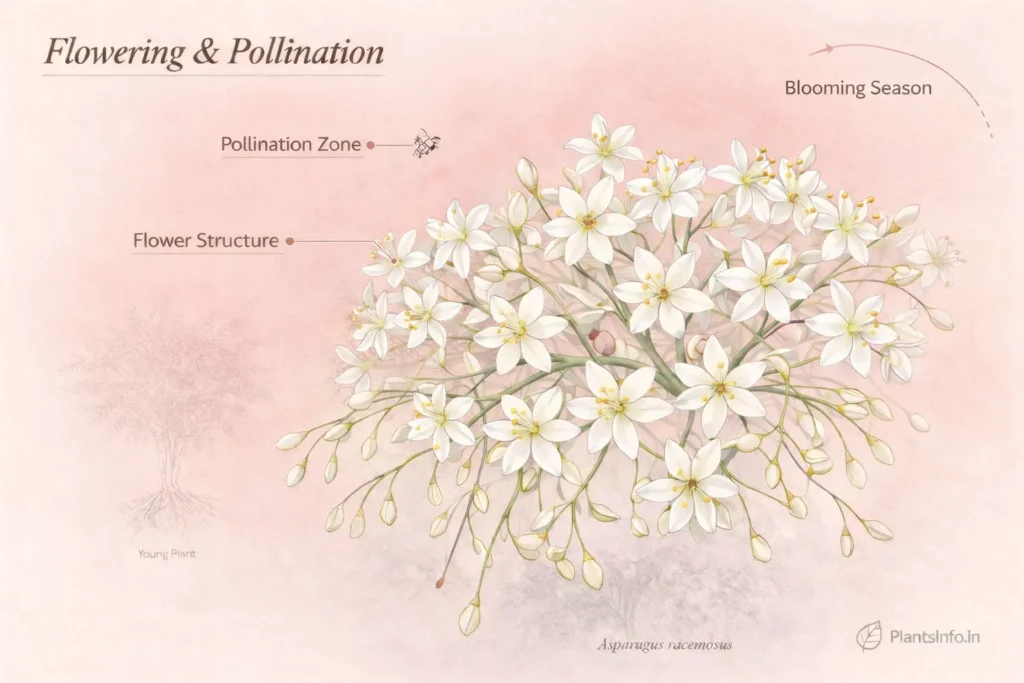
Flowers are small, white, and intensely fragrant — they appear in slender racemes (clusters along a central stem) during the winter months. Each flower is less than 1 cm across, but the clusters are numerous, and the scent carries well. The unmistakable identifying detail: the fragrance of Shatavari in bloom is noticeably sweet and clean, unlike any other common garden climber.
Berries follow the flowers — small, round, turning from green to deep red at maturity in early spring. The underground roots are the most distinctive feature: fleshy, cylindrical, cream-to-pale-yellow tubers, 10–30 cm long, growing in dense clusters of 20–100 tubers per mature plant.
Where Does It Grow in India?
Shatavari is native to India and widely distributed across the subcontinent. It grows naturally in tropical and subtropical forests, scrubland, rocky hillsides, and the edges of cultivated land from sea level to approximately 1,400 metres altitude.
The highest concentrations of wild Shatavari are found in Rajasthan, Madhya Pradesh, Uttar Pradesh, Maharashtra, and Karnataka. It also occurs naturally across Andhra Pradesh, Tamil Nadu, and the lower foothills of the Himalayas. In the northeast, it is found in Assam and Manipur, though it is less documented there.
Cultivated Shatavari is grown commercially in Rajasthan (particularly the Barmer, Jodhpur, and Udaipur belts), Madhya Pradesh, and Maharashtra. Small-scale cultivation also occurs in home gardens and Ayurvedic farm plots across Karnataka and Andhra Pradesh.
The plant tolerates a wide climate range: hot semi-arid conditions in the northwest, humid tropical conditions in coastal regions, and the dry Deccan plateau. It does not perform well in sustained temperatures below 5°C, making it unsuitable for high-altitude hill stations above 1,500 m.
What Is It Used For?
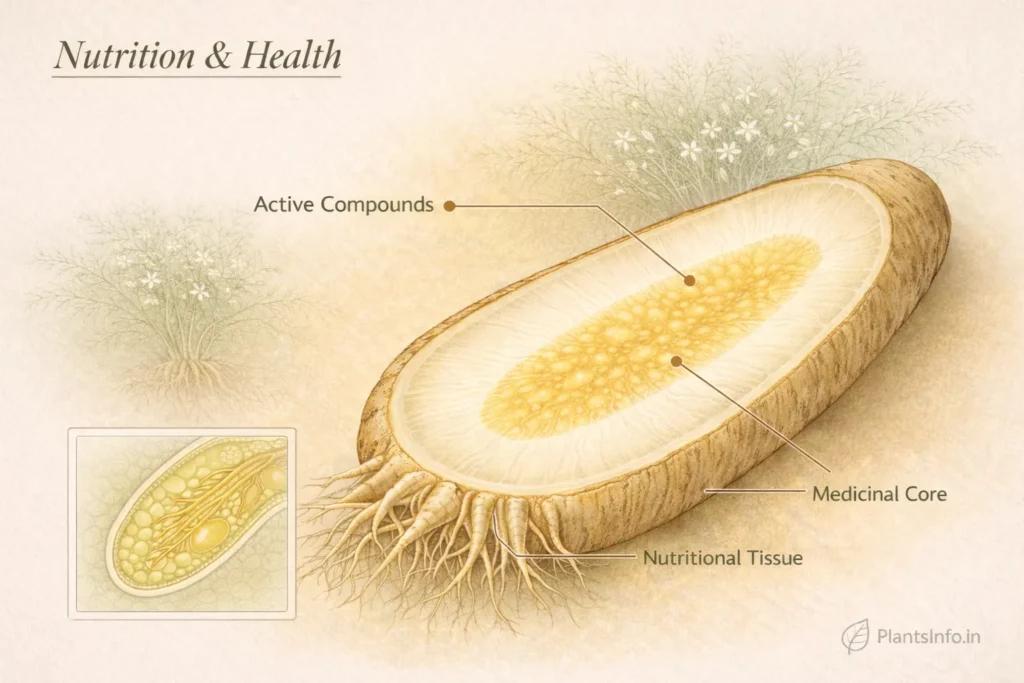
Shatavari is used primarily as a medicinal herb — its roots are processed into powder, tablets, and liquid extracts widely available across Indian pharmacies and Ayurvedic shops. For full details on its medicinal properties, see the Benefits Guide.
The fresh roots are eaten as a vegetable in some tribal communities in Rajasthan and central India — boiled, roasted, or added to curries. The young shoots are edible and similar in taste to cultivated asparagus.
The plant is grown as an ornamental climber for its feathery, evergreen foliage and fragrant winter flowers. Beekeepers value it as a winter nectar source in regions where few plants bloom during December–January.
Ayurvedic practitioners use Shatavari as a component in numerous classical formulations for women’s health and as a general rasayana (rejuvenative tonic).
In Mythology and Ancient Texts
Shatavari is one of the plants named and described in detail in the Charaka Samhita, the foundational Ayurvedic text compiled between approximately the 1st century BCE and 2nd century CE. It is listed among the primary drugs in the Balya (strength-promoting) and Vayasthapana (age-arresting) groups, placing it in the highest tier of Ayurvedic medicinal plants.
The Sushruta Samhita also references Shatavari as a key herb for wound healing, eye conditions, and overall vitality. It appears in the Ashtanga Hridayam as a component of formulations for pitta-related conditions and reproductive wellness.
The name Shatavari is a Sanskrit compound — “shata” (hundred) and “vari” (possessor, or roots, depending on the interpretive tradition). The two folk etymologies that have persisted — “she who possesses a hundred husbands” and “she who possesses a hundred roots” — both appear in regional Ayurvedic commentary traditions. The “hundred roots” reading is considered more botanically accurate and is corroborated by the actual growth habit of a mature plant, which does indeed produce extraordinarily dense root clusters. The other reading reflects the plant’s deep association with female fertility and vitality in the Sanskrit literary tradition.
Regional mythology in parts of Rajasthan and Madhya Pradesh associates the plant with Indra (the Vedic king of gods), with local folk names in some tribal communities translating roughly as “Indra’s plant” or “plant of the heavens” — a likely reference to the dense, cascading foliage that resembles falling rain.
Is It Easy to Grow?
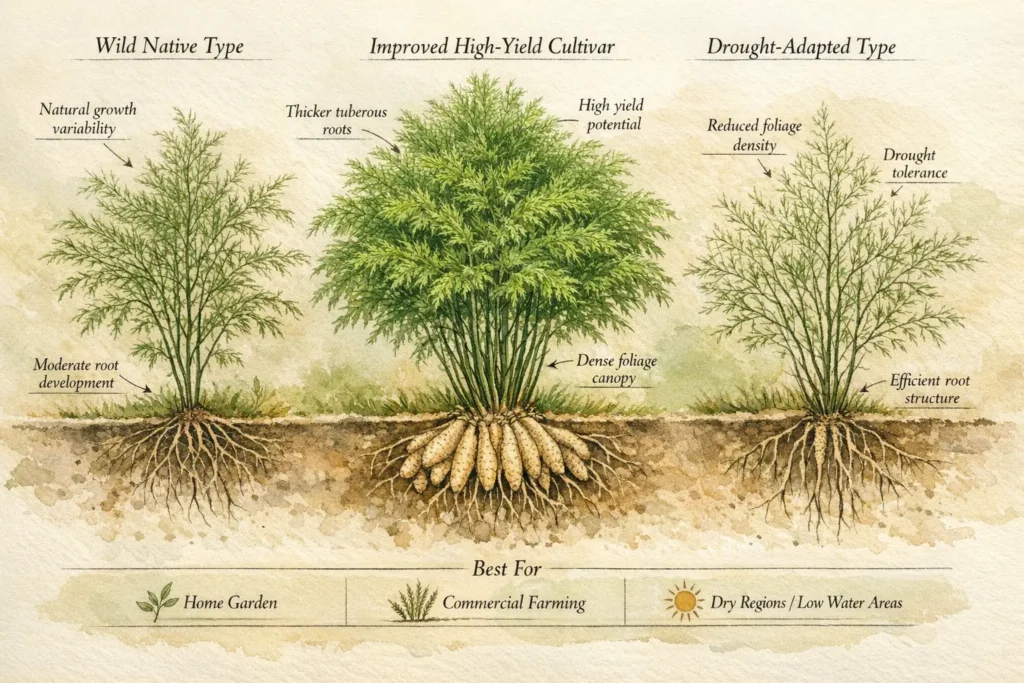
Shatavari is moderately easy to grow for most Indian home gardeners. It is not a delicate plant — once established, it tolerates heat, irregular watering, and moderate neglect better than most medicinal climbers. The main requirement is good drainage and patience.
It is suited to ground planting in most plains states and container growing on terraces and balconies with sufficient depth. It is not suitable for very cold climates or high-altitude regions.
⚠ Special Flags
Wild collection pressure: Shatavari is listed in Appendix II of CITES and is classified as a species of conservation concern in India due to widespread over-collection from the wild. Home cultivation is actively encouraged as a conservation measure — growing your own reduces demand on wild populations.
No significant toxicity to humans at normal use levels has been documented. Overconsumption of concentrated root preparations may cause digestive heaviness. Berries are not recommended for consumption without preparation guidance.
Frequently Asked Questions
Is Shatavari the same as regular asparagus?
They are related — both belong to the Asparagaceae family — but Asparagus racemosus is a distinct wild species. The young shoots are similarly edible, but the plant is grown primarily for its roots, not shoots.
Can it be grown on a terrace in a pot?
Yes, in a container with a minimum depth of 45 cm and a trellis. Root yield will be smaller than ground planting, but the plant grows and flowers normally.
Is the plant safe around pets?
The red berries of Shatavari are mildly toxic to dogs and cats if consumed in quantity. Keep berrying plants in areas inaccessible to pets, or harvest berries promptly.
Conclusion
Shatavari is one of India’s most documented and widely distributed medicinal plants — a species that bridges wild scrubland ecology, classical Sanskrit texts, and the contemporary Ayurvedic market in an unusually direct line.