How to Grow Vasaka: Complete Care Guide for Indian Gardens
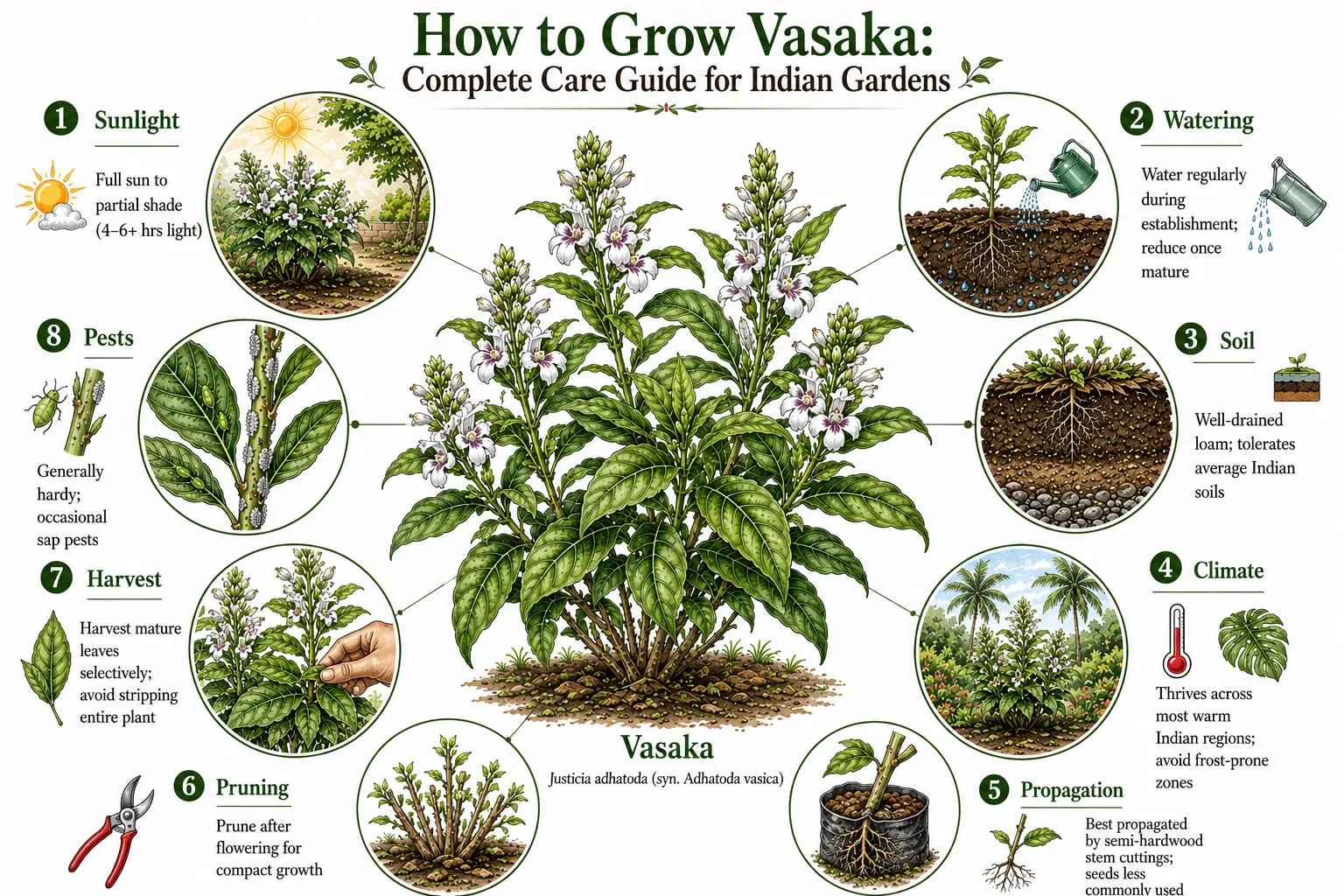
Quick Answer: Vasaka is an easy, fast-growing medicinal shrub that thrives across most of India with minimal care. Plant a stem cutting in well-drained soil, give it full to partial sun, and it will establish itself within a single monsoon season — even in neglected hedgerows and rocky patches.
See also: Vasaka plant profile, common problems, its flowering season, its benefits, and its varieties.
Here is the thing most people discover too late: Vasaka is so unbothered by Indian conditions that it almost grows itself. The shrub’s extreme bitterness is the reason goats, cattle, and most garden pests ignore it entirely — it is effectively self-defending. The one mistake beginners make is overwatering young cuttings, which is the only reliable way to set this plant back significantly.
Recommended Products
Disclosure: As an Amazon Associate, PlantsInfo may earn from qualifying purchases.
🌱 Growing Essentials
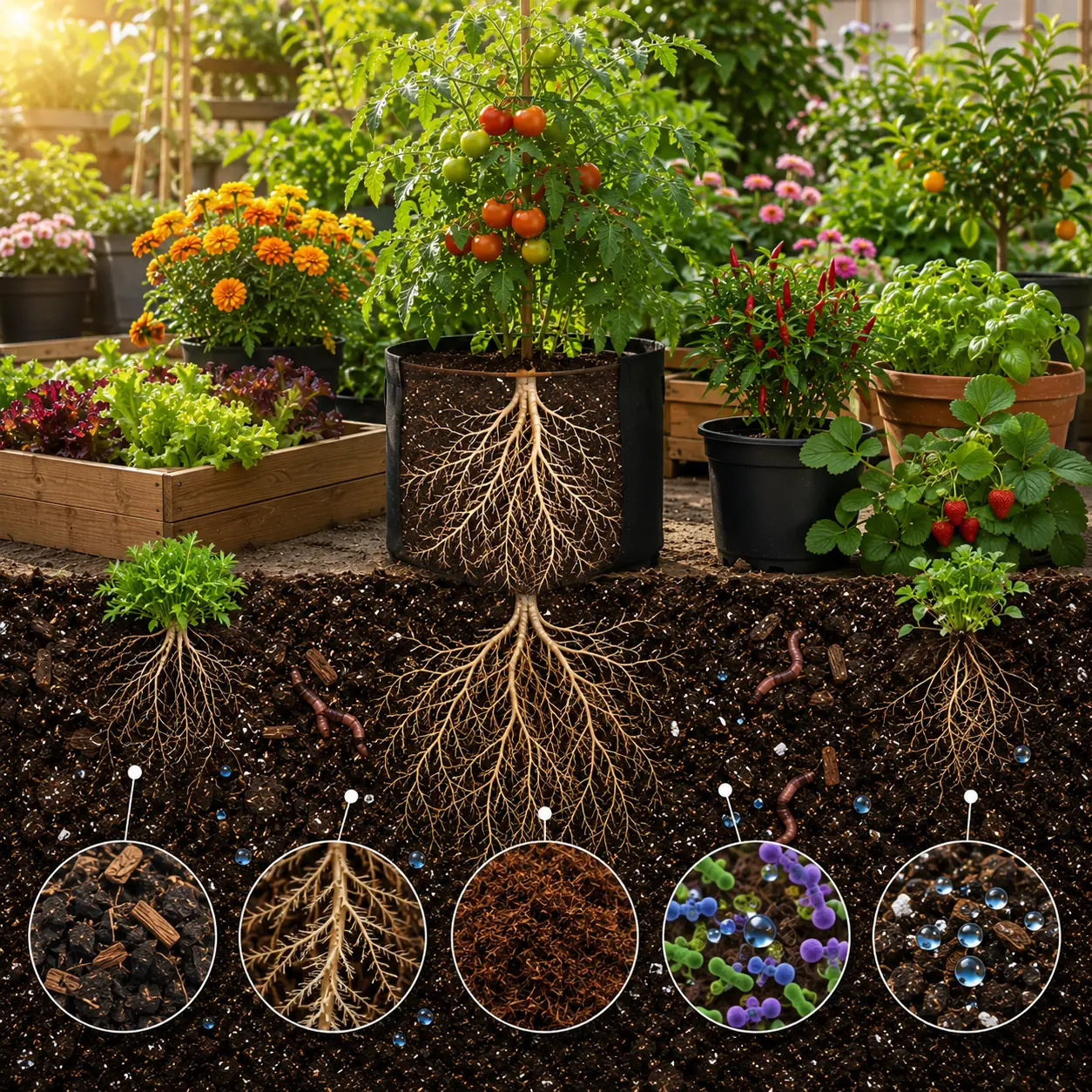
The following products can help with container gardening, potting, root development, soil management, and healthy plant growth.
Organic Potting Soil Mix
Provides nutrients, structure, and healthy growing conditions for container plants.
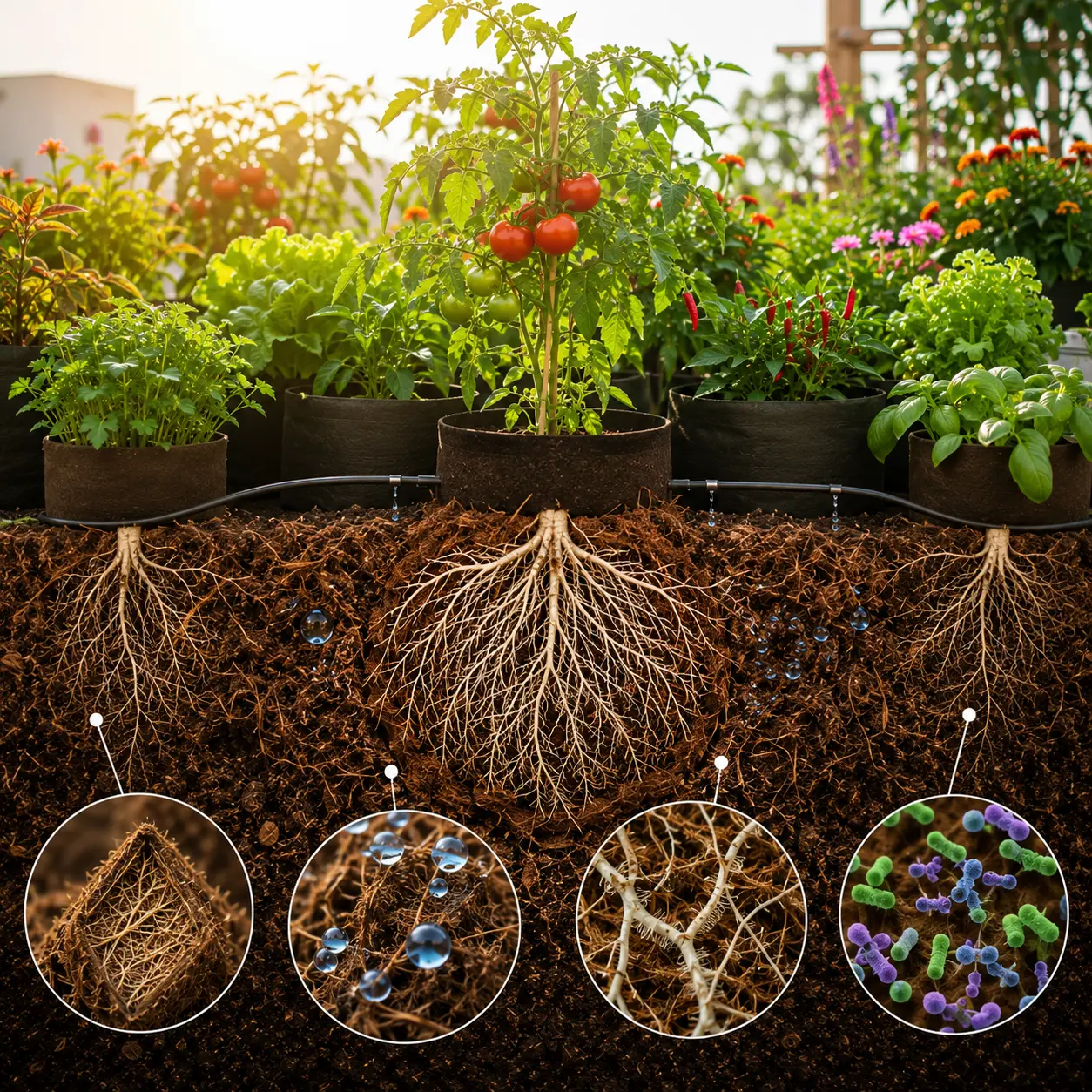
Coco Peat Growing Medium
Enhances moisture retention while maintaining excellent root-zone aeration.

Grow Bags for Plants
Improve drainage, root aeration, and vegetable production in limited spaces.

Plastic Pots for Plants
Ideal containers for seedlings, ornamentals, herbs, and balcony gardens.
Quick Facts
| Attribute | Detail |
|---|---|
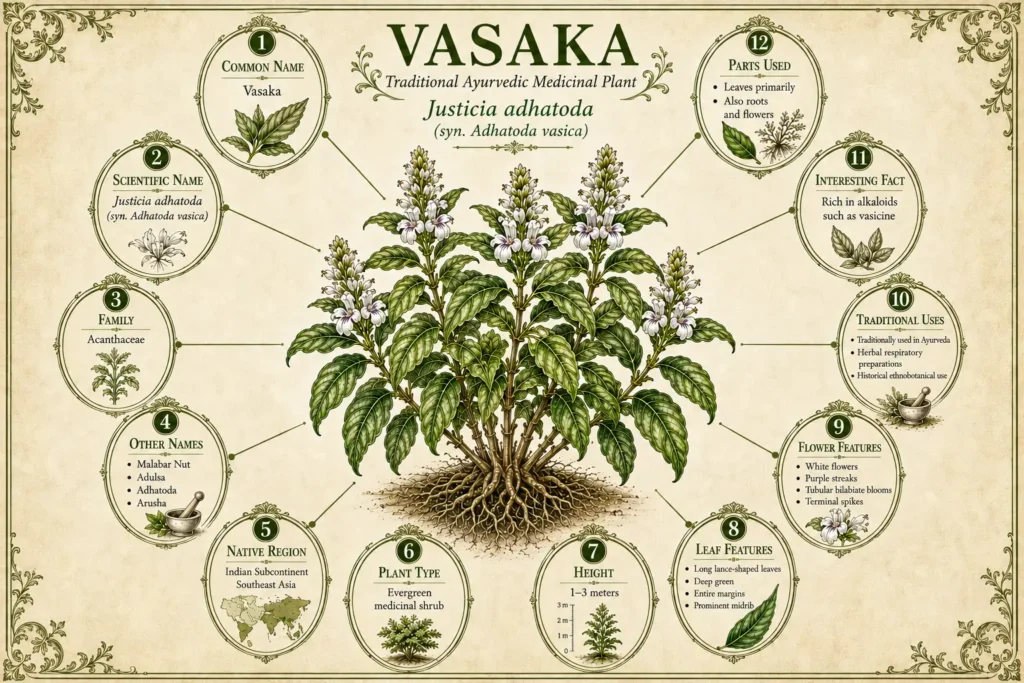
| Common names | Vasaka, Adulsa, Malabar Nut, Vasa, Arusa |
| Scientific name | Justicia adhatoda L. (syn. Adhatoda vasica Nees) |
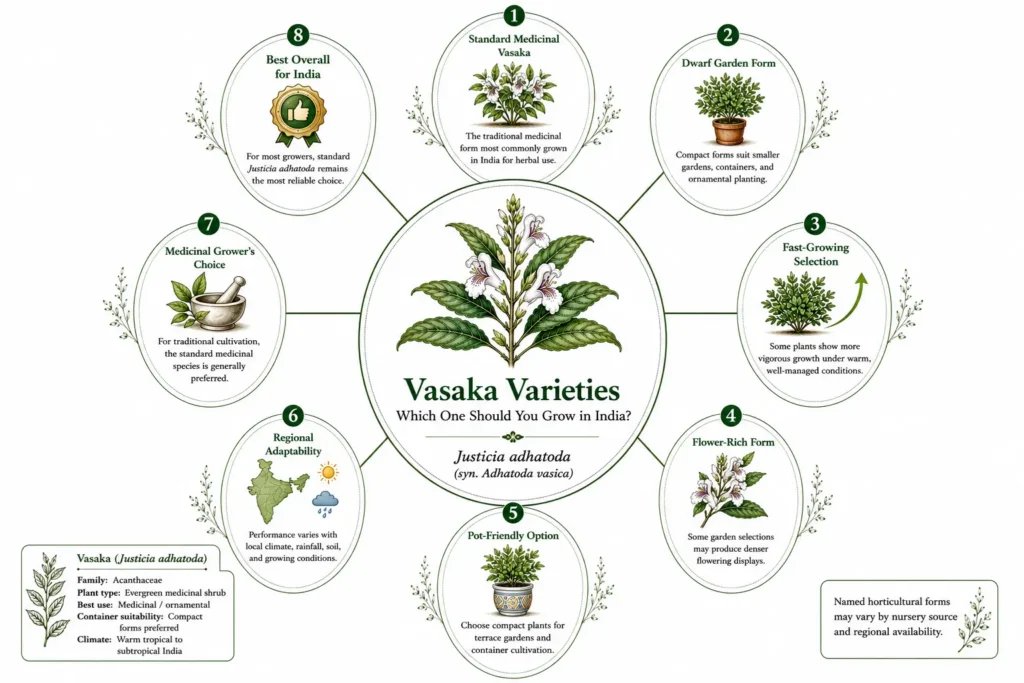
| Varieties | J. adhatoda var. vasica (North India), J. adhatoda var. zeylanica (South India/Kerala). |
| Plant type | Perennial evergreen shrub |
| Mature size | 1.5–3 m height; 1–2 m spread |
| Sunlight | Full sun to partial shade; prefers full sun |
| Water needs | Low once established; moderate during first 4–6 weeks |
| Best season to plant | Monsoon onset (June–July) or early post-monsoon (August–September) |
| Suitable states | All of India up to 1,300 m altitude; especially common in UP, Bihar, MP, West Bengal, Maharashtra, Karnataka, Kerala |
Choosing the Right Spot
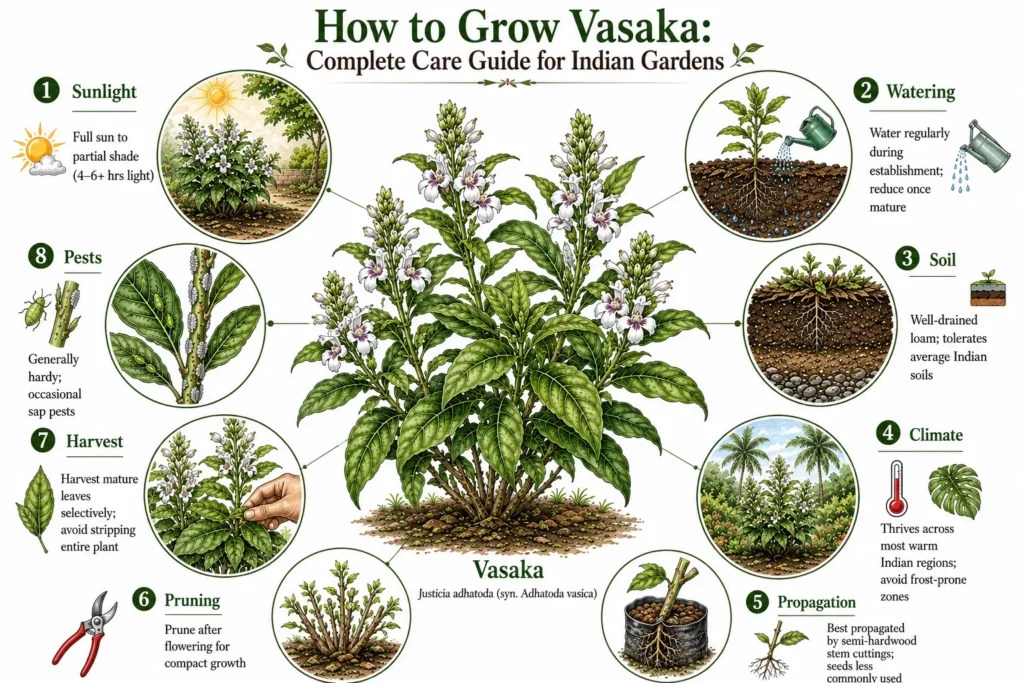
Vasaka prefers a position in full sun or bright partial shade. It grows naturally on roadsides, rocky embankments, forest edges, and hedgerows across India — places that receive direct sun for most of the day. In South India’s intense summer heat, morning sun with afternoon shade is perfectly adequate. In North and Central India, full sun produces the densest growth and highest leaf alkaloid content.
This shrub is widely used as a boundary hedge and live fence, precisely because no animal will eat it. It is an excellent choice for a garden perimeter, compound wall base, or open patch where you want a dense medicinal shrub that manages itself. A single plant spreads to 1–2 m width, so plan spacing accordingly.
Container growing is entirely feasible in pots of 15–20 litres or larger, though the plant in the ground is always more vigorous. Containers work well on balconies and terraces in northern cities where direct sun is available.
Soil and Potting Mix
Vasaka tolerates a wide range of soils — loam, sandy loam, laterite, and rocky hill soils all support it. The essential requirement is drainage. It handles poor, stony soils far better than waterlogged, heavy clay, making it one of the few medicinal shrubs suited to rocky or marginal garden spots.
A pH range of 6.0–7.5 suits it comfortably. For container planting, use one part garden soil, one part coarse river sand, and one part vermicompost. In the ground, no amendment is usually required unless the soil is hard clay.
The most common soil mistake is planting in a low-lying bed that collects monsoon runoff. Vasaka in standing water quickly develops root rot at the collar — visible as a soft, darkening stem base within weeks.
Planting — Season and Method
The best planting window is monsoon onset — late June to mid-July. Warmth, consistent moisture, and high humidity give stem cuttings optimal conditions for rooting. A strong second window is August–September as the peak rains subside, but soil warmth remains high.
Stem cuttings are the standard and most practical method. Choose semi-hardwood stems about 15–20 cm long with at least two nodes. Plant 5–6 cm deep in prepared soil or a nursery pot. Firm the soil around the cutting and water once at planting. Do not water again until the top 3–4 cm of soil is dry.
Spacing for hedgerow planting: 60–90 cm between plants. For specimen shrubs in a garden bed, allow 1.5 m from other large plants.
Watering
For the first four to six weeks, water every two to three days — enough to keep the root zone just moist, never saturated. The cutting is building its root system and is most vulnerable to both overwatering and complete drought during this period.
Once established, Vasaka is drought-tolerant and typically needs watering only during extended dry spells — once every seven to ten days in the dry season is sufficient for in-ground plants. During the monsoon, natural rainfall is usually adequate, and supplementary watering should stop entirely unless the season is unusually dry.
One specific overwatering sign to watch for: the lower stem turns pale, soft, and spongy at the soil surface while the upper leaves look fine. This is early collar rot, not a watering deficiency — and more water will accelerate the damage.
Fertiliser
Vasaka is a light feeder. It grows well in poor soils with no fertiliser at all, which is one reason it naturalises so readily along roadsides. For home garden plants where you want more productive medicinal foliage, apply a modest dressing of vermicompost or well-rotted cowdung at the base once before the monsoon begins (May–June) and once in October after the rains.
Neem cake worked into the topsoil twice a year functions as both a mild fertiliser and a soil-health treatment. A light application of balanced NPK (10:10:10) in June supports vigorous monsoon-season growth for container plants.
Do not fertilise in winter. The plant slows its growth significantly in December–January in North and Central India, and feeding it during this period produces weak, pale growth that is more susceptible to pest damage.
Common Problems and Fixes
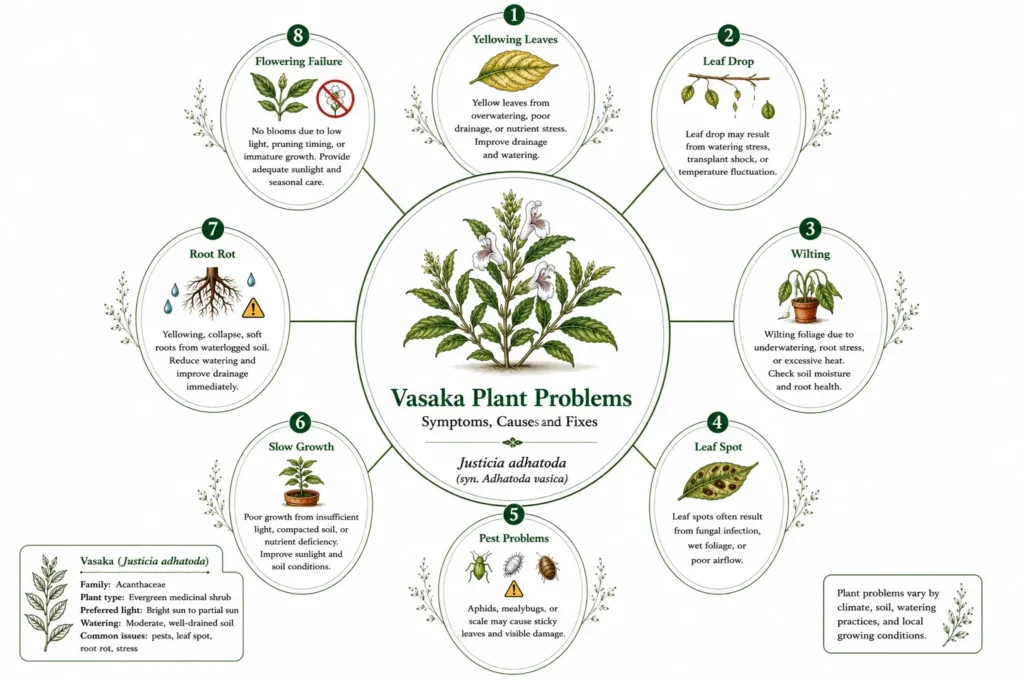
Vasaka has very few serious problems in Indian conditions. The three issues that appear most consistently are:
Root rot/collar rot — softening at the stem base, almost always caused by waterlogged soil or a poorly draining container.
Powdery mildew — white coating on young leaves during humid, low-airflow conditions in the post-monsoon period.
Scale insects — flat, brown, disc-like creatures adhered to older stems, causing gradual yellowing and dieback.
For full diagnosis and treatment, see the Vasaka Problems Guide.
When Will You See Results?
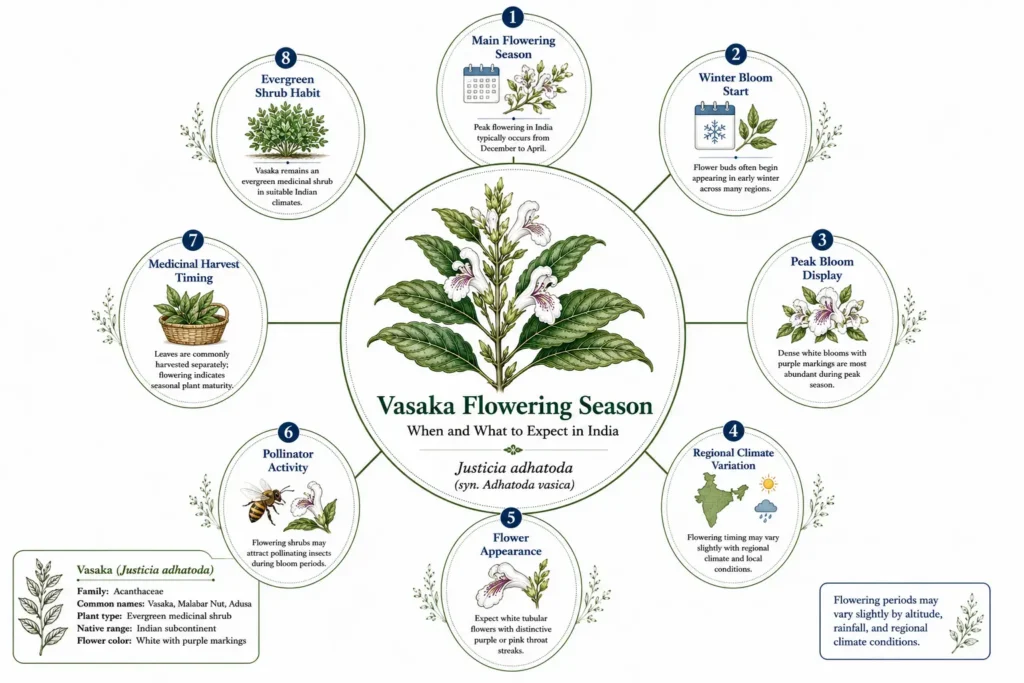
A well-rooted monsoon cutting will put out 30–50 cm of new growth in its first season. By the end of year one, the shrub will be 60–90 cm tall and producing a useful quantity of leaves. Flowers typically appear in the second year, from February to April.
Leaves for medicinal use can be harvested lightly from year one, more substantially from year two onward. The shrub’s longevity means a well-planted specimen produces usable foliage for many years with no replanting required.
Propagation
Stem cuttings are the overwhelmingly practical choice for home gardeners. Success rates during monsoon planting are typically 80–90% under normal Indian conditions. Semi-hardwood cuttings root faster and more reliably than soft tip cuttings.
Propagation by seed is possible — seeds ripen in small capsule-shaped fruits — but seedlings are slow to establish in the first two months and offer no advantage over cuttings for a home grower.
Root division works on older, established shrubs. Carefully divide a portion of the root clump with a sharp spade, replant it in prepared soil, and keep it well-watered for three to four weeks until it re-establishes.
Pruning and Training
Prune Vasaka in late February or March before the main growth season begins. Cut back long, leggy branches by one-third to one-half to encourage dense, bushy regrowth and maximise leaf production. Left unpruned, older specimens become woody and open at the centre with relatively sparse foliage.
For hedgerow use, a hard annual prune to 30–40 cm after the winter slowdown keeps the hedge dense and productive. The shrub responds vigorously to pruning and typically pushes out new growth within two to three weeks.
Never prune in October–November when the plant is approaching its winter slow period — this delays recovery until spring.
Container Growing
Use a minimum 15–20 litre container, terracotta or cement preferred over plastic in hot Indian summers. Ensure at least two large drainage holes at the base. Vasaka in containers needs slightly more attentive watering than ground plants — the pot dries out faster in summer — but remains one of the easier medicinal shrubs for terrace gardening.
Repot every two years when roots begin circling the bottom of the container, moving up one pot size each time. Add fresh vermicompost to the new potting mix.
Container plants in North India will show some leaf drop or slowdown in December–January, even in pots. This is normal and temporary — growth resumes fully in February.
Harvesting
Harvest leaves from established plants by snipping individual mature leaves or cutting 15–20 cm stem sections with attached leaves. Leaves are most potent in alkaloid content when harvested just before or during the flowering period (February–April). Avoid stripping more than 30% of the foliage at one harvest.
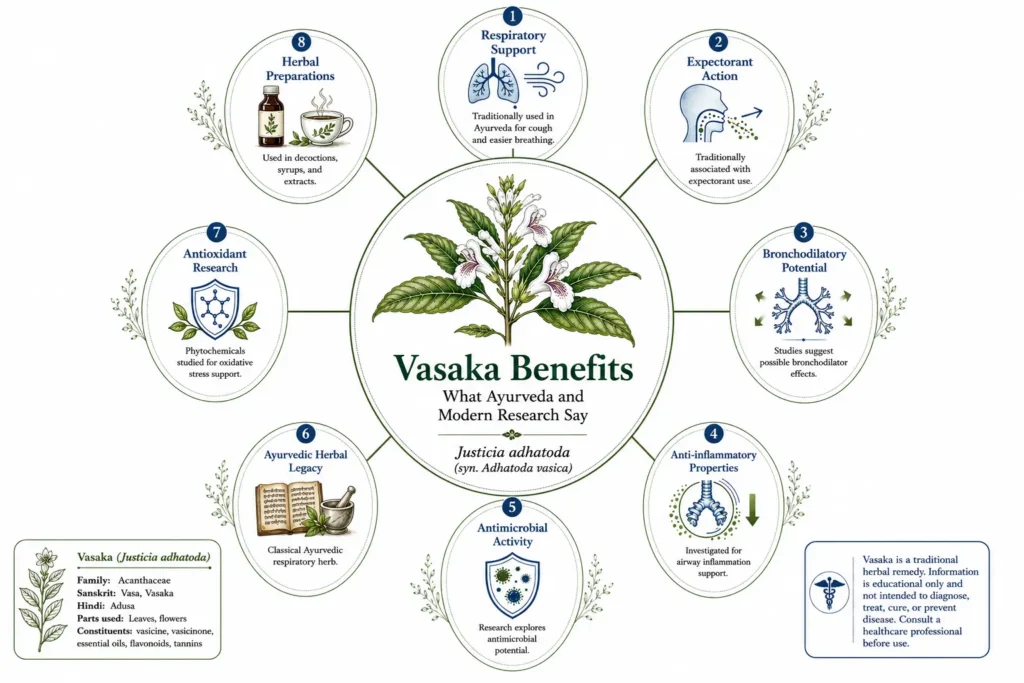
The flowers, roots, and bark are also used in traditional preparations, though leaves are the primary medicinal part. Roots can be harvested from older shrubs in small quantities without disturbing the whole plant.
Dry-harvested leaves in shade — spread in thin layers with good airflow. Dried Vasaka leaves turn dull brownish-green and carry a strong, distinctive tea-like smell. Store in a clean, airtight glass jar away from direct light. Properly dried and stored leaves retain potency for 12–18 months.
Companion Plants
Vasaka is one of the best companion plants for a medicinal herb garden because its extreme bitterness creates a zone of pest deterrence that benefits nearby plants. Goats, cattle, and most browsing insects avoid it — planting it as an outer hedge layer protects more palatable inner plants.
Tulsi planted nearby complements Vasaka’s respiratory medicine role and shares its preference for well-drained, sunny positions. Neem, as an adjacent canopy tree, creates a traditional medicinal garden combination with real ecological merit.
Avoid planting Vasaka directly under fruiting trees with large canopies — the resulting shade reduces growth and leaf alkaloid concentration. Vasaka in deep shade produces inferior foliage for medicinal use.
Key Takeaways
- Vasaka grows from stem cuttings with 80–90% success during monsoon planting in Indian conditions.
- Its extreme bitterness makes it self-defending against goats, cattle, and most garden pests — a genuine advantage in Indian home gardens.
- Drainage matters more than any other care factor. Waterlogged soil is the only reliable way to kill an established plant.
- Leaves harvested just before or during the February–April flowering period carry the highest alkaloid concentration.
- A single well-planted shrub produces medicinal foliage reliably for many years with almost no ongoing inputs.
Plant it in a sunny, well-drained spot, and Vasaka will largely take care of itself — which is exactly what you want from a medicinal plant.