Jasmine Plant Seasonal Guide: Year-Round Care for Healthy Growth and Flowering
Quick Answer
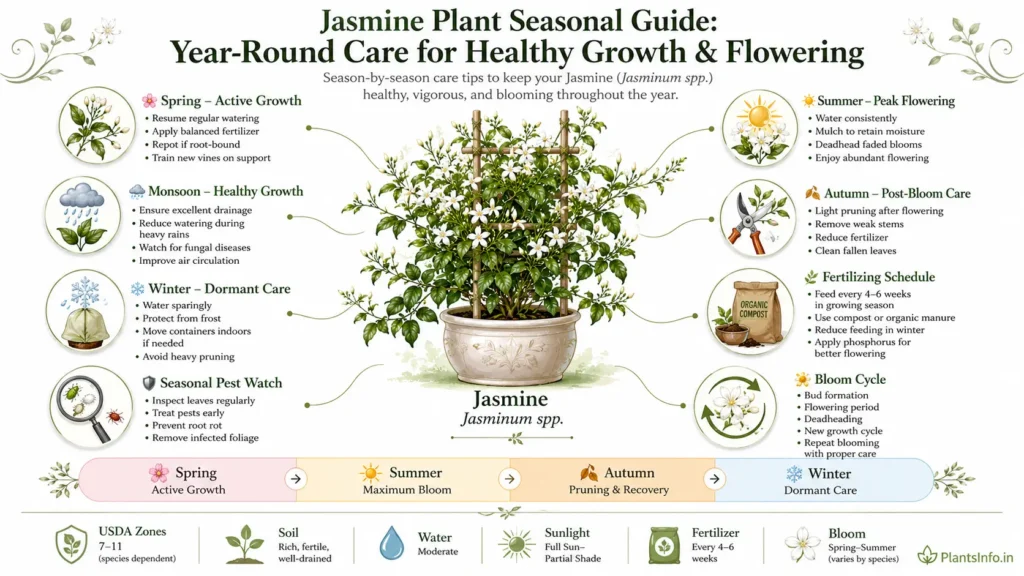
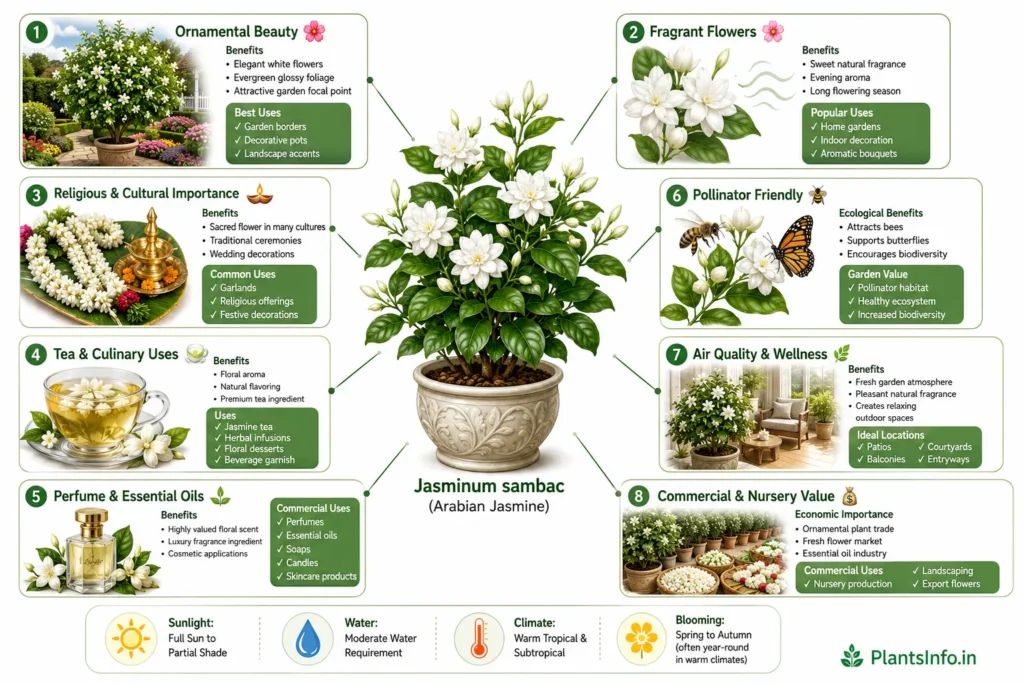
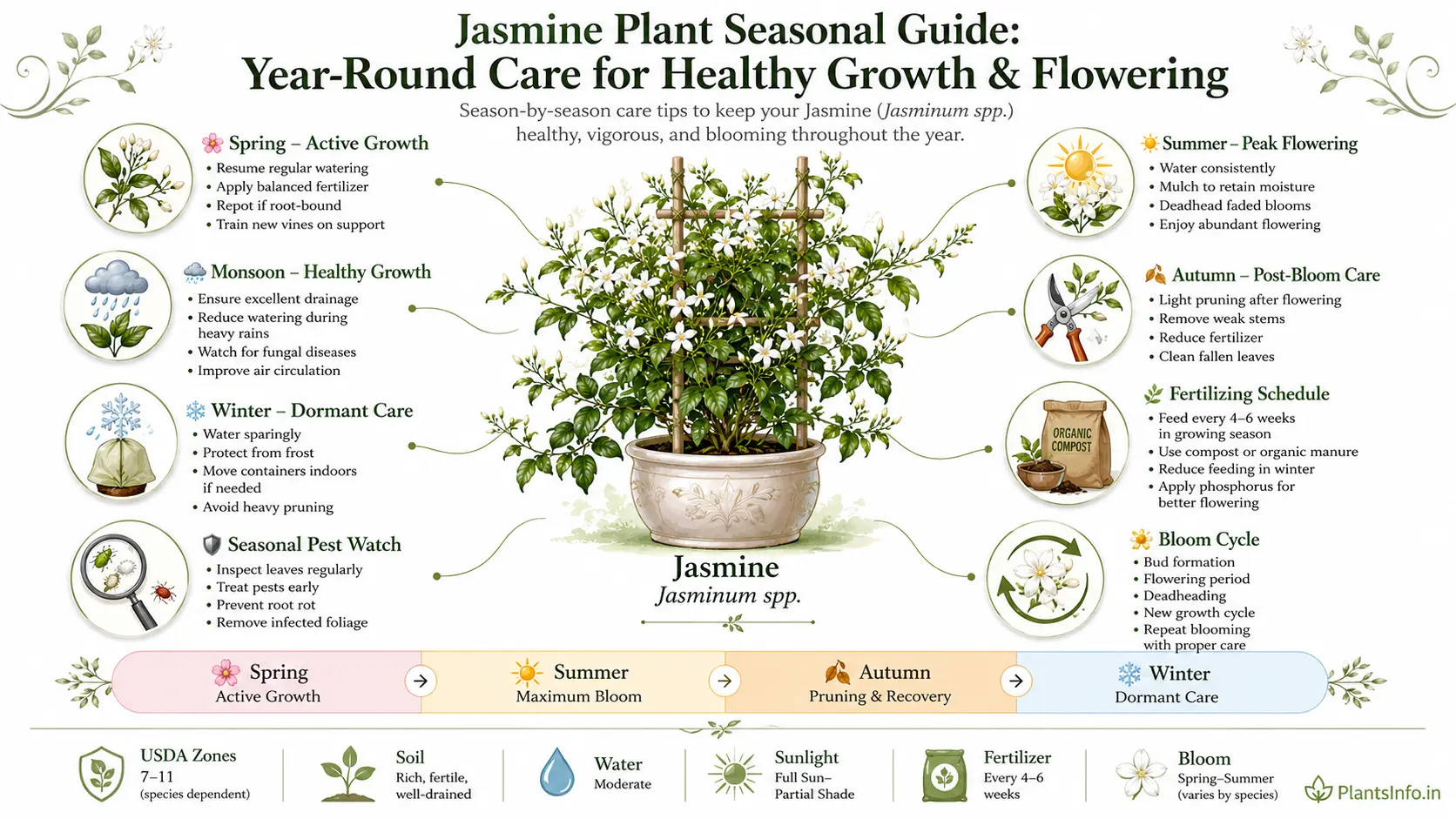
Jasmine (Jasminum spp.) is a warm-climate perennial whose care requirements change throughout the year according to temperature, rainfall, daylight, and plant growth stage. In most parts of India, jasmine begins active vegetative growth during late winter and spring, flowers abundantly from spring through autumn, slows during winter, and requires additional attention during the monsoon to prevent waterlogging and disease. Understanding these seasonal changes allows gardeners to provide the right care at the right time, resulting in healthier plants, longer flowering periods, and improved fragrance.
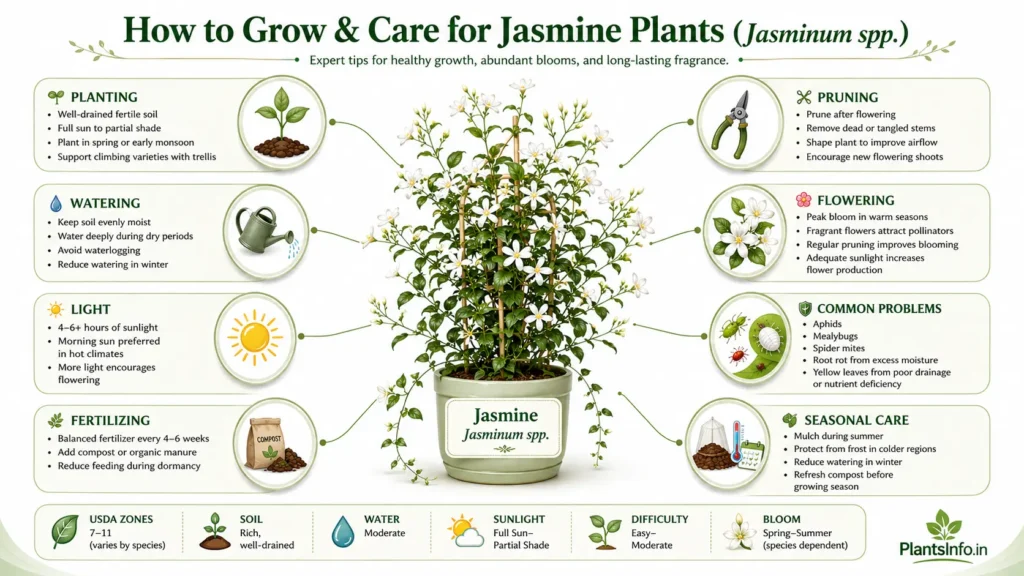
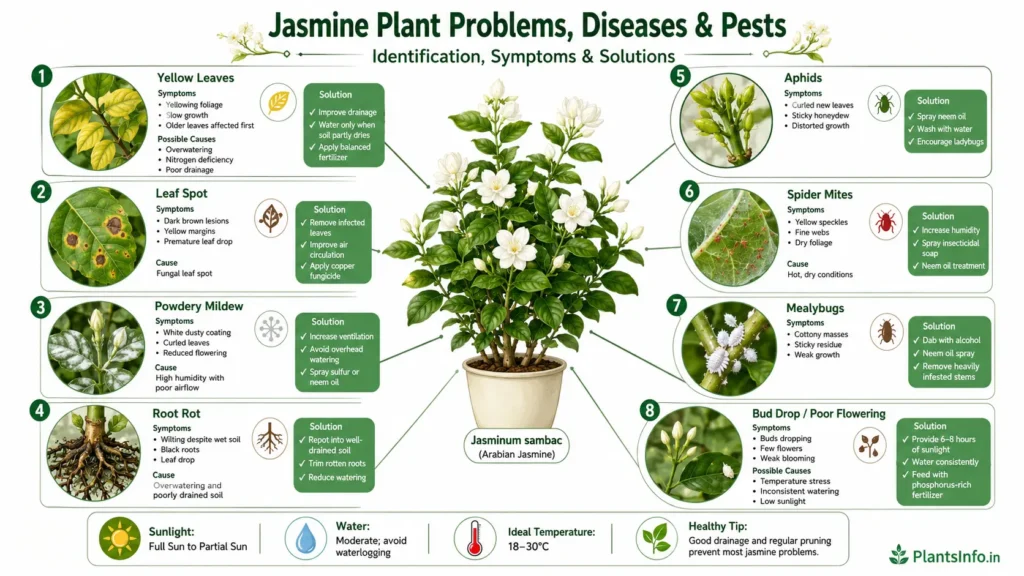
See also: Jasmine Plant plant profile, how to grow it, common problems, its flowering season, and its benefits.
Rather than following a fixed care routine throughout the year, adjust watering, fertilizing, pruning, and maintenance according to the plant’s seasonal growth cycle and local climate.
Recommended Products
Disclosure: As an Amazon Associate, PlantsInfo may earn from qualifying purchases.
🌱 Growing Essentials
The following products can help with container gardening, potting, root development, soil management, and healthy plant growth.
Organic Potting Soil Mix
Provides nutrients, structure, and healthy growing conditions for container plants.
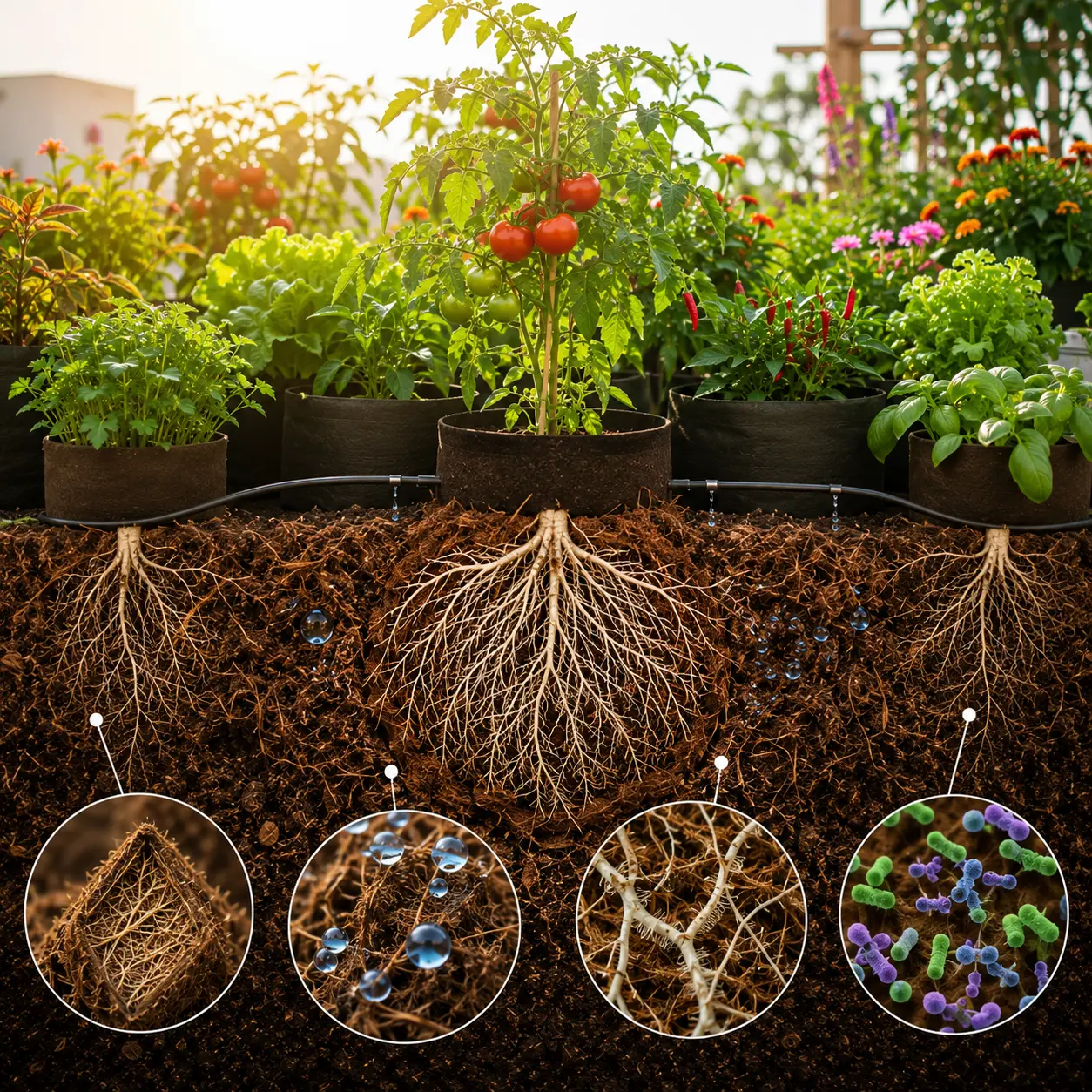
Coco Peat Growing Medium
Enhances moisture retention while maintaining excellent root-zone aeration.

Grow Bags for Plants
Improve drainage, root aeration, and vegetable production in limited spaces.

Plastic Pots for Plants
Ideal containers for seedlings, ornamentals, herbs, and balcony gardens.
Introduction
Jasmine (Jasminum spp.) is one of the most adaptable ornamental flowering plants grown across tropical and subtropical regions. Although evergreen in many warm climates, its growth is not uniform throughout the year. Instead, jasmine follows a repeating seasonal cycle of vegetative growth, flower bud formation, flowering, recovery, and reduced winter activity. These changes are influenced primarily by temperature, light availability, soil moisture, and rainfall rather than by strict dormancy as seen in many temperate plants.
In India, where climatic conditions vary from tropical coastal regions to subtropical plains and Himalayan foothills, seasonal care requirements differ considerably. Plants growing in southern India may flower almost continuously, whereas those in northern regions often experience a noticeable reduction in flowering during winter before resuming vigorous growth in spring.
Understanding Jasmine’s Seasonal Growth Cycle
Unlike annual flowering plants that complete their life cycle within a single season, jasmine is a long-lived woody perennial that retains its structural framework for many years while producing new flowering shoots each growing season.
Its annual growth pattern is governed by environmental conditions, particularly temperature stability, increasing daylight, and adequate soil moisture. Rather than entering complete dormancy, most tropical jasmine species simply reduce growth during cooler months before producing vigorous new shoots when favourable conditions return.
Typical Annual Growth Cycle
| Growth Phase | General Timing (India) | Plant Activity |
|---|---|---|
| Active Vegetative Growth | Late winter to spring | Rapid production of new shoots and leaves |
| Flower Bud Formation | Spring to early summer | Development of flower buds on new growth |
| Peak Flowering | Spring to autumn | Continuous or repeated flowering flushes |
| Fruit Development (where pollinated) | Summer to autumn | Seed formation in fertile species |
| Reduced Growth | Late autumn to winter | Slower vegetative growth and fewer flowers |
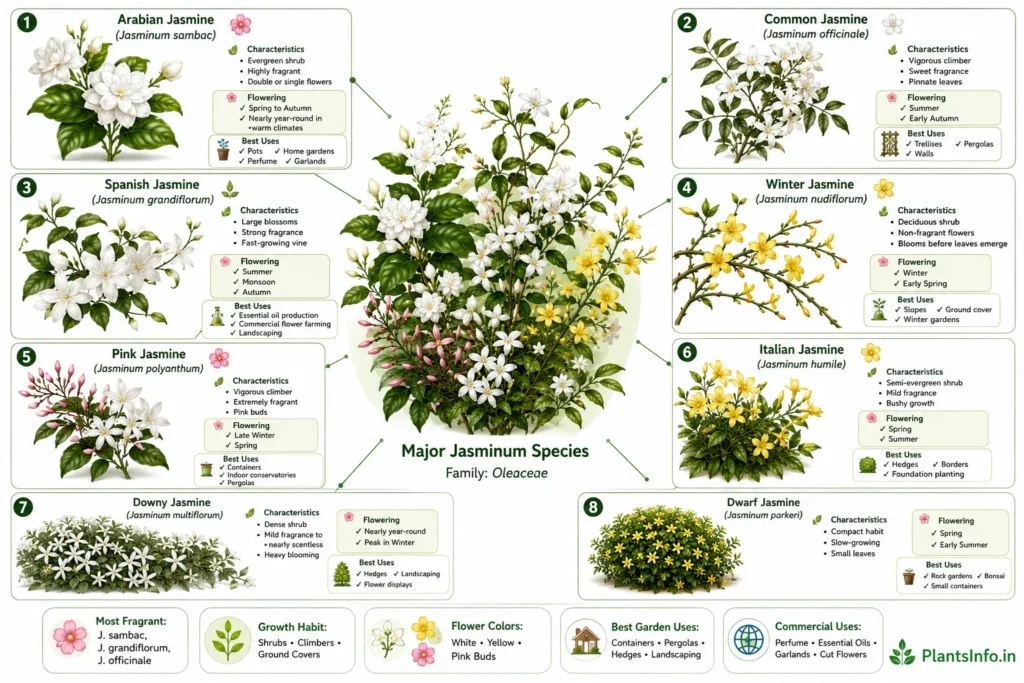
The exact timing varies depending on species, local climate, elevation, and cultivation conditions. Tropical species such as Jasminum sambac may continue flowering for much of the year, while temperate species experience more pronounced seasonal changes.
What Drives Seasonal Growth?
Several environmental factors regulate jasmine’s seasonal behaviour:
- Rising temperatures stimulate new shoot development.
- Increasing daylight encourages flower initiation.
- Moderate soil moisture supports continuous vegetative growth.
- Stable warm weather promotes repeated flowering cycles.
- Cooler temperatures reduce metabolic activity and flowering.
Because jasmine depends on repeated production of new shoots, proper seasonal management directly influences future flowering performance.
Spring Care (February–April in Most of India)
Spring marks the beginning of jasmine’s active growing season. Rising temperatures and longer daylight hours encourage vigorous new shoots, followed by flower bud development. This is the ideal time to prepare plants for their main flowering period.
Seasonal Priorities
- Resume regular watering as temperatures rise, adjusting according to soil moisture.
- Begin balanced fertilization to support new growth and flower bud formation.
- Carry out only light corrective pruning by removing dead, damaged, or weak stems. Delay heavy pruning until after major flowering flushes.
- Guide climbing stems onto their supports and remove early weeds to reduce competition for water and nutrients.
- Apply or refresh organic mulch to conserve soil moisture before summer.
Spring Care Checklist
✓ Resume regular watering.
✓ Begin balanced fertilization.
✓ Remove dead or weak stems.
✓ Inspect and secure climbing supports.
✓ Refresh mulch and control weeds.
✓ Monitor new shoots and flower bud development.
Summer Care (May–June)
Summer is typically the peak flowering season for jasmine across much of India. Higher temperatures increase water demand, while prolonged heat may temporarily reduce flower longevity.
Seasonal Priorities
- Water according to soil moisture, paying closer attention to container-grown plants.
- Maintain an organic mulch layer to reduce evaporation and keep roots cooler.
- Continue moderate fertilization during active flowering, avoiding heavy feeding during extreme heat.
- Harvest flowers regularly and remove spent blooms to encourage continued flowering.
- During prolonged heatwaves, monitor plants for temporary wilting or reduced flowering, which usually improves once temperatures moderate.
Summer Care Checklist
✓ Monitor soil moisture regularly.
✓ Maintain mulch around the root zone.
✓ Continue moderate feeding.
✓ Harvest flowers frequently.
✓ Check containers for rapid drying.
✓ Watch for signs of heat stress during extreme weather.
Monsoon Care (June–September)
The monsoon season brings abundant rainfall, high humidity, and rapid vegetative growth. While these conditions encourage healthy shoot development, prolonged waterlogging and poor air circulation can reduce flowering and weaken root health. During this season, drainage becomes the most important aspect of jasmine care.
Seasonal Priorities
- Reduce or suspend irrigation whenever rainfall provides sufficient moisture.
- Check that excess water drains quickly from garden beds and containers after heavy rain.
- Thin overcrowded growth and secure climbing stems to improve air circulation.
- Remove weeds, fallen leaves, and other debris to keep the growing area clean and well ventilated.
- Replenish organic mulch if it has decomposed or washed away, and apply compost only in moderate amounts when prolonged heavy rainfall is not expected.
- Inspect supports and ties after storms to ensure climbing plants remain secure.
Monsoon Care Checklist
✓ Check drainage after heavy rainfall.
✓ Reduce irrigation during rainy periods.
✓ Improve canopy airflow by thinning overcrowded growth.
✓ Remove weeds and fallen leaves regularly.
✓ Refresh mulch if required.
✓ Inspect supports after storms.
Autumn Care (October–November)
Autumn marks the transition from the monsoon to the cooler months. As humidity declines and temperatures become milder, jasmine often continues flowering while gradually slowing its vegetative growth. This season is ideal for helping plants recover from the vigorous monsoon period and preparing them for winter.
Seasonal Priorities
- Gradually reduce watering as temperatures cool, allowing the soil surface to dry slightly between irrigations.
- Continue moderate fertilization while flowering persists, avoiding heavy late-season feeding.
- Remove damaged or overcrowded branches, but postpone major structural pruning until flowering has finished.
- Clear fallen leaves and plant debris to maintain good garden hygiene.
- Monitor late-season flowering and overall plant health before winter.
Autumn Care Checklist
✓ Gradually reduce watering.
✓ Continue moderate feeding while flowering continues.
✓ Remove damaged branches and garden debris.
✓ Observe plant structure before winter pruning.
✓ Monitor late-season flowering.
Winter Care (December–January)
Winter care depends largely on the regional climate. In tropical parts of India, jasmine often remains evergreen with only slightly slower growth, while cooler northern and subtropical regions experience reduced flowering and slower shoot development. This seasonal slowdown is normal and should not be mistaken for poor plant health.
Seasonal Priorities
- Reduce watering to match slower growth, allowing the soil to dry slightly between irrigations.
- Avoid heavy fertilization during winter and resume regular feeding when active spring growth begins.
- Protect young plants from frost in colder regions by covering them overnight or moving containers to sheltered locations.
- Delay major pruning until temperatures begin to rise, removing only dead or frost-damaged stems if necessary.
- Monitor plants for healthy buds and prepare for the return of active growth in spring.
Winter Care Checklist
✓ Reduce watering.
✓ Protect plants from frost where necessary.
✓ Delay heavy fertilization.
✓ Remove only dead or frost-damaged stems.
✓ Prepare for spring growth and maintenance.
Seasonal Watering Schedule
Watering requirements change throughout the year in response to temperature, rainfall, and plant growth. Use the following schedule as a general guide and always adjust according to local weather and soil moisture.
| Season | Water Requirement | Seasonal Focus |
|---|---|---|
| Spring | Moderate | Support new growth and flower bud development |
| Summer | High | Replace moisture lost through heat and flowering |
| Monsoon | Low to Moderate | Reduce irrigation and prevent waterlogging |
| Autumn | Moderate | Maintain moisture as temperatures cool |
| Winter | Low | Avoid excessive soil moisture during slower growth |
Seasonal Tip: Water according to soil moisture rather than a fixed schedule. Container-grown plants generally require more frequent monitoring than garden-grown plants.
Seasonal Fertilizing Schedule
Jasmine benefits from moderate feeding during active growth and flowering, with reduced nutrient requirements during winter.
| Season | Recommendation |
|---|---|
| Spring | Begin balanced feeding |
| Summer | Continue moderate fertilization |
| Monsoon | Replenish organic matter if required after prolonged rain |
| Autumn | Continue light feeding while flowering persists |
| Winter | Reduce or suspend regular fertilization |
Seasonal Tip: Avoid excessive nitrogen at any time of year, as it encourages leafy growth at the expense of flowers.
Seasonal Pruning Calendar
Pruning intensity should vary with the plant’s seasonal growth cycle.
| Season | Recommended Pruning |
|---|---|
| Spring | Light corrective pruning only |
| Summer | Remove spent flowers and maintain plant shape |
| Monsoon | Thin overcrowded growth to improve airflow |
| Autumn | Carry out moderate structural pruning after major flowering flushes |
| Winter | Remove only dead or frost-damaged stems; delay major pruning in colder regions |
Seasonal Tip: Heavy pruning is best carried out after the main flowering period rather than during active bud and flower development.
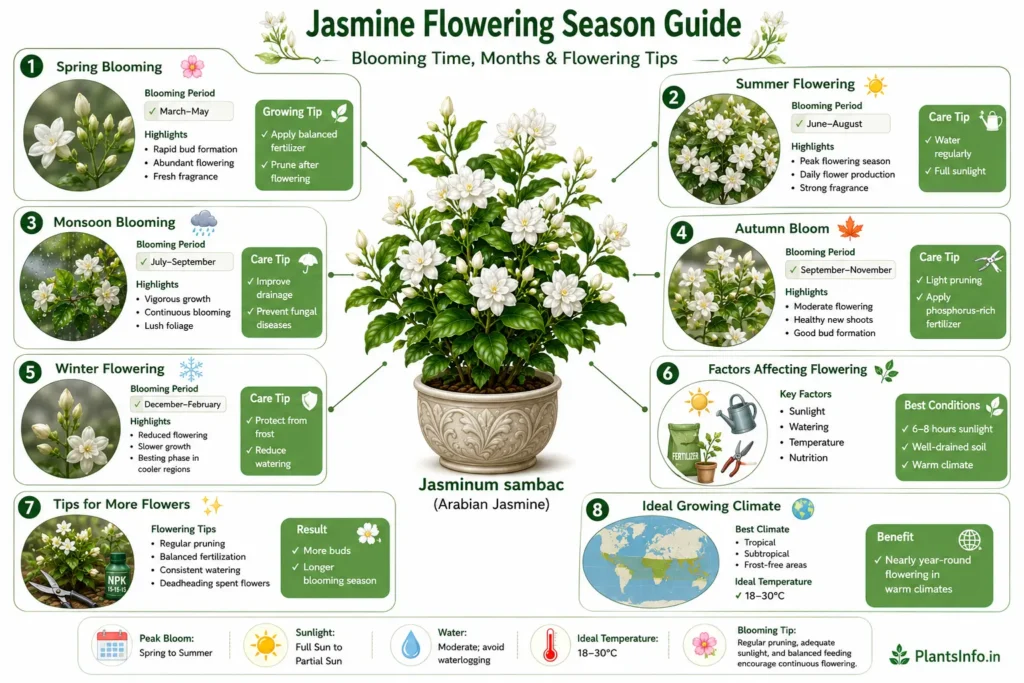
Seasonal Flowering Calendar (India)
Flowering varies among jasmine species, cultivars, and regional climates. Tropical species such as Jasminum sambac may flower for much of the year, while subtropical species generally produce distinct flowering seasons.
The following calendar represents typical flowering patterns under Indian growing conditions.
| Season | Flowering Activity | Garden Expectations |
|---|---|---|
| Late Winter | Low to moderate | New growth begins; limited flowering |
| Spring | High | Flower buds develop rapidly and flowering increases |
| Summer | Very high | Peak flowering and strongest fragrance in many species |
| Monsoon | Moderate to high | Continued flowering with vigorous vegetative growth |
| Autumn | Moderate | Flowering gradually slows while remaining attractive |
| Winter | Low | Reduced flowering except in frost-free tropical climates |
Regional Flowering Differences
Tropical South India
Many plants flower almost continuously, with repeated flowering flushes throughout the year.
Central and Eastern India
Peak flowering generally occurs from spring through the monsoon before gradually declining during winter.
Northern India
Cool winters reduce flowering considerably, followed by vigorous spring regrowth.
Hill Regions
Flowering may begin later because of cooler temperatures and shorter growing seasons.
Extreme Weather Protection
Although jasmine is adaptable, prolonged weather extremes reduce flowering long before they threaten plant survival. Protecting plants during periods of environmental stress preserves plant health and improves long-term flowering performance.
Heat Waves
High temperatures increase water loss and shorten flower life.
Protect plants by:
- Watering deeply during early morning.
- Maintaining organic mulch.
- Avoid heavy fertilization during extreme heat.
- Providing temporary afternoon shade for newly planted specimens if required.
Established plants usually recover quickly once temperatures moderate.
Heavy Rain and Waterlogging
The greatest seasonal threat during the monsoon is prolonged root-zone saturation.
Protect plants by:
- Improving drainage.
- Raising containers above standing water.
- Clearing blocked drainage channels.
- Removing accumulated debris around the base of the plant.
Healthy roots require both water and oxygen.
Drought
Extended dry periods reduce flowering before seriously affecting the woody framework.
Management includes:
- Deep irrigation rather than frequent shallow watering.
- Organic mulching.
- Monitoring container-grown plants closely.
- Avoiding unnecessary pruning during drought.
Strong Winds
Climbing jasmine can suffer stem breakage and flower damage during storms.
Recommended precautions:
- Secure climbing stems.
- Inspect supports regularly.
- Replace damaged ties.
- Remove broken branches promptly.
Frost
In regions with occasional frost:
- Cover young plants overnight.
- Move containers to sheltered areas.
- Avoid pruning immediately before cold weather.
- Resume normal maintenance after temperatures stabilize.
Flowering shoots are considerably more frost-sensitive than mature woody stems.
Monthly Care Calendar
The following calendar provides a practical overview of year-round jasmine care for most Indian growing conditions.
| Month | Main Activities |
|---|---|
| January | Reduce watering, protect from frost where necessary |
| February | Resume watering, begin fertilization, encourage new growth |
| March | Active growth, support flowering, remove weak shoots |
| April | Continue fertilization and regular watering |
| May | Maintain irrigation, mulch heavily, harvest flowers |
| June | Monitor drainage, reduce irrigation during rains |
| July | Weed control, improve airflow, inspect supports |
| August | Continue monsoon maintenance and moderate feeding |
| September | Maintain flowering, monitor vigorous growth |
| October | Continue balanced nutrition and structural observation |
| November | Prepare plants for cooler weather, reduce irrigation gradually |
| December | Minimal watering, protect from frost in cooler regions |
This schedule serves as a general guide and should be adjusted according to local climate and species.
Frequently Asked Questions (FAQ)
Does jasmine flower throughout the year?
Some tropical species, particularly Jasminum sambac, may flower for much of the year under warm conditions, while most species produce their heaviest flowering from spring through autumn.
Which season produces the most flowers?
For most cultivated jasmine in India, spring and summer provide the heaviest flowering, provided the plant receives sufficient sunlight, balanced nutrition, and consistent moisture.
Should Jasmine be fertilized during winter?
Winter nutrient demand is relatively low. Most established plants require little or no supplemental fertilizer until active spring growth resumes.
Why does jasmine flower less during winter?
Lower temperatures and shorter day length naturally slow plant metabolism and reduce new shoot production, resulting in fewer flowers.
Is heavy pruning suitable every year?
No. Moderate annual pruning generally produces healthier plants and more consistent flowering than infrequent heavy pruning.
How should seasonal care differ for potted jasmine?
Container-grown plants require:
- More frequent watering during summer.
- Closer monitoring during heavy rainfall.
- Regular fertilization because nutrients are depleted more quickly.
- Protection from extreme cold and prolonged waterlogging.
Conclusion
Seasonal care is the foundation of successful jasmine cultivation. Rather than treating the plant the same throughout the year, gardeners achieve the best results by adjusting maintenance practices to match its natural cycle of growth, flowering, recovery, and reduced winter activity.
Spring and summer encourage vigorous shoot development and abundant flowering, making them the most active periods for watering, fertilizing, and routine maintenance. During the monsoon, excellent drainage and improved air circulation become the primary priorities, while autumn provides an opportunity to restore plant balance after months of rapid growth. Winter, although quieter, remains an important period for protecting plants from cold stress and preparing them for the next growing season.
By understanding how jasmine responds to seasonal changes in temperature, rainfall, and daylight, gardeners can provide timely care that supports healthier roots, stronger growth, prolonged flowering, and greater resilience. With appropriate seasonal management, jasmine remains one of the most dependable and rewarding ornamental flowering plants for gardens, terraces, and containers throughout much of India.