How to Grow Jasmine Plant (Jasminum spp.): Complete Growing Guide
Quick Answer
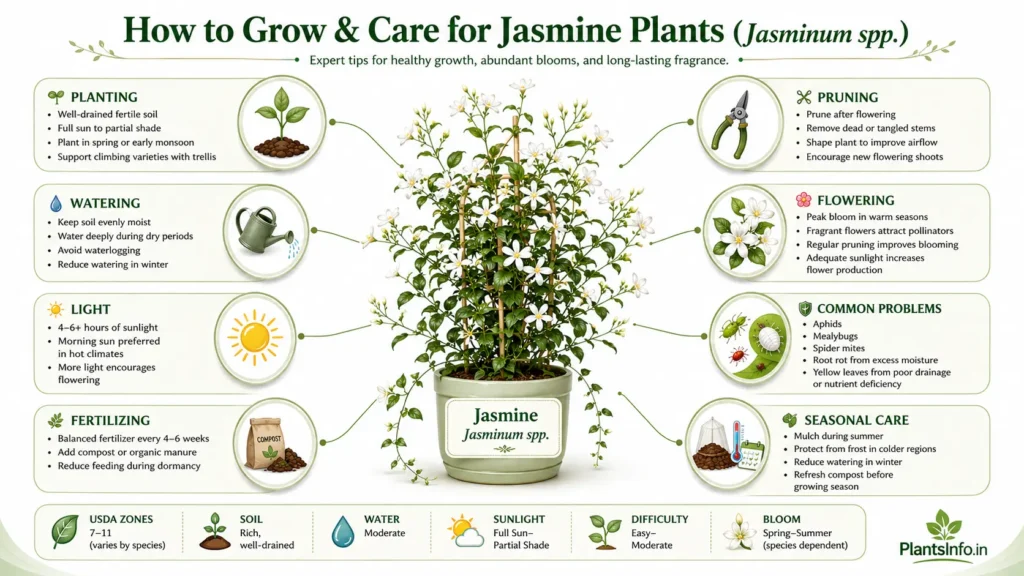
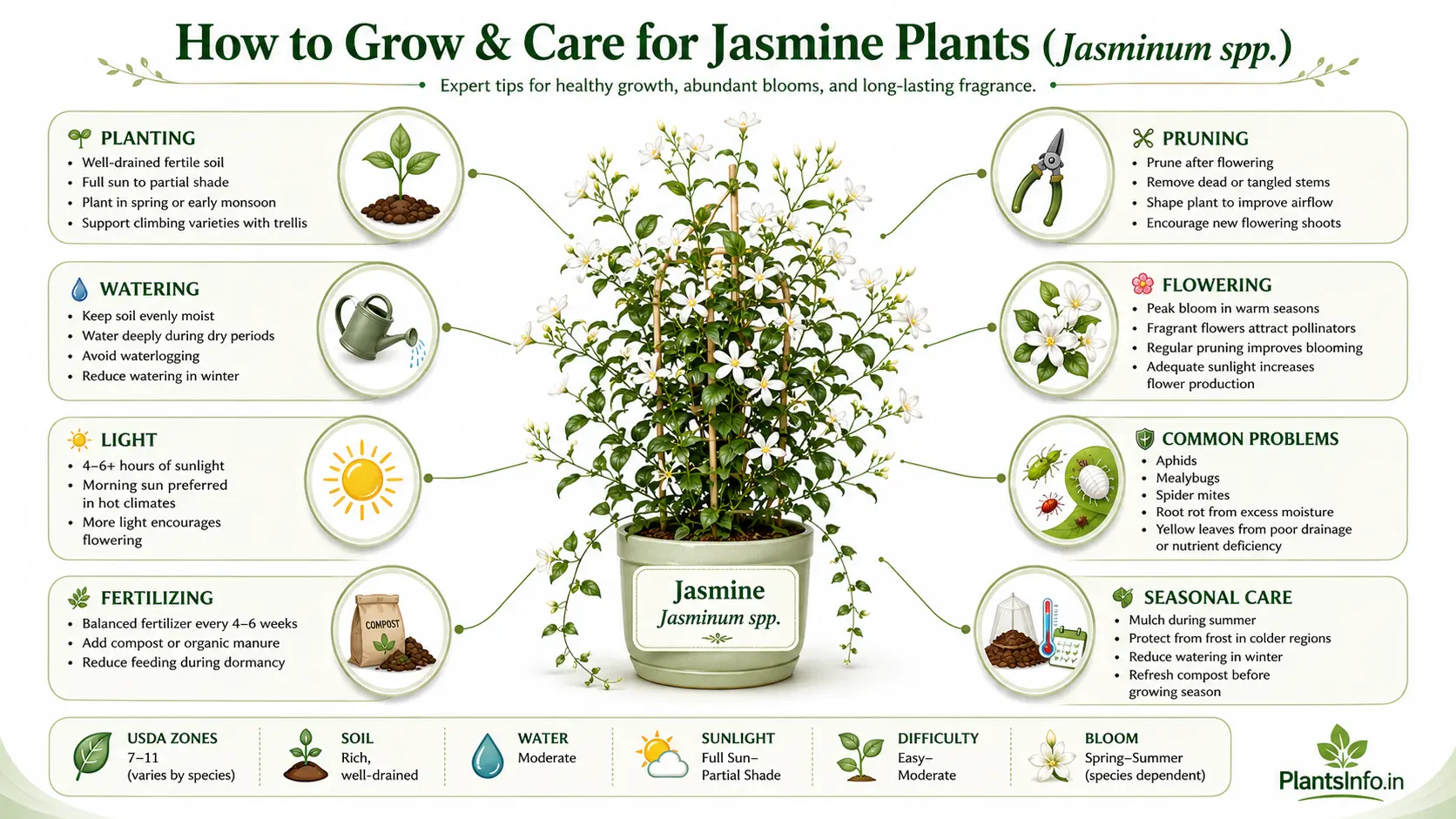
Jasmine (Jasminum spp.) grows best in warm tropical and subtropical climates with full sun to partial shade, well-drained fertile soil, and consistent but moderate watering. Most species thrive in temperatures between 10–35°C, making them well suited to much of India, particularly the plains, coastal regions, and the southern states. Established plants are moderately drought-tolerant but perform best when soil moisture remains evenly balanced without becoming waterlogged.
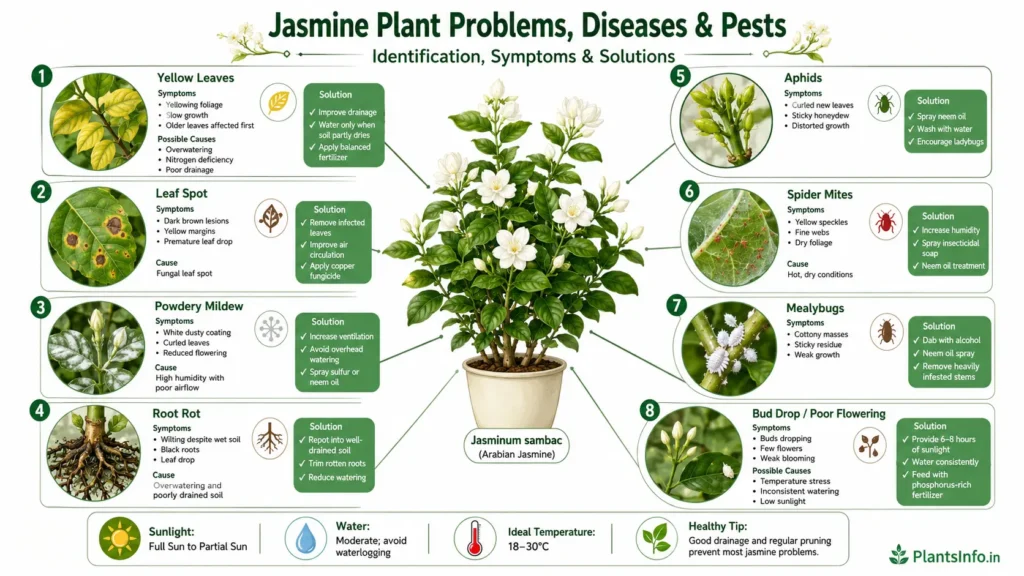
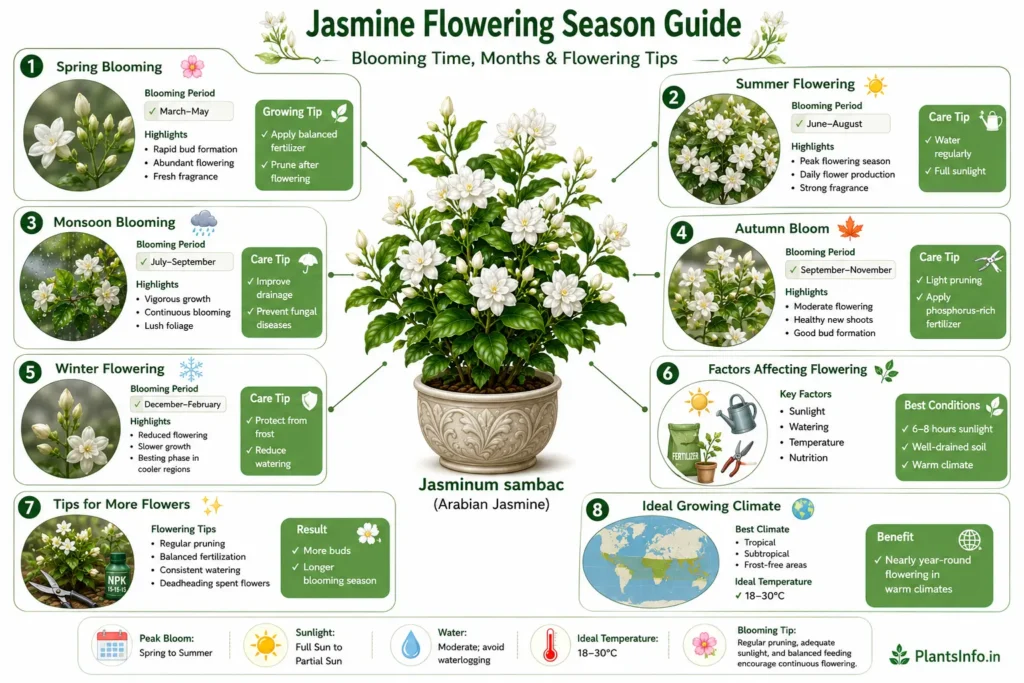
See also: Jasmine Plant plant profile, common problems, seasonal care, its flowering season, and its benefits.
For the healthiest plants and the most abundant flowering, choose a location that receives at least 6 hours of direct sunlight, prune after major flowering flushes, and avoid overwatering. Poor drainage is one of the most common reasons for declining plant health, often affecting flowering long before the plant itself dies.
Recommended Products
Disclosure: As an Amazon Associate, PlantsInfo may earn from qualifying purchases.
🌱 Growing Essentials
The following products can help with container gardening, potting, root development, soil management, and healthy plant growth.
Organic Potting Soil Mix
Provides nutrients, structure, and healthy growing conditions for container plants.
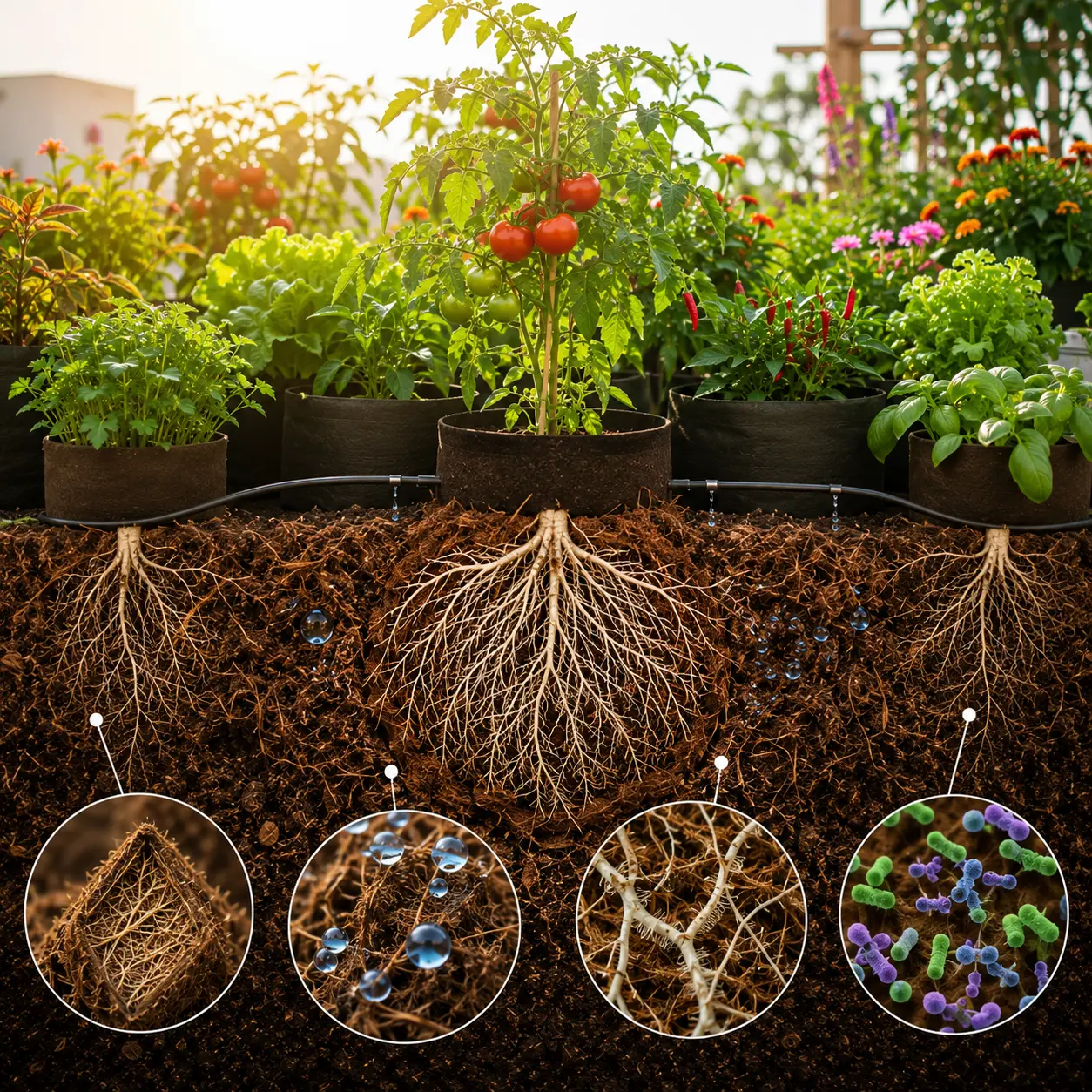
Coco Peat Growing Medium
Enhances moisture retention while maintaining excellent root-zone aeration.

Grow Bags for Plants
Improve drainage, root aeration, and vegetable production in limited spaces.

Plastic Pots for Plants
Ideal containers for seedlings, ornamentals, herbs, and balcony gardens.
Introduction
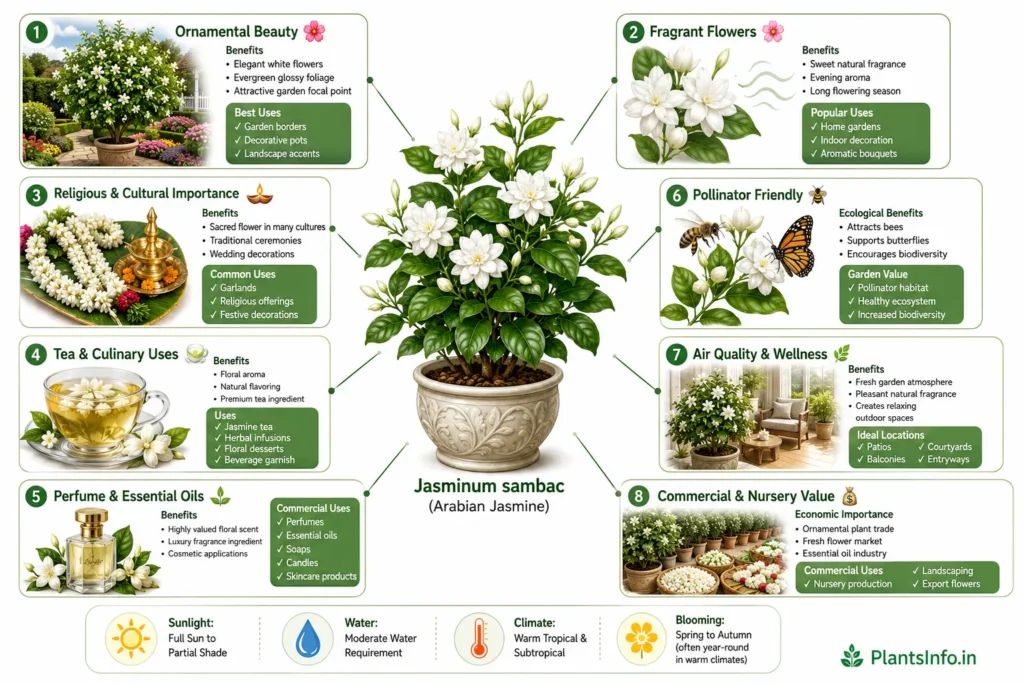
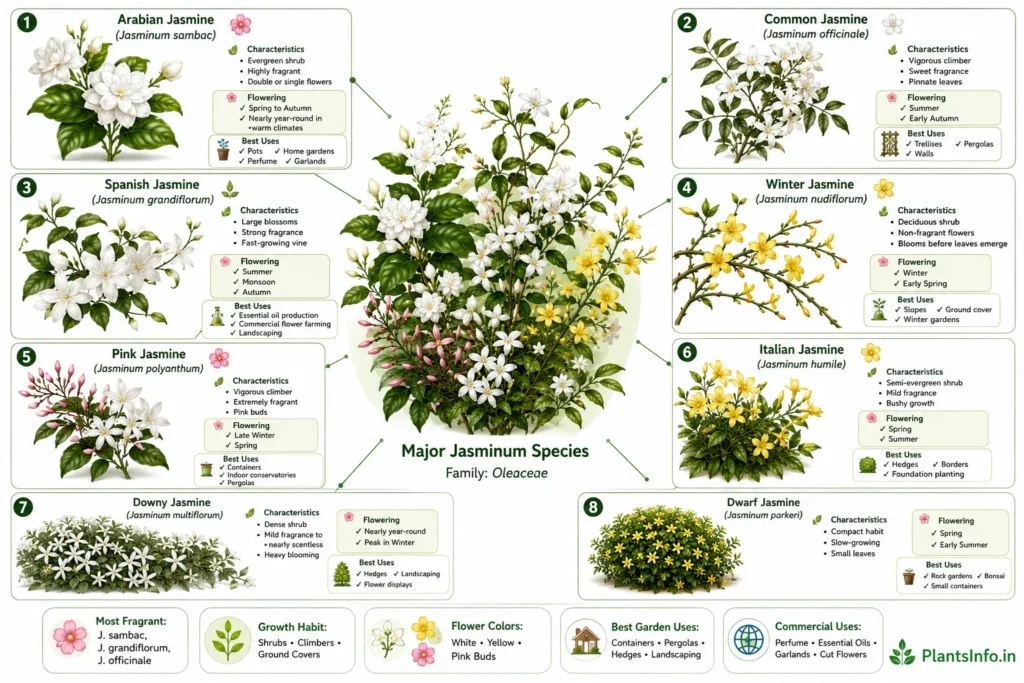
Jasmine (Jasminum spp.) is one of the world’s most valued ornamental flowering plants, admired for its intensely fragrant blossoms, attractive foliage, and versatility in gardens. The genus includes approximately 200 accepted species within the olive family (Oleaceae), ranging from compact shrubs to vigorous climbing vines. Among the best-known cultivated species are Jasminum sambac (Arabian jasmine or Mogra), Jasminum grandiflorum (Spanish jasmine), and Jasminum officinale (Common jasmine), all widely grown across India for ornamental, cultural, and commercial purposes.
Jasmine adapts well to home gardens, balconies, terraces, pergolas, and commercial flower cultivation. Its long flowering season, evergreen or semi-evergreen foliage, and relatively low maintenance requirements make it suitable for both beginner and experienced gardeners. However, successful cultivation depends far more on selecting the right growing conditions than on frequent maintenance.
Growing Essentials
| Factor | Recommendation |
|---|---|
| Scientific Name | Jasminum spp. |
| Plant Type | Perennial woody shrub or climber |
| Difficulty | Easy to Moderate |
| Sunlight | Full sun to partial shade (minimum 6 hours of direct sun preferred) |
| Water Requirement | Moderate; keep soil evenly moist but never waterlogged |
| Soil | Well-drained loam or sandy loam with good organic matter |
| Preferred Soil pH | Slightly acidic to neutral (approximately 6.0–7.5) |
| Climate | Tropical and subtropical; warm temperate species also available |
| Ideal Temperature | 10–35°C |
| Growth Rate | Moderate to fast |
| Container Suitable | Yes |
| Primary Propagation | Stem cuttings and layering |
| Best For | Gardens, trellises, pergolas, hedges, balconies, containers and fragrance gardens |
Before You Start
Before planting jasmine, evaluate whether your garden or growing space can provide the conditions the plant needs throughout the year.
Unlike many flowering annuals, jasmine is a long-lived woody perennial that develops a permanent framework of stems. Although many species flower repeatedly over several months, they establish gradually during their first growing season before reaching peak flowering in later years. Gardeners expecting heavy flowering immediately after planting may be disappointed, especially with young nursery plants.
If you are growing a climbing species such as Jasminum officinale, install a trellis, fence, pergola, or other support before planting. Shrub-form species, including many forms of Jasminum sambac, require less structural support but still benefit from open spacing and good air movement.
Is Jasmine Suitable for Your Region?
| Indian Region | Suitability | Notes |
|---|---|---|
| South India | Excellent | Long growing season and mild winters favour continuous flowering. |
| Coastal India | Excellent | Warm temperatures and humidity support vigorous growth if drainage is good. |
| Central India | Very Good | Performs well with supplemental irrigation during prolonged dry periods. |
| Eastern India | Very Good | Thrives in warm humid conditions with proper drainage. |
| North Indian Plains | Good | Growth slows during winter but resumes vigorously in spring. |
| Himalayan Hills | Variable | Warm temperate species perform better than tropical species in cooler elevations. |
Biggest Success Factor
Excellent Drainage Is More Important Than Frequent Watering
The single factor that most influences Jasmine’s health is well-drained soil.
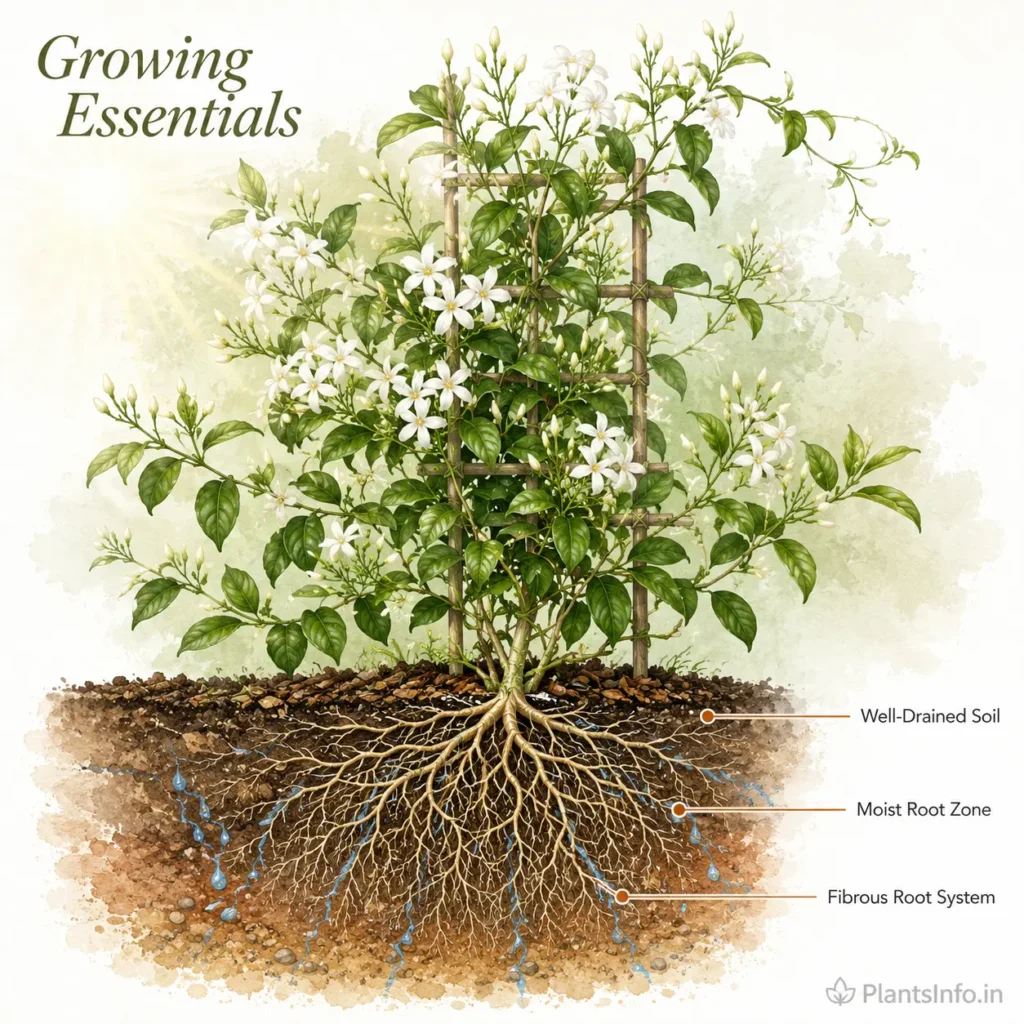
Jasmine naturally develops a fibrous root system concentrated within the upper soil layers, where oxygen availability is essential for healthy root function. While the plant appreciates regular moisture, prolonged waterlogging quickly reduces root respiration, weakens growth, and often results in poor flowering before visible decline occurs.
Many beginners mistakenly water jasmine every day regardless of weather or soil conditions. In much of India, especially during the monsoon, natural rainfall is often sufficient for established plants. Additional irrigation should only be applied when the upper soil begins to dry.
Practical observation: In tropical gardens, overwatering and poor drainage generally cause more long-term problems than temporary summer heat.
Choosing a Location
Selecting the right planting site reduces maintenance while improving flowering and plant longevity.
Garden Planting
Choose an open location where the plant receives good sunlight throughout the day and where excess rainwater drains quickly. Avoid low-lying areas that remain wet after rainfall.
For climbing species, position the plant near:
- Trellises
- Pergolas
- Garden arches
- Boundary fences
- Decorative pillars
- Wire supports
These structures allow stems to spread naturally while improving air circulation and flower display.
Shrub-form jasmine should be planted with enough spacing to allow mature branching without overcrowding.
Container Growing
Jasmine performs exceptionally well in large containers provided that:
- The pot has multiple drainage holes.
- A free-draining growing medium is used.
- Water never remains standing in the saucer.
- The plant receives abundant sunlight.
Containers between 30–45 cm in diameter are generally suitable for young plants, with larger pots supporting mature specimens for many years.
Air Circulation
Although jasmine tolerates humid climates, dense, enclosed planting locations should be avoided. Good air movement helps maintain healthy foliage and encourages stronger flowering, especially during humid monsoon weather.
Sunlight Requirements
Most cultivated jasmine species flower best under full sun, although many tolerate partial shade.
| Light Condition | Expected Performance |
|---|---|
| Full Sun (6–8+ hours) | Best flowering, compact growth and strongest fragrance |
| Partial Shade (4–6 hours) | Healthy growth with moderate flowering |
| Heavy Shade | Vigorous foliage but noticeably fewer flowers |
Sunlight directly influences flower production because the plant allocates more energy toward reproductive growth under higher light intensity. While foliage often remains attractive in shaded gardens, flowering usually declines significantly.
India-Specific Recommendations
- Southern and coastal India: Full sun is generally suitable throughout the year, although light afternoon shade may reduce heat stress during exceptionally hot summers.
- Northern India: Full sun is recommended during most of the growing season to maximise flowering.
- Very hot inland areas: Temporary afternoon shade during extreme heatwaves can reduce leaf scorch in newly established plants without significantly reducing flowering.
Expectation management: Increasing fertiliser cannot fully compensate for inadequate sunlight. Poor flowering is often caused by insufficient light rather than nutrient deficiency.
Soil Requirements
Jasmine grows in a wide range of soils but consistently performs best in well-drained, fertile loam or sandy loam enriched with organic matter. Slightly acidic to neutral soil (around pH 6.0–7.5) supports healthy root development and nutrient availability.
Ideal Garden Soil
A suitable garden soil should provide:
- Excellent drainage
- Moderate moisture retention
- Good organic matter content
- Loose, friable structure
- Adequate aeration around the roots
Heavy clay soils can be improved by incorporating compost and coarse river sand before planting. Conversely, very sandy soils benefit from additional compost or well-decomposed farmyard manure to improve moisture retention.
Recommended Potting Mix
For container-grown jasmine, an effective growing medium consists of:
- 40–50% quality garden loam
- 25–30% well-decomposed compost or organic manure
- 20–30% coarse sand, perlite, or similar drainage material
This combination provides sufficient fertility while preventing waterlogging.
Soil Drainage
Drainage remains the most critical soil characteristic. If water remains around the roots for extended periods after irrigation or rainfall, flowering often declines, and long-term plant health suffers.
Before planting, test drainage by watering the site thoroughly. If water remains pooled for several hours, improve drainage or consider planting in a raised bed or large container.
Beginner mistake: Many gardeners focus on soil fertility while overlooking drainage. Jasmine generally tolerates average fertility far better than permanently wet soil.
Planting
Proper planting establishes the foundation for healthy root development, vigorous vegetative growth, and consistent flowering. Although jasmine is adaptable, careful site preparation significantly improves long-term performance.
Best Time to Plant
In most parts of India, the ideal planting seasons are:
| Region | Recommended Planting Time |
|---|---|
| South India | February–April or June–August |
| Central & Eastern India | February–March or after the onset of the monsoon |
| North India | February–April after severe frost has passed |
| Container-grown plants | Almost year-round if protected from extreme heat and frost |
Planting during cooler weather or early in the monsoon allows roots to establish before periods of intense heat or prolonged drought.
Selecting Healthy Nursery Plants
Choose plants that have:
- Healthy green foliage without yellowing or wilting.
- Several well-developed stems.
- A compact root ball that is neither root-bound nor excessively loose.
- No signs of stem damage or poor vigour.
Avoid plants with soft stem bases, weak growth, or persistently waterlogged potting media.
Garden Planting Method
- Dig a planting hole approximately twice the width of the root ball.
- Loosen the surrounding soil to encourage root expansion.
- Mix well-decomposed compost into the excavated soil if fertility is poor.
- Place the plant so that the top of the root ball remains level with the surrounding soil.
- Backfill gently without compacting excessively.
- Water thoroughly after planting to settle the soil.
- Apply mulch while keeping it away from direct contact with the stem.
For climbing species, install supports before or immediately after planting to avoid disturbing the root system later.
Plant Spacing
| Plant Type | Recommended Spacing |
|---|---|
| Shrub-form jasmine | 1–1.5 m |
| Vigorous climbers | 2–3 m |
| Commercial flower production | Follow local production system while maintaining adequate airflow |
Adequate spacing improves light penetration, encourages branching, and reduces competition for water and nutrients.
Watering
Jasmine prefers consistent soil moisture rather than constantly wet soil. The goal is to keep the root zone evenly moist while allowing excess water to drain freely.
Because most roots occupy the upper soil layers, plants respond quickly to both drought and prolonged waterlogging. Established jasmine tolerates short dry periods better than continuously saturated soil.
Watering During Different Growth Stages
| Growth Stage | Water Requirement |
|---|---|
| Newly planted | Keep soil consistently moist until established. |
| Active vegetative growth | Water when the upper few centimetres of soil begin to dry. |
| Flowering period | Maintain even moisture to support continuous bloom production. |
| Established mature plants | Reduce watering frequency while avoiding prolonged drought. |
Seasonal Watering in India
Summer
High temperatures increase water loss through evaporation and transpiration. Deep watering every few days is generally more effective than frequent light irrigation.
Monsoon
Reduce supplemental watering whenever rainfall is adequate. Ensure that water drains quickly from the planting site.
Winter
Growth slows in many regions, so watering requirements decline. Irrigate only when the soil begins to dry.
Practical Watering Tips
- Water deeply rather than lightly.
- Irrigate early in the morning whenever possible.
- Avoid leaving containers standing in water-filled trays.
- Check soil moisture before watering instead of following a fixed schedule.
Limiting factor: Poor drainage combined with excessive watering is one of the most common causes of declining jasmine performance.
Fertilizing
Jasmine benefits from balanced nutrition but generally performs better with moderate feeding than with excessive fertiliser application.
The plant invests considerable energy into producing repeated flushes of flowers, making regular nutrient replenishment beneficial, especially in containers where nutrients are depleted more quickly.
Organic Fertilization
Organic amendments provide gradual nutrient release while improving soil structure.
Suitable materials include:
- Well-decomposed compost
- Farmyard manure
- Vermicompost
- Leaf mould
Apply organic matter around the root zone once or twice each year without piling it against the stem.
Balanced Fertilizers
Where additional nutrition is required, use a balanced fertiliser formulated for flowering ornamental plants according to the manufacturer’s recommendations.
Avoid excessive nitrogen, as it often stimulates vigorous leafy growth at the expense of flowering.
Fertilizing Schedule
| Growth Stage | Recommendation |
|---|---|
| Newly planted | Delay heavy fertilization until new growth begins. |
| Active growth | Feed periodically during the growing season. |
| Peak flowering | Continue balanced feeding without overapplication. |
| Dormant or slow-growing period | Reduce or suspend fertilization until growth resumes. |
India-Specific Considerations
In regions with long growing seasons, lighter applications made several times each year generally produce better results than one heavy feeding.
Beginner mistake: Applying large amounts of nitrogen in the hope of increasing flowers usually produces lush foliage instead of abundant blooms.
Mulching
Mulching improves soil conditions by conserving moisture, moderating soil temperature, suppressing weeds, and gradually increasing organic matter as natural mulches decompose.
This is particularly valuable in India’s hot summers, where exposed soil loses moisture rapidly.
Suitable Mulch Materials
- Dry leaves
- Compost
- Coco chips
- Bark chips
- Rice straw
- Sugarcane mulch
Apply a mulch layer approximately 5–8 cm thick around the root zone.
Leave a small gap around the main stem to prevent excessive moisture accumulation against the bark.
Benefits of Mulching
- Reduces soil moisture loss.
- Suppresses weed growth.
- Protects shallow feeder roots from temperature extremes.
- Improves soil structure over time.
- Reduces irrigation frequency during hot weather.
Organic mulch also supports healthy soil biological activity, complementing the plant’s natural association with beneficial soil microorganisms.
Pruning
Regular pruning helps maintain plant shape, stimulates new flowering shoots, improves air circulation, and prevents overcrowding.
Because many jasmine species flower on new seasonal growth, appropriate pruning encourages repeated blooming while maintaining a manageable framework.
When to Prune
The best time to prune is soon after a major flowering flush.
Avoid heavy pruning immediately before the expected flowering period, as this removes developing flowering shoots.
Routine Pruning
Routine maintenance includes:
- Removing dead, damaged, or weak branches.
- Cutting back excessively long stems.
- Removing tangled interior growth.
- Guiding climbing stems onto supports.
Rejuvenation Pruning
Older neglected plants can often be rejuvenated through gradual structural pruning over one or two growing seasons rather than removing excessive growth at once.
Training Climbing Jasmine
For climbing species:
- Tie young stems loosely to supports.
- Spread shoots evenly across trellises or pergolas.
- Avoid tightly binding stems, which can damage expanding growth.
Practical observation: Moderate annual pruning generally produces more consistent flowering than allowing dense, unpruned growth to accumulate for several years.
Container Growing
Jasmine adapts exceptionally well to container cultivation, making it suitable for balconies, patios, terraces, and small urban gardens.
Many gardeners successfully grow Jasminum sambac and other compact species in pots for years with proper care.
Choosing the Right Container
Select containers that provide:
- Multiple drainage holes.
- Adequate depth for root development.
- Stable construction capable of supporting mature plants.
Containers 30–45 cm wide suit young plants, while mature specimens often benefit from larger pots.
Potting Mix
Use a free-draining growing medium consisting of:
- Garden loam
- Organic compost
- Coarse sand or perlite
The mixture should retain sufficient moisture while allowing excess water to drain rapidly.
Positioning Containers
Place pots where plants receive:
- At least 6 hours of direct sunlight.
- Good air circulation.
- Protection from prolonged waterlogging during heavy rains.
Water and Nutrient Management
Container-grown jasmine dries out faster than garden plants and generally requires:
- More frequent moisture monitoring.
- Regular but moderate fertilization.
- Occasional replacement or refreshing of the potting mix.
Repotting
Report every 2–3 years, or sooner if roots become crowded.
Signs that repotting is needed include:
- Rapid drying of the potting mix.
- Roots emerging from drainage holes.
- Reduced vigour despite proper watering and fertilization.
Expectation management: Container-grown jasmine usually remains slightly smaller than garden-grown plants but can still produce abundant flowers when provided with adequate sunlight, balanced nutrition, and proper drainage.
Harvesting
While jasmine is primarily grown as an ornamental plant, many species are also cultivated commercially for their highly fragrant flowers used in garlands, religious offerings, perfumes, essential oils, and traditional decorative purposes. Proper harvesting helps preserve flower quality while encouraging continued blooming.
When to Harvest
The ideal harvest stage depends on the intended use.
| Intended Use | Best Harvest Stage |
|---|---|
| Garlands and floral decoration | Mature flower buds just before opening |
| Religious offerings | Freshly opened flowers |
| Perfume and essential oil production | Fully developed, freshly opened flowers with peak fragrance |
| Home display | Newly opened flowers during the coolest part of the day |
Best Time of Day
Harvest flowers early in the morning, when temperatures are cool, and the blooms are fully hydrated. Morning harvesting generally preserves fragrance, freshness, and post-harvest quality better than harvesting during the heat of the afternoon.
Harvesting Technique
- Use clean fingers or sterilized pruning scissors.
- Remove flowers gently without damaging nearby developing buds.
- Avoid pulling or twisting stems excessively.
- Collect flowers in shallow baskets or containers to prevent crushing.
Regular harvesting often encourages the production of additional flower buds by reducing the energy invested in aging blooms.
Caring for Cut Flowers
Fresh jasmine flowers retain their fragrance longest when:
- Kept in a cool, shaded location.
- Protected from direct sunlight.
- Handled gently to avoid bruising.
- Used soon after harvesting for maximum fragrance and freshness.
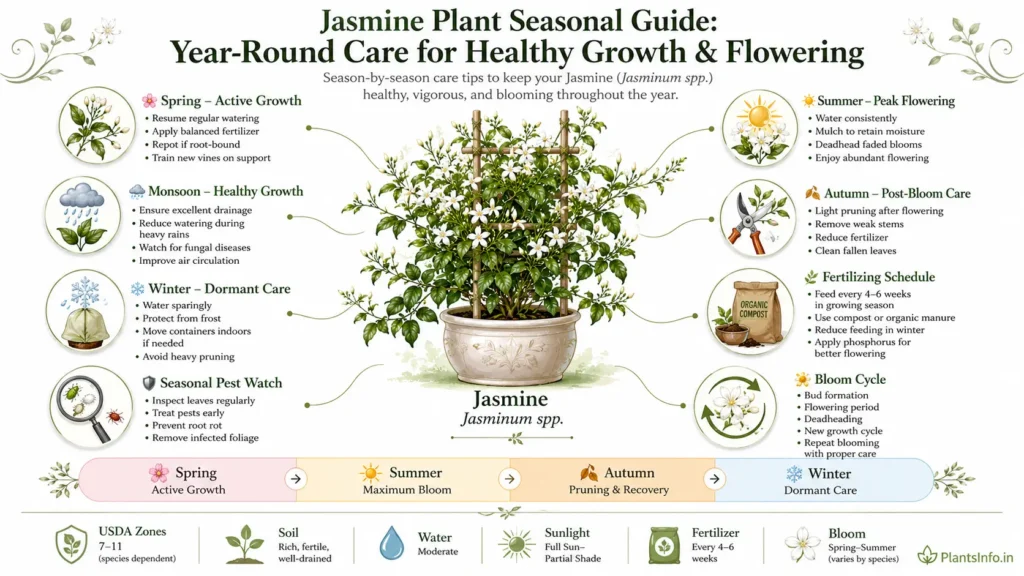
Seasonal Protection
Jasmine is naturally well adapted to tropical and subtropical climates, but seasonal care helps maintain vigorous growth and reliable flowering throughout the year.
Summer Care
During periods of extreme heat:
- Water deeply when the upper soil begins to dry.
- Maintain organic mulch around the root zone.
- Protect newly planted specimens from intense afternoon sun if leaf scorch develops.
- Avoid heavy pruning during severe heat stress.
Established plants generally tolerate high temperatures better than newly planted specimens.
Monsoon Care
Heavy rainfall presents the greatest management challenge for many jasmine plants.
Key practices include:
- Ensure rapid drainage around the root zone.
- Remove fallen leaves and plant debris.
- Improve air circulation where growth becomes excessively dense.
- Inspect supports for climbing species after storms.
Prolonged waterlogging should be avoided, as saturated soil can reduce root health and flowering.
Winter Care
In cooler regions:
- Reduce irrigation frequency as growth slows.
- Delay heavy pruning until active growth resumes.
- Protect young plants from frost where freezing temperatures occur.
- Container-grown plants may be moved to sheltered locations during severe cold spells.
Most tropical jasmine species resume vigorous growth as temperatures increase in spring.
Common Mistakes
Many jasmine problems result from cultivation practices rather than the plant itself. Avoiding these common mistakes greatly improves long-term success.
1. Planting in Poorly Drained Soil
Waterlogged conditions reduce root health and frequently lead to weak growth and fewer flowers.
Better practice: Improve drainage before planting or use raised beds and containers where necessary.
2. Providing Too Little Sunlight
Plants grown in deep shade often produce healthy foliage but significantly fewer flowers.
Better practice: Choose locations receiving at least six hours of direct sunlight whenever possible.
3. Overwatering
Frequent watering without checking soil moisture is one of the most common beginner mistakes.
Better practice: Water according to soil moisture rather than following a fixed schedule.
4. Excessive Nitrogen Fertilization
High nitrogen levels encourage leafy growth while reducing flowering.
Better practice: Use balanced nutrition and avoid excessive nitrogen applications.
5. Ignoring Structural Support
Climbing species perform best when trained on appropriate supports.
Better practice: Install trellises, fences, or pergolas before vigorous growth begins.
6. Delaying Pruning for Many Years
Old, congested growth reduces air circulation and limits flowering.
Better practice: Carry out moderate annual pruning after major flowering flushes.
7. Choosing Containers Without Drainage
Decorative pots lacking drainage holes often retain excessive water around the roots.
Better practice: Always use containers with adequate drainage openings.
Frequently Asked Questions (FAQ)
How long does jasmine take to flower after planting?
Healthy nursery plants often begin flowering within the first growing season under favourable conditions, although flowering generally becomes more abundant after the plant is fully established.
Does jasmine need full sun?
Yes. Most cultivated jasmine species flower best in full sun, receiving at least six hours of direct sunlight daily. Partial shade is tolerated, but flowering is usually reduced.
Can jasmine grow in pots?
Yes. Jasmine is well suited to container cultivation provided that the pot has excellent drainage, a fertile growing medium, and adequate sunlight.
How often should Jasmine be watered?
Water whenever the upper layer of soil begins to dry. Frequency varies according to climate, soil type, container size, and season rather than following a fixed timetable.
Why is my jasmine producing leaves but no flowers?
Insufficient sunlight, excessive nitrogen fertilization, overwatering, delayed pruning, or immature plants are among the most common reasons for reduced flowering.
Is jasmine suitable for beginners?
Yes. Jasmine is considered one of the more beginner-friendly ornamental flowering plants because it adapts well to a wide range of growing conditions when provided with good drainage, sufficient sunlight, and moderate care.
How long does a jasmine plant live?
With proper maintenance, many jasmine plants remain productive and ornamental for decades, producing seasonal flushes of flowers year after year.
Conclusion
Jasmine (Jasminum spp.) remains one of the most rewarding flowering plants for home gardens because it combines exceptional fragrance, ornamental beauty, and relatively simple cultivation requirements. Whether grown as a compact shrub, an elegant climber, or a container specimen, its long flowering season and versatility make it a valuable addition to gardens throughout much of India.
Successful cultivation depends less on intensive maintenance and more on consistently providing the plant with the right growing environment. Well-drained fertile soil, abundant sunlight, moderate watering, balanced nutrition, and regular pruning together create the conditions needed for vigorous growth and reliable flowering. Most long-term cultivation problems arise from excessive watering, inadequate sunlight, or poor drainage rather than from inherent difficulty in growing the plant.
Once established, jasmine rewards gardeners with years of fragrant blooms while requiring only routine seasonal care. By following the best practices outlined in this guide, gardeners can enjoy healthy plants, prolonged flowering, and a landscape enriched with one of the world’s most cherished ornamental flowers.