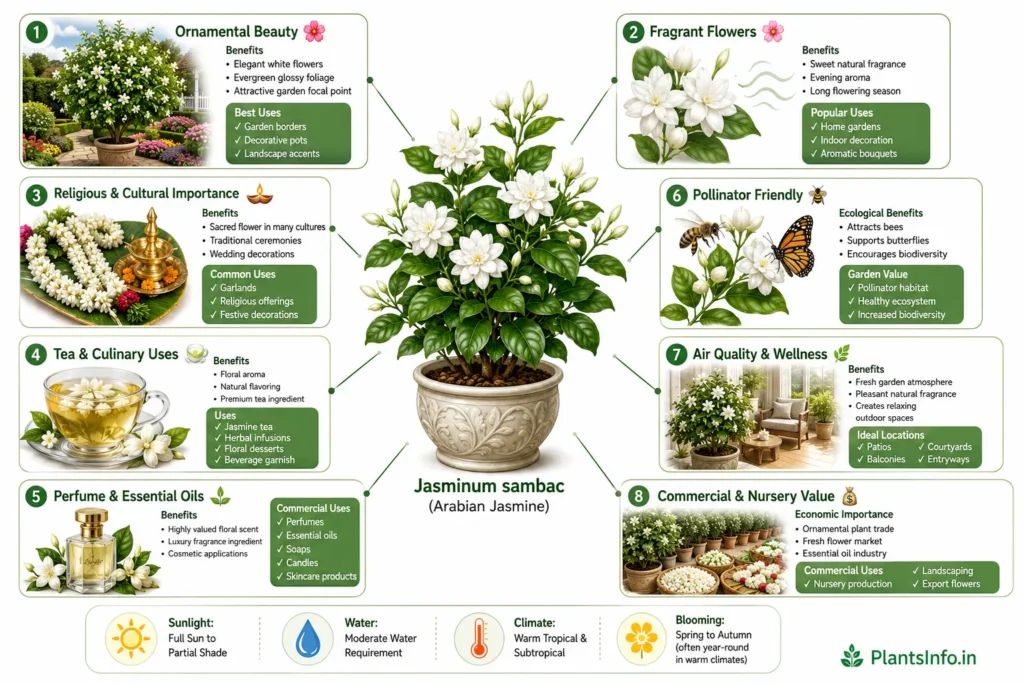
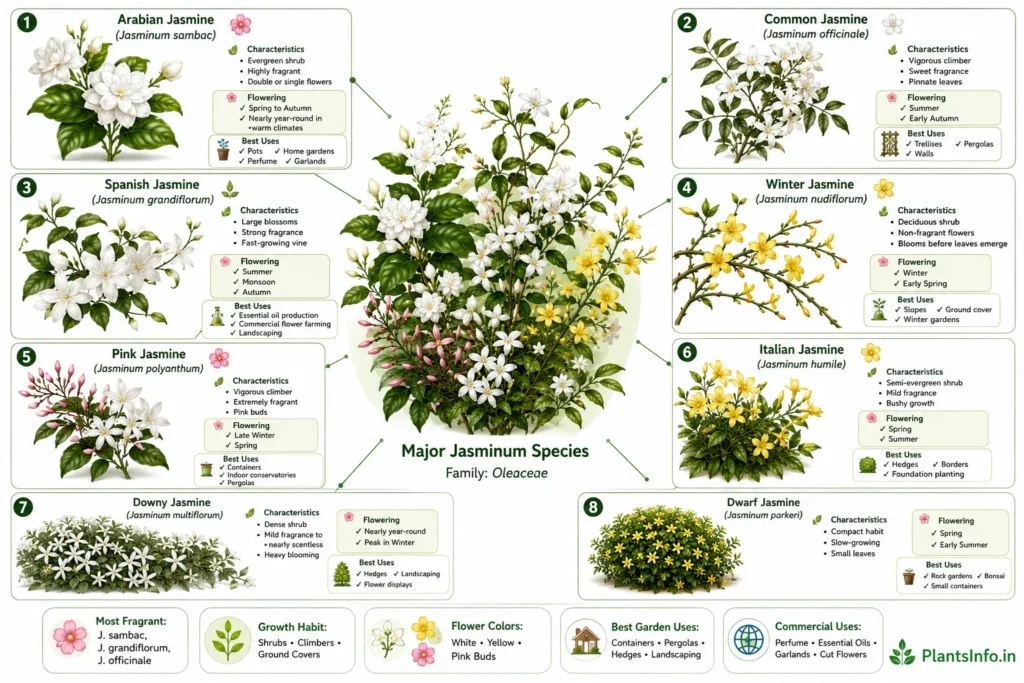
Jasmine Plant Problems, Diseases, and Fixing Guide
Quick Answer
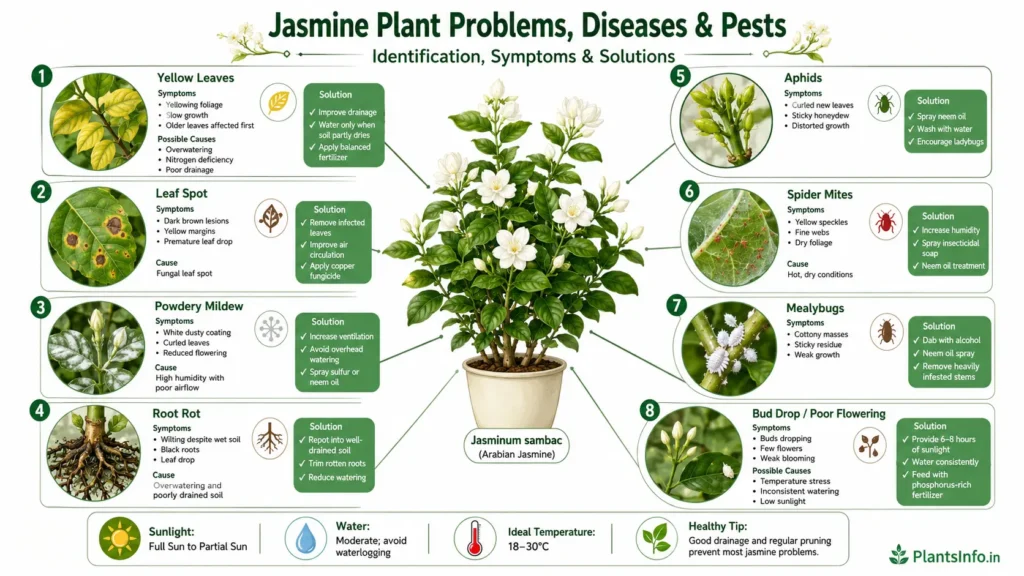
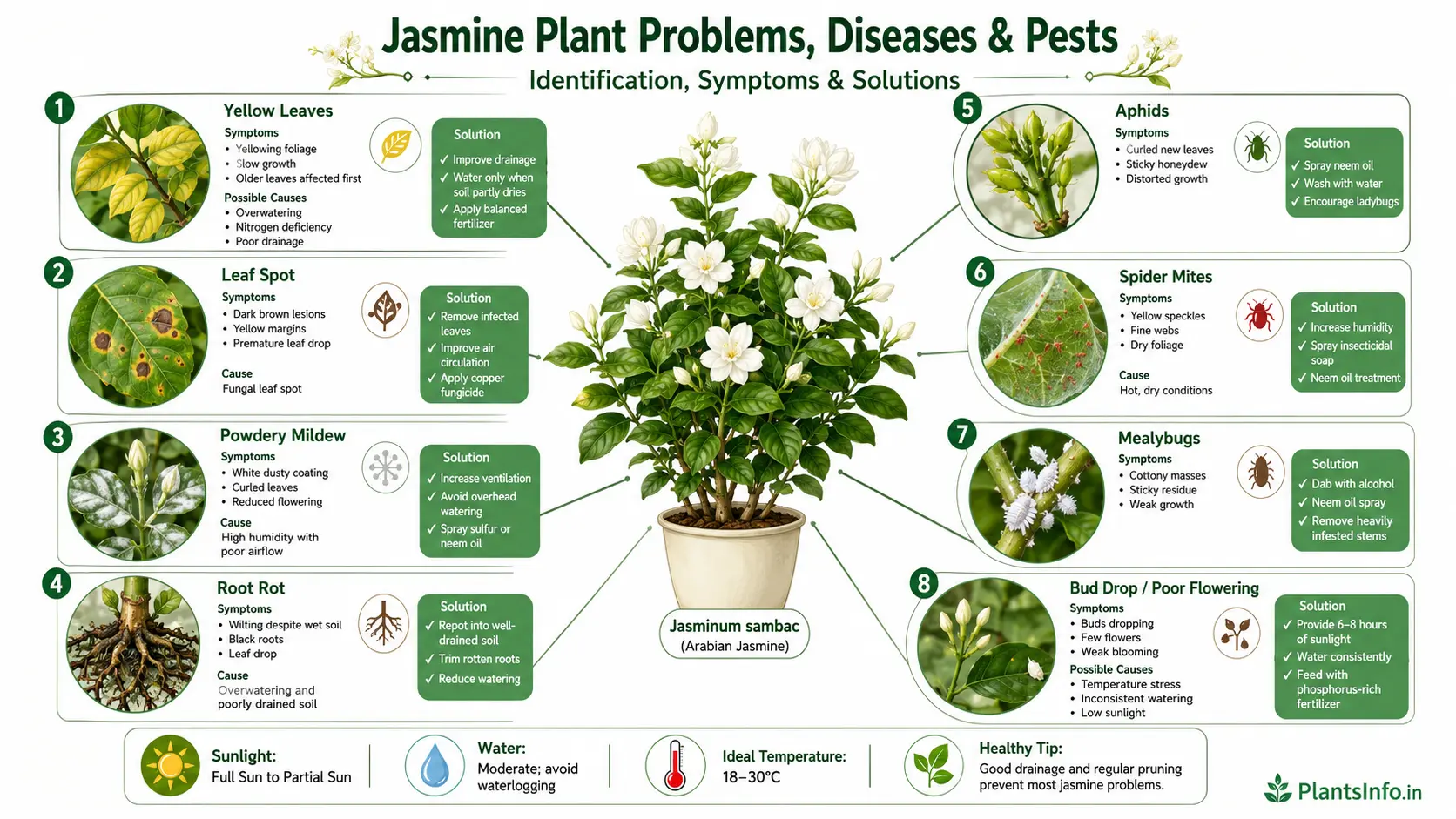
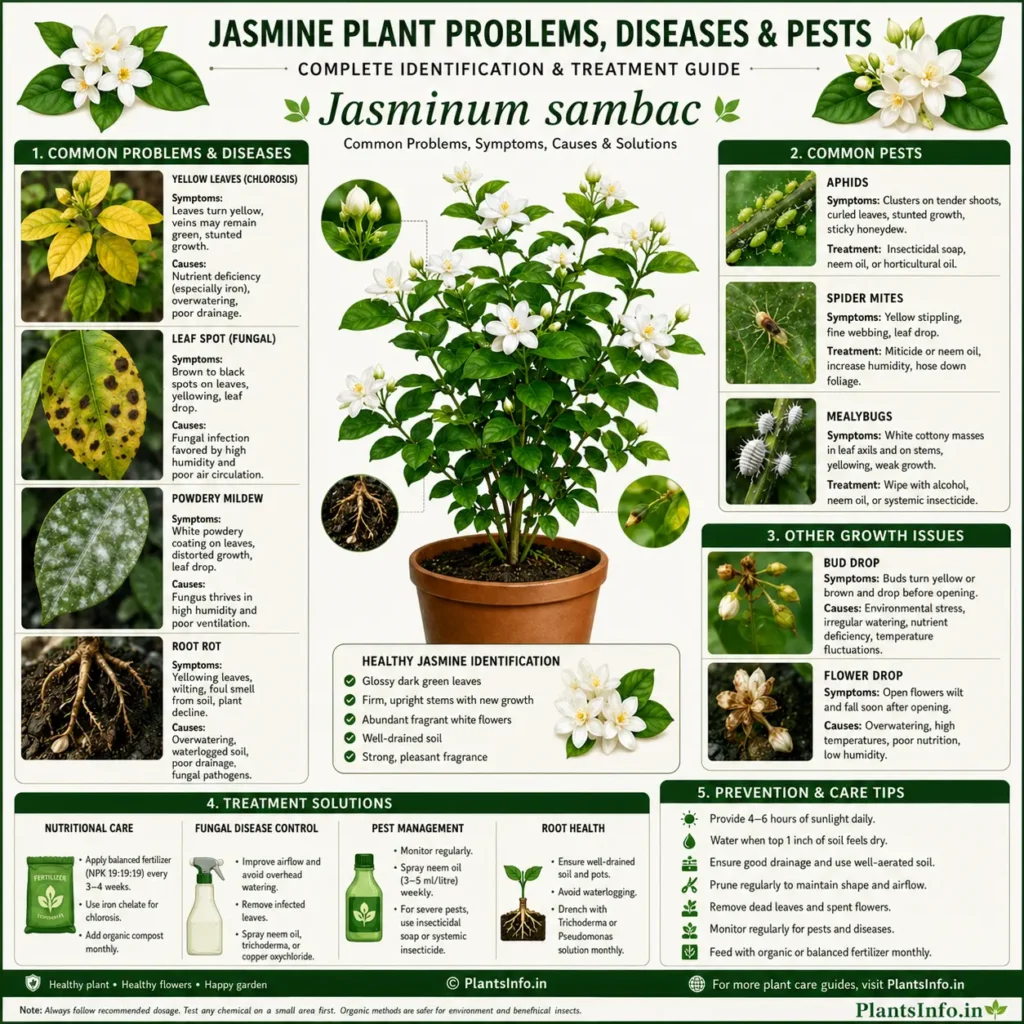
Most jasmine (Jasminum spp.) problems are caused by environmental stress, improper cultural practices, nutrient imbalances, or pest and disease pressure rather than by the plant itself. The most common issues include poor flowering, yellow leaves, leaf drop, wilting, sun scorch, and nutrient deficiencies. Early diagnosis based on visible symptoms allows gardeners to correct problems before they permanently affect flowering or plant health. Healthy jasmine grown in well-drained soil, adequate sunlight, and balanced moisture is naturally resilient and recovers well from most non-severe problems.
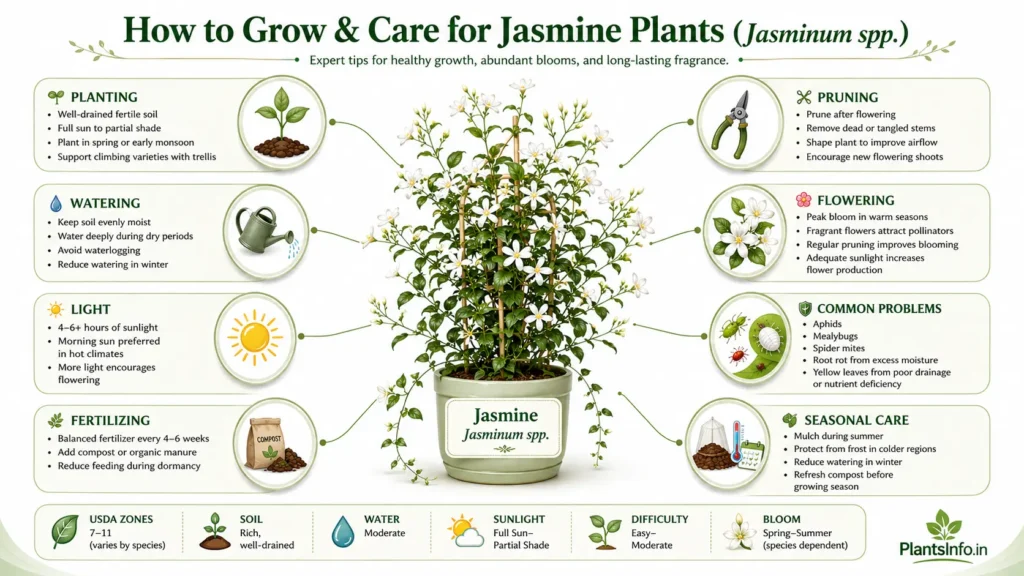
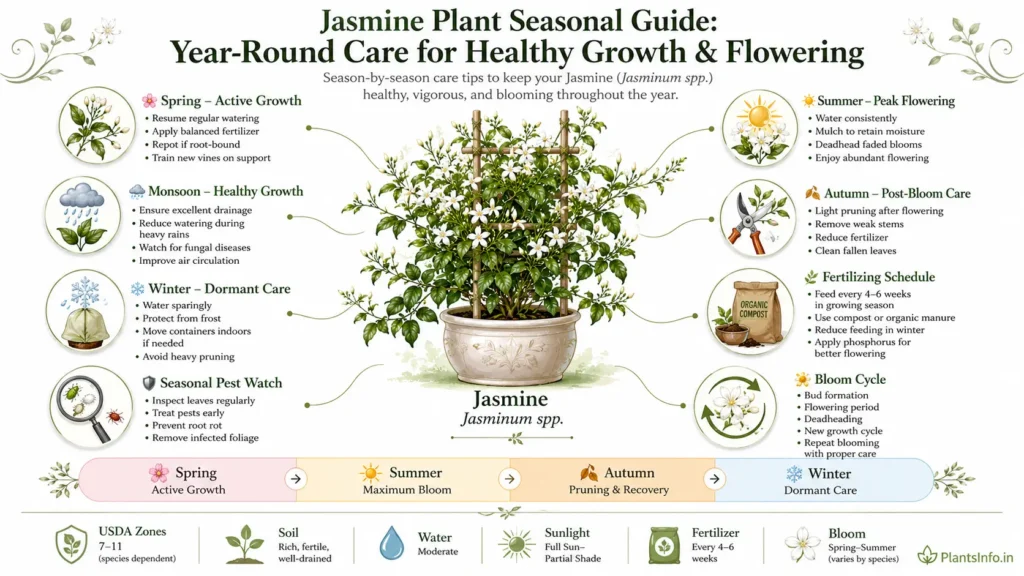
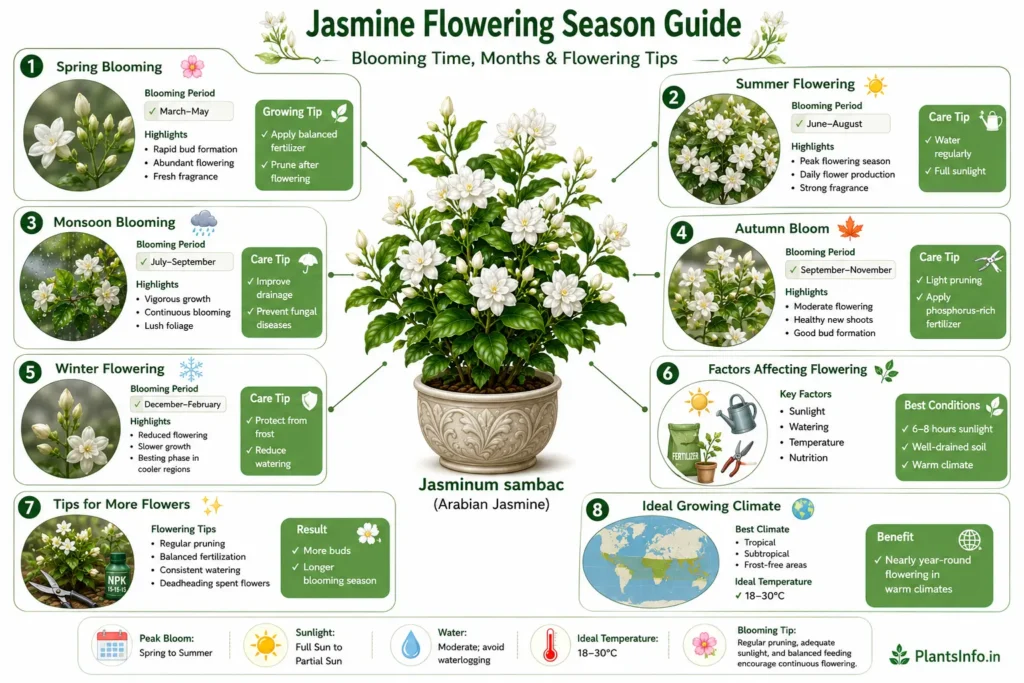
See also: Jasmine Plant plant profile, how to grow it, seasonal care, its flowering season, and its benefits.
Introduction
Jasmine is generally considered an easy-to-grow ornamental shrub or climber, but like all perennial plants, it can experience health problems when environmental conditions move outside its preferred growing range. Stress caused by excess or insufficient water, unsuitable soil conditions, nutrient imbalance, poor light, temperature extremes, or prolonged neglect often weakens the plant before pests or diseases become noticeable.
Recommended Products
Disclosure: As an Amazon Associate, PlantsInfo may earn from qualifying purchases.
🌱 Growing Essentials
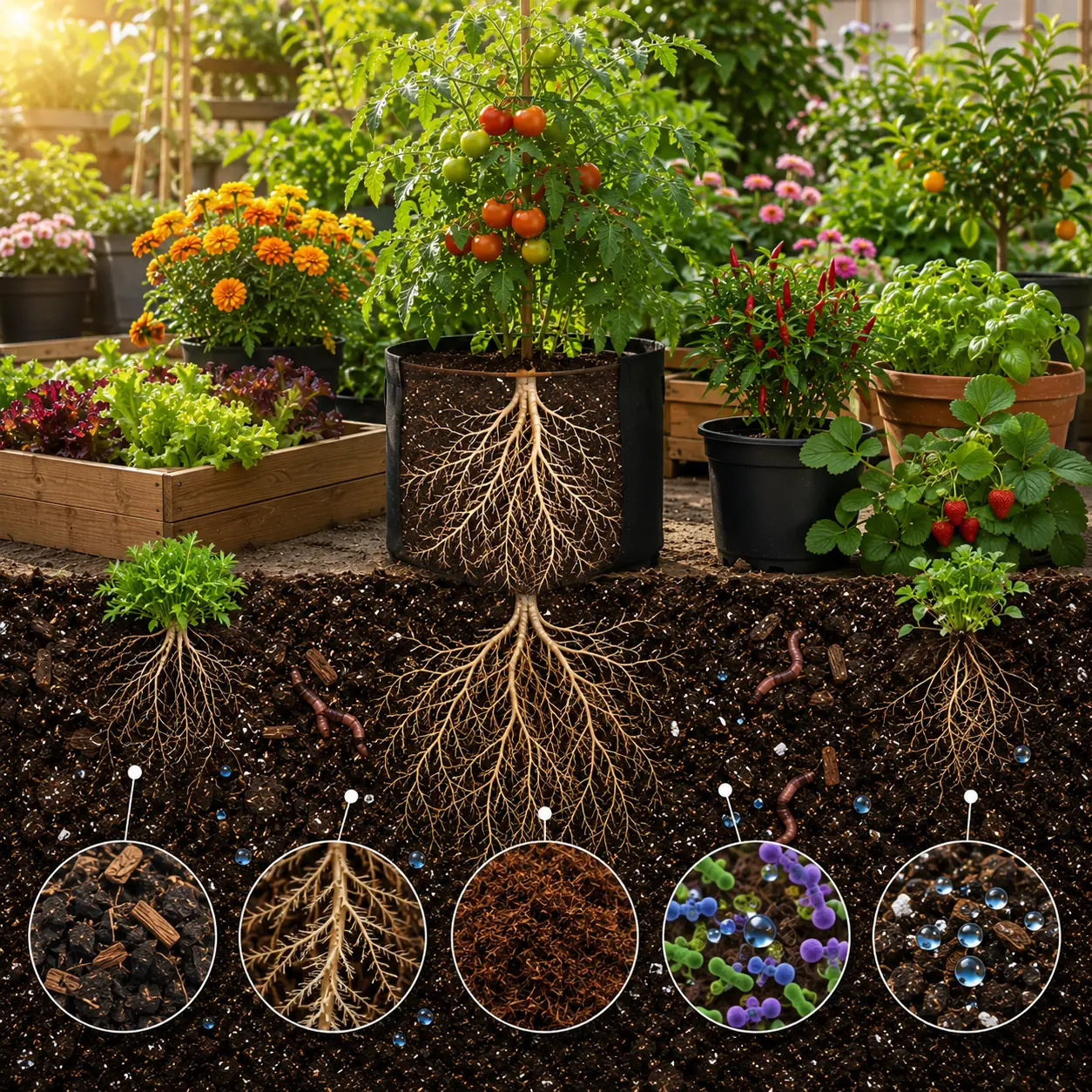
The following products can help with container gardening, potting, root development, soil management, and healthy plant growth.
Organic Potting Soil Mix
Provides nutrients, structure, and healthy growing conditions for container plants.
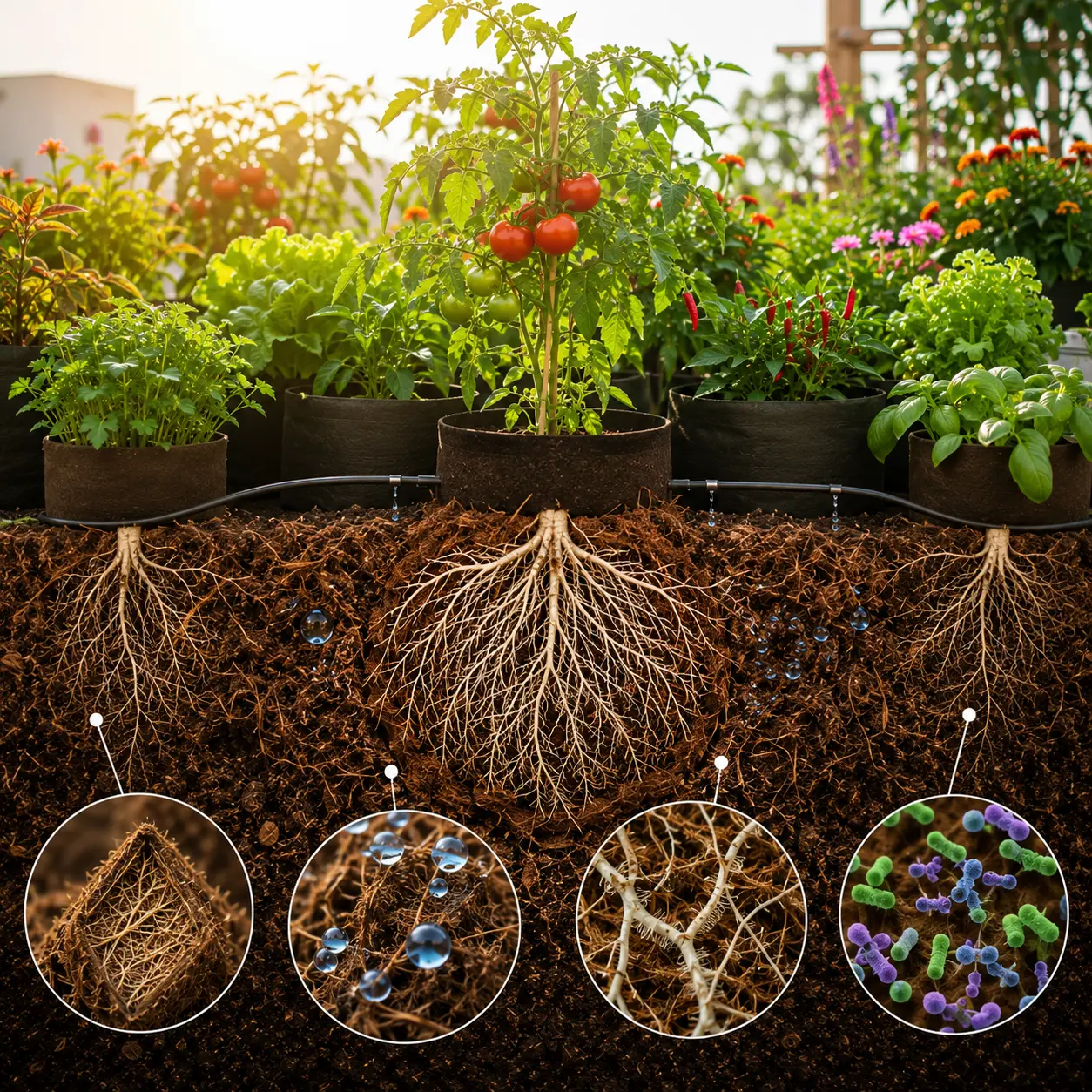
Coco Peat Growing Medium
Enhances moisture retention while maintaining excellent root-zone aeration.

Grow Bags for Plants
Improve drainage, root aeration, and vegetable production in limited spaces.

Plastic Pots for Plants
Ideal containers for seedlings, ornamentals, herbs, and balcony gardens.
Fortunately, jasmine usually provides clear visual warning signs long before irreversible damage occurs. Reduced flowering, yellowing foliage, premature leaf drop, slow growth, or wilting often indicate that the plant is responding to environmental conditions rather than suffering from a serious disease.
Successful diagnosis begins by identifying which symptom appeared first, since many problems produce similar secondary effects. For example, both overwatering and drought can cause leaf yellowing and wilting, but the recommended corrective actions differ completely. Careful observation therefore prevents unnecessary treatments and improves long-term plant health.
Understanding Jasmine Health Problems
Most jasmine problems can be grouped into three broad categories:
1. Environmental Problems
These result from unsuitable growing conditions, including:
- Incorrect watering.
- Poor drainage.
- Excessive heat.
- Frost injury.
- Inadequate sunlight.
- Waterlogged soil.
- Strong winds.
Environmental stress is the most common cause of declining plant performance.
2. Physiological Problems
Physiological disorders occur when normal plant functions become disrupted without infection by pests or pathogens.
Examples include:
- Nutrient deficiencies.
- Salt accumulation.
- Root stress.
- Heat stress.
- Transplant shock.
- Flower bud abortion.
Most physiological disorders are reversible once growing conditions improve.
3. Biotic Problems
These involve living organisms such as:
- Insect pests.
- Mites.
- Fungal pathogens.
- Bacteria.
- Viruses.
Biotic problems generally affect plants that have already been weakened by environmental stress, making prevention through proper cultivation especially important.
Symptoms-Based Quick Diagnosis Table
The following table provides a rapid starting point for identifying common jasmine problems.
| Visible Symptom | Most Likely Cause | Recommended First Action |
|---|---|---|
| Few or no flowers | Insufficient sunlight, excessive nitrogen, incorrect pruning | Increase sunlight and review fertilization and pruning practices |
| Yellow leaves | Water imbalance, nutrient deficiency, root stress | Check soil moisture and inspect roots |
| Leaves dropping | Seasonal change, watering problems, environmental stress | Adjust watering and monitor new growth |
| Wilting | Drought, root damage, waterlogging | Examine soil moisture before watering |
| Brown leaf edges | Heat stress or sun scorch | Improve watering consistency and provide temporary protection if necessary |
| Pale leaves | Nitrogen or iron deficiency | Evaluate fertilization and soil condition |
| Stunted growth | Root restriction, nutrient deficiency, poor soil | Improve growing conditions and root environment |
Many symptoms have multiple possible causes. Accurate diagnosis requires considering recent weather, watering practices, soil condition, and plant history before taking corrective action.
Environmental & Physiological Problems
Poor Flowering
Symptoms
Poor flowering may appear as:
- Few flower buds.
- Reduced bloom size.
- Short flowering period.
- Vigorous leafy growth with almost no flowers.
- Healthy-looking plants producing very few blooms.
Flower production often declines before overall plant health deteriorates because jasmine naturally prioritizes survival over reproduction during periods of stress.
Possible Causes
Common causes include:
- Insufficient sunlight.
- Excessive nitrogen fertilizer.
- Heavy pruning before flowering.
- Immature plants.
- Extended drought.
- Waterlogged roots.
- Low winter temperatures.
- Natural seasonal variation.
How to Fix It
- Provide at least several hours of direct sunlight daily.
- Use balanced fertilizers rather than high-nitrogen products.
- Prune immediately after major flowering periods rather than before bud formation.
- Maintain consistent soil moisture.
- Improve drainage if roots remain wet for extended periods.
- Allow young plants sufficient time to establish.
Once favorable growing conditions return, flowering generally improves during the next active growth cycle.
Yellow Leaves
Yellow leaves are among the most common warning signs in jasmine and should always be interpreted alongside soil moisture, weather, and plant age.
Symptoms
Yellowing may affect:
- Older leaves first.
- New leaves first.
- Entire shoots.
- Leaf veins or leaf margins.
- Random branches.
Different yellowing patterns often suggest different underlying causes.
Common Causes
- Overwatering.
- Underwatering.
- Nitrogen deficiency.
- Iron deficiency.
- Poor drainage.
- Root restriction.
- Natural aging of older leaves.
Seasonal replacement of a small number of older leaves is normal and usually requires no treatment.
How to Fix It
- Check soil moisture before watering.
- Improve drainage where necessary.
- Remove standing water around containers.
- Apply balanced fertilizer if deficiency is suspected.
- Replace exhausted potting media in container plants.
- Remove only completely yellow, non-functional leaves.
Healthy new growth is a better indicator of recovery than the persistence of older damaged foliage.
Leaf Drop
Leaf drop may occur naturally during seasonal adjustment or as a response to environmental stress.
Symptoms
- Premature leaf fall.
- Sparse canopy.
- Bare lower stems.
- Temporary reduction in foliage density.
Common Causes
- Seasonal adaptation.
- Water stress.
- Sudden temperature changes.
- Root disturbance.
- Strong winds.
- Heat stress.
Light seasonal leaf drop is normal in many perennial woody ornamentals.
How to Fix It
- Maintain consistent watering.
- Avoid sudden changes in irrigation.
- Protect plants from prolonged environmental stress.
- Continue normal maintenance while monitoring new growth.
If vigorous new shoots continue developing, temporary leaf loss is rarely a serious concern.
Wilting
Wilting is often mistaken as a simple sign of drought, but it may also indicate excessive soil moisture and impaired root function.
Symptoms
- Drooping leaves.
- Soft young shoots.
- Loss of stem firmness.
- Temporary midday wilting.
- Persistent whole-plant collapse.
Possible Causes
- Dry soil.
- Waterlogged roots.
- Damaged root system.
- Extreme heat.
- Recently transplanted plants.
Always inspect soil moisture before watering, since both drought and overwatering produce similar symptoms.
How to Fix It
If soil is dry:
- Water deeply.
- Apply mulch.
- Resume regular irrigation.
If soil is saturated:
- Stop watering temporarily.
- Improve drainage.
- Increase soil aeration.
- Remove standing water around containers.
Persistent wilting despite moist soil often indicates root dysfunction rather than insufficient water.
Sun Scorch
Although jasmine thrives in bright conditions, intense heat combined with inadequate moisture may damage exposed foliage.
Symptoms
- Brown leaf edges.
- Dry patches.
- Crispy leaf tips.
- Bleached leaves.
- Reduced flower longevity.
Common Causes
- Heat waves.
- Inadequate watering.
- Reflection from walls or paving.
- Sudden exposure after heavy pruning.
How to Fix It
- Water deeply during early morning.
- Maintain organic mulch.
- Avoid severe pruning during extreme heat.
- Provide temporary afternoon shade for newly established plants if necessary.
Damaged leaves will not recover, but healthy new growth should appear once favorable conditions return.
Nutrient Deficiencies
Jasmine performs best in fertile, well-drained soil with balanced nutrition. Deficiencies develop gradually and often become most visible during periods of active growth.
Common Deficiency Symptoms
| Nutrient | Typical Symptoms |
|---|---|
| Nitrogen | Pale green leaves, slow growth, reduced flowering |
| Iron | Yellow young leaves with green veins |
| Potassium | Brown leaf margins and weaker flowering |
| Magnesium | Yellowing between veins on older leaves |
| Phosphorus | Reduced growth and fewer flower buds |
Common Causes
- Nutrient-poor soil.
- Leached nutrients after heavy rainfall.
- Improper soil pH.
- Root stress.
- Excessive fertilizer imbalance.
How to Fix It
- Apply well-balanced fertilizers.
- Incorporate organic compost annually.
- Avoid excessive nitrogen applications.
- Improve drainage and root health.
- Maintain healthy soil organic matter.
Because nutrient deficiencies may resemble root disorders, always examine overall growing conditions before applying corrective fertilizers.
Common Insect Pests of Jasmine (Jasminum spp.)
Although jasmine is generally a hardy ornamental plant, several insect pests can affect its foliage, stems, flower buds, and overall vigor. Most infestations become severe when plants are stressed by drought, excessive nitrogen fertilization, overcrowding, poor air circulation, or unsuitable growing conditions. Healthy, well-maintained plants are naturally more resistant and often tolerate minor pest populations without significant damage.
Early detection is the key to successful pest management. Regular inspection of young shoots, leaf undersides, flower buds, and stem joints allows gardeners to identify infestations before they spread.
Aphids
Aphids are among the most common pests attacking tender jasmine growth. They are small, soft-bodied insects that feed by sucking plant sap from young shoots and flower buds.
Identification
Typical characteristics include:
- Small green, black, yellow, or brown insects.
- Clusters on tender shoots.
- Colonies beneath young leaves.
- Presence on developing flower buds.
Large infestations may develop rapidly during warm weather.
Symptoms
- Curled young leaves.
- Distorted new shoots.
- Reduced flower development.
- Sticky honeydew deposits.
- Increased ant activity.
Honeydew often encourages the growth of sooty mold on leaves and stems.
Management
- Remove heavily infested shoots.
- Wash colonies off using a strong stream of water.
- Encourage beneficial insects such as ladybird beetles and lacewings.
- Use insecticidal soap or neem-based products when populations become severe.
Early treatment usually prevents widespread infestation.
Whiteflies
Whiteflies are tiny, white-winged sap-feeding insects commonly found on the undersides of leaves.
Identification
Signs include:
- Tiny white insects flying when disturbed.
- Dense colonies beneath leaves.
- Sticky honeydew.
- Presence of immature scales on foliage.
Symptoms
- Yellowing leaves.
- Reduced plant vigor.
- Premature leaf drop.
- Sticky foliage.
- Black sooty mold developing on honeydew.
Large populations weaken plants by continuously removing plant sap.
Management
Recommended practices include:
- Removing heavily infested leaves.
- Improving airflow around the plant.
- Installing yellow sticky traps for monitoring.
- Applying insecticidal soap or neem oil according to label directions.
Repeated monitoring is important because whiteflies reproduce rapidly.
Spider Mites
Spider mites are extremely small arachnids that thrive during hot, dry weather. Their feeding damages leaf tissues and reduces photosynthetic efficiency.
Identification
Look for:
- Fine webbing between leaves.
- Tiny moving dots beneath foliage.
- Speckled leaf surfaces.
- Dusty appearance on leaves.
Mites are often difficult to detect without close inspection.
Symptoms
- Yellow stippling.
- Bronzed foliage.
- Dry leaves.
- Premature leaf fall.
- Reduced flowering.
Severe infestations may cover shoot tips with delicate webbing.
Management
Effective control includes:
- Increasing humidity around the plant where practical.
- Washing leaves with water.
- Removing severely affected foliage.
- Applying horticultural oils or miticides only when necessary and according to product directions.
Maintaining adequate soil moisture helps reduce drought stress that favors mite outbreaks.
Mealybugs
Mealybugs are soft-bodied insects covered with a white, cotton-like wax that protects them while feeding on plant sap.
Identification
Common locations include:
- Leaf axils.
- Stem joints.
- Young shoots.
- Beneath leaves.
- Around flower buds.
They often appear as small white cottony masses.
Symptoms
- Sticky honeydew.
- Weak new growth.
- Yellow leaves.
- Reduced flowering.
- Sooty mold developing on honeydew.
Heavy infestations gradually weaken plant vigor.
Management
Control measures include:
- Removing insects manually using cotton swabs dipped in isopropyl alcohol.
- Pruning heavily infested shoots.
- Applying neem-based products or insecticidal soap.
- Monitoring regularly for reinfestation.
Inspect hidden stem joints carefully because mealybugs often survive in protected areas.
Scale Insects
Scale insects attach themselves firmly to stems and leaves, where they feed on plant sap beneath protective waxy coverings.
Identification
Scales appear as:
- Small brown bumps.
- Oval wax-covered shells.
- Immobile insects attached to stems.
- Hard or soft protective coverings.
Many gardeners mistake them for natural stem growth.
Symptoms
- Yellow foliage.
- Slow growth.
- Sticky honeydew (soft scales).
- Reduced flowering.
- Branch dieback under severe infestations.
Because scales remain attached to the plant, infestations may develop unnoticed.
Management
Recommended actions include:
- Scraping off individual scales by hand.
- Pruning severely affected branches.
- Applying horticultural oil during periods of low pest activity.
- Monitoring neighboring plants to prevent spread.
Repeated inspections improve long-term control.
Thrips
Thrips are slender insects that feed by rasping plant tissues and sucking released plant fluids. They commonly attack flowers and young leaves.
Identification
Typical characteristics include:
- Tiny, narrow-bodied insects.
- Rapid movement.
- Presence inside flower buds.
- Silvery feeding scars.
Their small size often makes them difficult to detect.
Symptoms
- Distorted flowers.
- Brown petal edges.
- Silver streaks on leaves.
- Deformed flower buds.
- Reduced ornamental quality.
Heavy infestations primarily affect flowering performance.
Management
Control strategies include:
- Removing heavily damaged flowers.
- Maintaining good garden sanitation.
- Encouraging beneficial predatory insects.
- Using insecticidal soap or neem-based treatments where appropriate.
Regular flower inspection is particularly important during warm weather.
Bud Borers and Caterpillars
Several caterpillar species feed on jasmine foliage and developing flower buds.
Identification
Signs include:
- Chewed leaves.
- Holes in flower buds.
- Green or brown caterpillars.
- Frass (insect droppings) on leaves.
- Damaged growing tips.
Young larvae often remain hidden inside folded leaves or flower buds.
Symptoms
- Missing flower buds.
- Irregular leaf damage.
- Reduced flowering.
- Damaged shoot tips.
- Ragged foliage.
Unlike sap-feeding insects, caterpillars remove plant tissue directly.
Management
Recommended practices include:
- Hand-picking visible caterpillars.
- Removing damaged buds.
- Encouraging insect-eating birds.
- Using biological control products containing Bacillus thuringiensis (Bt) where appropriate and according to label directions.
Regular inspection during active growing seasons minimizes damage.
Prevention & Integrated Pest Management (IPM)
Integrated Pest Management (IPM) combines cultural, biological, mechanical, and chemical strategies to maintain pest populations below damaging levels while minimizing unnecessary pesticide use.
For jasmine, prevention is significantly more effective than repeated pesticide applications.
Cultural Practices
Healthy growing conditions reduce plant stress and improve natural resistance.
Recommended practices include:
- Plant in well-drained soil.
- Provide adequate sunlight.
- Water consistently without waterlogging.
- Avoid excessive nitrogen fertilization.
- Prune overcrowded growth to improve airflow.
- Remove fallen leaves and plant debris.
Strong, vigorous plants are less attractive to many sap-feeding pests.
Regular Monitoring
Inspect plants at least once each week during active growth.
Pay particular attention to:
- Young shoot tips.
- Leaf undersides.
- Flower buds.
- Stem joints.
- Newly emerging foliage.
Early infestations are far easier to manage than established populations.
Mechanical Control
Small infestations can often be controlled without pesticides.
Suitable methods include:
- Hand removal.
- Washing insects off with water.
- Pruning infested shoots.
- Destroying heavily damaged plant material.
- Installing sticky monitoring traps for flying pests.
These approaches are especially effective in home gardens.
Biological Control
Many beneficial organisms naturally suppress jasmine pests.
Common natural enemies include:
- Ladybird beetles.
- Lacewings.
- Hoverfly larvae.
- Predatory mites.
- Parasitic wasps.
- Insect-eating birds.
Avoid broad-spectrum insecticides whenever possible to conserve these beneficial species.
Responsible Chemical Use
Chemical treatments should be considered only when pest populations exceed acceptable levels and non-chemical methods have proven insufficient.
When treatment becomes necessary:
- Correctly identify the pest before selecting a product.
- Follow all manufacturer label instructions.
- Apply products during cooler parts of the day.
- Avoid spraying open flowers when pollinators are active.
- Rotate products with different modes of action where repeated treatments are required to help reduce the risk of resistance.
Chemical control should support, rather than replace, good cultural and biological management practices.
Pest Prevention Checklist
✓ Inspect plants every week during the growing season.
✓ Maintain balanced watering and fertilization.
✓ Improve air circulation through selective pruning.
✓ Remove weeds and plant debris promptly.
✓ Encourage beneficial insects in the garden.
✓ Isolate newly purchased plants before placing them near established specimens.
✓ Address small infestations before they become widespread.
Consistent preventive care is the most effective long-term strategy for maintaining healthy, vigorous jasmine plants with minimal pest-related damage.
Common Diseases of Jasmine (Jasminum spp.)
Although jasmine is naturally resilient, diseases may develop when environmental conditions favor the growth of fungi or other pathogens. Most disease outbreaks occur in plants weakened by prolonged moisture, poor drainage, overcrowding, inadequate air circulation, or mechanical injury. Maintaining healthy growing conditions remains the most effective strategy for preventing disease.
Early diagnosis is essential because many diseases produce similar symptoms during their initial stages. Careful observation of roots, stems, leaves, and flowers helps identify problems before they become severe.
Root Rot
Root rot is one of the most serious diseases affecting jasmine and is usually associated with prolonged waterlogged soil rather than excessive watering alone. Various soil-borne fungi and fungus-like organisms may contribute to root decay under poorly drained conditions.
Symptoms
Common symptoms include:
- Persistent wilting despite moist soil.
- Yellowing leaves.
- Slow or stunted growth.
- Premature leaf drop.
- Soft, dark, or decaying roots.
- Foul odor from the root zone in advanced cases.
Plants often appear drought-stressed even when the soil is wet because damaged roots can no longer absorb water effectively.
Causes
- Poor soil drainage.
- Waterlogged containers.
- Overwatering.
- Compacted soils.
- Prolonged heavy rainfall.
How to Fix It
- Stop watering until excess moisture has drained.
- Improve soil drainage.
- Repot container plants into fresh, well-drained growing media if root damage is limited.
- Remove severely decayed roots using clean pruning tools.
- Disinfect tools before and after use.
- Resume watering only when the soil begins to dry appropriately.
Prevention through proper drainage is considerably more effective than attempting to treat advanced root rot.
Powdery Mildew
Powdery mildew is a fungal disease that commonly develops under humid conditions combined with poor air circulation. Unlike many fungal diseases, free water on leaf surfaces is not always required for infection.
Symptoms
Typical signs include:
- White or gray powdery coating on leaves.
- Distorted young foliage.
- Curling leaves.
- Reduced plant vigor.
- Premature leaf aging.
Severe infections may reduce flowering by weakening new growth.
Causes
- High humidity.
- Dense plant growth.
- Poor ventilation.
- Shaded growing conditions.
How to Fix It
- Remove infected leaves where practical.
- Improve air circulation through selective pruning.
- Avoid overcrowding.
- Water the soil rather than wetting foliage whenever possible.
- Apply appropriate fungicides only when necessary and according to product directions.
Early intervention usually prevents extensive spread.
Leaf Spot
Leaf spot refers to several fungal diseases that produce localized lesions on foliage.
Symptoms
- Brown or black spots.
- Yellow halos around lesions.
- Premature leaf drop.
- Multiple circular or irregular spots.
- Reduced ornamental quality.
Affected leaves generally remain attached until infections become severe.
Causes
- Extended leaf wetness.
- High humidity.
- Poor airflow.
- Rain splash spreading fungal spores.
How to Fix It
- Remove infected leaves.
- Dispose of fallen plant debris.
- Increase spacing between plants.
- Avoid overhead irrigation where possible.
- Improve canopy ventilation.
Good sanitation significantly reduces future infections.
Sooty Mold
Sooty mold is not a direct plant infection but a superficial fungal growth that develops on the sticky honeydew produced by sap-feeding insects such as aphids, whiteflies, mealybugs, and soft scale insects.
Symptoms
- Black coating on leaves.
- Blackened stems.
- Reduced leaf appearance.
- Lower photosynthetic efficiency.
- Sticky plant surfaces.
The fungus itself rarely penetrates plant tissues but may interfere with normal photosynthesis.
Causes
- Honeydew-producing insect infestations.
- High humidity.
- Delayed pest control.
How to Fix It
- Control the insects producing honeydew.
- Wash affected leaves gently with water.
- Improve airflow around the canopy.
- Continue monitoring for reinfestation.
Once insect populations decline, sooty mold usually disappears gradually as leaves are cleaned by rainfall or new growth replaces affected foliage.
Stem Rot
Stem rot affects stems near the soil line or damaged branches and is commonly associated with prolonged moisture and fungal infection.
Symptoms
- Soft stems.
- Brown or black stem lesions.
- Stem collapse.
- Wilting above infected areas.
- Progressive dieback.
Advanced infections may spread upward from the base of the plant.
Causes
- Poor drainage.
- Excess humidity.
- Mechanical injuries.
- Infected pruning wounds.
How to Fix It
- Remove affected stems using sterilized tools.
- Improve drainage immediately.
- Avoid injuring healthy stems.
- Increase air circulation around the plant.
- Destroy infected plant material rather than composting it.
Preventing stem injuries greatly reduces infection risk.
Viral Symptoms
True viral diseases are comparatively uncommon in jasmine but may occasionally occur. Viruses cannot be cured once a plant becomes infected.
Possible Symptoms
- Mosaic leaf patterns.
- Yellow streaking.
- Distorted foliage.
- Reduced flowering.
- Stunted growth.
- Abnormal shoot development.
Because nutrient deficiencies and herbicide injury may produce similar symptoms, accurate diagnosis is important before assuming viral infection.
Transmission
Plant viruses are commonly spread through:
- Sap-feeding insects.
- Contaminated pruning tools.
- Infected planting material.
Management
- Remove severely affected plants if infection is confirmed.
- Disinfect pruning equipment.
- Control insect vectors.
- Purchase healthy planting stock from reputable nurseries.
Preventing introduction remains the most effective control strategy.
Seasonal Disease Prevention
Seasonal management greatly reduces the likelihood of disease outbreaks by maintaining favorable growing conditions throughout the year.
| Season | Disease Prevention Priorities |
|---|---|
| Spring | Remove winter-damaged growth, improve airflow, inspect new shoots |
| Summer | Maintain balanced irrigation, avoid prolonged drought stress |
| Monsoon | Ensure excellent drainage, remove fallen debris, inspect regularly for fungal diseases |
| Autumn | Clean up old foliage, remove damaged branches, monitor late-season humidity |
| Winter | Reduce watering, protect plants from prolonged cold stress, inspect dormant stems |
General Preventive Measures
- Grow plants in well-drained soil.
- Avoid prolonged waterlogging.
- Maintain proper spacing.
- Remove diseased leaves promptly.
- Sterilize pruning equipment.
- Water according to seasonal requirements.
- Monitor plants regularly for early symptoms.
Preventive care is consistently more successful than attempting to cure advanced disease outbreaks.
Emergency Recovery Guide
Prompt action improves the chances of recovery when jasmine shows signs of rapid decline.
Step 1 – Identify the Primary Symptom
Determine whether the first visible problem involves:
- Leaves.
- Roots.
- Stems.
- Flowers.
- Entire plant.
The earliest symptom often provides the most reliable diagnostic clue.
Step 2 – Inspect the Growing Environment
Evaluate:
- Soil moisture.
- Drainage.
- Recent weather.
- Sunlight exposure.
- Fertilization history.
- Root condition.
Environmental stress should be ruled out before assuming disease.
Step 3 – Remove Damaged Plant Material
Safely remove:
- Dead leaves.
- Diseased stems.
- Fallen flowers.
- Severely infected branches.
Always disinfect pruning tools between cuts.
Step 4 – Correct the Underlying Problem
Depending on diagnosis:
- Improve drainage.
- Adjust watering.
- Increase airflow.
- Correct nutrient imbalance.
- Manage insect pests.
- Apply appropriate fungicides only when justified.
Treating symptoms without correcting the underlying cause often results in recurring problems.
Step 5 – Monitor Recovery
Observe plants over the following weeks for:
- Healthy new shoots.
- Improved leaf color.
- Reduced wilting.
- Fresh flower buds.
- Stable overall growth.
Recovery is generally indicated by healthy new growth rather than by repair of previously damaged leaves.
When a Plant Cannot Be Saved
Although jasmine is capable of recovering from many stresses, replacement may be the most practical option under certain circumstances.
Consider removing the plant when:
- Most roots have completely decayed.
- The main stem has extensive rot.
- A confirmed viral infection causes progressive decline.
- More than 70–80% of the plant has died back despite corrective measures.
- Repeated severe disease continues despite improving growing conditions.
Remove affected plants carefully and dispose of infected material responsibly to reduce the risk of spreading pathogens to nearby plants.
Frequently Asked Questions (FAQ)
Why do jasmine leaves turn yellow even though I water regularly?
Both excessive watering and insufficient watering can cause yellow leaves. Always check soil moisture and root health before increasing irrigation.
Can root rot be cured?
Early cases may recover if drainage is improved and damaged roots are removed. Advanced root rot often causes irreversible root loss.
Is powdery mildew fatal?
Powdery mildew rarely kills healthy jasmine but can reduce flowering and weaken plants if left unmanaged.
Does neem oil control all jasmine diseases?
No. Neem-based products are primarily useful against certain insect pests and some fungal problems. They are not effective against every disease or viral infection.
Should infected leaves be removed?
Yes. Removing heavily infected foliage helps reduce the spread of many fungal diseases and improves air circulation within the plant canopy.
Can jasmine recover after severe pest or disease damage?
Yes. If the root system and main stems remain healthy and the underlying cause is corrected promptly, jasmine often produces vigorous new growth during the next active growing season.
Conclusion
Most jasmine health problems develop gradually and can be prevented through proper cultural care rather than intensive chemical treatment. Well-drained soil, balanced irrigation, adequate sunlight, seasonal pruning, and regular monitoring provide the foundation for healthy, disease-resistant plants.
Environmental stress frequently precedes pest infestations and disease outbreaks, making early observation and timely corrective action essential. By identifying symptoms accurately, correcting underlying growing conditions, and following an integrated approach to plant health management, gardeners can prevent many common problems before they become severe.
With consistent preventive care and prompt intervention when issues arise, jasmine remains one of the most dependable ornamental flowering plants, rewarding gardeners with vigorous growth, abundant blooms, and exceptional fragrance for many years.