Jasmine Flowering Season Guide (Jasminum spp.)
Quick Answer
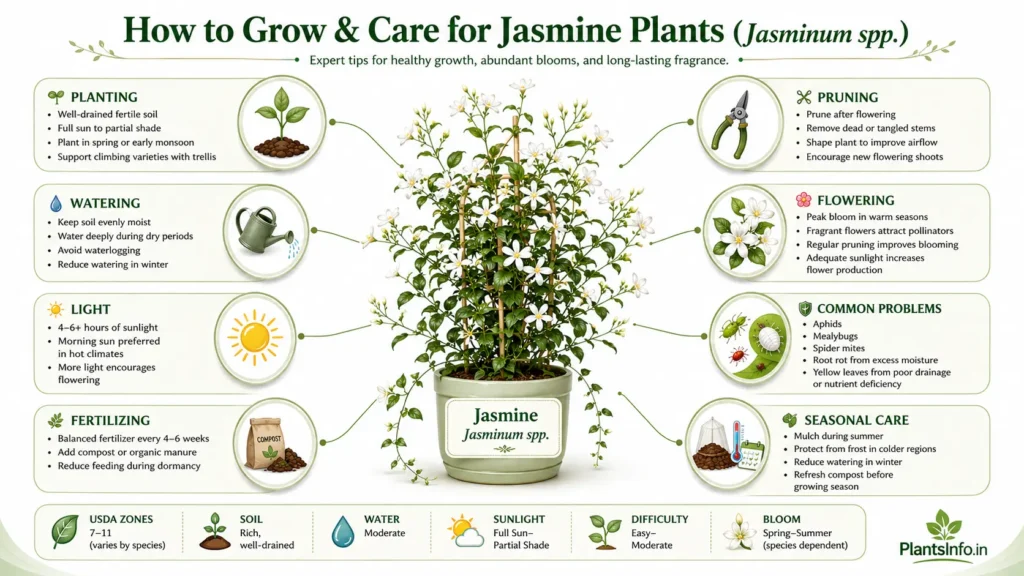
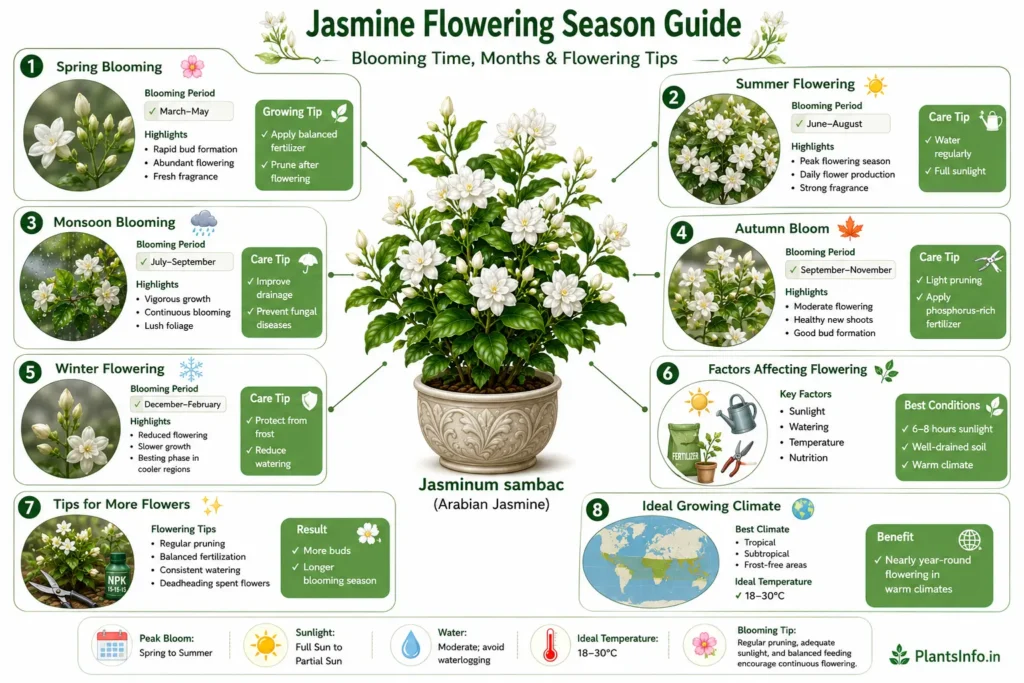
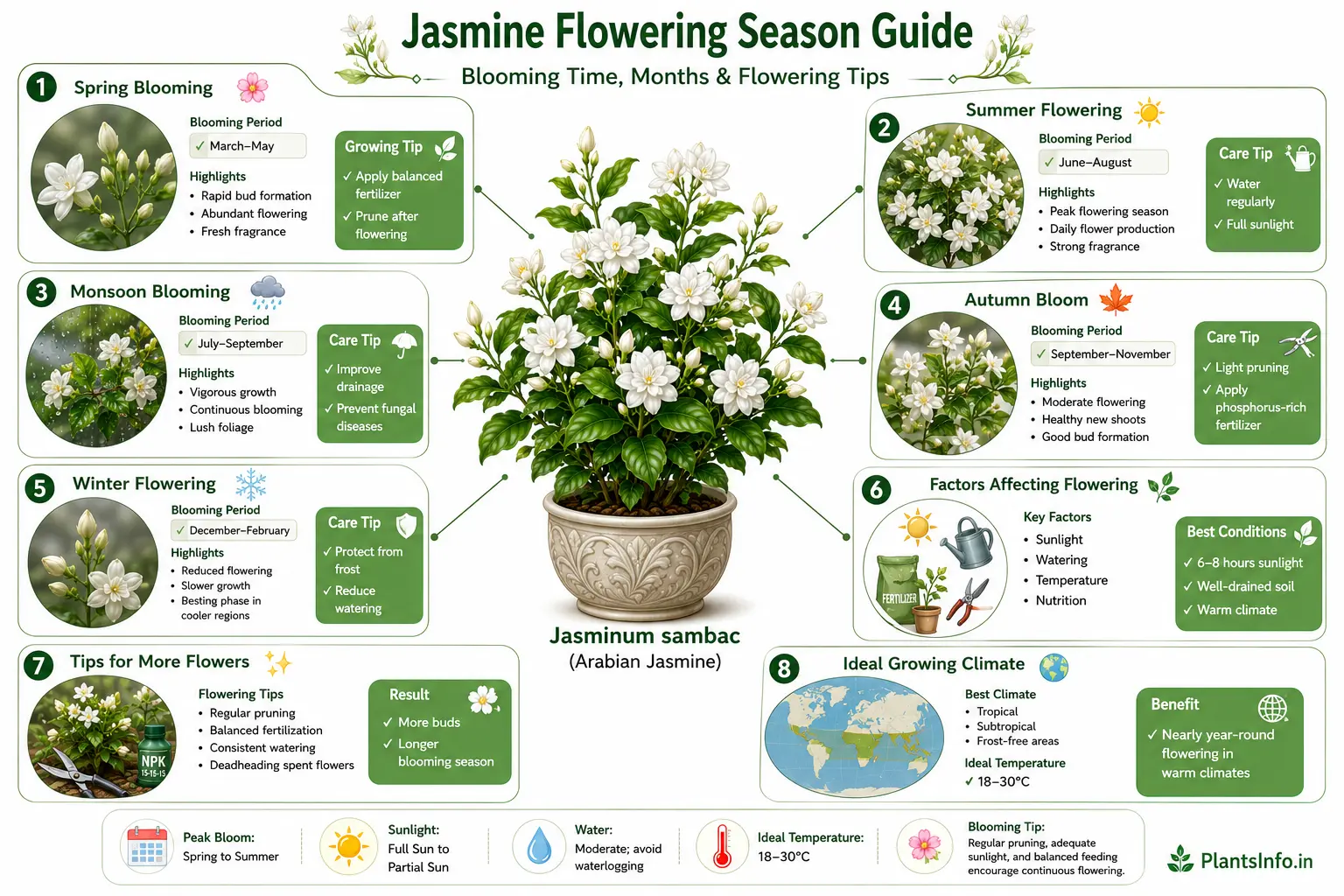
Jasmine (Jasminum spp.) flowers primarily from spring through autumn under warm growing conditions, although flowering season varies considerably among species, climate, and local weather. In most parts of India, the heaviest flowering occurs between March and September, with many tropical species, particularly Jasminum sambac, continuing to produce flowers intermittently throughout the year in frost-free regions.
See also: Jasmine Plant plant profile, how to grow it, common problems, seasonal care, and its benefits.
Flower production depends more on temperature, sunlight, plant maturity, and healthy vegetative growth than on a single flowering month. Established plants growing in full sun and warm temperatures generally produce several flushes of blooms rather than a single continuous flowering period.
Recommended Products
Disclosure: As an Amazon Associate, PlantsInfo may earn from qualifying purchases.
🌱 Growing Essentials
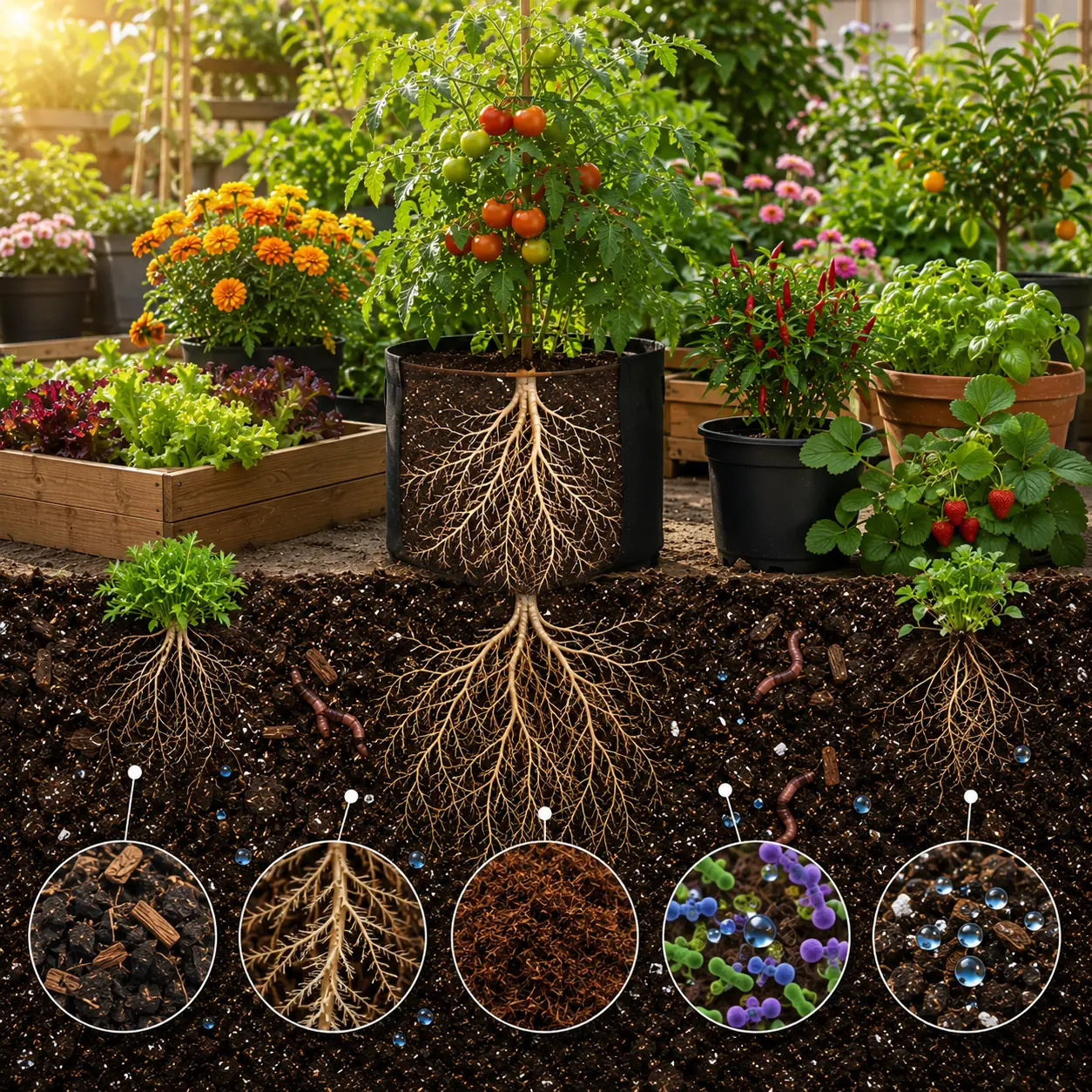
The following products can help with container gardening, potting, root development, soil management, and healthy plant growth.
Organic Potting Soil Mix
Provides nutrients, structure, and healthy growing conditions for container plants.
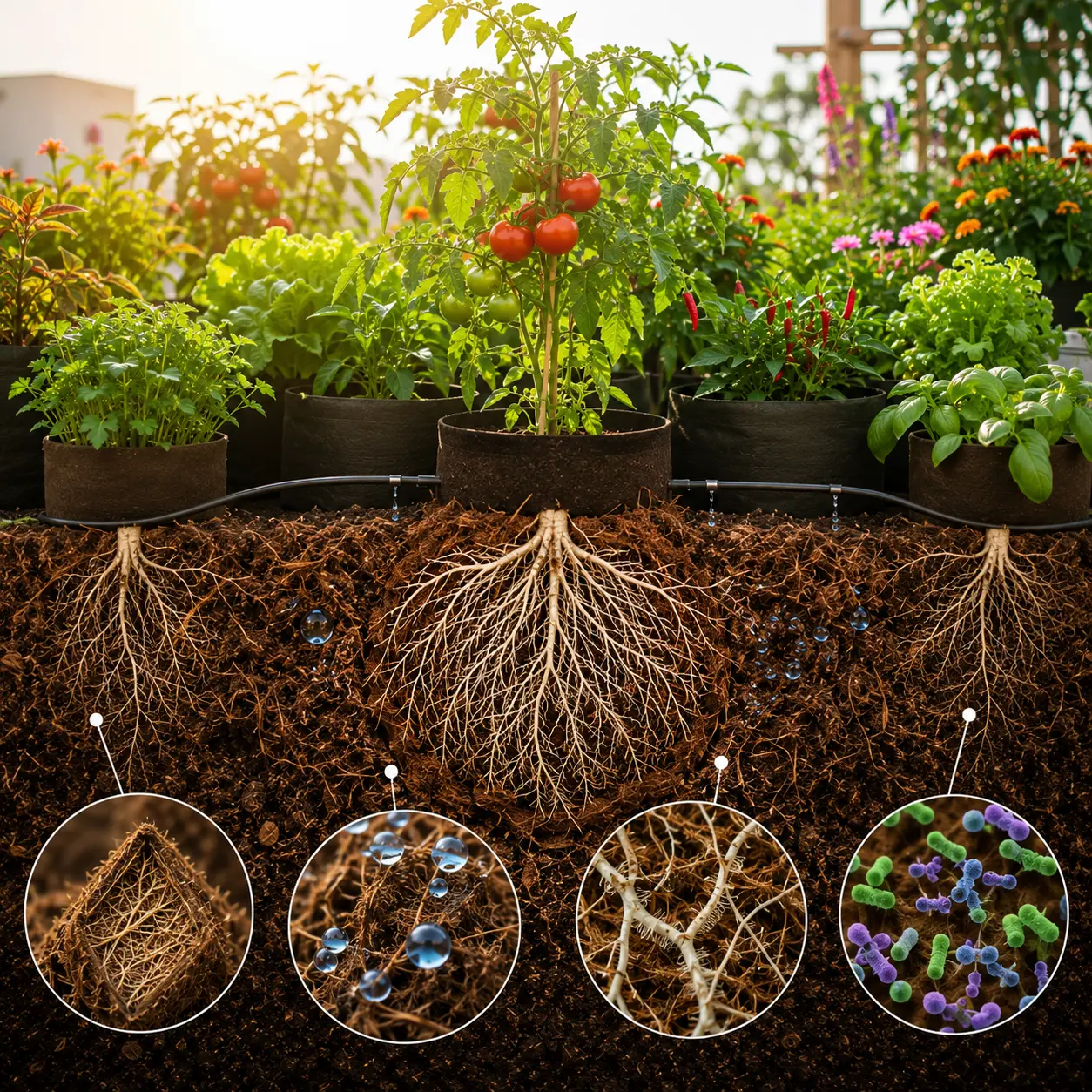
Coco Peat Growing Medium
Enhances moisture retention while maintaining excellent root-zone aeration.

Grow Bags for Plants
Improve drainage, root aeration, and vegetable production in limited spaces.

Plastic Pots for Plants
Ideal containers for seedlings, ornamentals, herbs, and balcony gardens.
Introduction
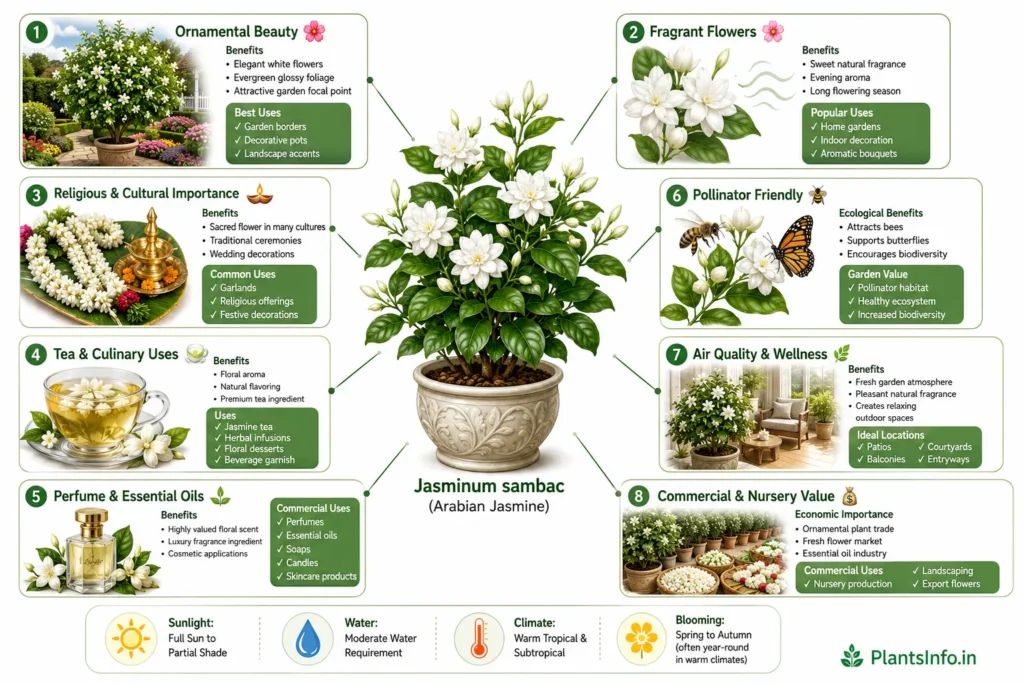
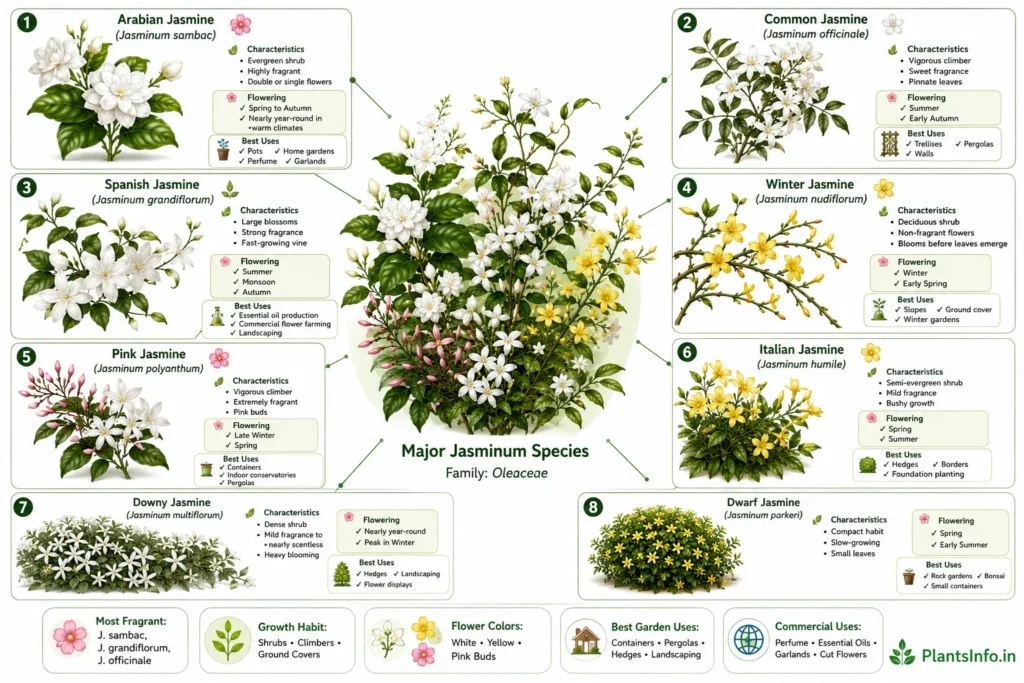
Jasmine is valued worldwide for its intensely fragrant flowers, making it one of the most important ornamental and commercial flowering plants. Although the genus contains approximately 200 accepted species, flowering behaviour differs between species, cultivars, and climatic regions. Some jasmine species bloom for only a few months each year, whereas tropical species can flower almost continuously under favourable conditions.
Understanding the natural flowering cycle helps gardeners predict bloom periods, improve flowering performance, and distinguish normal seasonal changes from potential flowering problems.
Flowering Overview
| Feature | Details |
|---|---|
| Scientific Name | Jasminum spp. |
| Main Flowering Season (India) | March–September |
| Peak Bloom Period | Late spring to monsoon (April–August in many regions) |
| Tropical Flowering | Nearly year-round in frost-free climates |
| Flower Colour | Mostly white; some species yellow or cream |
| Fragrance | Strong to intensely fragrant in many species |
| Flowering Habit | Repeated flowering flushes |
| Commercial Flower Harvest | Mainly spring through monsoon, depending on region |
Understanding the Flowering Cycle
Unlike many ornamental shrubs that produce a single annual bloom, most jasmine species flower in repeated cycles. New shoots develop during active growth, followed by flower bud initiation once environmental conditions become favourable.
In warm tropical climates, flowering commonly occurs in multiple flushes throughout the growing season. Each flush may last several weeks before the plant temporarily shifts resources back to vegetative growth, after which another flowering cycle begins.
This repeated bloom habit explains why healthy jasmine plants may appear to “rest” briefly between flowering periods without indicating poor health.
Flowering Biology and Triggers
Flower production results from the interaction of plant physiology and environmental conditions rather than a fixed calendar date.
Temperature
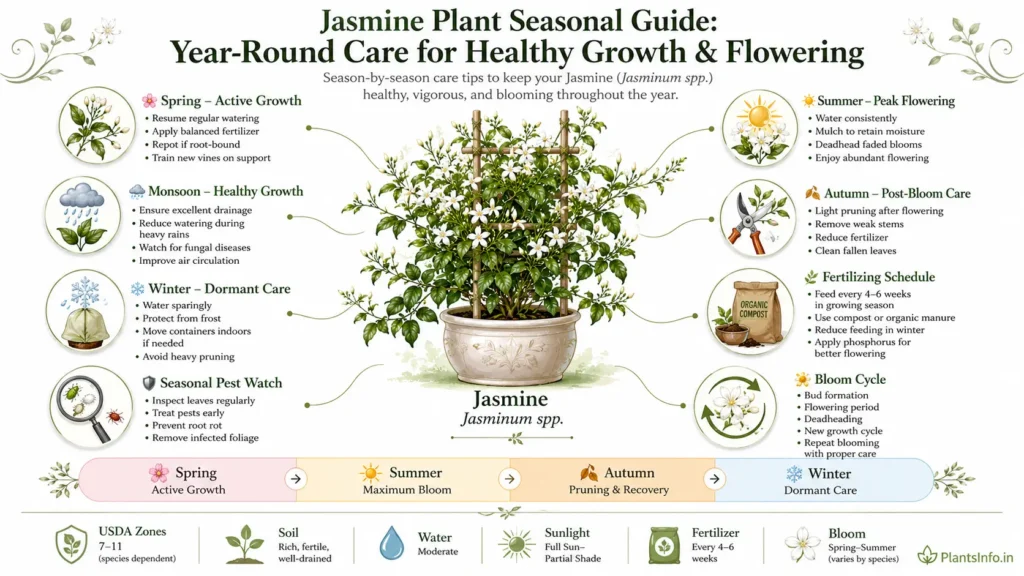
Most cultivated jasmine species flower best when daytime temperatures remain between 20°C and 35°C. Growth slows considerably during prolonged cold weather, reducing or temporarily stopping flower production.
Sunlight
Adequate sunlight is one of the strongest determinants of flowering. Plants receiving full sun generally develop more flower buds and produce larger flowering flushes than those grown in heavy shade.
Plant Maturity
Young plants often prioritise root and shoot development before flowering heavily. Established plants typically produce progressively larger bloom displays each year under suitable growing conditions.
Seasonal Growth
Flower buds generally form on actively growing shoots. Periods of vigorous vegetative growth are therefore often followed by abundant flowering.
Annual Flowering Pattern
The following represents a typical flowering pattern for commonly cultivated jasmine species in India.
| Season | Typical Flowering Activity |
|---|---|
| January–February | Limited flowering in cooler regions; moderate flowering in tropical areas |
| March–April | Flowering increases rapidly |
| May–June | Heavy flowering begins |
| July–August | Peak flowering for many cultivated jasmines |
| September | Continued abundant flowering |
| October | Flowering gradually declines in many regions |
| November–December | Reduced flowering except in frost-free tropical climates |
Actual flowering periods vary among species and local climatic conditions.
Flowering Season by Region
| Indian Region | Typical Flowering Pattern |
|---|---|
| South India | Long flowering season with nearly year-round blooms in warm areas |
| Coastal India | Extended flowering due to moderate temperatures |
| Central India | Strong spring to monsoon flowering |
| North India | Main flowering from late spring until autumn; winter flowering is limited by cold |
| Himalayan Foothills | Shorter flowering season because of cooler temperatures |
Gardeners in southern India often enjoy longer flowering periods than those in northern regions because frost and prolonged winter dormancy are uncommon.
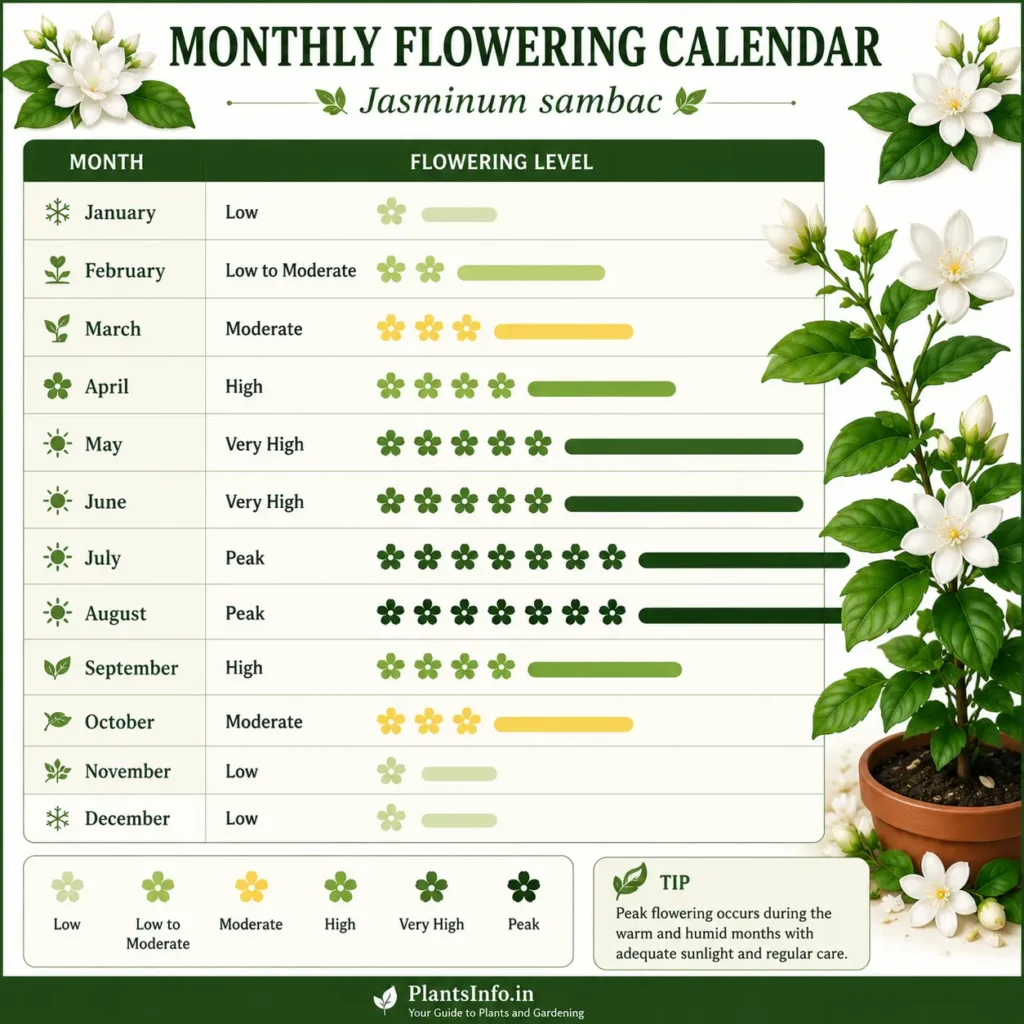
Monthly Flowering Calendar
| Month | Flowering Level |
|---|---|
| January | Low |
| February | Low to Moderate |
| March | Moderate |
| April | High |
| May | Very High |
| June | Very High |
| July | Peak |
| August | Peak |
| September | High |
| October | Moderate |
| November | Low |
| December | Low |
This calendar reflects general flowering trends for widely cultivated jasmine species rather than every species within the genus.
Factors Affecting Flowering
Sunlight
Plants growing in at least six hours of direct sunlight generally produce more flower buds than those in shaded locations.
Temperature
Warm weather promotes continuous shoot growth and repeated flowering, whereas prolonged cold suppresses bloom production.
Moisture
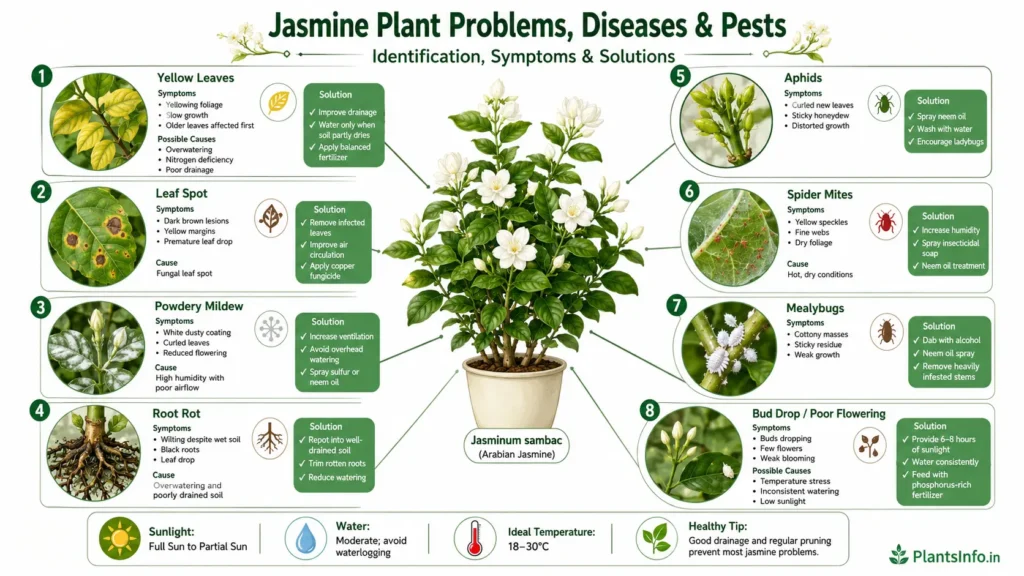
Consistent soil moisture supports active growth, but prolonged waterlogging can reduce flowering by affecting root health. Temporary drought stress may also decrease the number of flower buds.
Nutrition
Balanced nutrition encourages healthy shoot development. Excessive nitrogen fertiliser often stimulates leafy growth at the expense of flowers.
Plant Age
Older, well-established plants usually flower more heavily than newly planted specimens.
How to Encourage More Flowers
Flower production can often be improved by optimising growing conditions rather than relying on additional fertilisers.
- Grow plants where they receive abundant sunlight.
- Encourage healthy new shoot growth, as flower buds commonly develop on actively growing stems.
- Avoid excessive nitrogen applications that favour foliage over flowers.
- Maintain evenly moist, well-drained soil.
- Remove weak or overcrowded branches during routine pruning after major flowering flushes.
- Allow plants sufficient time to mature before expecting heavy flowering.
A common beginner mistake is assuming that additional fertiliser alone will increase flowering. In practice, insufficient sunlight is often the more limiting factor.
Flower Bud Development
Flower buds usually develop on young lateral shoots following periods of active vegetative growth. Depending on species and environmental conditions, buds expand over several days before opening.
Many fragrant jasmine species release their strongest scent during the evening or night, an adaptation that helps attract moths and other nocturnal pollinators.
Peak Flowering Period
For most cultivated jasmine species in India, the greatest abundance of flowers occurs from late spring through the monsoon season, generally between May and August.
Commercial flower growers often plan harvesting around these peak flushes because flower yield and fragrance quality are typically highest during warm, humid growing conditions.
Flower Longevity
Individual jasmine flowers are relatively short-lived, typically remaining attractive for one to three days, although the plant continues to produce successive blooms over an extended season.
Repeated flowering flushes ensure that healthy plants remain ornamental for several months despite the brief lifespan of each flower.
Deadheading and Spent Flower Management
Removing faded flowers is optional for most jasmine species but can improve the plant’s appearance and may help redirect resources toward continued flower production rather than fruit development.
Routine removal of spent blooms is particularly useful in ornamental gardens where continuous flowering display is the primary objective.
Commercial Flowering Season
India is one of the world’s major producers of jasmine flowers for garlands, religious offerings, perfumery, and the fragrance industry.
Commercial harvesting generally begins during spring, increases rapidly through summer, and reaches maximum production during the monsoon months. In southern India, especially where Jasminum sambac is widely cultivated, harvesting may continue for much of the year under favourable climatic conditions.
Frequently Asked Questions
When does jasmine flower in India?
Most cultivated jasmine plants flower from March to September, with peak flowering typically occurring between May and August. In tropical southern India, some species bloom almost throughout the year.
Which jasmine species flowers for the longest period?
Among commonly cultivated species, Jasminum sambac often has one of the longest flowering seasons in frost-free tropical climates, producing repeated flowering flushes throughout much of the year.
Why is my jasmine producing leaves but no flowers?
Insufficient sunlight, excessive nitrogen fertiliser, cool temperatures, or an immature plant are among the most common reasons for poor flowering. Persistent lack of flowering despite suitable growing conditions may also indicate an underlying cultivation or health issue requiring further assessment.
Do jasmine flowers open at night?
Many fragrant jasmine species release their strongest fragrance during the evening or night, although flower opening varies among species. This fragrance pattern helps attract nocturnal pollinators such as hawkmoths.
Does jasmine flower every year?
Yes. Healthy perennial jasmine plants normally flower every year, producing one or more flowering flushes depending on species and local climate.
Conclusion
Jasmine is characterised by a long flowering season rather than a single annual bloom. Across most of India, flowering begins in spring, peaks during the warm summer and monsoon months, and gradually declines with cooler weather. Tropical regions experience the longest flowering seasons, with species such as Jasminum sambac capable of blooming for much of the year.
Consistent warmth, abundant sunlight, healthy vegetative growth, and plant maturity remain the primary drivers of abundant flowering. While exact flowering periods differ among species and regions, understanding these seasonal patterns allows gardeners to set realistic expectations and maximise floral display.