Introduction
The Aloe plant refers broadly to members of the genus Aloe, a group of perennial succulent plants recognized for their fleshy leaves, rosette-forming growth habit, and long-standing association with arid and semi-arid environments. The genus comprises several hundred species, ranging from small, compact forms to large, tree-like aloes, each exhibiting distinctive leaf textures, growth patterns, and flowering characteristics.
Classification
- Plant Type
- Succulent
- Lifecycle
- Perennial
- Leaf Habit
- Evergreen
- Native Region
- Africa, Madagascar
- Plant Family
- Asphodelaceae
Unlike pages dedicated to individual species such as Aloe vera, this entry presents a generalized botanical overview of Aloe plants as a collective group. Aloe species are widely distributed across warm regions of the world and are frequently encountered in natural landscapes, botanical collections, and ornamental plantings due to their structural form and ecological resilience.
Quick Plant Information
| Attribute | Details |
|---|---|
| Common Names | Aloe, Aloe Lily |
| Scientific Name | Aloe spp. |
| Family | Rosette-forming, clumping, or arborescent |
| Plant Type | Succulent perennial |
| Lifespan | Perennial |
| Native Region | Africa, Arabian Peninsula |
| Growth Habit | Rosette-forming, clumping or arborescent |
| Average Height | 30 cm – 3 m (species dependent) |
| Leaf Characteristics | Thick, fleshy, lance-shaped, often serrated |
| Flower Color | Yellow, orange, red (species dependent) |
| Sunlight Requirement | Full sun to partial shade |
| Water Requirement | Low to moderate |
| Soil Type | Well-drained, sandy or loamy |
| Toxicity | Rosette-forming, clumping, or arborescent |
Botanical Characteristics
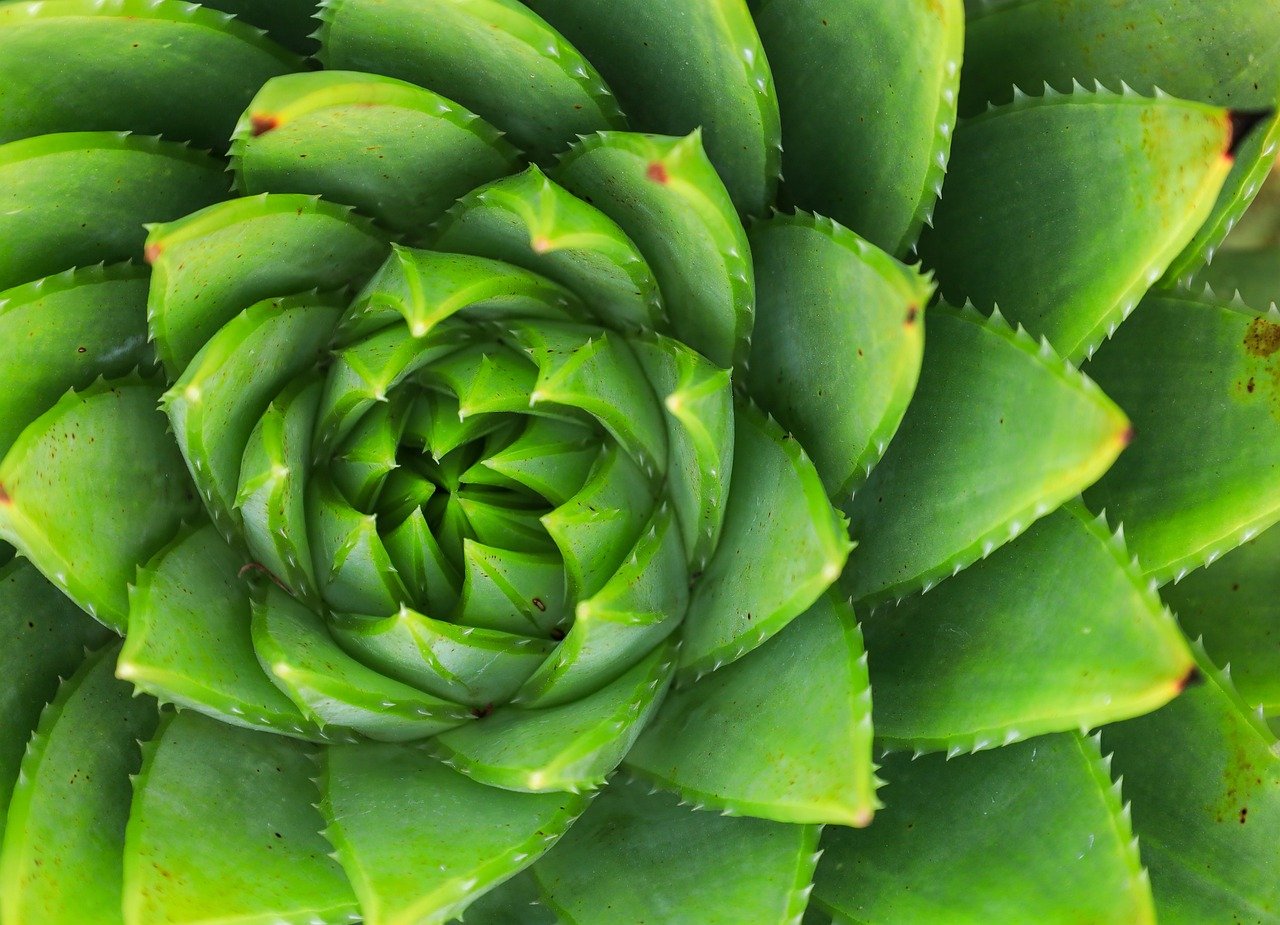
Aloe plants are characterized by succulent leaves arranged in dense basal or terminal rosettes. The leaves are typically elongated and tapering, with a thickened structure adapted for water storage. Leaf surfaces may appear smooth, spotted, or glaucous, and margins often bear small, firm teeth.
The internal leaf tissue consists of a gel-like parenchyma surrounded by fibrous layers, contributing to the plant’s drought tolerance. Depending on species, Aloe plants may remain stemless or develop visible stems that support elevated rosettes, particularly in larger or tree-like forms.
Flowering structures emerge as upright inflorescences rising above the foliage. These inflorescences bear tubular flowers arranged in racemes or panicles, creating a visually prominent contrast with the compact vegetative form of the plant.
Native Habitat and Distribution
Aloe species are native primarily to Africa, with the highest diversity occurring in the southern and eastern regions of the continent. Additional native populations extend into the Arabian Peninsula and nearby islands. In their natural habitats, Aloe plants are commonly found in dry grasslands, rocky slopes, desert margins, and scrublands.
These environments are characterized by high light exposure, periodic drought, and well-drained soils. The genus has successfully adapted to a range of ecological niches, from coastal plains to mountainous regions.
Through cultivation and horticultural exchange, many Aloe species have been introduced to other parts of the world, where they are grown as ornamental or landscape plants in climates that support their environmental preferences.
Common Varieties or Types
The genus Aloe includes a wide diversity of species differing in size, form, and growth habit. Some species remain compact and ground-hugging, while others develop tall, branching structures resembling small trees.
Well-known groups within the genus include rosette-forming aloes with spotted or patterned leaves, as well as larger arborescent species that develop woody stems over time. Certain species are noted for dramatic floral displays, producing tall spikes with densely packed, brightly colored flowers.
This variation reflects the broad evolutionary adaptability of the genus, allowing Aloe plants to occupy both ornamental and ecological roles across different landscapes.
Uses and Importance
Aloe plants hold cultural, botanical, and economic importance across many regions. Historically, various Aloe species have been associated with traditional practices, particularly those involving plant-derived substances obtained from the leaves.
In modern contexts, Aloe plants are widely valued as ornamental succulents due to their architectural form, minimal resource requirements, and longevity. Public landscapes, botanical gardens, and private collections frequently feature Aloe species for their visual impact and adaptability.
Beyond ornamental value, the genus contributes to scientific research related to plant physiology, drought adaptation, and secondary plant compounds, reinforcing its significance within botanical studies.
Growth Behavior and Care (Descriptive)
Aloe plants exhibit slow to moderate growth rates, with new leaves emerging from the central growing point of the rosette. Over time, many species form offsets or clusters, resulting in clumping growth patterns. Larger species may gradually develop stems as older leaves are shed.
Growth activity is typically aligned with warm, bright conditions, while periods of cooler temperatures often correspond with reduced growth. The succulent nature of Aloe leaves allows the plants to maintain structural integrity during extended dry periods.
The overall growth form emphasizes water conservation, efficient light capture, and long-term survival in resource-limited environments.
Lifecycle, Flowering, and Seasonal Patterns
As perennial plants, Aloe species persist for many years, undergoing continuous cycles of leaf renewal and structural development. Individual leaves have a long lifespan, remaining functional for extended periods before senescing.
Flowering usually occurs once plants reach maturity and is often seasonal. Inflorescences develop from the center of the rosette or from upper stem regions, depending on species. After flowering, the main plant typically continues vegetative growth without decline.
Seed production follows pollination, while vegetative reproduction through offsets contributes significantly to population persistence in both natural and cultivated settings.
Environmental and Ecological Value
In native ecosystems, Aloe plants play a role in supporting biodiversity by providing nectar resources for birds, insects, and other pollinators. The tubular flowers are particularly attractive to nectar-feeding species adapted to their structure.
The dense growth habit of some Aloe species contributes to soil stabilization in rocky or erosion-prone environments. Their presence also enhances habitat complexity, offering shelter and microhabitats for small organisms.
These ecological interactions highlight the genus’s contribution beyond ornamental or cultural contexts.
Recommended Products
Disclosure: As an Amazon Associate, PlantsInfo may earn from qualifying purchases.
🌱 Plant Care Essentials
The following tools can help with pruning, plant health, soil management, and fruit garden maintenance.

Neem Oil for Plant Care
Natural plant protection against aphids, whiteflies, mites, and other common garden pests.

Fungicide for Root Care
Helps suppress soil-borne fungal diseases and supports healthier root systems.

Spray Bottle for Plants
Ideal for applying foliar sprays, neem oil solutions, and liquid plant treatments.

Rubber Hand Gloves
Protects hands during pruning, planting, soil preparation, and garden maintenance.
Epilogue
The Aloe plant represents a diverse and resilient genus of succulents adapted to some of the world’s most challenging environments. With distinctive foliage, varied growth forms, and prominent flowering structures, Aloe species occupy a significant place in botanical classification and global plant cultivation.
As a collective group distinct from individual species such as Aloe vera, Aloe plants illustrate the breadth of adaptation and form achievable within a single genus, reinforcing their enduring relevance in ecological, ornamental, and scientific domains.
Frequently Asked Questions (FAQs)
Is Aloe a single plant or a group of plants?
Aloe refers to a genus containing hundreds of related species rather than a single plant.
Do all Aloe plants produce flowers?
Most Aloe species are capable of flowering once they reach maturity, although flowering frequency and appearance vary by species.
Are all Aloe plants the same as Aloe vera?
No. Aloe vera is one specific species within the Aloe genus, distinct from many other Aloe plants.
Are Aloe plants perennial?
Yes. Aloe species are perennial plants that persist for multiple years.
Do Aloe plants naturally grow in deserts?
Many Aloe species originate from arid or semi-arid regions, but they are also found in grasslands and rocky habitats.
Plants Info presents structured plant database entries that document botanical characteristics, habitat distribution, and ecological relevance across a wide range of plant groups. Reference pages covering genera, species, and plant families provide contextual understanding and comparative insight, supporting accurate identification and long-term botanical knowledge development.