Complete Neem Plant (Azadirachta indica) Guides
Problems & Diseases
Flowering Season
Quick Facts
Introduction
Azadirachta indica A.Juss., known globally as neem, is a fast-growing evergreen tree in the family Meliaceae native to the Indian subcontinent and parts of mainland Southeast Asia. It is one of the most extensively studied tropical trees, recognised for its exceptionally complex phytochemical composition and its ecological role as a dominant species in dry deciduous and semi-arid landscapes. The species has been widely introduced across tropical Africa, the Americas, the Caribbean, and Australasia, where it is now naturalised in many regions.
Classification
Neem is a tall, spreading canopy tree capable of tolerating prolonged drought and poor soils, which has made it a widely planted agroforestry, reforestation, and urban forestry species throughout the tropics. It produces small white flowers in large panicles, and olive-like drupes containing seeds from which the commercially significant neem seed oil is derived. The tree is a phanerophyte in the Raunkiaer classification and exhibits indeterminate growth in frost-free environments.
The genus Azadirachta belongs to the mahogany family Meliaceae and contains only two accepted species; A. indica is by far the more broadly distributed and extensively studied of the two. Its distribution now spans more than 70 countries through deliberate planting and subsequent naturalisation, making it one of the most widely distributed tropical trees in cultivation.
Taxonomic Synonyms
| Field | Information |
|---|---|
| Accepted Scientific Name | Azadirachta indica A.Juss. |
| Known Synonyms | Melia azadirachta L.; Antelaea azadirachta (L.) Adelb.; Melia indica (A.Juss.) Brandis |
| Taxonomic Authority Source | Kew Plants of the World Online (POWO) |
Quick Plant Information
| Field | Information |
|---|---|
| Common Name(s) | Neem; Indian lilac; Margosa; Nimtree |
| Scientific Name | Azadirachta indica A.Juss. |
| Family | Meliaceae |
| Plant Type | Tree |
| Lifespan | Perennial; reported to live 150–200 years |
| Growth Habit & Form | Erect, spreading evergreen tree; rounded to irregular crown |
| Native Range | Indian subcontinent (India, Pakistan, Bangladesh, Sri Lanka, Nepal); Myanmar; parts of mainland Southeast Asia |
| Climate Adaptation & Habitat Type | Tropical and subtropical dry to semi-arid climates; dry deciduous forests, scrublands, roadsides, agroforestry systems |
| Leaf Type | Pinnate; alternate; imparipinnate; leaflets lanceolate to falcate, serrate |
| Flower Color(s) | White to pale yellow |
| Fruit Type | Drupe (olive-like, ellipsoid) |
| Evergreen or Deciduous | Evergreen; briefly deciduous under severe drought |
Botanical Description
Stem
Azadirachta indica develops a stout, straight to moderately branched trunk that may reach 30–50 cm in diameter at breast height in mature specimens, and a total height of 15–20 m under optimal conditions, occasionally exceeding 30 m in sheltered sites. The bark is grey-brown to dark brown, deeply furrowed longitudinally with age, and exudes a clear to yellowish gum when wounded. Young branches are light grey-green, becoming darker and rougher with maturity; the inner wood is reddish-brown, hard, and ring-porous.
Leaves
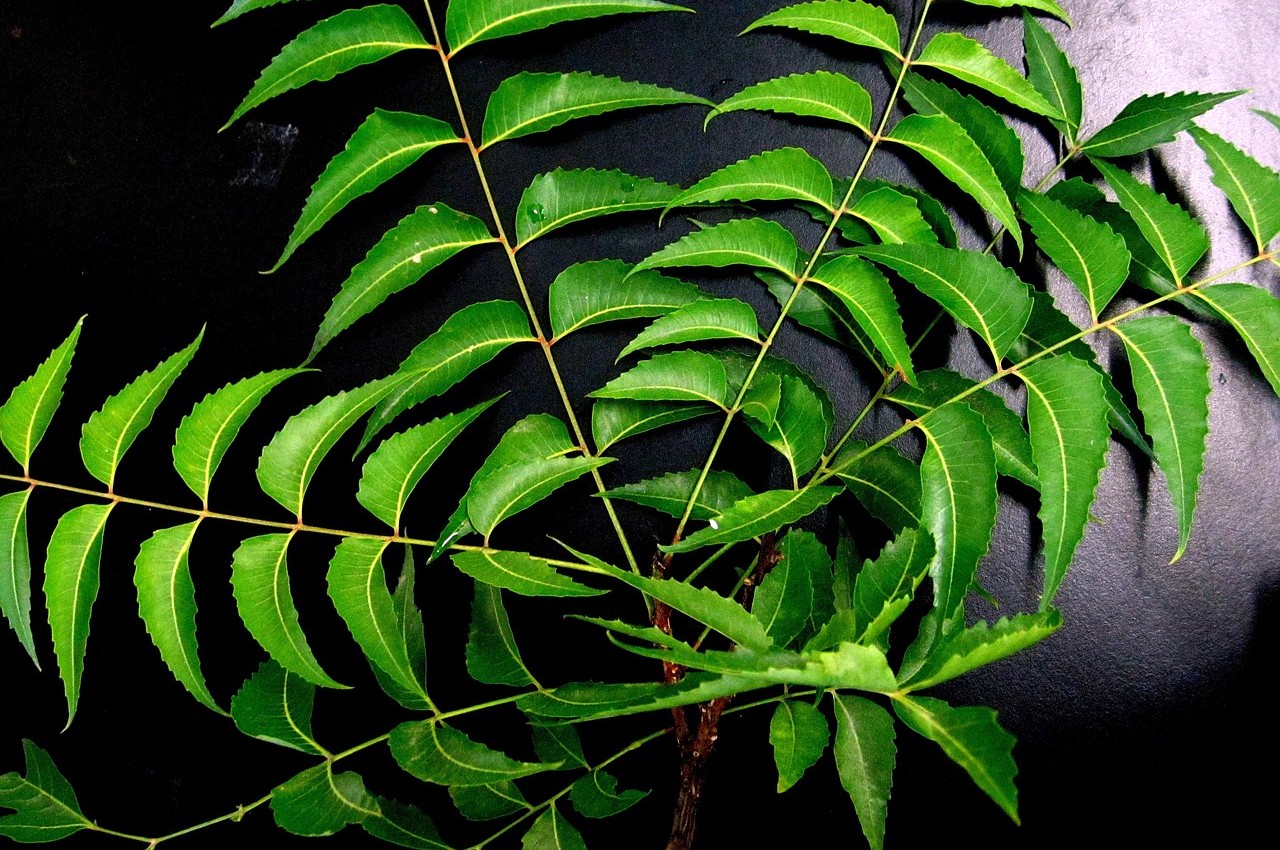
The leaves are alternate, imparipinnate, and 20–40 cm long, bearing 8–18 pairs of leaflets plus a terminal leaflet. Individual leaflets are lanceolate to falcate, 3–8 cm long, sharply serrate to crenate along the margins, and glabrous on both surfaces when mature. The leaf rachis is slender, slightly ridged, and often lightly pubescent when young. New flushes are initially coppery or reddish-brown before turning dark glossy green.
Flowers
Flowers are small, approximately 5 mm in diameter, and produced in large, many-branched axillary panicles 10–25 cm long. Each flower is bisexual, actinomorphic, with 5 white to pale yellowish-white petals, a staminal tube of 10 filaments united into a cylinder, and a superior ovary. The flowers are strongly fragrant, particularly during the evening, and are produced in large quantities when the tree reaches reproductive maturity.
Fruit
The fruit is a smooth, ellipsoid drupe, 1–2 cm long, turning from green to yellow to olive-yellow at maturity. The outer mesocarp is thin, fleshy, and edible to birds and mammals; the inner endocarp is bony and encloses a single elongated seed. The seeds are enclosed within a thin brown testa and contain a high proportion of fixed oil concentrated in the kernel. Each tree may produce several hundred to several thousand fruits per season.
Roots
Azadirachta indica develops an extensive taproot system in early growth, penetrating deeply into the soil profile to access subsoil moisture during dry seasons. Mature trees produce both a deep taproot and widely spreading lateral roots that may extend beyond the crown radius. The root system is robust and capable of resprouting following canopy damage, contributing to the tree’s persistence in disturbed habitats.
Growth Architecture & Life Strategy
Azadirachta indica is a phanerophyte in the Raunkiaer classification, maintaining its perennating buds well above 25 cm from the ground throughout the year, shielded by an evergreen canopy. The tree exhibits a rapid juvenile growth rate, commonly gaining 1–2 m in height per year under favourable tropical conditions, with a noticeable deceleration as the canopy broadens and the tree enters full reproductive maturity. The crown architecture is characterised by repeated sympodial branching, producing a broad, irregular to rounded canopy that provides dense shade.
The species adopts a stress-tolerant life strategy, persisting in nutrient-poor, drought-prone, and degraded soils where other canopy trees fail to establish. It is capable of brief deciduousness under extreme water stress, shedding older leaves to reduce transpirational water loss, then flushing new growth once moisture becomes available. This facultative drought-deciduous response distinguishes it from obligately evergreen relatives and underpins its success as a pioneer in degraded dryland landscapes.
In natural dry deciduous forest ecosystems, neem occupies the sub-canopy to canopy stratum. Its deep root system allows it to access groundwater that shallower-rooted species cannot, conferring a competitive advantage during prolonged dry seasons. The tree also demonstrates high plasticity in trunk form and branching pattern in response to light availability and wind exposure.
Common Types / Varieties
Named cultivars of Azadirachta indica are less formally standardised than in many horticultural crops, but several selections and accessions with documented characteristics are cultivated in research and commercial contexts.
‘PKV-1’ is an accession selected at Panjabrao Krishi Vidyapeeth, India, on the basis of high seed yield and high azadirachtin content in the kernel oil. It has been used as a reference genotype in neem biopesticide production trials and is associated with early flowering relative to unselected seedling populations.
‘Dhanuka Selection’ refers to a commercial seed source popularised in Indian agroforestry plantings for its consistent fruit size and reliable oil yield. It is typically propagated from seed lots screened for high kernel weight, though it does not represent a formally registered cultivar in the sense of UPOV-recognised varieties.
‘CAZRI Neem-1’ is an arid-zone selection developed by the Central Arid Zone Research Institute (CAZRI), Jodhpur, India, for tolerance to extreme heat and low annual rainfall. It is planted in dryland afforestation programmes in Rajasthan and other arid states where standard seedling stocks show higher mortality.
Native Range & Distribution
| Country / Territory | Range Status | Notes |
|---|---|---|
| India | Native | Widely distributed across all climatic zones except alpine; particularly abundant in dry deciduous and semi-arid regions |
| Pakistan | Native | Distributed in Punjab and Sindh plains; planted extensively in urban and agricultural settings |
| Bangladesh | Native | Present in natural dry forest fragments; extensively cultivated |
| Sri Lanka | Native | Coastal and dry zone lowlands |
| Nepal | Native | Terai lowlands and southern foothills |
| Myanmar | Native | Dry central zone; Irrawaddy basin |
| Thailand | Native | Northern and central dry deciduous forests |
| Laos | Native | Dry dipterocarp forest zones |
| Vietnam | Native | Central and southern dry forests |
| Senegal | Naturalised | Extensively planted in the Sahel; naturalised along roadsides and fields |
| Nigeria | Naturalised | Widespread planting since 1970s; self-seeding recorded in multiple states |
| Kenya | Naturalised | Planted for shade and agroforestry; naturalised locally in dry savanna zones |
| Sudan | Naturalised | Planted for dryland reclamation; naturalised in Khartoum and Gezira regions |
| Ethiopia | Naturalised | Introduced for agroforestry and shade; naturalised in Rift Valley lowlands |
| Uganda | Naturalised | Widely planted; spontaneous regeneration documented in disturbed sites |
| Tanzania | Naturalised | Planted along roadsides and in villages; naturalised in coastal dry zones |
| Mozambique | Naturalised | Coastal lowlands; naturalised near settlements |
| Ghana | Naturalised | Planted widely; naturalised in northern savanna zone |
| Zambia | Naturalised | Planted for shade and soil conservation; self-seeding documented |
| Brazil | Naturalised | Introduced 1980s; naturalised in semi-arid Caatinga region; declared invasive in some states |
| Dominican Republic | Naturalised; invasive concern | Widely planted; declared invasive in national park buffers |
| Puerto Rico (USA) | Naturalised; invasive concern | Naturalised in coastal and disturbed habitats |
| Colombia | Naturalised | Dry inter-Andean valleys; naturalised near agricultural zones |
| Peru | Naturalised | Coastal desert fringe plantings; naturalised in irrigated lowlands |
| Australia | Naturalised; invasive concern | Declared weed in Queensland and Northern Territory; naturalised in tropical savanna and disturbed sites |
| United States (Florida, Hawaii) | Naturalised | Cultivated; limited naturalisation in frost-free coastal zones |
| Jamaica | Naturalised | Coastal and disturbed lowlands |
| Trinidad and Tobago | Naturalised | Coastal dry scrub and disturbed areas |
| Philippines | Cultivated; naturalised locally | Planted for agroforestry; limited spontaneous regeneration |
| Cambodia | Native | Dry season forest zones |
Distribution records derived from GBIF occurrence datasets and regional botanical surveys. Distribution maps for this species can be generated from GBIF occurrence data at gbif.org.
Habitat & Ecology
Azadirachta indica is native to tropical and subtropical dry deciduous forests, thorn scrublands, and semi-arid plains of the Indian subcontinent and mainland Southeast Asia. It occurs predominantly at elevations below 700 m, in regions characterised by a distinct dry season of four to eight months, annual rainfall of 400–1,200 mm, and mean annual temperatures of 21–32 °C (70–90 °F). The species is most abundant in the dry deciduous forest biome of peninsular India, where it co-occurs with Tectona grandis, Butea monosperma, and Diospyros melanoxylon.
The tree tolerates a wide range of soil conditions, including shallow rocky soils, saline soils, and highly degraded substrates with low organic matter, and is characteristic of roadsides, village boundaries, riverbanks, and disturbed forest margins across its native range. It does not tolerate waterlogging or prolonged flooding, and its natural distribution is largely excluded from regions with heavy clay soils and impeded drainage. Neem is also sensitive to frost, and its native distribution does not extend above approximately 1,000 m elevation or into climates with regular sub-zero temperatures.
In introduced regions across tropical Africa and the Americas, Azadirachta indica occupies structurally similar dry woodland, savanna, and disturbed habitats, where it often establishes rapidly in degraded soils following deliberate planting. In parts of Queensland and the Northern Territory of Australia and in the semi-arid Northeast of Brazil, the species has expanded beyond planted areas into native vegetation, raising ecological concerns about displacement of native dry-forest species.
Ecological Role
Azadirachta indica functions as a canopy and sub-canopy tree in dry deciduous forest ecosystems, contributing significantly to leaf litter production and soil organic matter cycling in seasonally dry environments. The leaf litter decomposes relatively slowly due to the presence of secondary metabolites, which influences the rates of nutrient mineralisation and may affect the composition of soil decomposer communities beneath established trees. The dense canopy moderates understorey temperature and humidity, creating microhabitats that support shade-tolerant understorey species.
The flowering panicles attract a broad guild of generalist pollinators, including bees (Apidae), hoverflies (Syrphidae), and various small moths (Noctuidae), making the tree an important nectar and pollen source during late dry-season periods when other floral resources are scarce in semi-arid habitats. The ripe drupes are consumed and dispersed by fruit-eating birds including mynas (Acridotheres spp.), bulbuls (Pycnonotidae), and frugivorous bats (Pteropodidae), which deposit seeds in roosting sites and along flight corridors. The combination of prolonged flowering, high fruit output, and vertebrate-mediated seed dispersal underpins the tree’s capacity for rapid naturalisation following introduction.
Functional Traits
| Trait | Value |
|---|---|
| Growth Form | Erect evergreen tree; spreading canopy; 15–20 m typical height, up to 30+ m |
| Leaf Type | Imparipinnate compound; leaflets lanceolate-falcate, serrate |
| Photosynthetic Pathway | C3 |
| Seed Type | Orthodox |
| Rooting Depth | Deep taproot system; reported to 6 m+ in sandy soils; widespread laterals |
| Wood Density | 0.56–0.85 g/cm³ (reported range from Indian and West African specimens) |
Recommended Products
Disclosure: As an Amazon Associate, PlantsInfo may earn from qualifying purchases.
🌱 Plant Care Essentials
The following tools can help with pruning, plant health, soil management, and fruit garden maintenance.

Neem Oil for Plant Care
Natural plant protection against aphids, whiteflies, mites, and other common garden pests.

Fungicide for Root Care
Helps suppress soil-borne fungal diseases and supports healthier root systems.

Spray Bottle for Plants
Ideal for applying foliar sprays, neem oil solutions, and liquid plant treatments.

Rubber Hand Gloves
Protects hands during pruning, planting, soil preparation, and garden maintenance.
Phenological Calendar
| Event | Tropical & Subtropical Regions | Regional Qualifiers & Seasonal Deviations |
|---|---|---|
| Leaf Flush | Year-round in humid tropics; new flush at dry-season end | February–April in Indian subcontinent following brief dry-season leaf drop |
| Primary Flowering Onset | January–April (cool-dry to dry-wet transition) | February–March in northern India; December–January in southern India and Sri Lanka |
| Peak Flowering | February–May | March–April peak across most of Indian range; November–January in equatorial zones |
| Secondary Flowering | Occasional minor flush June–August following rainfall stimulus | Less pronounced in drier climates; absent in highly seasonal regimes |
| Fruit Development | 8–12 weeks post-pollination; March–June | April–June in north India; January–April in Sri Lanka and tropical South Asia |
| Fruit Maturity | May–August; fruits turn yellow-olive at maturity | June–July in northern India; February–April in equatorial humid zones |
| Seed Dispersal | Concurrent with fruit maturity; gravity and vertebrate-mediated | Bird and bat dispersal extends July–September in Indian subcontinent |
| Dormancy or Rest Period | Brief facultative dormancy during peak dry season; partial leaf drop | January–February in drier zones; absent in humid aseasonal climates |
Flowering onset in Azadirachta indica is associated primarily with rising temperatures and declining soil moisture stress at the end of the cool-dry season, with photoperiod playing a secondary modulatory role; trees in continuously humid equatorial climates may flower sporadically year-round without a well-defined seasonal peak.
Reproductive Biology
Azadirachta indica reaches sexual maturity at approximately 3–5 years after planting from seed in full-sun conditions, with onset of flowering somewhat earlier in grafted specimens. The tree is protandrous in most populations, with pollen release preceding stigma receptivity within individual flowers, a mechanism that promotes outcrossing with neighbouring trees. Large panicles each bearing several hundred individual flowers are produced in the axils of newly flushed leaves, and a mature canopy tree may carry hundreds of inflorescences simultaneously.
Fruit set in natural populations varies considerably with pollinator abundance and canopy density, with open-grown trees typically producing substantially higher fruit loads than forest-interior specimens. The drupe contains a single seed enclosed within a hard endocarp; seed viability is short relative to many tree species, declining markedly within two to three months under ambient tropical conditions. Each fruit contains approximately 0.2–0.4 g of oil-bearing kernel, and individual trees may produce 20–50 kg of fruit per season under favourable conditions.
Pollination Ecology
| Field | Information |
|---|---|
| Pollination Mechanism | Insect |
| Primary Pollinator Groups | Bees (Apidae); hoverflies (Syrphidae); small moths (Noctuidae); ants (Formicidae) as secondary visitors |
| Pollination Syndrome | Entomophily |
| Floral Reward | Nectar and pollen |
Seed Biology & Germination Ecology
| Field | Information |
|---|---|
| Seed Type | Orthodox |
| Seed Viability Period | 4–8 weeks under ambient tropical conditions; viability preserved up to 6 months under dry cold storage (below 10 °C / 50 °F) |
| Dormancy Type | None documented |
| Dormancy Breaking Mechanism | None documented; seeds germinate readily without pretreatment |
| Germination Temperature Range | 25–35 °C (77–95 °F) optimal; germination reduced below 20 °C (68 °F) |
| Light Requirement for Germination | Non-photoblastic; germination occurs in light and dark conditions |
| Seed Bank Classification | Transient (seeds remain viable in soil for less than one year) |
| Dispersal Unit | Whole drupe; endocarp-enclosed seed following mesocarp removal by frugivores |
Azadirachta indica seeds exhibit no physiological dormancy and will germinate within 7–21 days of sowing under warm, moist conditions; the primary constraint on natural regeneration is the short seed viability period, which restricts the effective dispersal window and limits seed bank persistence.
Vegetative Regeneration & Clonal Biology
| Field | Information |
|---|---|
| Vegetative Regeneration Capacity | Moderate |
| Primary Regeneration Mechanism | Coppice sprouting from stem base following cutting or fire damage |
| Tissue Types Capable of Regeneration | Stump; root collar; lateral root fragments in juvenile trees |
| Apomixis Status | Not documented in available literature |
| Bulbil or Propagule Production | Absent |
| Layering Capacity | Not documented in available literature |
| Root Sprouting from Fragments | Documented in juvenile trees and from lateral root exposure; reduced in mature specimens |
| Clonal Spread Rate | Negligible under natural conditions; root sprouts rarely produce independent clonal genets |
| Coppicing Response | Vigorous coppice response when trees are cut at stump height; multiple shoots produced from stump within one growing season |
| Ecological or Invasive Significance of Clonal Biology | Coppicing capacity contributes to tree persistence in managed agroforestry and roadside systems; does not contribute significantly to invasive spread in naturalised populations, where spread is predominantly seed-mediated |
The coppicing response of Azadirachta indica is exploited in traditional agroforestry systems where trees are periodically cut for biomass or canopy management; regrowth is rapid, with replacement shoots reaching 2–3 m within a single growing season under tropical conditions.
Soil Ecology & Rhizosphere Interactions
| Field | Information |
|---|---|
| Mycorrhizal Association Type | AM (arbuscular mycorrhizal) |
| Documented Fungal Partners | Glomus mosseae; Rhizophagus irregularis; Funneliformis coronatus (reported from Indian dryland soils) |
| Nitrogen Fixation | Absent |
| Allelopathic Properties | Documented; leaf leachates and decomposing litter associated with inhibition of seed germination and seedling growth in understorey plants |
| Documented Allelopathic Targets | Triticum aestivum; Vigna radiata; various weedy annuals in agricultural contexts |
| Rhizosphere pH Modification | Not documented in available literature |
| Root Exudate Compounds | Azadirachtins and limonoids reported in root exudates; triterpenoid compounds identified in rhizosphere soil adjacent to mature trees |
| Soil Microbiome Influence | Neem leaf litter and root exudates associated with suppression of certain soilborne fungal pathogens; altered bacterial community composition in rhizosphere relative to bulk soil in Indian studies |
Biochemical Profile
| Compound Class | Compounds Documented | Primary Location in Plant | Ecological Function |
|---|---|---|---|
| Limonoids (tetranortriterpenoids) | Azadirachtin A, azadirachtin B, nimbin, salannin, gedunin, nimbidinin, meliantriol | Seeds (kernel oil); leaves; bark | Herbivore deterrence; insect growth regulation interference |
| Triterpenoids | Nimbidin, nimbolide, azadarone, mahmoodin | Bark; seeds; leaves | Herbivore deterrence; antimicrobial defence in plant tissues |
| Flavonoids | Quercetin, kaempferol, myricetin, rutin | Leaves; flowers | UV photoprotection; pollinator attraction |
| Tannins | Gallic acid; ellagic acid; hydrolysable tannins | Bark; leaves | Herbivore deterrence; resistance to fungal colonisation |
| Fatty acids (fixed oil) | Oleic acid, stearic acid, palmitic acid, linoleic acid | Seed kernel | Seed energy reserve; feeding deterrence via associated bitter limonoids |
| Sterols | β-sitosterol, stigmasterol, campesterol | Leaves; seeds | Membrane component; not documented as having a primary ecological signalling role distinct from the limonoid fraction |
| Sulphurous compounds | Not documented in available literature | Not documented | Not documented in available literature |
Research Coverage
| Field | Information |
|---|---|
| Research Coverage Level | High |
| Primary Research Fields | Phytochemistry; biopesticide development; agroforestry; dryland ecology; seed biology |
| Earliest Published Study | Staudinger, H. & Ruzicka, L., 1924 (early terpenoid isolation from neem-related extracts); sustained modern research from 1960s onwards |
| Most Active Research Regions | India; Nigeria; Germany; United States; Brazil; Kenya |
| Key Knowledge Gaps | Long-term population genetics of naturalised non-native populations; detailed seed bank dynamics under variable tropical climates; full genome-scale characterisation |
Phytochemical Organ Distribution
| Plant Organ | Compound Class | Compounds Documented | Source |
|---|---|---|---|
| Root | Triterpenoids | Nimbidin; azadarone; root-specific limonoid fractions | Harborne, J.B. & Baxter, H., 1993 |
| Stem bark | Triterpenoids; tannins | Nimbidin; nimbolide; gallic acid; ellagic acid | Harborne, J.B. & Baxter, H., 1993 |
| Leaves | Limonoids; flavonoids; tannins | Azadirachtin A; quercetin; kaempferol; nimbolide; rutin | Harborne, J.B. & Baxter, H., 1993 |
| Flowers | Flavonoids; sterols | Quercetin; kaempferol; myricetin; β-sitosterol | Harborne, J.B. & Baxter, H., 1993 |
| Fruit | Limonoids; fatty acids | Gedunin; azadirachtins (pericarp); oleic acid (mesocarp) | Harborne, J.B. & Baxter, H., 1993 |
| Seeds | Limonoids; fatty acids; sterols | Azadirachtin A, azadirachtin B; salannin; nimbin; oleic acid; stearic acid; β-sitosterol | Harborne, J.B. & Baxter, H., 1993 |
The seed kernel is the organ with the most complete phytochemical documentation for Azadirachta indica, particularly with respect to the commercially significant azadirachtin limonoid fraction, which has been quantified extensively in seed oil across multiple Indian and Nigerian provenance studies.
Climate Adaptation & Stress Tolerance
Azadirachta indica is adapted to tropical and subtropical climates with mean annual temperatures of 21–32 °C (70–90 °F) and annual rainfall between 400–1,200 mm, though established trees have survived in areas receiving as little as 250 mm of rainfall per year where groundwater is accessible. The species exhibits high drought tolerance through a combination of deep rooting, facultative leaf shedding during peak water stress, and efficient stomatal regulation that reduces transpirational water loss without a proportionate reduction in carbon assimilation. It does not tolerate waterlogging, with root oxygen deprivation leading to decline and death within days in flooded soils.
The tree is frost-sensitive and is killed or severely damaged by temperatures below −1 °C (30 °F), which effectively limits its natural distribution and large-scale cultivation to climates without regular hard frosts. It tolerates full sun exposure and performs poorly in heavy shade, exhibiting etiolated growth and reduced reproductive output under canopy competition. Salinity tolerance is moderate, with the species persisting on coastal sandy soils and degraded saline agricultural land that excludes less salt-tolerant tree species.
Climate Vulnerability & Range Dynamics
| Field | Information |
|---|---|
| IUCN Climate Vulnerability Assessment | Not Evaluated |
| Primary Climate Sensitivity Factors | Frost events; extreme flooding and waterlogging; anomalously cold spells in marginal semi-arid cultivation zones |
| Projected Range Shift Direction | Not documented in available literature |
| Projected Range Shift Magnitude | Not documented in available literature |
| Key Threatening Processes | Increased frequency of unseasonable cold events in northern Indian range margin; changes in monsoon rainfall timing affecting seed dispersal and seedling establishment phenology |
| Resilience Factors | High drought tolerance; deep root system; facultative deciduousness; broad edaphic tolerance; extensive naturalised range outside native distribution |
| Published Modelling Studies | No study identified |
| Confidence Level | Low |
Cytogenetics
| Field | Information |
|---|---|
| Chromosome Number (2n) | 28 |
| Ploidy Level | Diploid |
| Genome Size (1C value) | Not documented in available literature |
| Karyotype Notes | Karyotype composed of 14 pairs of small to medium chromosomes; no polyploid cytotypes confirmed in peer-reviewed literature |
| Source | Darlington, C.D. & Wylie, A.P., 1955 |
Cultivation Requirements
| Field | Information |
|---|---|
| Light Requirements | Full sun; minimum 6 hours direct sunlight daily for vigorous growth and fruiting |
| Watering | Low once established; drought-tolerant; requires regular watering during establishment phase (first 2–3 seasons) |
| Soil Type | Well-drained loamy, sandy, or rocky soils; tolerates degraded and skeletal soils; does not tolerate waterlogging |
| Soil pH | 6.0–8.5 |
| Humidity | Low to moderate; tolerates arid conditions; sensitive to prolonged high humidity combined with poor drainage |
| Temperature Range | 21–40 °C (70–104 °F) optimal; frost below −1 °C (30 °F) causes severe injury |
| USDA Hardiness Zone | 10–12 |
| Fertilization | Low requirement on most soils; responds to nitrogen supplementation on highly degraded substrates during establishment |
| Container Suitability | Suitable as a container specimen when young but outgrows standard containers within 2–3 years and requires transplanting to permanent ground position |
Propagation Methods
Azadirachta indica is most commonly propagated from fresh seed, which should be sown within four to eight weeks of harvest as seed viability declines rapidly under ambient conditions; seeds are sown at 1–2 cm depth in warm, well-drained substrate and germinate within 7–21 days at 28–35 °C (82–95 °F). Vegetative propagation via softwood or semi-hardwood stem cuttings is practised for clonal multiplication of selected high-yielding accessions, with cuttings typically treated with indole-3-butyric acid (IBA) rooting hormone and maintained under intermittent mist for 6–8 weeks to achieve acceptable rooting percentages. Grafting onto seedling rootstocks is used in commercial neem oil production plantations to ensure uniformity of azadirachtin content and precocious fruiting, with approach grafting and budding both reported as effective techniques; grafted trees typically begin fruiting one to two years earlier than seedling-raised trees under comparable conditions.
Pests & Diseases
| Issue | Notes |
|---|---|
| Neem bark-eating caterpillar (Indarbela tetraonis) | Larvae tunnel beneath bark and into sapwood of trunk and major limbs; frass and silk webbing visible at entry points; more prevalent on older trees with bark fissures |
| Powdery mildew (Erysiphe sp.) | White powdery colonies on young leaves and shoot tips during warm dry periods; associated with high dust and low ambient humidity in semi-arid cultivation zones |
| Mealy bugs (Planococcus spp.) | Wax-covered colonies on young shoots, leaf axils, and fruit peduncles; associated with ant attendance; higher incidence under water-stressed conditions |
| Dieback (Botryodiplodia theobromae) | Progressive die-back of shoot tips and upper branches; associated with wounded entry points and drought stress; internal discolouration of affected wood |
| Leaf webber (Looper caterpillars, Euteliidae) | Larvae web together leaflets and feed on leaf tissue within shelters; defoliation localised to individual branch clusters; more common during humid monsoon onset periods |
Toxicity & Safety
| Field | Information |
|---|---|
| Humans | Seed oil and bark extracts contain azadirachtins and nimbin; concentrated seed oil associated with vomiting, hepatotoxicity, and metabolic acidosis, particularly in young children and individuals with hepatic impairment; leaf and fruit tissue at ordinary dietary exposure levels presents low systemic risk |
| Cats | Azadirachtin and neem oil components are toxic to cats; exposure to concentrated neem preparations associated with neurological signs including tremors, ataxia, and seizures |
| Dogs | Azadirachtin and neem seed oil components are toxic to dogs; exposure associated with vomiting, diarrhoea, and in severe cases neurological depression |
| Toxic Compounds | Azadirachtin A and B; nimbin; gedunin; concentrated seed oil components |
| Source | ASPCA Animal Poison Control Center (aspca.org/pet-care/animal-poison-control) |
The toxicological profile of Azadirachta indica varies markedly between plant organs, with seed kernel oil representing the most concentrated source of potentially harmful limonoids; the thin mesocarp of the ripe fruit has been consumed by both wildlife and humans in its native range without recorded systematic harm at typical exposure levels, whereas concentrated seed oil preparations carry documented risk of hepatotoxic and neurological effects.
Invasive Status
Azadirachta indica is classified as an invasive or declared weed in parts of northern Queensland and the Northern Territory of Australia, where it has naturalised in tropical savanna, woodland margins, and disturbed riparian habitats following deliberate planting for shade and agroforestry. In the semi-arid Caatinga biome of northeastern Brazil, the species has expanded beyond planted areas and is subject to monitoring as a potential threat to native dry-forest species composition. The tree’s ability to produce large fruit crops dispersed by vertebrate frugivores, combined with rapid growth on degraded soils, gives it a colonisation advantage in disturbed landscapes where it has been introduced.
Conservation Status
| Field | Information |
|---|---|
| IUCN Red List Status | Not Evaluated |
| Assessment Year | Not applicable |
| Population Trend | Not documented in available literature |
| Source | IUCN Red List of Threatened Species — https://www.iucnredlist.org (Accessed: 2026-03-13). |
Economic Importance
Azadirachta indica is one of the most economically significant multipurpose trees of the tropical world. The seed kernel oil is the primary commercial product, used extensively in the formulation of botanical biopesticides, with azadirachtin recognised as a commercially viable insect growth regulator and feeding deterrent approved for use in organic agriculture in the United States, European Union, and India. The global neem oil market is concentrated in India, which accounts for the majority of commercial seed processing and export, with the Indian neem industry estimated to involve several hundred enterprises ranging from village-level oil extraction to industrial-scale biopesticide formulation.
The timber is hard, durable, and resistant to termite damage, and is used locally in furniture, agricultural implements, and construction throughout the Indian subcontinent and parts of Africa. Neem cake (the de-oiled seed residue after oil extraction) is used as a soil amendment and slow-release nitrogen fertiliser, valued for its capacity to suppress nitrification and reduce nitrogen losses in flooded paddy systems. Urban and peri-urban forestry also constitute a significant economic use of the tree, as its dense shade, rapid growth, and tolerance of roadside pollution have made it one of the most widely planted street trees across South Asia and tropical Africa.
Ethnobotanical Uses
Azadirachta indica has one of the longest documented histories of ethnobotanical use of any tree species in the world, with recorded uses in the Indian Ayurvedic system spanning more than two thousand years. The tree is referenced in Sanskrit texts including the Charaka Samhita and Sushruta Samhita, where it is described under the names nimba and arishtha, with documented uses across all major plant organs including bark, leaf, seed oil, flower, and root. Traditional systems of use are embedded in both formal classical medical traditions and in informal village-level practice across rural South Asia.
In West African ethnobotany, particularly in the Sahel and Guinea savanna zones, the introduced neem tree has been rapidly incorporated into local practice following its extensive planting since the 1960s and 1970s. Its uses in these contexts parallel many of its South Asian applications, including use of bark and leaf preparations in traditional management of fever and skin conditions, use of young twigs as chewing sticks for dental hygiene, and use of seed oil in lamp fuel and soap-making. This rapid ethnobotanical adoption in a region where the species is non-native is a documented phenomenon in the ethnobotanical literature and has attracted academic attention as an example of introduced plant assimilation into local knowledge systems.
Neem twigs used as toothbrushes (datun or miswak equivalents) represent a cross-cultural practice that has been documented from India and Pakistan through the Middle East to Sahelian Africa, with the practice contributing to the diffusion of the species along trade and pilgrimage routes. In South Indian and Sri Lankan village traditions, neem branches are hung at doorways during festivals and weddings as protective symbols, with cultural significance extending beyond the practical applications of the plant. This dual identity — as both a practically useful tree and a symbolically charged species — distinguishes neem within the ethnobotanical record of tropical Asia.
Cultural & Traditional Context
Azadirachta indica holds a position of considerable cultural importance in Hindu religious tradition, where it is associated with the goddess Mariamman (Tamil) and Shitala Mata (North Indian traditions), deities connected with fever, smallpox, and skin conditions. Neem garlands and leaves are offered at temples and shrines dedicated to these goddesses, and the tree is commonly planted within temple compounds across Tamil Nadu, Andhra Pradesh, and other southern and central Indian states. The tree’s association with these protective deities reflects its deep integration into Indian cultural cosmology, where practical utility and sacred significance are interwoven in ways that have sustained the tree’s cultivation and protection across centuries of agricultural and urban land use.
In the Ayurvedic system, Azadirachta indica is classified as a cooling, purifying plant and features in foundational classical texts as a treatment for a range of conditions arising from excess heat and impurity in the body. This Ayurvedic classification has influenced the tree’s symbolism in broader South Asian cultural life, where neem is often described as the tree that heals and protects, a characterisation reproduced in oral traditions, popular literature, and regional proverbs across the Indian subcontinent. The cultural weight of this association has also influenced the reception of neem-based biopesticide research in India, where the tree’s traditional importance has contributed to popular support for its development as a commercially significant alternative to synthetic pesticide inputs.
Beyond India, in Sahelian Africa and parts of the Caribbean where the tree has been introduced, neem has acquired local cultural identities distinct from its South Asian origins. In Senegal and Mali, the tree is identified by local names (Gro-ven, Nim) and associated with shade, community gathering spaces, and village protection, reflecting the rapid cultural assimilation that has accompanied its widespread planting in these regions.
Interesting Facts
Azadirachta indica produces more than 300 documented phytochemical compounds, making it one of the chemically most complex single-species natural product sources among all studied tropical trees.
The active limonoid azadirachtin A, first isolated and structurally characterised in the 1960s, has an exceptionally complex molecular structure with sixteen chiral centres, which rendered its total chemical synthesis a challenge that was not achieved until 2007 by Ley and colleagues at the University of Cambridge.
Azadirachta indica is known to shed leaves briefly during peak dry-season water stress even though it is classified as evergreen; this facultative semi-deciduousness allows the tree to survive annual rainfall as low as 250 mm without permanent canopy loss, a trait not shared by most other trees in the Meliaceae family.
In northern India, the introduction of a hard frost even below −1 °C can cause dieback across entire neem windbreak plantations, and the northern limit of reliable neem cultivation corresponds closely with the isoline of the lowest recorded temperature rather than with mean annual temperature or rainfall limits.
Neem seed oil retains insect-deterrent properties even after the azadirachtin fraction has degraded, due to the presence of other limonoid compounds including nimbin and salannin, which have distinct modes of action as insect feeding deterrents independent of the growth-regulation pathway associated with azadirachtin.
FAQs
How fast does Azadirachta indica grow, and when does it begin producing fruit? Azadirachta indica is a fast-growing tree that typically gains 1–2 m in height per year under tropical conditions during its juvenile phase. Seedling-raised trees generally begin fruiting at 3–5 years of age, while grafted trees may begin producing fruit within 2–3 years; maximum fruit production is usually reached at 10–15 years when the canopy is fully developed.
What soil conditions does Azadirachta indica require for successful establishment? Azadirachta indica is highly tolerant of poor, shallow, and degraded soils, including skeletal rocky substrates, saline soils, and low-fertility dryland soils that exclude most other tree species. The single critical requirement is good drainage; the species does not tolerate waterlogging and will decline rapidly in soils with impeded drainage or high clay content that becomes saturated during the rainy season.
Is Azadirachta indica suitable for planting in subtropical climates outside its native range? Azadirachta indica can be planted successfully in frost-free subtropical climates corresponding to USDA Hardiness Zones 10–12. In regions where temperatures occasionally fall below −1 °C (30 °F), the tree may suffer significant dieback or death; it is therefore not suitable for outdoor planting in subtropical climates subject to regular frost events, though specimens in sheltered microclimates have sometimes persisted at the frost margin of its cultivable range.
Why is Azadirachta indica considered an invasive species in some countries? In Queensland and the Northern Territory of Australia, and in parts of northeastern Brazil, Azadirachta indica has naturalised in native dry woodland and savanna habitats following deliberate planting. Its invasive behaviour in these regions is driven by the combination of high fruit production, effective vertebrate-mediated seed dispersal, rapid growth on degraded soils, and the absence of the specialist herbivores and pathogens that constrain its population density in its native South Asian range. For more information on its distribution, see https://plantsinfo.in/plant-database/azadirachta-indica.
How long can Azadirachta indica seeds remain viable for storage? Azadirachta indica seeds are orthodox in their storage behaviour but have an unusually short viability period for a tree species; viability declines markedly within four to eight weeks under ambient tropical conditions. Under dry cold storage below 10 °C (50 °F), viability can be extended to approximately six months, though germination rates decline progressively even under optimal storage conditions. This short viability is one of the principal challenges in large-scale neem nursery operations that rely on stored seed lots.
Conclusion
Azadirachta indica is a botanically, ecologically, and economically exceptional tree whose natural distribution across South and Southeast Asia has been vastly extended by millennia of human planting and, more recently, by naturalisation following large-scale introductions in tropical Africa, the Americas, and Australasia. Its capacity to colonise degraded, dry, and nutrient-poor soils has made it both a valued reforestation and agroforestry tool and, in certain introduced contexts, a documented invasive threat to native dry-forest communities.
The tree’s phytochemical complexity, anchored by the limonoid compound azadirachtin, has generated sustained scientific interest since the mid-twentieth century and has supported a commercially significant biopesticide industry with global reach. The breadth and depth of research attention that Azadirachta indica has received across phytochemistry, ecology, agroforestry, and seed biology place it among the most thoroughly investigated tropical tree species in the literature.
Its cultural and ethnobotanical significance in South Asia, and its rapid cultural assimilation in introduced regions across Sub-Saharan Africa, reflect a broader pattern by which species of outstanding practical utility become embedded in local knowledge systems and sacred traditions. The integration of ecological, commercial, and cultural dimensions makes Azadirachta indica one of the most multidimensionally significant trees in the tropical world and a species whose management — whether in its native range, its extensive cultivated areas, or its naturalised populations — requires engagement with all of these dimensions simultaneously.
Common Cultivation Observations
| Observation | Associated Condition |
|---|---|
| Yellowing and drop of older leaves in late dry season | Facultative drought-deciduous response; associated with soil moisture depletion in seasonally dry climates |
| Sparse flowering or failure to set fruit in urban trees | Associated with insufficient light penetration to inner canopy or limited pollinator access in dense streetscape plantings |
| Dieback of shoot tips and wilting of young growth following cold spell | Frost or cold-shock injury to apical meristems and young tissue; associated with temperatures below 5 °C (41 °F) even without hard frost |
| White powdery coating on young leaf surfaces | Powdery mildew colonisation; associated with dry dusty conditions combined with high temperature fluctuation between day and night |
| Copious gum exuding from bark wounds or branch insertion points | Gummosis; associated with mechanical injury, bark-boring insect damage, or fungal canker colonisation of wound tissue |
Scientific Stability Note
The currently accepted name Azadirachta indica A.Juss. replaces the earlier placement under Melia as Melia azadirachta L., reflecting generic-level reclassification within Meliaceae that separated Azadirachta from Melia on the basis of distinct floral and fruit morphology. The name Antelaea azadirachta (L.) Adelb. represents a further generic-level synonym used in some mid-twentieth century taxonomic treatments but not accepted in current classifications. All three names refer to the same biological species, and researchers encountering historical literature should be aware that pre-1960s botanical studies may reference the species under Melia azadirachta or Melia indica. Current authoritative placement is confirmed by Kew Plants of the World Online (POWO), and the accepted name Azadirachta indica A.Juss. has been stable in the major taxonomic databases since the APG IV framework was adopted.
Reference Summary
A. Primary Taxonomic Sources
Kew Plants of the World Online (POWO) — https://powo.science.kew.org (Accessed: 2026-03-13). GBIF Backbone Taxonomy — https://www.gbif.org (Accessed: 2026-03-13).
B. Peer-Reviewed Literature
Ermel, K., Schmutterer, H. & Kleeberg, H. (1987). Effects of seed kernel extracts of Azadirachta indica on larval development and reproduction of the diamondback moth Plutella xylostella. Journal of Applied Entomology, 104(1–5), 468–473.
Schmutterer, H. (1990). Properties and potential of natural pesticides from the neem tree, Azadirachta indica. Annual Review of Entomology, 35, 271–297.
C. Monographs and Books
Harborne, J.B. & Baxter, H. (1993). Phytochemical Dictionary: A Handbook of Bioactive Compounds from Plants. Taylor & Francis, London.
Darlington, C.D. & Wylie, A.P. (1955). Chromosome Atlas of Flowering Plants. George Allen & Unwin, London.
Schmutterer, H. (ed.) (1995). The Neem Tree: Source of Unique Natural Products for Integrated Pest Management, Medicine, Industry and Other Purposes. VCH, Weinheim.
D. Herbarium and Specimen Records
Royal Botanic Gardens Kew Herbarium (K) — digitised specimens available via Kew Herbarium Catalogue. JSTOR Global Plants — specimen images from multiple herbaria available via jstor.org/plants.
E. Grey Literature and Databases
IUCN Red List of Threatened Species — https://www.iucnredlist.org (Accessed: 2026-03-13). ASPCA Animal Poison Control Center — https://www.aspca.org/pet-care/animal-poison-control (Accessed: 2026-03-13). USDA FoodData Central — https://fdc.nal.usda.gov (Accessed: 2026-03-13).